

I once mixed castile soap and vinegar in a spray bottle, feeling very smug about my “natural” cleaner. Ten minutes later the bottle held a curdled, cottage-cheese mess. I sprayed it on my shower door anyway. It left white streaks that took an hour to buff off.
That flop taught me the rules. This DIY shower cleaner uses Dawn and white vinegar, and it works because the two do different jobs. You’ll learn one base recipe, how to adjust it for glass, tile, grout, tub and curtain, a no-rinse daily spray, and the mixes you should never make.
Why Make Your Own Shower Cleaner
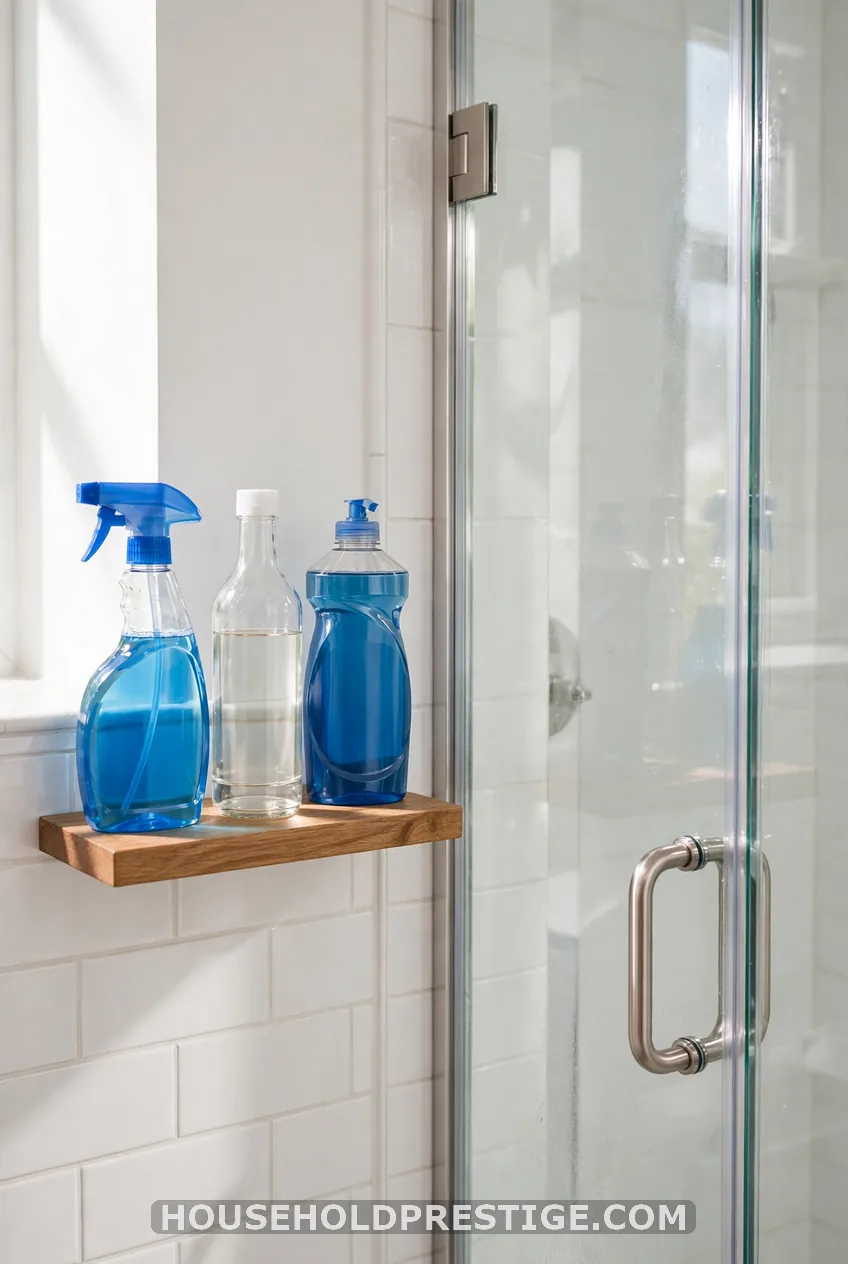
It’s cheap. A gallon of distilled white vinegar runs a few dollars and fills many bottles. A bottle of Dawn lasts for months at one teaspoon to a tablespoon per batch. A store-bought shower spray often costs more for a single bottle.
It’s also gentler for daily use. You skip bleach fumes in a small, closed room.
DIY has limits, though. Heavy orange iron stains and black mold that has grown under the caulk need more than a spray. I cover both below.
What You Need (Supplies & Ingredients)
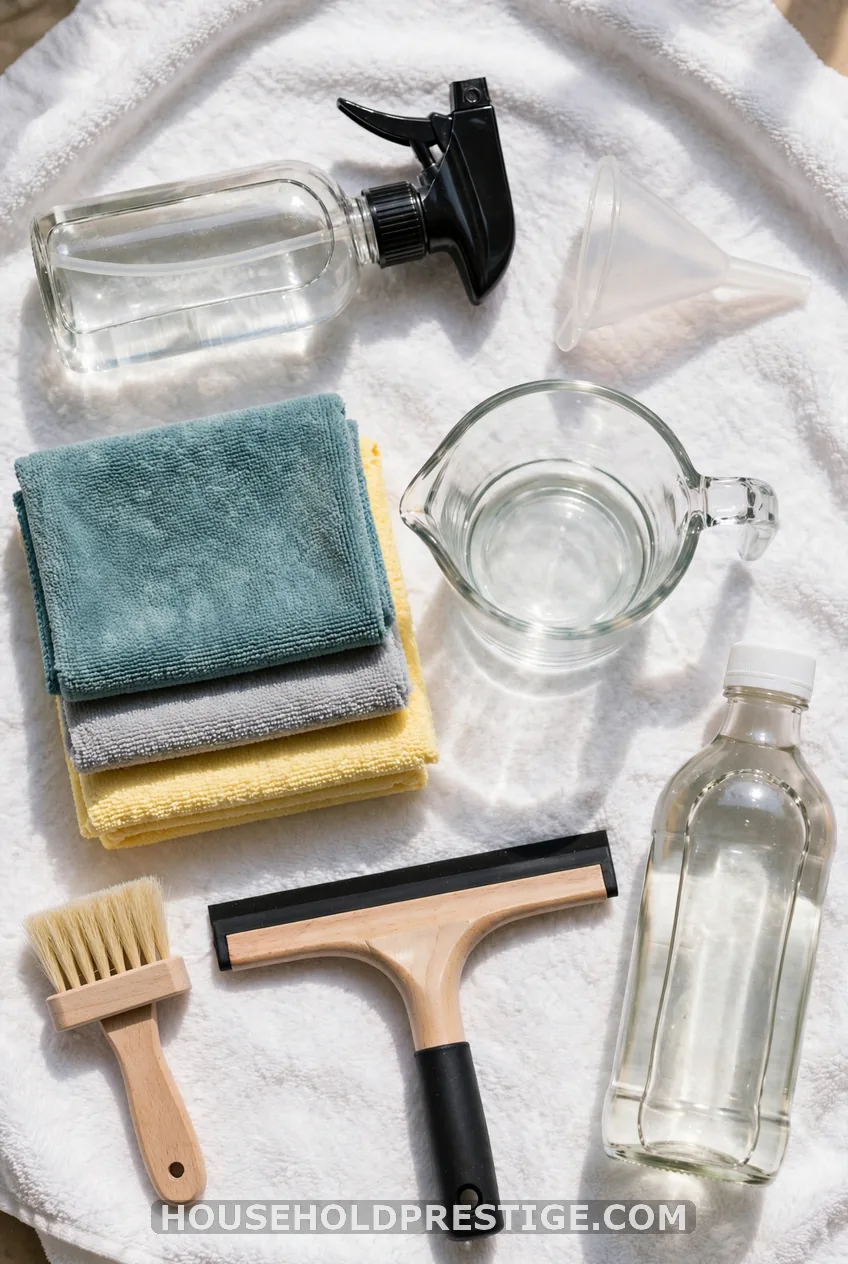
Gather these before you mix:
- A 16 oz spray bottle. Use glass if you add essential oils, since oils can break down some plastics. Use plastic if the bottle lives in the shower.
- Distilled white vinegar. Skip apple cider vinegar, which can stain. Skip “cleaning vinegar” too, because it is stronger and harsher on seals.
- Dawn Ultra dish soap. The blue original is the classic. Its grease-cutting formula breaks down body oils, which are the glue in soap scum.
- Distilled water for the daily spray. Tap water leaves mineral spots.
- Baking soda and 70% isopropyl rubbing alcohol.
- A funnel, liquid measuring cup, microfiber cloths and a non-scratch scrub sponge.
- A grout brush or old toothbrush, and a squeegee.
- Optional: tea tree, clove, lemon or peppermint essential oil.
Know Your Enemy: Soap Scum vs. Hard Water
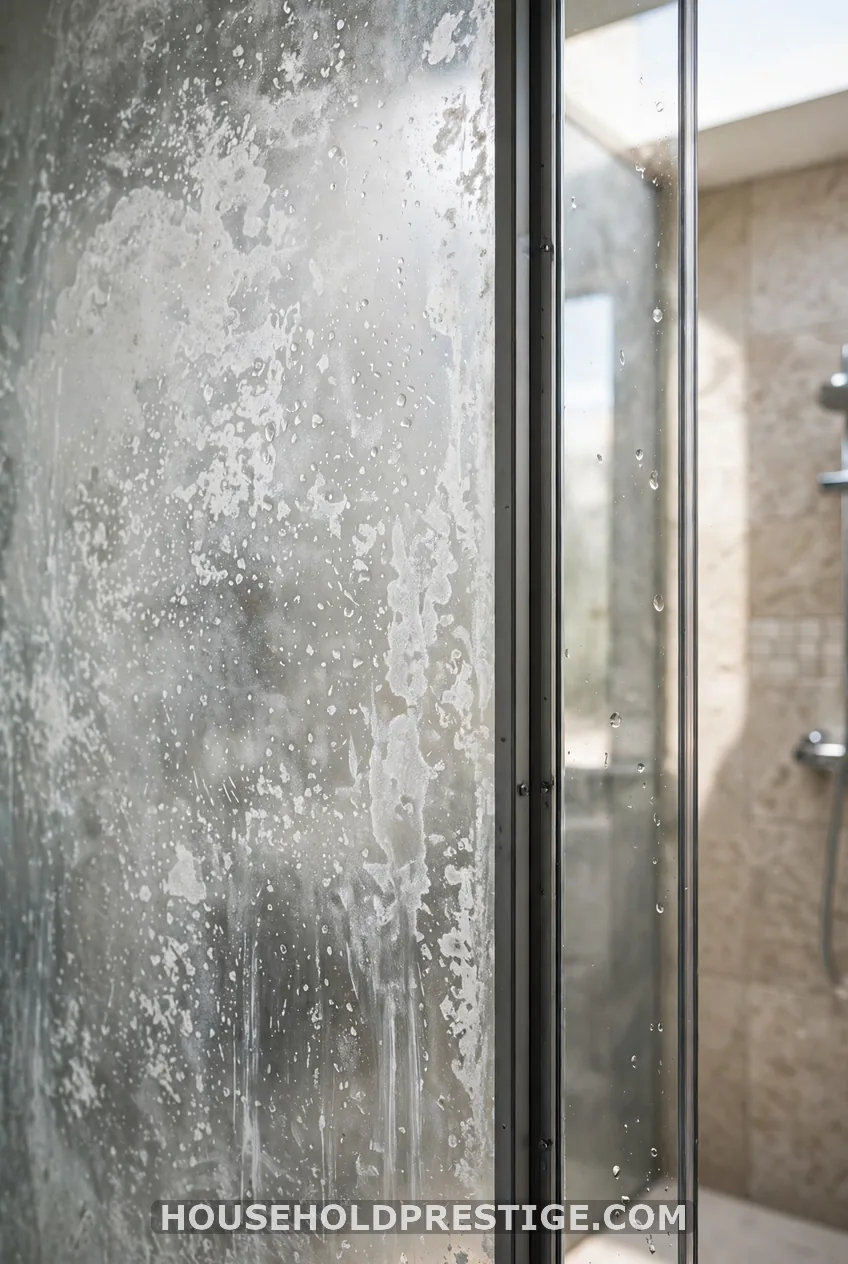
Soap scum is a waxy film. It is made of soap, body oils and minerals. It feels slightly greasy and smears when you wipe it.
Hard water scale is mineral buildup, mostly calcium and lime. It looks like chalky spots and feels rough. Dawn handles the first. Vinegar and baking soda handle the second.
Most showers have both. That’s why the base recipe uses both.
Step 1: Mix the Base Dawn + Vinegar Shower Cleaner
Pick your strength.
- Heavy soap scum: Equal parts Dawn and white vinegar. Use 1/4 cup of each in a 16 oz bottle, then top with warm water.
- Routine cleaning: 1 tablespoon Dawn per 1 cup of vinegar.
Warm the vinegar first. Warm, never boiling. It helps the soap blend in. Use a funnel and pour the vinegar in before the Dawn.
Swirl the bottle gently. Don’t shake it hard, or you get a bottle full of suds that won’t spray. Label it with a marker so no one mistakes it for water.
Step 2: Spray, Let Sit, Scrub, Rinse, Dry
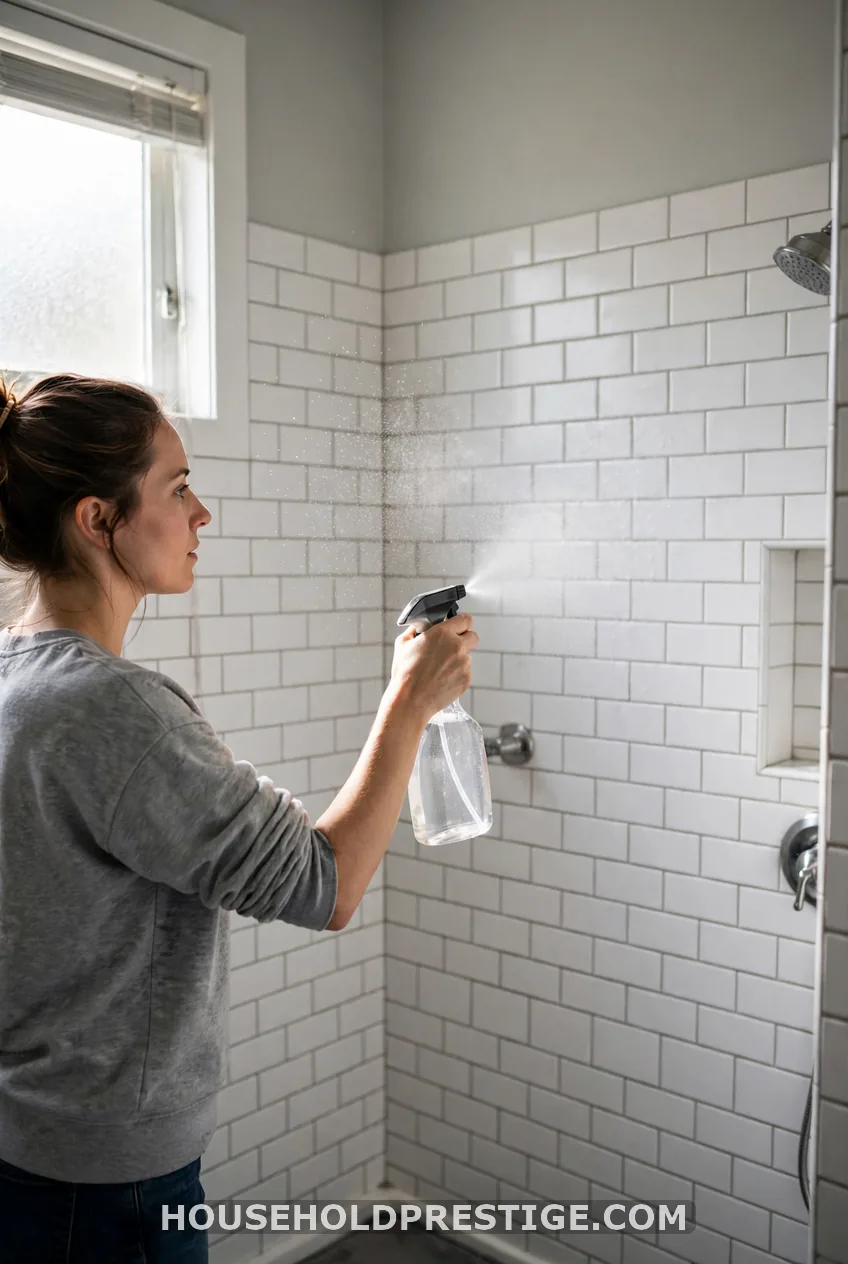
This five-part routine is the whole system.
- Spray generously on dry surfaces. Wet walls dilute the cleaner.
- Let it sit. Give light film 3 to 5 minutes. Give heavy buildup 10 to 15 minutes. Never let it dry on the surface.
- Scrub with a non-scratch sponge or microfiber cloth. Skip abrasive pads, which scratch glass.
- Rinse well with clean water.
- Dry with a cloth or squeegee. This is what gives you streak-free glass.
If the spray starts to dry, mist it again. Dried cleaner leaves a film.
Step 3: Adjust the Recipe for Each Surface
One spray doesn’t fit every surface. Use this guide:
- Glass doors: 1 cup white vinegar plus 1 teaspoon blue Dawn. Sit 5 minutes, scrub, rinse, squeegee.
- Tile: The base spray. Scrub in small circles, then rinse.
- Grout: Base spray plus a baking soda paste (next section). Work it in with a grout brush.
- Tub and shower pan: Baking soda paste first, then a spray of vinegar to foam. Rinse well so the surface isn’t slick.
- Showerhead and fixtures: Fill a plastic bag with straight vinegar, tie it around the head so the nozzles soak, and leave 30 minutes to an hour. Wipe and run the water. Skip this on brushed or specialty metal finishes.
- Door tracks: Spray vinegar, scrub with a toothbrush, then wipe out.
- Shower curtain: Mist with half vinegar, half water. Or wash a fabric or plastic liner on gentle with a few old towels.
For Heavy Buildup: The Baking Soda Paste Method
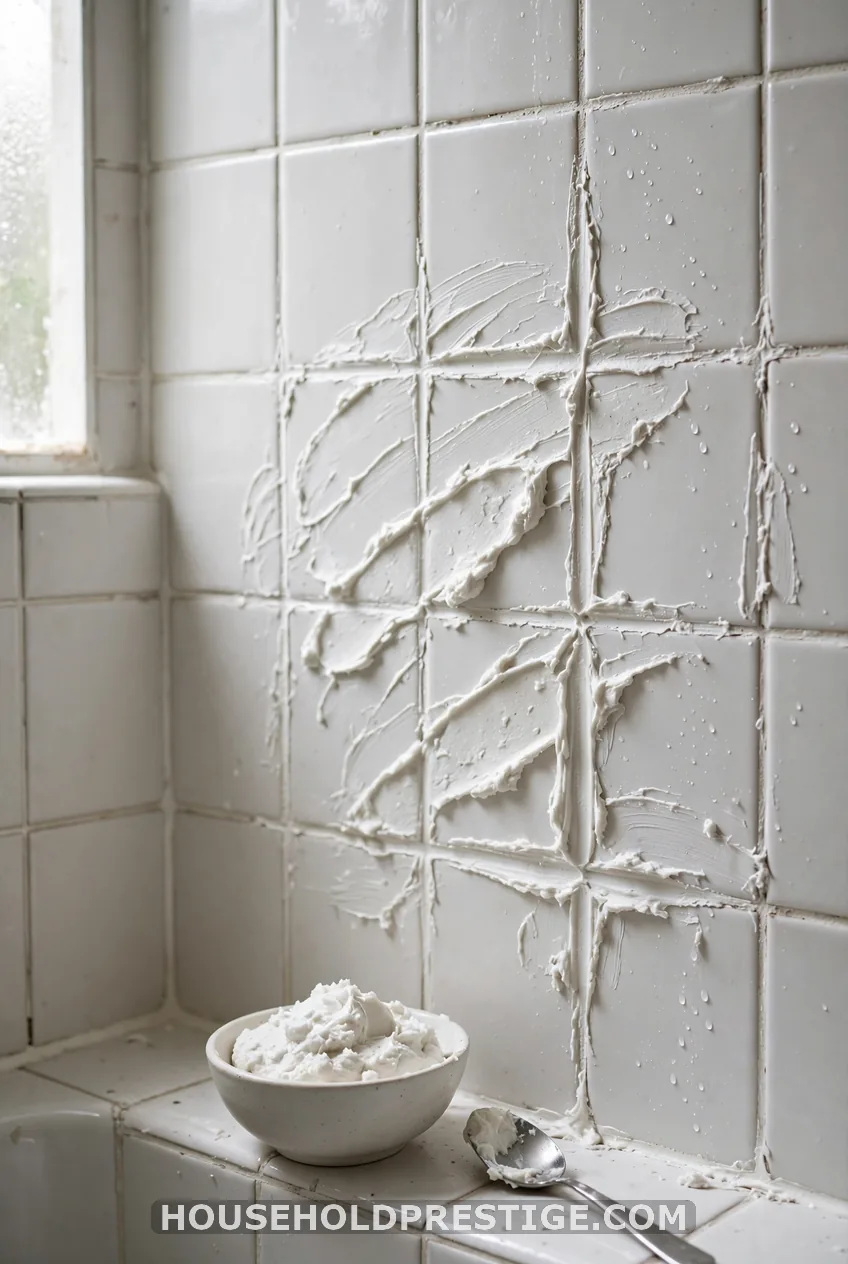
Mix 2 parts baking soda with 1 part water until it forms a thick paste. Spread it over the soap scum or grout lines. Let it sit 10 minutes.
Now spray vinegar on top. It foams and helps lift the deposits. Scrub, then rinse well. Hard water scale may need a second round.
Don’t use this on natural stone or brushed metal. Baking soda is a mild abrasive and can dull finishes.
Make the No-Rinse Daily Shower Spray
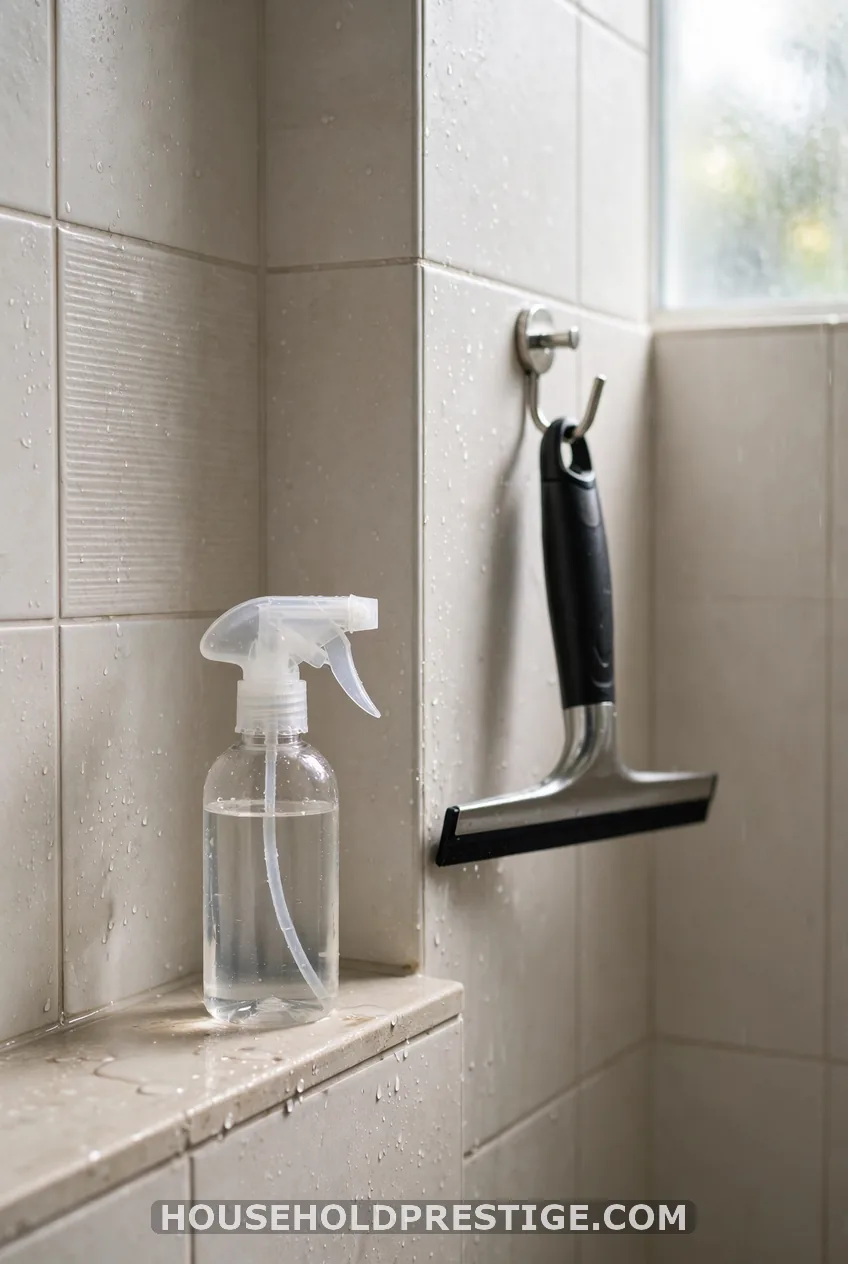
This spray is for upkeep, not deep cleaning. For a 16 oz bottle, mix:
- 1 1/4 cups distilled water
- 1/2 cup rubbing alcohol
- 1 teaspoon Dawn
- Optional: a splash of dishwasher rinse aid, such as Jet-Dry
Add the water first, then the alcohol, then the soap. Rock the bottle gently. The alcohol makes water evaporate faster, so spots have less time to form.
After the last shower of the day, mist walls, door and fixtures. Walk away. No wiping, no rinsing.
Never spray the tub floor or shower pan. The residue makes it dangerously slick. Keep the bottle in the shower so the habit sticks.
Mold and Mildew: What Actually Works
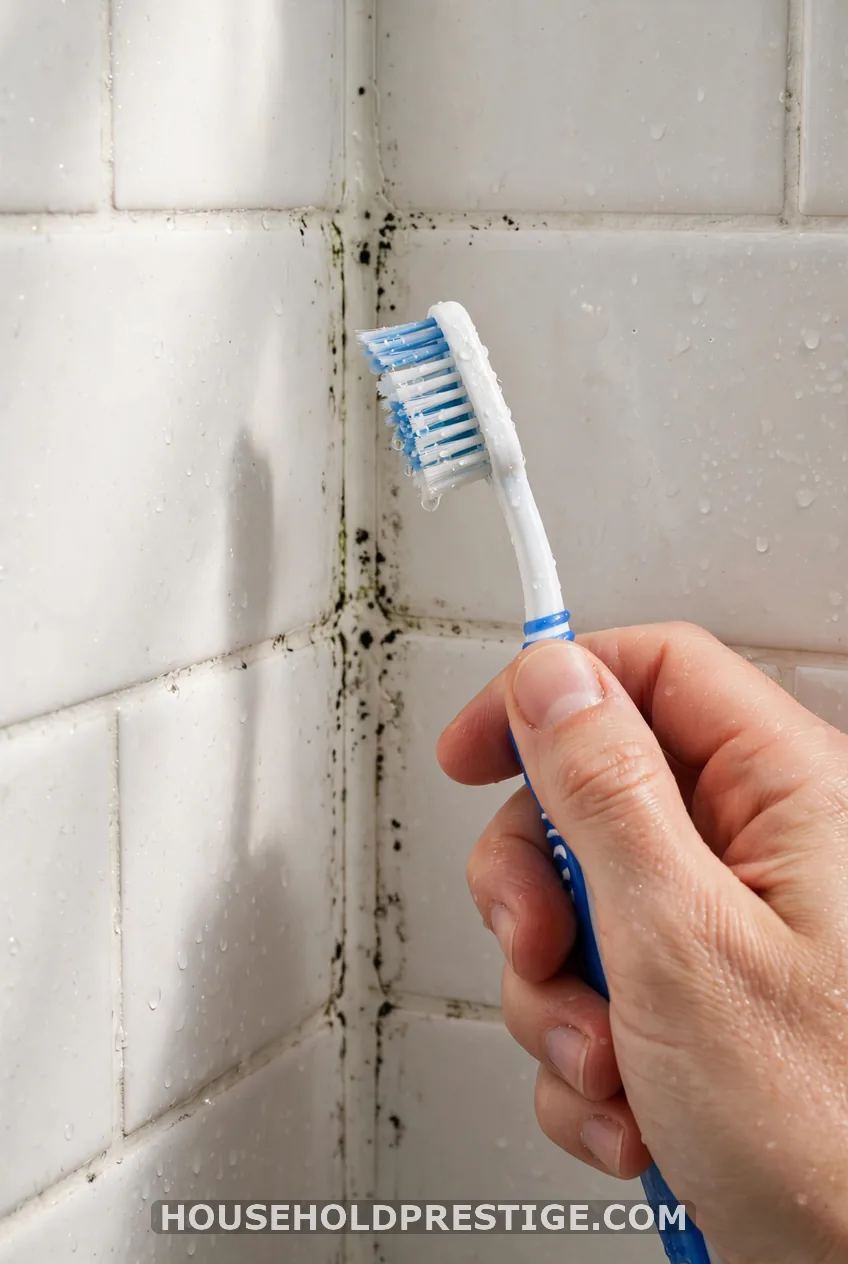
Vinegar helps with light surface mildew. It can’t reach mold growing under silicone caulk.
For prevention, add 10 drops tea tree oil to a 16 oz bottle of half vinegar, half water. Clove oil works in the same way. Use glass for any oil blend. Ventilate the room while you spray.
For stubborn surface mildew, use 3% hydrogen peroxide on its own. Spray, wait 10 minutes, scrub and rinse. Rinse the surface fully before you use any vinegar.
If caulk is black all the way through, cleaning won’t fix it. Scrape it out and re-caulk.
What NOT to Do (Read Before You Spray)
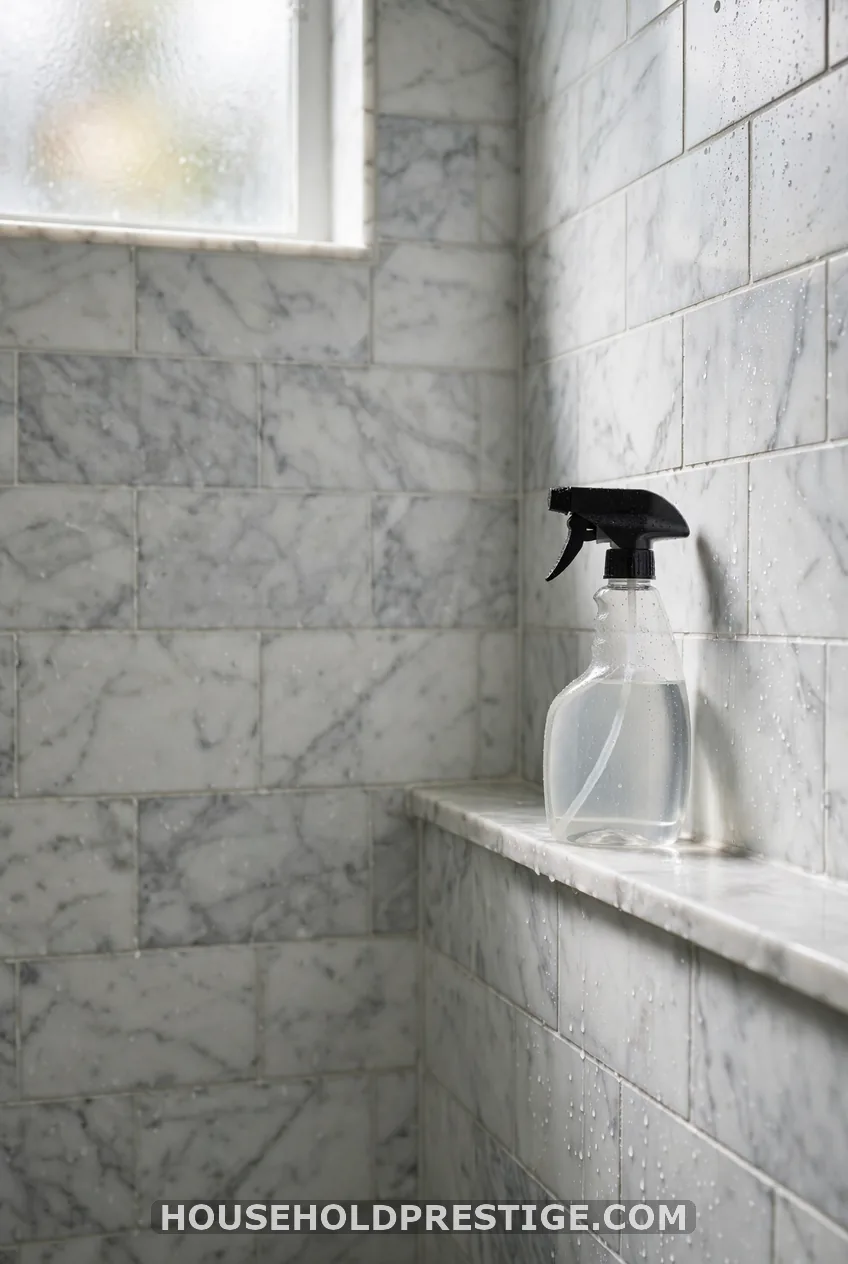
Some mixes cause real harm.
- No vinegar on natural stone. Marble, travertine and limestone etch, and the dull spots are permanent. Use a stone-safe cleaner or mild dish soap and water.
- Never put vinegar and hydrogen peroxide in one bottle. Together they form peracetic acid, which irritates skin, eyes and lungs. Use them in separate steps and rinse between.
- Skip castile soap with vinegar. It separates and curdles. Use Dawn.
- Don’t let spray dry on glass. It leaves a film.
- Test a hidden spot first. Go easy on metal finishes and seals.
Never mix any of these with bleach either.
Troubleshooting: Cloudy Glass, Streaks and Clogs
- Cloudy glass: Usually leftover soap. Rinse longer and buff dry. If it stays cloudy, it may be etching, which cleaner can’t fix.
- Streaks: Too much Dawn. Cut back to 1 teaspoon and dry with a clean microfiber cloth.
- Lingering vinegar smell: Rinse well and leave the door open. Add a few drops of lemon or peppermint oil.
- Clogged nozzle: Soak the sprayer head in warm water. Use distilled water in the daily spray to prevent a repeat.
Keep It Clean: The 30-Second Maintenance Routine

A little effort often beats a big scrub now and then.
- Daily: Squeegee the glass top to bottom, then mist with the no-rinse spray.
- Weekly: Spray and wipe the glass and fixtures.
- Monthly: Deep clean with the Dawn and vinegar base.
- Every few months: Do a mineral pass on hard water spots with straight vinegar on a cloth.
Leave the door partly open and run the fan so everything dries.
Conclusion
Spray it on dry, give it time to sit, and let the Dawn and vinegar do the scrubbing for you.
FAQ
What is the best DIY shower cleaner for soap scum?
Equal parts Dawn and white vinegar. Spray it on a dry surface and let it sit 10 minutes before you scrub and rinse. Dawn cuts the body oils and vinegar dissolves the mineral film.
Can I use vinegar in a marble or travertine shower?
No. Acid etches calcium-based stone and dulls the finish for good. Use a stone-safe cleaner, or dish soap and water.
Does DIY shower cleaner work without rinsing?
Only the diluted daily spray is no-rinse. The Dawn and vinegar base must be rinsed off, or the soap residue attracts dirt and leaves a film.
Why did my homemade shower cleaner separate or turn cloudy?
Castile soap curdles in vinegar, and hard tap water can cloud a mix. Use Dawn and distilled water, and swirl the bottle instead of shaking it.