

“You want a pond in the living room?” my sister asked. She stood on my bare floor with a coffee in her hand. “And where does the water go when it spills?”
Fair question. An indoor pond looks calm in photos, but a full one can weigh more than an upright piano. It also adds moisture to the air and needs a pump that never sleeps.
This list covers 14 designs, from a tabletop bowl to a glass floor over a koi basin. Each one gets a weight number, a renter-or-owner verdict and the one upkeep detail that decides whether it survives month three.
Before You Pick an Idea: The 4 Numbers That Decide Everything
Run these first. They rule out half the design photos you’ll see online before you spend a dime.
- Weight. One gallon of water weighs 8.3 lbs. A 4×4 ft pond with 8 inches of water holds about 80 gallons, or roughly 660 lbs, before the frame. Every inch of depth adds about 5.2 lbs per square foot.
- Floor load. Most homes are built for about 40 lbs per square foot of live load. A slab-on-grade floor handles far more. For anything heavy on an upper floor, call a structural engineer, and place it along a load-bearing wall.
- Humidity. An open pond puts water into the air. Buy a $10 hygrometer, aim for 40 to 50 percent indoor humidity, and plan on a dehumidifier or good ventilation.
- Electrical. Plug every pump and light into a GFCI outlet. Leave a drip loop in each cord so water can’t run down it to the plug. Never run a cord across a walkway.
No-Construction Ideas for Renters and Small Rooms
These need no tools, no permits and no deposit-risking holes. Each one can be drained and moved.
1. The Fountain-Bowl Mini Pond
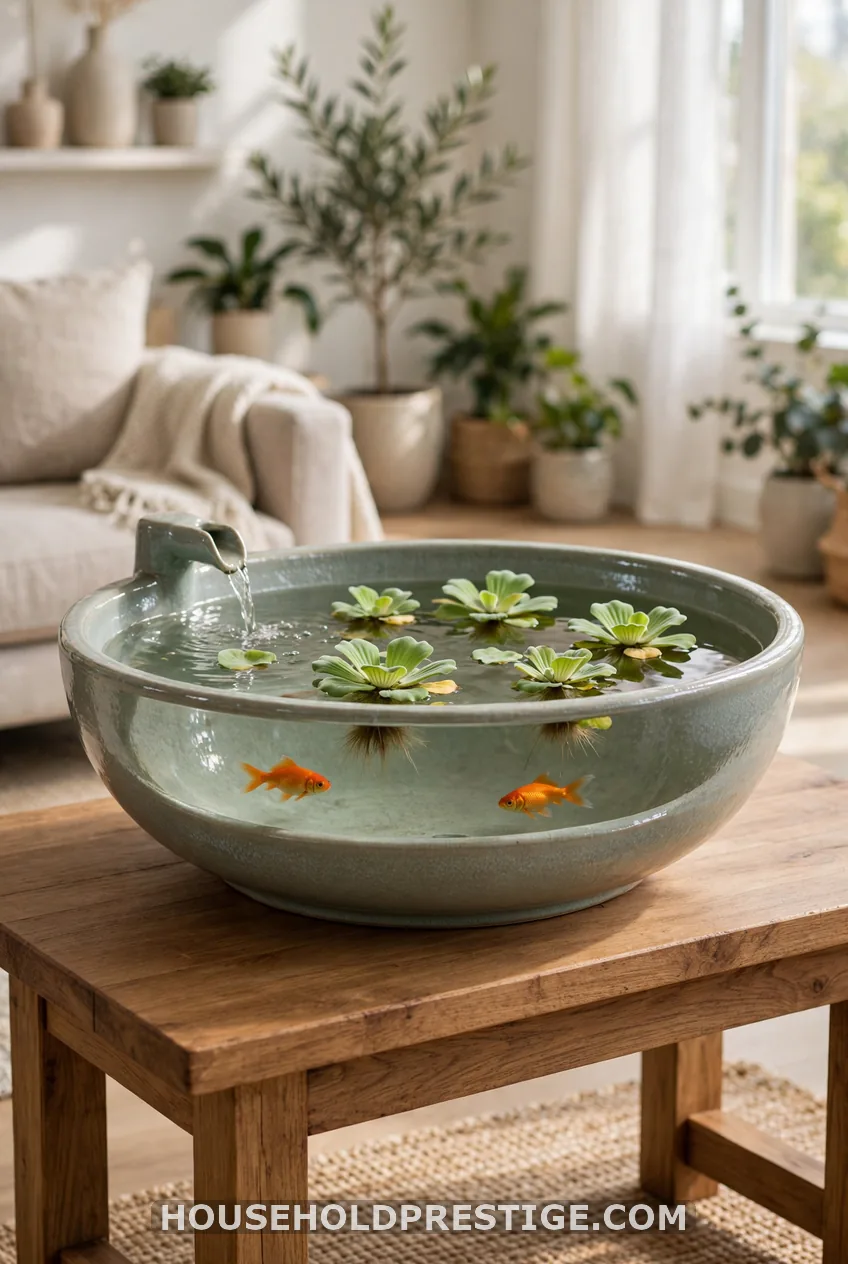
A glazed fountain bowl is the cheapest way in, usually $150 to $250 with a pump. A 10-gallon bowl holds about 83 lbs of water, so put it on furniture rated for that or on the floor. Renter verdict: yes.
The bowl is shallow, so stock only small fish, shrimp or snails. Keep the pump running 24 hours a day for oxygen. When fish outgrow the bowl, move them to a bigger home.
The catch:
Shallow water heats up fast near a sunny window. Keep the bowl out of direct afternoon sun.
2. The Indoor Water Garden (Plants, No Fish)
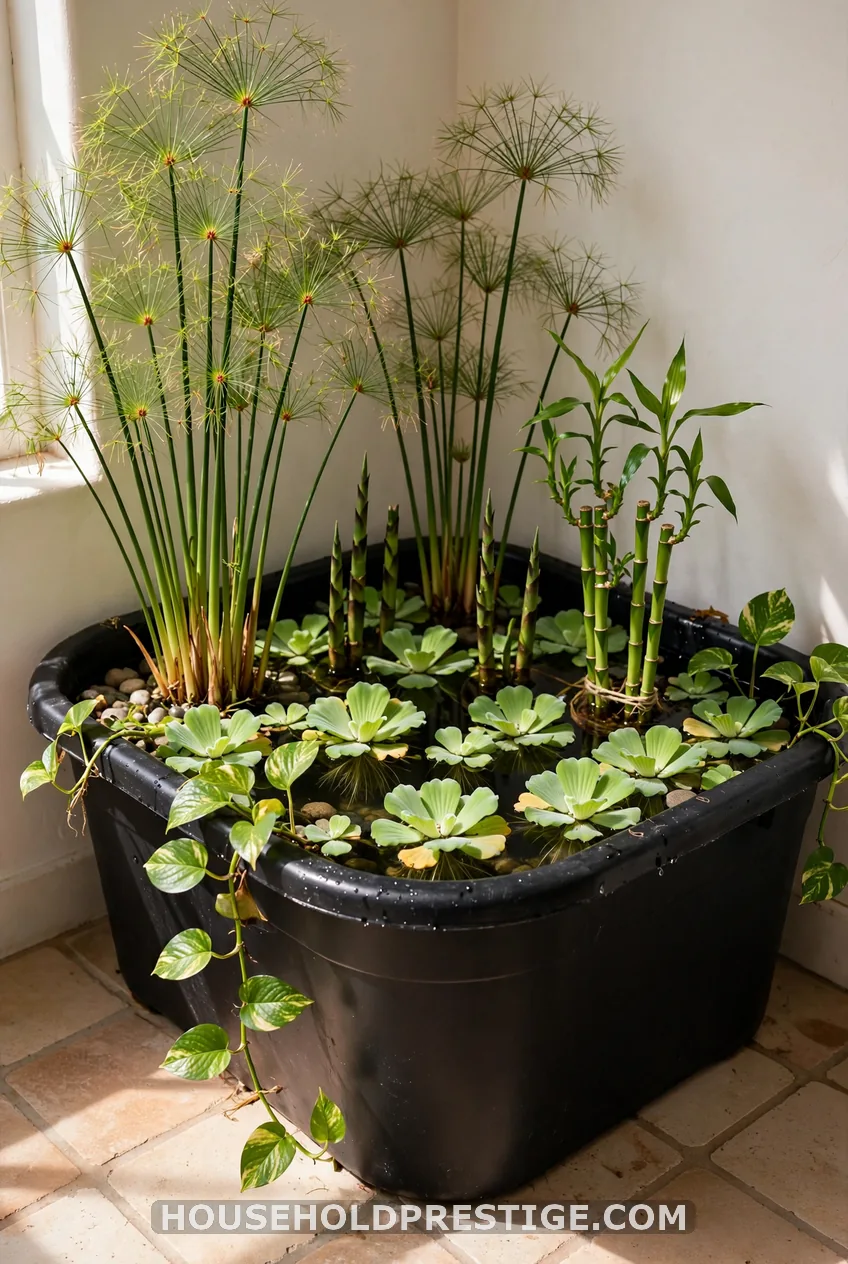
Fill a 20-gallon container (about 166 lbs) with water lettuce, dwarf papyrus and lucky bamboo. Add a small pump and an Aquascape Container Water Garden Filter. Moving water stops mosquitoes.
Renter verdict: yes. Skim dead leaves weekly.
3. The Stock Tank Pond (The Renter-Friendly One)
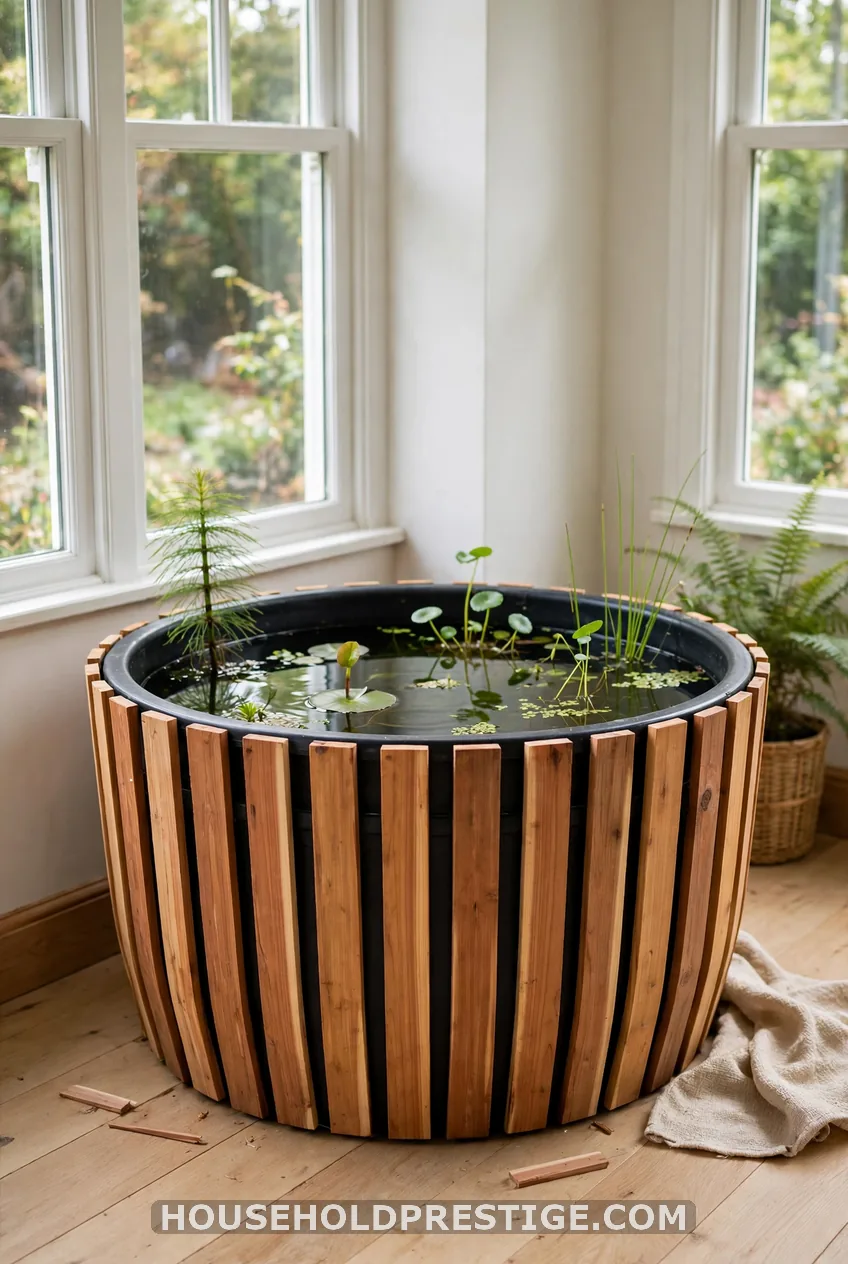
A 40-gallon tank holds about 330 lbs of water. A 100-gallon tank holds about 830 lbs over a footprint near 8 square feet, so you land around 100 lbs per square foot. Keep the big one on a slab or a ground floor. Cost runs $150 to $400 with pump and cladding.
Hide the plastic or metal with a cedar wrap, a slatted screen or a tile surround. Put casters under it only while it’s empty. A full tank won’t roll.
For lease-end, set a $30 utility pump in the tank and run its hose out a window or into a tub. Plan the drain route before you fill.
The catch:
Bare galvanized steel can leach zinc into the water. Choose a rubber tank, or seal a metal one with a pond-safe coating before fish go in.
4. The Corner Vertical Stacked Pond
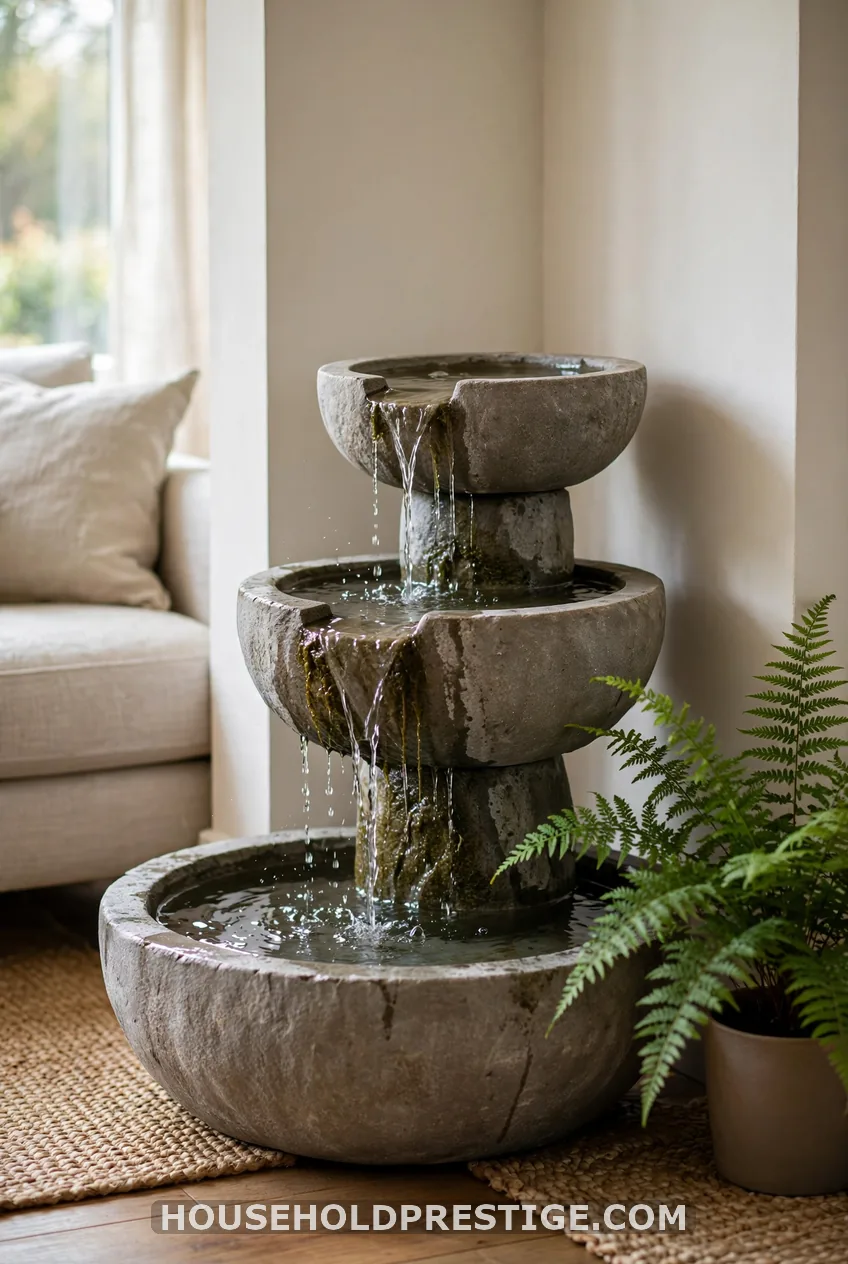
Three tiered basins fit a corner under 3 square feet. A small pump sends water up and a trickle returns it. Sound is the feature.
Renter verdict: yes. Add a drop of vinegar-safe cleaner? No: just wipe algae off the basin edges monthly.
Weekend Builds for Owners and Confident Renters
These take lumber, liner and a free Saturday. Ask your landlord first if you rent.
5. The Raised Plywood Indoor Pond With a Waterfall
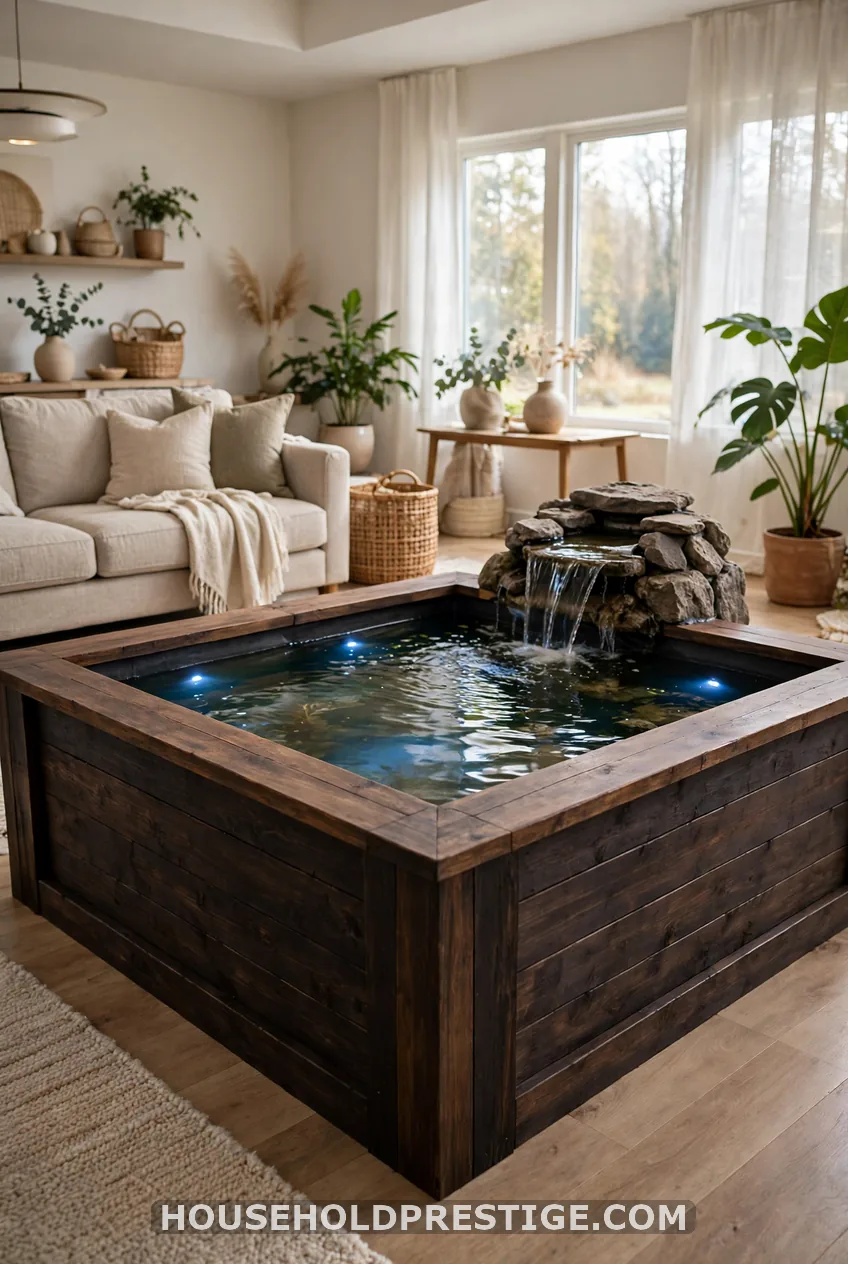
This is the classic DIY build. The footprint is 4×4 ft with 8 inches of water, which is about 660 lbs and 42 lbs per square foot from the water alone. Add the frame and you’re near 50.
It suits a slab or a floor you’ve checked with an engineer. Plan on a weekend, around 6 to 8 hours, and $300 to $700 total.
Materials:
- 2×4 lumber for the frame, about $30
- One 3/4-inch plywood sheet for the base, about $55
- An 8×8 ft EPDM pond liner, about $60 to $90
- Old carpet or geotextile underlay, free to $20
- A budget pond kit with pump, mechanical filter, three submersible lights and fountain heads, $80 to $150 (the Aquascape AquaGarden Mini Pond Kit is one option)
Steps:
- Build a 4×4 ft base frame from 2x4s with joists 12 inches apart, then screw down the plywood.
- Frame 12-inch walls and cover them with plywood.
- Sand every edge and line the inside with underlay.
- Drape the liner, fold the corners like a gift, and staple it above the waterline.
- Set the pump in a low corner and run tubing to a spillway.
- Fill to 8 inches, check for leaks overnight, then trim the liner and clad the outside.
For a waterfall, match the pump to head height. Pumps list their flow at a given lift, so read the rating at your spillway height, not the headline number.
The catch:
Place the pond before you fill it. A full pond is effectively immovable, and I know someone who learned that with a tape measure and a very long evening.
6. The Aquarium-Style Open-Top Indoor Pond
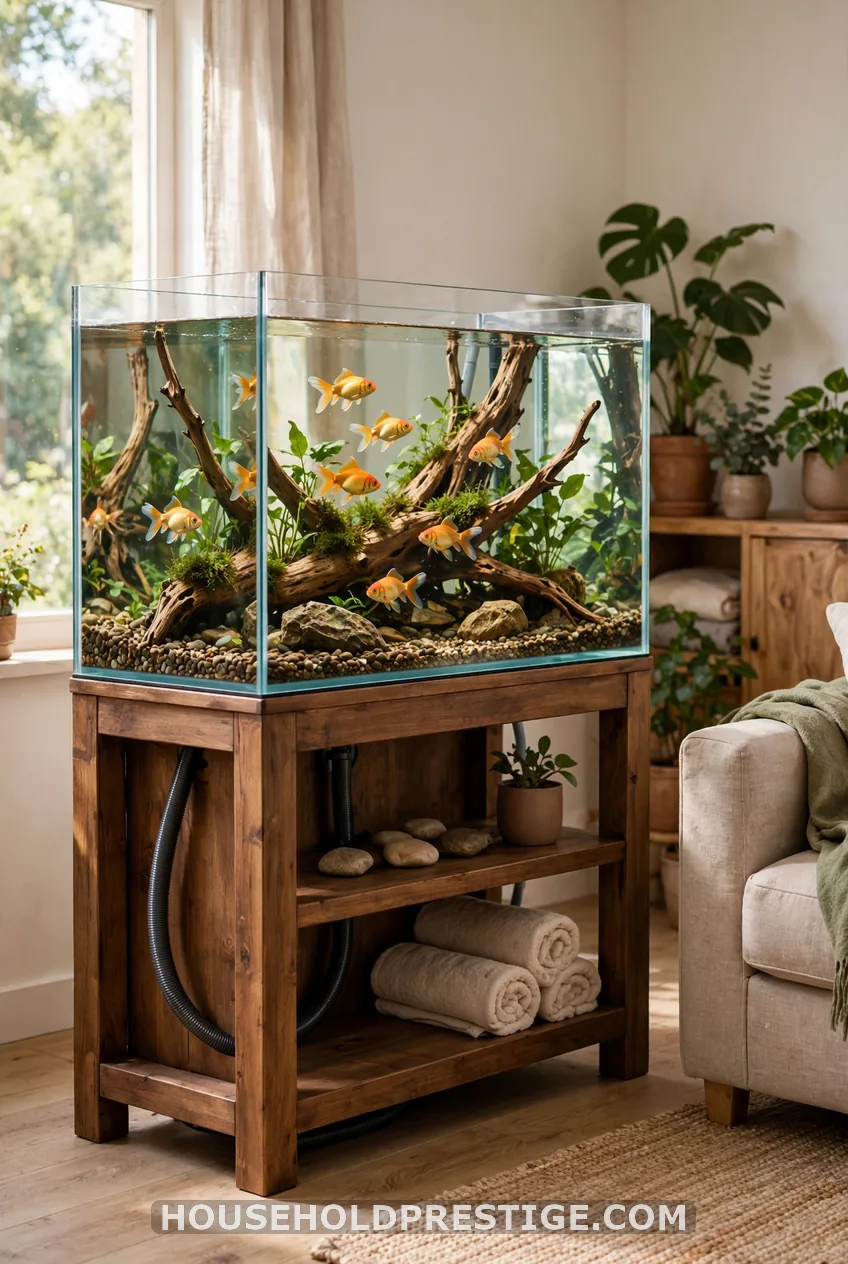
An open-top glass tank gives you the see-through look without building a basin. A 75-gallon tank holds about 625 lbs of water. With glass and stand you pass 100 lbs per square foot, so use a slab or a reinforced spot.
Run a canister filter and an air stone. For goldfish, count 20 gallons for the first fish plus 10 for each extra. Fit a mesh jump guard, because goldfish and koi do breach.
Top off evaporation weekly. Cost: $300 to $700. Renter verdict: yes.
7. The Under-Stair Nook Pond
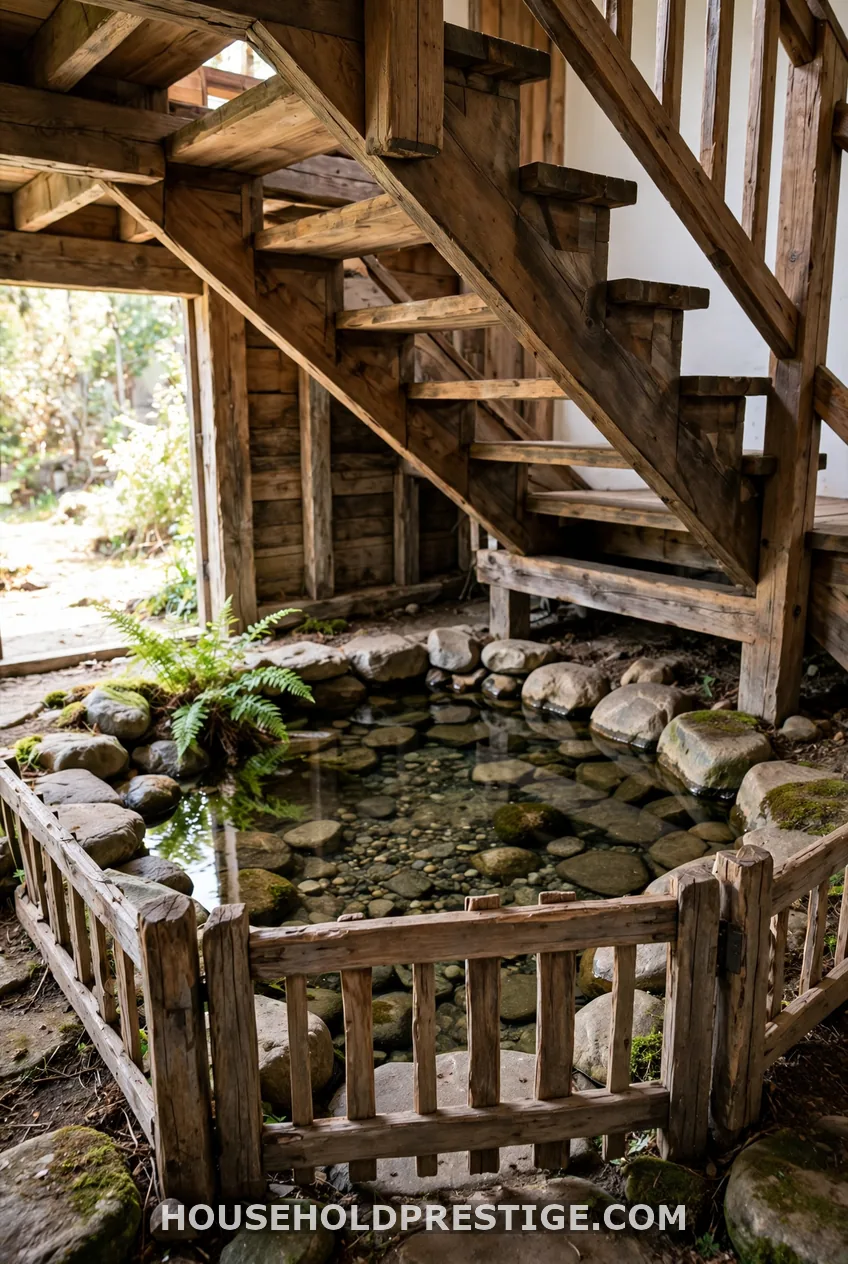
Dead space becomes a lit display pond. Keep it shallow, about 6 inches (31 lbs per square foot). Leave a service hatch, not a sealed box, so you can reach the pump.
Add a gate for kids and pets, since any open water at floor level is a drowning risk. Owner verdict only.
8. The Hallway Lazy River Channel
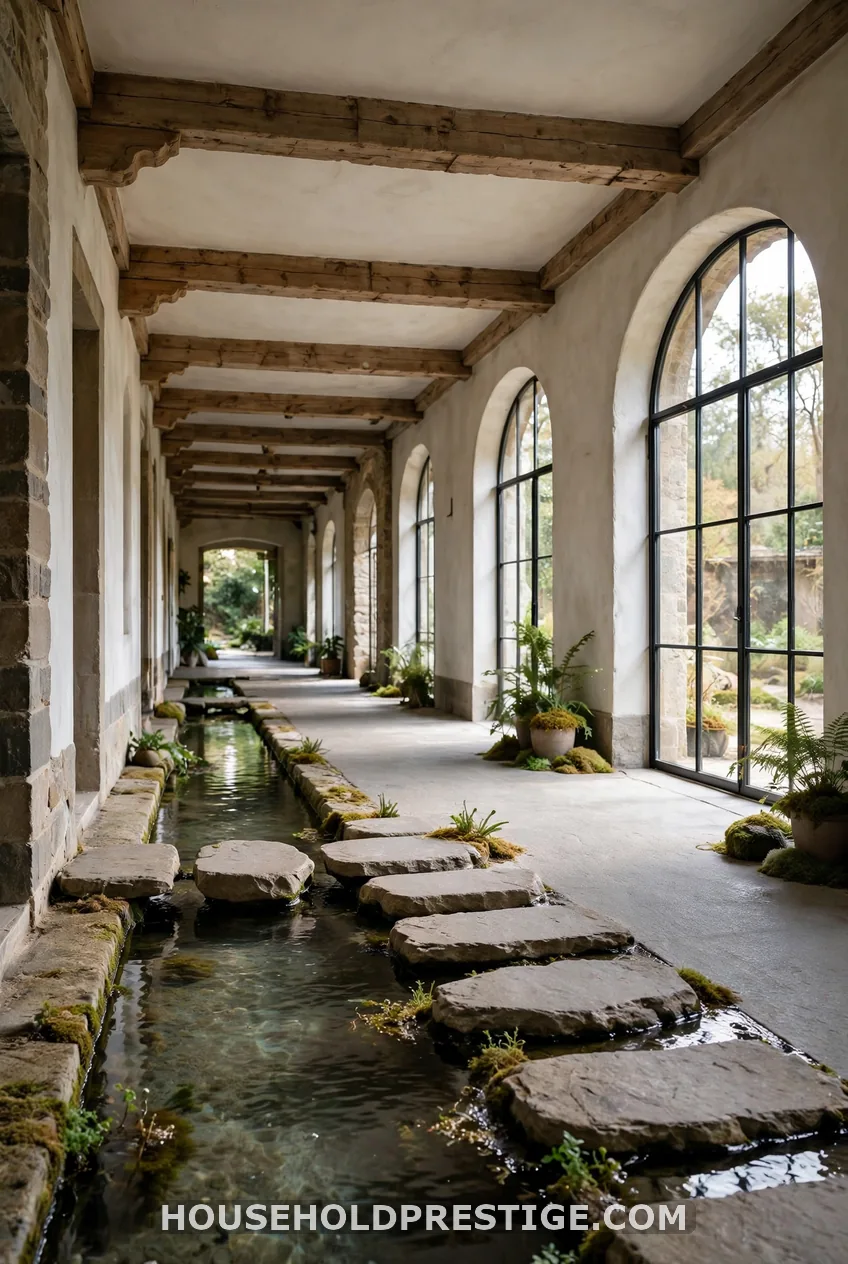
A 12 to 16 inch wide channel along a hallway wall makes a calm river. Use stepping stones or a solid strip beside it. Hide the pump and filter in a cabinet at one end.
Keep the water 6 inches deep (31 lbs per square foot). Owner verdict.
9. The Sunroom Pond With a Waterfall Wall
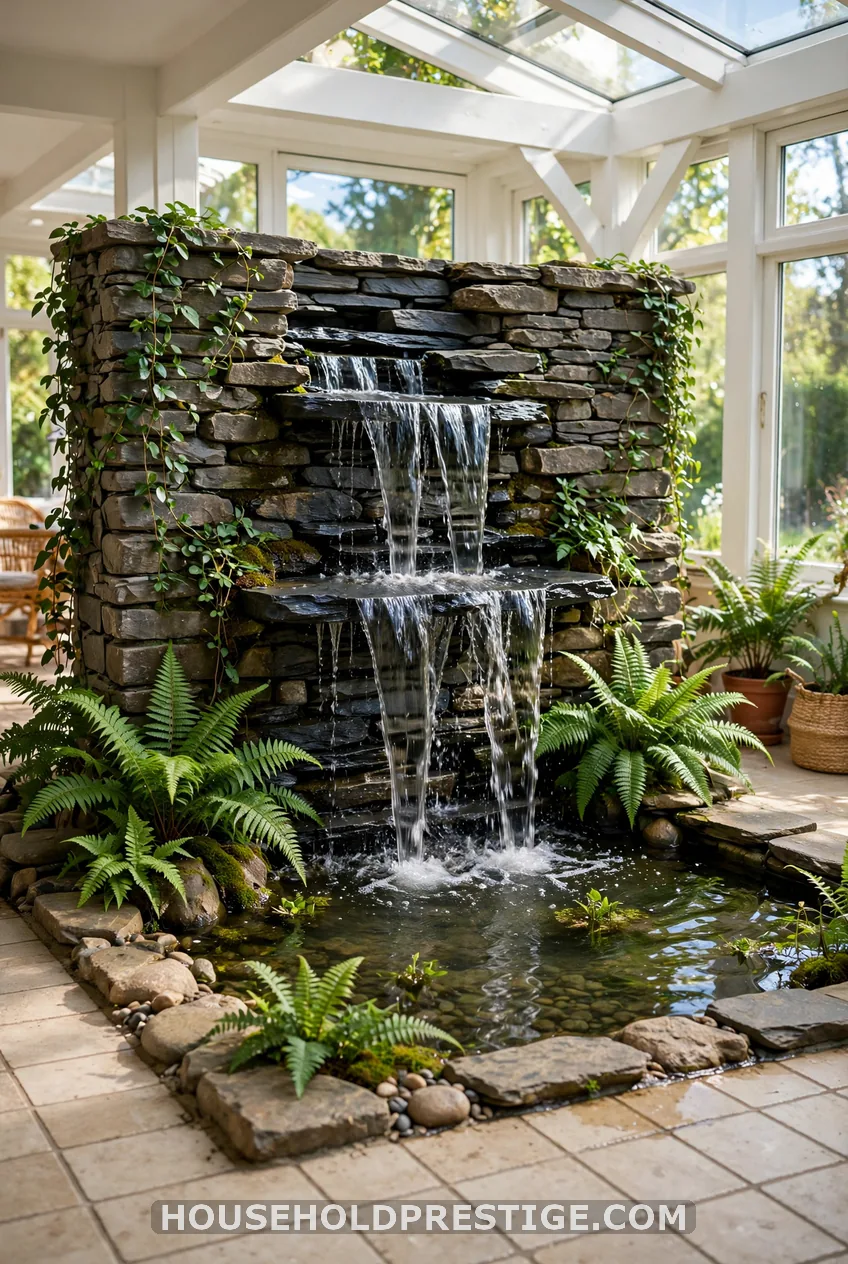
Sunrooms are the best room for a pond. You get light, a tile floor that handles splashes and often a slope toward a drain. Use a slate or stacked-stone spillway. A rough rule is 100 to 150 gallons per hour for each inch of spillway width, so a 12-inch lip wants 1,200 to 1,800 GPH at its lift height.
Plant ferns, creeping fig and pothos around the falls. Water at 8 inches is about 42 lbs per square foot, so check the floor. Owners can build it. Renters should ask.
The catch:
Single-glazed sunroom glass sweats in cold weather. Watch the windows, since that’s where mold begins, and shade the water in summer to hold off algae.
Pets in the Pond: Turtles and Koi
Living animals change everything. Size the pond for the adult animal, not the baby you buy.
10. The Indoor Turtle Pond With a Basking Dock
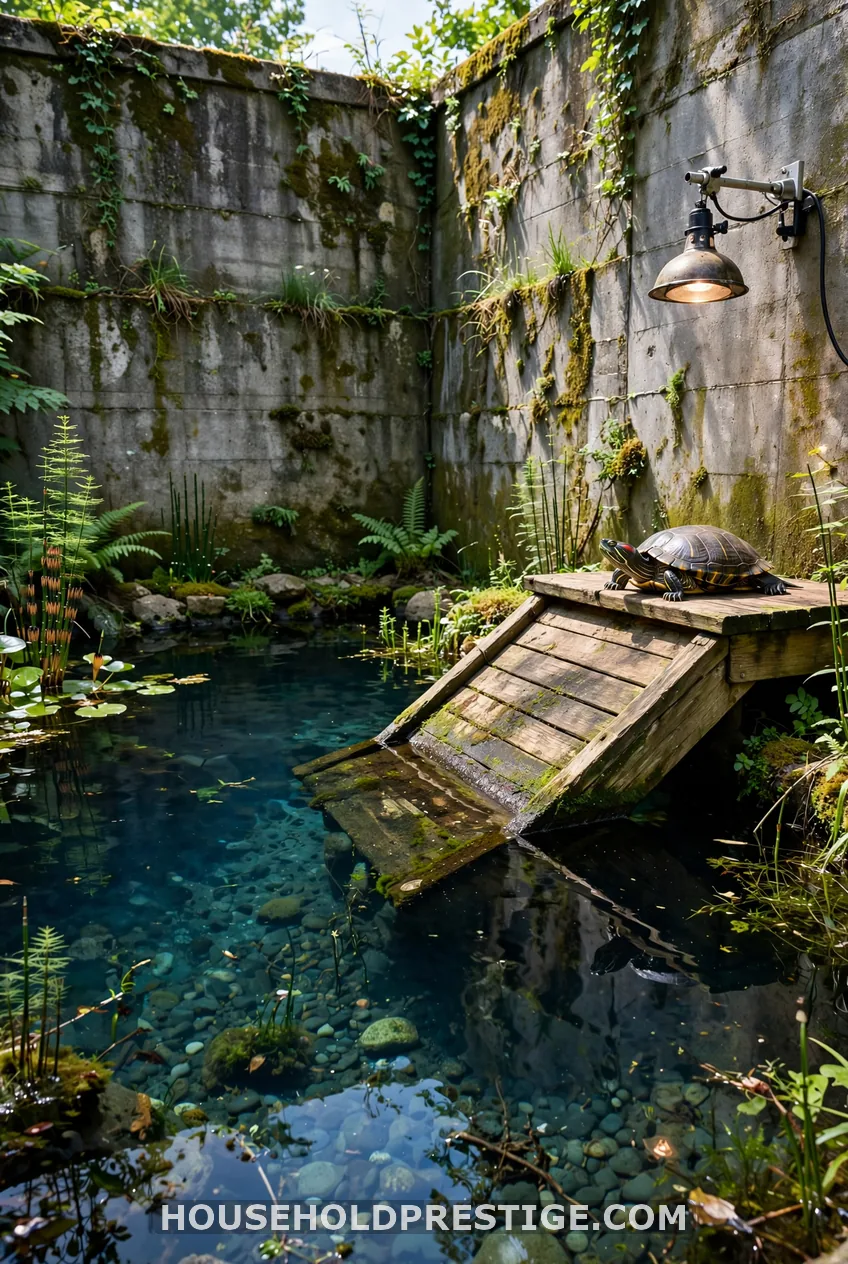
A common rule is 10 gallons of water per inch of shell. An adult red-eared slider reaches 8 to 12 inches, so plan on 80 to 120 gallons. That is 665 to 1,000 lbs of water. Slab floors only.
Give it a basking dock, a UVB bulb and a heat lamp. Basking spots run about 90 to 95°F and water about 75 to 80°F, but check your species care sheet. Turtles make far more waste than fish, so buy a filter rated well above your volume.
Turtles also escape. A friend of mine once found hers behind the sofa three days later. Build the wall 10 to 12 inches above the water or add a lid.
11. The Glass-Front Indoor Koi Pond
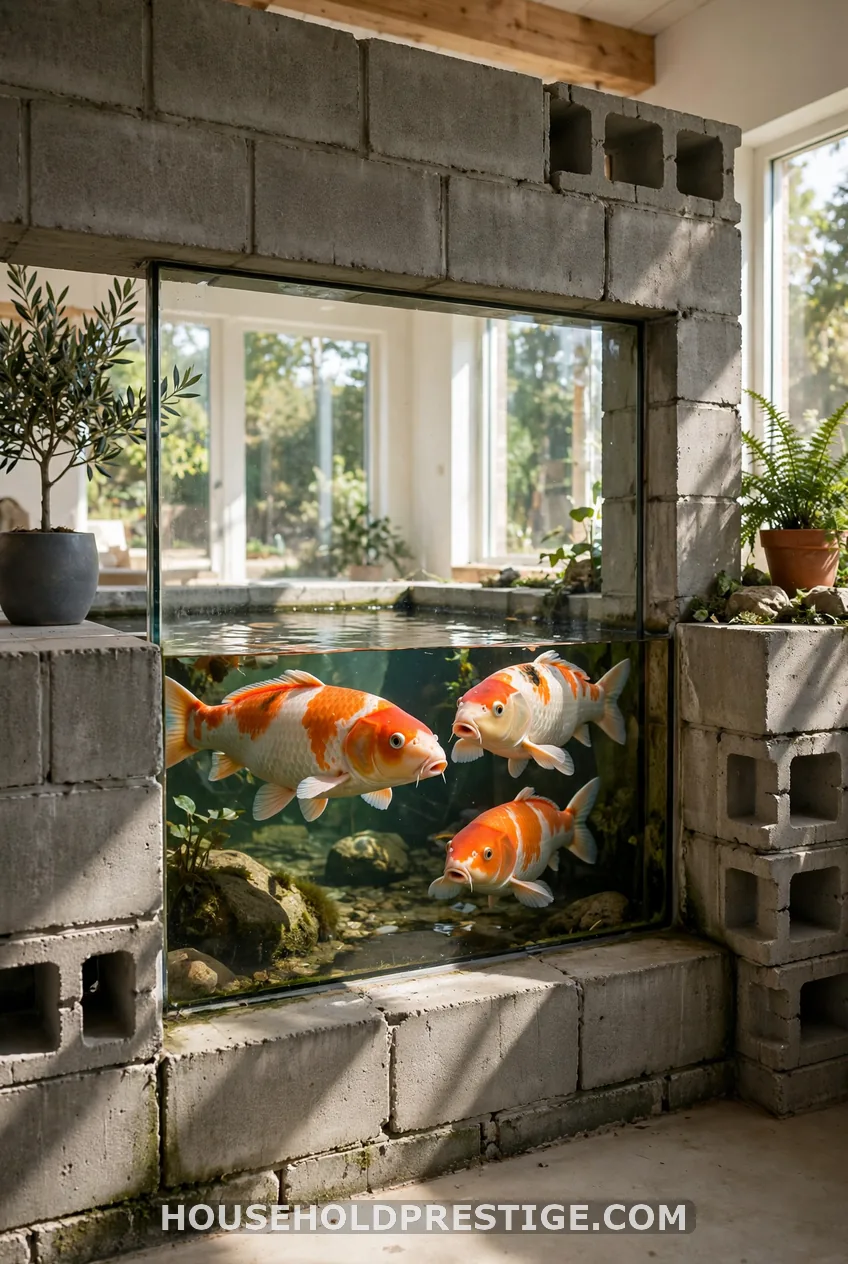
Koi grow past two feet. Budget at least 250 gallons for the first one and more for each extra. A 500-gallon basin weighs about 4,150 lbs, so this belongs on a slab with a pro involved.
Build a concrete block basin with an acrylic or glass viewing window. Seal it with Pond Armor or a similar coating. Use a bead filter and a UV clarifier.
There’s no sun, so you need a heater too. Cost starts in the thousands.
Call a Pro: Sunken and Built-In Designs
These involve floors, walls and waterproofing. Hire people who do this for a living.
12. The Sunken Glass-Top Pond
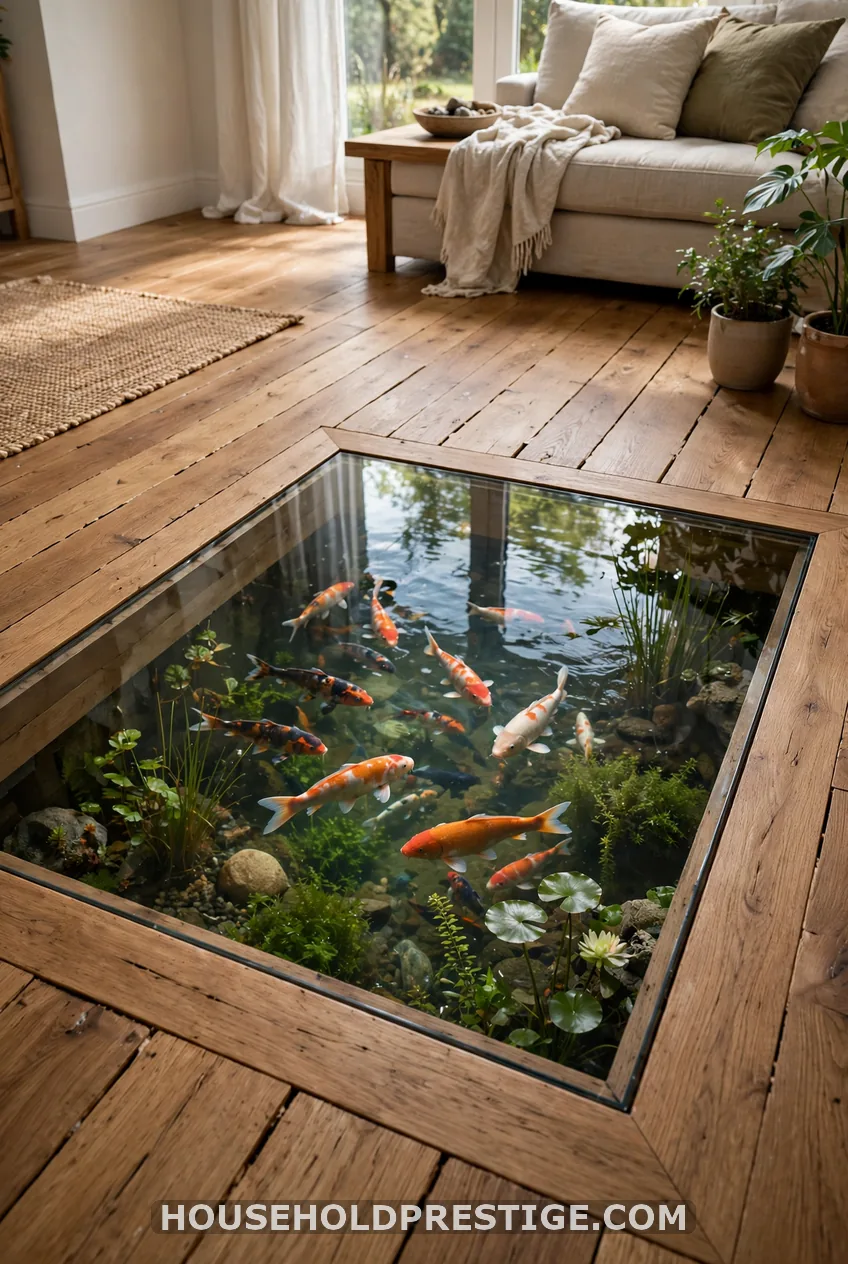
This is the stunning one. A tempered glass or acrylic panel sits flush with the floor over a recessed basin. It suits slab-on-grade rooms with a gap in the layout.
The photo hides the cost. Expect thousands, often well past $10,000. The panel must be rated for foot traffic.
Keep an access hatch for cleaning and run a dehumidifier, since condensation forms under the glass. Owner verdict only.
13. The Indoor-Outdoor Channel Pond
A channel under a glass floor links your living room to a garden pond. Fish can swim in and out, and lights make it glow at night. The trouble is the wall penetration.
Poor waterproofing leaks, and in winter the opening can freeze and push cold air inside. Professional design only.
14. The Basement Pond With a Tank
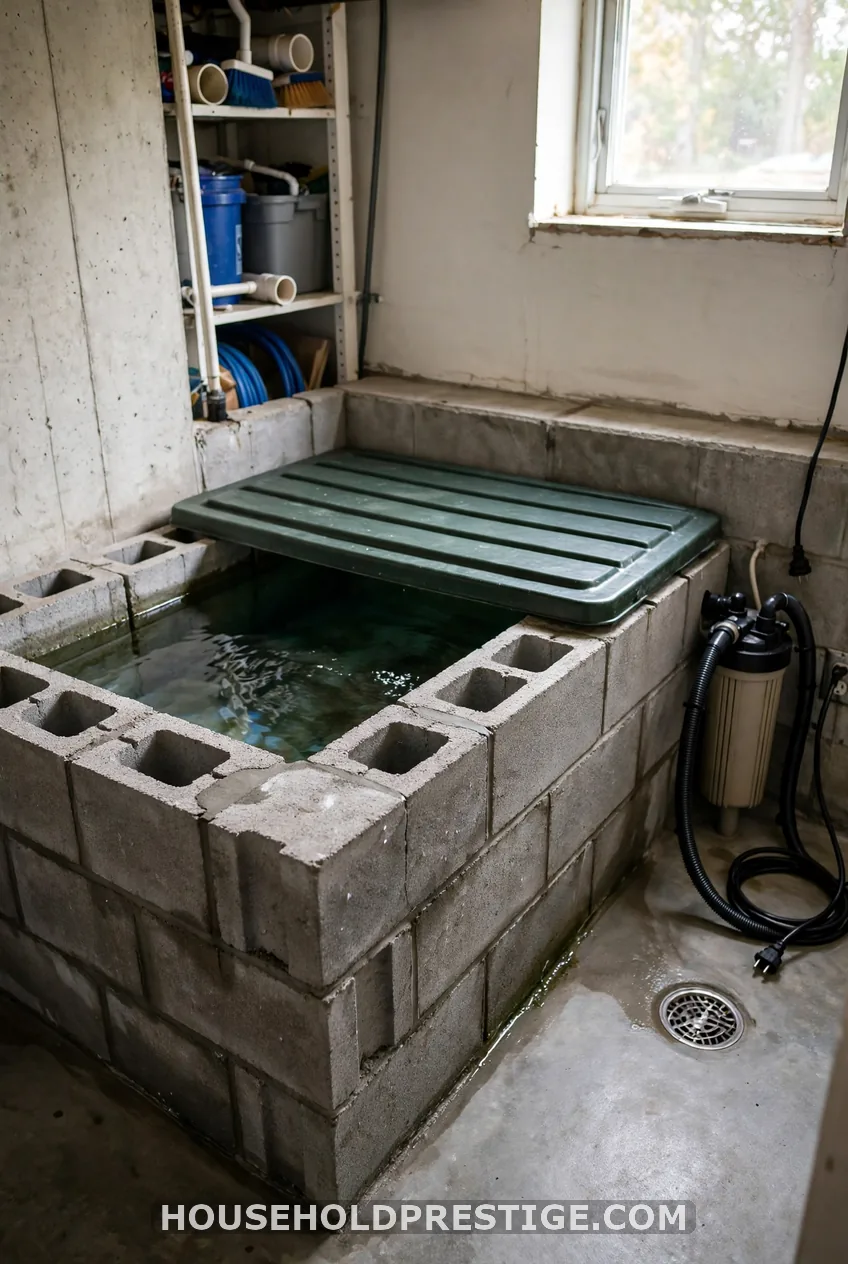
A basement slab can carry big volume, but basements run cold. Add a heater and a cover or lid. Choose a concrete block basin for large volume or a liner-and-frame build for lower cost.
Plan where the muck goes. Backflushing a bead filter indoors makes a mess, so build next to a floor drain. Keep a dehumidifier running at 45 to 50 percent.
What Every Indoor Pond Needs
Whatever you build, cover these basics:
- Filtration: mechanical plus biological (biofilter media), sized above your water volume.
- Circulation: run the pump around the clock. A backup pump or air stone protects fish if one fails.
- Water changes: 10 to 20 percent weekly for stocked ponds, with a spill tray and a drain route ready.
- Stocking limits: keep to the gallon rules above, and wait until the filter finishes cycling before adding fish.
The 7 Mistakes That Kill Indoor Ponds
- Filling before final placement.
- Under-sizing the filter for turtles or koi.
- Ignoring condensation on cold single-glazed windows.
- Skipping vibration padding under a loud pump in a quiet room.
- No GFCI outlet and no drip loop.
- Buying fish before the cycle finishes.
- Skipping the jump guard.
Where the Water Goes
So, back to my sister’s question. The water goes into a spill tray, a drain route and a pump that’s been placed before anyone filled the pond.
Start with the weight, then the outlet, then the idea you love. A bowl on a table is a fine first pond. A sunken glass floor can wait until you’ve kept a small one alive for a few months.
FAQ
How big does an indoor pond need to be for fish?
For goldfish, allow 20 gallons for the first fish and 10 more for each extra. Koi need hundreds of gallons because they grow past two feet. If you only have room for a bowl, go fishless or keep shrimp and snails.
Do indoor ponds cause mold or damp?
An open pond adds real moisture to a room. Run a dehumidifier or ventilation, keep the surface area modest and watch cold windows for condensation. That is where mold starts.
How much does an indoor pond cost?
A stock tank or fountain bowl runs about $150 to $400. A DIY raised pond with a kit costs $300 to $700. Recessed glass or concrete koi ponds start in the thousands once labor and structural work are added.