

Your yard is the size of a parking spot. A standard inground pool needs more room than you have, and the quotes start around $50,000. So you scroll, you sigh, and you close the tab.
I did the same thing for two summers. Then I found container pool ideas, and the whole math changed. A steel shipping container is already a watertight box. Drop in a liner, add a pump, and you have a pool that fits a narrow yard, ships mostly finished, and often goes in within a single day.
I have spent way too many hours pricing these out and pinning the ones that made me gasp. Below are 23 ideas, sorted from quick wins to full builds. Some take one sentence. One takes a full tutorial with a cost table. By the end, you will know which version fits your yard and your budget, and which mistakes to skip.
1. The 20-Foot Plunge Pool
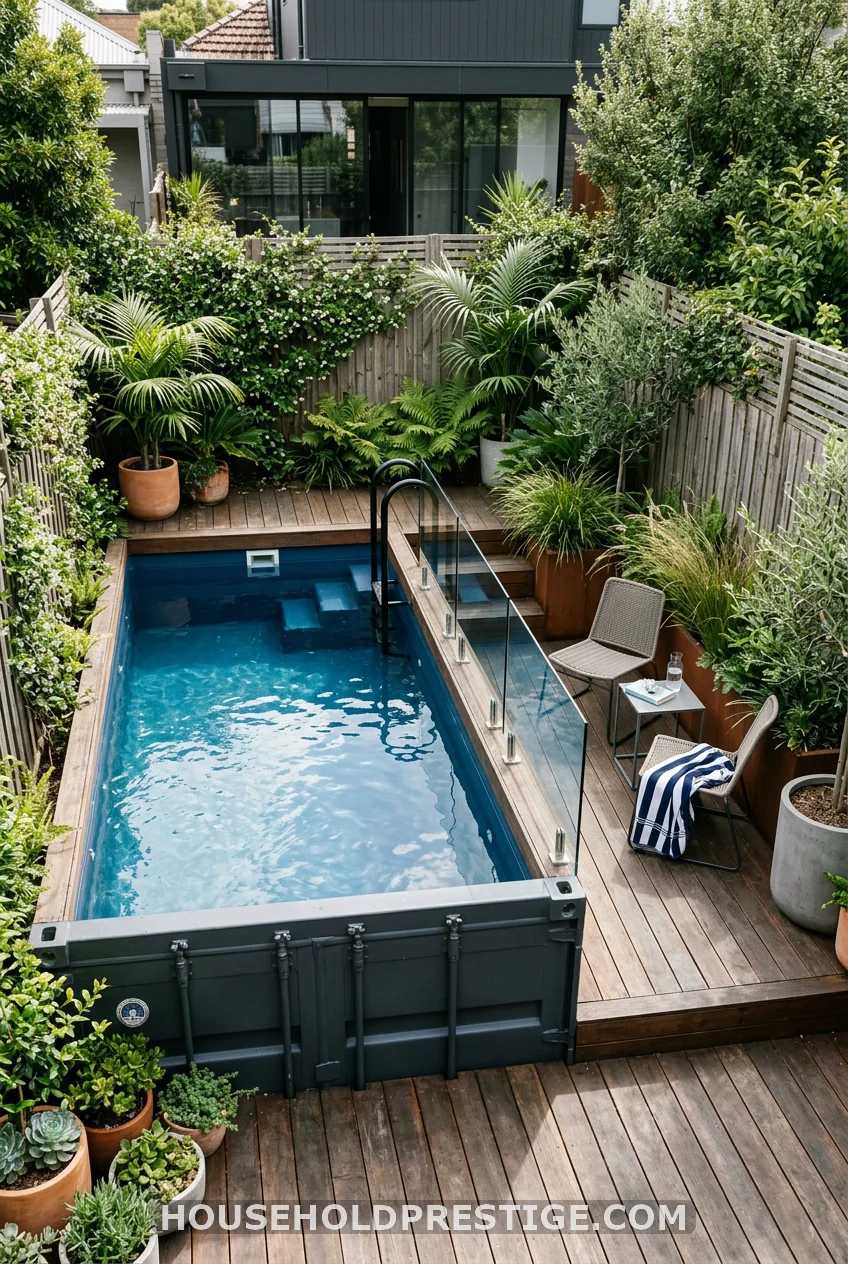
Short yard? Start here. A 20-foot container gives you roughly an 8 by 16 foot swimming space, holds about 8,700 gallons, and fits where a real pool never could. It is the entry point for almost everyone reading this.
2. Above-Ground With a Wraparound Deck
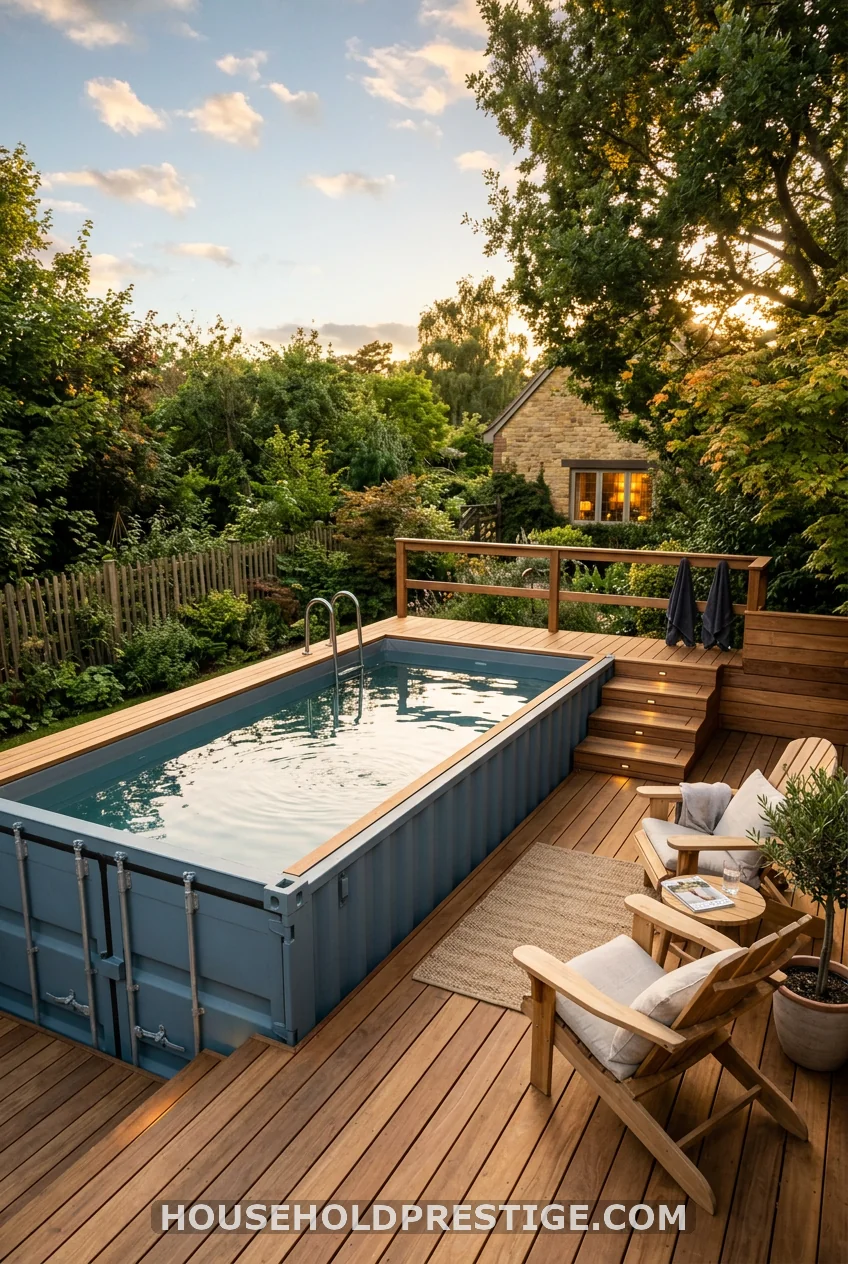
An above-ground container looks like a metal box sitting on grass. A deck fixes that. Wrap the sides with wood or composite decking that meets the pool rim, and the container disappears. Now it reads as a built-in pool. The deck also hides the pump bay and gives you a dry spot to climb out onto.
Cost reality: decking runs $15 to $40 per square foot installed. A modest wraparound for a 20-foot pool lands near $3,000 to $6,000. It is the single upgrade that does the most for looks.
3. The Acrylic Viewing Window
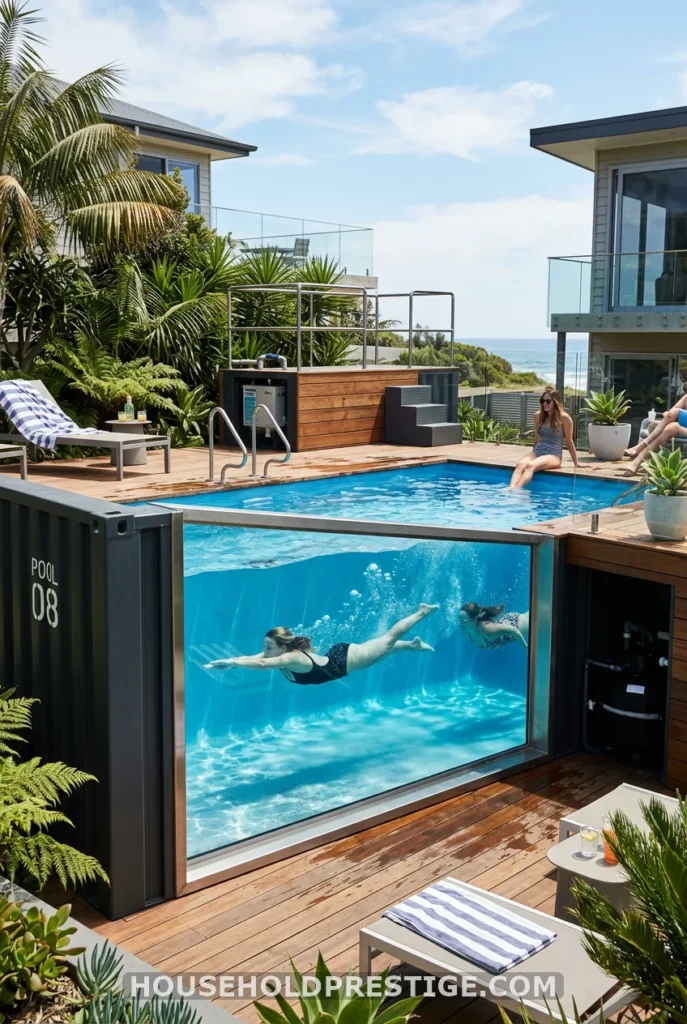
Cut a panel from the steel wall, seal in a thick acrylic window, and your pool becomes the backyard centerpiece. Kids press their faces to the glass. Guests stare. It is pure show, and it photographs beautifully.
4. Semi-Inground for a Grounded Look
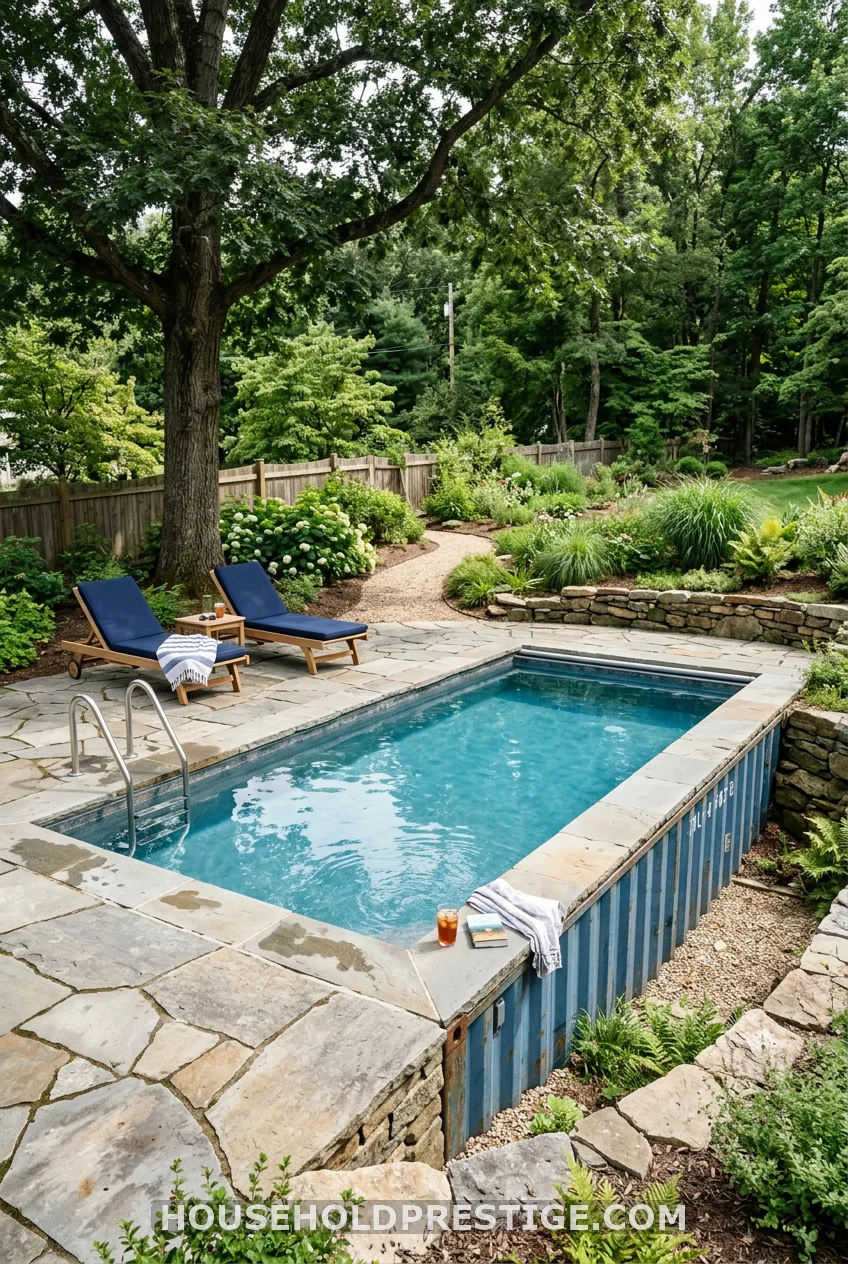
You do not have to bury the whole thing. Sink the container halfway, then build a patio up to the rim. You get the clean look of an inground pool without full excavation. Digging costs less, and the pool sits low enough to feel built-in.
The catch: any digging means a crane, soil hauling, and likely a permit. Budget $10,000 to $30,000 over the above-ground price.
5. Go Black Inside
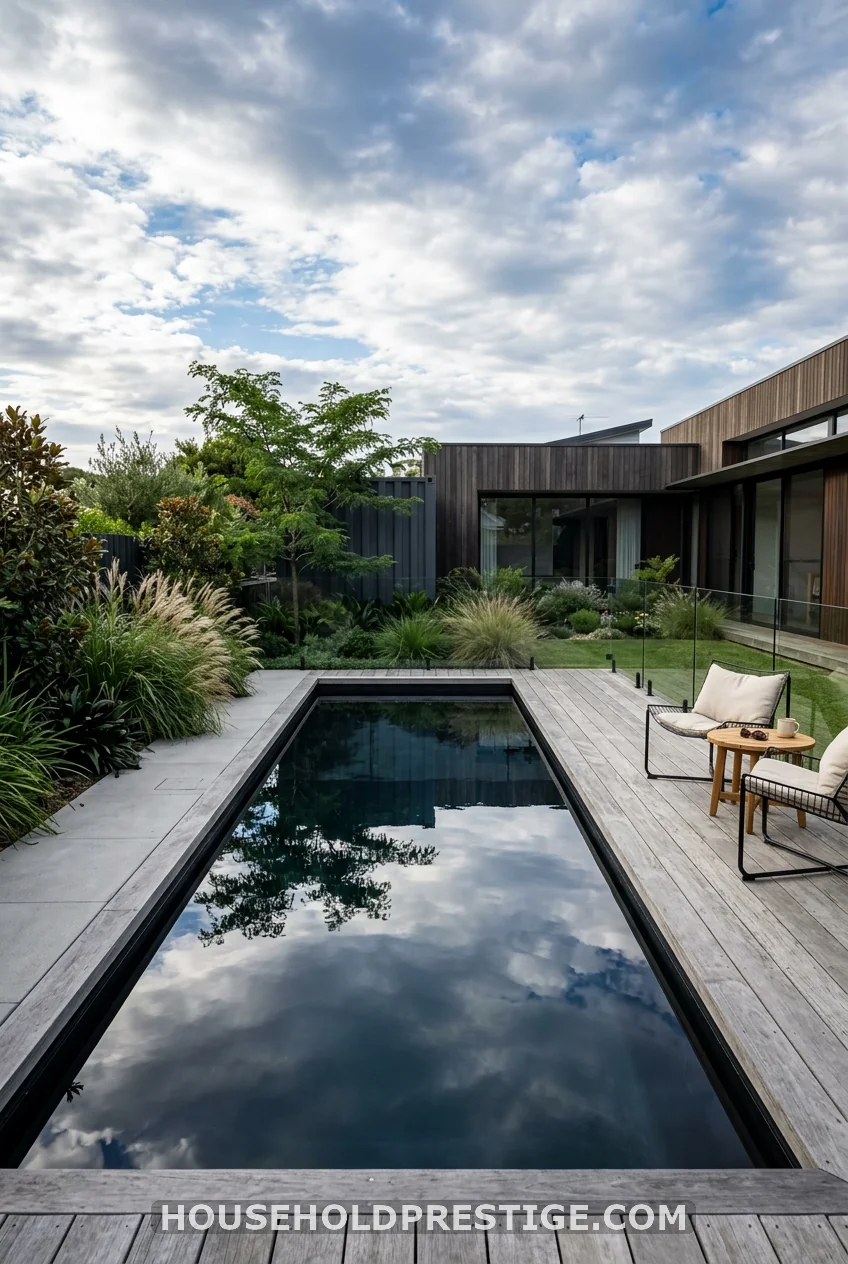
Swap the standard blue liner for a dark gray or black one. The water turns into a mirror. It looks high-end, hides leaves, and holds heat better in cool climates. Same pool, very different mood.
6. The Pool-and-Spa Combo
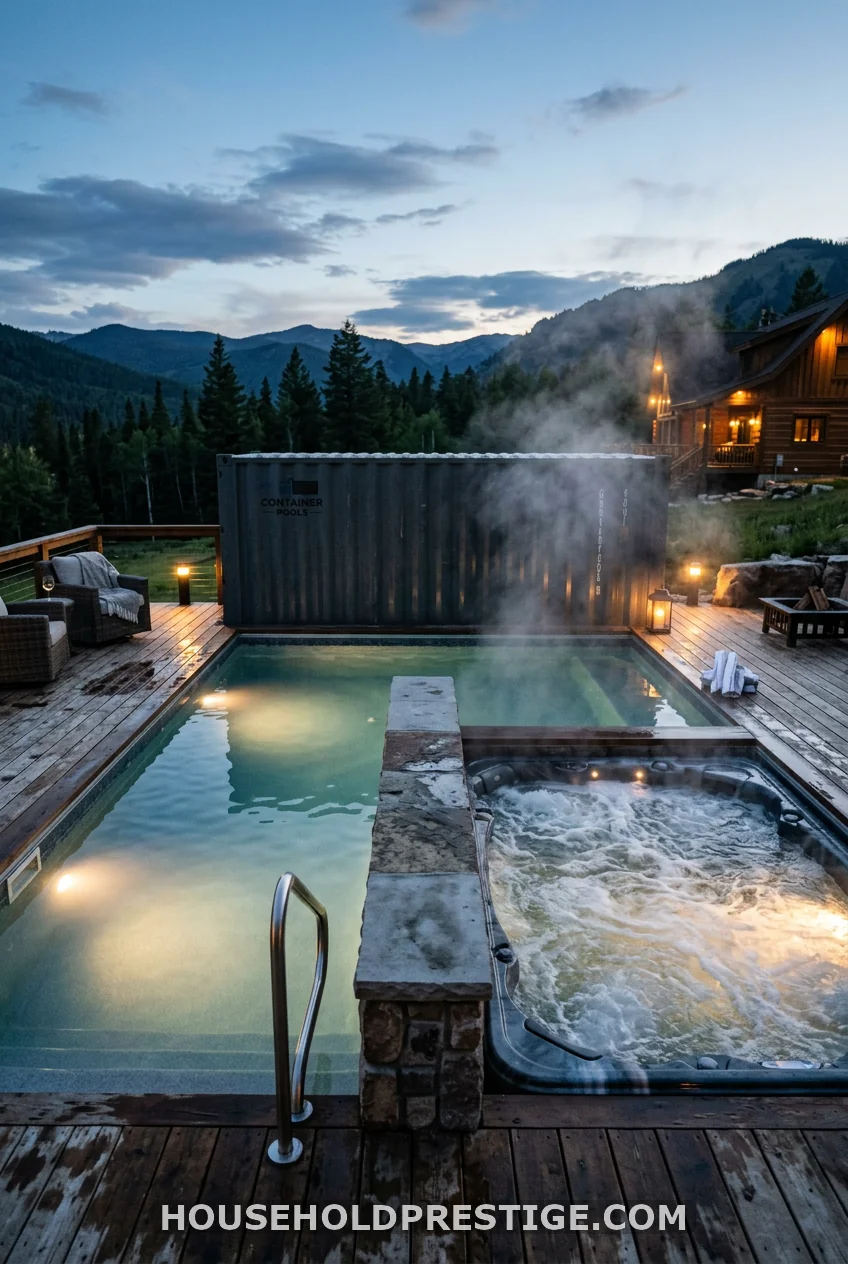
Add a divider wall near one end, and that section becomes a hot tub. Heat the small zone fast, soak on cool nights, and still have a full pool beside it. Many prefab brands offer this divider as a factory option, so you skip the custom fabrication.
7. Fit It on a Tight Urban Lot
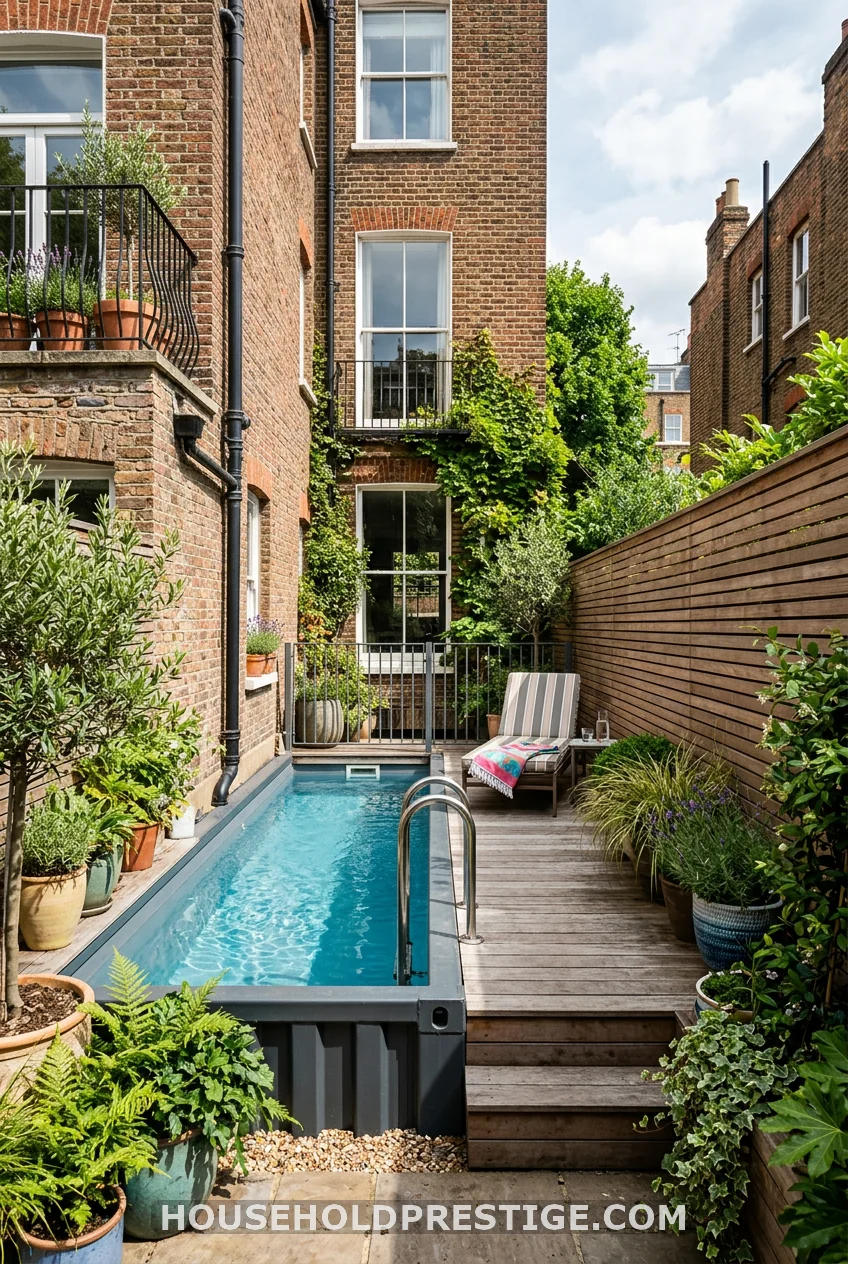
No yard, just a side strip or a rooftop? A container’s narrow footprint is the whole point. As long as the ground or roof can carry the load and you clear local rules, these pools slot into spaces a poured pool would never reach.
8. The 8 by 40 Lap Pool
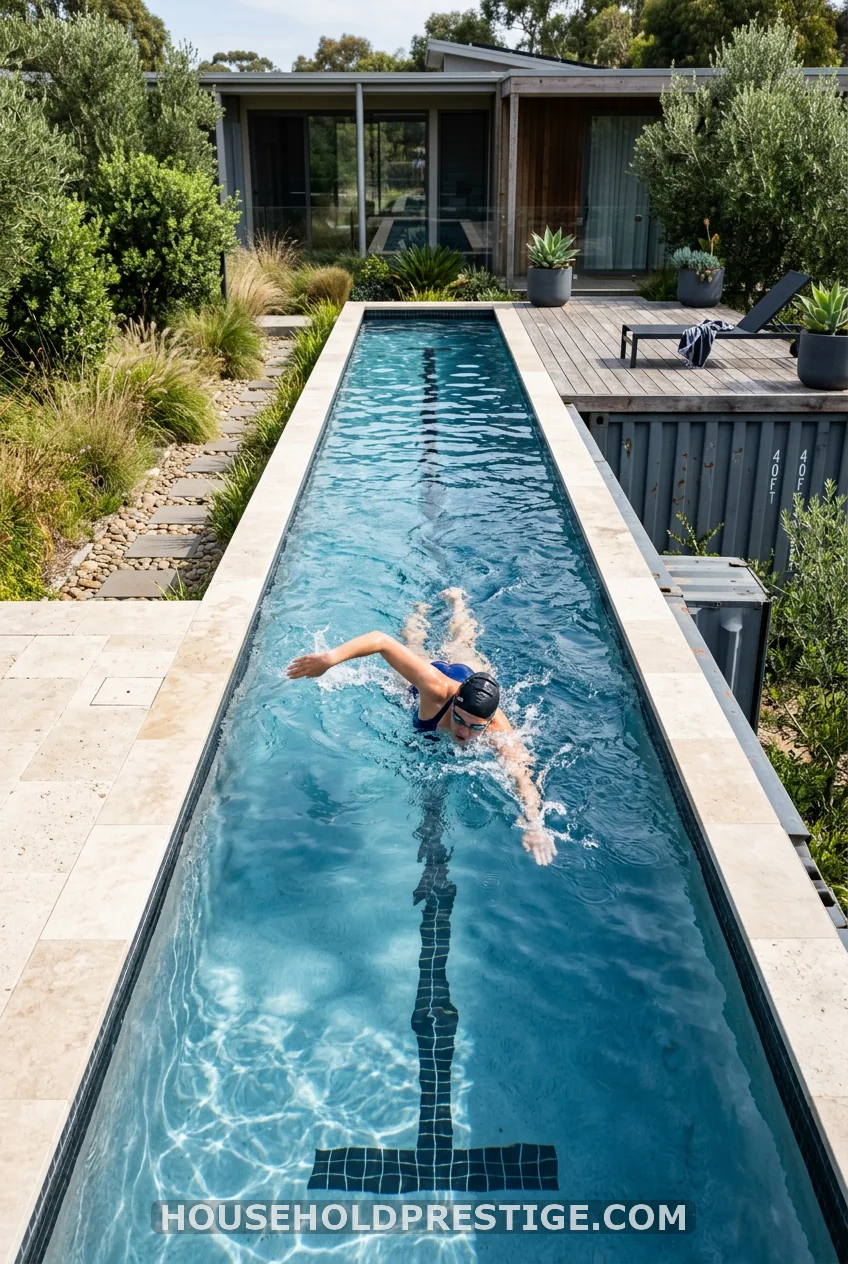
Swimmers, this one is for you. A 40-foot container gives you a long, narrow lane for real lap workouts, and it holds close to 17,800 gallons. It costs more to buy, ship, and heat than the 20-footer, but nothing else this compact lets you swim straight laps at home.
9. The Full DIY Conversion (The Deep Dive)
This is the one most people pin, and almost nobody finishes. So here is the honest, full version. If you are handy and patient, a DIY above-ground container pool can cost between $8,000 and $20,000 instead of the $35,000-plus that prefab brands charge. That gap is why people try it.
Why this works
A shipping container is engineered to hold tons of cargo and survive ocean crossings. The steel shell is already strong and watertight at the seams. You are not building a pool from scratch. You are finishing one that is most of the way there.
Dimensions to plan around
A standard 20-foot container is 8 feet wide, 8.5 feet tall, and 20 feet long. Cut the top off, and you have an 8-by-20-foot pool, usable depth around 4 to 5 feet, holding roughly 8,700 gallons. A 40-foot version doubles the length and holds about 17,800 gallons.
Step by step
- Check your rules first. Call your county before you spend a dollar. Many areas need a permit for any pool over a set gallon count, and some treat container pools as structures. Skipping this can force you to tear it out.
- Source the container. Buy a “one-trip” container in good shape. A 20-foot runs $2,500 to $5,500; a 40-foot runs $4,500 to $7,000. Inspect for rust and dents.
- Prep the base. Level the ground and lay a foundation. Gravel runs $1 to $3 per square foot; a concrete slab runs $4 to $8 per square foot. A full container of water is extremely heavy, so this step is not optional.
- Cut the top. Remove the roof panel with a plasma cutter or angle grinder. Grind the edges smooth and cap them.
- Reinforce and waterproof. Add steel bracing to the long walls so they do not bow under water pressure, then seal and prime the interior against rust.
- Install the liner. A fitted vinyl liner stops leaks and gives a smooth swim surface. Liners run $1,000 to $3,500, depending on size and material.
- Add the equipment. Plumb in a pump and filtration system ($1,000 to $2,000), then run the electrical to code. A licensed electrician is worth it here.
- Fill and balance. Water delivery costs $200 to $600 for a truckload up to 6,000 gallons, or $4 to $10 per 1,000 gallons from a garden hose. Then, balance the chemistry before anyone gets in.
Materials and costs
| Item | Typical Cost |
|---|---|
| 20-foot container (one-trip) | $2,500 – $5,500 |
| Vinyl liner | $1,000 – $3,500 |
| Pump and filtration | $1,000 – $2,000 |
| Base prep (gravel or slab) | $1,000 – $4,000 |
| Plumbing and electrical | $1,500 – $4,000 |
| Initial water fill | $200 – $600 |
| DIY total (above-ground) | $8,000 – $20,000 |
Pro move
Hire out only the two steps that punish mistakes: the structural bracing and the electrical. Do the rest yourself. You keep most of the savings without risking a bowed wall or a wiring hazard.
Common mistakes to avoid
- Skipping the base prep. A settling container cracks seams and ruins the liner.
- Under-bracing the walls. Water pushes hard, and a bare container wall will flex.
- Ignoring rust prep. Bare steel underwater rusts fast. Prime everything.
- Forgetting the permit. The cheapest pool is worthless if the county makes you remove it.
10. Glass Mosaic Tile Finish
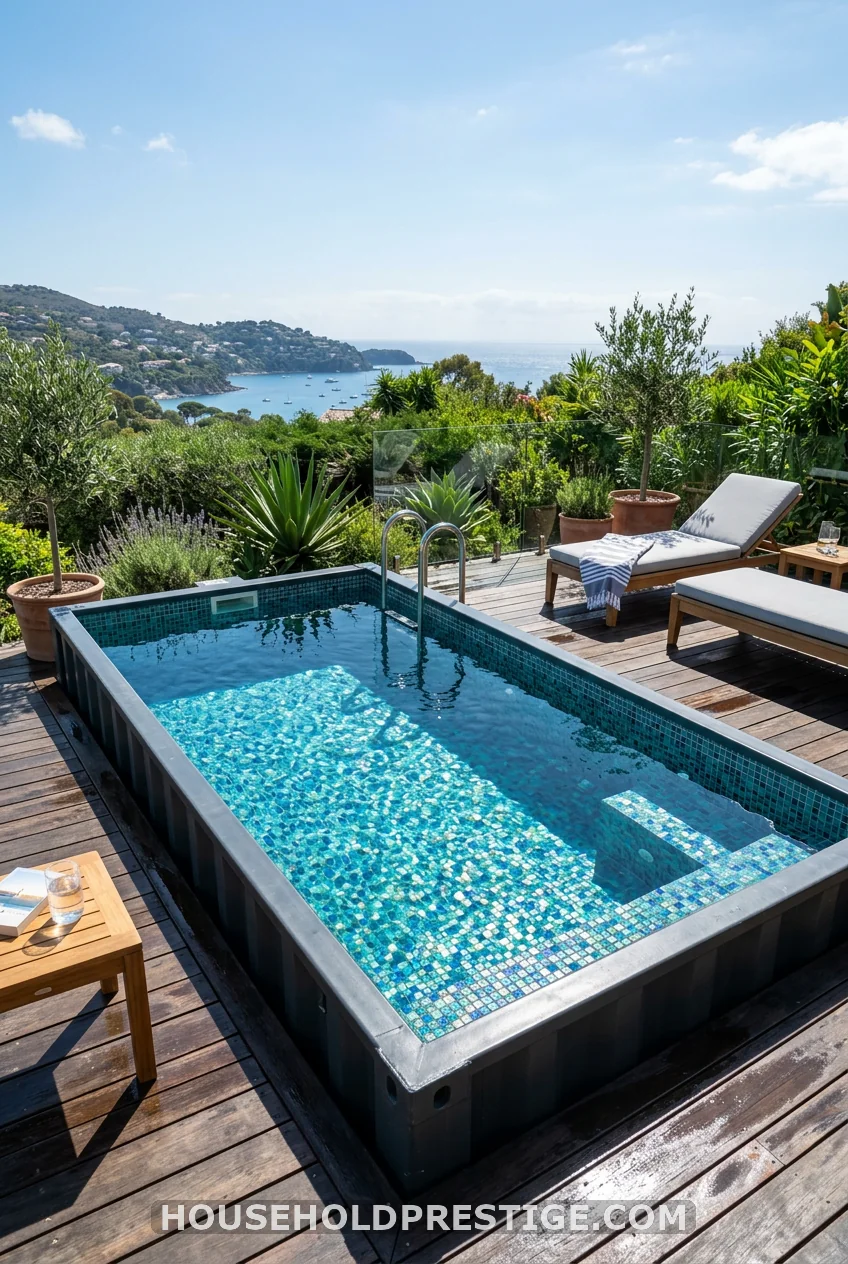
Line the interior with glass mosaic tile instead of vinyl. The water shimmers, the finish lasts for years, and it photographs like a resort. This is the splurge end, but the look is hard to beat.
11. App-Controlled LED Lighting
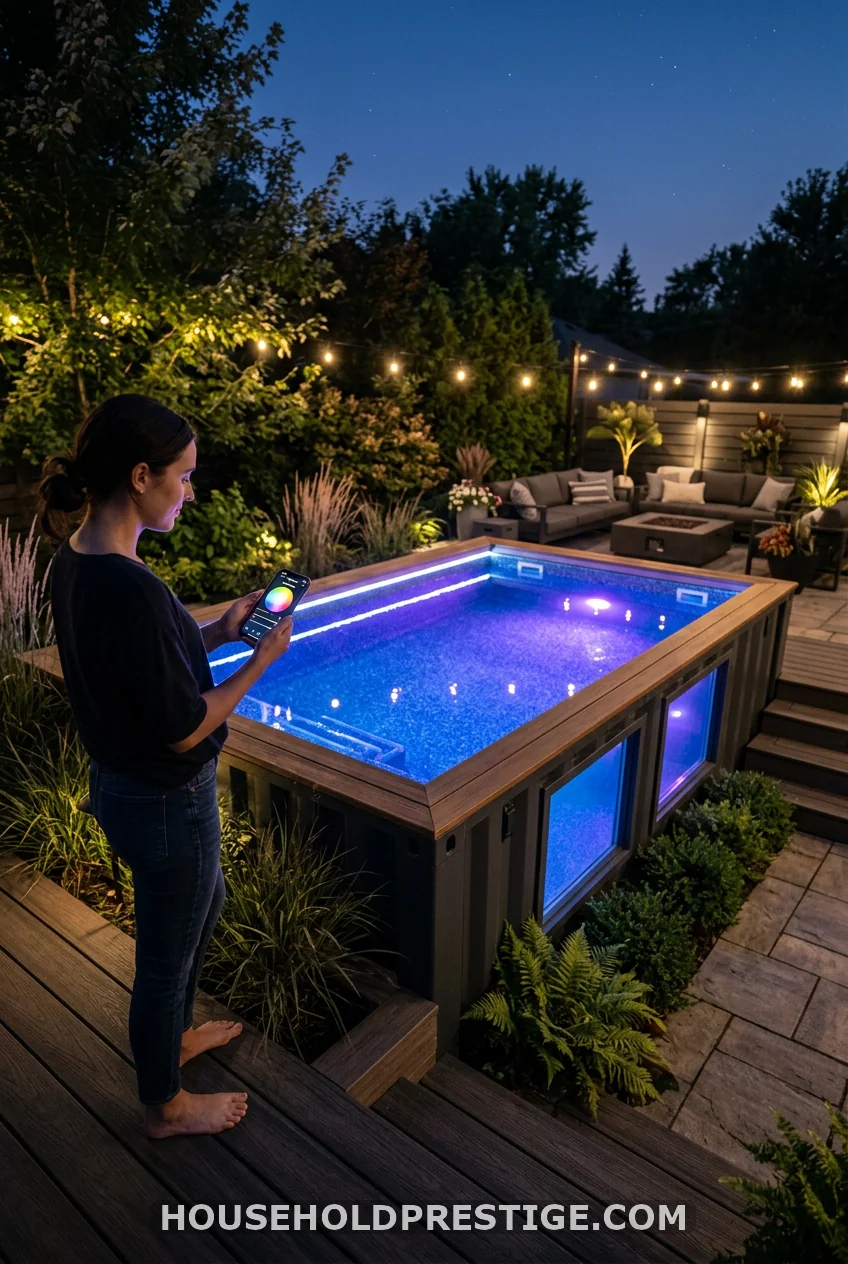
Color-changing LEDs let you set the mood from your phone. Warm white for a quiet evening, deep blue for a party. Many prefab pools build this in, and it turns a plain swim into a scene after dark.
12. Cedar-Clad Exterior
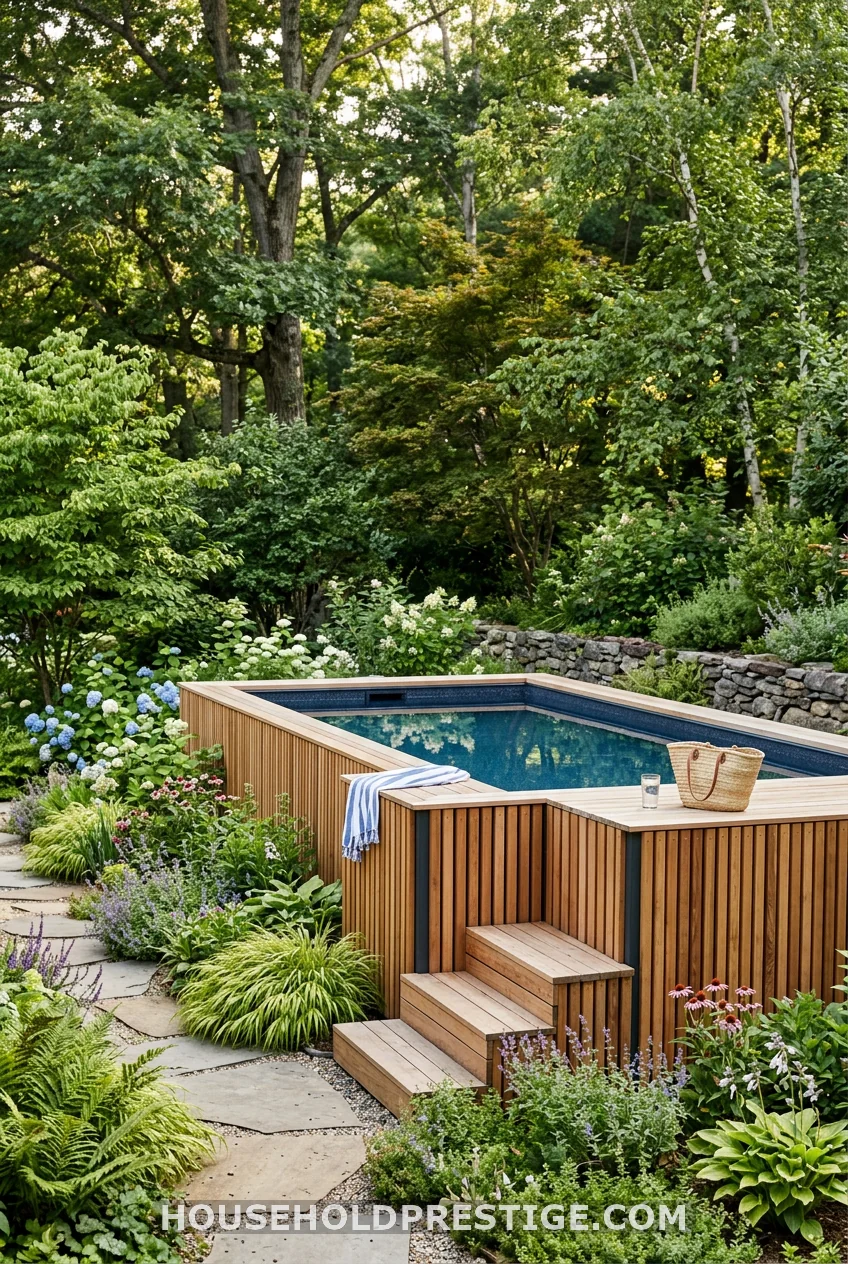
Wrap the outside steel in cedar or thermally treated wood slats. The industrial box turns warm and organic, and it tucks into a garden instead of fighting it. Cladding is one of the cheapest ways to soften the look.
13. Add a Tanning Ledge
A shallow Baja shelf at one end gives you a spot to set a lounge chair right in the water. Kids splash there safely. You sunbathe half-submerged. It is the feature people request most after their first summer.
14. The Pool-and-Cold-Plunge Pair
Put a small cold plunge beside the main pool, or chill one divided section. Recovery soak after a workout, then a warm swim. The wellness crowd loves this, and it makes a compact yard feel like a private spa.
15. Swim Jets for Endless Swimming
Short on length but want a real workout? Add a swim jet. It pushes a steady current so you swim in place against the flow. Now, a tiny 20-foot pool trains like a full lap lane.
16. What Went Wrong in My Neighbor’s Yard (A Cautionary Tale)
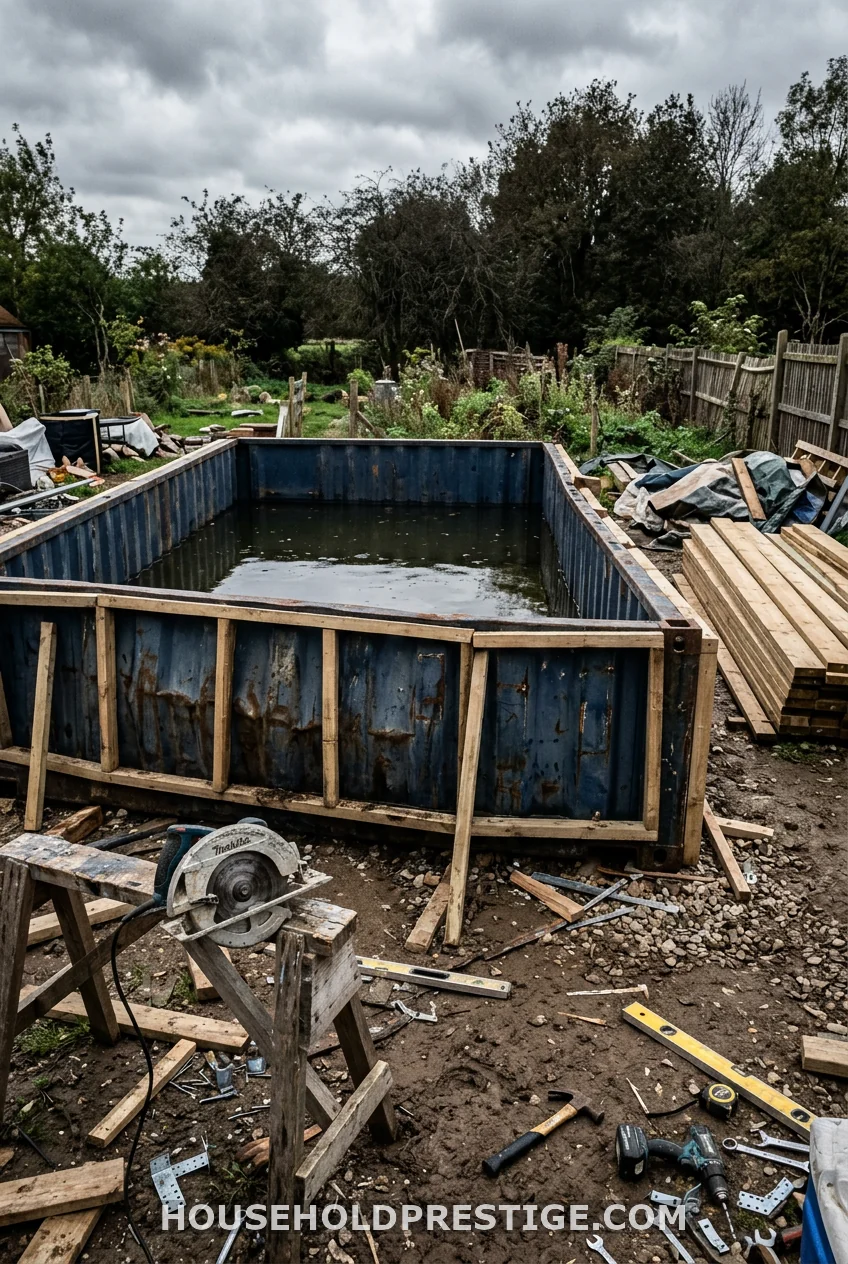
My neighbor Dana found a cheap container and decided to convert it herself over one summer. No bracing plan. No real base, just packed dirt. She cut the top, dropped in a liner, and filled it.
It looked great for about a week.
Then the long walls started to bow under the water pressure. The liner pulled at the corners. Water seeped under the unprepared base, and the whole box began to tilt. By August, she had drained it, and the next spring she paid to haul it away.
Her mistake was not the idea. It was treating the strong parts as the whole job. A container resists crushing from the outside. It does not love thousands of gallons pushing out from the inside without bracing. And it will not sit level on soft ground for long. Dana skipped the two steps that mattered most, and they were the two that sank her.
Learn from Dana. Brace the walls. Prep the base. Then have your fun.
17. Join Two Containers
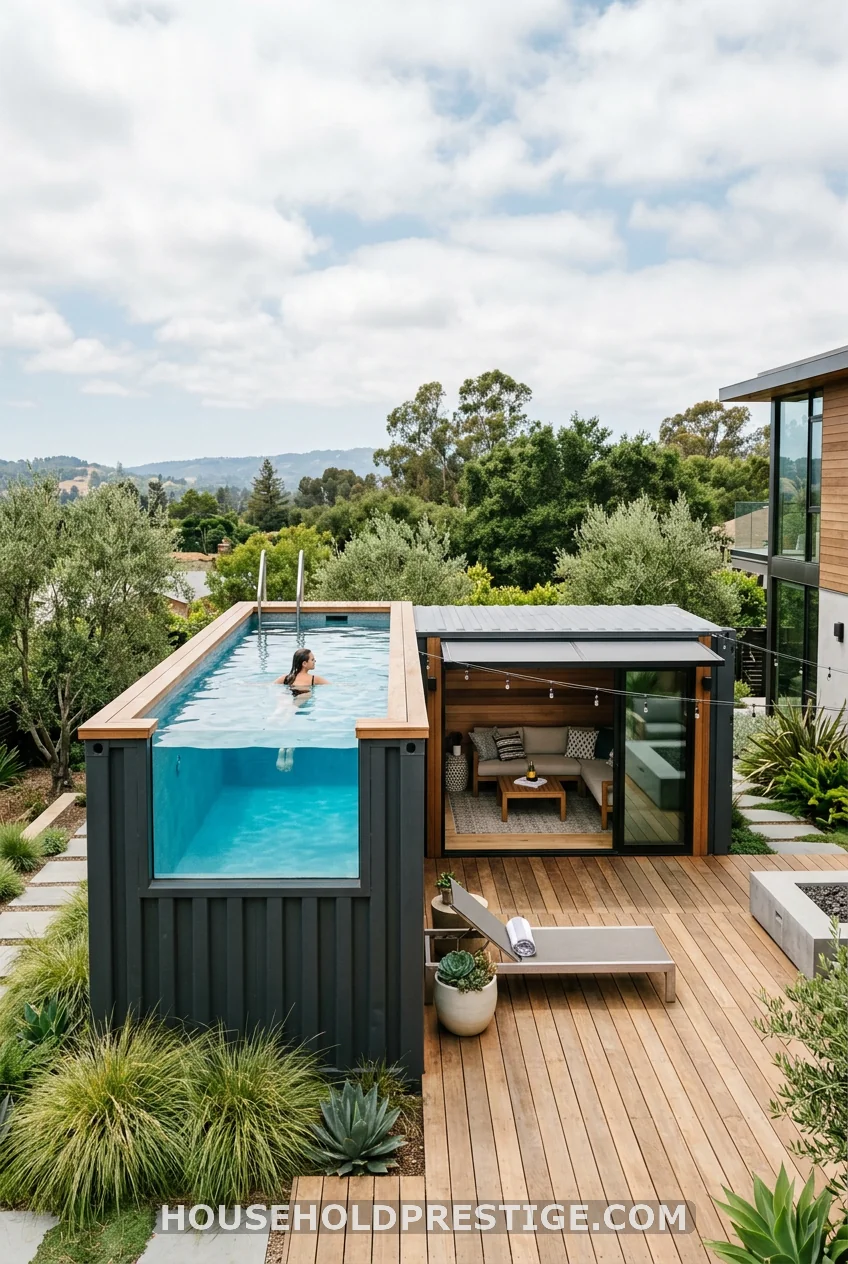
Need more room or a built-in lounge? Pair two containers. Run them in a line for length, or set them in an L with one as the pool and one as a shaded cabana or changing room. Some brands let you connect units for a custom layout.
18. Solar-Heated Container Pool
Mount solar panels on a nearby roof or fence and run the pool water through them. The sun heats your swim for almost nothing after installation. In a compact pool with a smaller water volume, solar heating works faster and cheaper than it does on a big inground pool.
19. Privacy Screen and Green Surround
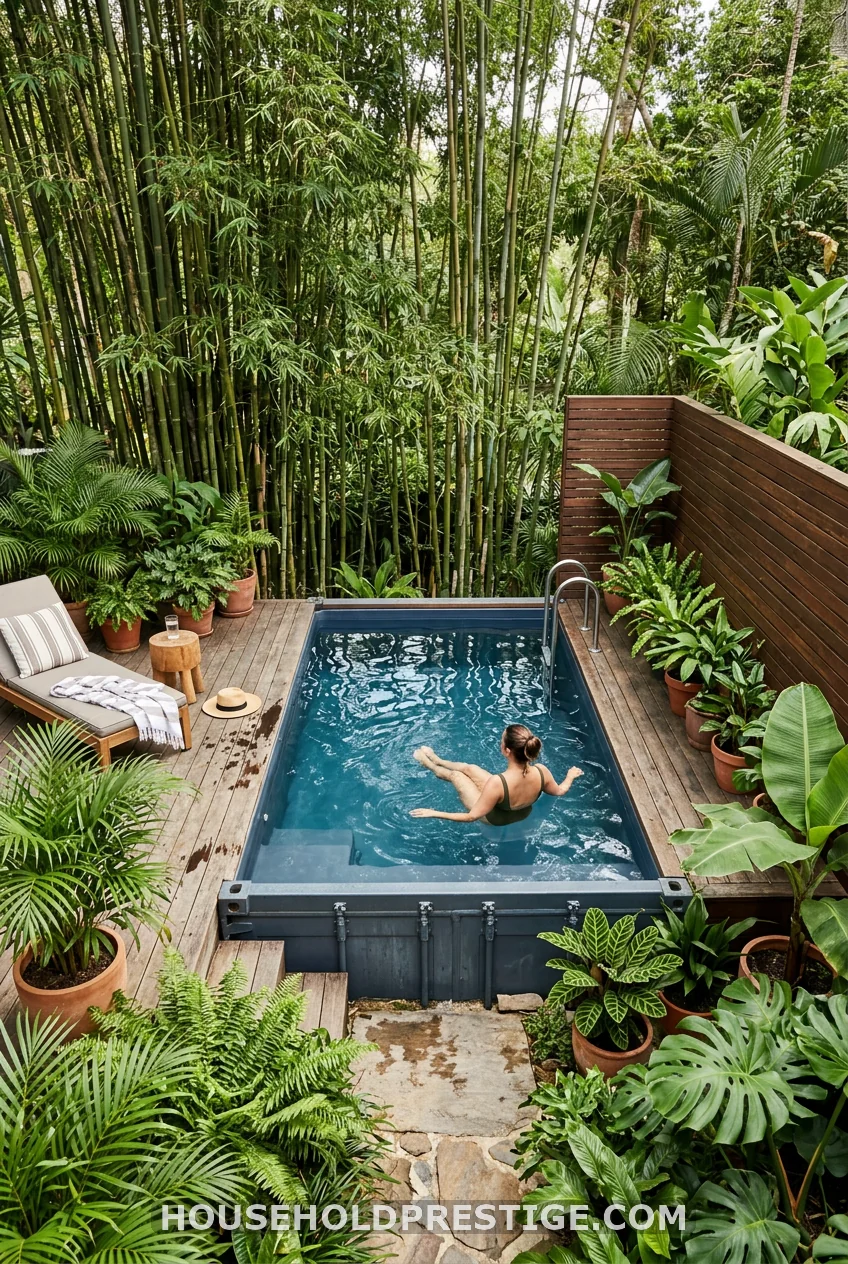
Frame the pool with tall planters, bamboo, or a slatted screen. Greenery hides the steel, blocks the neighbors, and turns a bare corner into a private retreat. Plants do the heavy lifting for very little money.
20. Pair It With an Outdoor Shower
Bolt a simple outdoor shower to the container’s end wall. Rinse before and after, keep grass clippings out of the water, and lean into the resort feel. Quick, cheap, and surprisingly useful.
21. The Plant-Filtered Natural Pool
Dedicate one zone to water plants that filter naturally and cut your chemical use. You get clearer, softer water and a living edge that looks like a pond. It takes more planning, but the payoff is a chemical-light swim.
22. Winter-Ready and Insulated
Add insulation around the shell and a quality cover, and a container pool runs year-round, even in cold climates. Insulated models hold heat far better, which slashes heating costs through the shoulder seasons. Swim in October without flinching.
23. Myth vs. Reality: “Container Pools Are Cheap”
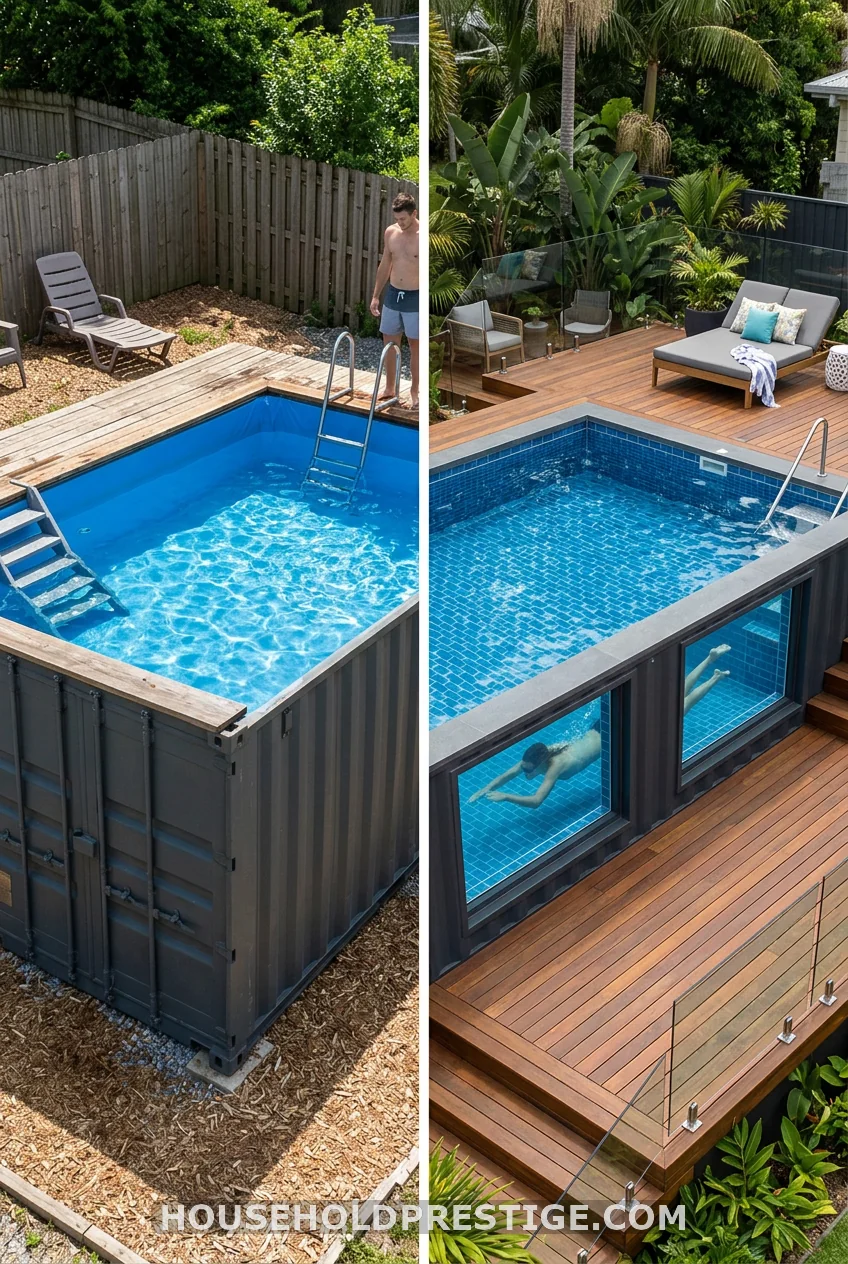
This is the belief that trips up most first-time buyers, so let me set it straight.
What most people think: A shipping container costs a few thousand dollars, so the pool must be cheap.
The reality: The container is the small part. A finished prefab container pool, delivered and installed, usually runs $35,000 to $65,000, with a national average near $50,000. Brands like Modpools start around $32,500, Trekpools around $40,000, and Ecopool around $30,000.
That said, the budget version is real. A DIY above-ground build can land at $8,000 to $20,000, and used kits sometimes sell for $10,000 to $30,000. So container pools span a wide range. They run cheaper and faster than a traditional inground pool, which costs $25,000 to $100,000 and takes months. But “cheap” depends entirely on whether you go DIY above-ground or full custom inground. Pick your tier on purpose, and the price stops surprising you.
Which One Fits Your Yard?
Here is the honest summary. If you have a small yard and a small budget, start with a 20-foot above-ground plunge and a wraparound deck. If you want the built-in look and can spend more, go semi-inground with a tile or black finish. If you swim for fitness, the 40-foot lap pool or a swim jet earns its keep. And if you want to DIY, brace the walls and prep the base, then keep the savings on everything else.
A small yard was never the reason you could not have a pool. The old pool shapes just did not fit it. A container does. Measure your space this weekend, price the tier that matches your budget, and pick the version that makes you want to jump in.
Frequently Asked Questions
How much does a container pool cost?
A finished prefab container pool runs about $35,000 to $65,000 installed, with an average near $50,000. A DIY above-ground build can drop to $8,000 to $20,000. Your number depends on size, whether you go above-ground or inground, and the features you add.
Are container pools a good idea for small backyards?
Yes. Their narrow footprint is the main reason people choose them. A 20-foot container fits where a poured pool cannot, and it can be installed in tight side yards or even on suitable rooftops once you clear local rules.
How long do container pools last?
A well-built and well-maintained container pool lasts around 15 to 20 years. Rust is the main enemy, so proper interior sealing, a quality liner, and routine upkeep make the difference.
Do I need a permit for a container pool?
Usually, yes. Most areas require a permit once a pool passes a set water volume, and some treat container pools as structures. Always check your county and city rules before you buy, because removal orders are expensive.
Can you build a container pool yourself?
You can, if you are comfortable with metalwork and follow the structure and electrical steps carefully. The two parts worth hiring out are the wall bracing and the wiring. Get those right, and a DIY container pool is one of the cheaper ways into pool ownership.