

I’m spreading thick white paste across the oven door like frosting on a cake. Behind it, the glass looks like weak tea. Brown streaks, greasy fingerprints, a fog I’ve blamed on the lighting for months.
This homemade oven door cleaner takes three pantry staples and about 20 minutes of waiting. You’ll learn the right order to use them, how to reach the greasy inside face of the glass, and what to do about the brown haze trapped between the panes.
Why Your Oven Door Glass Goes Cloudy and Brown
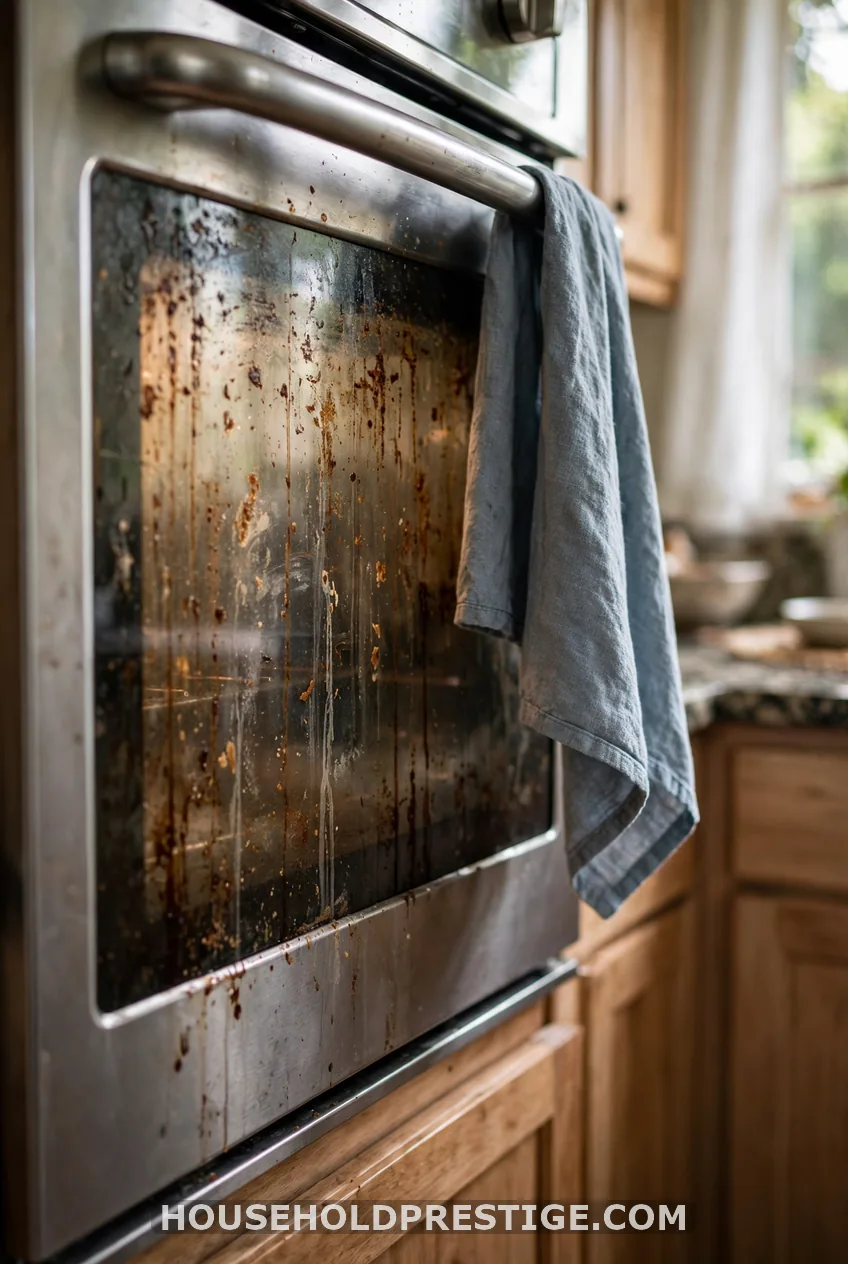
Two things build up on that glass. Everyday roasting leaves a thin, sticky grease film. Spills and splatter bake on top of it and turn into hard, brown carbon.
The self-clean cycle often makes this worse. The high heat bakes any leftover grease onto the glass for good. Wipe the window first if you plan to run it.
You are also fighting three separate surfaces:
- The outer glass, which gets a grease film and fingerprints.
- The inner face of the door glass, which takes the real splatter.
- The gap between the panes, where haze can sneak in and stay.
Each one needs a different fix, so this guide covers all three.
What You Need (and What to Skip)
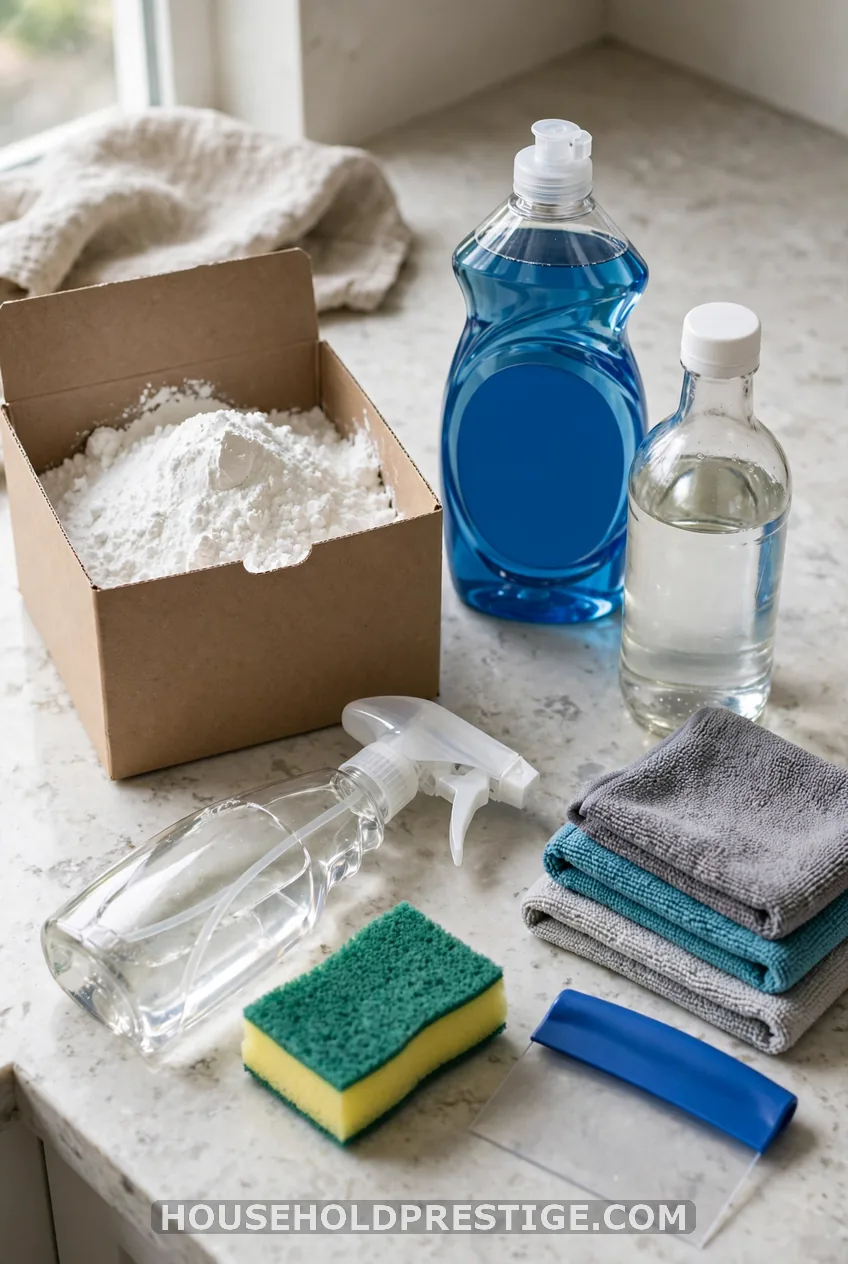
Gather these:
- Baking soda
- Water
- Dawn dish soap
- White vinegar and a spray bottle
- A non-scratch sponge
- Two microfiber cloths
- A plastic scraper
- Plastic wrap, for heavy buildup
Skip steel wool, scouring pads and chlorine bleach. Skip razor blades dragged across dry glass too. Never put any cleaner on hot glass.
The catch:
Printed, tinted or coated door glass can mark. Patch-test the paste in a bottom corner before you cover the whole door.
Clean the Outside Glass
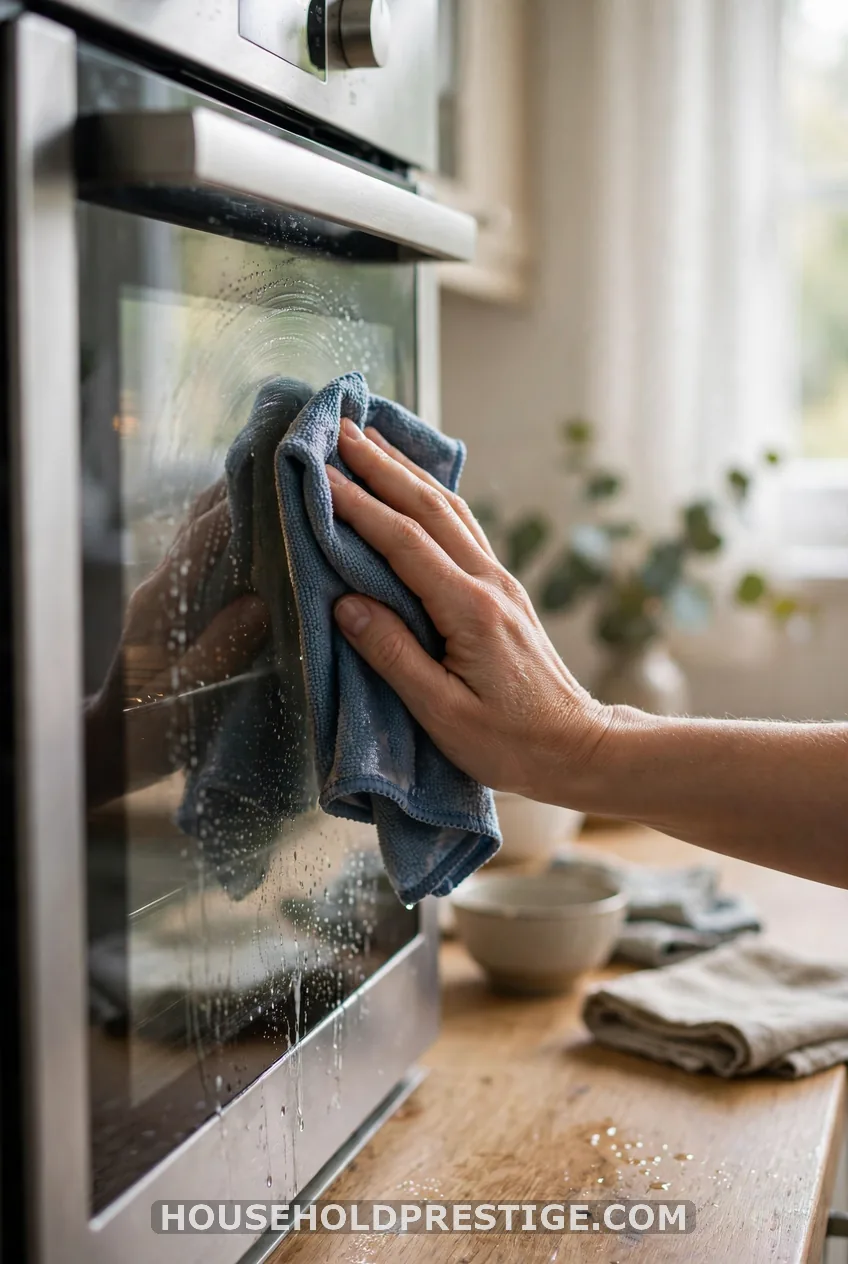
The outer glass is the part guests see. Work through it in five steps.
Step 1: Cool Down and Degrease
Let the oven cool all the way. Cold water or cold paste on warm glass can cause thermal shock, and thermal shock can crack it.
Wipe crumbs and loose ash away with a dry paper towel. Then wipe the glass with a damp cloth and one drop of Dawn. This cuts the surface grease so the paste can grip.
Step 2: Mix the Paste
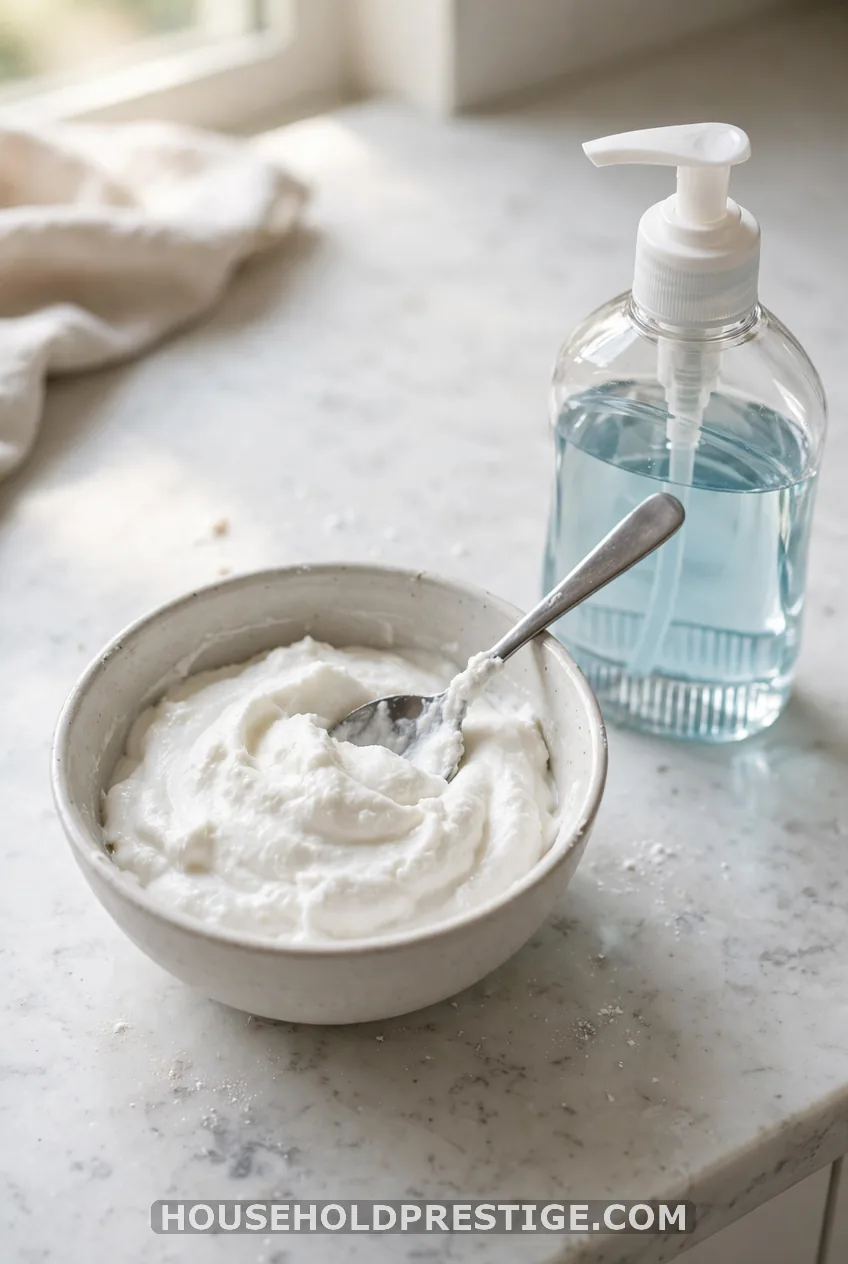
Here is the ratio I use:
- Put 3 tablespoons of baking soda in a small bowl.
- Add 1.5 tablespoons of water.
- Add a small squeeze of Dawn.
- Stir. If it’s crumbly, add water a teaspoon at a time.
You want the texture of frosting. It should cling to a spoon held sideways and not run. For extra stain lift, stir in 1 teaspoon of hydrogen peroxide.
Do not add vinegar. Baking soda is a base and vinegar is an acid. They fizz, cancel each other out, and leave you with salty water. The vinegar comes last.
Step 3: Apply Thick and Wait
Spread the paste in a thick, opaque layer. Press extra into greasy corners and stubborn spots. Then walk away for 15 to 20 minutes.
The waiting does the work. The paste softens the grease so you don’t have to scrub it off.
The catch:
Paste that dries out stops working. On a heavy, brown door, cover the glass with plastic wrap to keep it wet. Give it 30 to 60 minutes. A truly neglected door can sit overnight.
Step 4: Scrub Gently
Dampen a non-scratch sponge and work in small circles with light pressure. The paste is a mild abrasive and does the scouring for you.
For raised, hardened bits, hold a plastic scraper at a shallow angle. Push gently. Never use a bare razor blade on a dry surface. And don’t dig at chipped or cracked glass.
Step 5: Wipe, Then Rinse With Vinegar
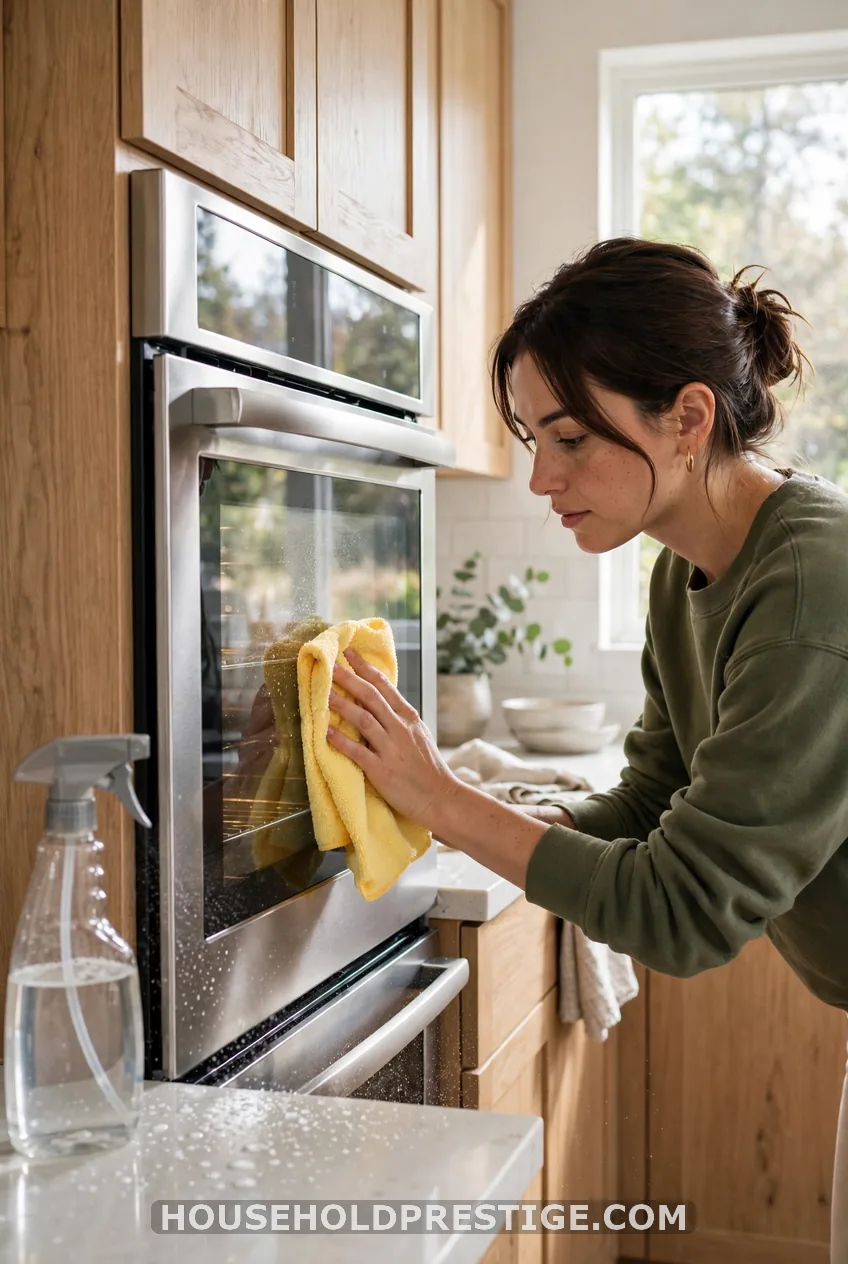
Wipe the paste off with a clean, damp cloth. This is where the grease actually leaves. Rinse the cloth often.
Now mix a 50/50 spray of white vinegar and water. Mist the glass. It neutralizes any baking soda residue and stops streaks. Buff dry with a microfiber cloth, top to bottom.
Clean the Inside Face and Between the Panes
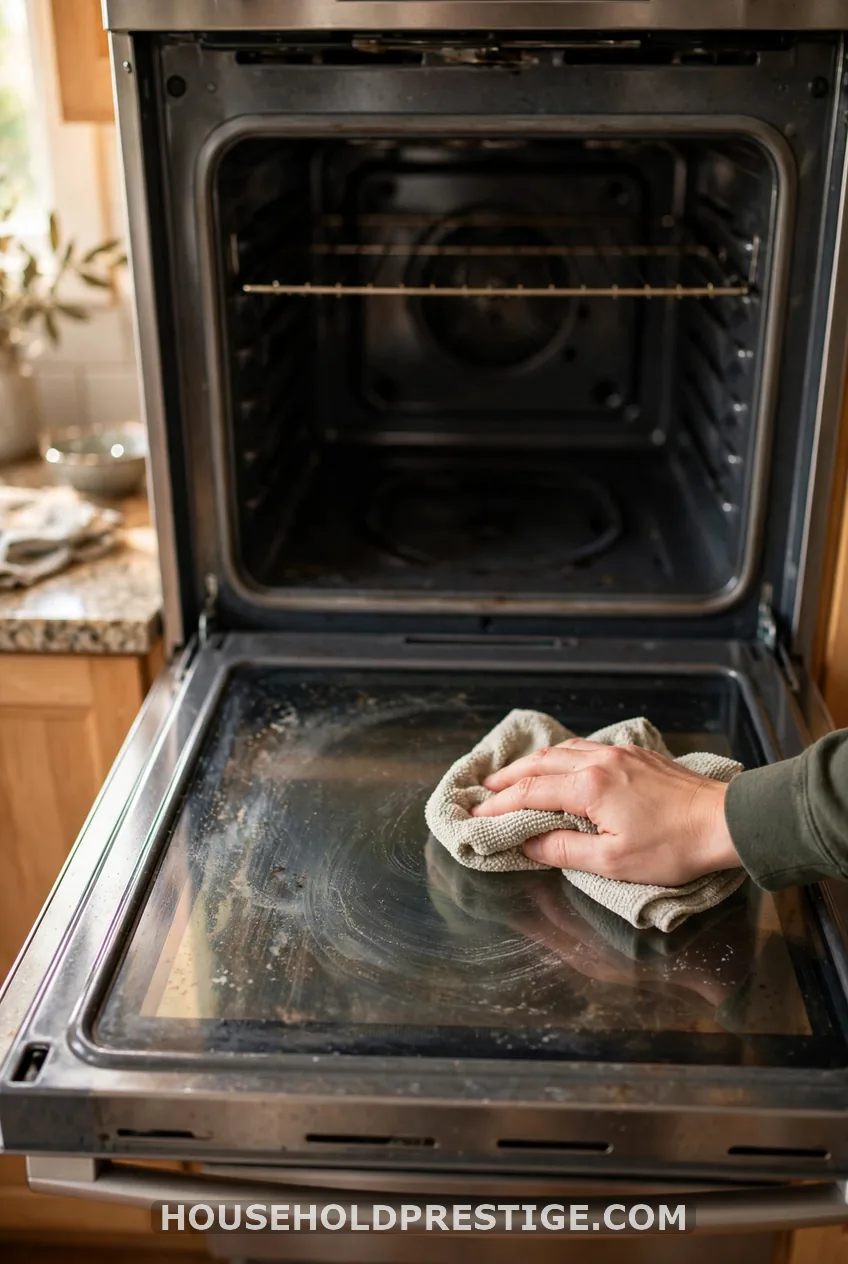
The inside of the door glass is the filthiest surface of all. Many people skip it.
Step 6: Tackle the Inner Glass
Open the door and lower it flat. A horizontal surface is easier to work on, and the paste stays put. Use the same paste, but let it sit for less time, about 10 minutes. Wipe, spray with vinegar, and dry.
If you can’t reach the glass, you have two options. You can reach through the vent slots at the top of the door with a thin cloth wrapped around a wooden spoon. Or you can remove the door.
Lift the hinge locks, close the door to about 45 degrees, and lift it straight out. Check your manual first, because the door is heavy and the method varies by model.
Step 7: Brown Haze Between the Panes
That haze is grease baked into the gap. On a sealed unit it’s usually permanent.
Some models have an inner panel held by serviceable screws. If yours does, you can remove it and clean the glass. If it doesn’t, leave it alone. Prying at a sealed double-pane door is how glass breaks.
The catch:
A cracked or chipped door is not a DIY job. Stop and call a repair person.
Extra Tips: Keep It Clear Longer
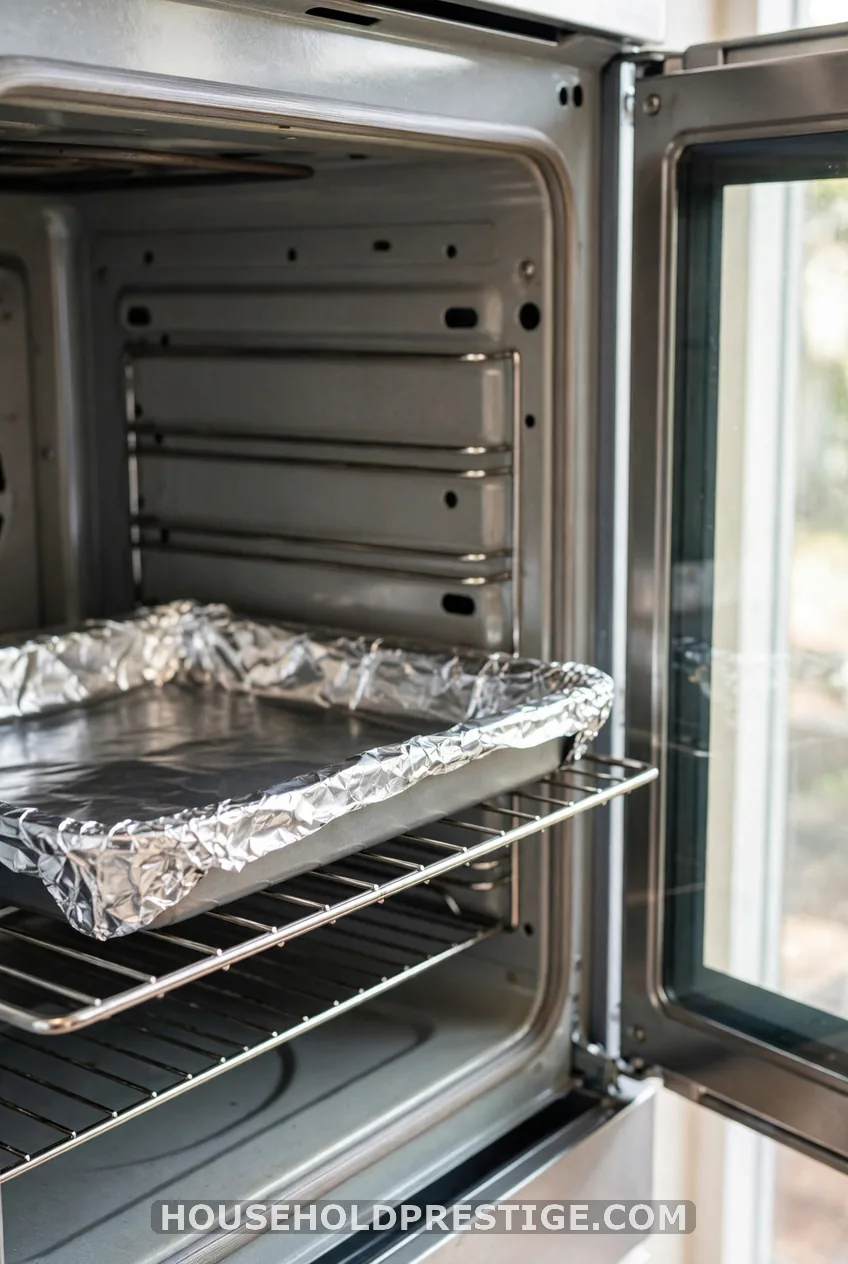
- Wipe the glass while it’s warm, not hot, after a messy bake.
- Line the bottom with foil or set a drip tray under bubbling dishes to catch splatter.
- Spot-clean weekly. Do the full paste treatment every 1 to 2 months.
- Run a paste-only pass over the door gasket and edges. Rinse well, since baking soda leaves a salty residue.
Frequently Asked Questions
Can I mix baking soda and vinegar into one cleaner?
No. They neutralize each other on contact and you lose most of the cleaning power. Use the baking soda paste first, wipe it off, then rinse with vinegar.
How long should the paste sit on the glass?
Give everyday grease 15 to 20 minutes. For heavy baked-on buildup, cover it with plastic wrap and wait 30 to 60 minutes. A badly neglected door can sit overnight.
How do I remove brown stains between the oven door panes?
It’s baked-in grease inside a sealed assembly, so it’s usually permanent. If your model has serviceable screws you can remove the inner panel and clean it. Otherwise, leave it.
Can I use a Magic Eraser on the oven door?
It works well on light grease film. Melamine sponges are micro-abrasive and can dull some finishes, so test a corner and use light pressure.
Your Door, Clear Again
That frosting-thick paste on a tea-colored door? After 20 minutes and a vinegar rinse, I could see my roast through the glass. Baking soda, water and Dawn did it. Mix, spread, wait, wipe, then spray.