

My coat closet used to be where good intentions went to die. One rod. One warped shelf. A floor that ate single gloves. Every time someone came over, I’d shove a tangle of jackets sideways and pray the door shut.
Sound familiar? If your coat closet organization plan is currently “stuff it and slam it,” you’re not lazy. Your closet is just badly built. Most builder-grade coat closets waste half their cubic space on a single high rod and a shelf you can’t reach. The coats live in the middle third. The top gathers dust. The floor becomes a boot graveyard.
I fixed mine over one Saturday for about $74. No contractor. No power tools beyond a drill. Here’s the exact order I worked in, the real measurements I used, what each piece cost, and the two mistakes that almost wrecked it. By the end, you’ll have a closet where every coat, every shoe, and every guest’s jacket has a home.
Before You Touch a Thing: Empty It Completely
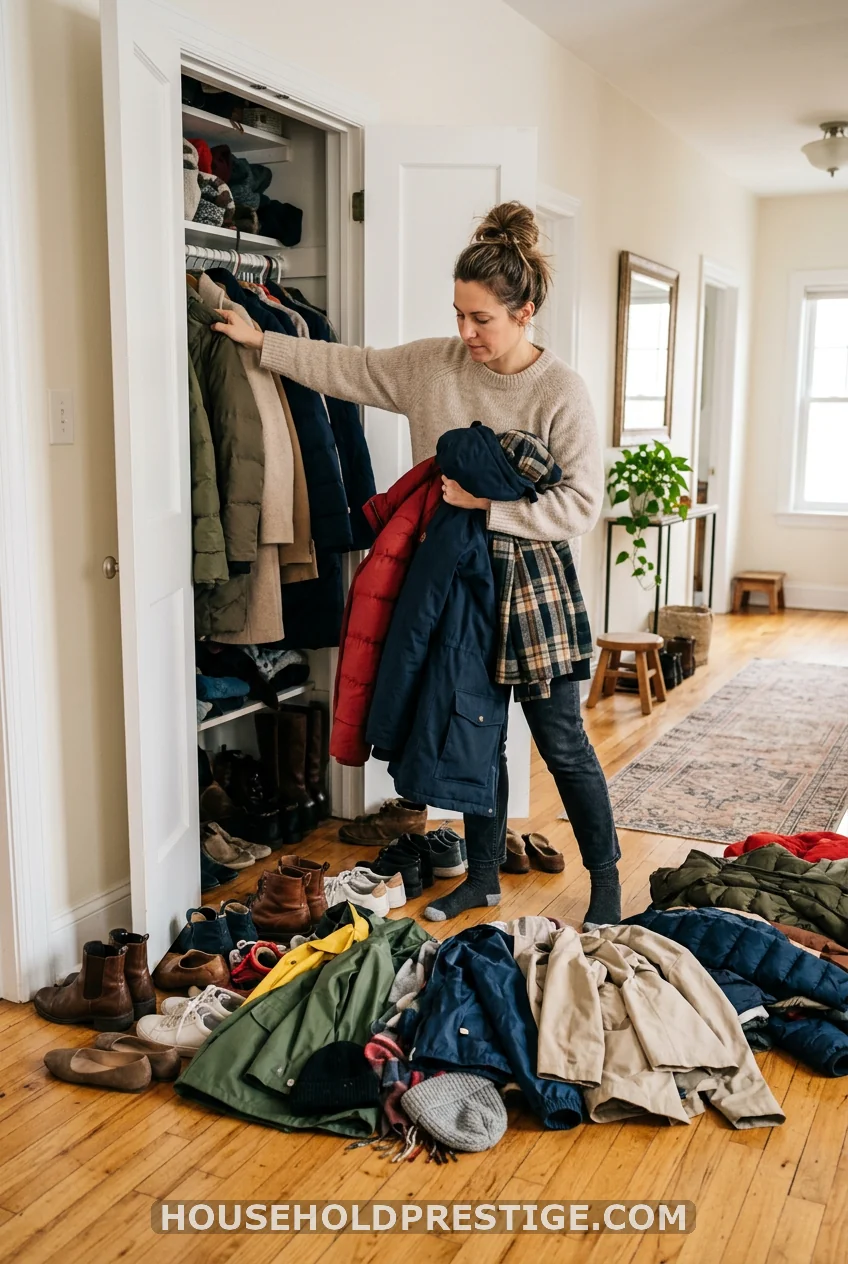
Pull every single item out. Yes, all of it. The lone umbrella. The mystery tote. The scarf you forgot you owned.
Pile it on the floor or a bed where you can see it. This one move does more than any product you’ll buy. You can’t organize a space you can’t see, and you can’t see a space that’s full.
Now sort into four piles: keep, relocate, donate, toss. Be honest. A coat you haven’t worn in two winters is taking up prime real estate. I pulled six jackets and two bags out of mine and never missed them.
Measure the Space (This Is Where the Wins Hide)
Grab a tape measure and write down three numbers: width, depth, and height. Most coat closets run about 24 to 28 inches deep and 24 to 48 inches wide. Mine was 30 inches wide and 26 inches deep.
Here’s the number that matters most: the distance from your rod to the ceiling. In my closet that was 34 inches of pure dead air. That gap is where your new storage lives. A standard coat needs roughly 40 inches of hanging height, so anything above that is yours to claim.
Jot it all down. You’ll use these numbers when you shop, and guessing in the store is how you end up returning a shelf that’s two inches too long.
Rethink the Rod
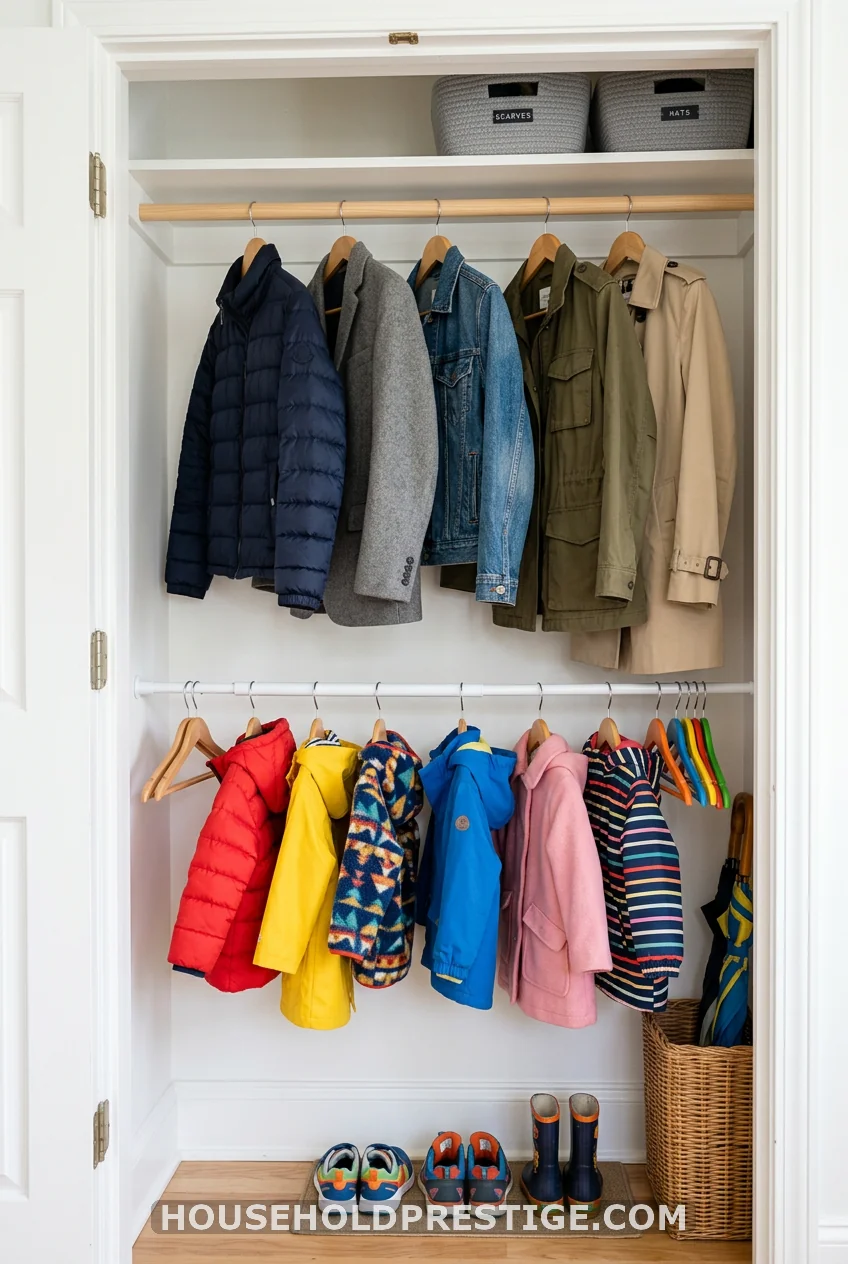
One high rod wastes the bottom half of your closet. If your coats are short, drop in a second rod underneath.
A spring-tension rod costs about $9 and needs no drilling. Hang adult coats up top, kids’ coats or shorter jackets below. You just doubled your hanging space in five minutes.
Renting? Tension rods are your best friend. They leave zero holes and pop out when you move.
Claim the Dead Air Up Top
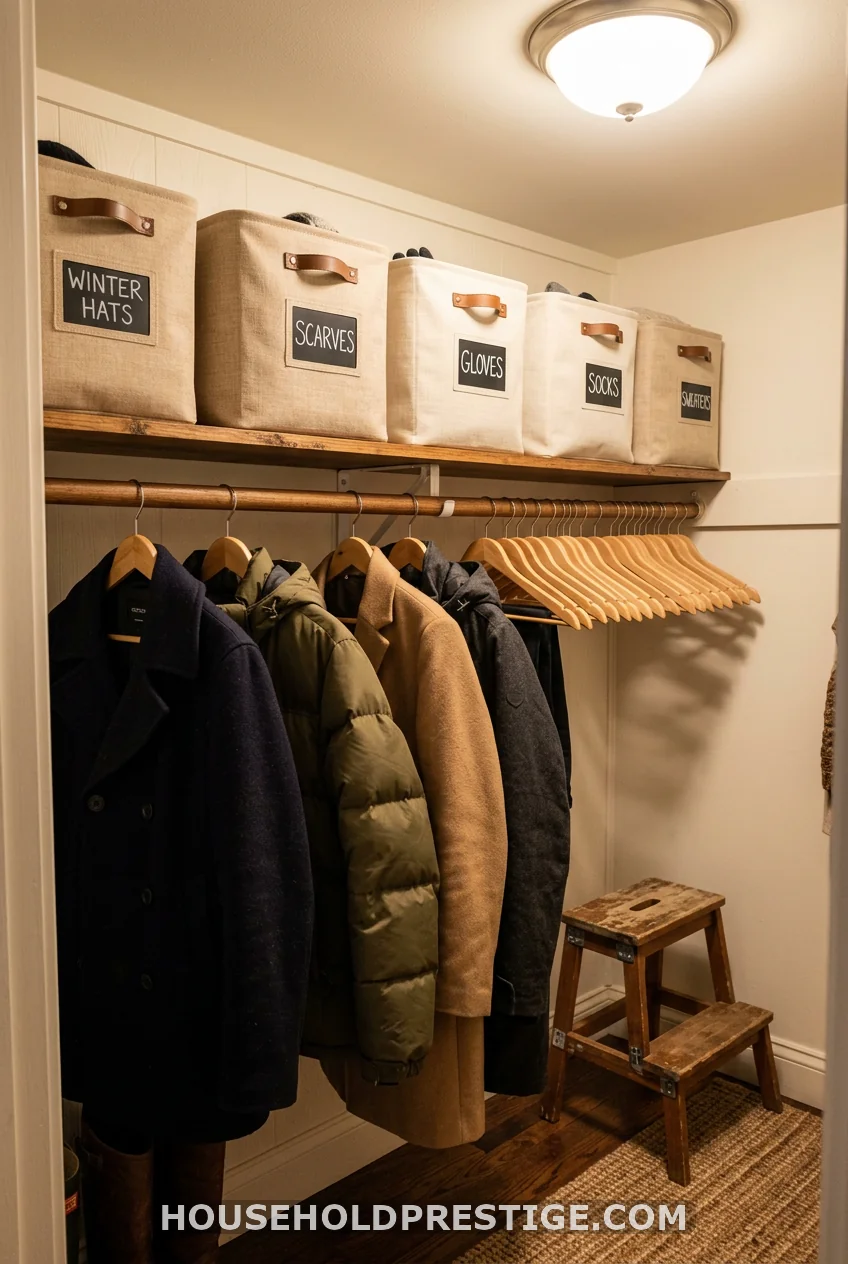
That 34-inch gap above the rod? Put a shelf in it, or stack bins on the shelf you already have.
I added one extra wire shelf and lined the top with three fabric bins. Out-of-season hats and gloves go up there. Light bulbs, batteries, and spare keys go in a small box beside them. Label the bins so you’re not pulling all three down to find one beanie.
This is the single biggest space gain in any coat closet makeover. The top third goes from useless to your deep-storage zone.
The Floor Project: Build a Real Shoe Zone (Step by Step)
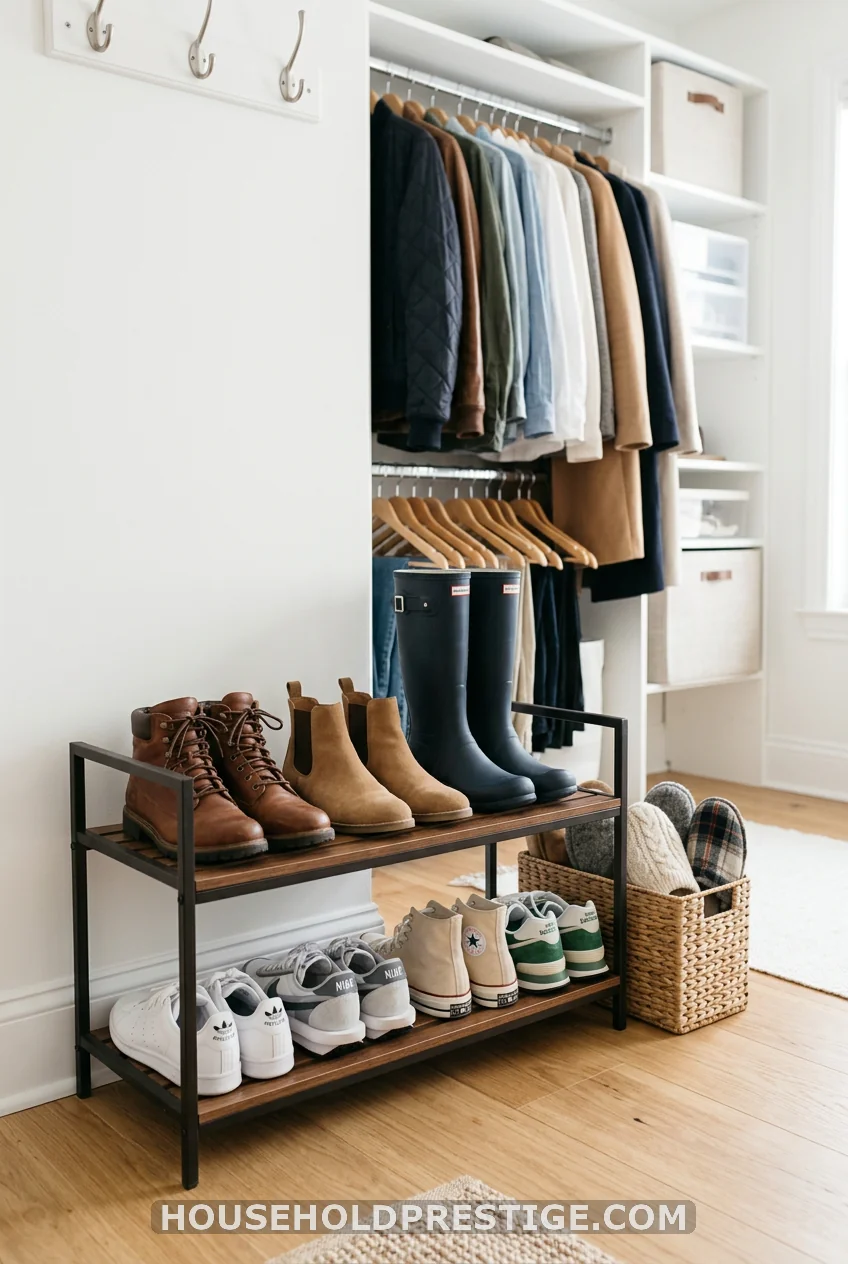
The closet floor is the part everyone gives up on. Don’t. A proper shoe zone here keeps muddy boots out of your living room and ends the daily floor-pile. This is the most involved step, so I’ll walk through it slowly.
Why this works
Shoes pile up because they have no edges. Give them a rack with defined slots, and the pile can’t form. A two-tier rack also lifts shoes off the floor, so you can sweep dust and stray salt without moving anything.
What you’ll need
- One stackable two-tier shoe rack, 24 to 30 inches wide (about $22)
- One low open basket for slippers or flip-flops (about $8)
- A drill, if you’re adding a hook strip
- A microfiber cloth and a small tray for wet boots
The steps
- Measure your floor width again and pick a rack one to two inches narrower so it slides in clean.
- Wipe the floor and let it dry fully. A damp floor under a metal rack means rust streaks later.
- Set the rack flush against the back wall, not the door, so the door clears it.
- Place a boot tray to one side for wet or snowy days. A simple plastic tray catches the melt before it warps your floor.
- Drop the slipper basket beside the rack at the very front, where feet can reach it without bending.
- Load shoes heel-out so you can grab pairs fast and see what you own.
Pro move
Leave a four-inch gap below the bottom shelf and slide flat totes or reusable shopping bags into it. That sliver of space holds a surprising amount, and folded bags don’t mind being squished.
Common mistakes to avoid
Don’t buy a tall shoe tower for a coat closet. It blocks the door swing and tips when you bump it. And don’t crowd the rack to the inch. Leave room for the boots you’ll buy next season, or you’ll be right back to a floor pile by December.
Put the Door to Work
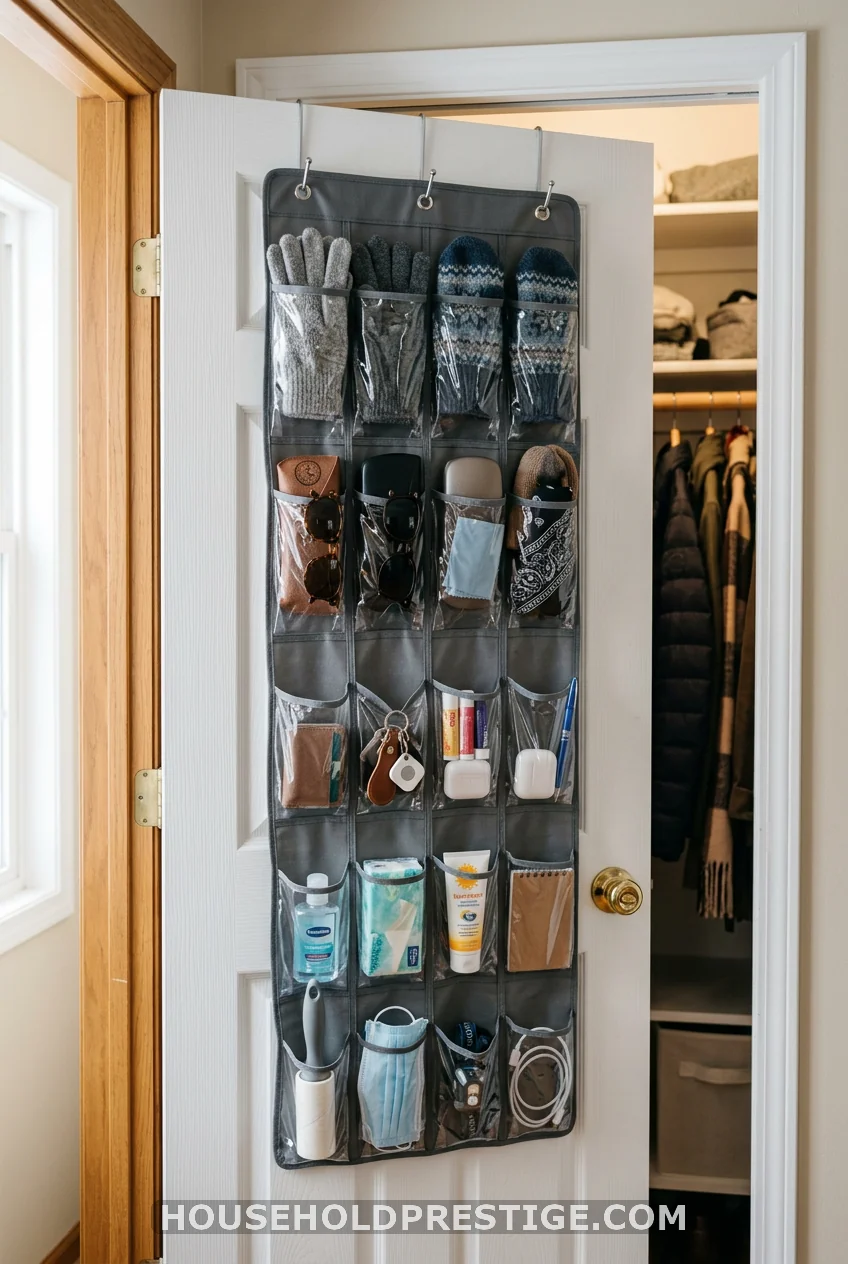
The back of the door is free storage you’re probably ignoring. An over-the-door organizer with clear pockets runs about $14 and hangs in under a minute.
Use it for the small stuff that vanishes: gloves, sunglasses, dog leashes, mittens, a spare phone charger. Clear pockets mean you spot what you need at a glance.
Check your door clears the organizer before you load it. A thick door with a bulky bin won’t close, and a closet door that won’t shut defeats the whole project.
Contain the Small Things
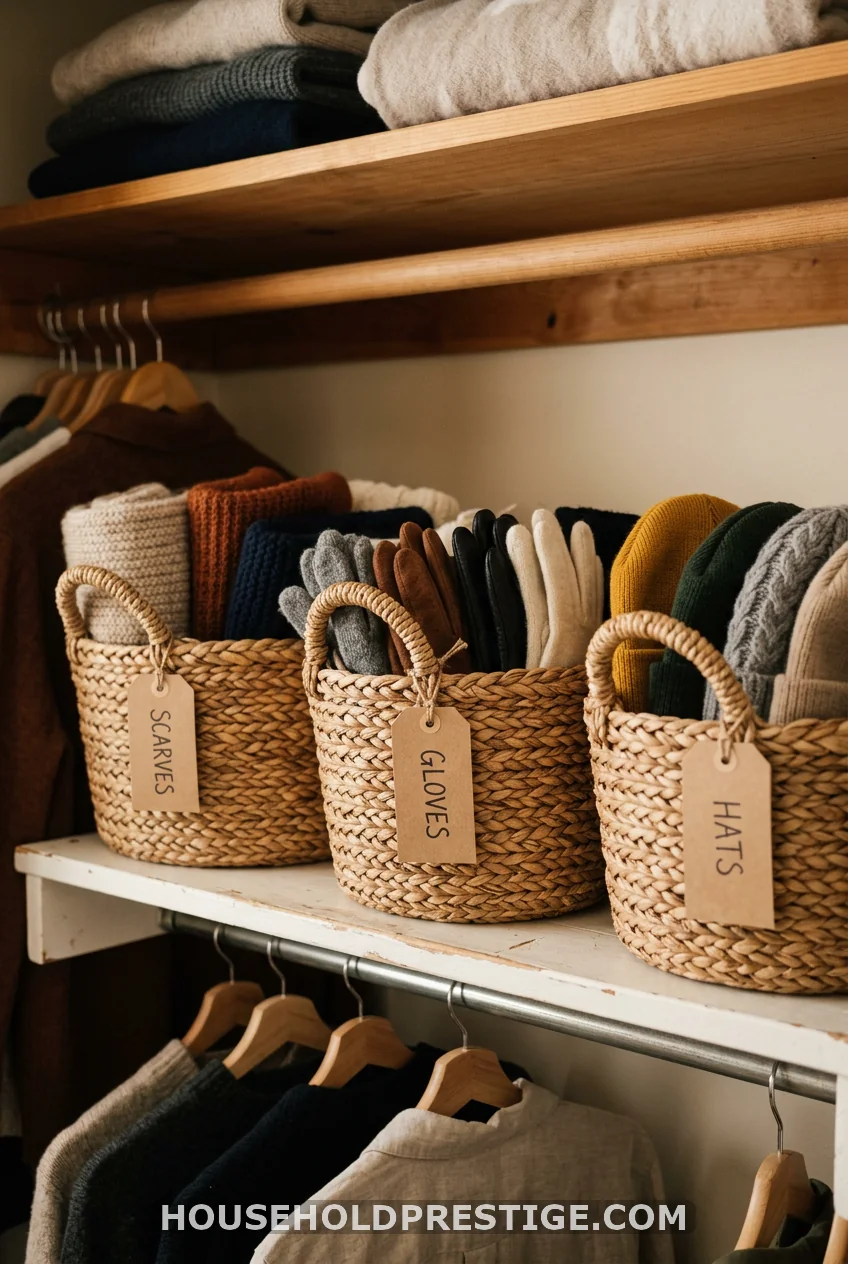
Loose hats and scarves are chaos in a costume. Group them by type into labeled baskets, and the chaos turns into a system.
I keep three baskets at eye level: one for scarves, one for gloves, and one for hats. Two minutes to put away, two seconds to find. Open-weave baskets let air move, so damp wool dries instead of souring.
Make It Grab-and-Go
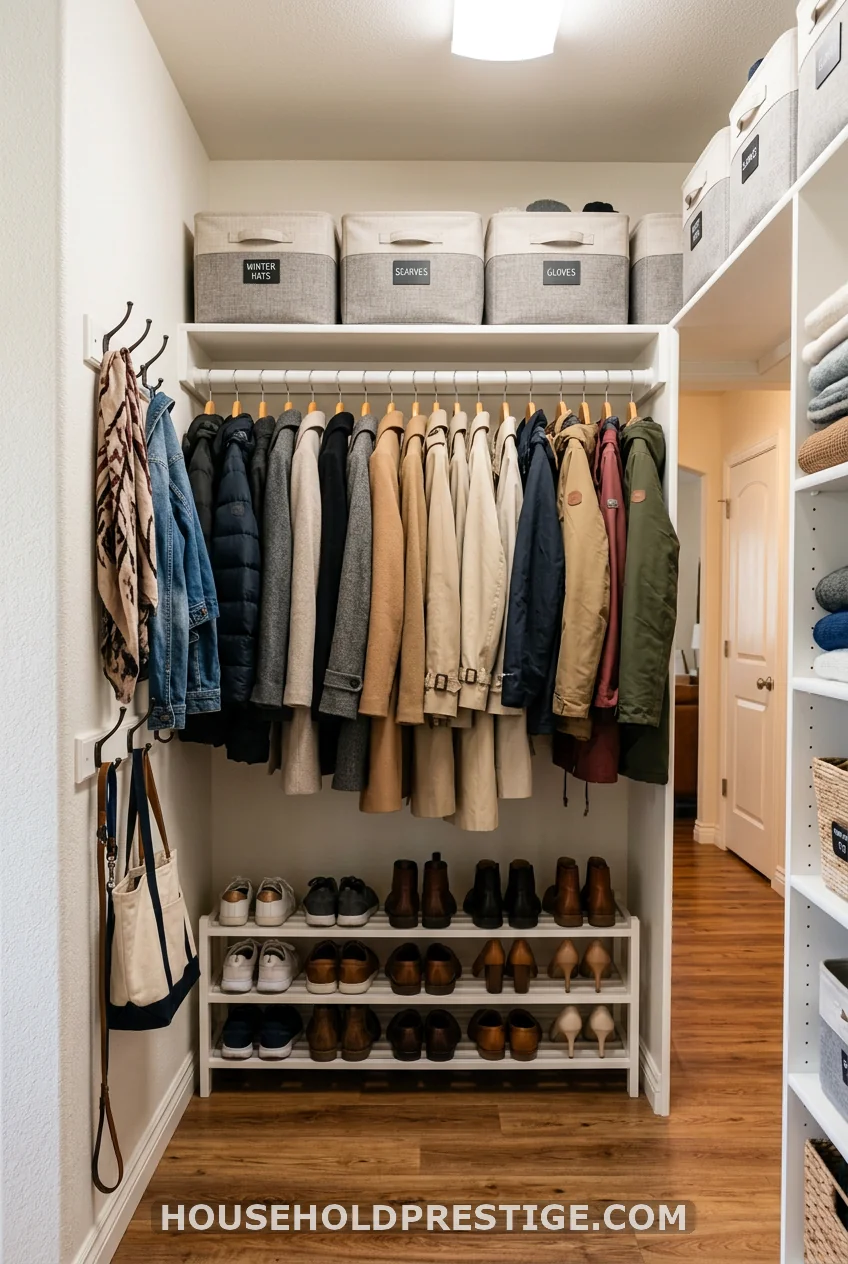
Now zone it for real life. The things you grab every day live at arm’s reach. The things you touch twice a year live up top.
Add two or three adhesive hooks on the side wall for the bag and jacket you use daily. Skip the hanger for those; a hook is faster, and speed is what keeps a closet organized after week one. Daily coats on hooks, dressy coats on hangers, everything else zoned by season.
Materials and Real Costs
Here’s exactly what I bought and what it cost. Your prices will vary by store and region, but this is a realistic budget for a small to medium coat closet.
| Item | Purpose | Cost |
|---|---|---|
| Spring tension rod | Second hanging row | $9 |
| Extra wire shelf | Claim top dead air | $12 |
| Two-tier shoe rack | Floor shoe zone | $22 |
| Three fabric bins | Top-shelf storage | $15 |
| Three woven baskets | Scarves, gloves, hats | $9 |
| Over-the-door organizer | Small items | $14 |
| Adhesive wall hooks (pack) | Daily grab-and-go | $7 |
| Boot tray | Wet-day catch | $6 |
| Total | $74 |
You can go lower. A dollar-store run for bins and hooks cuts this nearly in half. You can also go higher with matching wood crates or a custom shelf kit. The system works the same at any budget; the bins just get prettier.
When It Stops Working: Quick Fixes

Every organized closet drifts. Here’s how to catch it before it collapses.
If the floor pile creeps back, your shoe rack is too small for your household. Size up or add a second low rack. If bins overflow, you’re storing too many of one thing, so it’s time for a quick edit. And if guests’ coats end up on a chair, leave four empty hangers near the front as a permanent welcome mat for visitors. A ten-minute reset every season keeps the whole thing humming.
You’ve Got This
A coat closet makeover isn’t a renovation. It’s a Saturday, a tape measure, and about $74 of bins and rods. You don’t need to knock down a wall as the pros do. You just need to claim the dead air, lift the shoes off the floor, and give every small thing a labeled home.
Start by emptying it. That first pile on the floor looks scary, but it’s the moment everything changes. Once you can see the space, the rest falls into place faster than you’d think. Pour yourself a coffee, put on a podcast, and reclaim the first thing your guests see when they walk in.
FAQ
How do I organize a small coat closet with no floor space?
Go vertical. Add a second tension rod under your coats, put a shelf in the dead air above the main rod, and use the back of the door with a hanging organizer. A wall-mounted shoe rack frees the floor entirely if you’re truly tight on space.
What is the best way to store coats in a closet?
Hang heavy coats on sturdy wood or thick velvet hangers, so they hold their shape, and space them an inch apart so air moves and they don’t crush. Group by length to free up room below short jackets, and keep daily coats on hooks for fast grab-and-go.
How much does it cost to organize a coat closet?
A full coat closet organization makeover runs about $50 to $100 using off-the-shelf bins, rods, and racks. A dollar-store approach drops it under $40, while custom shelving or built-ins can climb past $300. The system matters more than the price tag.
How do I keep my coat closet organized long-term?
Give every category a labeled bin or zone, keep daily items on hooks at the front, and do a ten-minute reset each season. Pull what you didn’t wear, wipe the floor, and refill the baskets. The labels do the heavy lifting once the system is set.
Should I store shoes in my coat closet?
Yes, if you add a low rack or boot tray to contain them. Loose shoes on the floor create the clutter you’re trying to fix, but a defined two-tier rack near the back wall keeps them tidy and your floor sweepable.