

“Mom, I think I spilled something on the bed.”
That was my nephew, holding a half-empty cup of grape juice and wearing a very innocent face. I knew how to clean mattress stains in theory. In practice, I’d always dabbed one small spot and ended up with a bigger, uglier ring. This guide fixes that.
You’ll get a 7-step method that treats the whole mattress top, a stain-by-stain chart, and swaps for when you have no hydrogen peroxide or your mattress is colored.
Before You Start: The 5 Rules That Save the Mattress
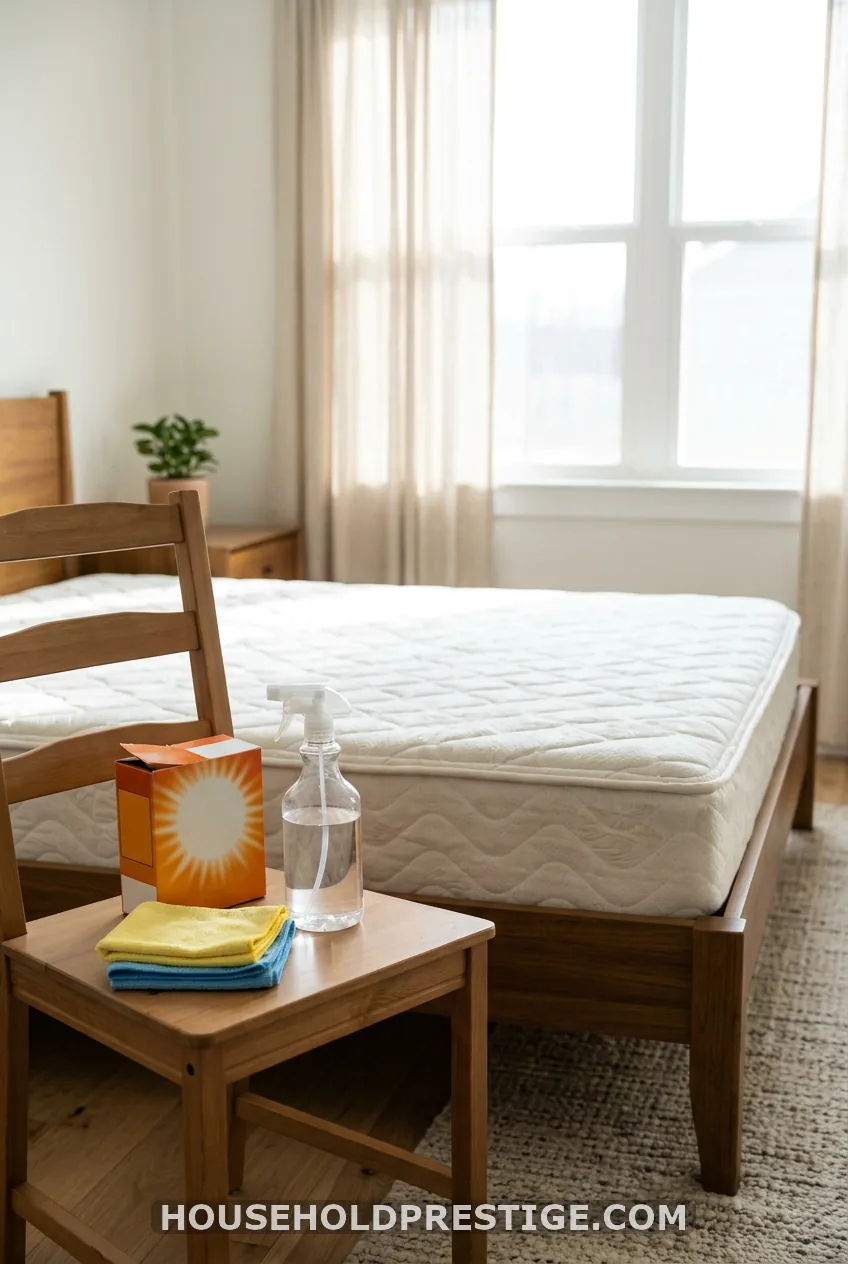
Five rules. Follow them and you avoid most mattress disasters.
- Check the care label and test first. Try any cleaner on a hidden seam or the underside before it touches the stain.
- Blot. Never scrub. Work from the outside of the stain toward the middle so it doesn’t spread.
- Never soak it. Mattresses dry slowly, and memory foam holds water like a sponge. Trapped moisture means mold and mildew.
- Skip the heat. No hot water, no hairdryer on the stain. Heat sets protein stains like blood and urine.
- Gather everything first. A stain dries while you hunt for a cloth.
What You’ll Need (and What Each Ingredient Does)
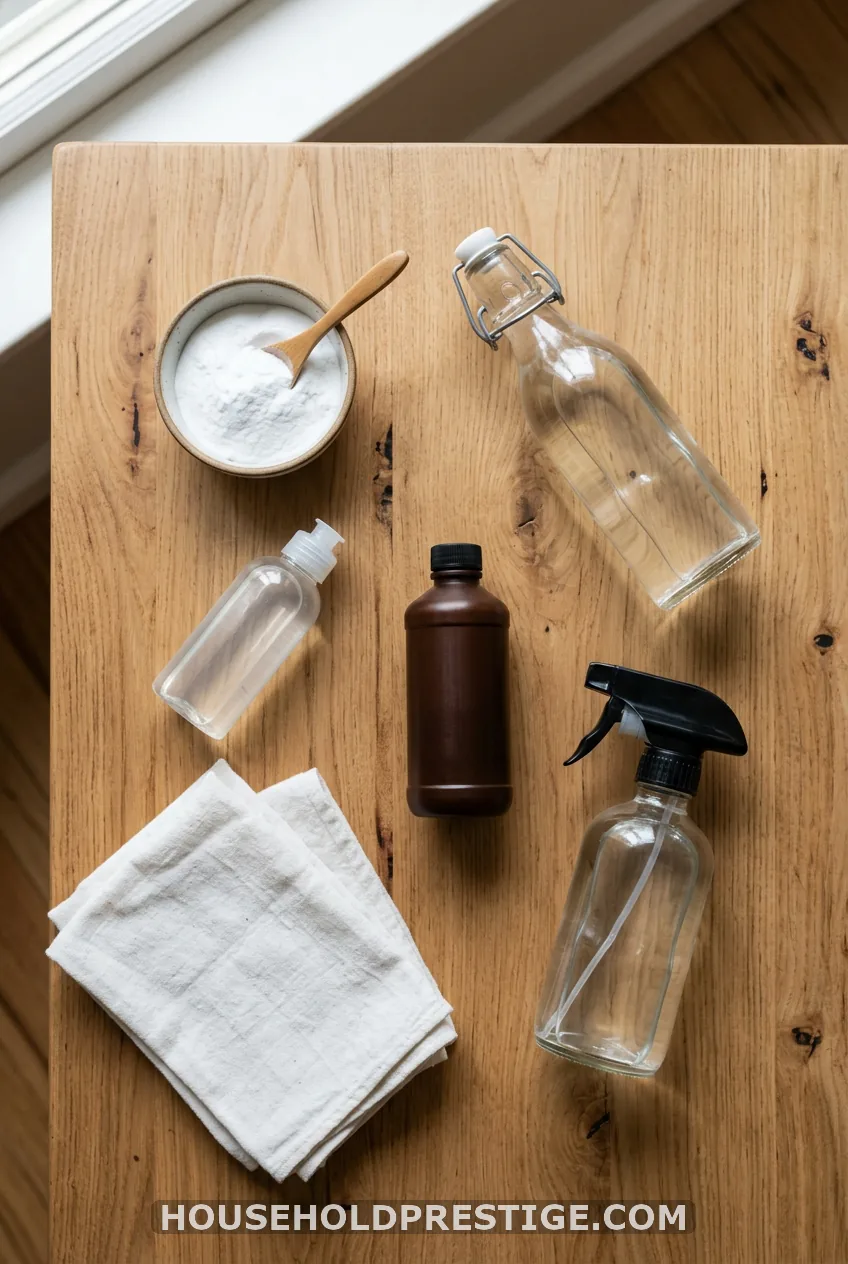
Everything here is probably in your cupboard already.
- Clear, undyed liquid dish soap: breaks up grease and body oils. Clear soap won’t transfer dye.
- Baking soda: lifts odor, pulls moisture from foam, and gently loosens dried gunk.
- Distilled white vinegar: dissolves mineral and detergent residue and tackles odor-causing bacteria.
- 3% hydrogen peroxide: lifts blood and urine by oxidation. It also bleaches fabric, so use it on white mattresses only.
- Tools: a spray bottle, several microfiber or undyed cotton cloths, a bowl, gloves, and a vacuum with an upholstery attachment.
Step 1: Strip the Bed and Vacuum the Whole Surface
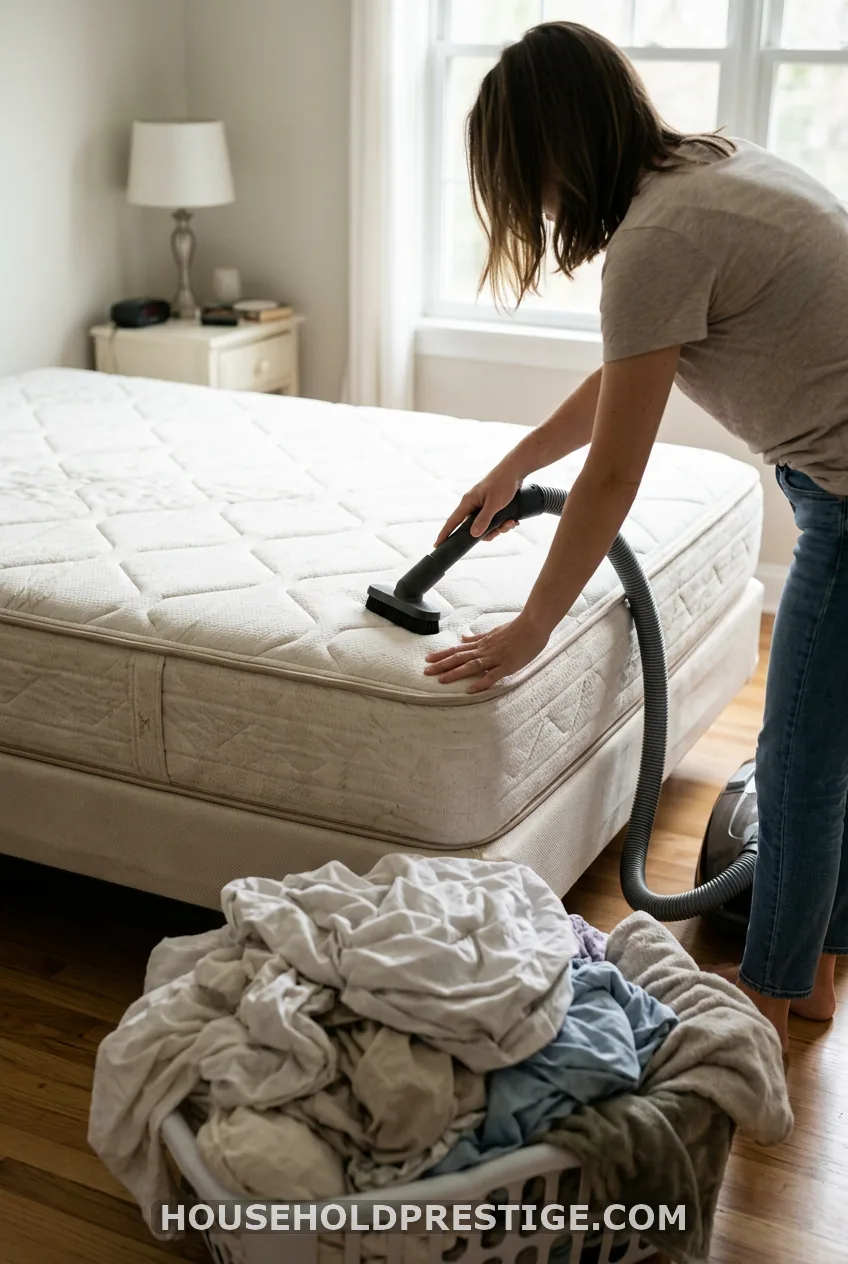
Pull off the sheets, pillowcases, and any mattress protector. Wash them while you work.
Now vacuum the entire top, the sides, and the seams. You’re removing dust, dead skin, crumbs, and pet hair. Skip this and the liquid turns that grit into muddy paste.
Step 2: Lift as Much of the Stain as You Can
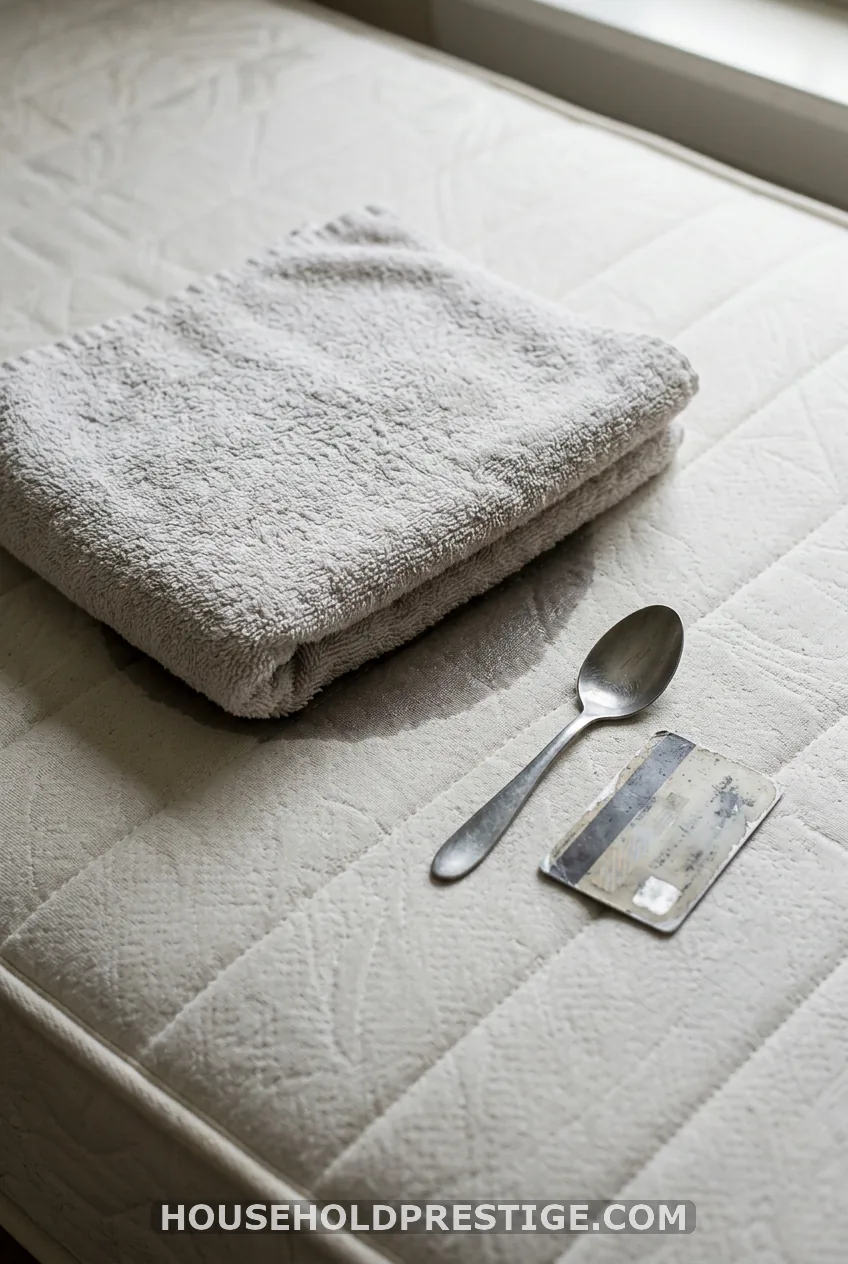
Wet stain? Press a dry towel on it and hold. Stand on the towel or stack something heavy on it for a few minutes. The towel wicks liquid out of the foam.
Dried stain? Scrape off any crusty bits with a spoon or an old card. Vacuum the crumbs.
Then dampen a cloth until it’s barely wet and press it on the crust. That rehydrates the stain so the cleaner can reach it.
Step 3: Mix the 3-Ingredient Base Cleaner
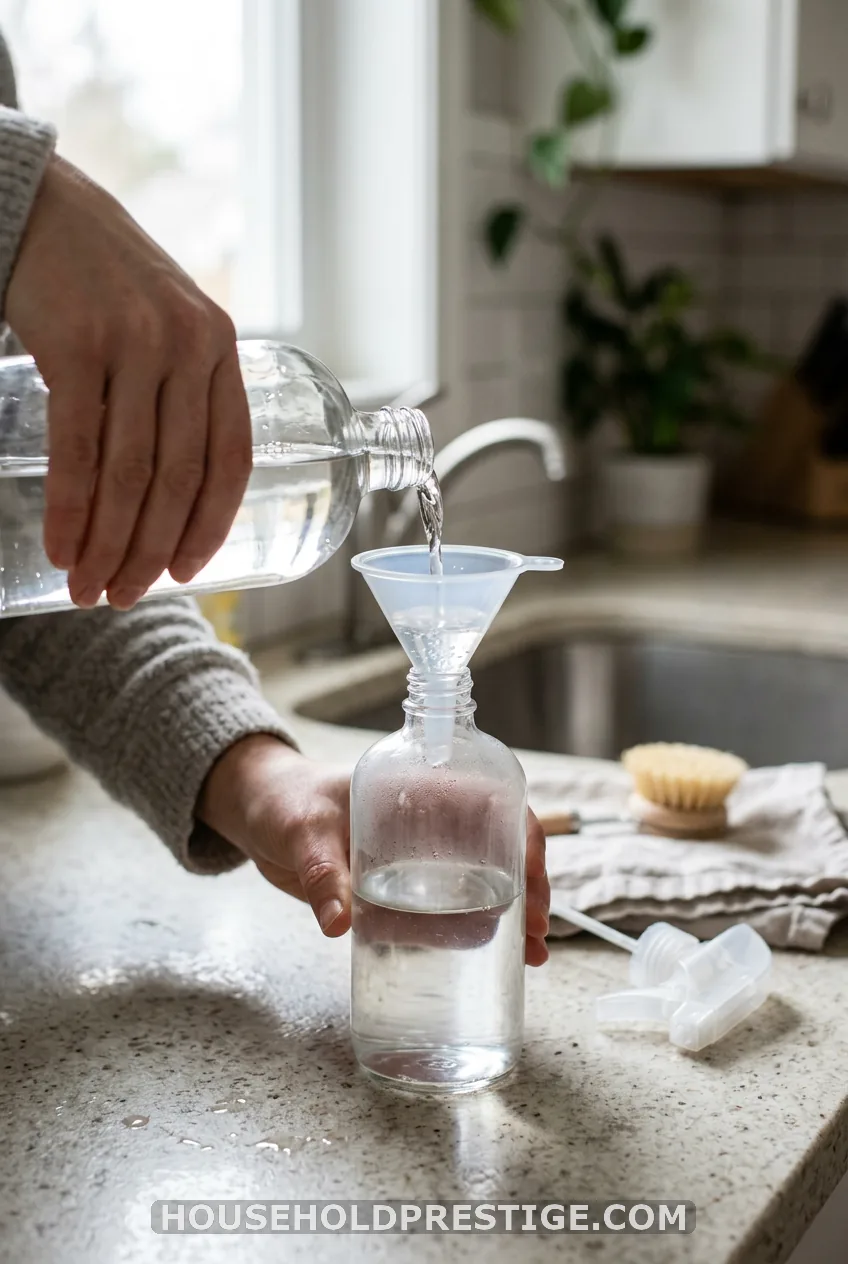
Pour this into a spray bottle:
- 3/4 cup warm water
- 1/4 cup distilled white vinegar
- 1 tablespoon clear dish soap
Tip the bottle gently to mix. Don’t shake it into foam. You want to mist the mattress, never pour on it.
This one mix handles coffee, wine, sweat, mud, juice, and most food spills.
Step 4: Treat the Stain by Type
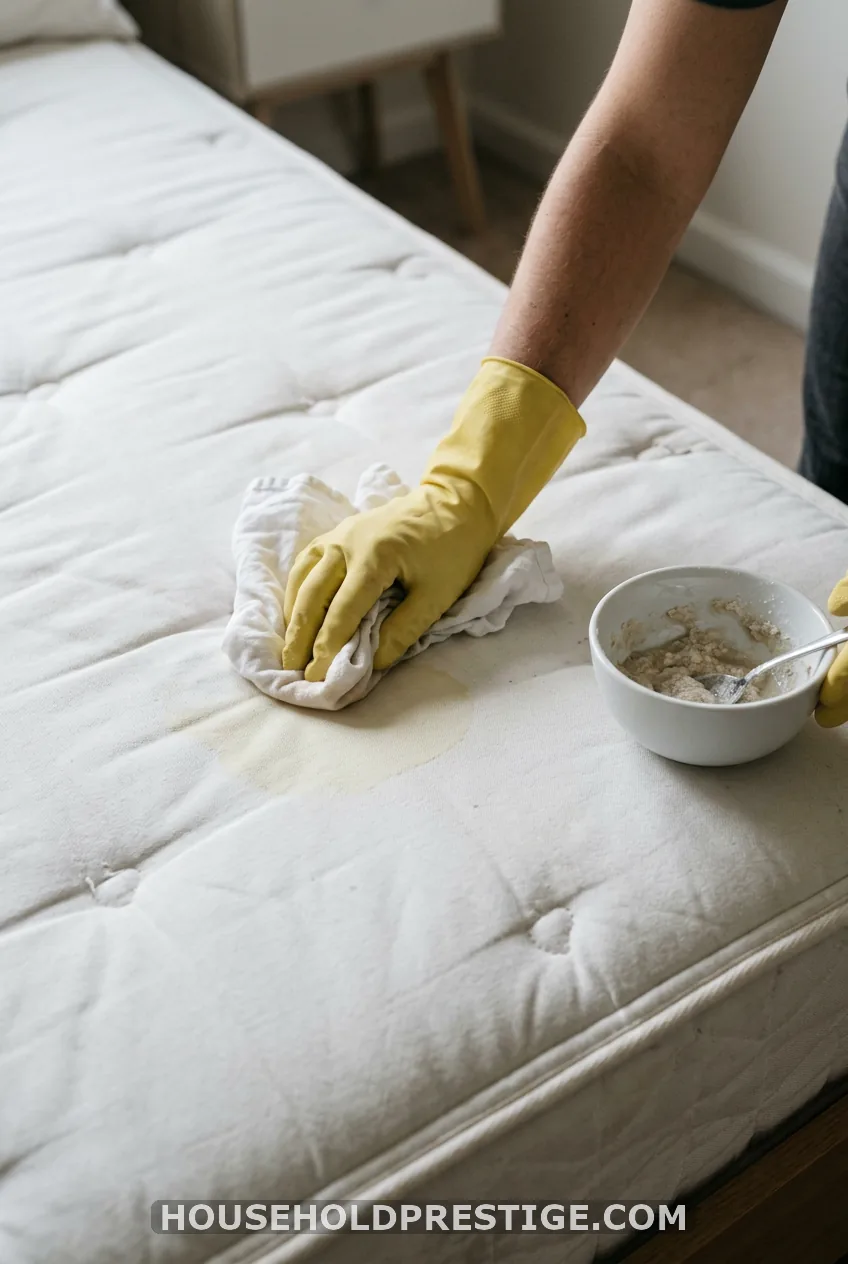
Start with the base cleaner for general spills. For tougher ones, use the swaps below.
Human urine: Blot first. For white mattresses only, mix 1/4 cup hydrogen peroxide, 1 tablespoon baking soda, and a drop of dish soap. Apply it, wait 10 minutes, blot, then dry.
On dark, coloured or patterned mattresses, skip the peroxide. Use the base cleaner instead.
Pet urine: Blot and press out as much as you can. Use an enzyme cleaner. Enzymes break down uric acid crystals, which cause the smell and make pets return to the same spot.
Blood: Cold water only at first. Then dab on hydrogen peroxide (white mattress) or vinegar. Blot away the foam and wipe with a damp cloth.
Sweat and yellow body-oil stains: Rub in a paste of dish soap and baking soda. On white fabric, diluted hydrogen peroxide also works.
Vomit: Remove solids. Use an enzyme cleaner, or baking soda and vinegar. Leave it overnight, then vacuum.
Coffee, wine, tea, juice: Use the base cleaner. For red wine, follow with cold water and a little salt, or club soda.
Ink, grease, lotion: Dab ink with rubbing alcohol on a cloth. Work straight dish soap or baking soda paste into grease.
Step 5: Feather the Edges So You Don’t Get Water Rings
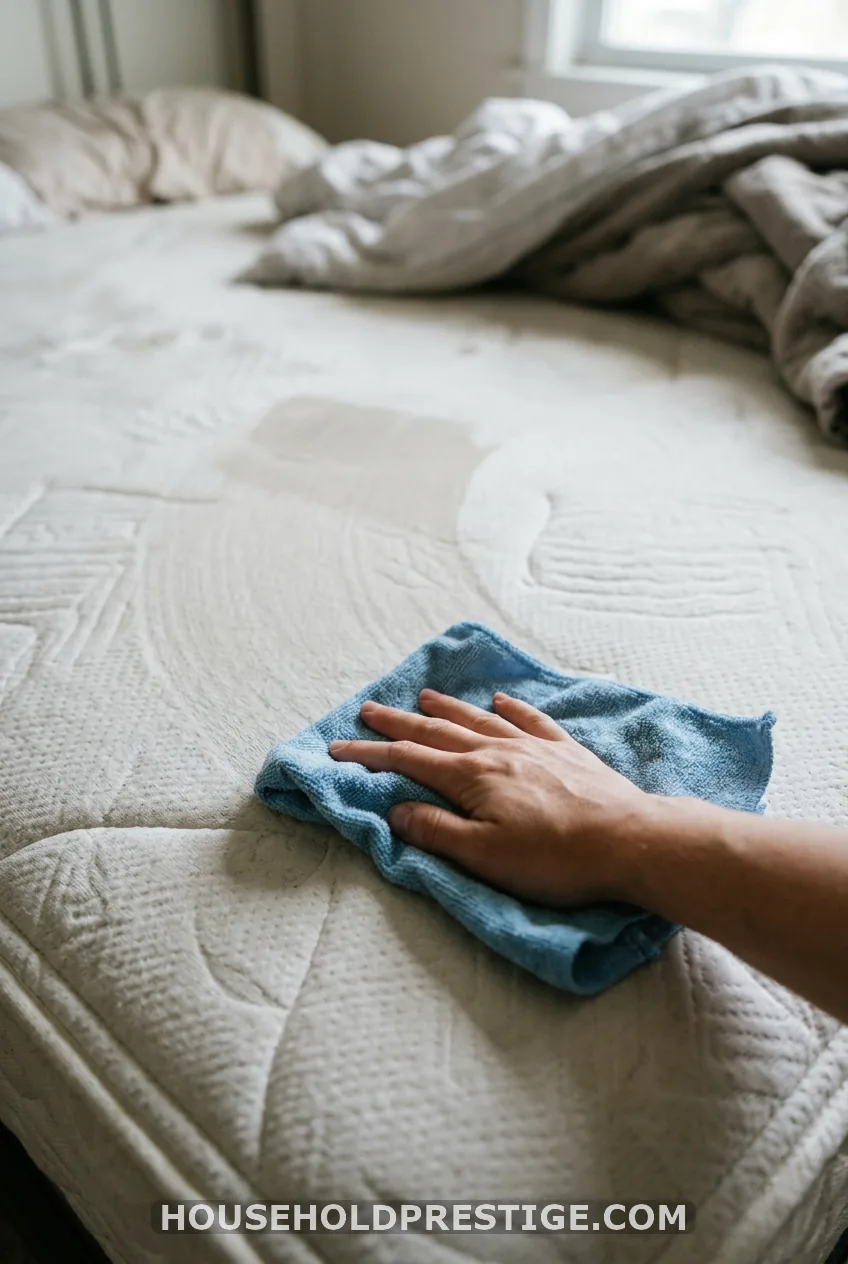
This is the step most people skip. It’s why a cleaned spot turns into a tide mark.
A small wet patch next to dry fabric dries with a hard border. That border is the ring. To avoid it, feather outward. Use a clean, damp cloth and blend the treated area 2 to 3 inches into the untreated fabric.
On very visible spots, mist the whole top lightly and evenly. A light mist, not a soak. It dries as one uniform surface, so no ring forms. This works on light and dark fabric.
Step 6: Pull the Moisture Out and Dry It Fast
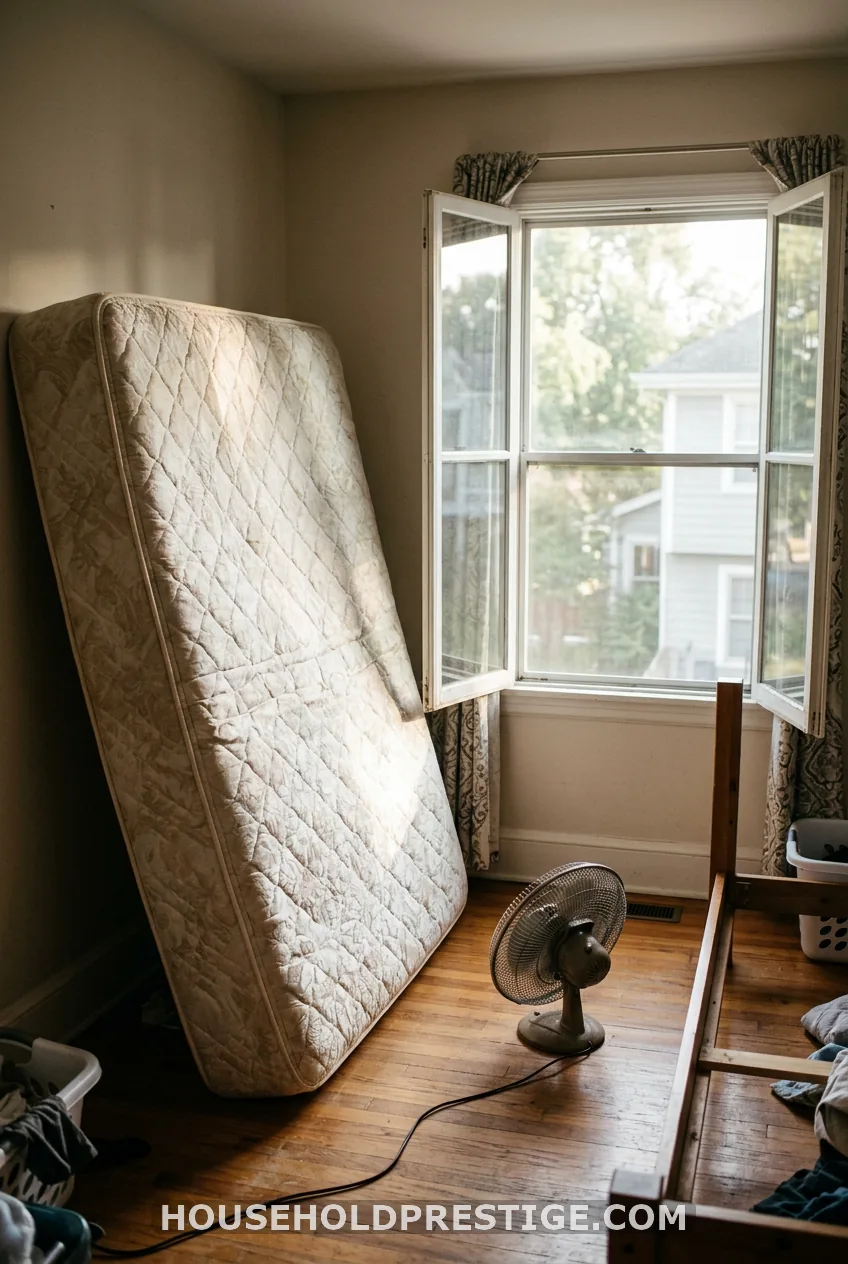
Press dry towels over the area to soak up cleaner and lifted soil. Then “rinse” by blotting with a cloth wrung out in cool, clean water. Blot dry again.
Now dry it. Stand the mattress on its side or prop it up. Open windows and run a fan. Foam can take 6 to 12 hours.
Sun helps. It fades stains and freshens fabric. Bring the mattress in before evening so damp air doesn’t settle in.
Step 7: Deodorize With Baking Soda and Vacuum
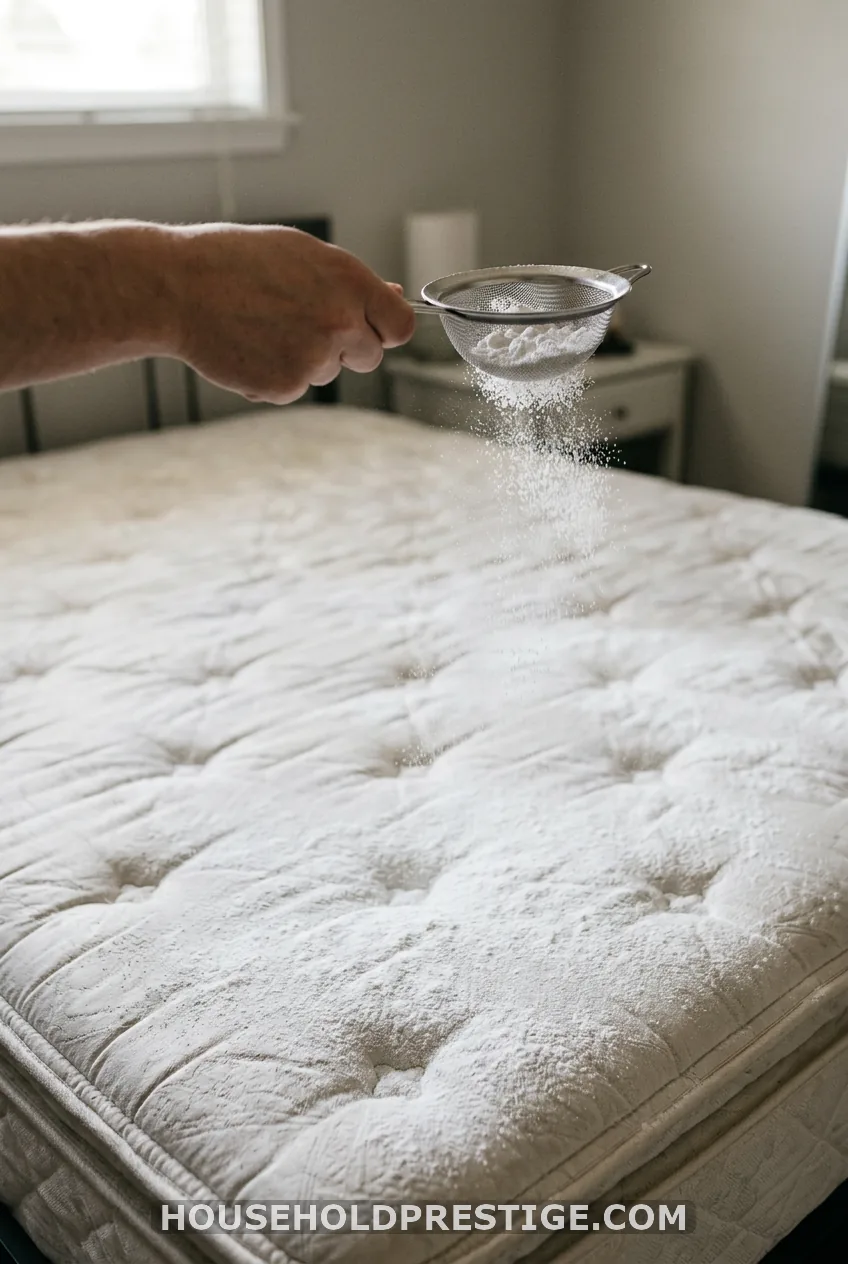
Wait until the mattress is fully dry. Then sprinkle a generous layer of baking soda over the whole top, not just the spot.
Leave it at least 30 minutes. For strong odors, leave it several hours or overnight. A few drops of lavender or tea tree oil stirred into the baking soda give a fresher finish.
Vacuum it all up with the upholstery attachment. Let the mattress air a little longer before you dress the bed.
No Hydrogen Peroxide on Hand, or a Colored Mattress?
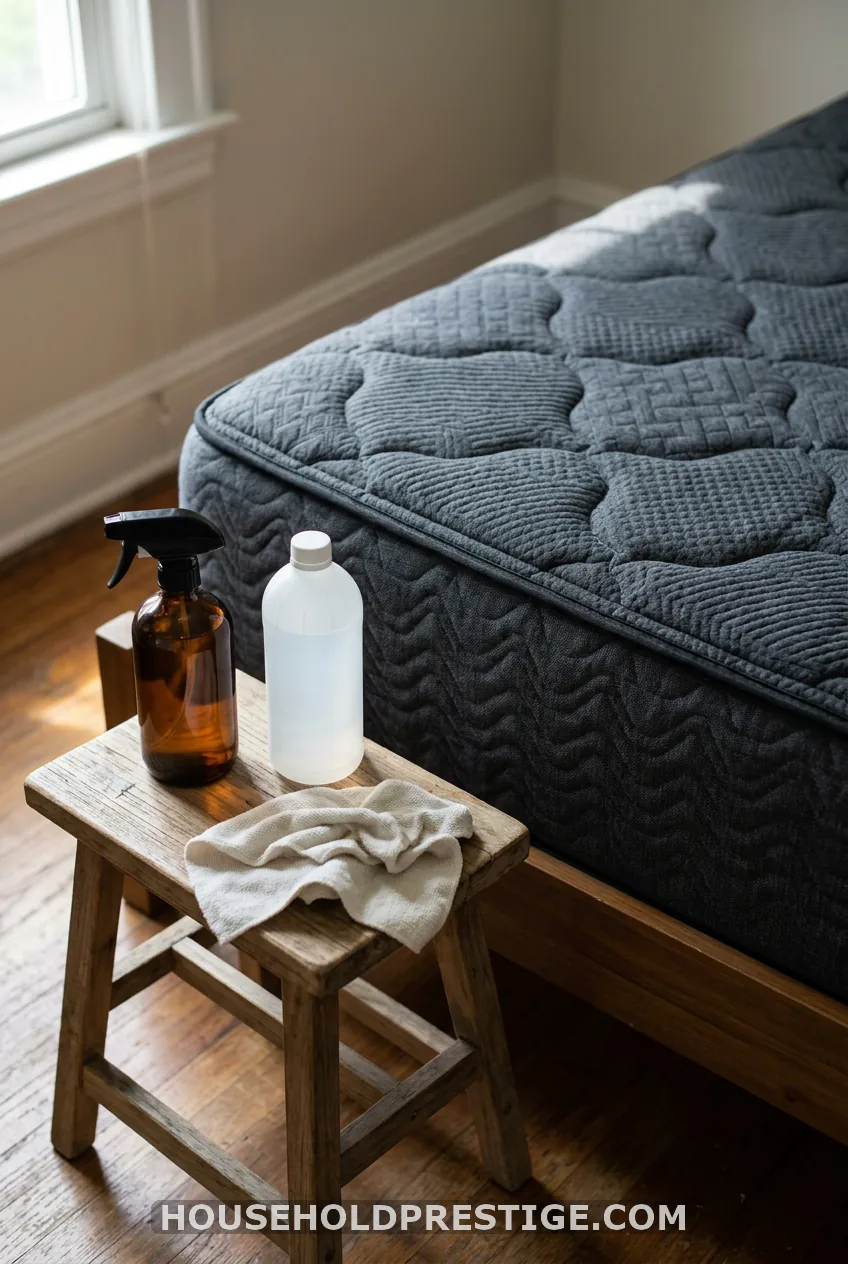
Peroxide bleaches color, so skip it on dark or patterned fabric. You have good options.
- Blood and urine: Use white vinegar or a squirt of clear dish soap in warm water.
- Color-safe cleaning: Choose an oxygen-based, color-safe cleaner. Avoid chlorine bleach. It’s too harsh and too hard to rinse out of foam.
- Protein and pet stains: Enzyme cleaners are the safest bet on any color.
- Red wine: Try club soda, or cold water and salt.
Test on a hidden seam first, every time.
Two Backup Hacks for Old, Stubborn Stains
Use these after the main method, not instead of it.
Shaving cream: Foam plain white shaving cream over a greasy or ink-type mark on light fabric. Wait 10 to 15 minutes. Blot with a damp cloth.
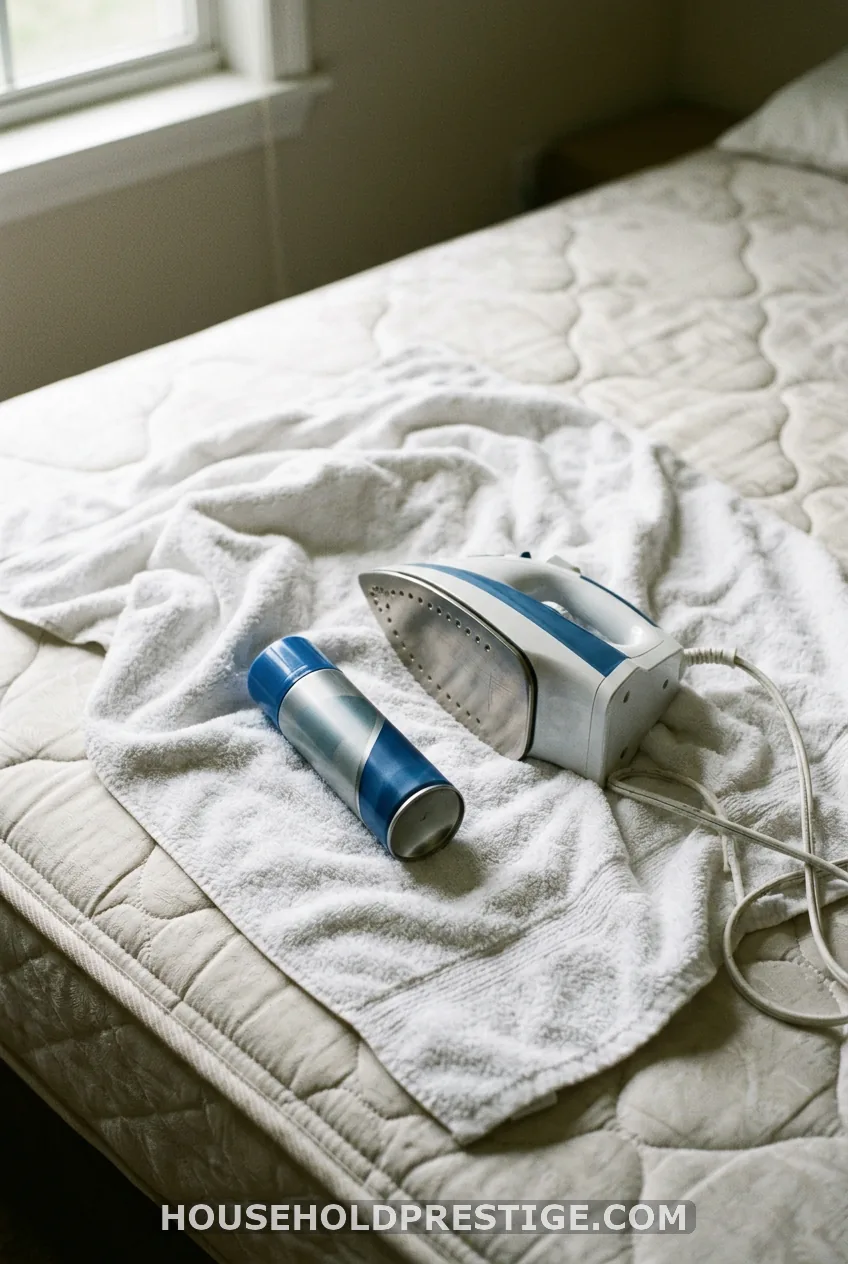
Set-in stains: Let the stain dry completely. Lay a clean white towel over it and press down firmly with your hands for a few minutes. Residue can lift into the towel.
Never use an iron or steam on a mattress. Heat can melt foam and cause burns or a fire.
What Not to Do
Don’t dump or soak. Over-wetting is the top cause of mold and lingering smell.
Don’t use bleach, hot water, or a hairdryer on blood or urine. Don’t scrub with a brush. It pills the fabric and pushes the stain deeper.
And don’t put bedding back on until the mattress is bone dry. If it still smells damp the next day, run the fan longer and add another baking soda layer.
Keeping Stains and Smells From Coming Back
A waterproof, washable mattress protector is the best upgrade you can make. It turns a mattress job into a load of laundry.
Vacuum the mattress monthly. Rotate or flip it on the maker’s schedule. Strip the bed for a few hours now and then so it can air out. Treat spills within minutes, and deal with yellow sweat marks before they set.
Whatever the stain, blot, mist lightly, feather the edges, and dry it completely.
FAQ
Can I clean mattress stains with just baking soda?
Baking soda alone works best on odors and fresh, damp spots. For dried stains, make a paste with a little water or dish soap, let it sit, then vacuum. For set-in yellow or urine stains, pair it with vinegar or hydrogen peroxide.
How do I clean mattress stains without hydrogen peroxide?
Use white vinegar or an oxygen-based, color-safe cleaner instead. An enzyme cleaner is best for urine and blood. All of these are safe for colored fabric that peroxide would bleach.
How long does a mattress take to dry after cleaning?
A light misting usually dries in 4 to 6 hours. Foam that got damp can take up to 12. Prop it up, open a window, and run a fan. Don’t make the bed until it’s completely dry.