

Mini pool ideas are what you start Googling when your backyard is 600 square feet, and you still want to swim this summer. You’ve done the mental math a dozen times. It keeps not working. The standard pool footprint alone is bigger than your entire outdoor space, and contractor quotes feel like they’re written for someone else’s budget.
But here’s what none of the pretty-photo roundups tell you: mini pool ideas aren’t a downgrade. They’re a separate category entirely. Lower chemical volume, cheaper heating, faster installation, and in many cases a smarter design than a standard 15×30 pool sitting in too much unused yard. You don’t need more space. You need the right idea matched to the space you actually have.
This list covers 21 mini pool ideas built for really small backyards — not architecture firms’ “compact” gardens with 3,000-square-foot layouts. Every option includes actual cost ranges, the dimensions that matter, and the stuff competitors always leave out: what goes wrong, what costs more than expected, and which ones are genuinely worth it.
1. The Classic Plunge Pool
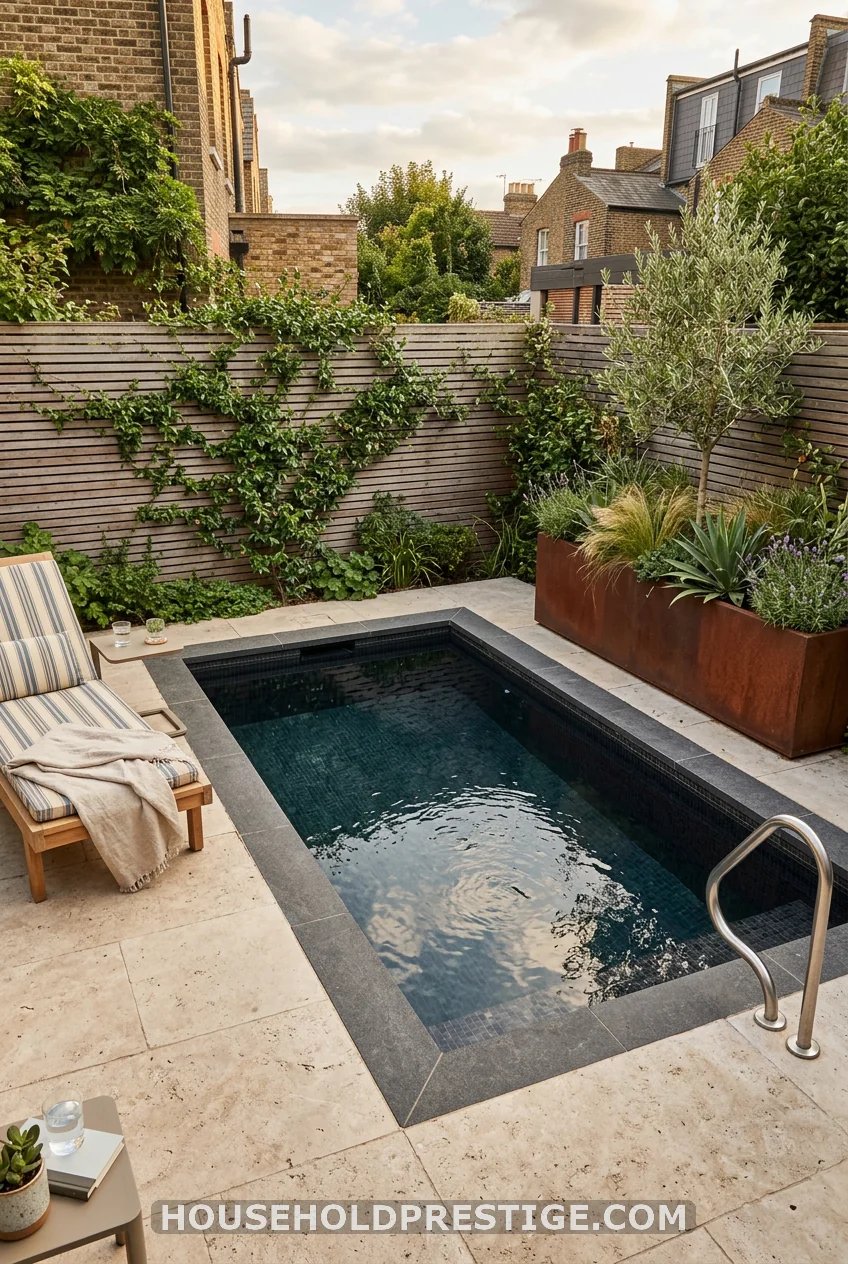
The plunge pool is the mini pool idea that’s dominated small backyard renovations for the last decade — and the data on why is pretty straightforward. It fits where nothing else will, it functions like a proper pool, and it photographs like something from a hotel in Tulum. A 6×10-foot plunge pool with a good tile finish and well-laid coping will stop people mid-sentence the first time they see it.
But the word “plunge pool” covers a wide range of builds, and what you choose upfront determines everything that follows. Here’s a complete breakdown.
Why It Works
A plunge pool is typically 5–8 feet wide, 8–15 feet long, and 4–6 feet deep. That footprint is smaller than most garden beds. At 2,000–6,000 gallons, heating is cheap, filtering is fast, and chemical volume is a fraction of a standard pool. Compare that to a 15×30 inground pool at 30,000+ gallons — you’re maintaining roughly one-tenth the water.
Dimensions to Plan Around
| Pool Size | Width | Length | Depth | Volume |
|---|---|---|---|---|
| Compact Plunge | 5 ft | 8 ft | 4–5 ft | ~1,500 gal |
| Standard Plunge | 6 ft | 10 ft | 5–6 ft | ~2,700 gal |
| Spa-Size Plunge | 7 ft | 12 ft | 5–6 ft | ~3,500 gal |
| Short Lap Plunge | 5 ft | 15 ft | 4 ft | ~3,000 gal |
Step-by-Step: What the Build Actually Looks Like
- Measure and design (Week 1–2). Map your yard and locate your drainage lines. Your pool can’t sit directly over existing drain lines without a relocation. Call 811 (US) to get utility lines marked for free before any digging starts.
- Check permits (Week 2–4). Most US municipalities require a building permit for any permanent inground pool structure. Budget $150–$500 for the permit itself. Most also require a safety fence (minimum 4 feet tall) with a self-closing gate. Skip this and you’ll be removing the pool before you ever swim in it.
- Excavation (Day 1–3). A mini excavator handles this. Expect $800–$2,000 for a standard plunge pool dig, including soil hauling. You’re moving roughly 25–40 cubic yards of material.
- Shell or construction method (Weeks 1–6, varies). Three main choices:
– Fiberglass shell: Factory-molded, dropped in by crane. In the ground in 1–3 days. Cost: $8,000–$18,000 installed.
– Gunite/shotcrete: Sprayed concrete over a rebar frame. Fully custom shapes. Takes 2–6 weeks. Cost: $15,000–$35,000.
– Vinyl liner: Steel or polymer walls with a replaceable liner. Mid-range look. Takes 1–2 weeks. Cost: $10,000–$20,000. - Plumbing and filtration (Weeks 2–4). You need a variable-speed pump, a filter, and basic skimmer and return plumbing. The Pentair IntelliFlo and Hayward TriStar are both solid choices ($800–$1,400 each). Size your pump to your filter’s flow rate, not your pool volume.
- Decking and coping (Weeks 3–6). This is where the visual comes from. Concrete pavers run $8–$15/sq ft installed. Natural travertine is $15–$30/sq ft. Timber decking is $12–$25/sq ft. For a 6×10 pool with a 4-foot border on three sides, budget $2,500–$6,000.
- Heating (Weeks 4–6). A heat pump heater is the most efficient option for a plunge pool. The Hayward HeatPro ($1,800–$2,400) or Pentair UltraTemp ($2,000–$2,800) will heat a 2,700-gallon pool from 60°F to 85°F in 4–8 hours.
- Fill and commission (Day 1). A standard plunge pool takes 12–24 hours to fill with a garden hose. Balance chemistry before the first swim: pH 7.2–7.6, total alkalinity 80–120 ppm, free chlorine 2–4 ppm.
Full Cost Breakdown
| Line Item | Low Estimate | High Estimate |
|---|---|---|
| Excavation | $800 | $2,000 |
| Shell or construction | $8,000 | $35,000 |
| Plumbing + filtration | $1,500 | $4,000 |
| Decking + coping | $2,500 | $6,000 |
| Heating | $1,800 | $2,800 |
| Permits + fence | $500 | $1,500 |
| Total | $15,100 | $51,300 |
Common Mistakes to Avoid
- Undersizing the pump. A pump too small for your filter causes cloudy water and burned-out equipment. Always confirm GPM ratings match.
- Forgetting the fence requirement. Most homeowner insurance policies require a compliant pool fence. Check your policy before breaking ground, not after.
- Skipping the heater. An unheated plunge pool in a northern climate sits unused for seven months a year. The heater pays for itself in usable pool days.
- Ignoring sunlight. A north-facing pool in a shaded yard won’t heat naturally. Aim for 4–6 hours of direct sun on the water surface daily.
2. Stock Tank Pool
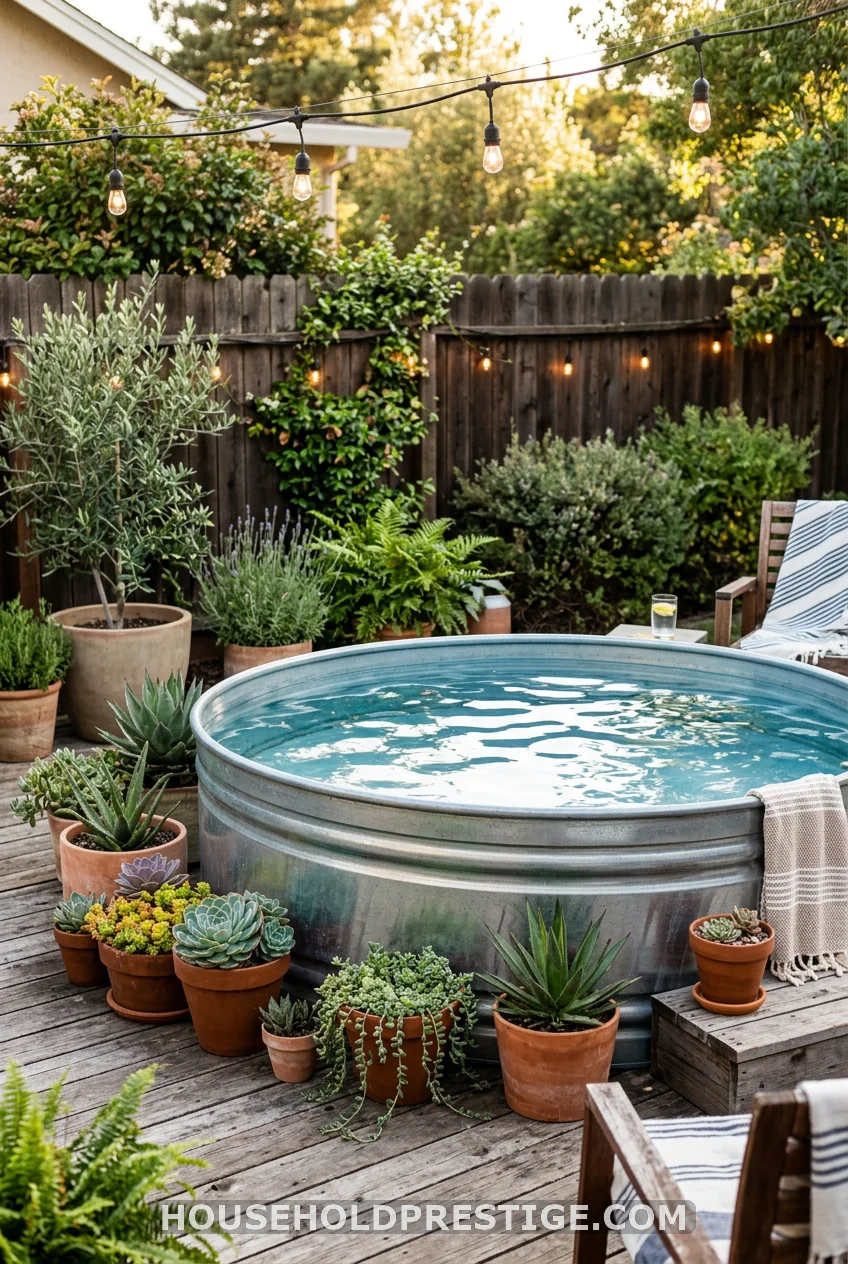
A 10-foot galvanized stock tank holds around 700 gallons and costs $450 at Tractor Supply. Add a $35 pump-filter kit, a chlorine float, and a garden hose. Drill a bulkhead fitting for the pump intake, run the line to a return jet, fill it, and swim. Done. Total setup: under $700. Maintenance is identical to any small pool — test chemistry weekly, shock monthly, clean the filter when flow drops. Not a kiddie pool in disguise. A genuinely functional mini pool for about the price of two restaurant dinners.
3. The Spool (Spa-Pool Hybrid)
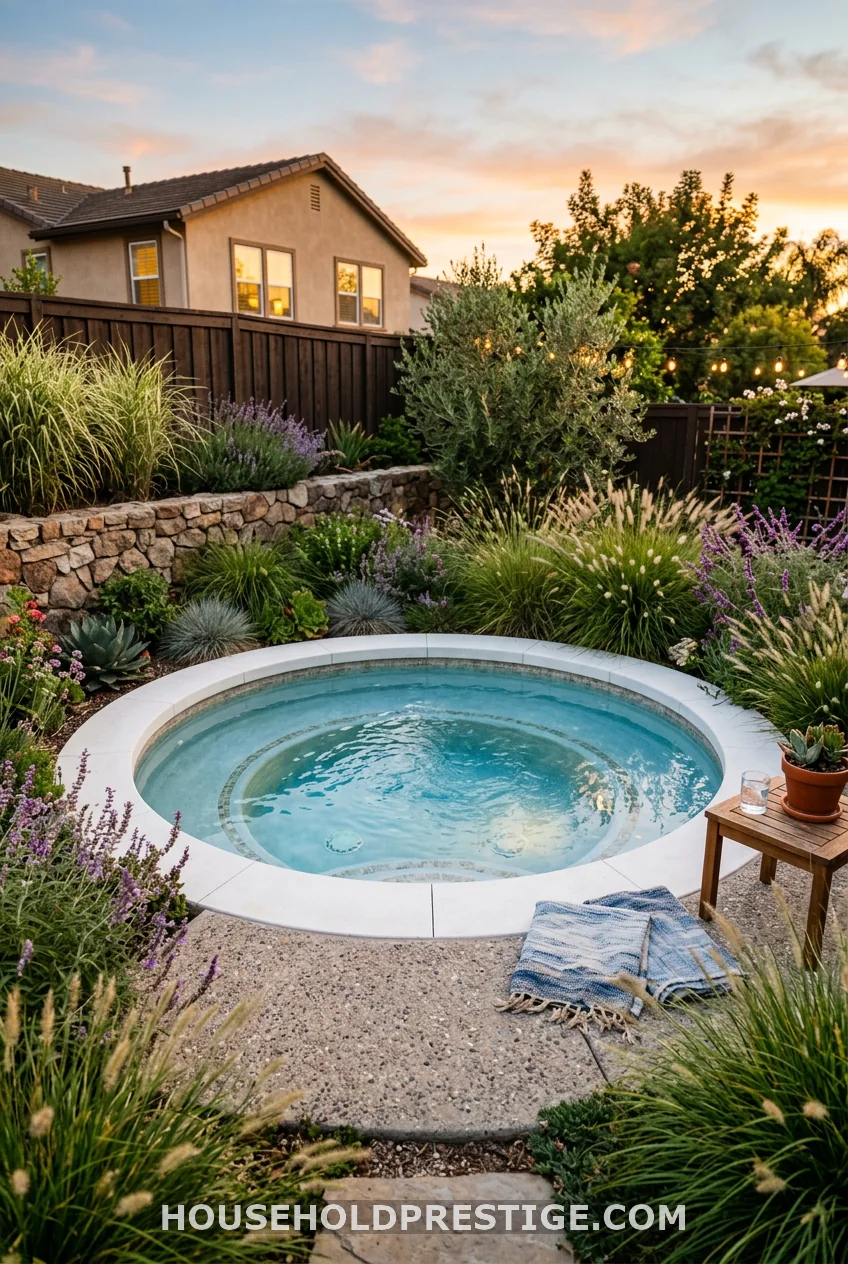
The spool is the cheat code of the mini pool world. Bigger than a hot tub (typically 10–14 feet in diameter, or 8×12 feet rectangular), smaller than a full pool, and it does both jobs. Drop it to 78°F in summer, heat it to 104°F in winter. Twelve months of use instead of four.
What sets the spool apart from a standard plunge pool is the built-in perimeter bench — usually a full-circumference ledge at 18 inches depth. You can sit in it socially, the way you’d use a hot tub, while the center drops to full swimming depth. Kids stand on the bench. Adults sit. Everyone’s in the water at the same time without bumping into each other.
Cost: $15,000–$28,000 installed. Freestanding fiberglass spool models like the Endless Pools Fastlane series or Master Spas TheraCare run $8,000–$14,000 before installation.
One decision to make before you get a quote: do you want hydrotherapy jets or not? A full-jet spool needs a separate blower pump ($1,200+) and a larger electrical service. A spool without jets is just a heated plunge pool with a bench — perfectly functional, about $3,000 cheaper. Know which one you’re pricing before the contractor assumes the other.
4. Above-Ground Cocktail Pool With Timber Cladding
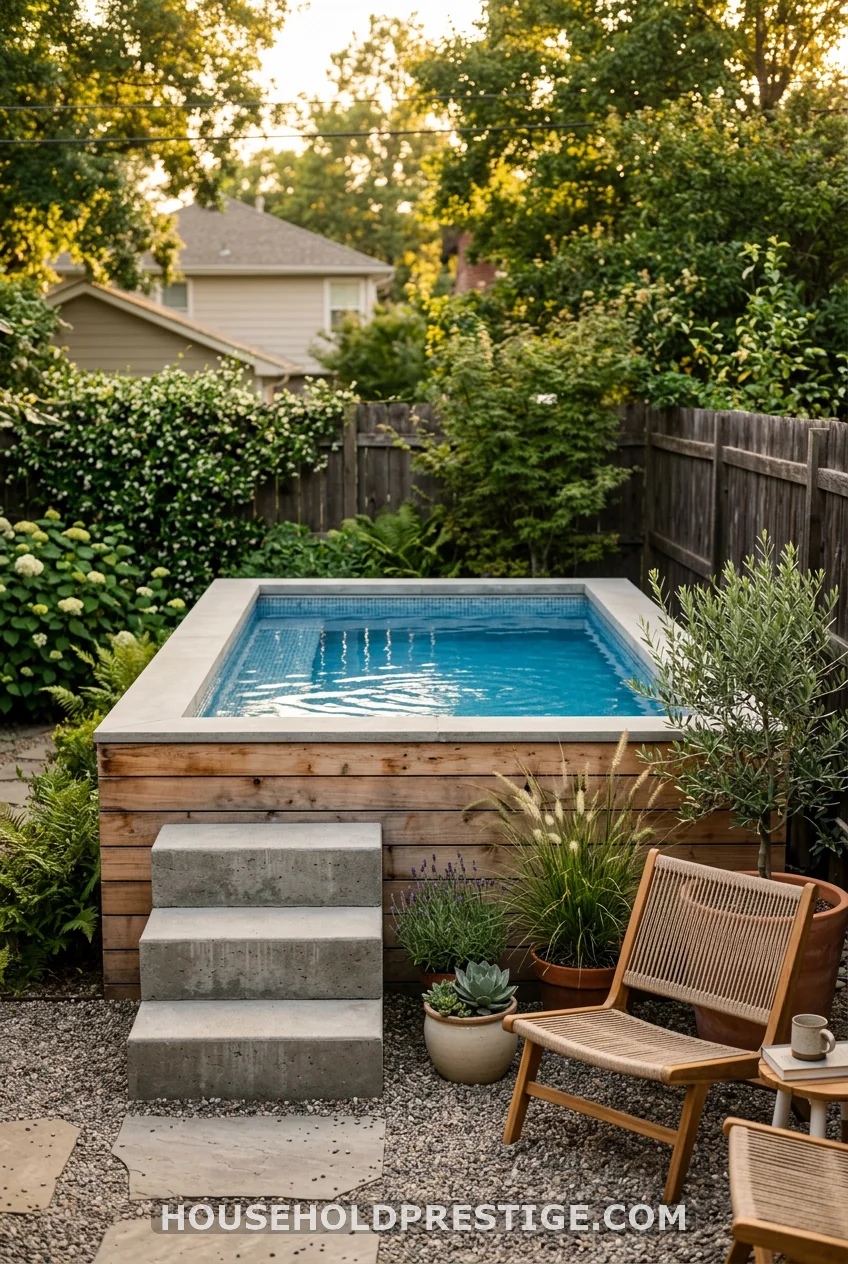
A cocktail pool is a short above-ground pool — typically 24–36 inches tall — that sits at or slightly above grade, usually clad in timber or composite to look intentional rather than like a summer rental afterthought. The water surface sits at standing height, which makes it inherently social: adults can lean on the edge from the outside while kids splash inside.
Stock versions (Aqua-Splash, Wilbar, and similar above-ground models) run $1,500–$4,000 before cladding. Add horizontal cedar or composite timber cladding, a small pump-and-filter kit, and a step unit, and you’re at $3,000–$7,000 all in. That’s the highest visual impact per dollar on this entire list.
One honest caveat: these pools are seasonal in cold climates. The liner degrades with freeze-thaw cycles if you leave water in year-round. Drain in October, store the liner inside, reinstall in May. About three hours each way.
5. The L-Shaped Corner Mini Pool
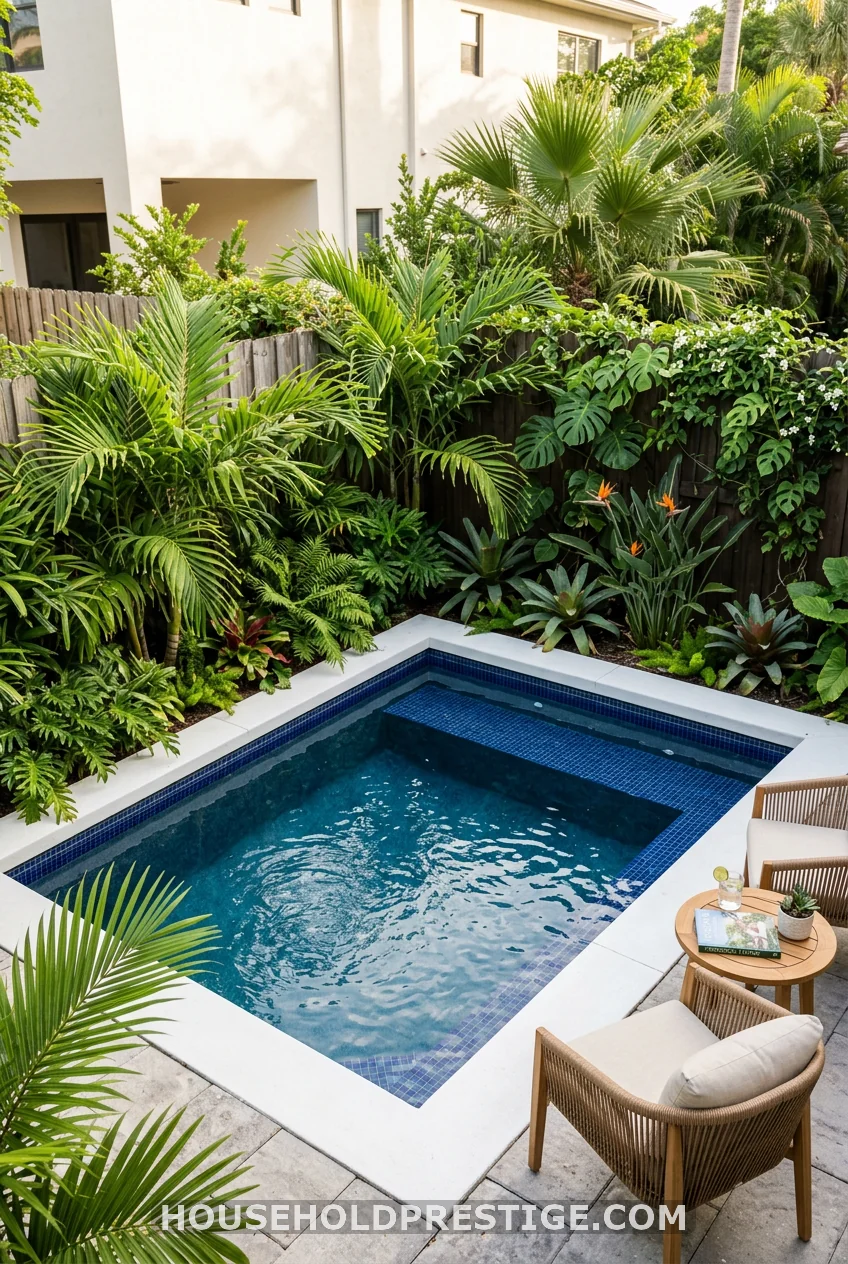
Two rectangles joined at a corner. One arm is 4×8 feet at 5-foot depth — that’s your swimming zone. The other is 4×5 feet at 3-foot depth — that’s your wading area or step zone. Combined footprint: roughly the size of a king-size mattress. Most useful when there’s a dead corner in your yard that currently does nothing except collect fallen leaves and mild regret. Cost tracks with a standard plunge pool: $18,000–$35,000 depending on material and finish.
6. Fiberglass Shell Pool
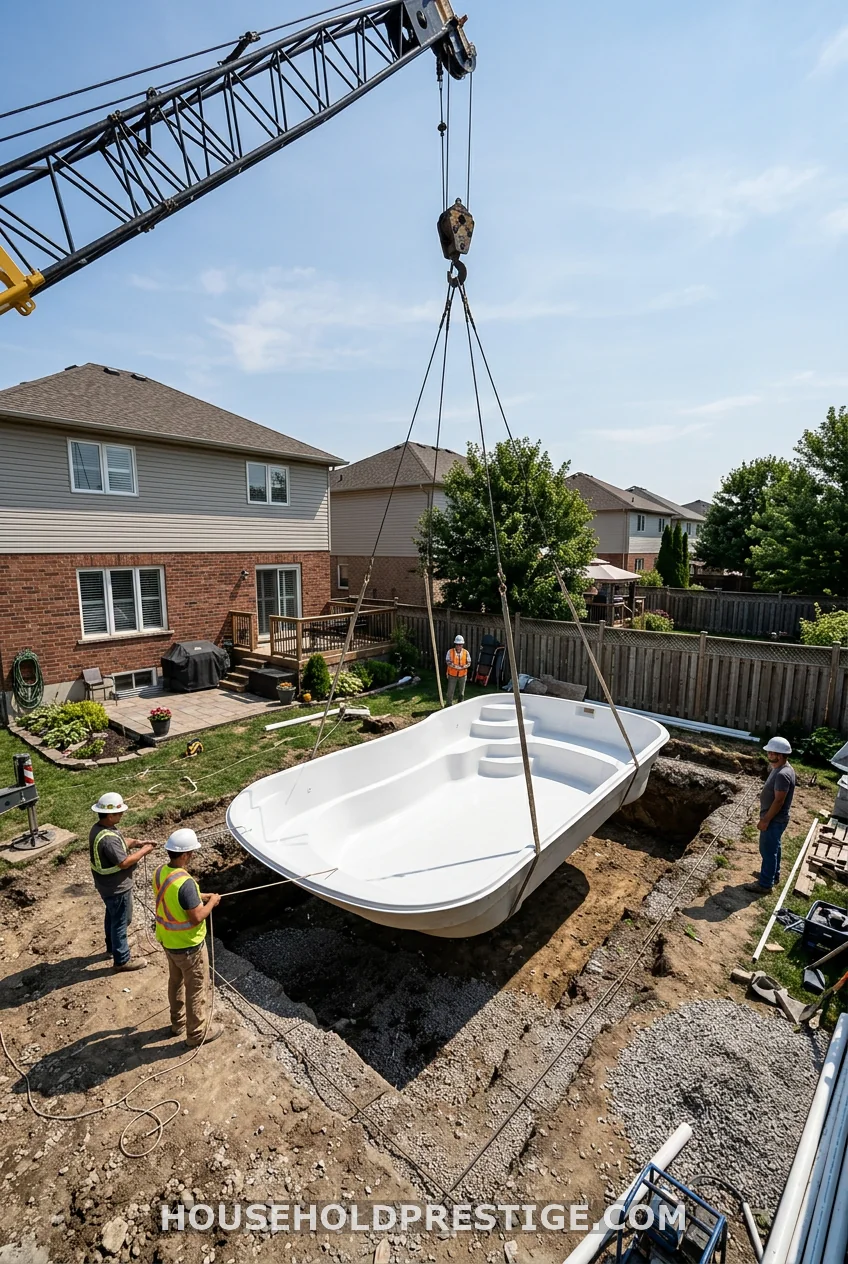
Fiberglass is the fastest mini pool route if you want water in the ground within a month of signing the contract. The shell arrives factory-finished in one piece and goes into the ground in a day or two. No curing time. No formwork. No waiting for the concrete to set.
The trade-off: you’re limited to whatever shapes the manufacturer offers. Latham, Blue Hawaiian, and Leisure Pools all produce shells in ranges that work for small backyards, but you need to ask specifically for compact sizes. Leisure Pools’ standard Splash model starts at 12×24 feet — too large for tight spaces. Their Plunge range (10 feet wide) is the better fit. Latham’s Sandal model (8 feet wide) is one of the few factory shells small enough for a genuinely constrained backyard.
Cost: $10,000–$18,000 for the shell, $5,000–$10,000 for installation and decking. Total: $15,000–$28,000.
7. Shipping Container Pool: What They Don’t Tell You
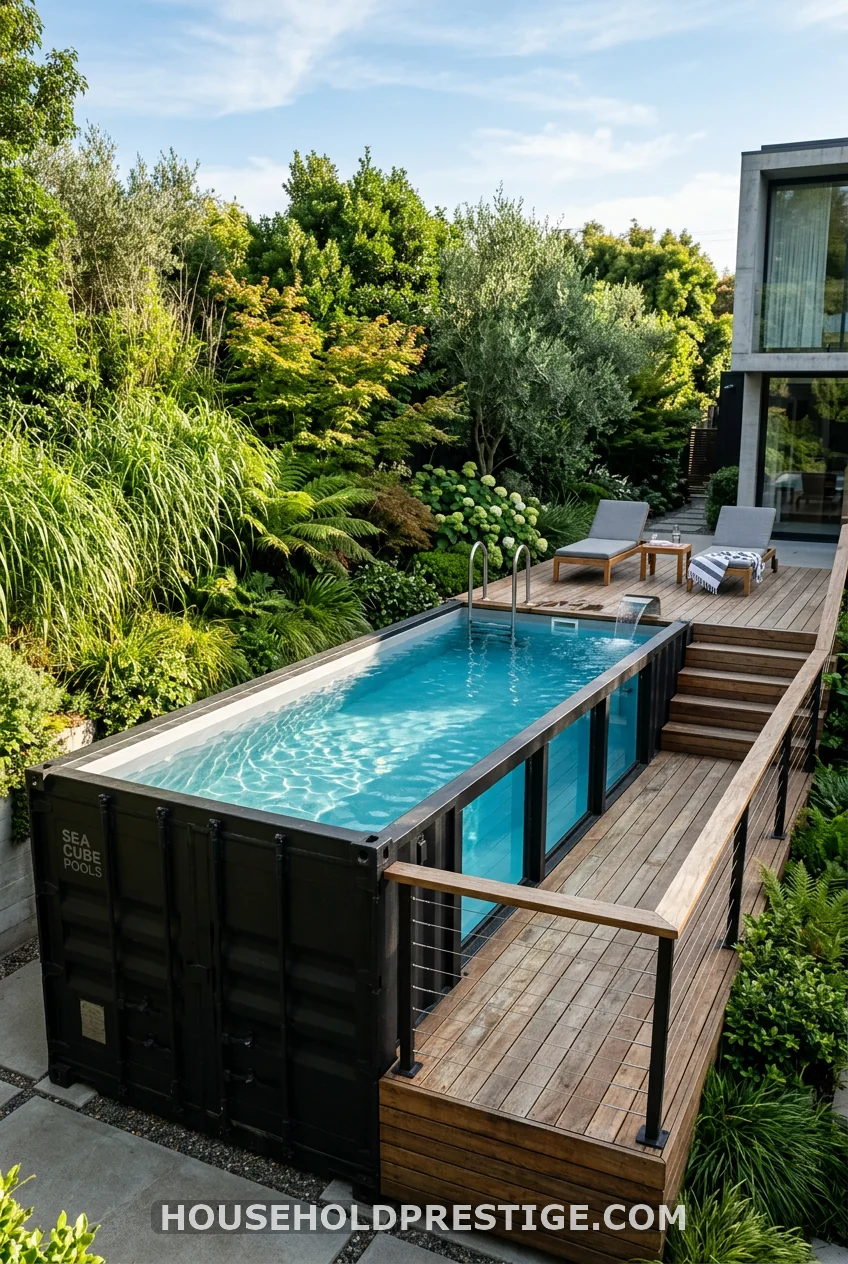
Every few months, container pools go viral. The concept is compelling: take a 20-foot steel shipping container ($2,000–$4,000 delivered), waterproof the interior, add a liner, hook up filtration, swim.
What most people believe: This is a $5,000 pool hack.
What it actually costs: $12,000–$25,000. Here’s the real line-item breakdown most viral posts skip entirely.
The container: $2,500–$5,000 delivered. Then: structural reinforcement to prevent bowing under water pressure ($1,500–$3,000), interior liner or epoxy coating ($1,500–$4,000), filtration plumbing ($1,500–$3,000), electrical for pump and lighting ($1,000–$2,500), decking and coping ($2,000–$5,000), crane delivery to your specific yard ($800–$1,500), permits ($300–$800). That’s your real number.
The finished result is genuinely striking. A matte-black container pool in a landscaped yard looks like something from an architecture competition, not a workaround. But if a contractor quoted you $5,000 for the complete job, that quote is missing seven line items. Get the full scope in writing before you commit.
Worth it? Yes — for the aesthetic, if you have an honest quote. Not as a budget shortcut. It isn’t one.
8. Semi-Inground Pool
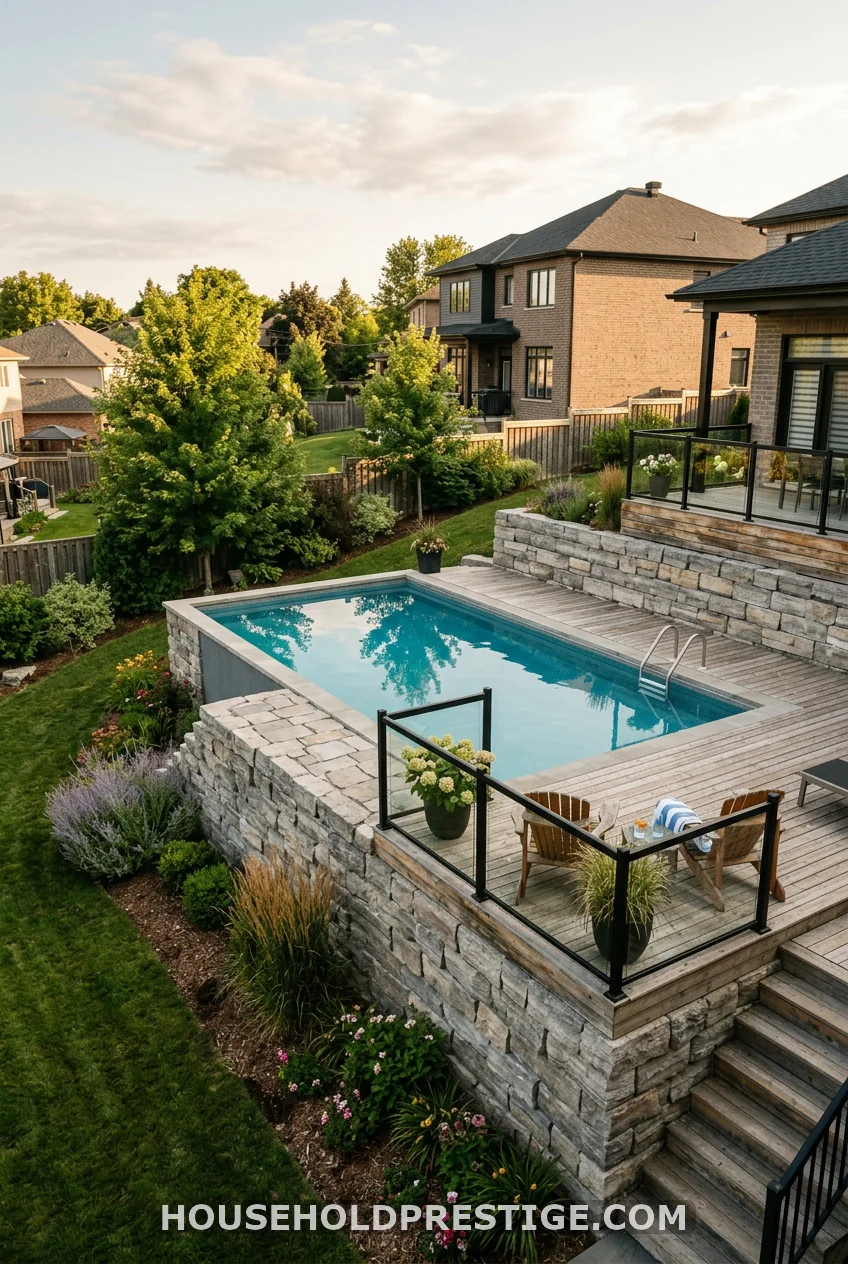
Sloped backyards get access to a different set of mini pool ideas. A semi-inground pool follows the terrain: the downhill side sits at or below grade, while the uphill side sits above ground, held by the landscape itself. You cut excavation costs dramatically because you’re only digging on one side.
The raised portion becomes a natural platform for a deck — a 12-inch-high pool wall is a perfect built-in seating ledge when finished with timber or composite.
Cost: $10,000–$22,000. Significantly less than full inground because of reduced excavation. Trevi, Cornelius, and Wilbar all produce semi-inground-rated kits.
Critical spec check: make sure whatever kit you choose is rated for semi-inground installation. Not every above-ground pool wall is engineered for the lateral soil pressure that comes from being partially buried. That spec is non-negotiable — a non-rated wall will bow, crack, or fail within a few seasons.
9. Natural Mini Pool (Chemical-Free Bio Pool)
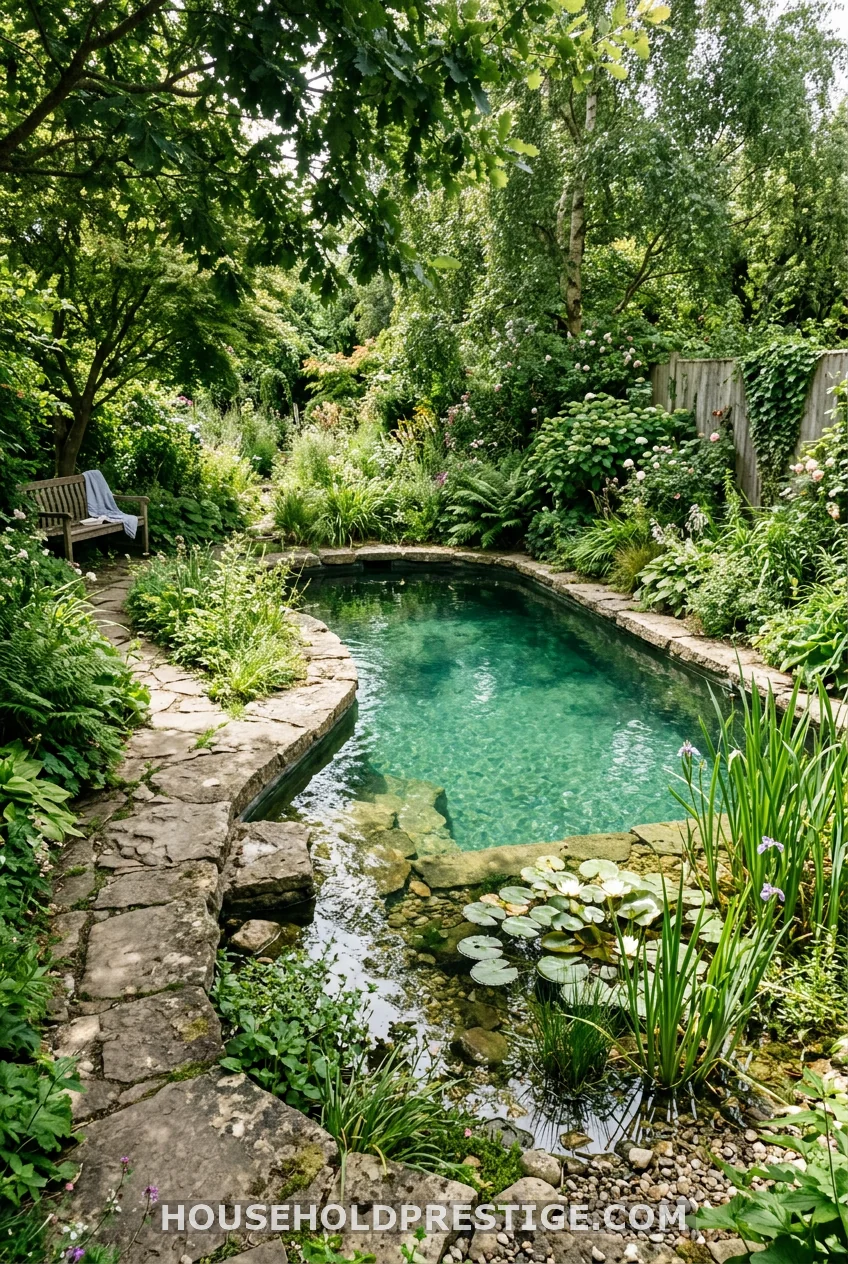
A natural swimming pool replaces chlorine with biology. The swimming zone sits adjacent to a regeneration zone — a planted shallow area where aquatic plants and gravel filter the water continuously. No chemicals. No residue on your skin. Just clear water maintained by plant biology and a slow-circulation pump that runs 24/7.
For a small backyard, the combined footprint needs to be at least 200 square feet — roughly 100 for swimming, 100 for the planted zone. You cannot shrink the regeneration zone without compromising water clarity; the plant-to-water ratio is the mechanism that keeps it clean.
Cost: $20,000–$50,000 professionally installed. That’s more expensive than a conventional plunge pool, and the reason is straightforward: you’re building two pools plus a planted water garden simultaneously. The ongoing savings, though, are real. No chemicals ($500–$1,500/year savings), lower pump energy consumption, and no liner replacement cycle. Companies like Clear Creek Natural Pools (US) and BioNova (international) specialize in small-footprint versions.
Who this is actually right for: anyone who reacts to chlorine, families with kids who swim daily, or anyone who wants a water feature that reads as a garden element you can also swim in. Not right for anyone who wants low-maintenance. Natural pools require more attention than a conventional pool during the first two seasons while the biology establishes.
10. The Dark-Bottom Pool
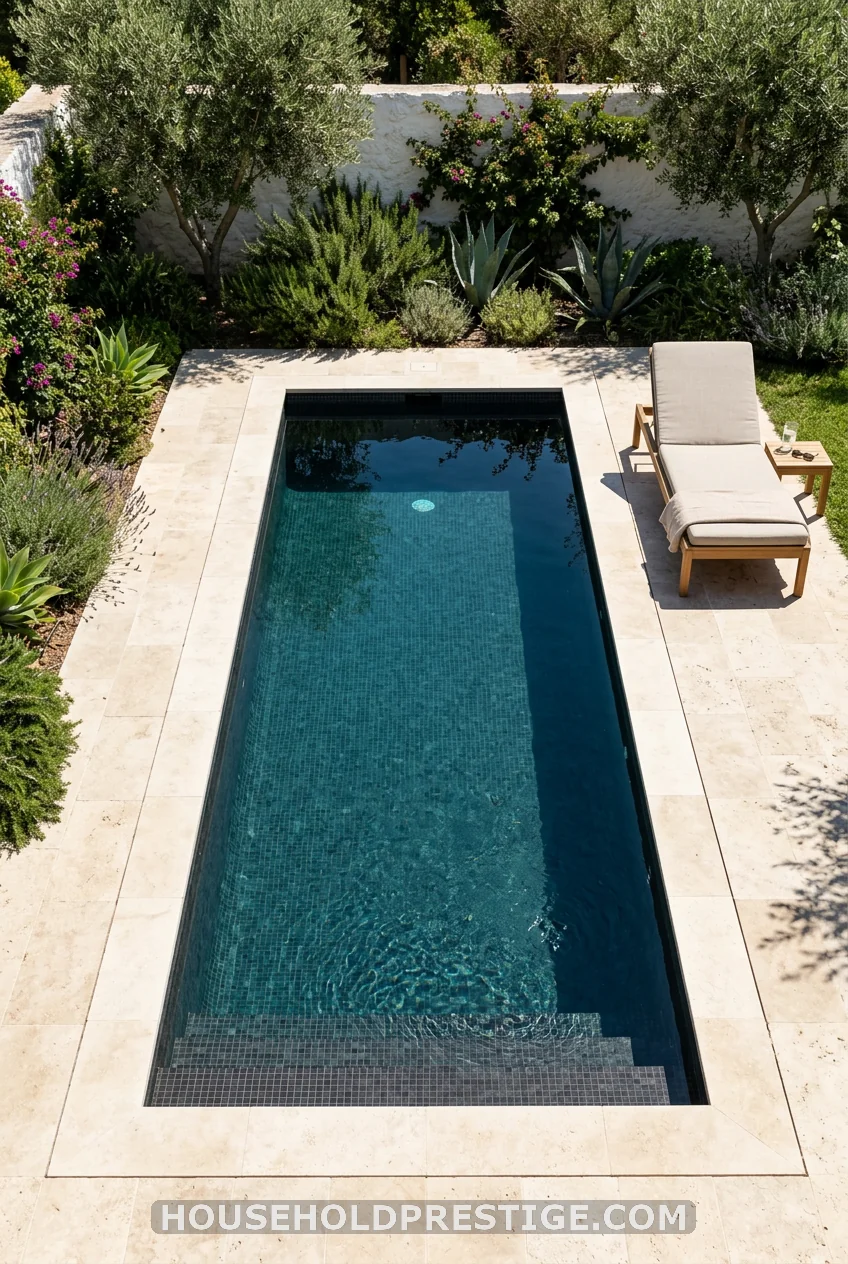
Black or dark charcoal pool tiles make the water look like deep ocean glass — the kind of visual you usually only see at five-star hotels. They also absorb solar heat 15–20% more efficiently than light finishes. In a sun-exposed yard that gets 6+ hours of direct sun daily, you may not need an electric heater at all. The tiles cost $4–$8 more per square foot than standard white plaster, but the visual result and the energy savings justify it in most installations.
11. Concrete Block DIY Mini Pool
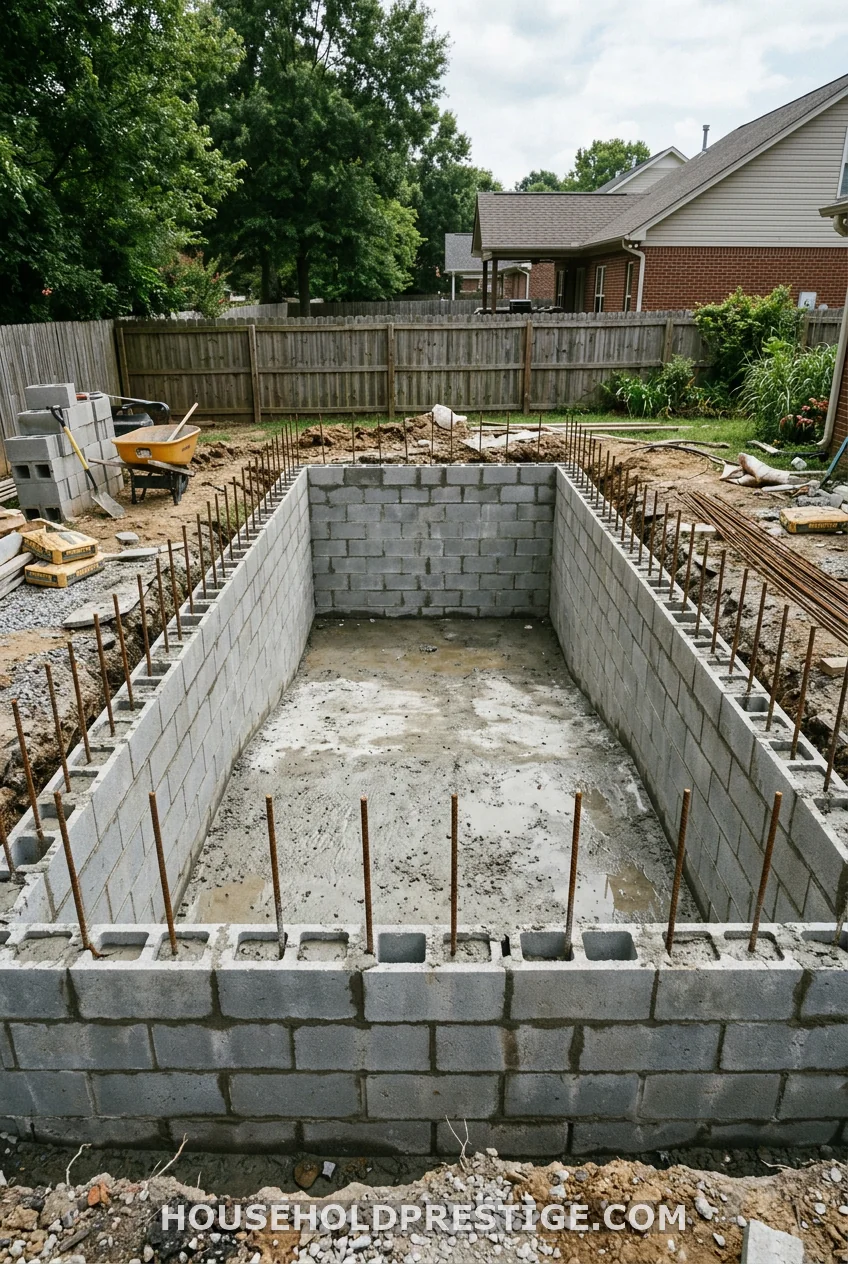
This is the $5,000–$9,000 mini pool that actually exists. Not a stock tank. Not a kit. An actual inground concrete block pool you build yourself — or with one helper — over three or four weekends.
The method is well-documented in Australian and UK DIY communities where pool permits are more accessible to homeowners. In the US, you’ll need a structural engineer to stamp your plans in most counties (add $500–$1,500). That’s not optional — it’s what protects you when the inspector shows up.
What You’re Building
A standard DIY concrete block pool is 8 feet wide by 12 feet long by 4.5 feet deep. Walls are 8-inch concrete masonry units (CMUs), reinforced with rebar and filled solid with concrete. The floor is a poured concrete slab, 4–6 inches thick, on compacted gravel.
Step-by-Step
- Excavate. Rent a mini excavator ($300/day) and dig to your finished depth plus 8 inches for the floor slab. Add 16 inches on each side for wall thickness and working room. Budget two full days for a first-time builder.
- Pour the floor slab. Grade and compact 4 inches of crushed gravel. Set #4 rebar on chairs at a 12-inch grid. Order ready-mix concrete — about 1.5 cubic yards for an 8×12 pool floor. Float it smooth. Cure 5–7 days before laying walls.
- Lay the CMU walls. Standard 8x8x16-inch blocks with Type S mortar. Lay three courses, then set vertical rebar (#4, 24 inches on center) in the block cores and fill with concrete. Use running bond at corners for structural integrity.
- Bond beam (cap course). The top course uses U-block (lintel block) with horizontal rebar running continuously around the perimeter, filled with concrete. This is the structural ring that keeps walls from spreading outward under water pressure.
- Waterproofing. Two coats of hydraulic cement (Quikrete FastSet or equivalent), followed by two coats of Thoroseal ($80/5 gal, coverage ~80 sq ft per coat). Cure each coat 24–48 hours. This is what keeps the water in.
- Interior finish. Options from cheapest to most durable: epoxy pool paint ($200–$400 DIY, recoat every 3–5 years) → white Marcite plaster ($1,000–$3,000 by a plasterer, lasts 10–15 years) → ceramic tile ($2,000–$6,000, longest-lasting).
- Plumbing. Set your main drain (anti-entrapment dual drain required by US code), skimmer, and returns before waterproofing. Run flex PVC to your equipment pad. Budget $600–$1,500 in materials.
- Equipment. A cartridge filter plus 1.5 HP pump combo (Hayward C1750 or similar) runs $600–$900. Add a basic digital timer for $40.
- Backfill with care. Fill the pool with water before backfilling around the outside. The water pressure inside counteracts soil pressure outside. Backfill in 6-inch lifts, wet and compact each layer.
Materials and Cost
| Item | Low | High |
|---|---|---|
| CMU blocks (~350) | $700 | $900 |
| Mortar + fill concrete | $400 | $700 |
| Rebar + hardware | $200 | $350 |
| Floor ready-mix (1.5 cu yd) | $250 | $400 |
| Waterproofing | $300 | $500 |
| Interior finish (epoxy to plaster) | $200 | $3,000 |
| Plumbing + fittings | $600 | $1,500 |
| Equipment | $700 | $1,000 |
| Excavation (rental + gravel) | $500 | $800 |
| Permits + engineering stamp | $500 | $1,500 |
| Total | $4,350 | $10,650 |
Common Mistakes
- No engineer stamp. Lateral soil pressure on a 4.5-foot-deep wall is significant. Undersized wall or rebar placement causes cracking within a few years.
- Rushing cure times. Concrete reaches full strength at 28 days. You can fill at 7 days, but treat the structure gently for the first month.
- Choosing epoxy paint and expecting permanence. It needs recoating. Know that going in, or budget for plaster from the start.
12. Cocktail Pool With Built-In Bench and Baja Shelf
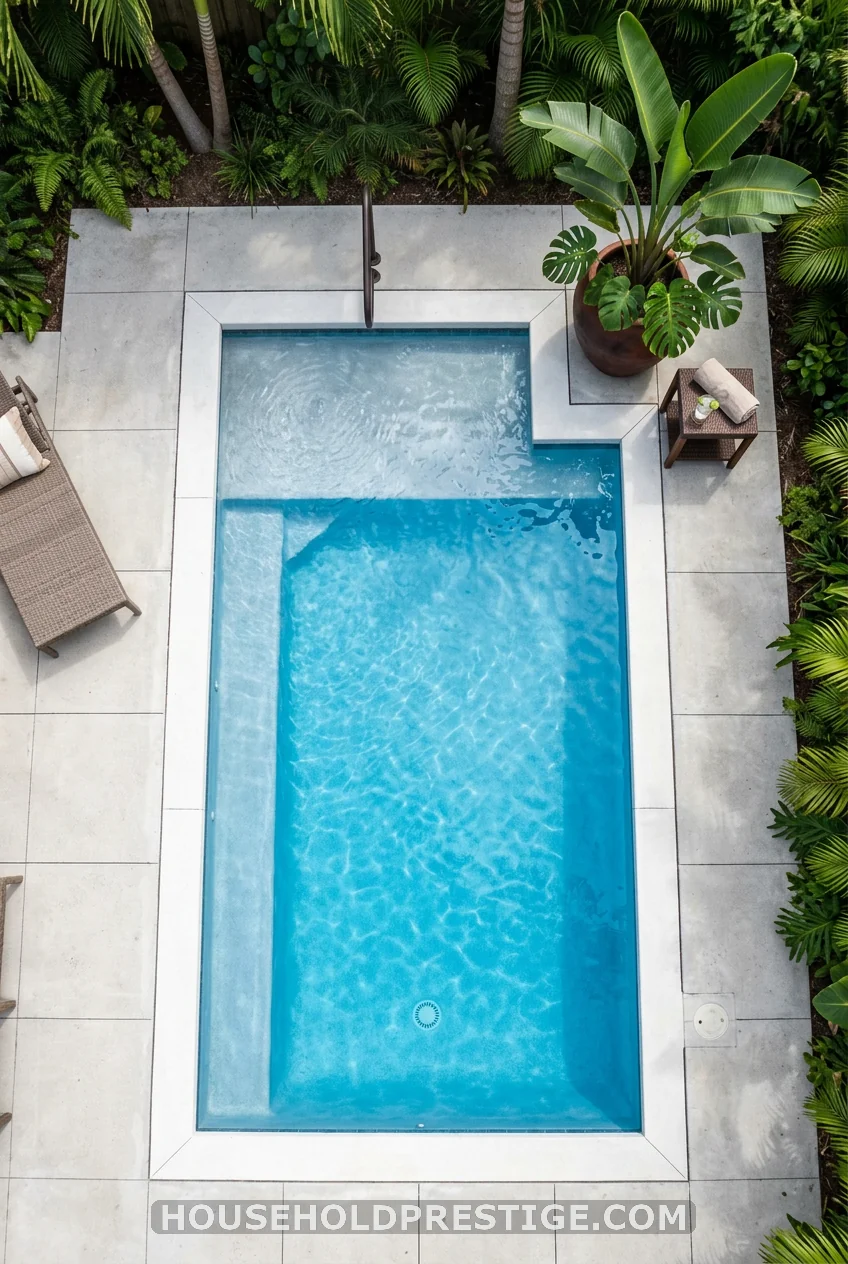
The built-in bench changes how a small pool gets used. Instead of treading water or sitting on the edge, you sit inside the pool. Half your body is submerged. You’re social without needing to swim. Kids stand on the baja shelf (8–12 inches of water) while adults sit on the bench ledge (18 inches below the surface). The bench also functions as a step entry, which removes the need for a separate ladder.
This is the feature most pool builders say clients wish they’d requested. Ask for a tanning ledge at one end and a full-width bench at the opposite end. Most plunge pool shells and gunite builds can incorporate both without a meaningful cost increase — typically $800–$1,500 added to the total.
13. Rooftop or Balcony Mini Pool
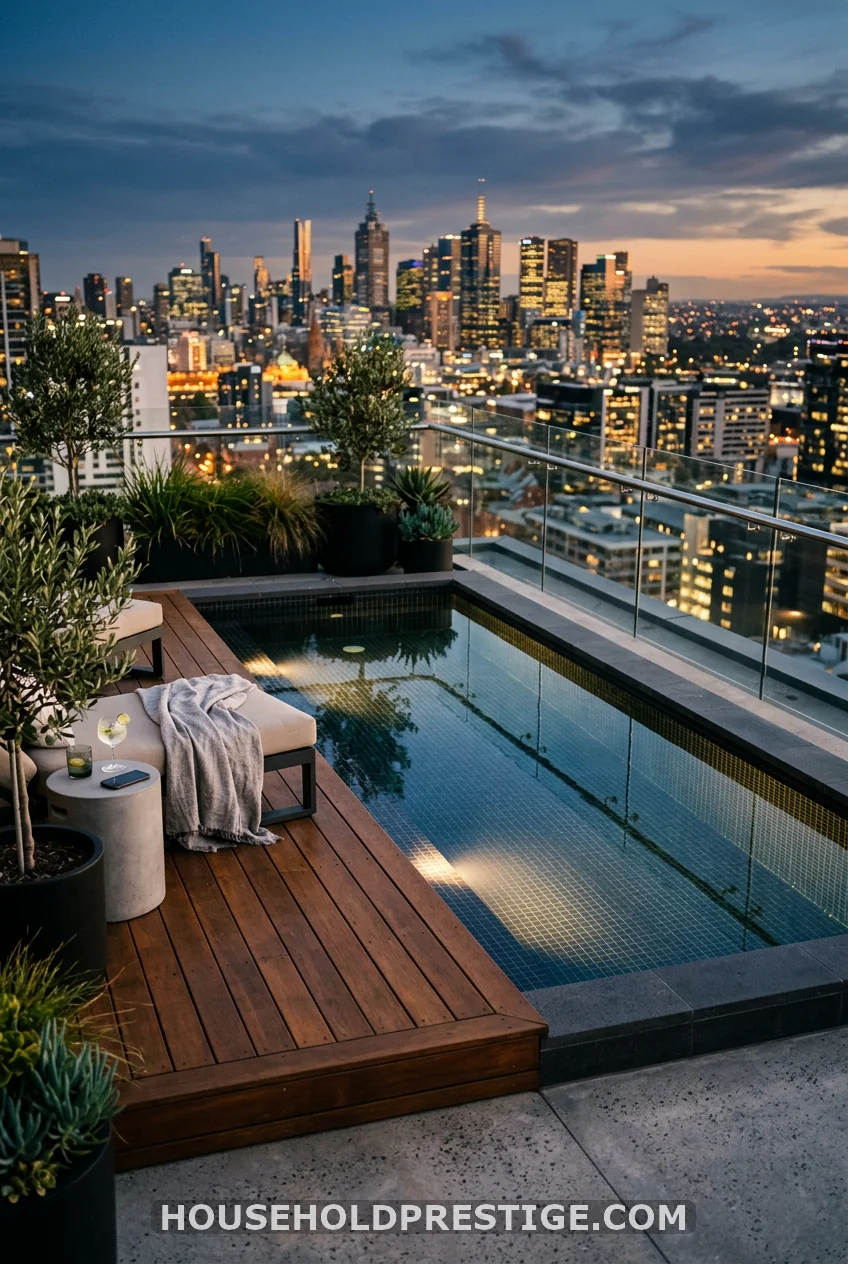
Before anything else: call a structural engineer. A standard plunge pool at 2,700 gallons adds approximately 22,000 pounds to whatever structure holds it. Most residential rooftops and balconies were not designed for that kind of point load.
If the engineer says yes, the pool will be fiberglass only (lighter than concrete), set on a custom steel platform designed to distribute the load across multiple structural points. Getting the shell up there typically requires a crane. Budget $25,000–$60,000 for the pool plus platform before decking and finishing. Striking when done right. Worth the engineering step every single time — the engineer’s fee is $500–$2,000 and it’s the cheapest money you’ll spend on the entire project.
14. Mediterranean Tiled Mini Pool
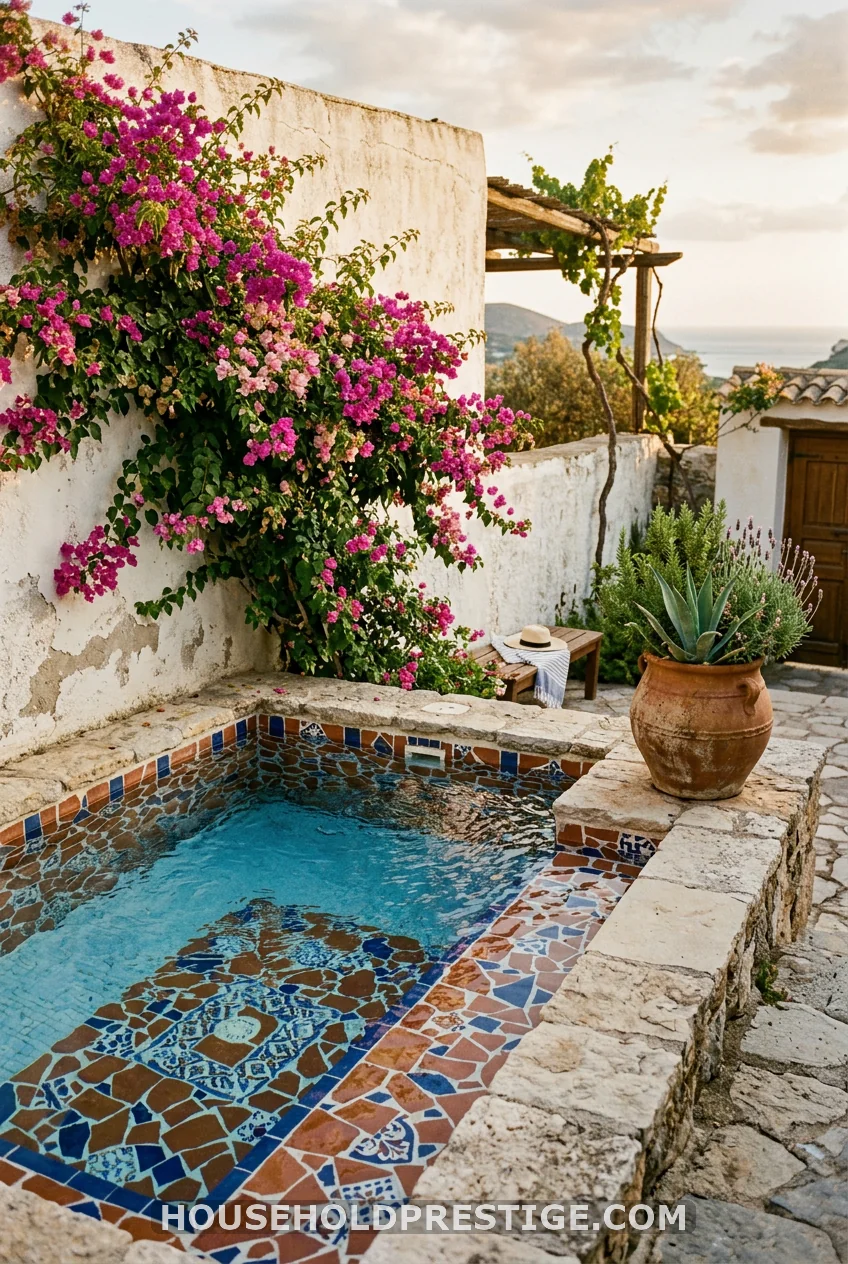
Mosaic and handmade ceramic tile on interior walls turns any mini pool into a visual anchor for the entire backyard. Mexican Talavera runs $5–$12 per tile. Moroccan zellige is $15–$35 per square foot. Portuguese azulejo sits between the two.
For a 6×10 pool interior, you have roughly 280 square feet of surface area (walls and floor), meaning tile cost alone is $1,400–$9,800 depending on style. Add $2,000–$4,000 for a skilled tile setter familiar with pool applications.
One maintenance note competitors never mention: pool tile requires epoxy grout — not standard cement grout. Cement grout in pool applications deteriorates in 3–5 years and needs full re-grouting. Epoxy grout lasts 10–15 years. The material cost difference is about $80–$120 for a plunge pool’s worth of grout. Pay the extra.
15. The Short Lap Pool
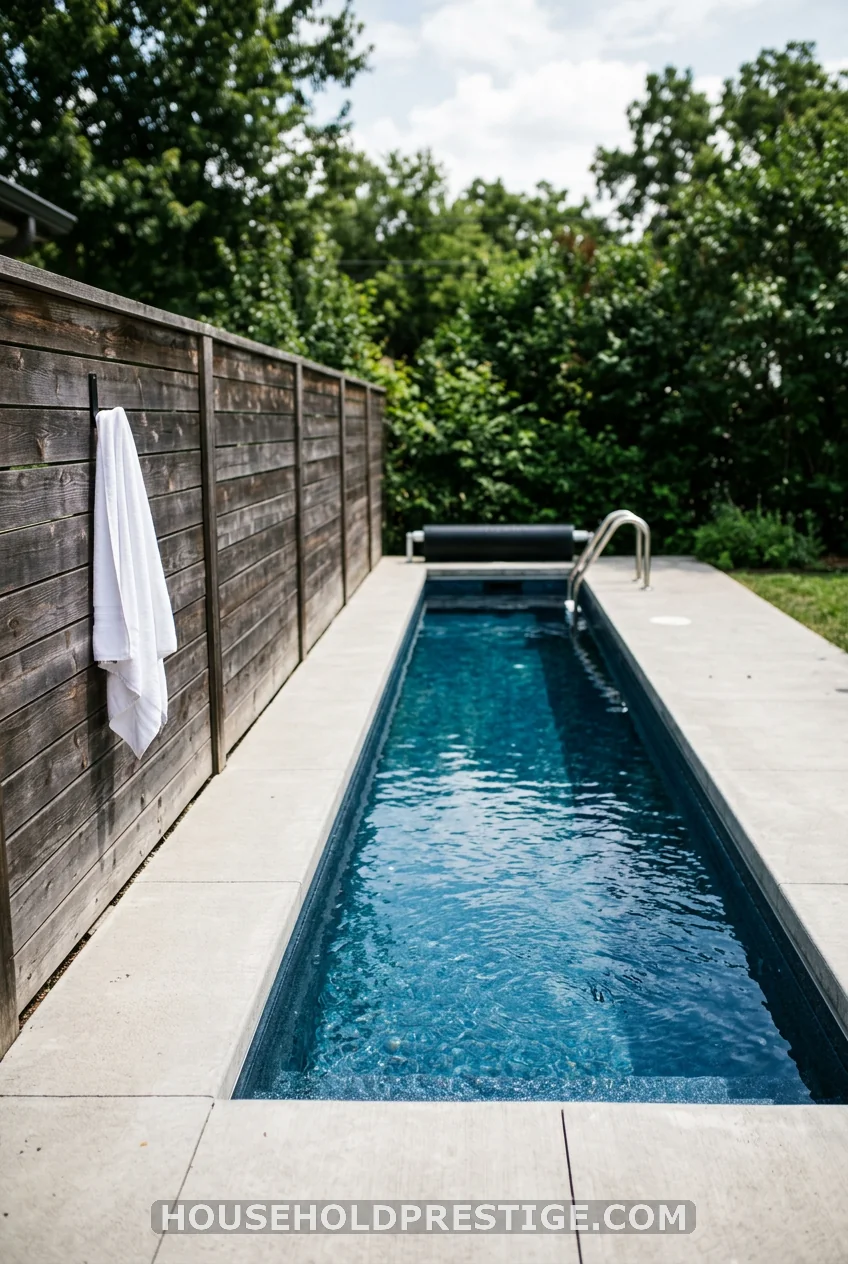
Most people think lap swimming requires 25 yards. That’s Olympic competition distance. For fitness swimming — maintaining cardiovascular fitness, stroke practice, rehabilitation — 15–20 feet is effective. Your turns come faster, and that’s fine.
A 5×20-foot lap pool fits in spaces where a rectangular plunge pool won’t. The narrow footprint preserves more yard than a square pool of equivalent volume. Want a constant current to swim against without turning at all? Endless Pools makes current systems that fit into a 7.5×15-foot shell ($20,000–$35,000 installed). You swim in place against the current indefinitely. Genuinely effective for fitness. Fits in a backyard, a garage, or a spare room.
16. Timber-Edged Above-Ground Round Pool
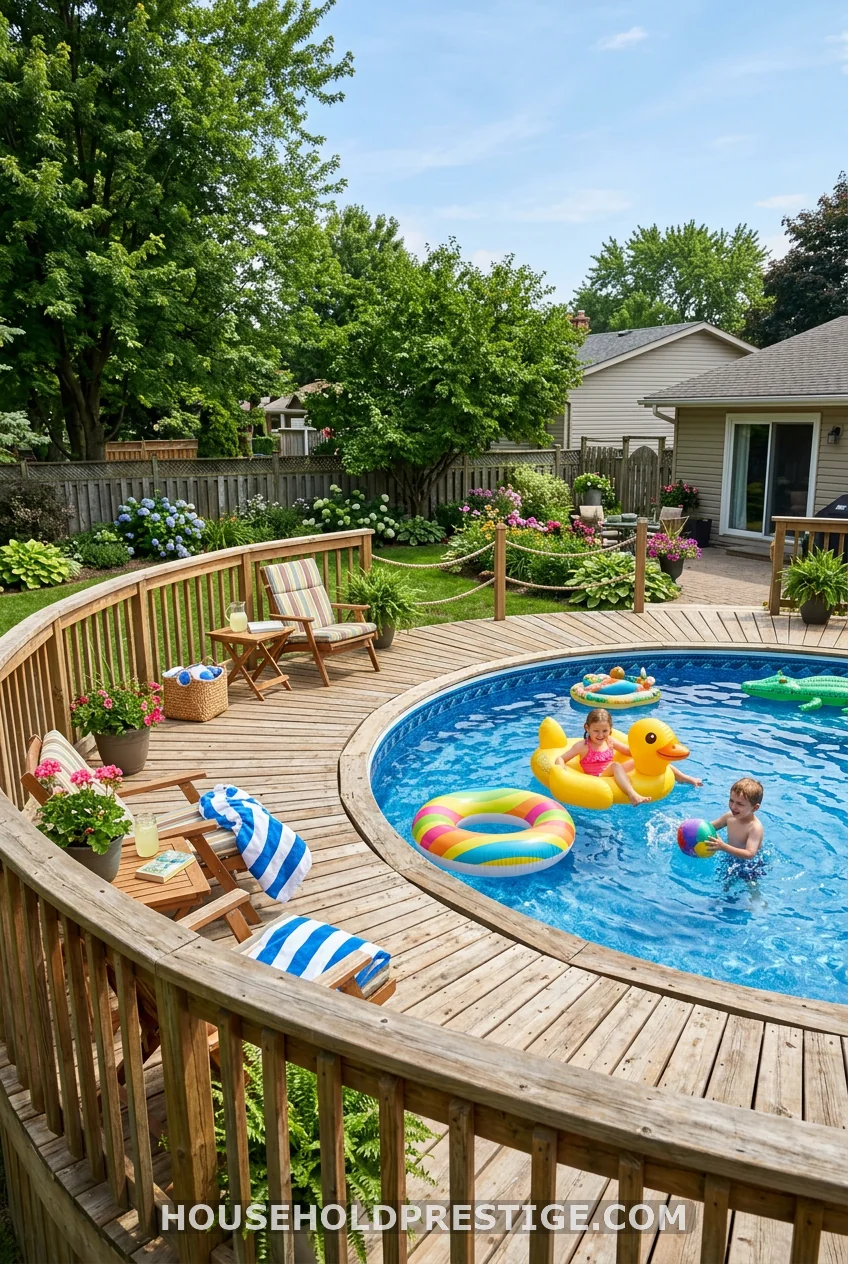
A round above-ground pool (18-foot diameter) costs $800–$1,500 for the kit. The upgrade that makes it look like a decision rather than a stopgap: a continuous timber deck built at water-level height, wrapping the pool perimeter with a 4-foot border. You step from the deck into the pool at the same level. No ladder. Just a wide edge that functions as seating, sunbathing space, and a social ledge all at once. Deck materials for an 18-foot pool with a 4-foot border: $2,000–$4,000 in composite decking. Add a pergola, and it becomes the best outdoor space on the street.
17. Pool + Compact Hot Tub Combo
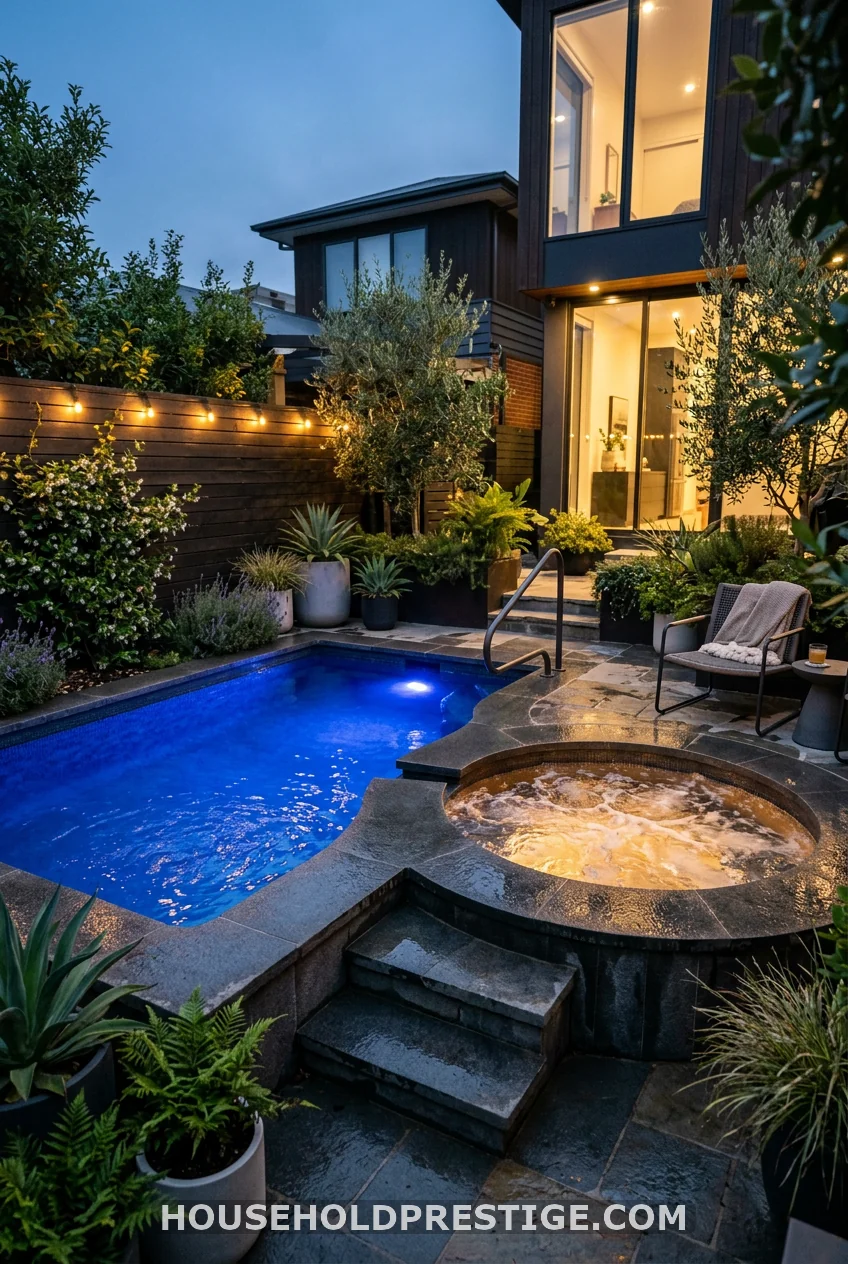
One equipment pad, two bodies of water. When a plunge pool and a hot tub share a single pump-and-heater setup — which most pool contractors can configure — you save $2,000–$4,000 in equipment costs versus running them separately. The plunge pool holds at 80°F. The hot tub holds at 102°F. A diverter valve controls both from a single controller. Jandy, Pentair, and Hayward all make combo-capable automation systems ($800–$1,500).
Footprint: a 6×10-foot plunge pool plus a 6×6-foot hot tub equals a 6×16-foot combined run. That fits along most fence lines in a small backyard, with room for coping and a single-chair perch on either end.
18. Disappearing-Edge Mini Pool
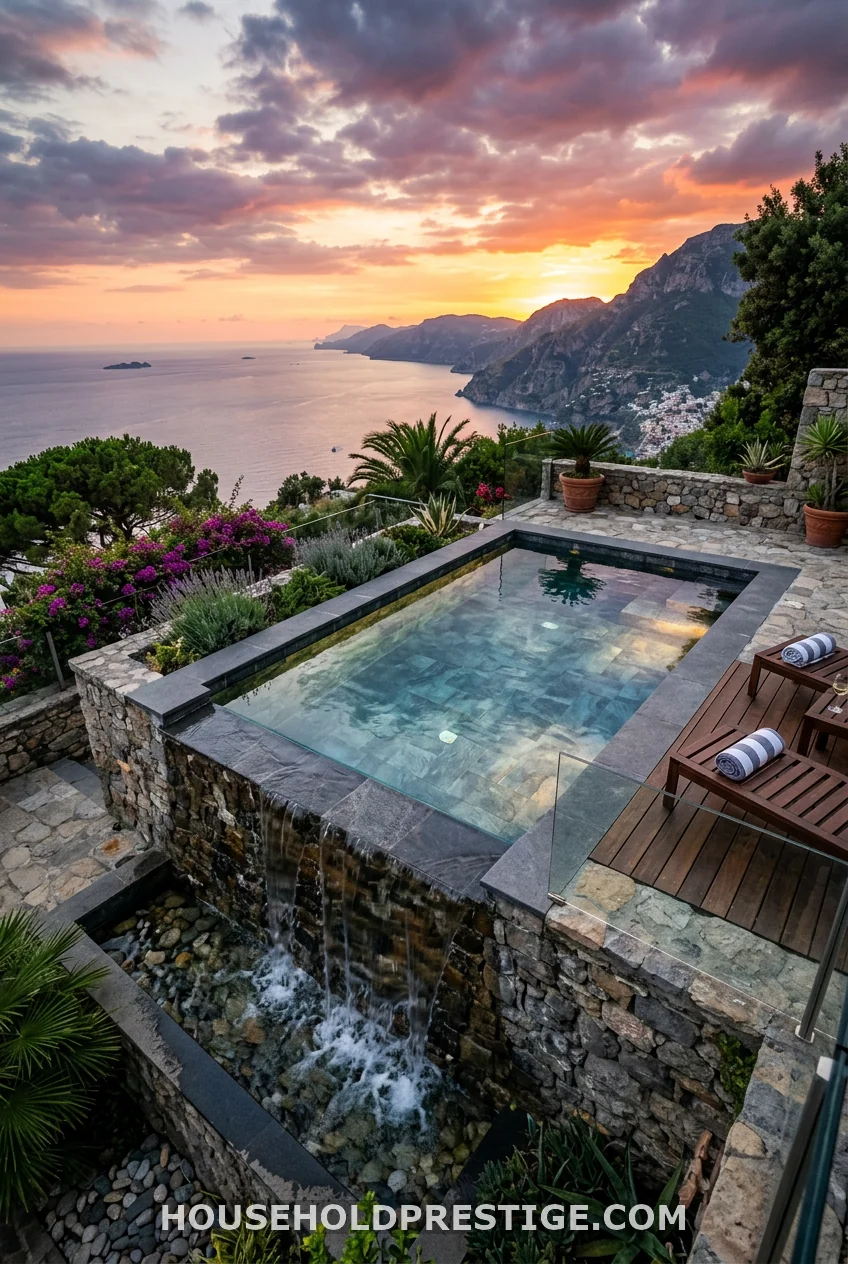
You don’t need a dramatic hillside to pull off a disappearing edge. The visual effect — water at the far wall spilling into a catch basin and recirculating back — works on a slope of as little as 3 feet of elevation change. The optical trick makes a 10-foot pool appear to extend toward the horizon.
Add-on cost versus a standard plunge pool: $3,000–$8,000 for the overflow trough, catch basin, and return pump. That’s not a dramatic upcharge for a genuinely dramatic visual.
19. The Courtyard Pool: A Transformation Story
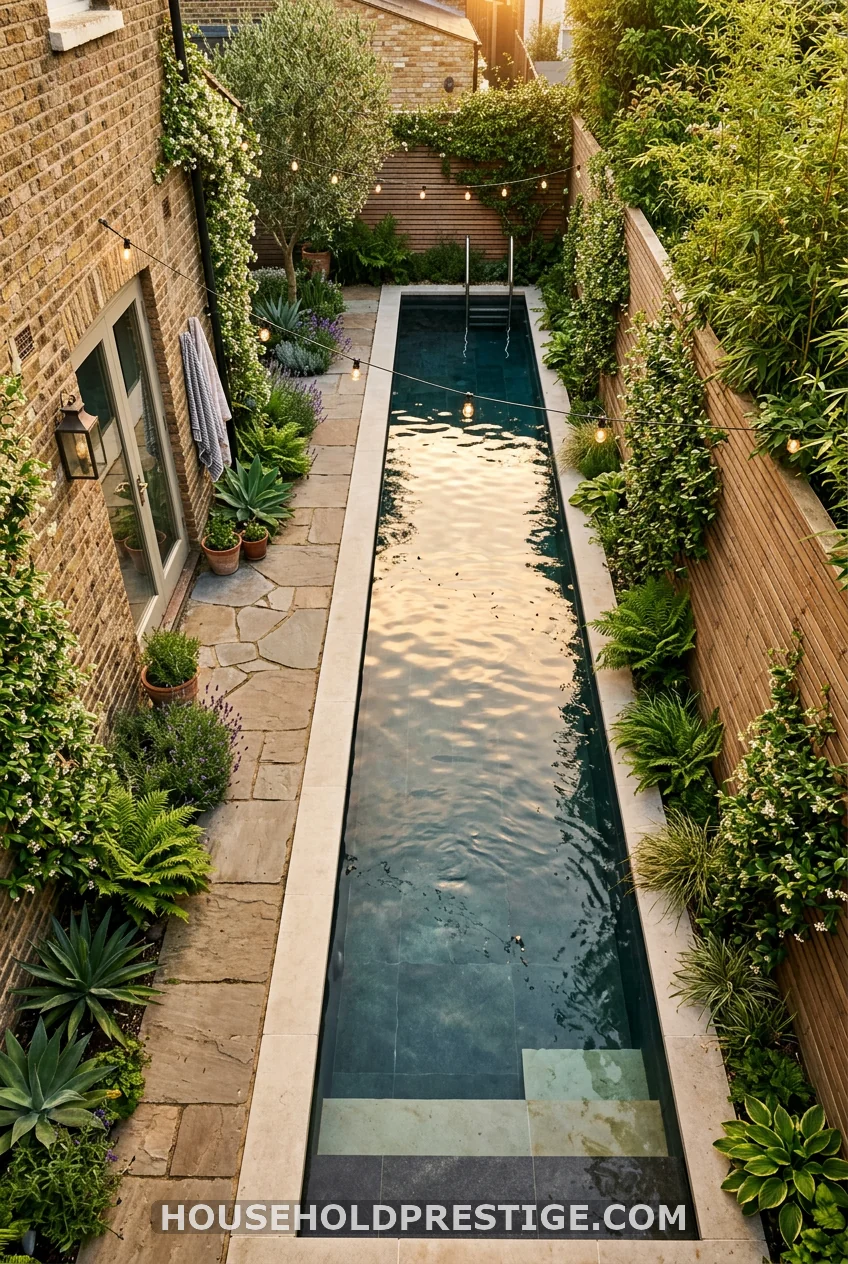
A close friend of mine had a side courtyard — 8 feet wide, 20 feet long — running alongside her house. Concrete. Used for nothing except dragging bins past twice a week.
She got a quote for a custom gunite pool running the full length: 18 feet long, 5 feet wide, charcoal tile interior, slim limestone coping, submerged LED lighting. Total: $22,000.
I thought it was a lot for a narrow strip of water. I was wrong.
The finished pool uses every inch of that formerly wasted space. Two slim planting beds — one on each side, 12 inches wide — soften the walls. A flat stepping stone at one end. A lounge chair sits perpendicular to the pool at the other. The whole courtyard now works as a single outdoor room, not a utility passage.
She swims in it every morning before work. Uses it to entertain on weekends. Says it’s the best money she’s spent on the house. The $22,000 turned a useless concrete strip into the most-used square footage on the property. Sometimes the math on wasted space is more compelling than you expect.
20. Mini Pool With Pergola Canopy
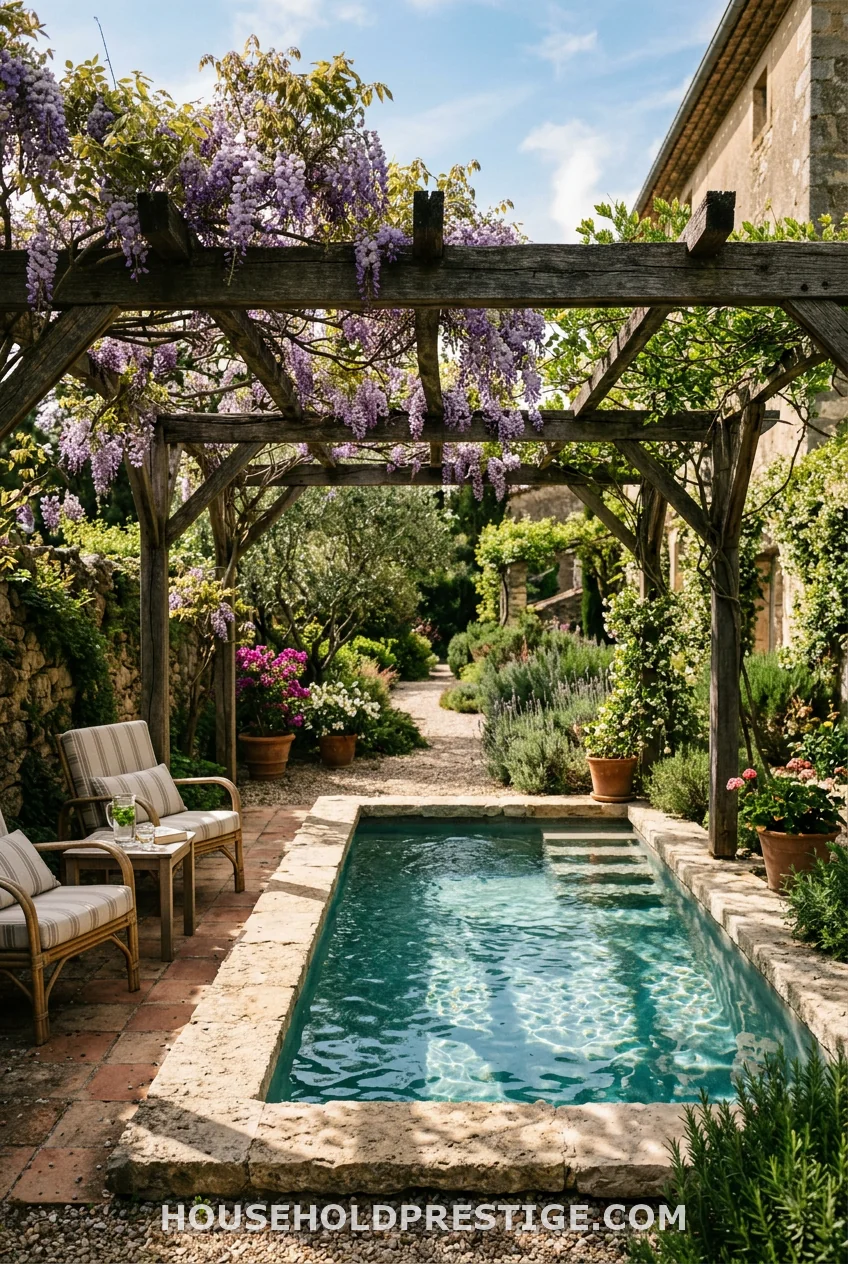
Shade changes how often a pool gets used. A south-facing pool without any shade coverage in July is unusable from 11am to 4pm in most of the US — when you’d most want to be in it. A 10×12-foot pergola positioned over the pool edge (leave the pool surface open to light, cover the sitting area) costs $800–$3,500 DIY, $3,000–$8,000 built by a contractor. Add climbing wisteria, jasmine, or passionflower vines and this structure looks established within two full growing seasons.
21. The Polished Concrete Plunge Pool
The simplest finish is often the most overlooked. A concrete interior — white or grey Marcite plaster — without tile or stone costs $1,500–$3,000 less than a tiled finish and ages well for 10–15 years before resurfacing. Pair it with architectural concrete coping — a clean 6-inch poured concrete lip — and total hardscaping costs drop by $1,500–$3,000 versus imported stone pavers. Nothing decorative. Just clean, lasting, functional water. For a certain kind of backyard, that restraint reads as the strongest design statement on the list.
Closing Thoughts
Small backyards don’t need a compromise pool. They need the right mini pool idea matched to the right space and the right budget — and those are two decisions you need to make separately. Figure out your space constraints first. Measure accurately, check with your county building department, and if you’re doing anything structural, get an engineer involved before you spend a cent on materials.
Then match a pool type to what you found. The stock tank works. The concrete block build works. The $35,000 plunge pool works. What doesn’t work is buying a kit without understanding your soil type, your slope, your local permit requirements, or what your neighbors have successfully built on similar lots.
Start with the idea that fits your yard. Get two contractor quotes — or price out the DIY version line by line. One of these 21 mini pool ideas will fit.
Frequently Asked Questions
How small can a mini pool actually be?
A functional mini pool can be as compact as 6×8 feet and 3.5 feet deep — enough for adults to fully submerge and float. Stock tank pools go smaller, some as compact as 6 feet in diameter. The practical minimum for any active use — floating, socializing, or a short swim — is around 5×10 feet. Below that, you’re looking at a plunge bath more than a pool.
Do I need a permit for a mini pool?
In most US states, yes — any permanent inground structure requires a building permit. Above-ground pools under a threshold height (often 24 inches) may be exempt, but this varies by county. Check with your local building department before purchasing anything. Fines for unpermitted pools range from $500 to mandatory removal at your expense, and they can affect your home’s resale.
How much does a mini pool cost to maintain annually?
A small plunge pool (2,500–4,000 gallons) typically runs $400–$900/year in chemicals with manual maintenance, or $600–$1,200/year with a salt chlorinator (which reduces chemical purchases but adds electricity). Heating adds $30–$80/month, depending on your heater type and climate. Annual cost for a well-maintained plunge pool is roughly $600–$1,500 total.
What’s the difference between a plunge pool and a cocktail pool?
A plunge pool is deeper (5–6 feet) and designed for immersion and cooling — you jump in, float, or swim short laps. A cocktail pool is shallower (3.5–4 feet) and wider, built for socializing, with built-in benches and a baja shelf. Both qualify as mini pool ideas. The choice comes down to whether you want to swim or to sit in the water.
Can I install a mini pool myself?
Some types, yes. A stock tank pool is completely DIY. A concrete block pool is DIY-possible with solid construction experience and the right permits. A fiberglass shell installation is technically possible for a capable DIYer but typically requires crane access and specific equipment permits. A gunite or shotcrete pool requires licensed concrete spraying contractors — this one is not a DIY project.