

I once hung three strips of black floral wallpaper before I noticed the roses were growing toward the floor. Upside down. In a 5×5 half bath, with the paste already drying and my husband laughing in the hallway.
That mistake cost me one roll and a whole Saturday. It also taught me that moody powder room wallpaper is forgiving in the best ways and unforgiving in a few specific ones. Pattern direction, repeat size, lighting, and yardage matter more in a tiny room than any designer name on the label.
Below are 18 dark, dramatic looks, each with the small-space rule that makes it work. Some suit renters. Some suit people with a laser level and a free weekend. All of them fit a room you can cross in three steps.
Why Moody Wallpaper Works in a Powder Room
A powder room is the safest place in your house to go dark. It has no shower or tub, so humidity stays low. It has few square feet, so a mistake costs one or two rolls, not ten.
Guests spend two minutes in there. That is exactly the right dose of drama.
Dark color also blurs corners. Instead of seeing where the walls end, your eye sees depth, and the room reads like a jewel box. The risks are a pattern that is too small and busy, and lighting that is too cold. I’ll flag both as we go.
1. Deep Emerald Botanical
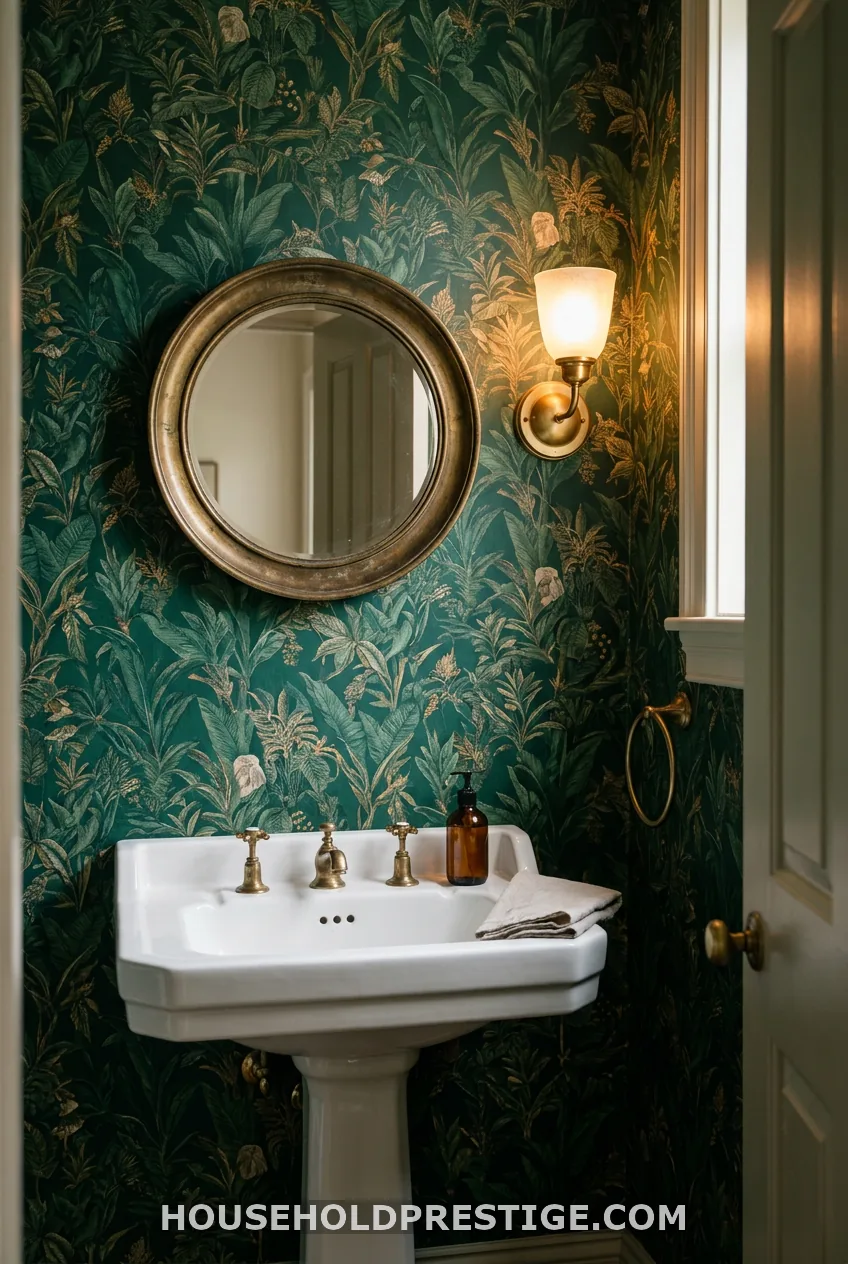
Green is the easiest dark color to live with. It reads rich, not blacked out, because it carries a little warmth even at night-sky depth.
Pair it with warm white trim, a brass faucet, and a vintage mirror. This is my pick for windowless powder rooms that need depth. Hang the paper edge to edge so the leaves wrap the whole room.
2. Ink-Blue Chinoiserie or Damask
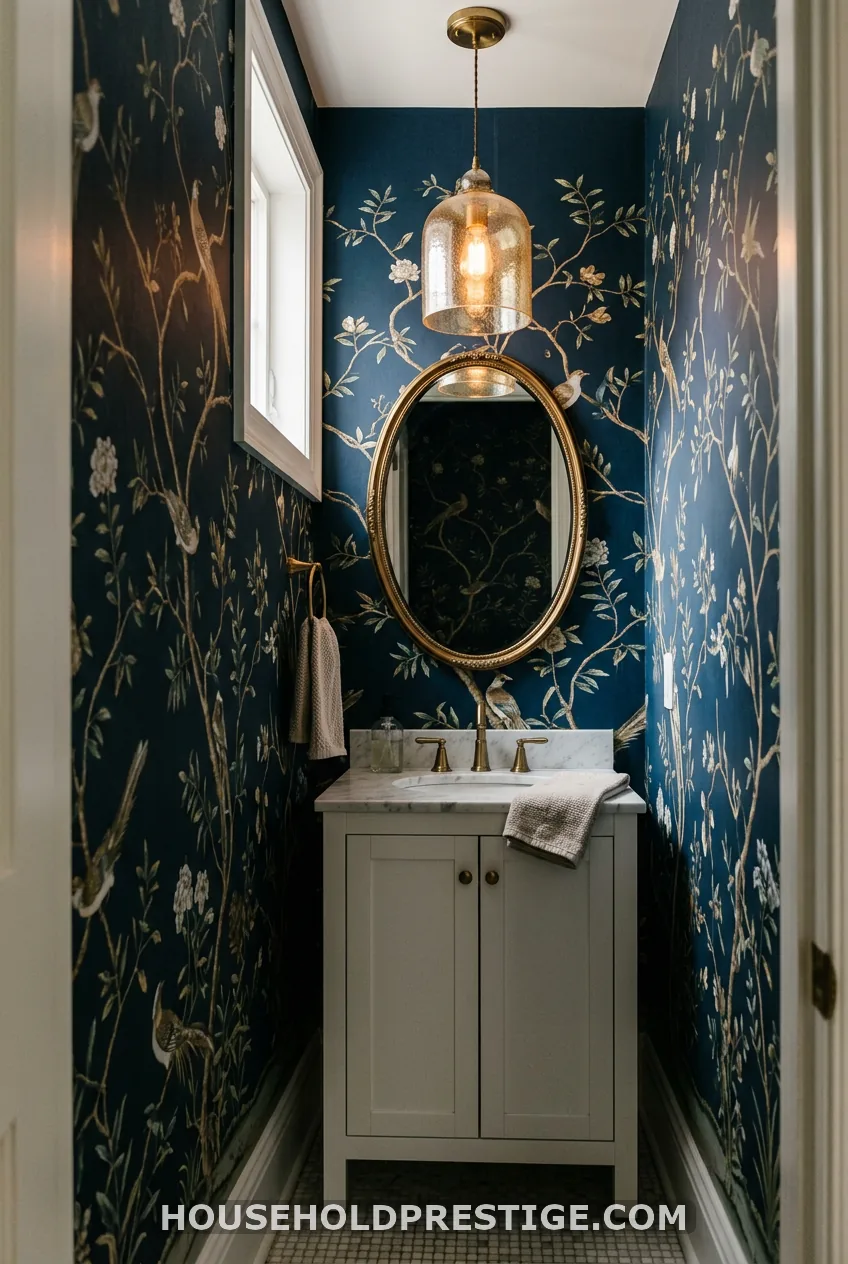
Moody blue shifts with your bulbs. Under a warm 2700K bulb it leans navy and cozy. Under a cool 4000K bulb it turns flat and slightly gray.
Test your sample at night before you commit. Then keep the vanity plain. A pattern this busy wants a quiet partner, so choose a white pedestal sink or a simple painted cabinet.
3. Black-Background Floral
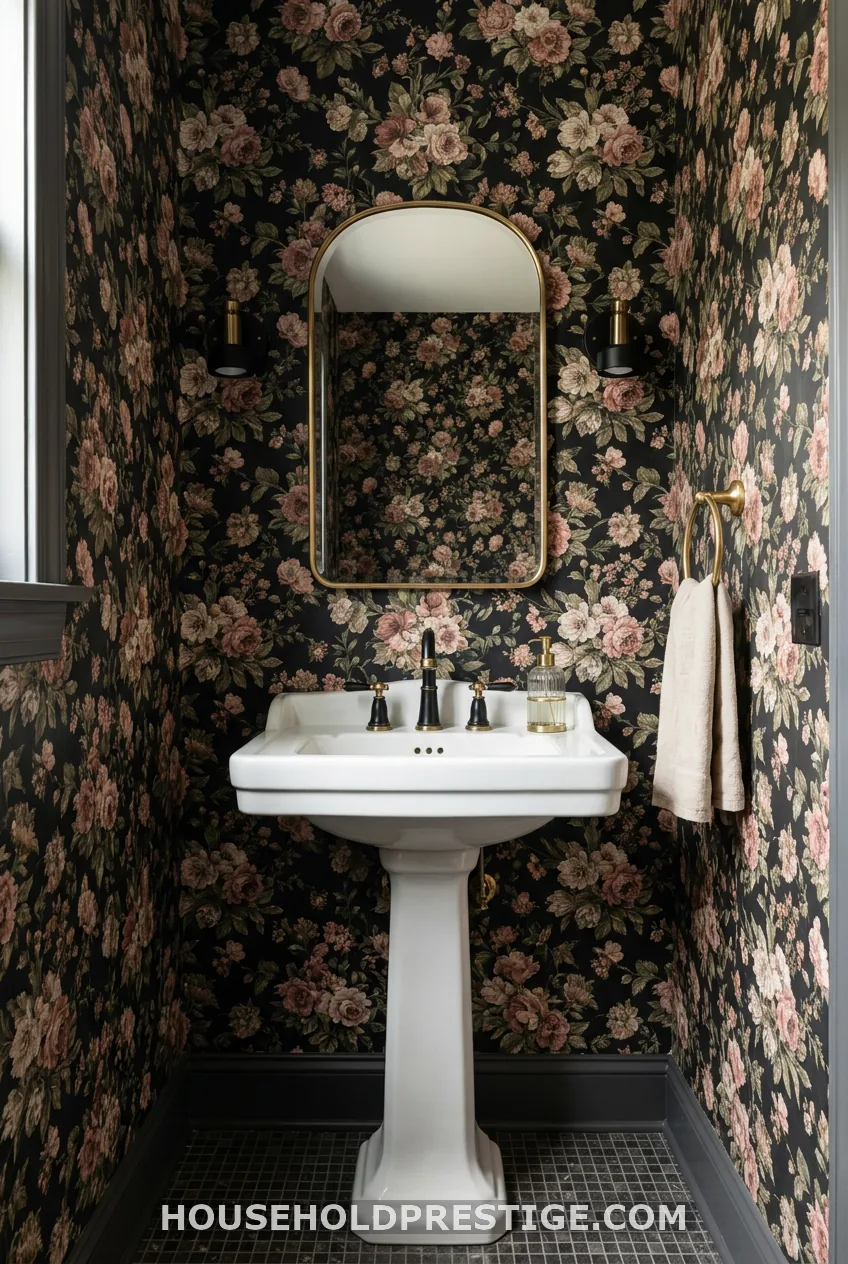
This is the classic. Black grounds hide wall flaws, so a bumpy old drywall job vanishes behind the blooms.
In a tiny room, pick between two scales. Oversized blooms feel bold and intentional. Dense ditsy prints feel like fabric. Skip the middle-sized, evenly spaced rose that looks like a hotel hallway.
4. Vintage Toile or Block Print
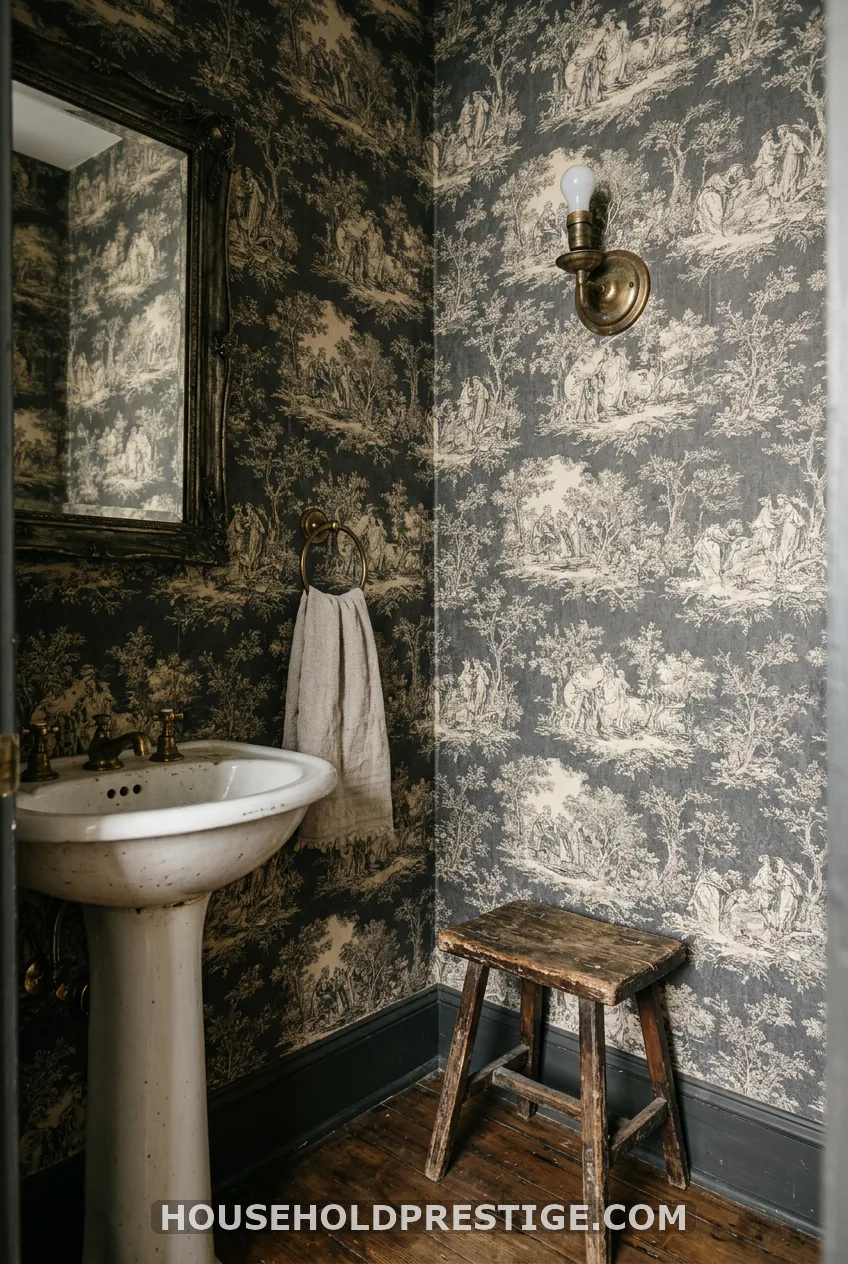
Look for toile, Indian block prints, and archival-style patterns from houses like Sanderson or in the spirit of Robert Kime. Aged brass and a scuffed wooden stool belong here.
One rule: do not match every vintage thing at once. Pick the wallpaper as your antique and keep the faucet, light, and mirror calm.
5. Oversized Moody Floral
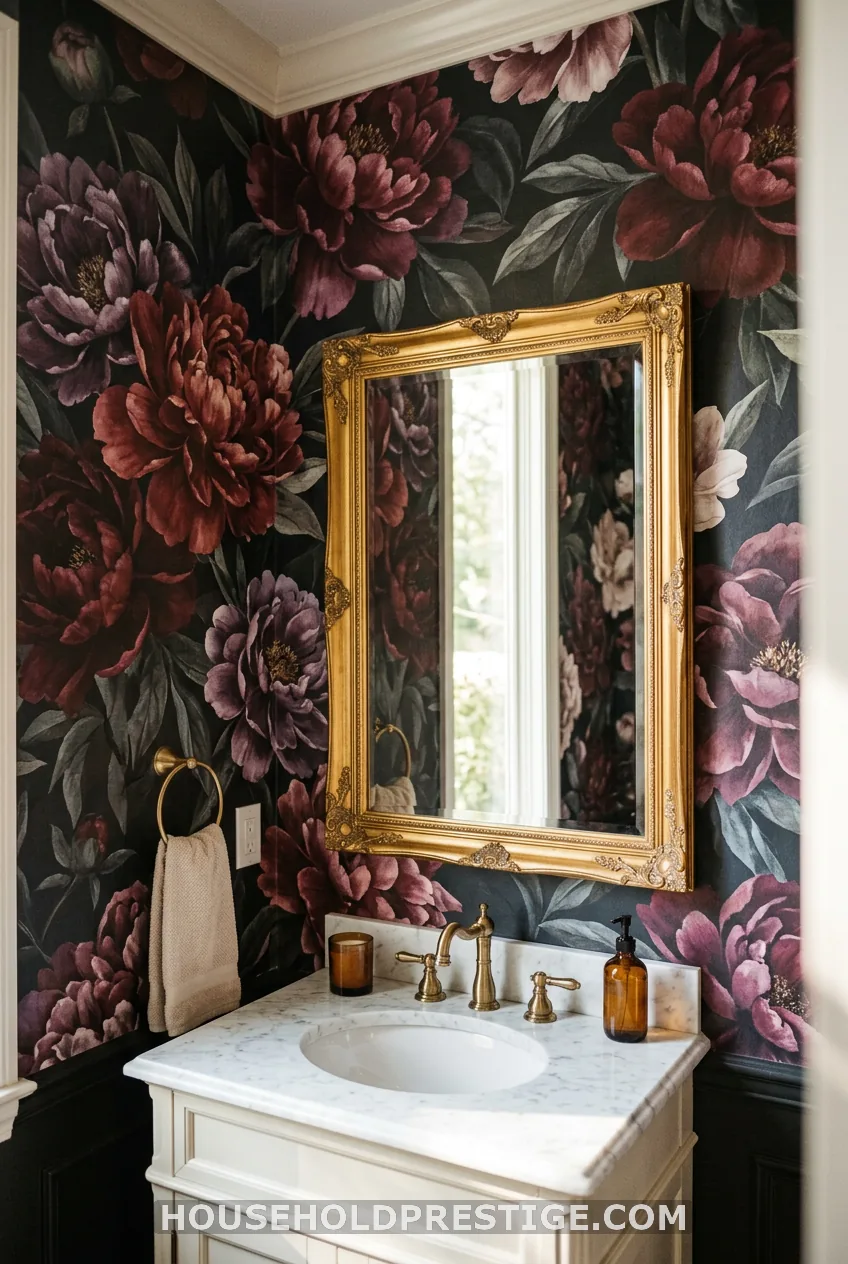
Here is the pattern scale rule most gallery roundups skip. In a tiny room, fewer, bigger motifs can look more confident than lots of small ones. Your eye gets a few big shapes to read instead of a thousand tiny ones.
Check where the biggest bloom lands. You do not want it cut in half by the mirror or hidden behind the door. If the repeat is huge, plan the layout on paper first.
6. Peel-and-Stick Dark Geometric
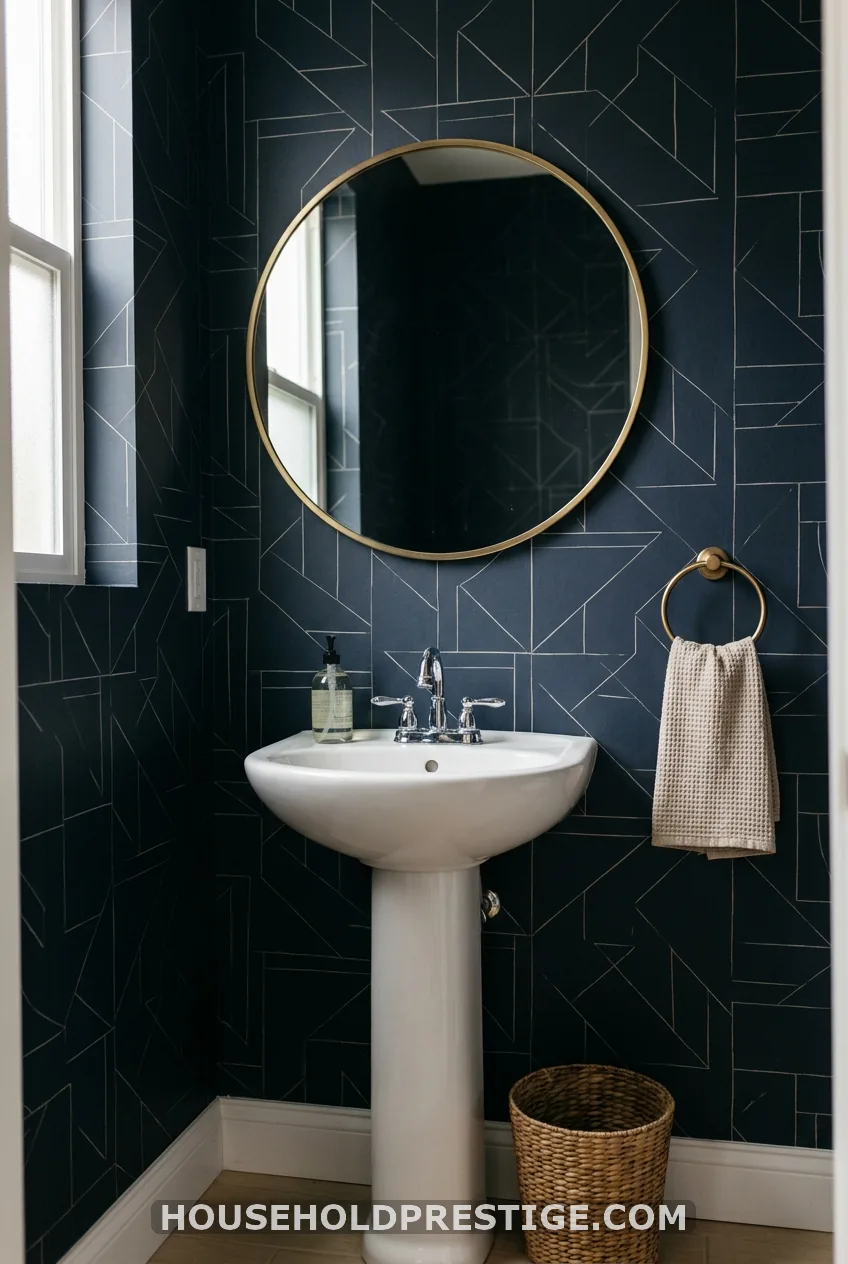
This one is for renters, and it deserves the full walkthrough. Brands like Tempaper and Chasing Paper make matte, removable peel-and-stick vinyl in dark geometrics.
What you need: a smoothing tool, a utility knife with fresh blades, a level, a tape measure, a damp cloth, and a hair dryer. Expect two to four rolls for a 5×5 room, so a weekend project.
- Wipe the wall with a damp cloth and let it dry fully. Dust and grease are the enemy.
- Test a hidden spot first. Press a small piece on, wait 24 hours, and peel it off to see what happens to the paint.
- Draw a plumb line with a level, starting in the corner people see first.
- Peel back six inches of backing, align to the line, and smooth from the center outward.
- Peel the rest of the backing in stages as you smooth, so air bubbles never trap.
- Trim at the ceiling and baseboard with a sharp blade, changing it often.
A common mistake is stretching the vinyl around corners. Cut it instead. To remove later, warm the edge with a hair dryer and pull slowly at a low angle.
A powder room has no shower, so humidity is mild. Still, avoid putting it right where the faucet splashes.
7. Accent Wall Behind the Vanity
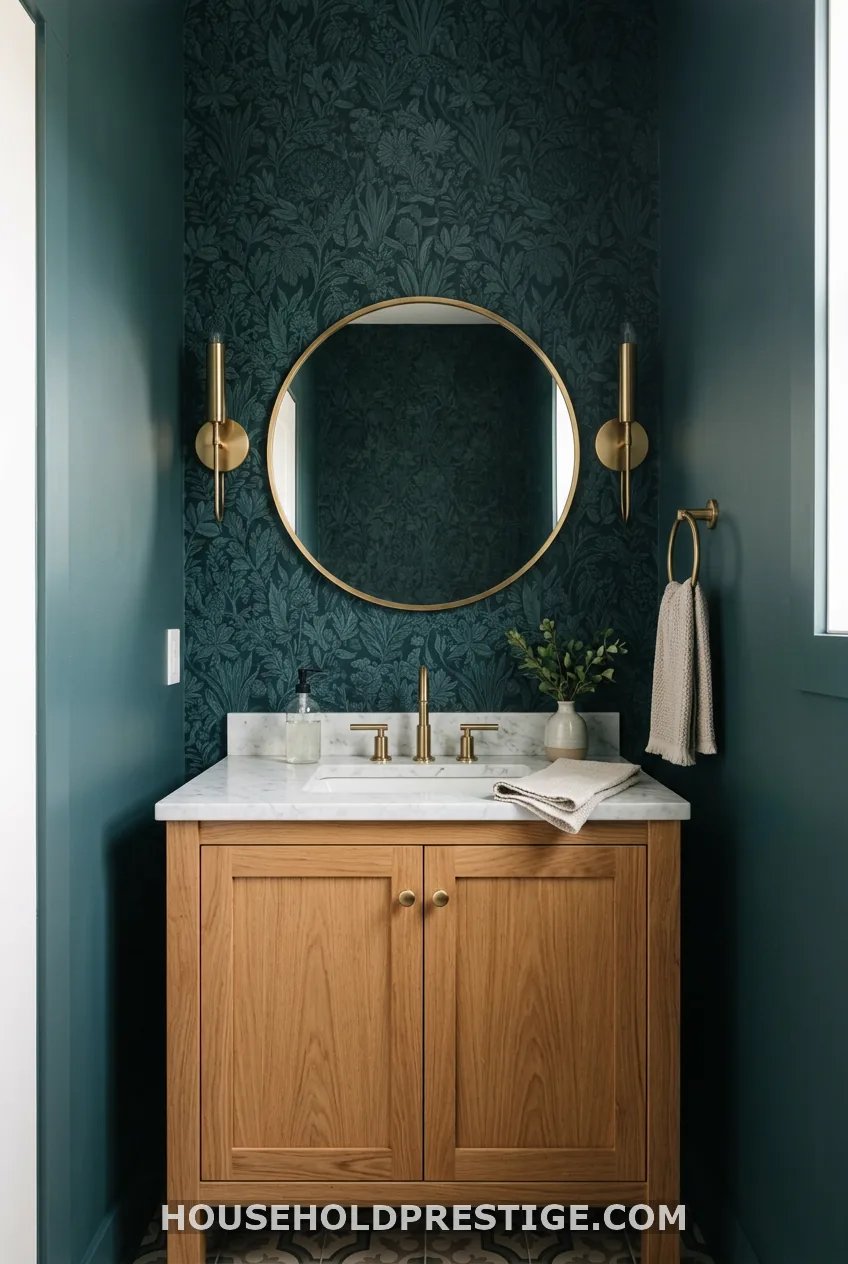
Paper the wall you face when you open the door, or the one behind the vanity. Stop at an inside corner, never an outside one, because inside corners hide the seam.
Then paint the rest of the walls a color pulled from the paper. A low-commitment way to get drama.
8. Wallpaper the Ceiling
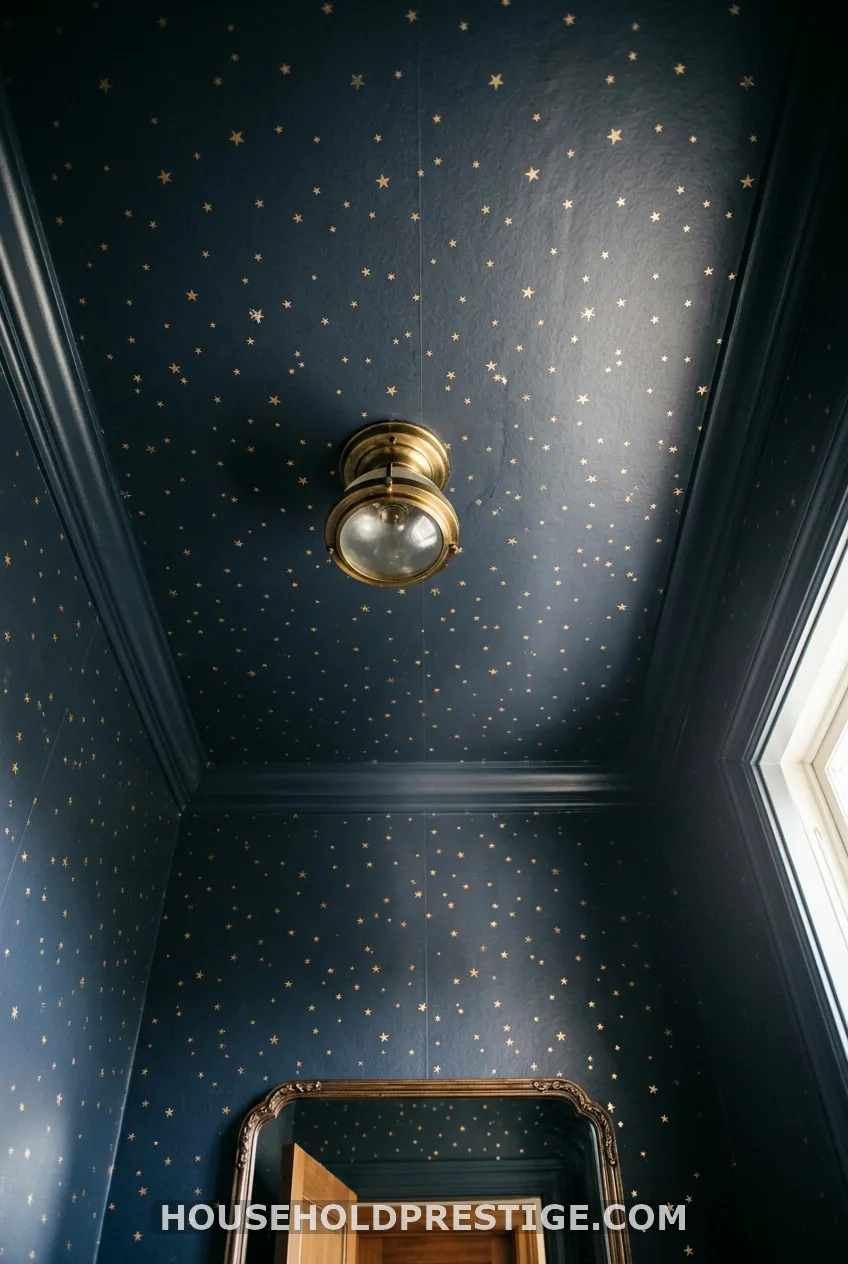
The ceiling is your fifth wall. In a windowless half bath, papering it makes the room feel finished, like the inside of a lacquered box.
Use a smaller repeat, and consider a lighter ground if the walls are dark. Hang the ceiling first, then the walls. Add roughly 25 square feet of paper for a 5×5 room, which usually means one more roll. Have a helper hold the strip while you press it.
9. Modern Atmospheric Abstract
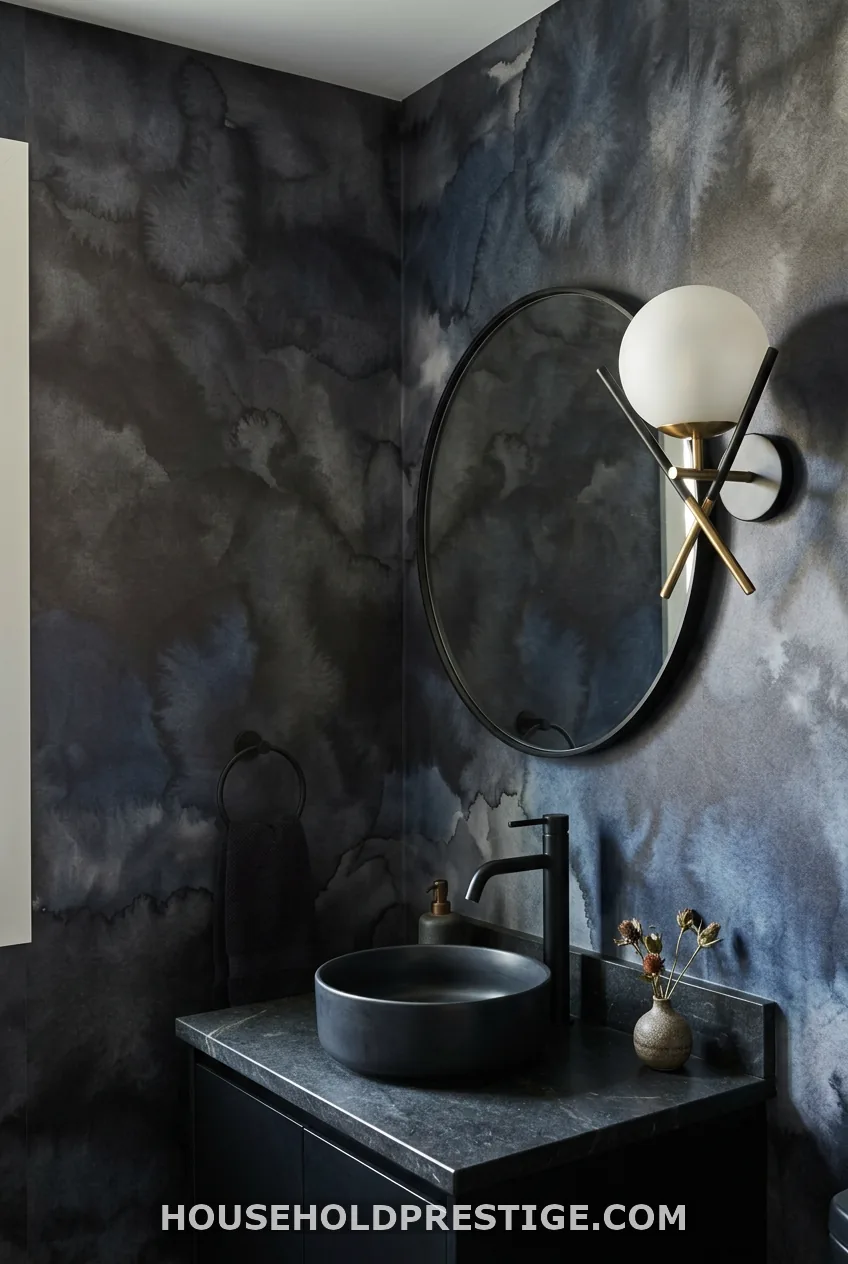
Watercolor, ink, and cloud patterns have no hard lines, so seams and wall flaws disappear. Low-contrast abstracts also feel calmer in a small room than a loud floral.
Pair it with streamlined fixtures and one sculptural light.
10. Dark Textured Grasscloth or Faux Linen
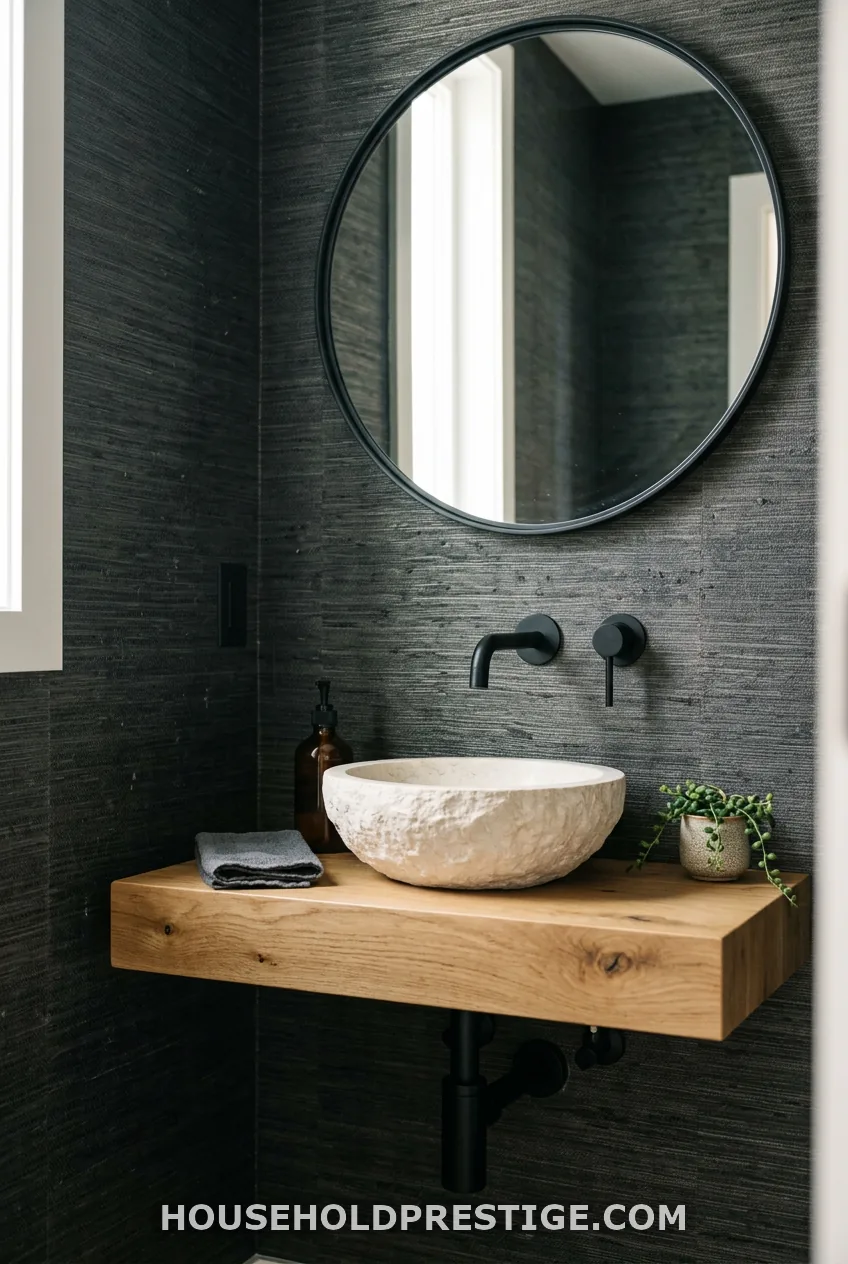
Not every moody wall needs a print. Texture does the work. Real grasscloth stains from water, so in a powder room I would pick a woven-look vinyl or faux linen from a brand like Graham & Brown or York Wallcoverings.
Keep the trim crisp and the fixtures matte black or brushed nickel.
11. Jewel-Tone Damask or Medallion
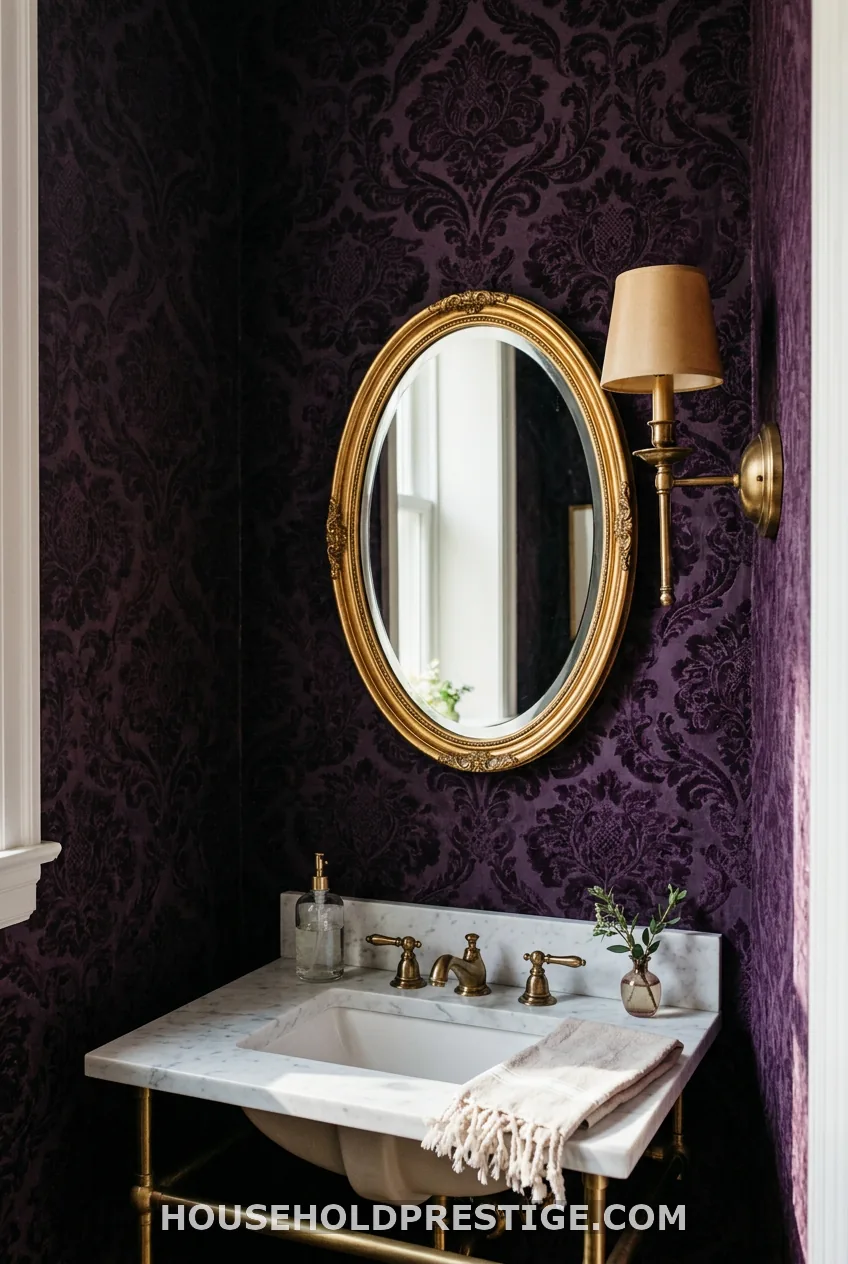
Amethyst, garnet, teal, and sapphire read glamorous, not gloomy, because they carry saturated color rather than just darkness.
Add metallics through the mirror frame and fixtures. If the medallion repeat is large, measure your wall width first. A repeat of 27 inches on a 60-inch wall will look planned. Center the medallion on the mirror.
12. Moody Heritage Stripe for Low Ceilings
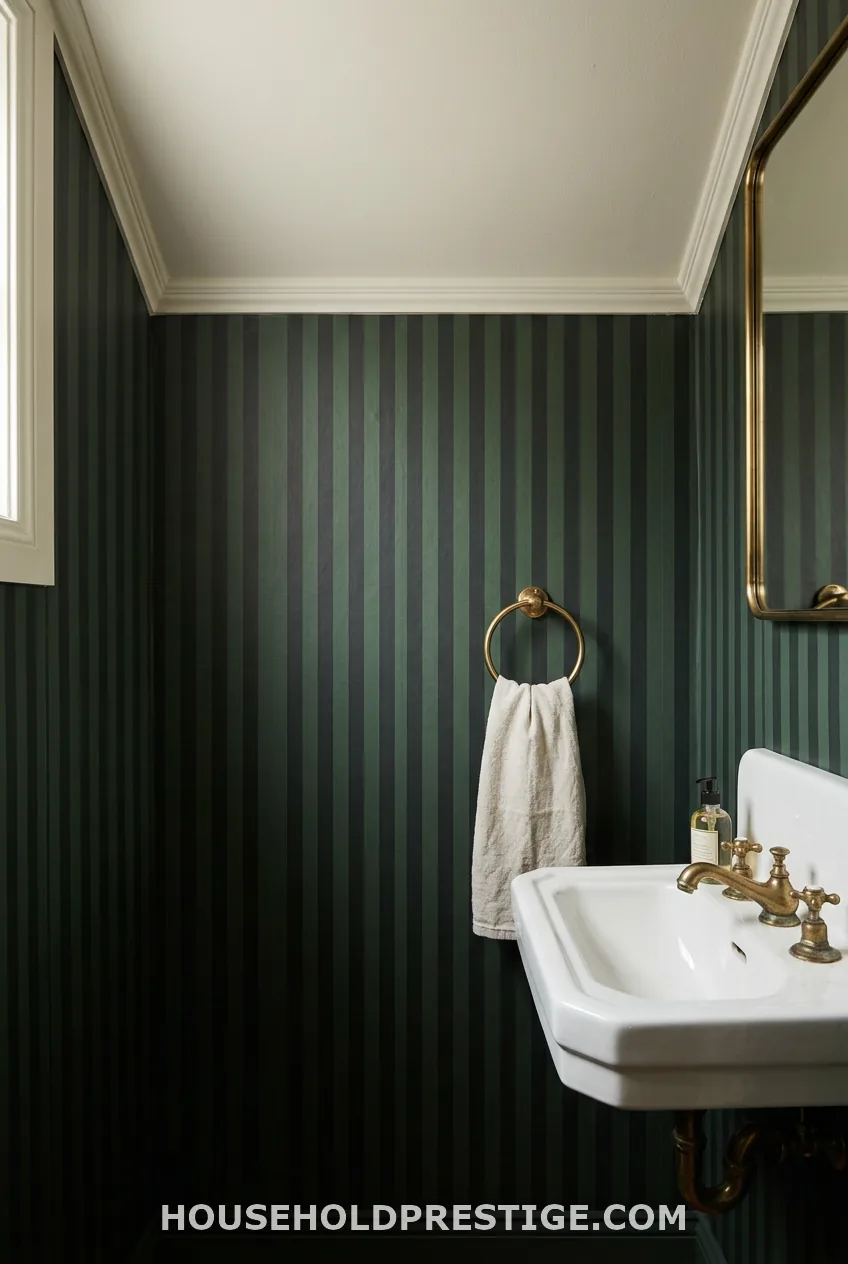
Vertical stripes pull your eye up, which helps a low ceiling. Tone-on-tone stripes give a subtle effect, with the stripe visible only as sheen.
Keep everything else quiet. A striped wall and a patterned rug fight.
13. Dark Tropical or Fig-Leaf Print
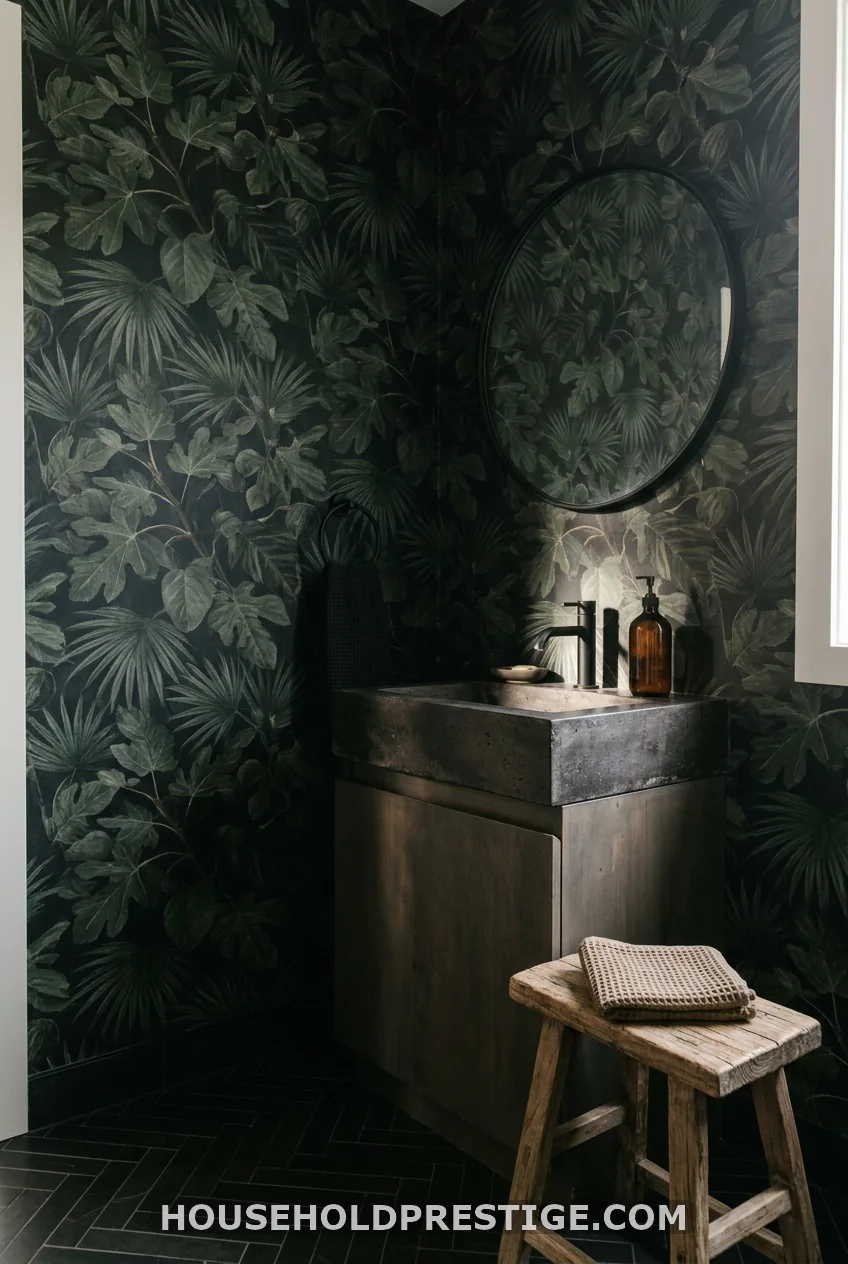
Dark palm, fig leaf, and jungle prints can look theme-park. The trick is restraint. Choose muted, inky greens, not bright parrots, and keep the rest of the room clean.
Matte black or aged brass hardware keeps it grown-up.
14. Color-Drenched Maximalist
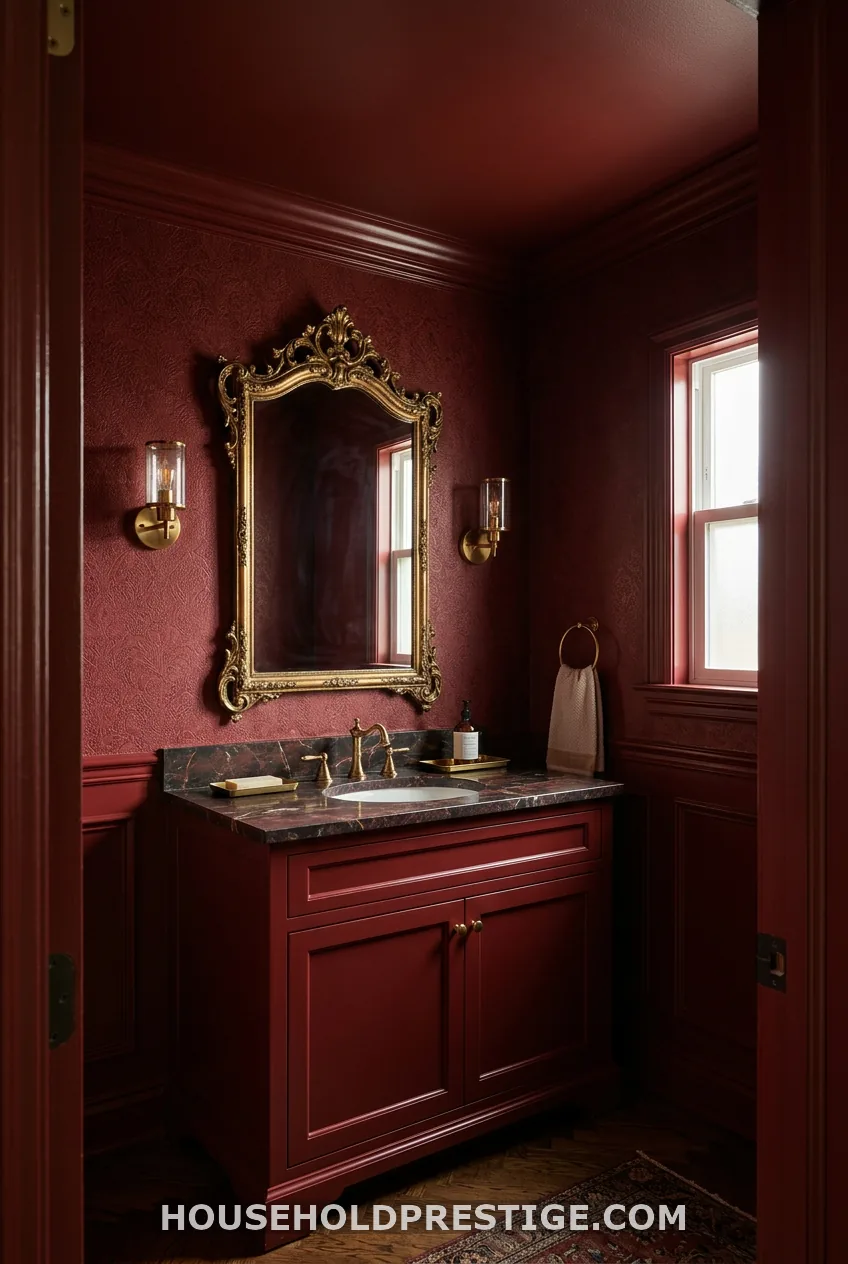
Drenching means matching the ceiling, trim, and even the vanity to the paper’s ground color. The room stops having edges.
Take your paint color from the background of the wallpaper, not the motif. Have the paint store color-match a sample. It sounds backward, but it often makes a tiny room feel bigger.
15. Scenic Mural or Landscape
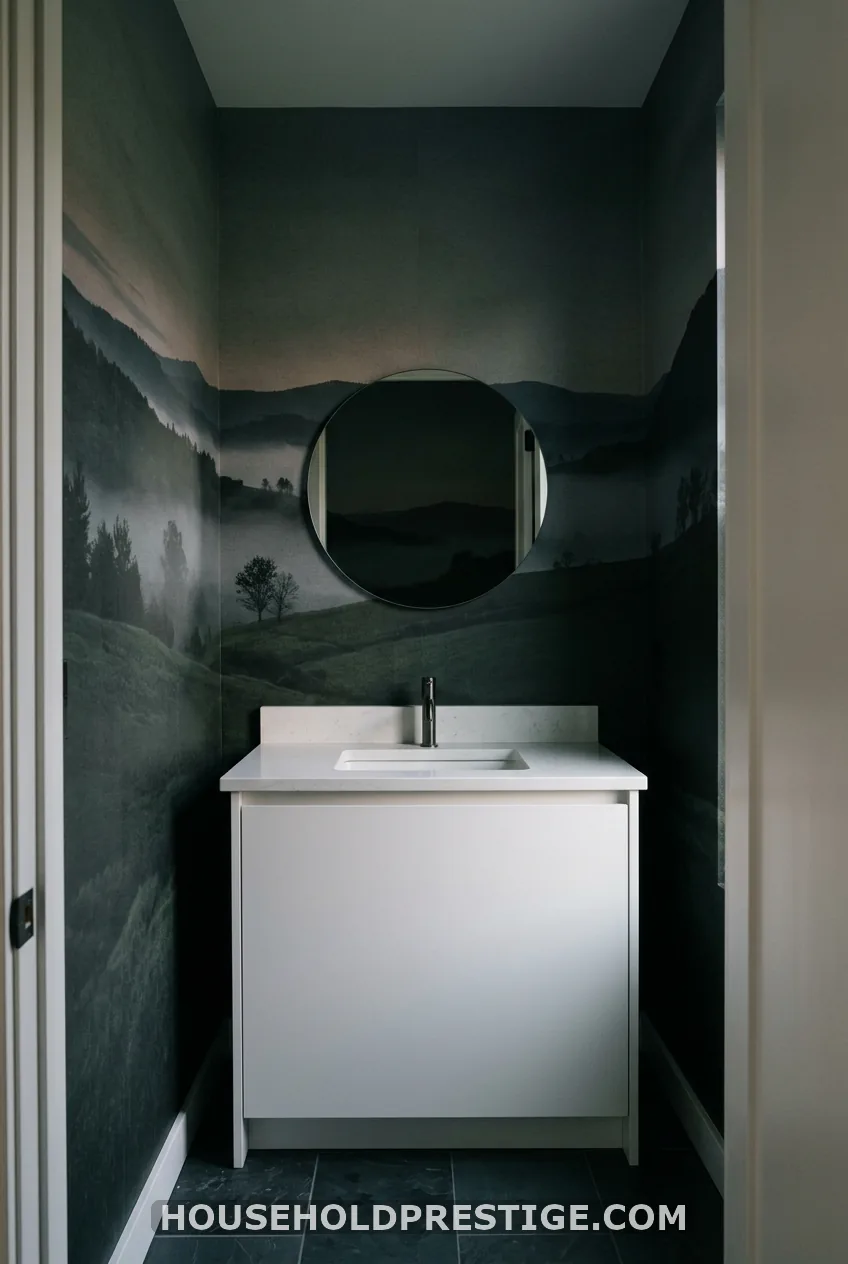
A mural is a single picture, so let it be the only star. Many companies cut murals to your wall size, so measure twice and send exact dimensions, including the door.
Keep the vanity and decor plain. No gallery wall on top.
16. Moody Blush and Plum
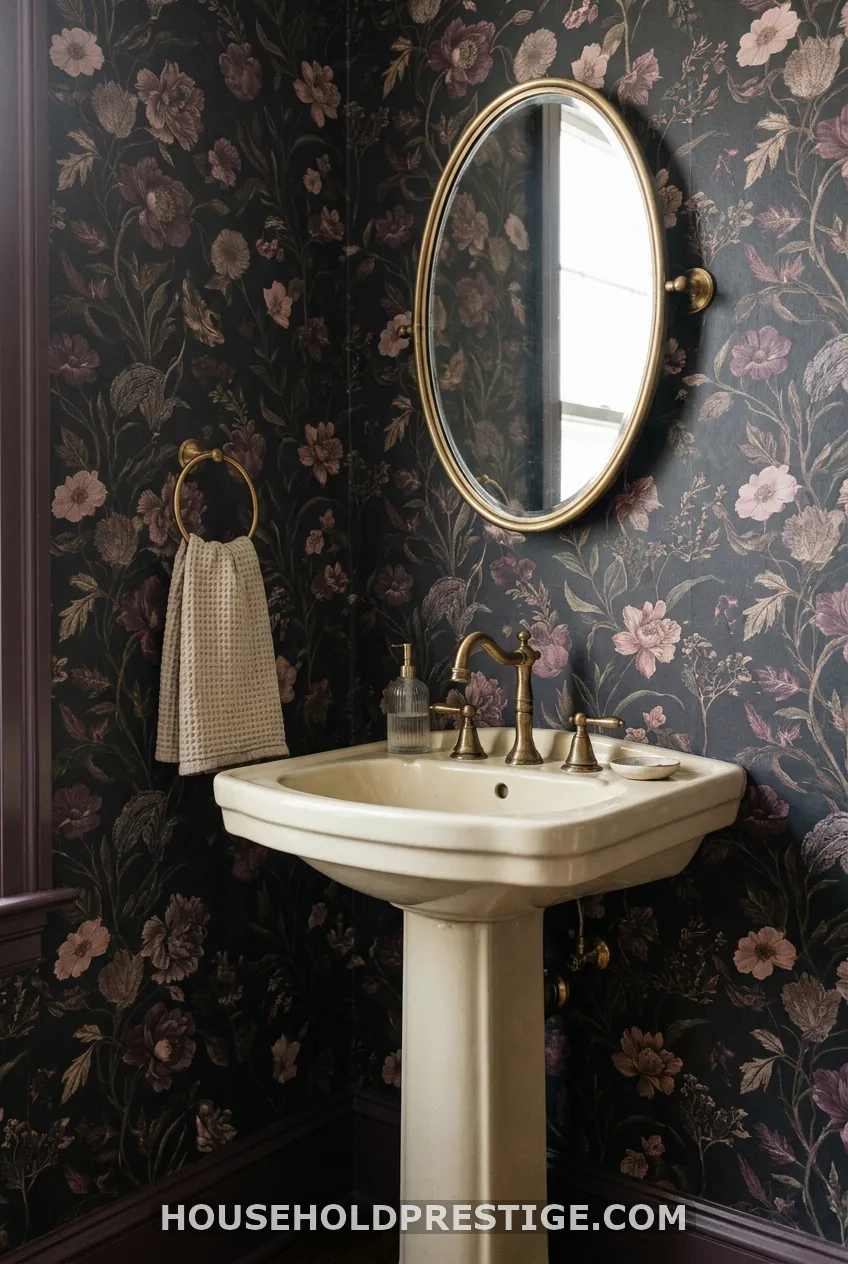
Moody does not have to mean black. Dusty plum with blush gives you the glow of candlelight. Shops like Wall Blush and Hygge & West carry colors in this range.
This works best with warm bulbs. Cool light turns the blush chalky.
17. Dark Sage Green Small Print
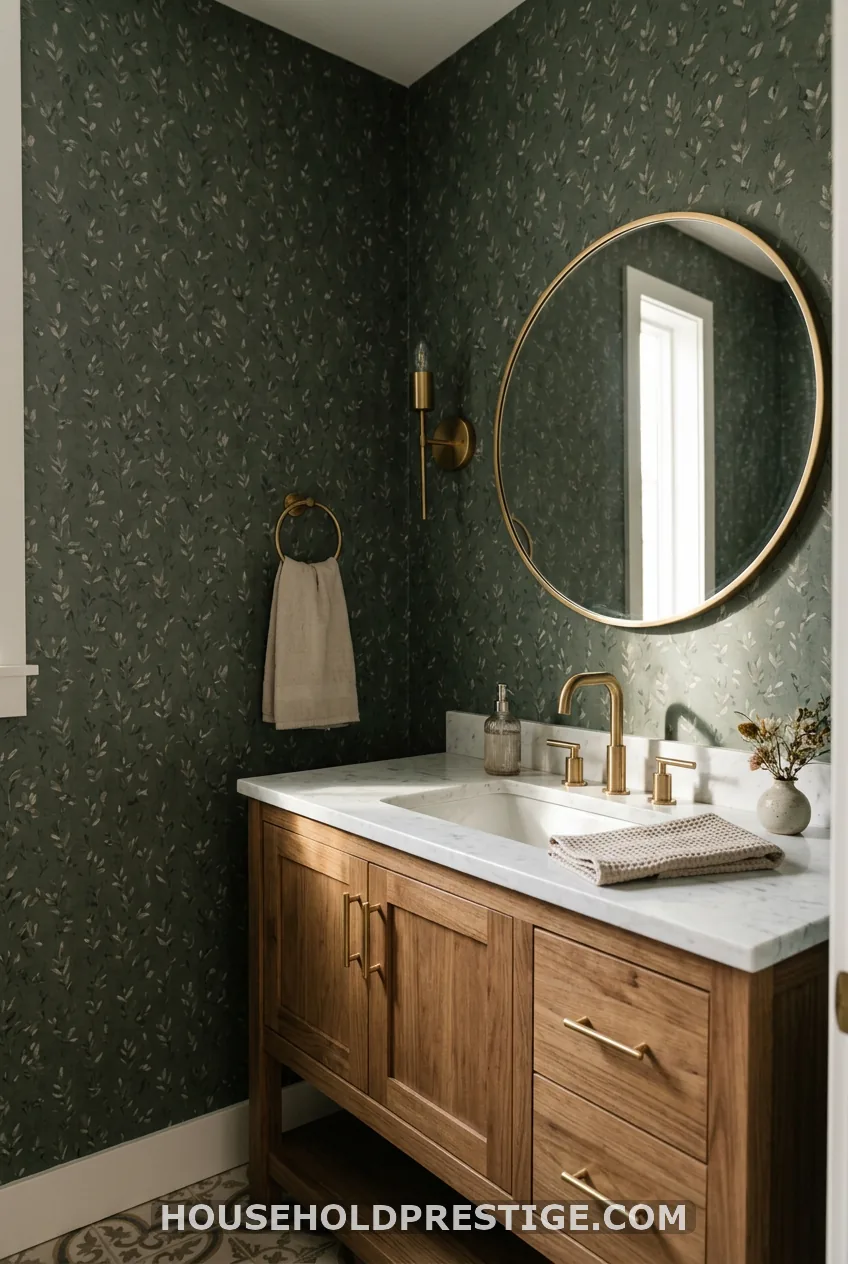
Myth: small rooms need small prints. Reality: a small print can work, but only if it is calm. Dark sage with a quiet leaf reads like a texture from three feet away. Close up, it rewards a look.
It is a good first dark paper for nervous beginners.
18. Black Wallpaper With Gold Accents
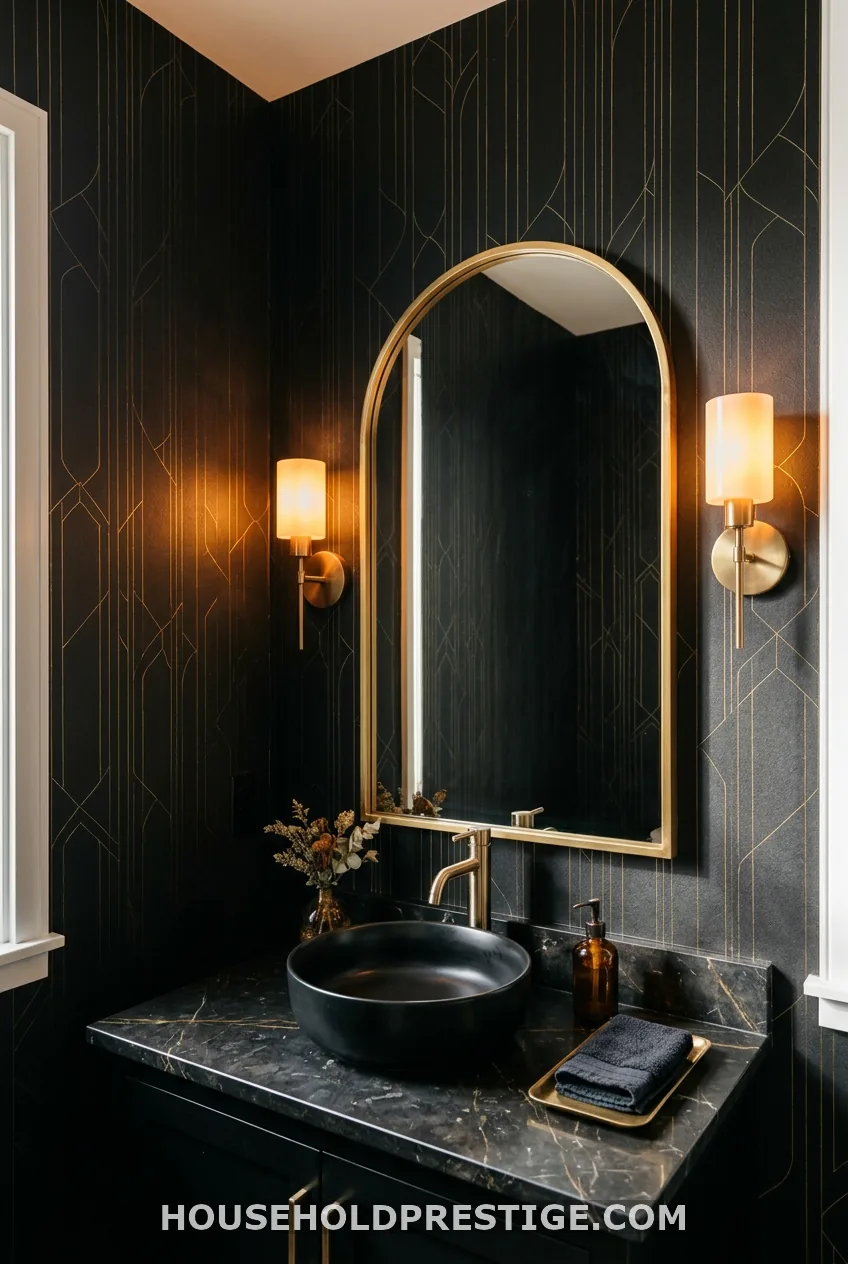
Go full black only with good lighting. Use two sconces flanking the mirror, at roughly 60 to 66 inches from the floor, so light hits your face and not the ceiling.
Without that, you get a cave. With it, you get a nightclub restroom in the best way.
How Much Wallpaper Does a Powder Room Need?
Math first, shopping second. A 5×5 room has a 20-foot perimeter. With 8-foot ceilings, that is 160 square feet of wall. Subtract about 21 square feet for a door and you have roughly 140.
A standard American single roll covers about 56 square feet, but you will use closer to 45 after trimming and matching the pattern. That puts a 5×5 room at about 4 rolls. A 5×8 room, with a 26-foot perimeter, needs roughly 5 or 6.
Buy one extra roll. Dye lots can differ, and a mismatched reorder is far more annoying than a spare roll in the closet. Also check each roll’s pattern repeat. A large repeat can add a full roll of waste.
How to Choose Moody Powder Room Wallpaper
Order samples and tape them up. Look at them in the morning, at night, and under your actual bulb. A windowless room shows you only one kind of light, so test that one.
Check the repeat against your wall height and width. Choose vinyl or non-woven paper for splash-prone spots.
On cost, peel-and-stick usually runs about $40 to $100 a roll, pre-pasted around $50 to $120, and traditional paste paper from designer houses like Mitchell Black or Painted Paper or Flavor Paper can climb to $150 and beyond per roll. For rentals, peel-and-stick wins. For long-term homes, non-woven paste-the-wall paper is easier to remove than old paste paper.
On older plaster or imperfect walls, sand, fill cracks, and prime with wallpaper primer first. That stops paste from lifting paint later.
FAQ
Will dark wallpaper make a small powder room look smaller?
Not usually. Dark walls blur the edges and create a jewel-box feel, especially with warm lighting and thoughtful trim and ceiling choices. The bigger risk is a pattern that is too small and busy for the space.
Is peel-and-stick wallpaper okay in a powder room?
Yes, because there is no shower or tub, so humidity is lower. Prep the wall well and avoid putting it directly behind a sink where splashing is common.
Should I wallpaper all four walls or just an accent wall?
All four walls give the moodiest, most cohesive look in a tiny room. An accent wall behind the vanity is a lower-commitment option that still adds drama.
How do I hang wallpaper around a pedestal sink and toilet?
Paper the wall first and cut in after. For a pedestal sink, make relief cuts and trim tight to the base. For a toilet, work around the base rather than behind the tank, and use a seam roller on the cut edges.
What paint color goes with moody wallpaper?
Pull a background or secondary color from the paper for the trim, ceiling, or remaining walls. Matching the ground color gives a drenched look, while a contrast trim feels more traditional.