

You scroll past those cozy kitchen reels and feel two things at once. A pull toward that slower, warmer way of keeping a home. And a quiet voice that says, “Cute, but I have a job and a 700-square-foot apartment.” I get it. Vintage homemaking can look like a costume you have to buy into, full aprons and sourdough starters and a clothesline you don’t have room for. It isn’t. The real thing is simpler, cheaper, and a lot more flexible than the picture-perfect version online.
Here’s my promise for this guide. By the end, you’ll have a plain starter kit with real prices, a weekly rhythm you can copy word for word, and an honest take on what’s worth bringing back and what’s just nostalgia in a linen dress. No farm. No free month. Just a calmer home.
What Vintage Homemaking Really Means
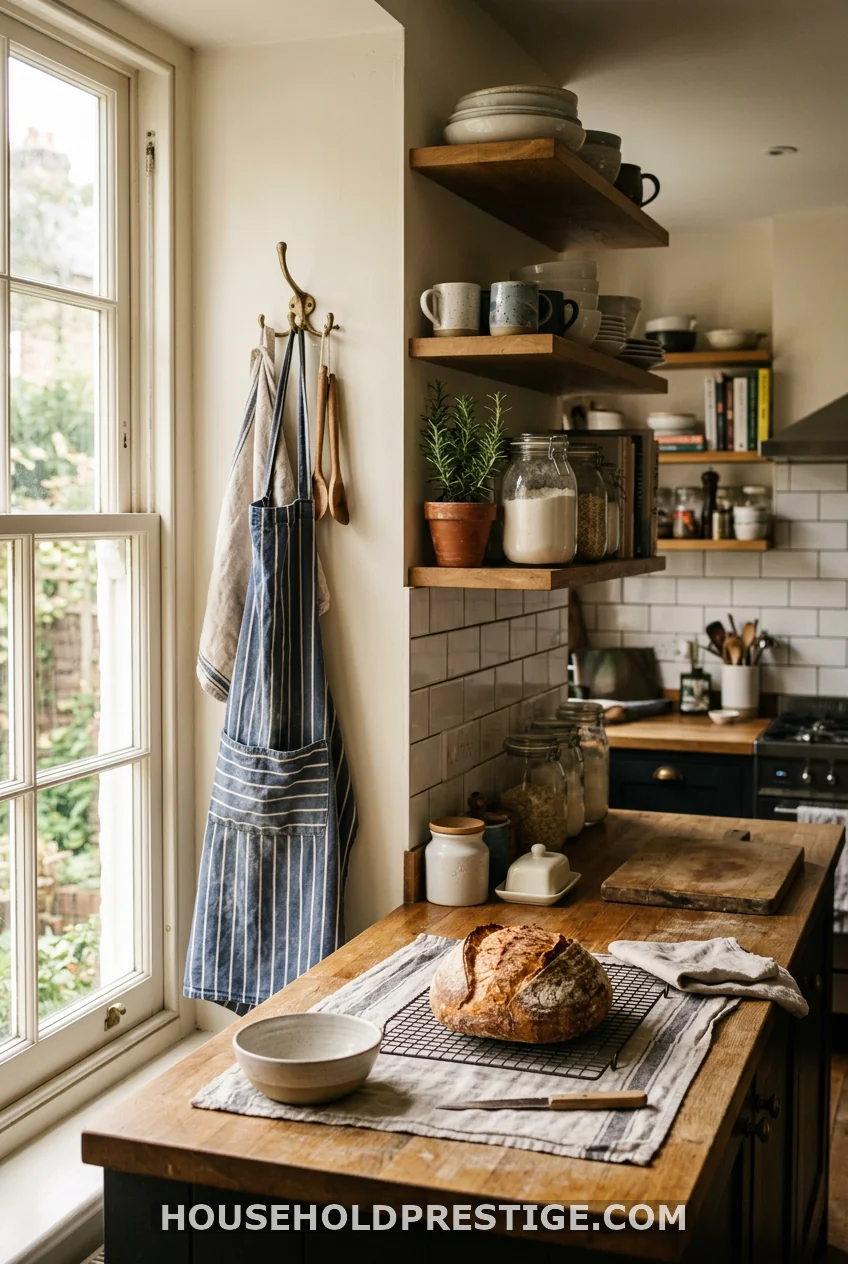
Strip away the aesthetic, and you’re left with one idea. Keep your home by rhythm, not by rescue.
Our great-grandmothers didn’t clean because the house hit crisis mode. They cleaned because Tuesday was Tuesday. The work was woven into the day, so it never piled into a mountain. That’s the whole secret. Not the apron. Not the wood stove. The rhythm.
This matters for you because rhythm is the part that survives a busy life. You can keep a gentle weekly flow whether you’re home all day or out of the house ten hours. The skills are optional. The rhythm is the engine.
The One Mindset Shift That Makes It Work
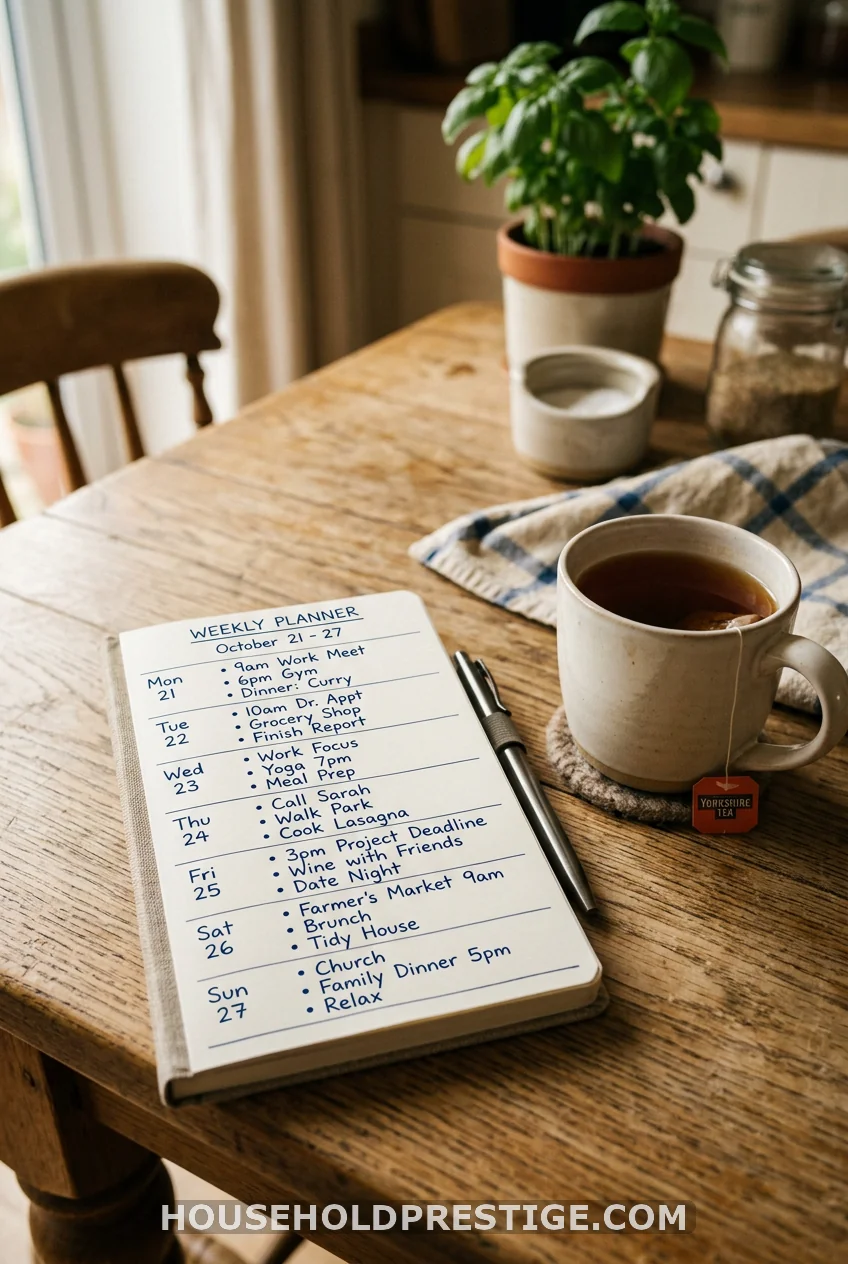
Most people quit vintage homemaking in week two. They quit because they built a schedule, not a routine. There’s a real difference, and it’s the difference between peace and pressure.
A schedule is time-bound. Laundry at 9:00. Floors at 10:00. Miss the slot and you feel behind all day. A routine is order-bound. It’s just a flow you follow, in the same rough order, whenever the day allows. Bread, then dishes, then the porch. No clock required.
Great-grandma ran on routine because she had to. Her day bent around daylight, meals, and the needs of small children, not a planner app. You can borrow that. Attach your tasks to parts of the day instead of to numbers. Morning chores. Midday reset. Evening close-up. The flow carries you, so you stop wondering what comes next.
Your Vintage Homemaking Starter Kit (Real Prices)
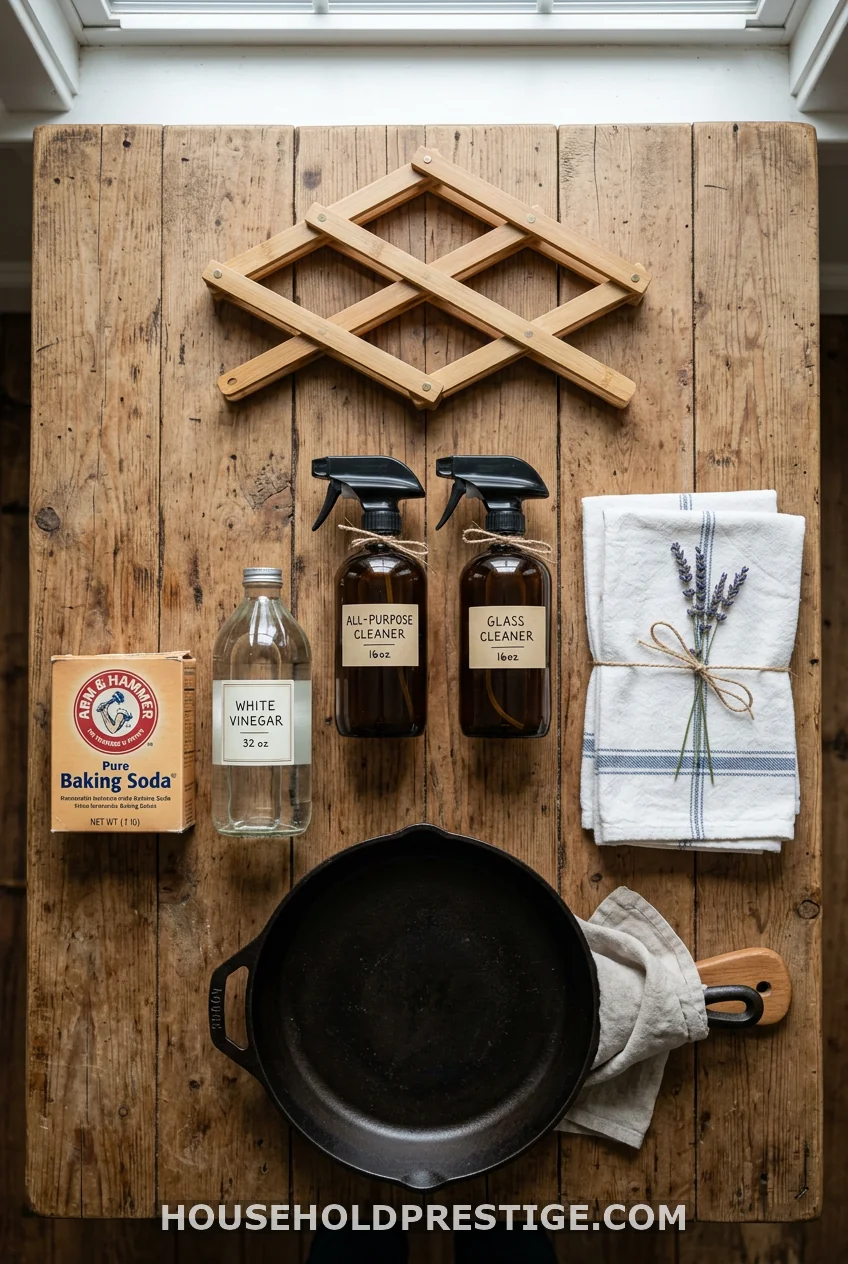
Here’s where the online versions go quiet. They show you the dream and sell you a 50-page ebook. I’d rather just tell you what to buy. You can start the whole thing for well under $200, and most of it lasts for years.
The Cleaning Basics
You can replace a cabinet full of sprays with four cheap things.
| Item | Rough Cost | Lasts |
|---|---|---|
| White vinegar (1 gallon) | $4 | Months |
| Baking soda (bulk box) | $5 | Months |
| Castile soap | $12 to $16 | Months |
| Two glass spray bottles | $8 to $12 | Years |
That’s your whole cleaning arsenal for around $30. Here are the three mixes that do almost everything:
- All-purpose spray. One part white vinegar, one part water. Add a dozen drops of lemon or tea tree oil if you like. Skip this one on stone, marble, or granite, since vinegar etches them.
- Soft scrub. Baking soda with a small squirt of dish soap, mixed to a paste. Great for sinks and tubs.
- Drain refresh. Half a cup of baking soda down the drain, then half a cup of vinegar. Let it fizz, then flush with hot water.
One safety note, and it’s a real one. Never mix vinegar with bleach. The fumes are dangerous. Keep your old-fashioned cleaners and your store-bought ones apart.
The Kitchen Basics
A few hardworking tools cover most from-scratch cooking:
- A 10-inch cast iron skillet (Lodge runs about $20 to $30). It outlives nonstick by decades.
- A simple loaf pan, around $10, for your first bread.
- A set of flour-sack towels, $12 to $18, that work as napkins, bread covers, and rags.
The Laundry and Mending Basics
- A folding drying rack, $20 to $35, for line-fresh laundry without a yard.
- A small mending kit with needles, thread, and a thimble, about $10.
Add it up, and a full starter kit lands near $130 to $180. Compare that to one big-box organizing haul and you’ll see why our grandmothers could do so much with so little.
The Weekly Rhythm Template You Can Copy
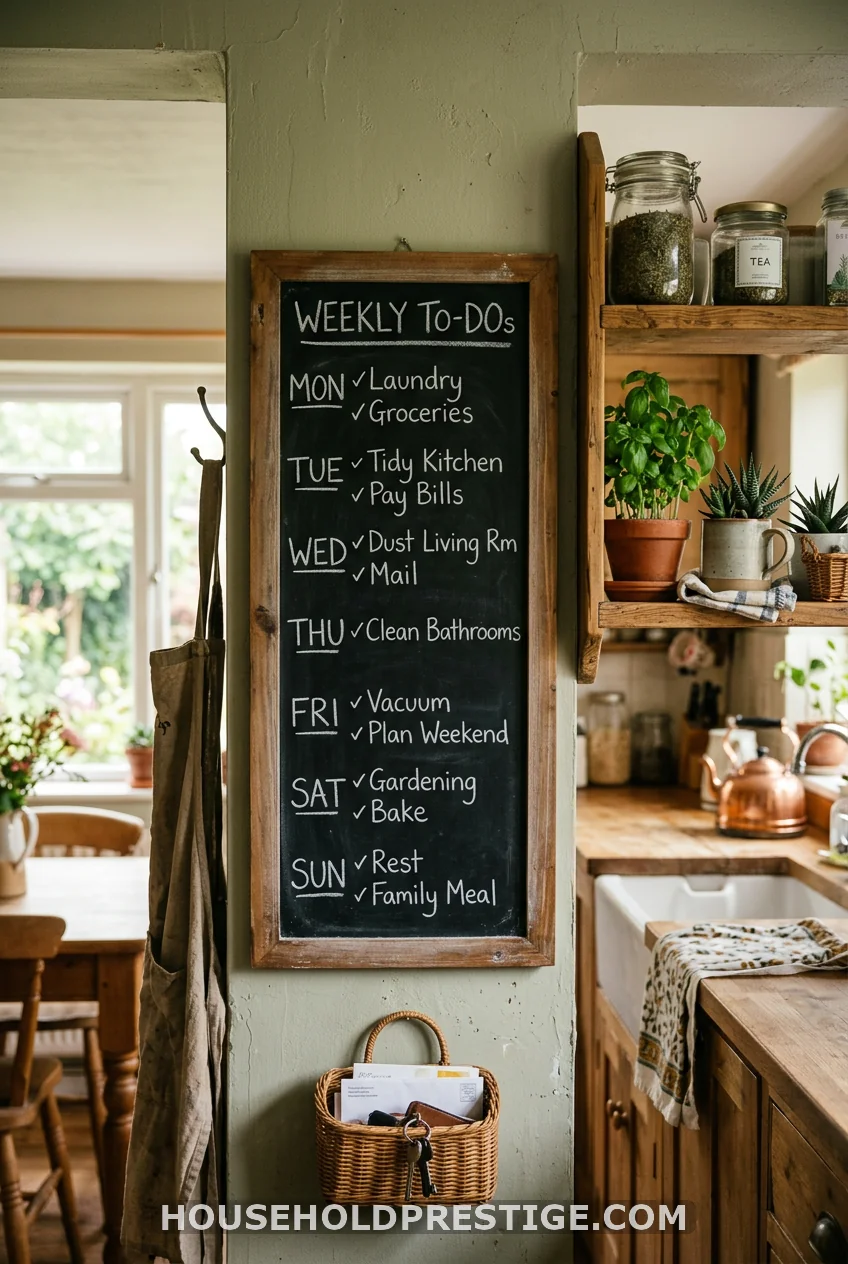
This is the piece every blog teases and then locks behind a freebie sign-up. I’ll just give it to you. The old method was “theme days,” one main focus per day, so nothing ever piled up. Here’s a full week:
- Monday: Kitchen day. Wipe down, mop, plan meals for the week.
- Tuesday: Bathrooms. Scrub, restock, swap towels.
- Wednesday: Floors and dusting through the main rooms.
- Thursday: Laundry deep day. Wash, line-dry, and mend the one thing in the basket.
- Friday: Flat surfaces and paperwork. Clear counters, sort mail, errands.
- Saturday: Outdoors and baking. Yard, plants, and a batch of bread or muffins.
- Sunday: Rest. A light tidy and a slow morning, nothing more.
The beauty is what it removes. You never face a whole filthy house, because each room gets its turn before it gets bad. You also stop deciding. Tuesday already told you what to do.
If You Work Full-Time, Compress It
Don’t try to run all seven. Pick three anchor days and let the rest ride.
- One weeknight for a single focus room.
- One weeknight for laundry.
- Sunday for a full reset and a little batch cooking.
Three touch points keep a home steady. Perfection was never the goal, not even for Grandma.
A Simple Daily Rhythm

Under the weekly flow sits a tiny daily one. Three anchors, that’s all.
Morning. Open the curtains. Make the bed. Start a load of laundry. Wipe the kitchen counter. Four small acts, ten minutes, and the day already feels in hand.
Midday. Do your one focus-day task. Prep a dinner component while you’re in the kitchen anyway, like chopping veg or starting a pot.
Evening. Reset the kitchen so you wake to a clean sink. Set out what tomorrow needs. Walk through and tidy for ten minutes. Then stop. The work has an end, and you’re allowed to reach it.
The Vintage Skills Worth Bringing Back
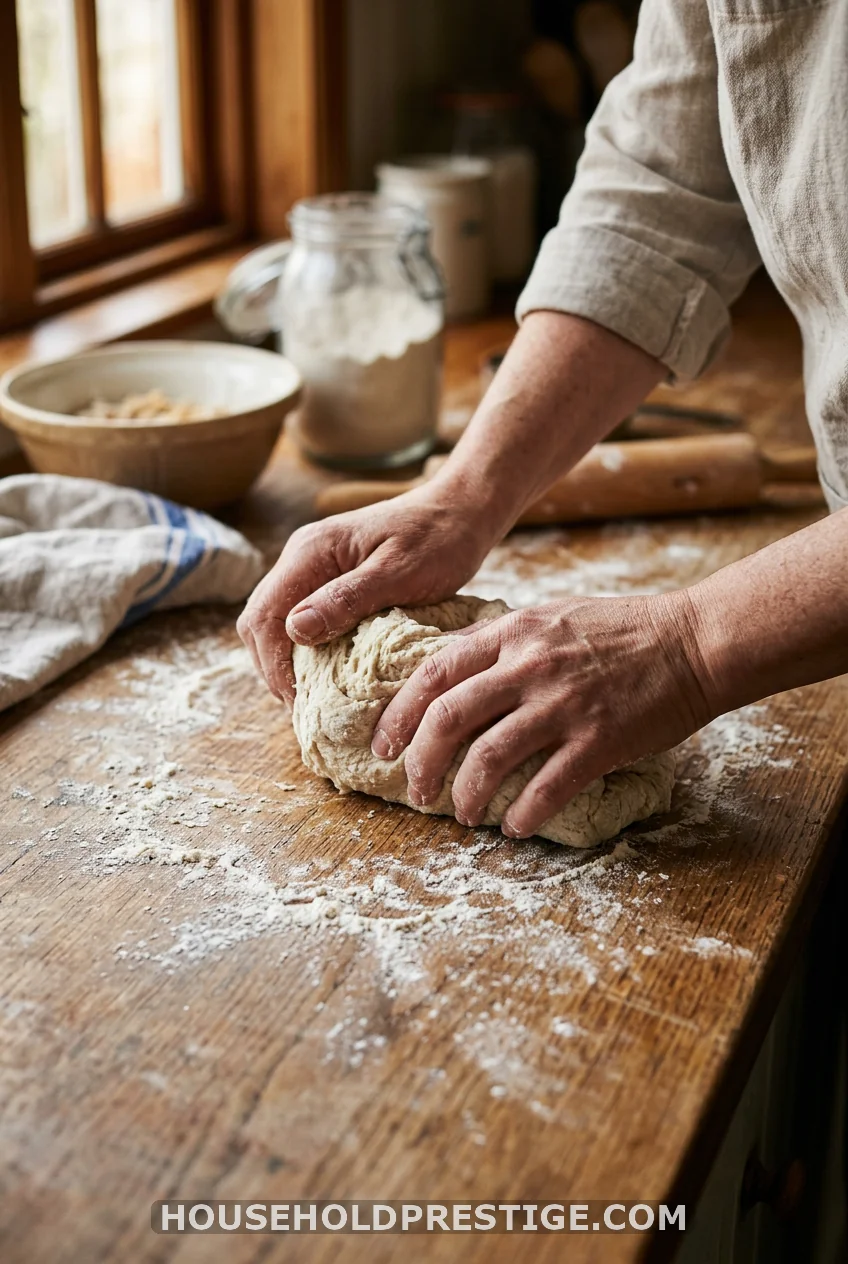
You don’t need every old skill. You need a few that pay you back. Here’s an honest list with how long each takes to learn:
- Baking a basic loaf. One weekend to your first one. Cheap, freezes well, and the house smells wonderful.
- Line-drying clothes. Learn it in five minutes. Saves on your power bill and makes sheets smell like outside.
- From-scratch cleaning. Instantly, using the three mixes above.
- Mending a button or hem. Thirty minutes to learn, and it saves clothes you’d otherwise toss.
- Batch cooking. One afternoon, stock your freezer for two weeks of easy dinners.
- Keeping a simple pantry. Stock the basics, cook from what you have, waste less.
Start with one. Get it comfortable. Add the next when it feels light, not heavy.
The Honest Part: What’s Worth It and What’s Just Nostalgia
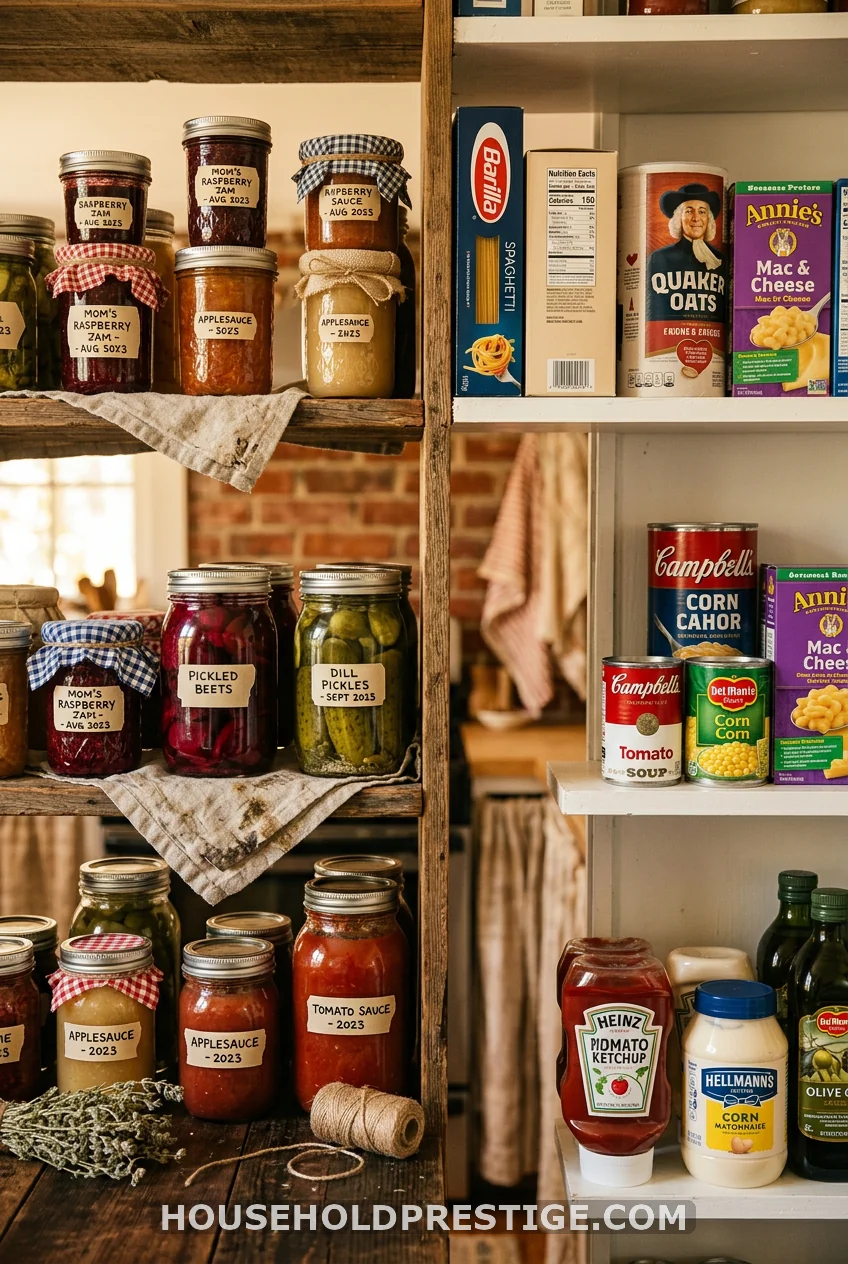
Most homemaking content won’t tell you this, so I will. Some vintage habits are pure gold. Others are a costume that costs you time and money you don’t have. Knowing the difference is the whole game.
Myth: Vintage homemaking means everything from scratch. Reality: our great-grandmothers had help. Older kids did chores. Many didn’t work outside the home. And honestly, they’d have grabbed a dishwasher and a washing machine in a heartbeat. They weren’t chasing hardship. They were doing the next needed thing with the tools they had. Use yours.
Myth: It always saves money. Reality: sometimes, not always. Homemade bread does save real money, every loaf. But canning your own tomatoes rarely beats a can on sale once you count jars, lids, energy, and your time. Do the from-scratch things that pay off. Skip the ones that only look thrifty.
Myth: It’s about the aesthetic. Reality: the linen apron and copper pots are a vibe, not the point. The actual reward is calm. A repeatable rhythm means you stop living in reaction mode. That’s worth far more than a matching set of canisters.
If a habit gives you peace or saves you real money, keep it. If it only gives you a prettier photo, you can let it go without guilt.
Common Mistakes That Make People Quit

I’ve watched friends bounce off this lifestyle, and it’s almost always one of these:
- Doing it all in week one. They adopt seven theme days, sourdough, mending, and canning at once, then burn out by Friday. Add one habit at a time.
- Buying the aesthetic first. They spend $200 on linen and copper before building a single routine. The habit comes first. The pretty stuff is optional, and later.
- Confusing a routine with a schedule. They time-block every task, miss one, and feel like a failure. Flow, don’t clock.
- Romanticizing it into guilt. They compare their real Tuesday to someone’s filtered reel and feel behind. That reel is a highlight, not a standard.
Avoid those four, and you’ll still be doing this next year.
Making It Work in a Small Apartment
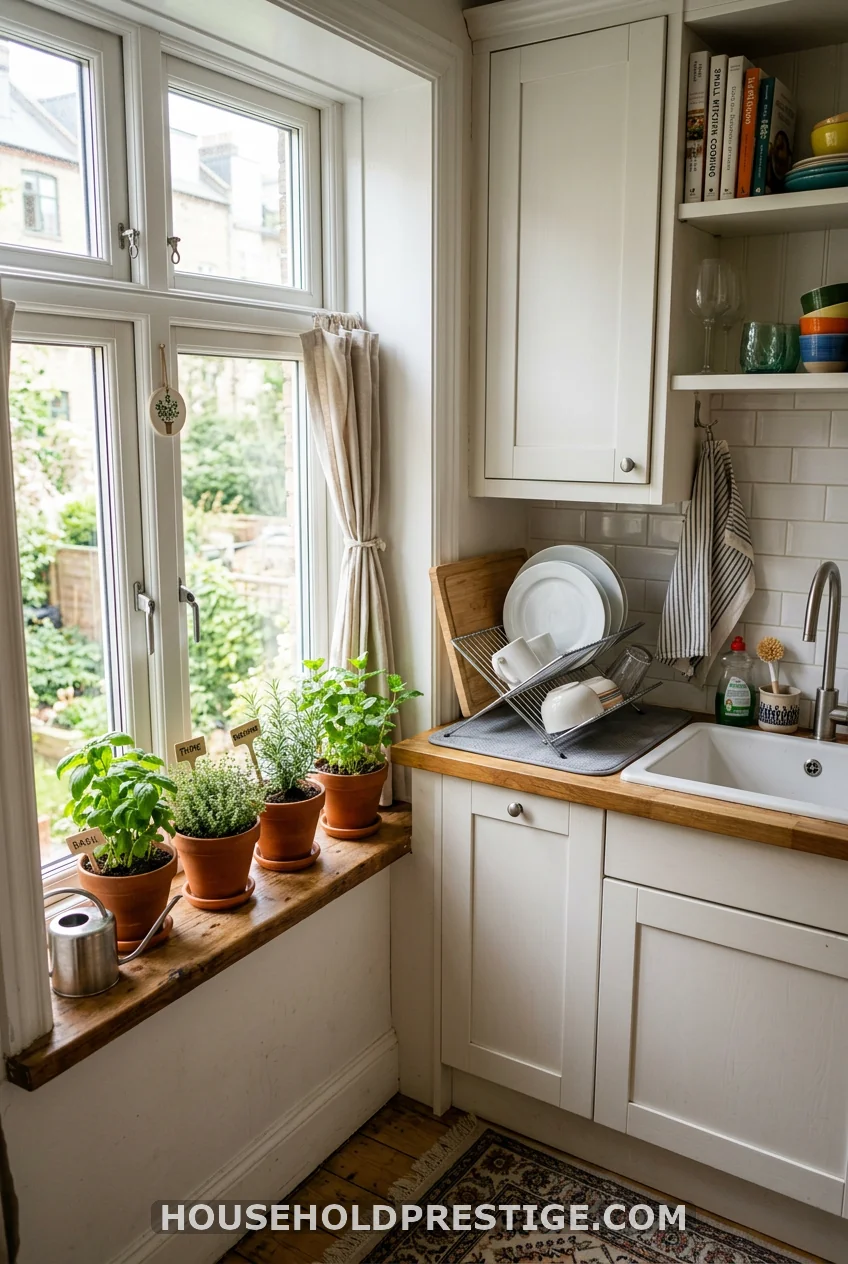
No yard? No problem. A folding rack by a sunny window dries laundry just fine. No garden? A single pot of basil on the sill counts. No deep freezer? Batch cook for the week instead of the month. Vintage homemaking was always about working with what you have, in the space you have. A studio counts just as much as a farmhouse.
A Gentle Place to Start
You don’t have to become a 1950s housewife to feel the good part of all this. Pick one rhythm this week. Make your bed and start a load each morning, maybe. Bake one loaf on Saturday. Let it feel small. The whole point of vintage homemaking is a slower, steadier home, not a longer to-do list. Add the next piece when this one feels like second nature. Your calmer home is built one quiet habit at a time, and you have everything you need to start today.
Frequently Asked Questions
What is vintage homemaking, in plain terms?
It’s keeping your home the old-fashioned way, by gentle daily and weekly rhythms instead of crisis cleaning. Think from-scratch basics, simple routines, and a slower pace. The focus is order and calm, not a perfect aesthetic.
Where do I start if I work full-time?
Pick three anchor points: one weeknight for a focus room, one weeknight for laundry, and a Sunday reset with a little batch cooking. Three touch points keep a home steady without taking over your week.
Does vintage homemaking really save money?
Some of it does, clearly. Homemade bread, from-scratch cleaners, and line-drying all cut real costs. Others, like small-batch canning, can cost more than they save once you count equipment and time. Keep the habits that pay off and skip the ones that only look thrifty.
What’s the difference between a homemaking routine and a schedule?
A schedule is tied to the clock, so a missed slot makes you feel behind. A routine is just an order you follow whenever the day allows. Routines hold up far better in a busy modern life.
Do I need to cook everything from scratch?
No. Choose a few from-scratch wins, like bread or a simple soup, and let convenience cover the rest. Even past generations used every shortcut they could get. Use yours without guilt.