

Some mornings, the sink is full, the baby is crying, and you feel like you’re failing at the one job God gave you. I’ve stood in that exact spot. Biblical homemaking isn’t about a magazine kitchen or doing it all without breaking a sweat. It’s about building a home on Christ, one ordinary habit at a time, even when you’re tired and the laundry never ends.
So let me share what changed things for me. Not a tidier house. A steadier heart. These 9 habits pulled my homemaking out of the comparison trap and put it back where it belongs: in worship, in grace, in the quiet faithfulness God asks of us. Read to the end, and you’ll have a simple, scripture-rooted rhythm you can start this week, no perfection required.
1. Open the Word Before the To-Do List

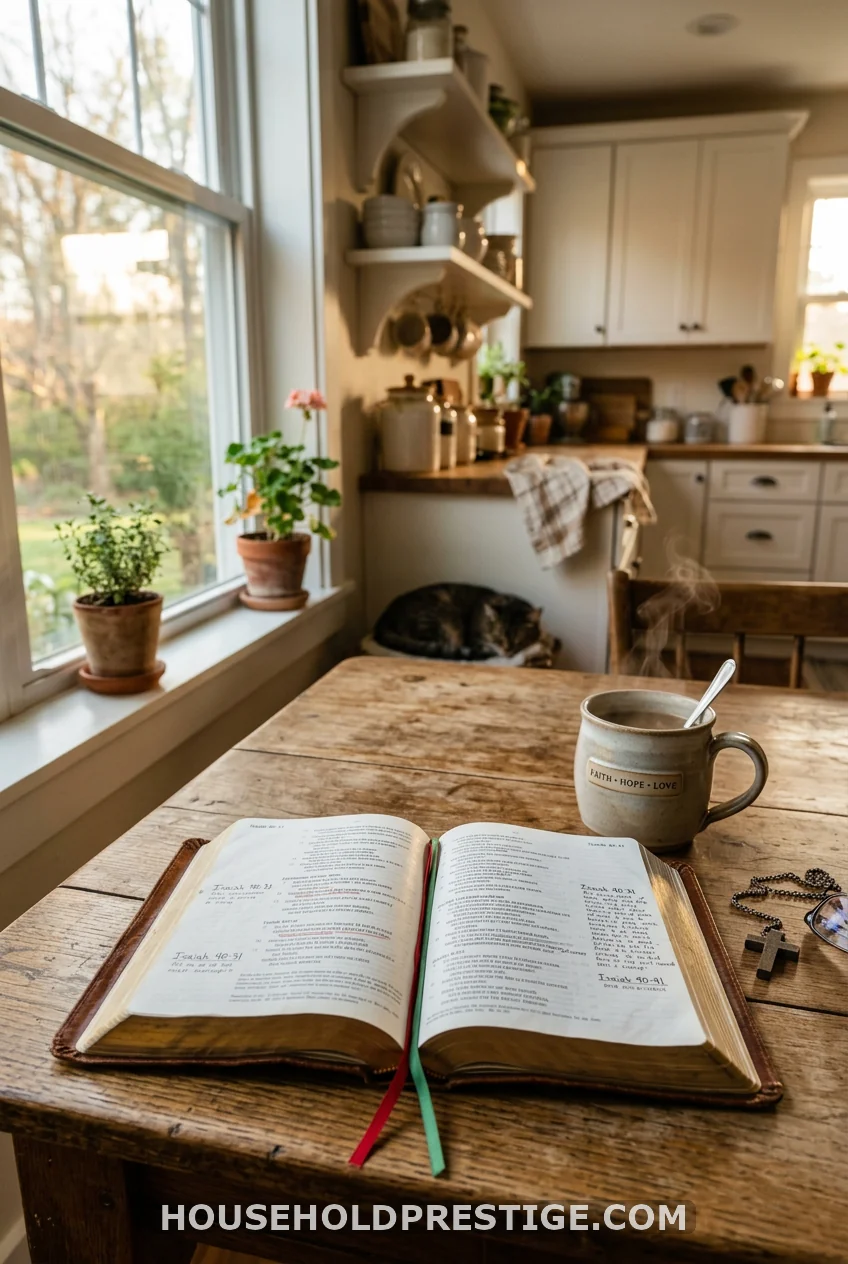
Reach for Scripture before you reach for your phone. Five minutes in Psalms beats an hour of scrolling. You set the tone of the whole house when you settle your own heart in God first. Try it tomorrow. The dishes can wait five minutes.
2. Guard the Atmosphere of Your Home (A Hard Lesson I Learned)

I want to tell you about the morning I lost it.
The kids had been at each other’s throats since breakfast. I’d stepped on a toy, burned the toast, and found a marker on the wall. By nine in the morning, I was snapping at everyone, slamming cabinet doors, wearing the kind of face that makes a child go quiet and small.
That afternoon, I opened my Bible and landed on Psalm 101:2. “I will walk within my house with a blameless heart.” It stopped me cold. I had been so focused on a clean house that I’d let my heart turn into the messiest room in it.
Here’s what I missed for years. The atmosphere of your home isn’t set by how it looks. It’s set by how you carry yourself inside it. You can scrub every surface and still fill the place with tension, sighing, and short answers. Your family feels your spirit long before they notice the counters.
So I started watching my heart the way I watch the floors. When I feel the frustration rising, I step into another room and pray a single sentence: “Lord, soften me.” It takes ten seconds. It has saved more mornings than any cleaning schedule ever did.
Your home doesn’t need a calmer house. It needs a calmer you. And that’s a thing God grows in us, slowly, as we keep handing Him our reactions.
3. Pray Over the Boring Stuff
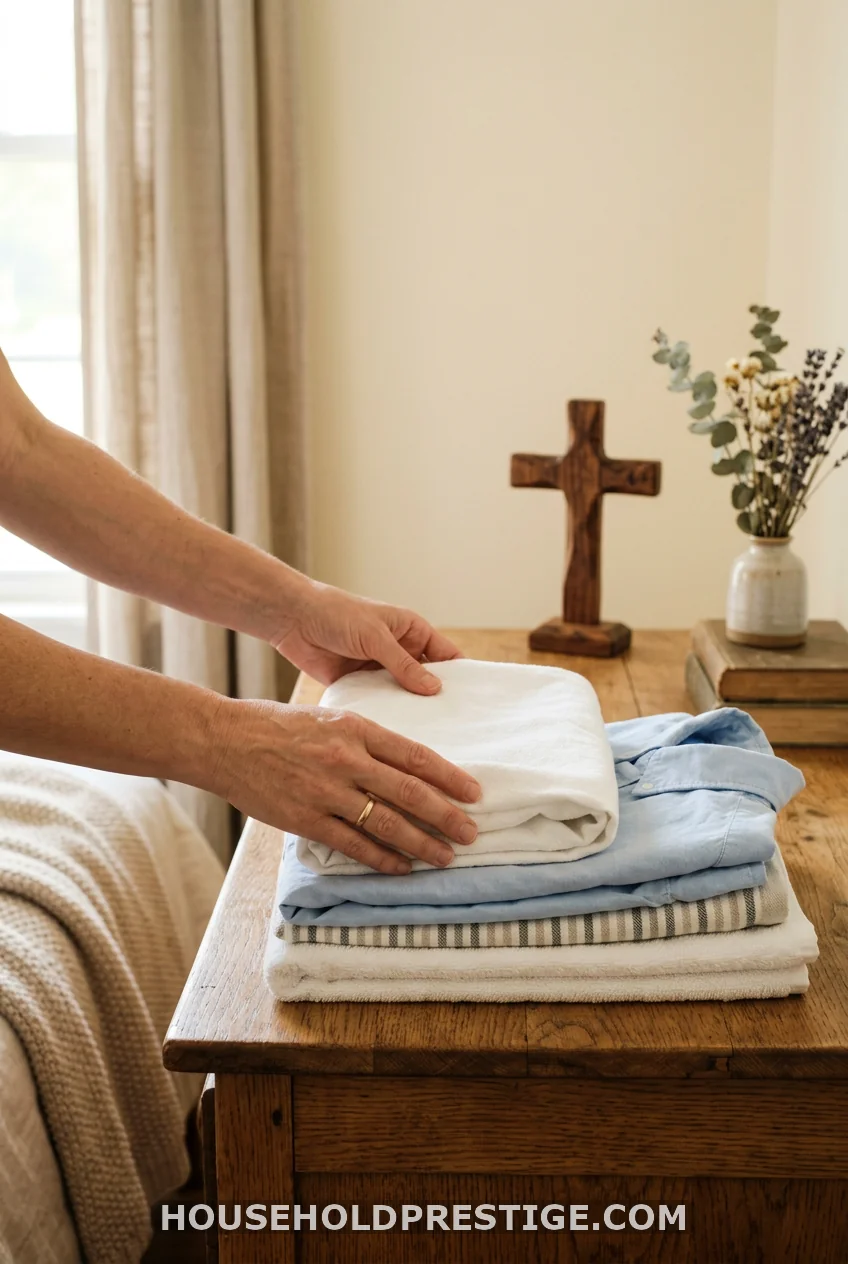
Folding socks isn’t glamorous. But you can pray while you fold. Thank God for the small body that wears them. Turn the dish water into worship. “Whatever you do, do it heartily, as to the Lord” (Colossians 3:23). The task stays the same. Your heart doesn’t.
4. Build a Simple Homemaking Rhythm Rooted in Scripture
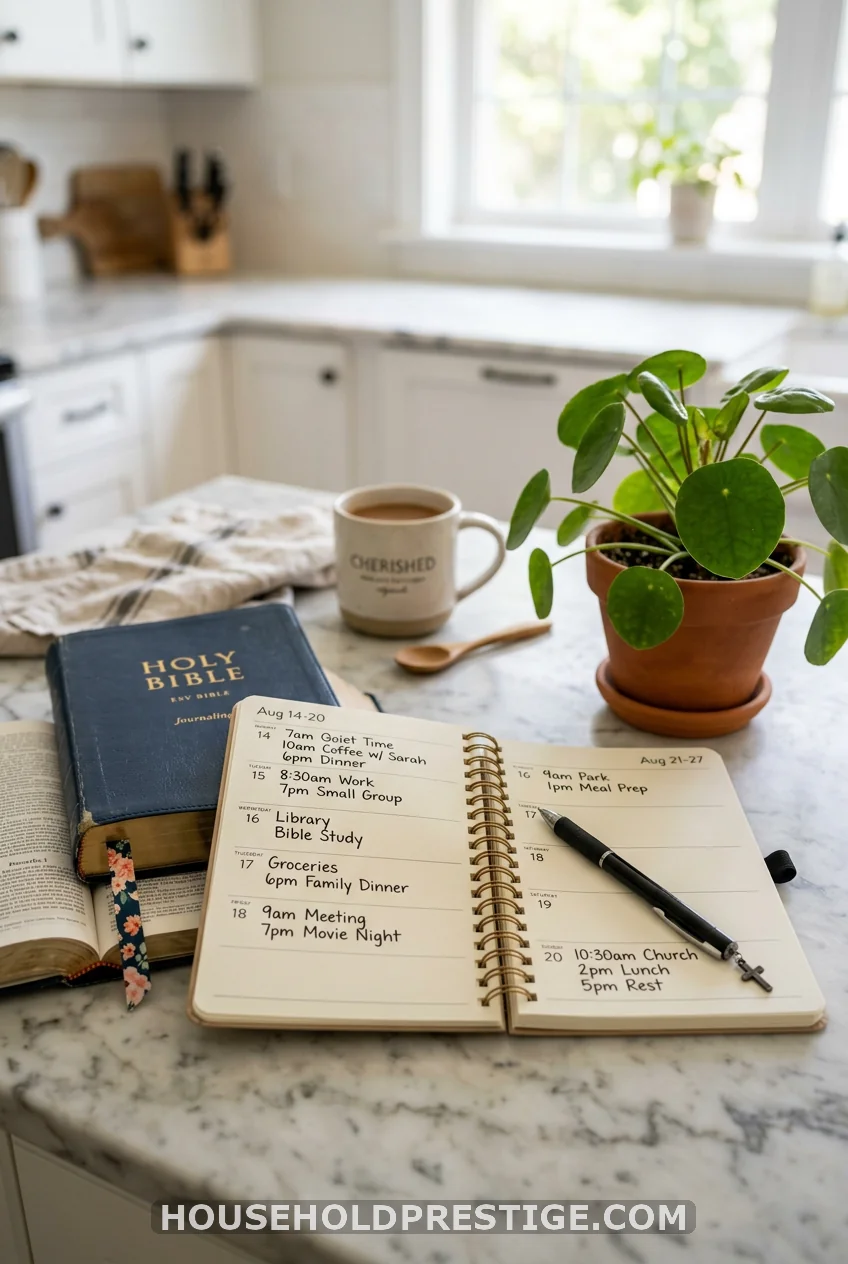
This is the habit that changed my whole week, so I’m going to walk you all the way through it.
Most homemaking advice hands you a color-coded cleaning chart and calls it a day. The trouble is, a chart tells you what to scrub. It never tells you why, and it never accounts for the day your toddler runs a fever and the whole plan falls apart. A rhythm is different. A rhythm bends without breaking.
Why a Rhythm Beats a Schedule
A schedule says “mop the floors at 2 p.m. Tuesday.” Miss the slot, and you feel behind. A rhythm says, “Tuesday is for floors and laundry, whenever they fit.” There’s grace built in. Proverbs 31:27 says she “watches over the ways of her household,” not that she runs it like a military base. You’re a keeper of a home, not a prisoner of a timer.
The Simple Weekly Frame
Here’s the structure I use. Assign one focus to each weekday and let the rest stay loose.
- Monday: Reset. Catch up on the weekend’s mess. Wipe surfaces, run a load of laundry, plan the week’s meals.
- Tuesday: Floors and laundry. Vacuum, mop, wash, and fold. Pick one prayer to pray over your family as you work.
- Wednesday: Kitchen deep clean. Fridge, counters, sink. This is the room your family gathers in, so give it care.
- Thursday: Bathrooms and bedrooms. Fresh sheets, clean mirrors, tidy nightstands.
- Friday: Light and prep. A quick tidy, then prep for the weekend so Saturday feels like rest, not catch-up.
Notice there’s no “perfect house” day. There isn’t one. That’s the point.
What You’ll Need to Start
You don’t need much. A simple paper planner works better than any app, because you’ll see it sitting on the counter. I keep an undated weekly planner that runs about $15 to $25, a pen, and a short list of family prayer points tucked in the front. The total cost under thirty dollars, and most of you already own a pen and could pencil this onto any notebook tonight for free.
The 15-Minute Setup
Sit down with your planner and a cup of tea. Spend fifteen minutes writing one focus per weekday, the way I listed above. Add one verse at the top of the page that you want to carry through the week. That’s the whole setup. You’re done.
Common Mistakes to Avoid
- Over-planning. Don’t fill every hour. Life with people in it needs margin. Leave white space on purpose.
- Treating a missed day as a failure. You’ll miss days. Sick kids, late nights, hard seasons. Pick the rhythm back up the next morning without the guilt spiral.
- Copying someone else’s exact routine. Your home, your season, your family. A mom of a newborn and a mom of teens needs different weeks. Build yours.
- Forgetting the why. A rhythm without prayer is just a chore list. Keep the verse at the top of the page so the work stays connected to worship.
Why This Works
A rhythm works because it removes the daily question “what should I do today?” and replaces it with a gentle, repeatable frame. You stop floating. You stop reacting to whatever mess shouts loudest. And because grace is built into the structure, one bad day doesn’t topple the whole thing. You wake up on Wednesday, and Wednesday still knows what it’s for. That steadiness, repeated week after week, is what turns a chaotic house into a peaceful home.
5. Practice Hospitality Without the Pinterest Pressure

Hospitality scares a lot of us because we think it means a flawless tablescape. It doesn’t. Romans 12:13 tells us to “practice hospitality,” and practice means imperfect, ongoing, real.
Open your door with what you have. A pot of soup and a loaf of bread feeds people just fine. The point was never to impress your guests. The point is to make them feel seen, fed, and at rest under your roof.
Start small. Invite one family. Serve something easy. You’ll find the warmth of the welcome matters far more than the menu ever could.
6. Let “Good Enough” Be Holy

Perfectionism is not a fruit of the Spirit. A clean-enough house with a peaceful mom beats a spotless one with a frazzled one. Lower the bar to “loved and functional.” God isn’t grading your grout. He’s growing your heart.
7. The 1950s Housewife Myth vs. The Proverbs 31 Reality
Let’s clear something up, because it trips up so many women.
What most people picture: Biblical homemaking means a 1950s housewife in pearls, vacuuming in heels, silent and small, with no thoughts of her own and no life outside the kitchen door.
What Scripture really shows: Read Proverbs 31 again, slowly. The woman there buys a field. She plants a vineyard. She runs a small textile business and sells what she makes. She gives generously to the poor. She speaks with wisdom, and her strength and dignity are described like fine clothing. She is industrious, shrewd, and respected.
That is not a doormat. That is a strong, capable woman who pours her gifts into her home and her community, and does it all unto the Lord.
So if guilt has been whispering that biblical homemaking means shrinking yourself, hush it with the actual text. God didn’t call you to disappear. He called you to build, to nurture, to steward, and to do it with a heart anchored in Him. The pearls and the heels were a TV invention. The vineyard was always the real picture.
8. Speak Blessing Over Your Home

Words build or tear down a house (Proverbs 14:1). Speak life out loud. Bless your kids by name at bedtime. Thank your husband where the children can hear it. A home soaked in spoken blessing grows roots that hold through hard seasons.
9. Treat Rest as Obedience, Not Laziness

You are not a machine, and God never asked you to be one. He rested on the seventh day, and He built rest into His commands for a reason.
When you push through every single day with no pause, you’re not being more faithful. You’re quietly telling yourself the house will fall apart without you. It won’t. God holds it together, not your exhaustion.
Pick one afternoon or evening a week and lay the work down on purpose. Let the dishes sit. Sit with your family, or your Bible, or just your own tired self in a quiet chair. Rest is an act of trust. It says, “Lord, I believe You’ve got this home, even when my hands are still.”
Bringing It Home
Biblical homemaking was never about a perfect house. It’s about a faithful heart, tending the same ordinary tasks day after day, offering them up as worship. You don’t have to do all 9 of these this week. Pick one. Maybe it’s opening your Bible before your phone, or building that simple rhythm, or finally letting “good enough” be holy.
Your home doesn’t need you to be flawless. It needs you to be steady, grounded in grace, leaning on the One who holds it all together. Start where you are, friend. He meets us right in the middle of the laundry pile.
Frequently Asked Questions
What does biblical homemaking really mean?
Biblical homemaking means caring for your home and family in a way that honors God, rooted in Scripture rather than cultural pressure. It treats ordinary tasks like cooking and cleaning as meaningful work done unto the Lord. It centers on a faithful heart, not a flawless house.
Is biblical homemaking only for stay-at-home moms?
Not at all. The Proverbs 31 woman ran a business and worked with her hands outside the home, too. Biblical homemaking is about how you steward and nurture your household with faith, whatever your work situation looks like. Working moms and single women keep faithful homes just as much.
What does the Bible say about homemaking?
Several passages speak to it. Titus 2:5 calls women to be “working at home,” Proverbs 31 paints a full picture of an industrious homemaker, and Colossians 3:23 reminds us to do all our work heartily as unto the Lord. Together, they frame homemaking as purposeful, valuable, God-honoring work.
How do I start biblical homemaking when I feel overwhelmed?
Start with one small habit instead of overhauling everything. Open your Bible for five minutes before the day begins, or build a loose weekly rhythm with grace built in. Let go of perfection and focus on a steady, prayerful heart. Small faithful steps compound in time.
Does biblical homemaking mean I have to be a 1950s housewife?
No. That image comes from an old television, not Scripture. The biblical model in Proverbs 31 is a strong, capable, generous woman who uses her gifts fully while keeping her home centered on God. It’s about faithfulness and purpose, not a costume or a stereotype.