

Is your laundry room the smallest, most neglected space in your house? A black and white laundry room can fix that without a full renovation. Mismatched baskets, a shelf that’s more suggestion than storage, a washer humming next to a pile of towels that never quite makes the shelf: sound familiar? Two colors, endless combinations, and a look that never goes out of style. Here are 23 ways to bring that palette into your own space, from five-minute swaps to a weekend cabinet build.
1. Modern Minimalism
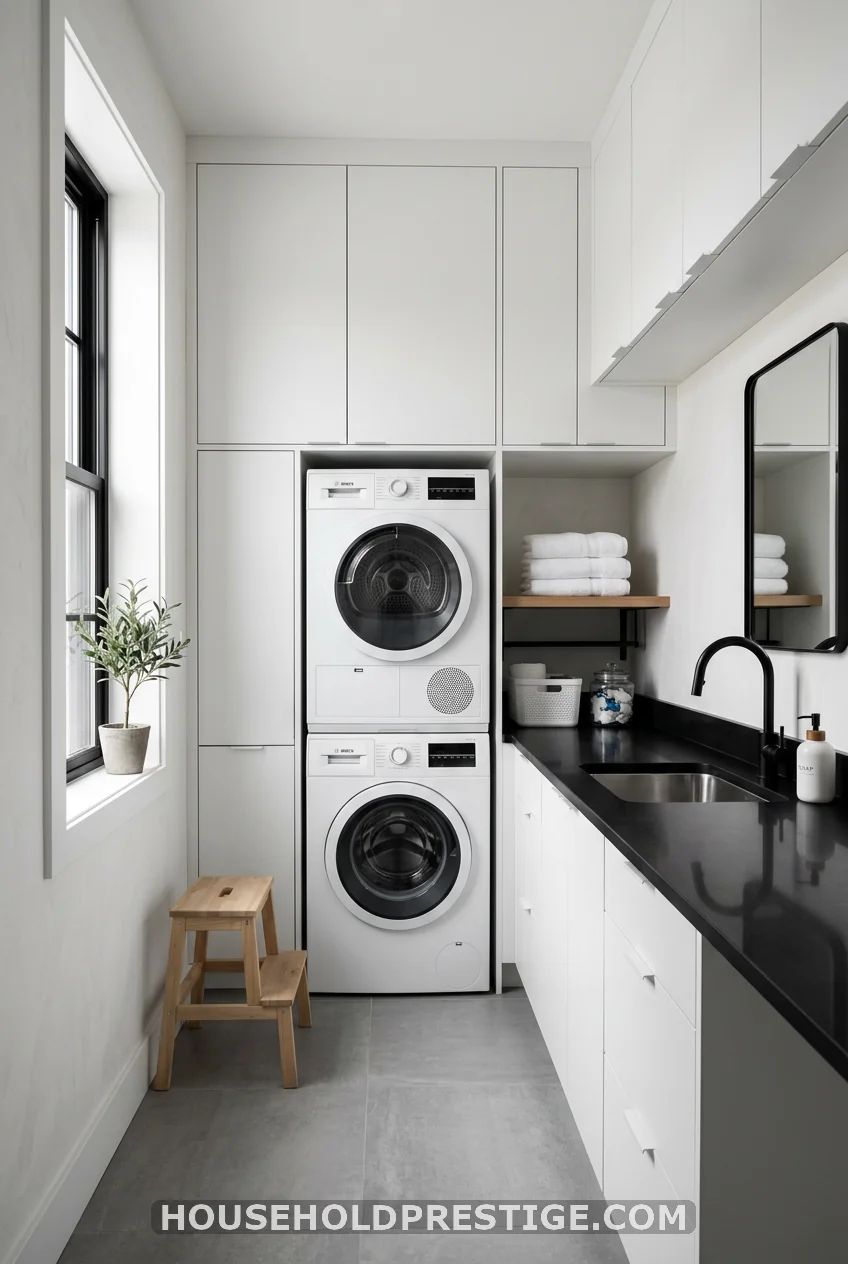
Black countertops. White cabinets. Nothing else competing for attention. That’s the whole idea behind modern minimalism, and it works because a laundry room doesn’t need twelve decisions, it needs two colors and clean lines. Skip the open shelving here. Closed white cabinet fronts keep detergent bottles and dryer sheets out of sight, while a single black quartz counter gives you a spot to fold. The room reads bigger just by having less in it.
2. Two-Tone Cabinets, Not All One Color
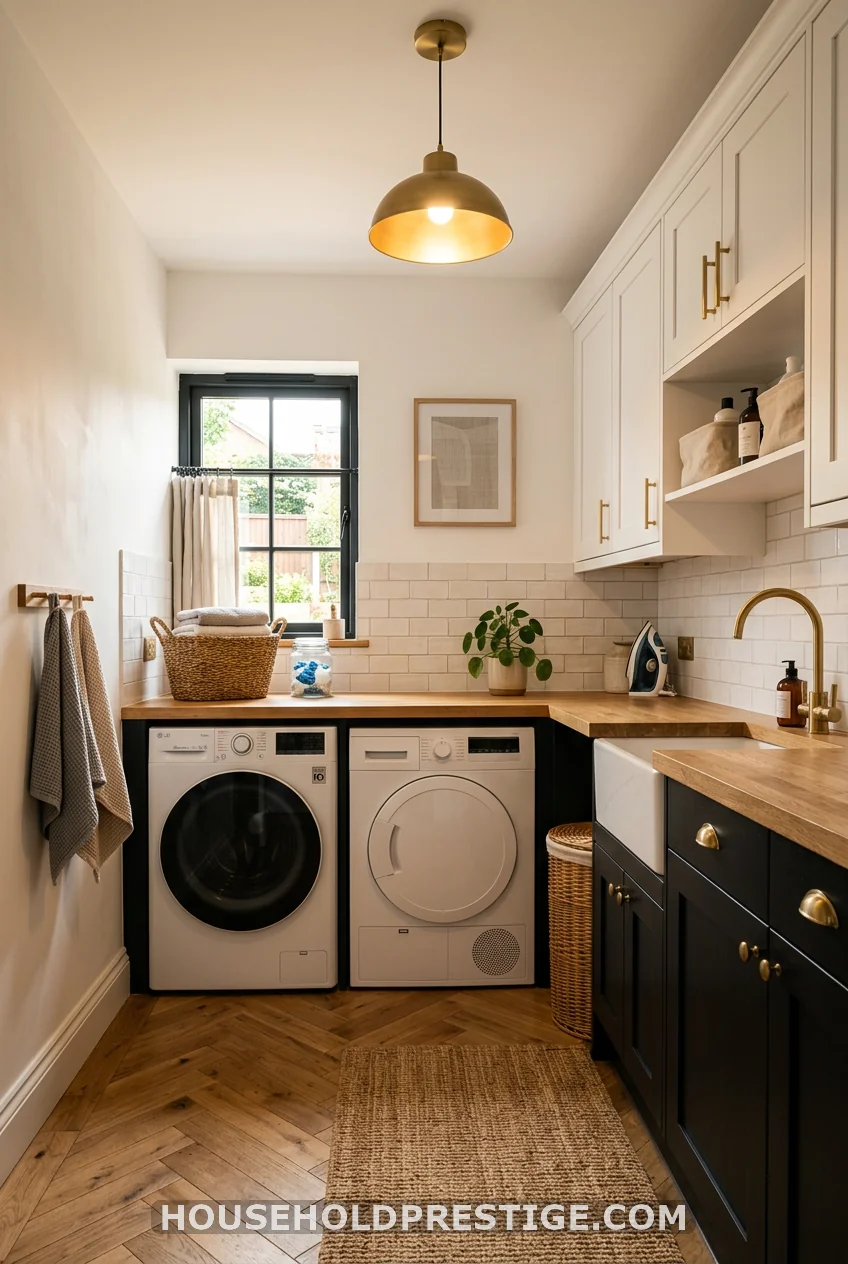
White upper cabinets. Black lower cabinets. This split does two things a single-color kitchen can’t: it draws your eye up toward the ceiling, and it hides scuffs where they’re most likely to happen, down low, near hampers and mop buckets. Try it with a warm brass or unlacquered pull instead of stark chrome. The metal softens the contrast just enough that the room doesn’t feel like a chessboard.
3. Classic Checkerboard Floor
Nothing says black and white like a checkerboard floor. Peel-and-stick vinyl tiles run $2 to $5 per square foot, so a 6-by-8 laundry room costs under $150 in materials. Lay them straight for a classic look, or turn them 45 degrees for a diamond pattern that hides dirt better.
4. Let the Appliances Do the Talking
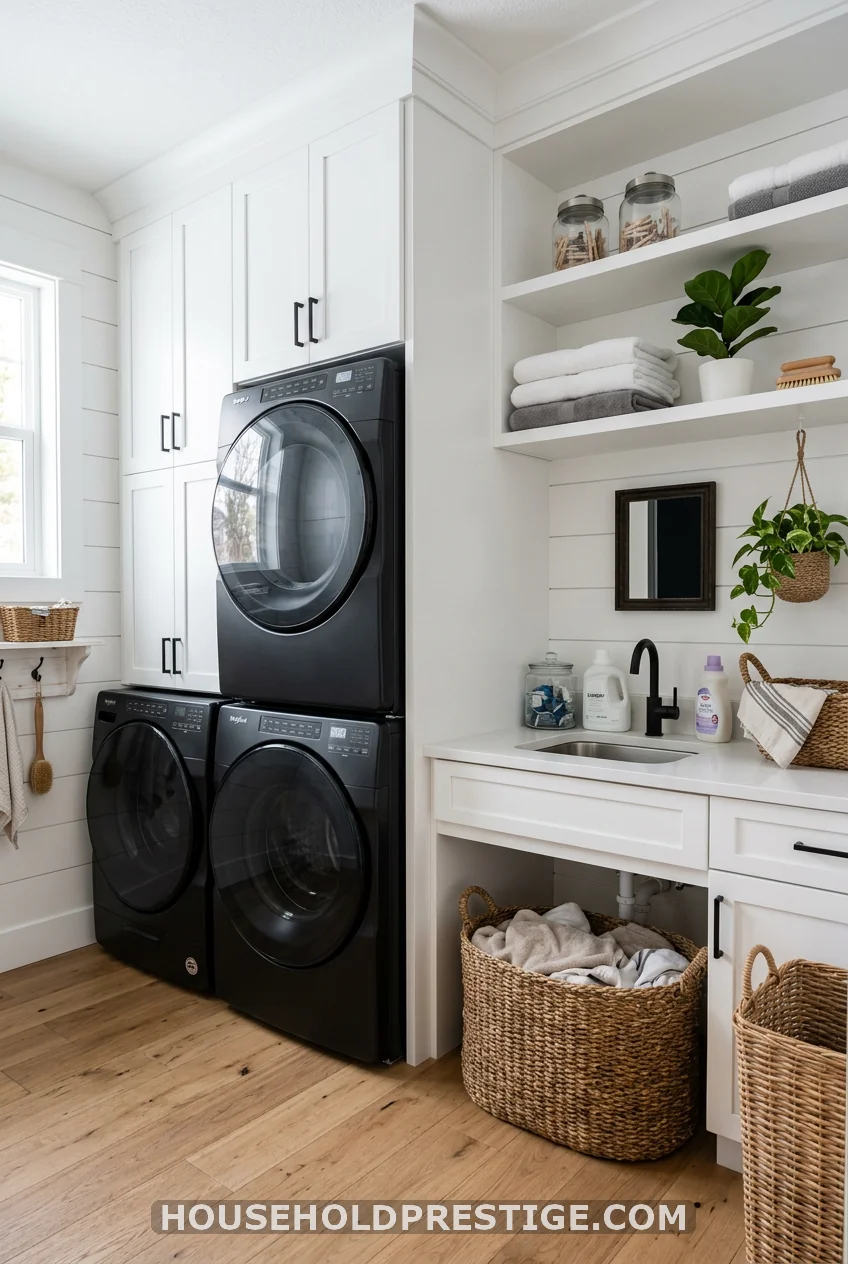
A matte black washer and dryer against white walls turns two appliances most people try to hide into the actual focal point of the room. Major brands sell black stainless finishes in the same price range as white, so you’re not paying extra for the look. Keep the wall behind them plain. The appliances need room to stand out.
5. White Subway Tile, Black Grout Line
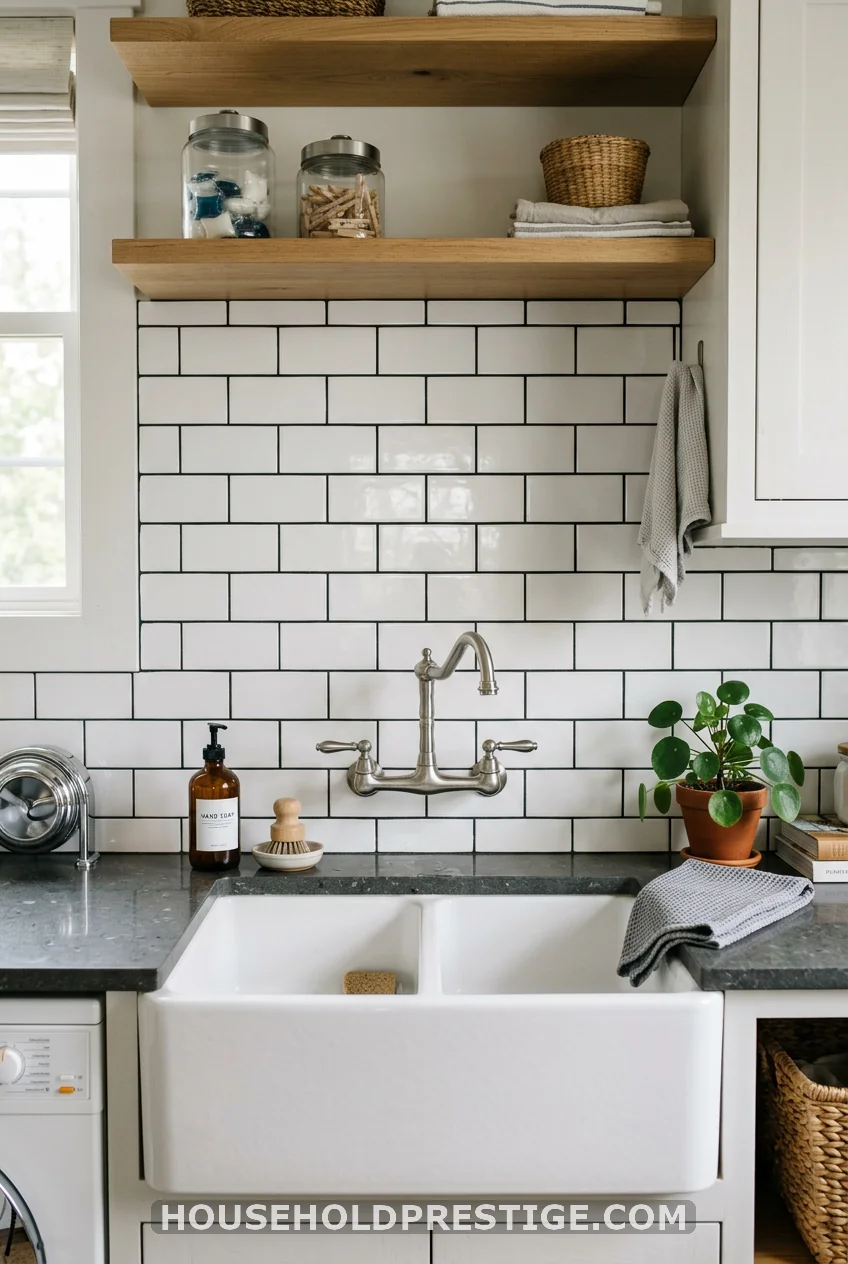
Swap your standard white grout for black, and a plain subway tile backsplash turns into a graphic pattern overnight. It costs nothing extra, since grout color is a choice, not an upgrade, and it hides splatter far better than white grout ever will behind a laundry sink.
6. The Deep Dive: Building a Two-Tone Cabinet Wall From Scratch
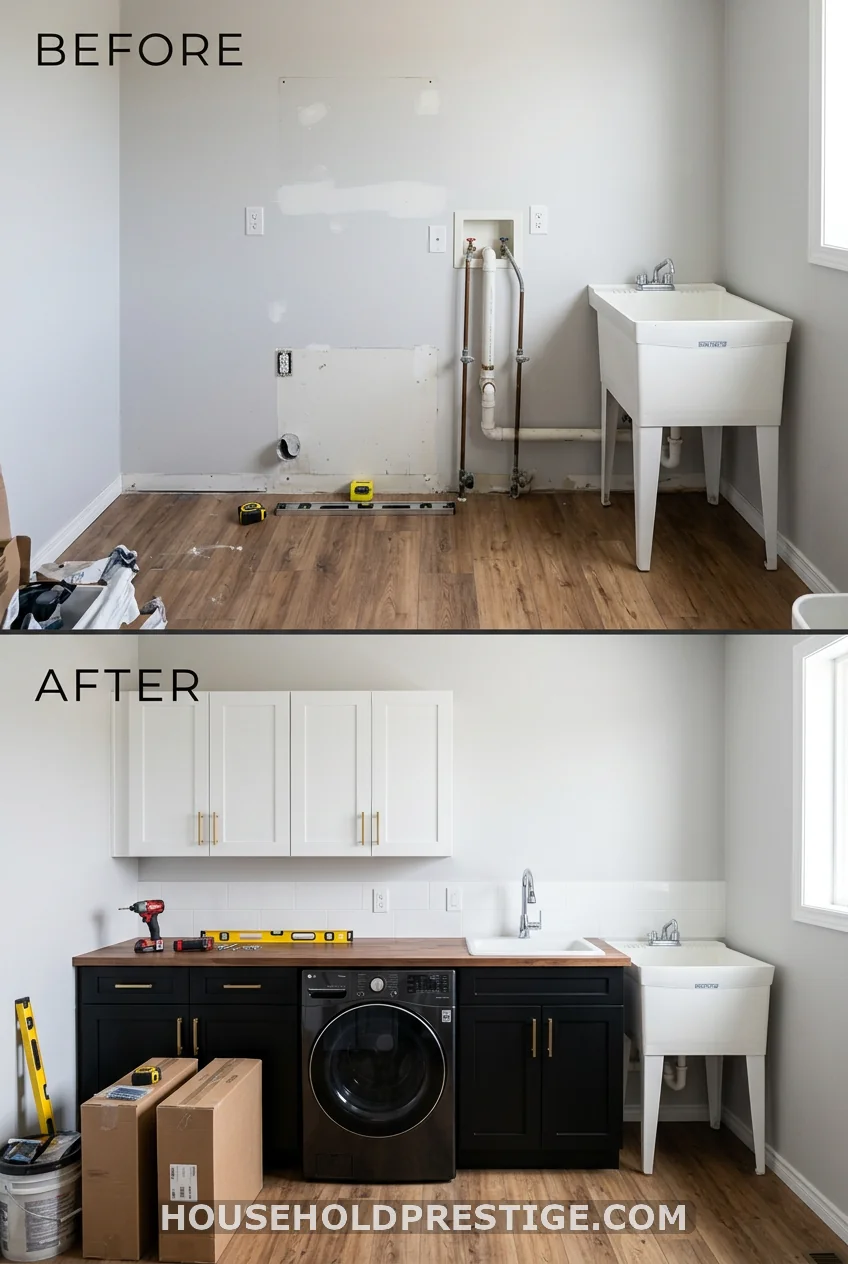
If you’re doing one project on this list with real tools and a real weekend, make it this one. A two-tone cabinet wall is the single upgrade that turns a laundry closet into a laundry room people want to walk into, and you don’t need to gut the space to get there.
Why This Works
Two-tone cabinetry splits the wall visually into a lighter upper zone and a heavier lower zone. Your eye reads the white uppers as open and airy, while the black lowers ground the room and hide the scuffs, water spots, and detergent drips that happen at knee height. It’s the same trick kitchen designers have used for a decade, just scaled down to a smaller wall.
Measurements That Matter
Standard base cabinets run 34.5 inches tall and 24 inches deep, which leaves room for a countertop at 36 inches, a comfortable folding height for most adults. Wall cabinets typically sit 18 inches above the counter and run 12 to 15 inches deep. If your laundry room is under 60 inches wide, stick to a single run of cabinets on one wall rather than an L-shape. It reads cleaner and costs less.
Step-by-Step
- Measure your wall width and mark stud locations with a stud finder.
- Order base cabinets in black, or a paintable white shaker style you’ll paint black yourself.
- Install base cabinets first, shimming for level before securing to studs.
- Add a countertop, quartz or butcher block both work, cut to size with a 1-inch overhang.
- Mount wall cabinets in white, using a ledger board screwed to studs as a temporary shelf while you drill.
- Swap all hardware to matte black knobs or pulls for a consistent finish.
- Caulk every seam where cabinet meets wall for a built-in look.
Materials and Costs
| Item | Cost Range |
|---|---|
| Stock base cabinets (2 units) | $300 to $600 |
| Stock wall cabinets (2 units) | $200 to $400 |
| Countertop, laminate to quartz | $150 to $500 |
| Hardware (10 to 12 pieces) | $40 to $90 |
| Paint, if refinishing existing cabinets | $35 to $60 |
A full stock-cabinet build lands between $725 and $1,650 depending on countertop material. Painting existing cabinets black instead of buying new ones drops that number closer to $200.
Common Mistakes
Skipping the stud finder is the big one. Cabinets loaded with wet towels and detergent jugs need to hang from studs, not drywall anchors alone. The second mistake is choosing a black paint without an appliance-grade finish. Standard wall paint scuffs and shows brush marks within months in a room this humid. Look for a cabinet-specific enamel instead. Third, people rush the caulk line and end up with visible gaps once the cabinets settle over a few weeks. Let the cabinets sit installed for a week before the final caulk pass.
7. One Bold Black Wall
Paint one wall black and leave the rest white. That’s it. A single accent wall gives you drama without committing an entire room to a color that can feel heavy in a small space. A true charcoal-black shade reads as black without turning purple in low light, unlike some blue-based blacks.
8. Open Shelving in Contrasting Tones
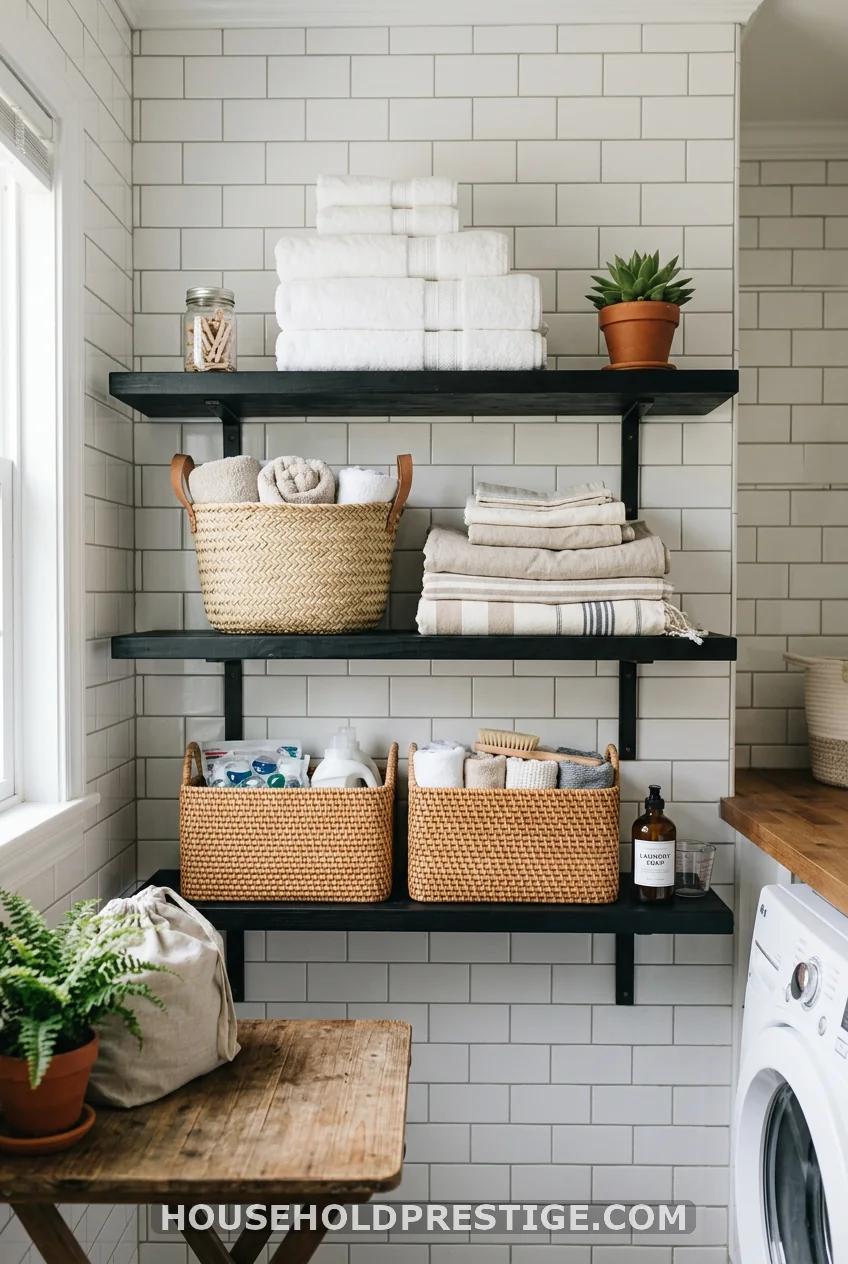
Black wood shelves against white walls hold everything from folded towels to your detergent collection, and because the shelves themselves are the visual statement, you can skip more expensive built-ins entirely. Two brackets, one board, an afternoon. Keep what’s on display tidy, since open shelving shows everything, including the mess.
9. Wallpaper With Real Pattern
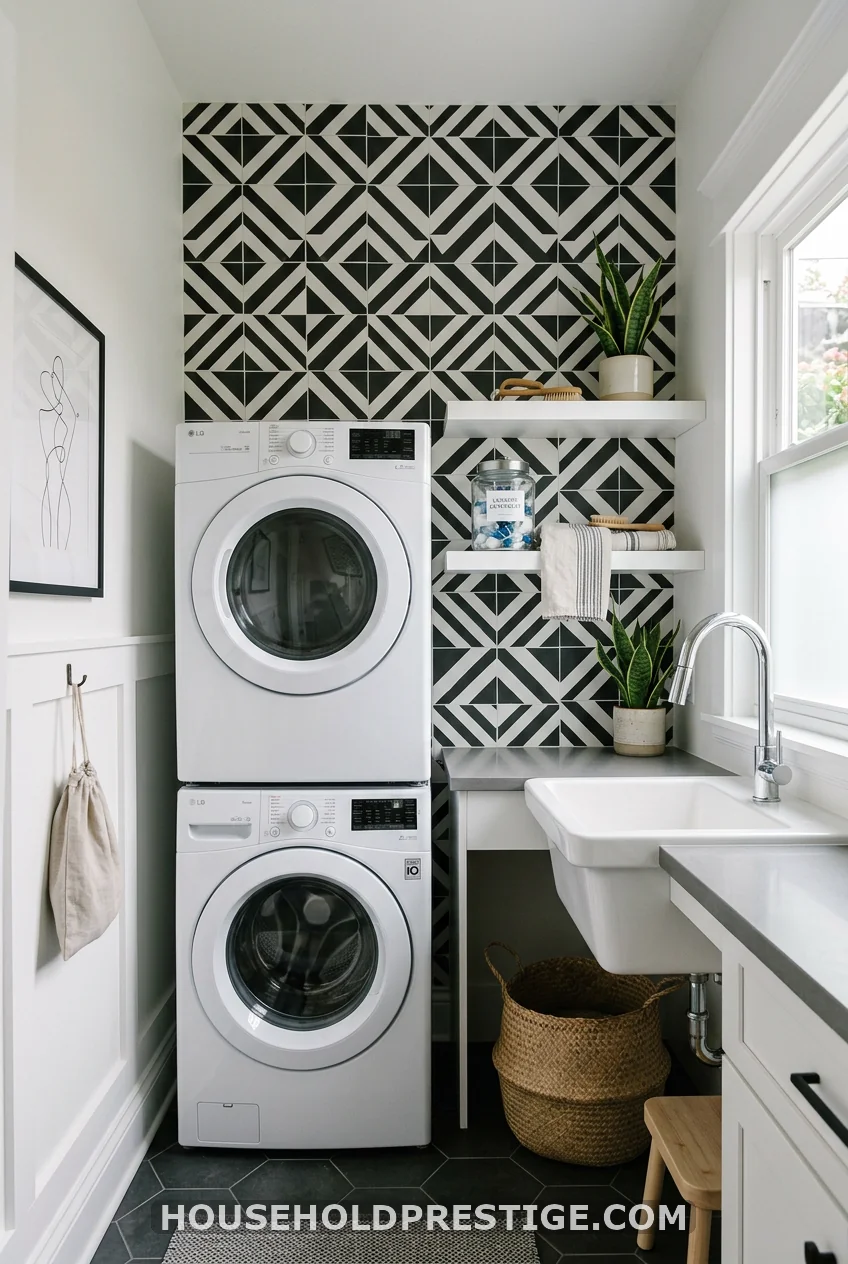
A laundry room is one of the few rooms in your house small enough to wallpaper without the cost spiraling. A bold black and white geometric print, on just the one wall behind the machines, adds personality that a can of paint can’t match. Peel-and-stick versions run $30 to $50 a roll and come down just as easily if you change your mind in two years.
10. Black Hardware, Every Single Knob
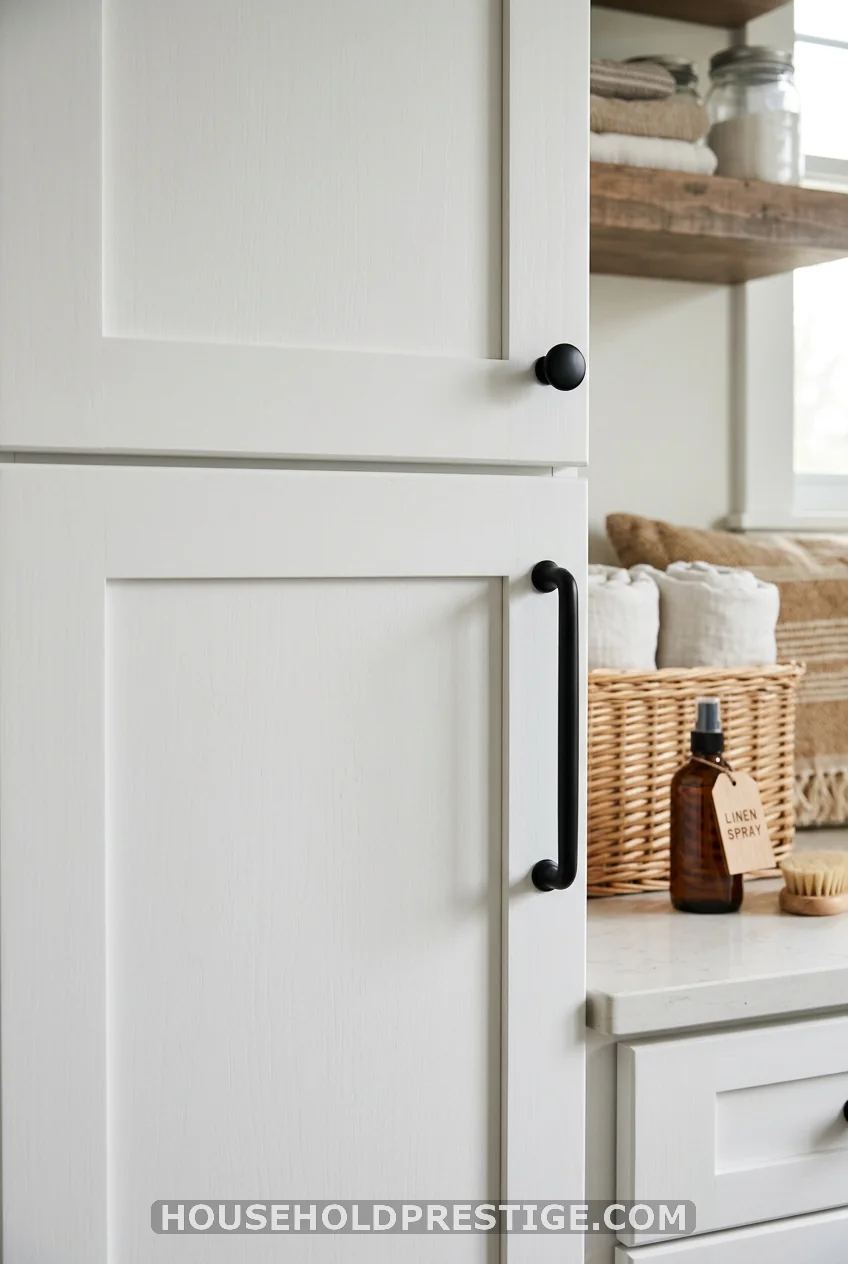
Swapping chrome or brass knobs for matte black ones is the cheapest change on this entire list, and it might do the most work. Ten to twelve pulls run about $40 to $70 total, and the black finish reads as intentional rather than mismatched the second every knob in the room matches.
11. Baskets and Bins That Match the Scheme
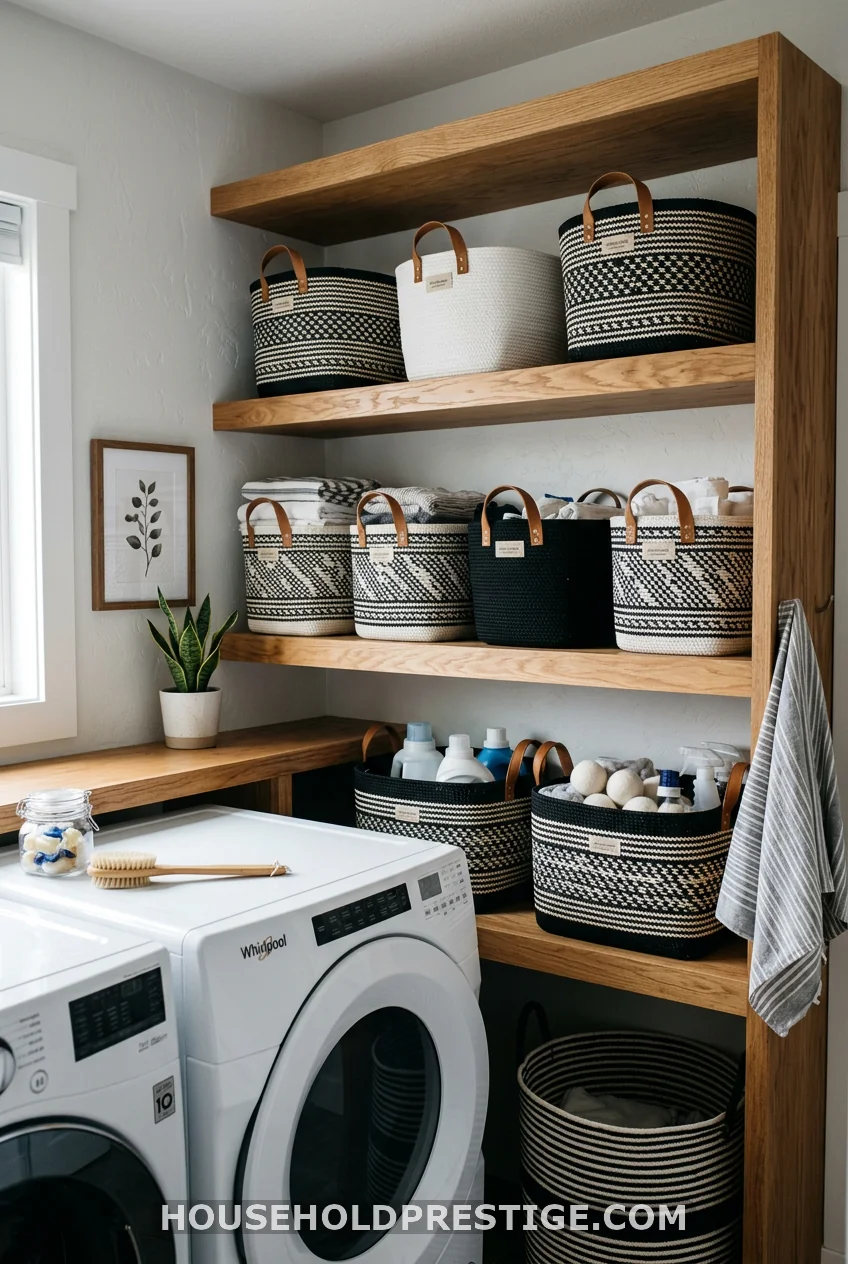
Sorting bins don’t have to be an eyesore. Black wire baskets or white woven ones, labeled by load type, keep the actual laundry organized while doubling as decor. Skip the plastic bins that scream utility closet, and stick to natural materials in your two colors instead.
12. High-Gloss Over Matte
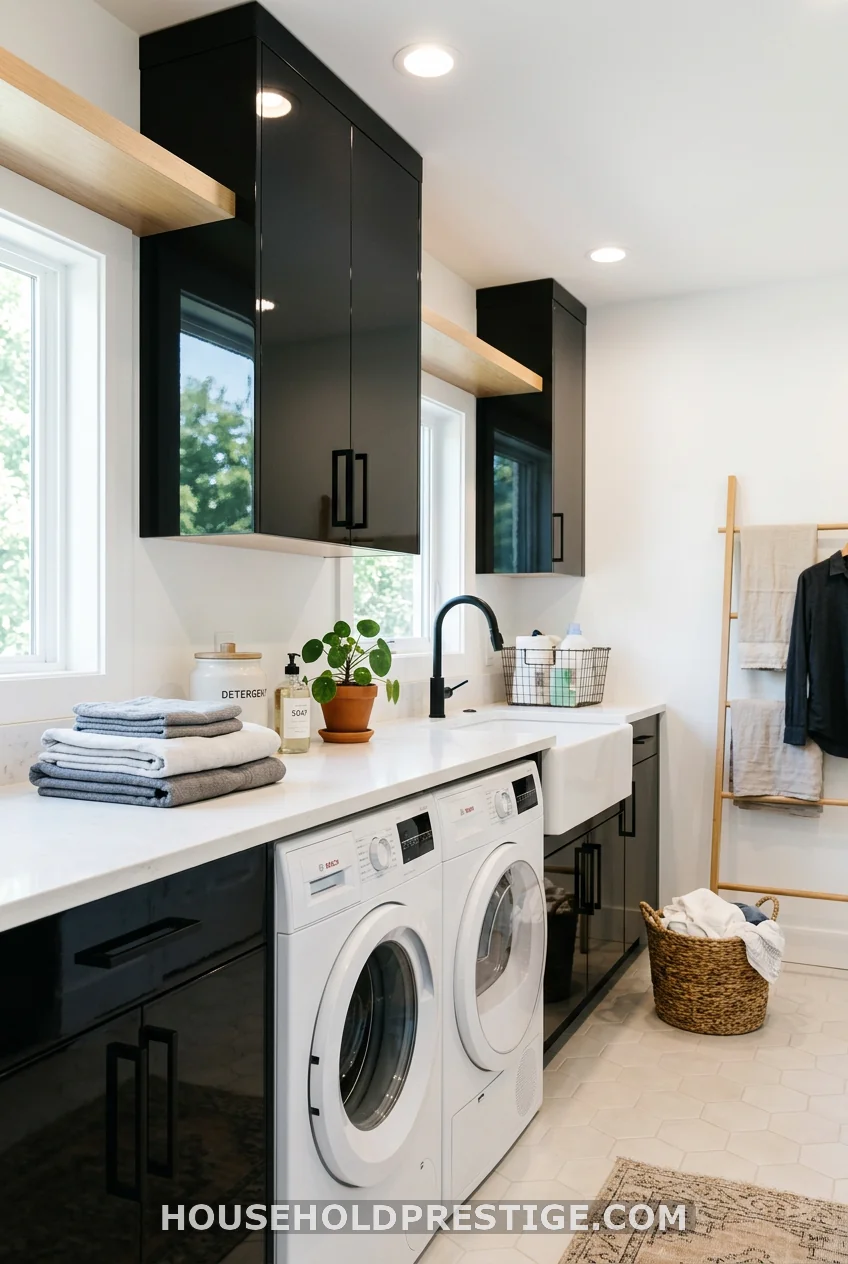
A high-gloss finish on black cabinetry bounces light around a room that usually has none to spare. Laundry rooms tucked into hallways or basements benefit the most here, since the shine does some of the work a window would otherwise do. The tradeoff: gloss shows fingerprints, so wipe it down weekly.
13. Black-and-White Wall Art
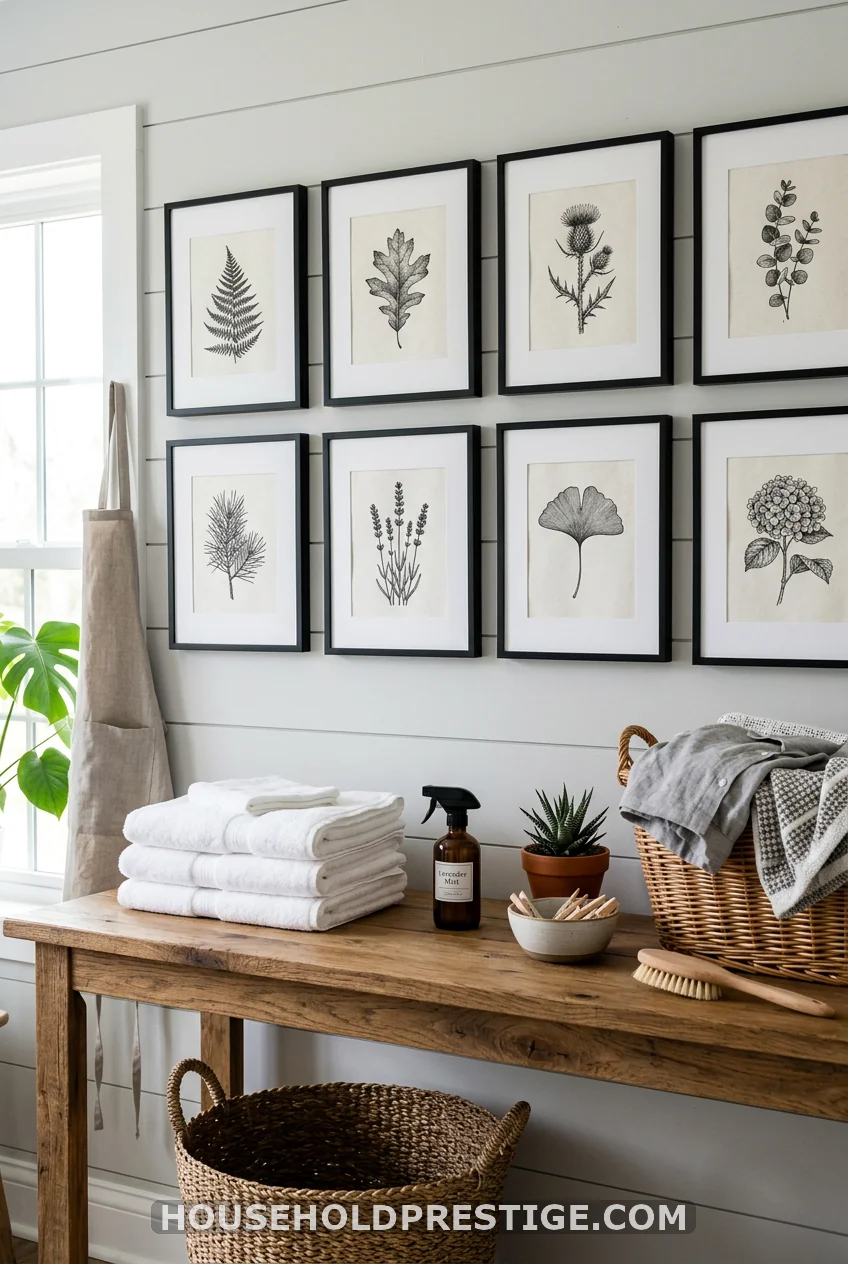
A gallery wall of black and white prints, botanical drawings, city photography, even a framed set of laundry symbols, gives the room a reason to feel like part of your home instead of a leftover utility space. Three frames in matching black molding look more curated than one large piece.
14. Patterned Tile Beyond the Checkerboard
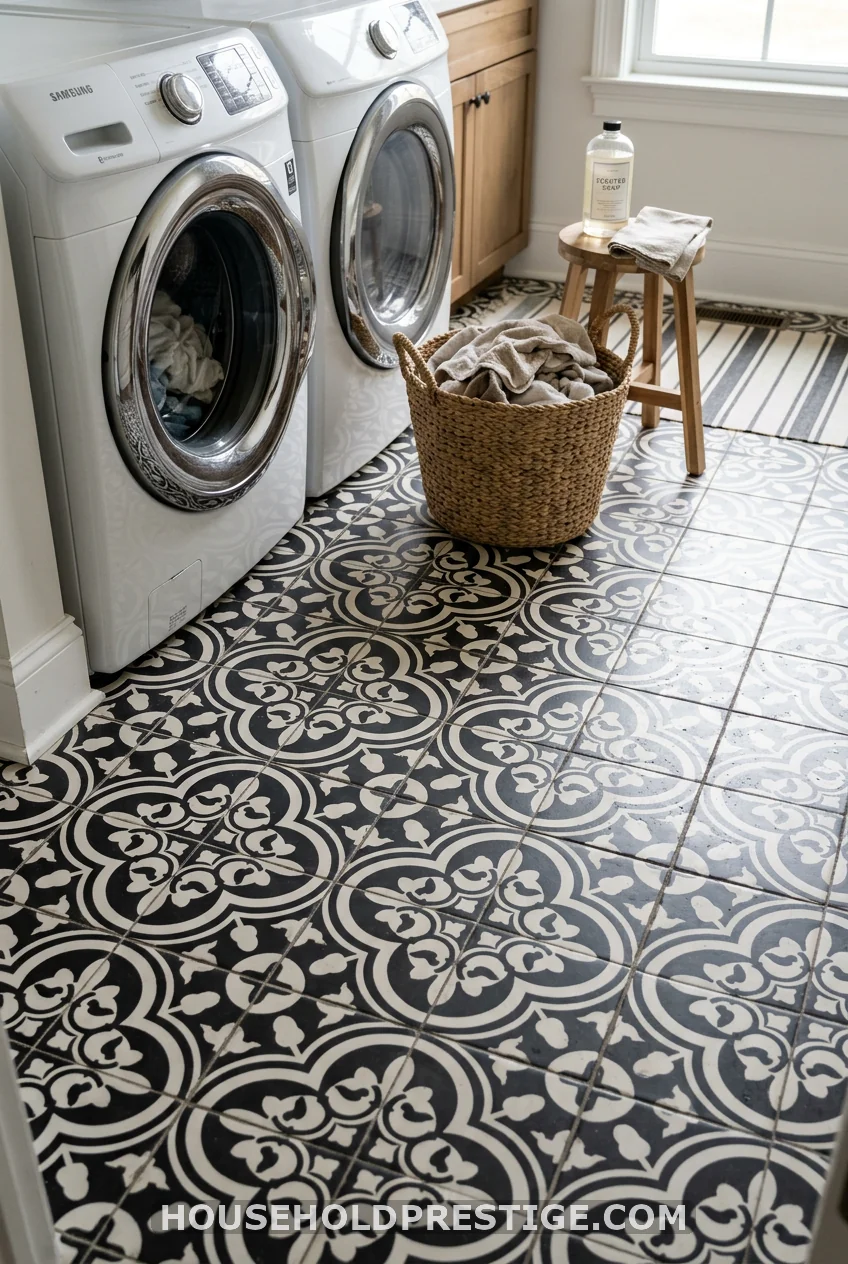
If checkerboard feels too predictable, encaustic-style tile gives you the same two colors in a busier, more ornate pattern. It costs more, usually $6 to $10 per square foot for porcelain versions, but it hides dirt and lint exceptionally well between wash days.
15. A Light Fixture That Earns Its Keep
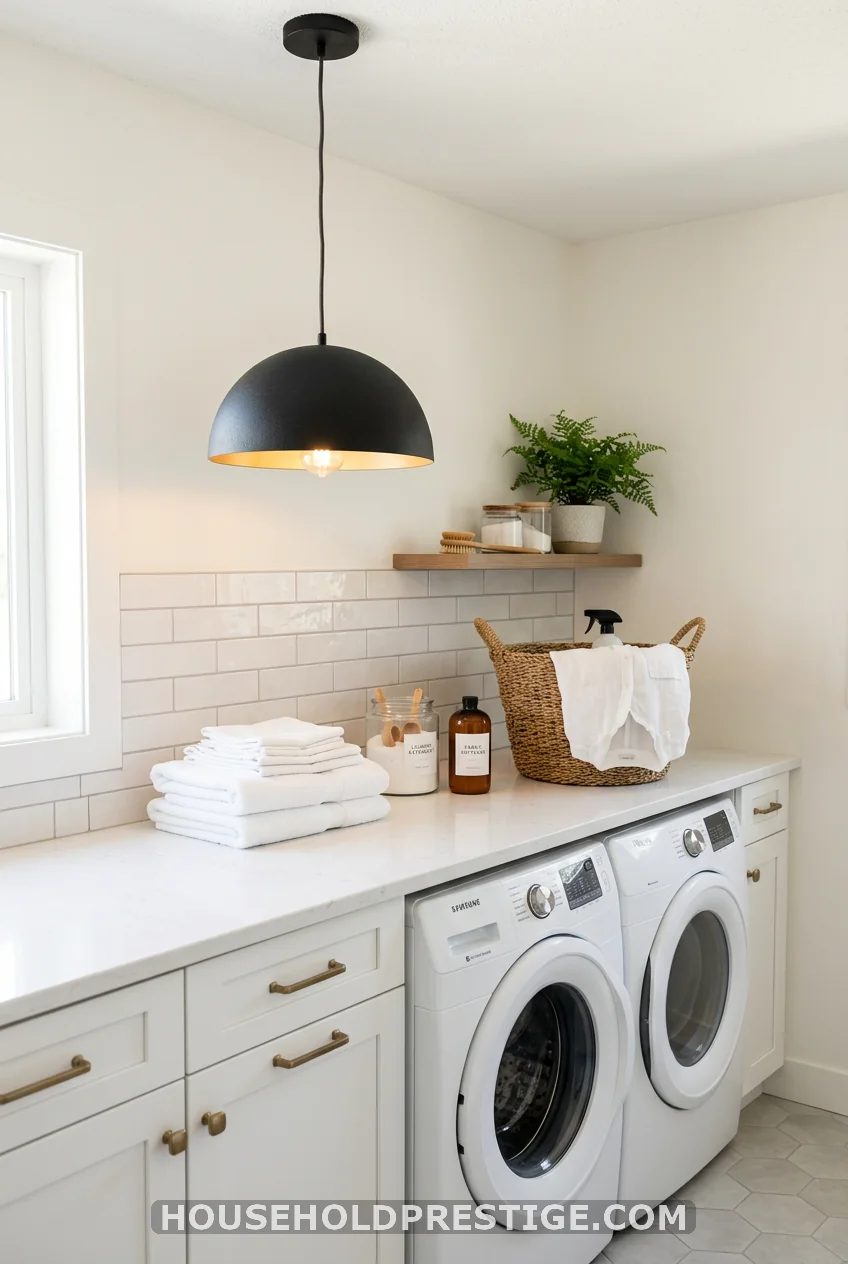
Most laundry rooms get one flush-mount fixture and nothing else. A black pendant, hung a bit lower over the folding counter, gives you better task lighting for reading care labels and a design element the room was missing. It’s a twenty-minute swap for anyone comfortable with a screwdriver and a wire nut.
16. Warm Wood Against Cool Monochrome
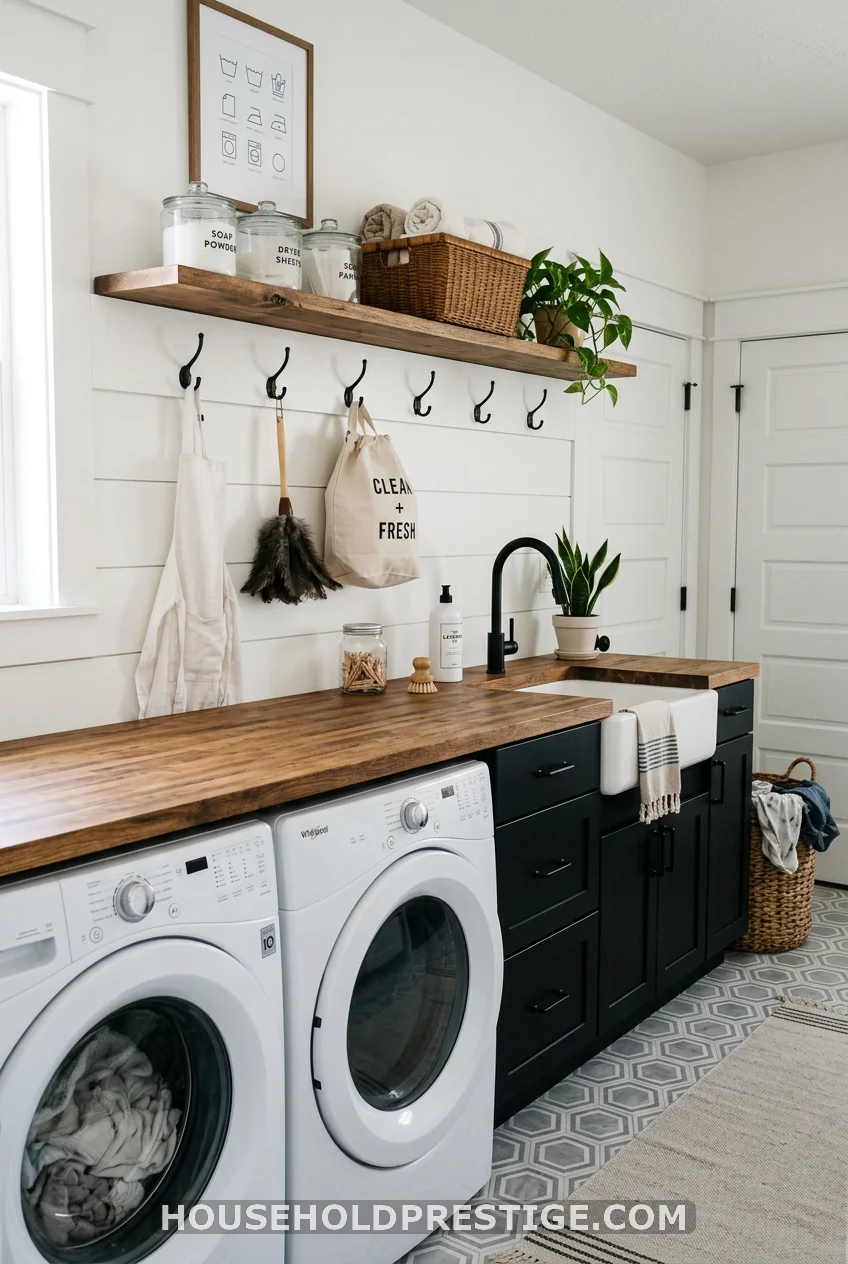
Black and white alone can feel a little cold, especially under fluorescent light. One warm element, a butcher block counter, a woven jute rug, an unfinished wood shelf, keeps the palette from feeling clinical. You only need one wood accent. More than that and you’ve built a different room entirely.
17. The Cautionary Tale: My All-Black Countertop Mistake
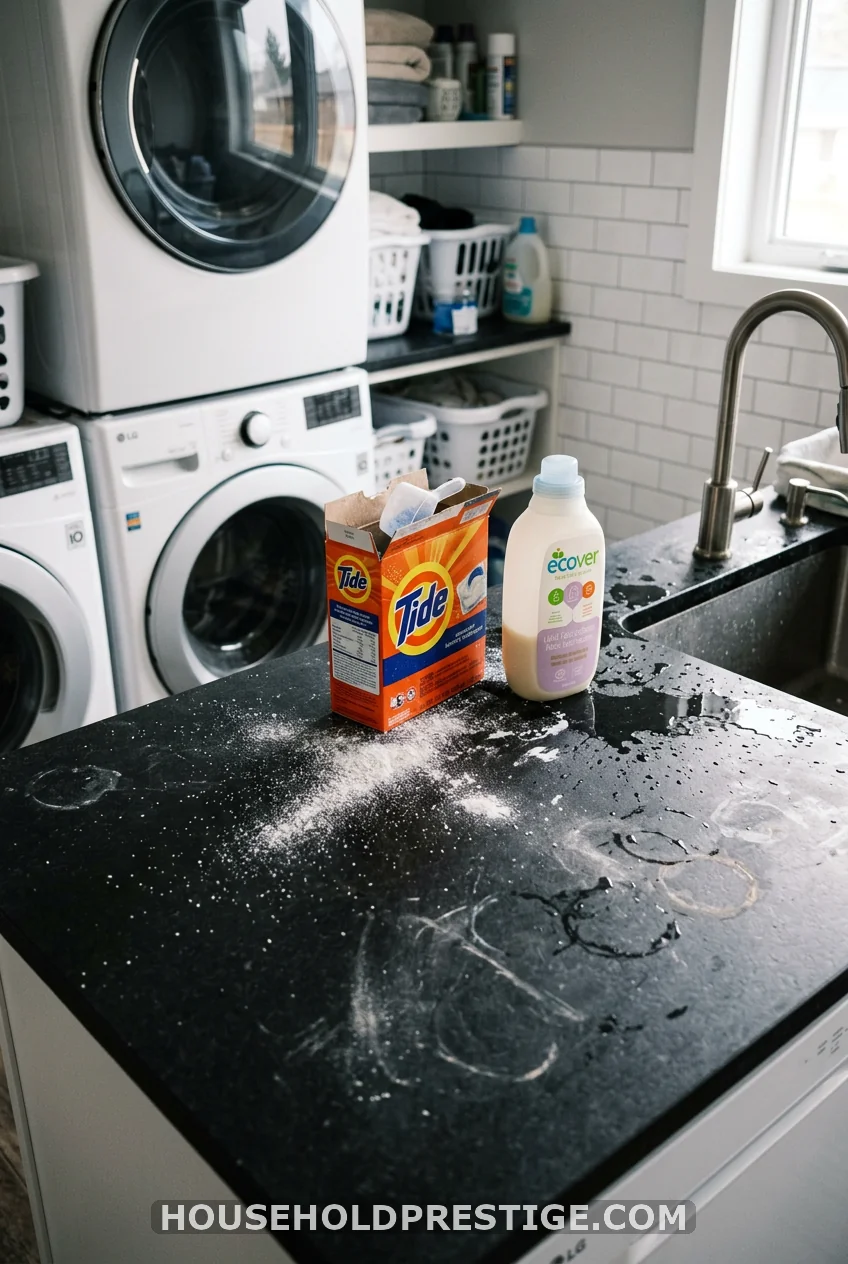
I painted my laundry counter matte black on a Saturday afternoon, convinced it would look like something out of a magazine. Two weeks later it looked like a chalkboard after a hard day at school. Every drop of white detergent powder showed. Every water spot from a wet sock left a ring that stayed visible until I wiped it down with the right cleaner, which I hadn’t bought yet because I didn’t know I’d need it.
Matte black surfaces are unforgiving in a room built around powders, liquids, and constant moisture. I sanded it back and switched to a black quartz with a slight fleck pattern instead of solid matte paint. The fleck hides what the flat color couldn’t, and I haven’t thought about the counter since. If you love the look of solid matte black, save it for a wall or a cabinet front, somewhere nothing gets spilled, and let your counter do the actual work of a counter.
18. The Myth: “Black and White Feels Cold”
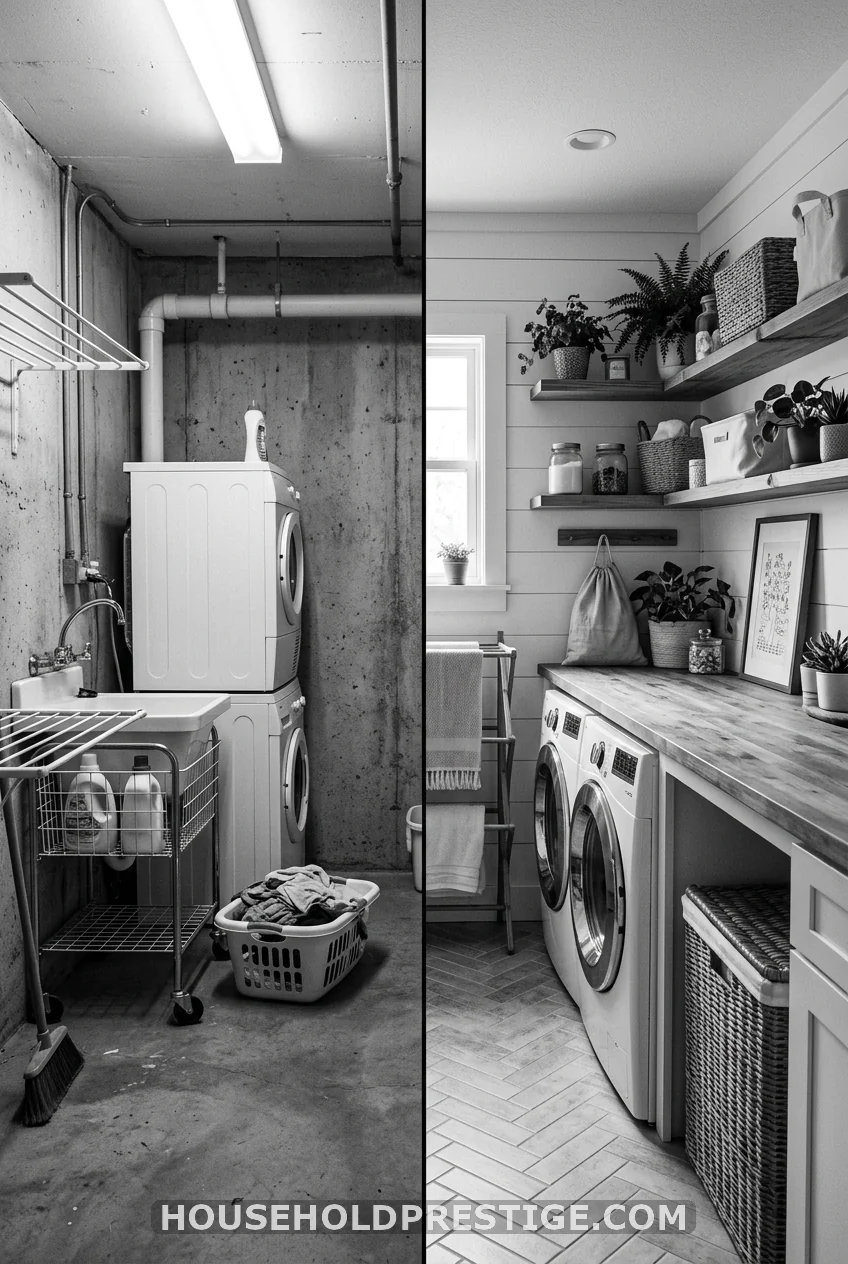
What most people think: a black and white laundry room reads sterile, like a hospital hallway or an old subway station.
The reality: cold results come from ratio, not color. A room split evenly between stark black and bright white, under cool-toned LED bulbs, does feel clinical. Shift the ratio to roughly 70 percent white and 30 percent black, add a warm-toned bulb instead of a daylight one, and bring in one natural texture like wood or woven rope. The colors stay the same. The feeling changes completely.
19. A Farmhouse Sink in Monochrome
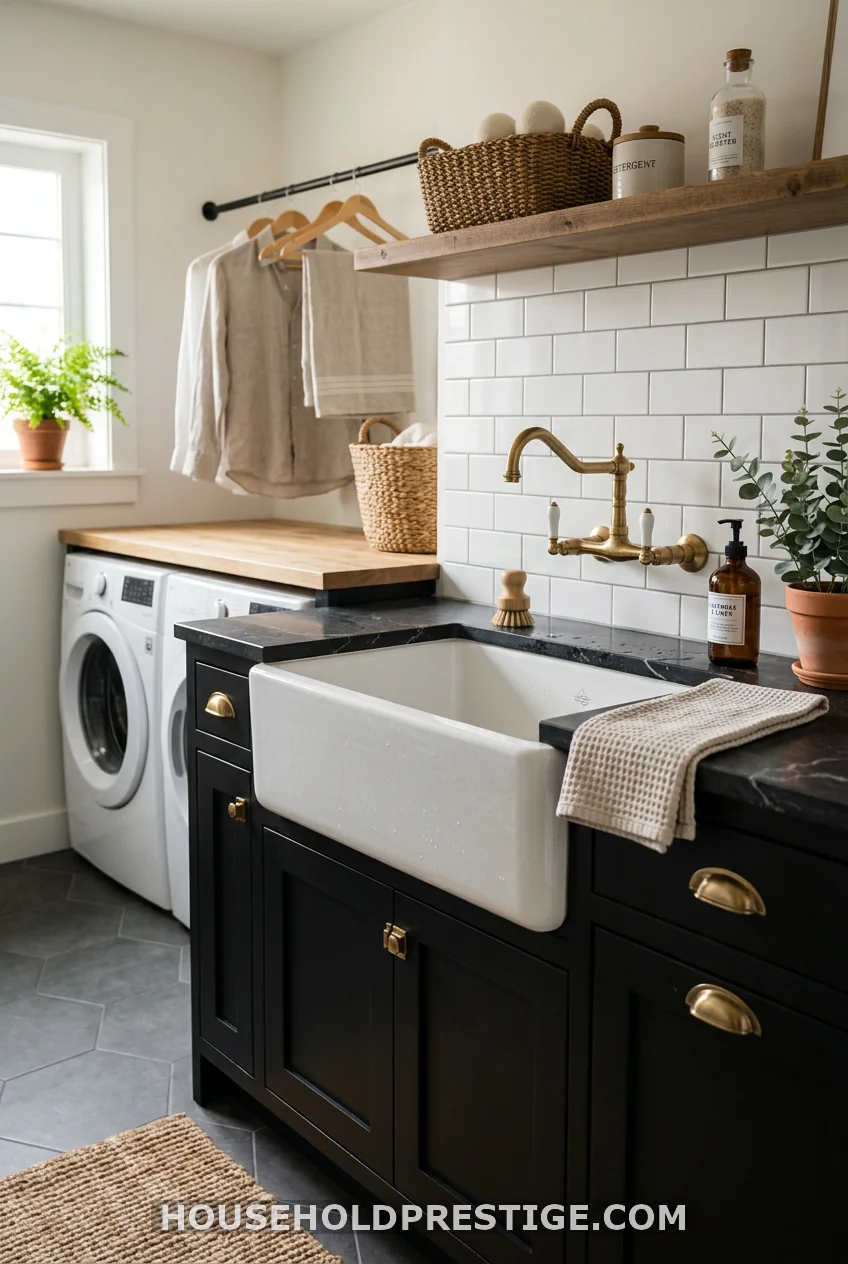
A white farmhouse sink set into black lower cabinets gives you a workhorse for hand-washing delicates and rinsing muddy cleats, while looking like a design choice instead of a utility fixture. The deep basin also hides the mess of soaking a stained shirt from anyone walking past the open door.
20. Vertical Shiplap, Painted Two Ways
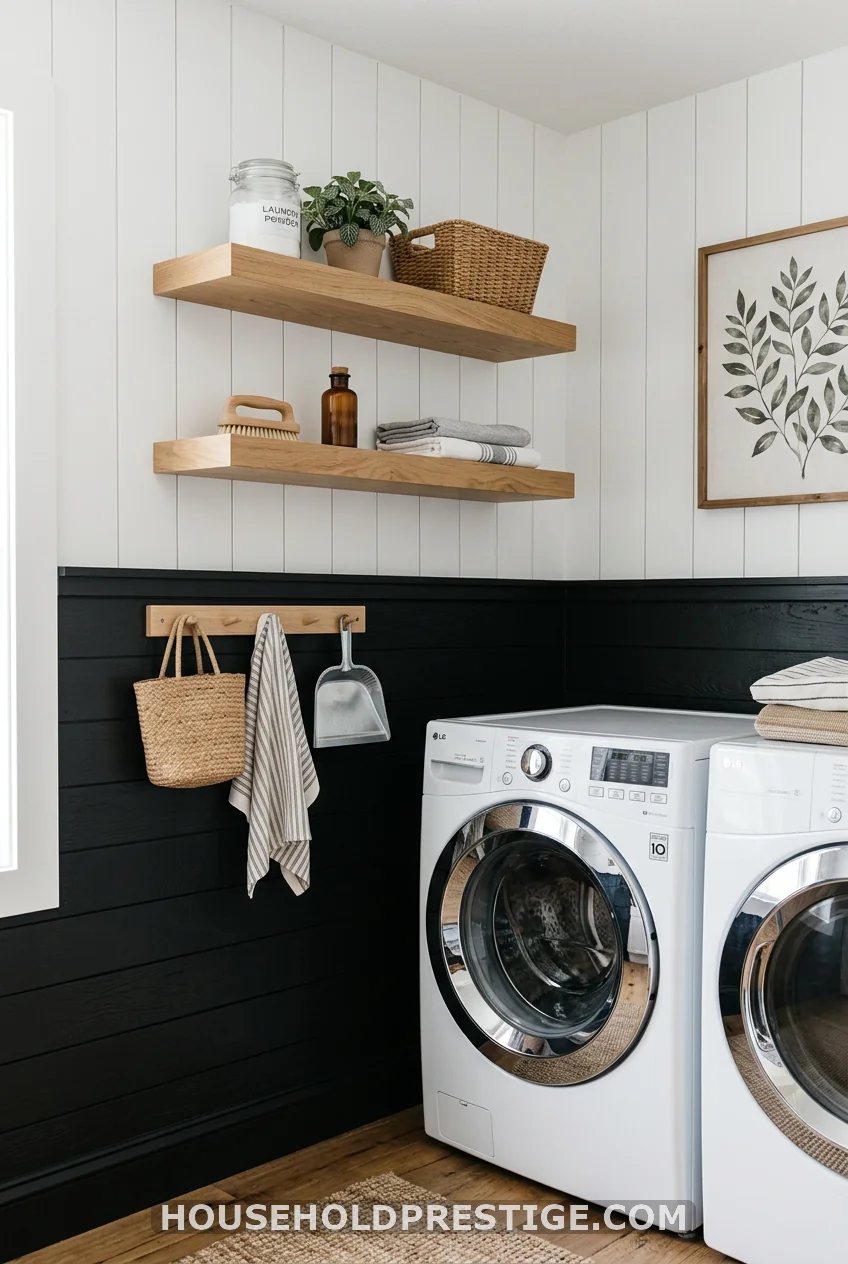
Shiplap running vertically instead of horizontally makes a low laundry room ceiling feel taller, and painting the bottom third black while leaving the rest white adds a wainscoting effect without the cost of actual millwork. Nickel gap panels from a home center run under $3 a square foot.
21. Exposed Black Pipes Against White Walls
Leave your utility pipes exposed and paint them matte black instead of boxing them in. Against a plain white wall, they read as an industrial design choice instead of something you forgot to hide. Zero construction required, just a can of spray paint rated for metal.
22. A Backsplash That Splits the Difference
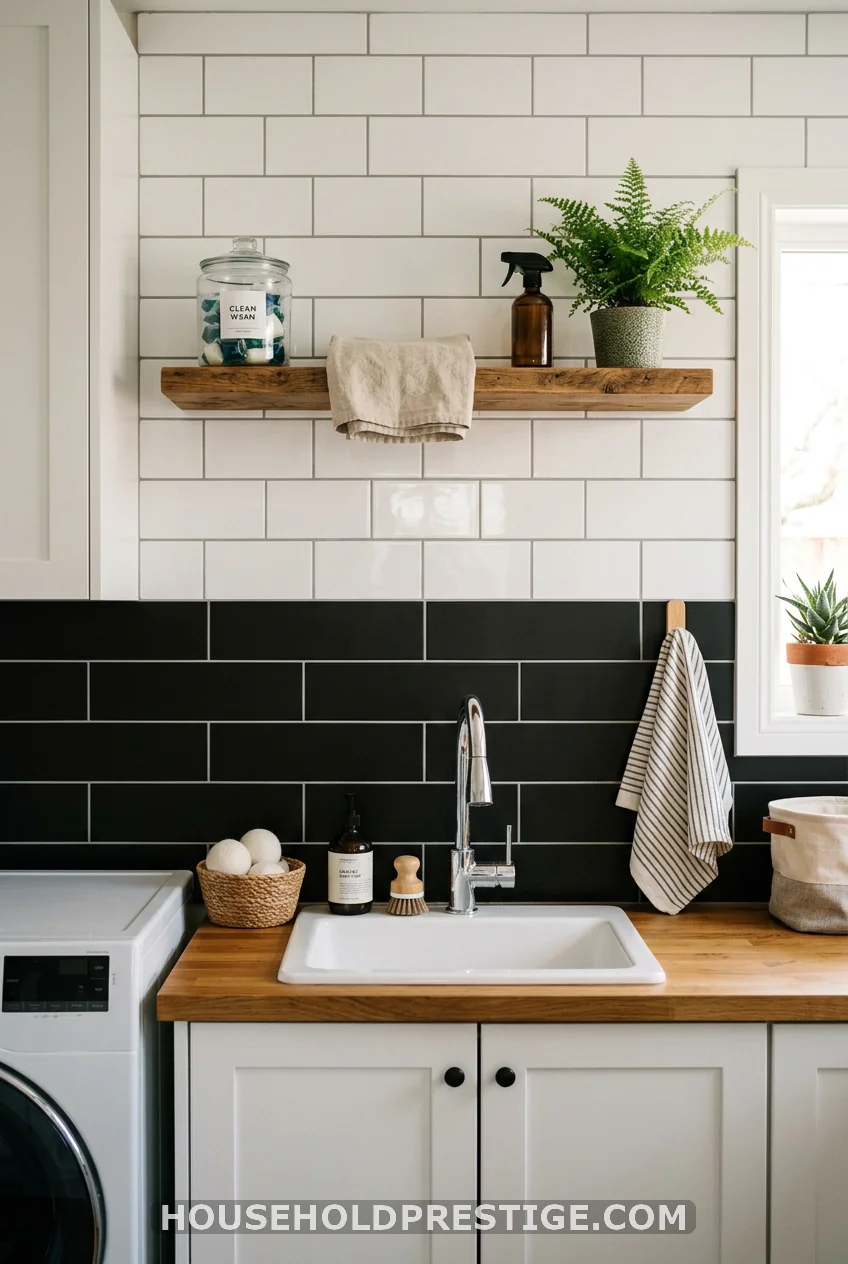
Instead of choosing one tile color for your backsplash, split it. White tile on top, black on the bottom third, divided by a thin metal trim strip. It reads more custom than a single all-white backsplash, and it costs the same since you’re using the same square footage either way, just two colors instead of one.
23. Small-Space Stacking, Framed in Black
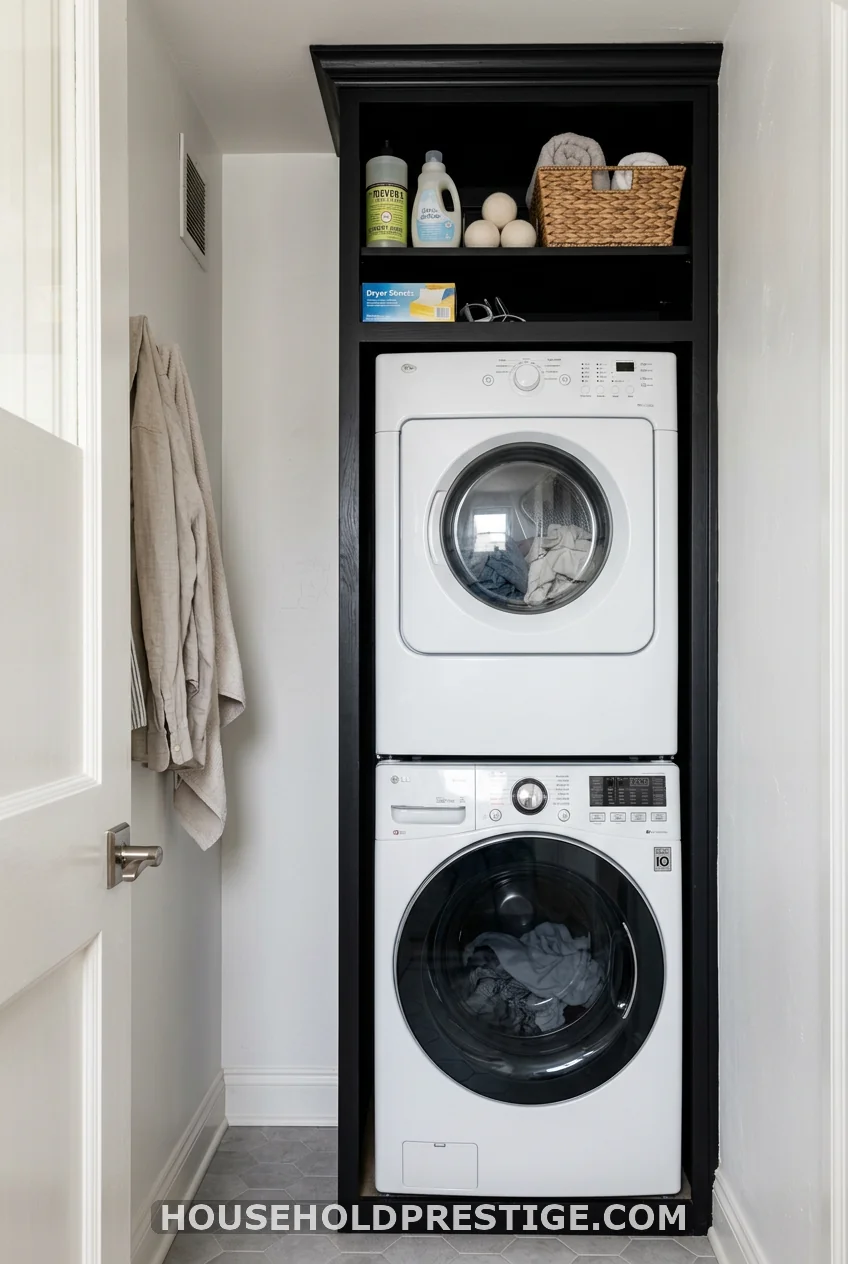
Stacked units save floor space, but a bare stacked washer and dryer can look like an afterthought crammed into a closet. Build a simple black frame or surround around the unit, even just painted MDF trim, and the appliances suddenly look built in rather than squeezed in. It’s the smallest laundry room idea on this list, and one of the ones that makes the biggest difference in a tight footprint.
Final Thoughts
A black and white laundry room doesn’t need a full renovation to work. Start with the cheapest swap on this list, black hardware or a painted accent wall, and build from there as your budget allows. The two colors do the heavy lifting. Everything else, the wood accent, the light fixture, the pattern on the floor- is just you deciding how loud or quiet you want the contrast to feel.
FAQ
What’s the best color ratio for a black and white laundry room?
Aim for roughly 70 percent white to 30 percent black. That split keeps the room feeling bright rather than heavy, especially in a small space with limited windows.
Does a black and white laundry room feel cold?
Only if the ratio leans too dark or the lighting runs too cool. Add one warm wood element and a warmer-toned bulb, and the same two colors feel inviting instead of clinical.
What flooring works best for a black and white laundry room?
Checkerboard vinyl or tile is the classic choice, but encaustic-pattern porcelain hides dirt just as well with a more ornate look. Both stand up to water and detergent spills better than wood.
Can a small laundry room handle a full black and white scheme?
Yes, and it often works better in small spaces than large ones. Contrast reads clearly in a tight room, while a huge all-black wall can feel overwhelming in a bigger space.
What accent color pairs well with black and white in a laundry room?
Warm wood tones and brass hardware both work well. A small pop of red or a natural material like woven rope adds interest without competing with the main two colors.