

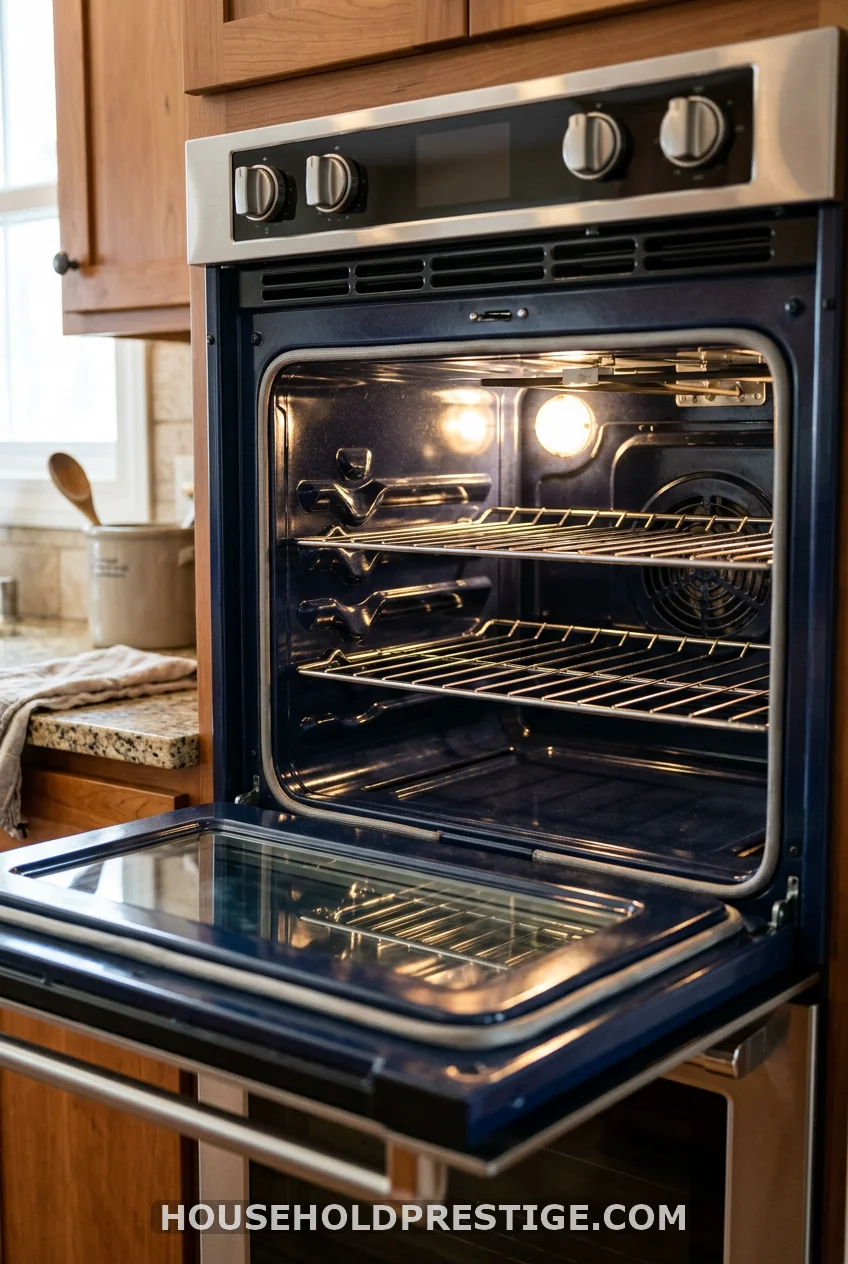
Open your oven door right now. Go on. What’s staring back at you? A crust of burnt sugar from that pie in November? A grease halo around the heating element? A smell that clings to every dinner since?
You are not alone here. Deep cleaning an oven sits near the bottom of everyone’s chore list, right next to grout and the inside of the fridge. But a dirty oven does more than embarrass you when the in-laws visit. It smokes. It smells. It makes your roast chicken taste faintly of last month’s lasagna. And the longer that grime bakes on, layer after layer, the harder it fights back.
Here’s the good news. You don’t need a bottle of harsh chemical oven cleaner, a gas mask, or an entire Saturday to fix this. Baking soda, vinegar, and a little patience will do the heavy lifting. I’ve cleaned enough grimy ovens to know exactly where people go wrong, and exactly what works. Follow these seven steps, and by tomorrow morning your oven will look like it just came off the delivery truck.
What You’ll Need to Deep Clean Your Oven
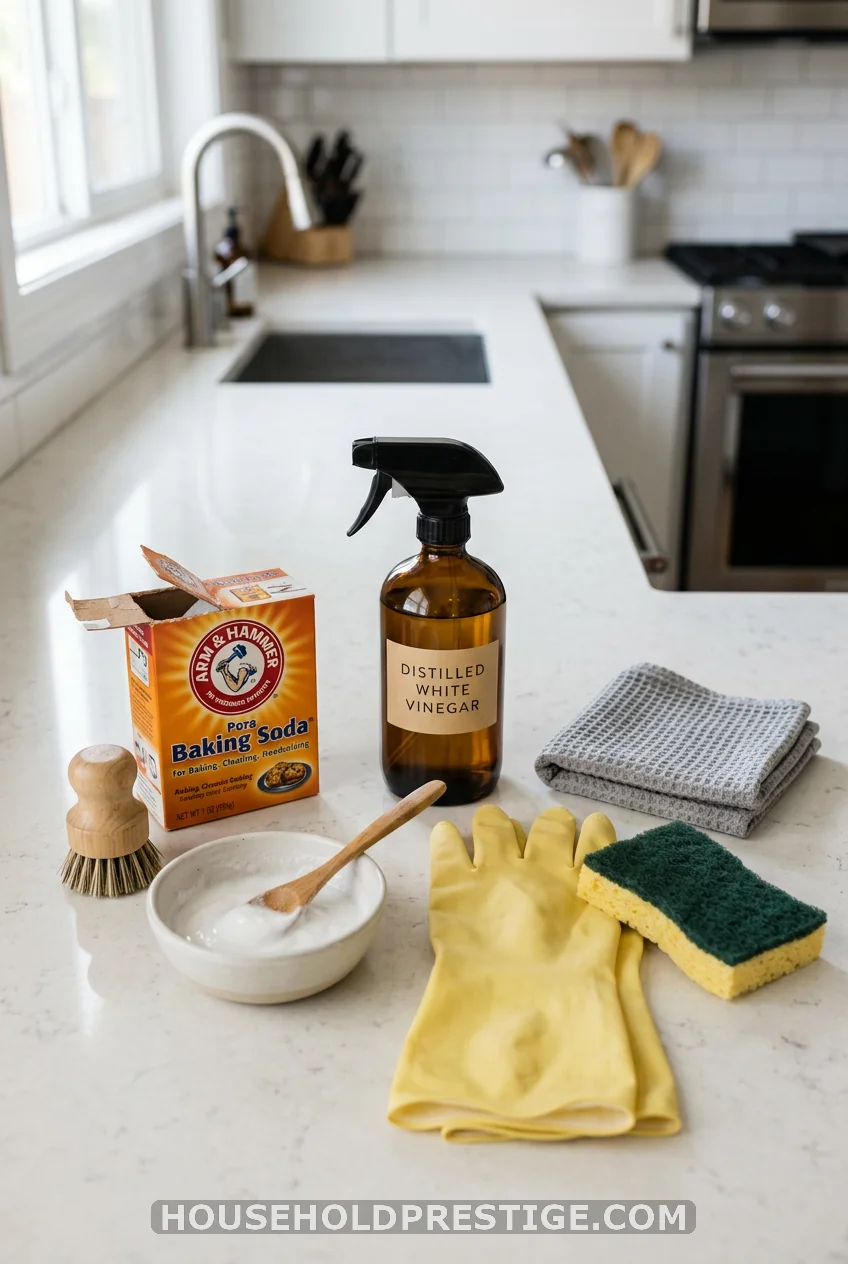
Before you start, gather these:
- Baking soda (about half a cup to a full cup, depending on oven size)
- White vinegar in a spray bottle
- Rubber gloves
- A damp microfiber cloth or two
- A silicone or plastic spatula (never metal, it scratches the enamel)
- Dish soap for the racks
- Old towels or newspaper to catch drips
That’s it. No specialty cleaners, no respirator, no trip to the store if your pantry is halfway stocked already.
The 7-Step Process
Step 1: Pull the Racks and Clear the Junk
Take out every rack, the pizza stone, the drip tray, all of it. An empty oven is a paste-friendly oven. While you’re in there, sweep or wipe out any loose crumbs and burnt bits sitting on the bottom. Getting rid of that debris now means it won’t turn into cement once your paste goes on top of it.
Set the racks aside. They’re getting their own soak in Step 4.
Step 2: Mix Your Baking Soda Paste
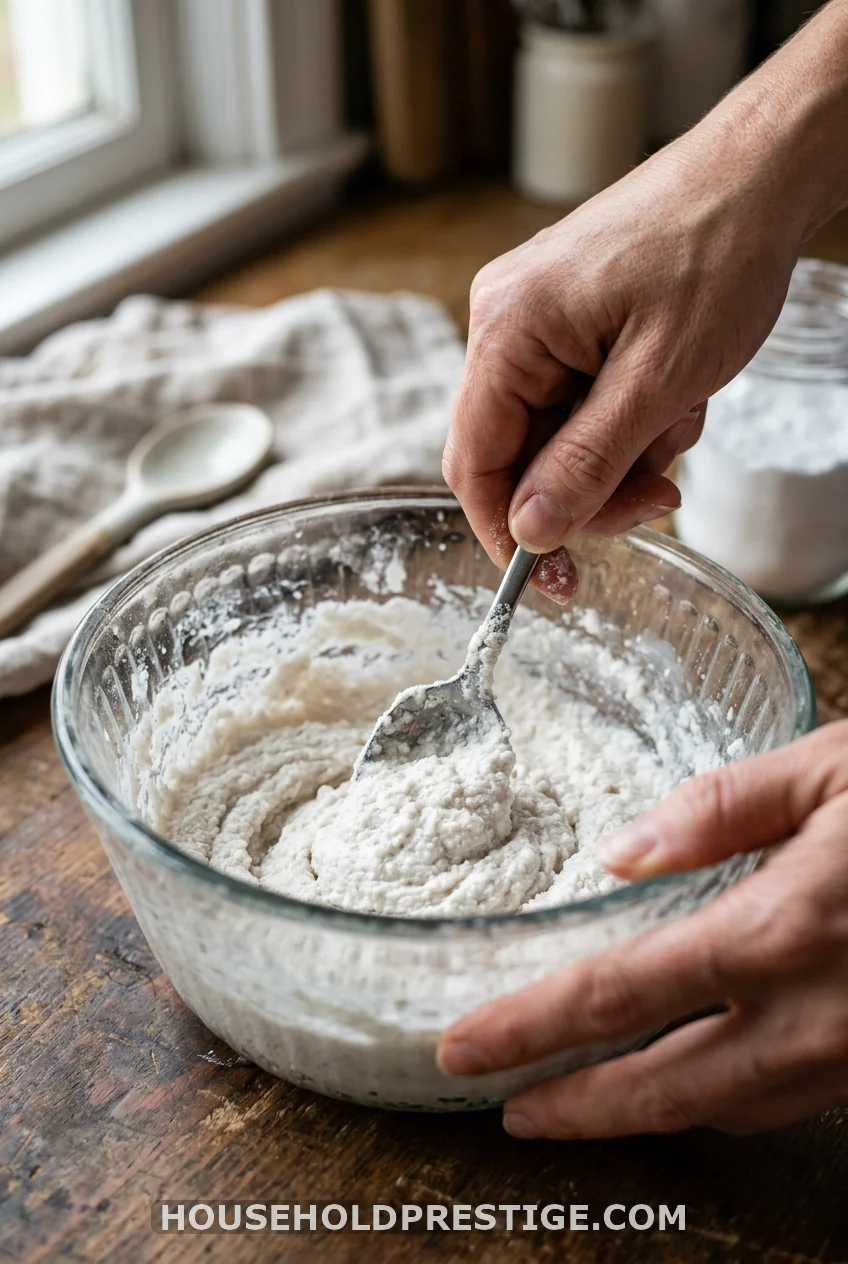
In a small bowl, combine baking soda with just enough water to form a thick, spreadable paste, think frosting consistency, not soup. A half cup of baking soda usually needs about three tablespoons of water. If it’s too runny, it’ll slide right off the walls of the oven instead of sitting there and working.
Step 3: Coat the Interior, Avoid the Heating Elements
Using gloved hands or a spatula, spread the paste across the bottom, sides, back, and inside of the door. Skip the heating elements themselves, the paste doesn’t belong there, and skip any exposed metal racks or hinges that could rust with prolonged moisture.
Cake it on thick in the greasiest spots. This isn’t a wipe-and-go job. The paste needs bulk to break down months of buildup.
Step 4: Let It Sit Overnight (Meanwhile, Soak the Racks)
Close the oven door and walk away for at least 12 hours. Overnight works best if your schedule allows it. This dwell time is where the actual cleaning happens, the baking soda slowly breaks the bond between grease and metal so nothing needs scrubbing later.
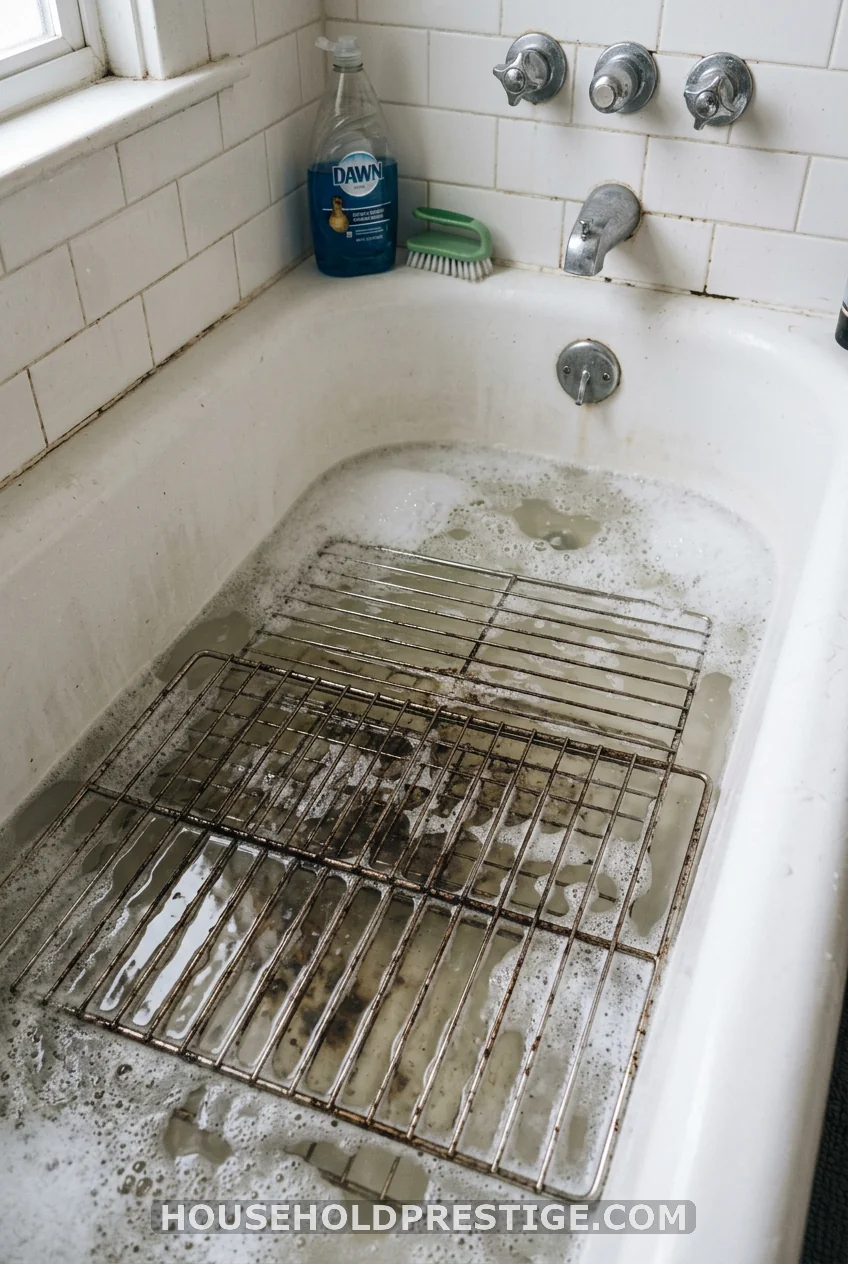
While the paste sits, fill your bathtub or a large sink with hot water and a generous squeeze of dish soap. Drop the racks in and let them soak the same length of time. Baked-on grime on racks comes off with almost no effort once it’s had a long soak.
Step 5: Wipe Out the Paste
The next morning, grab a damp cloth and start wiping. Most of the paste, along with the grime it grabbed onto, will come away easily. For anywhere still stubborn, use your spatula to gently lift the paste rather than scraping at bare metal.
Rinse your cloth often. You’ll go through more water than you expect, and that’s normal; it means the paste did its job.
Step 6: Spray with Vinegar and Wipe Again
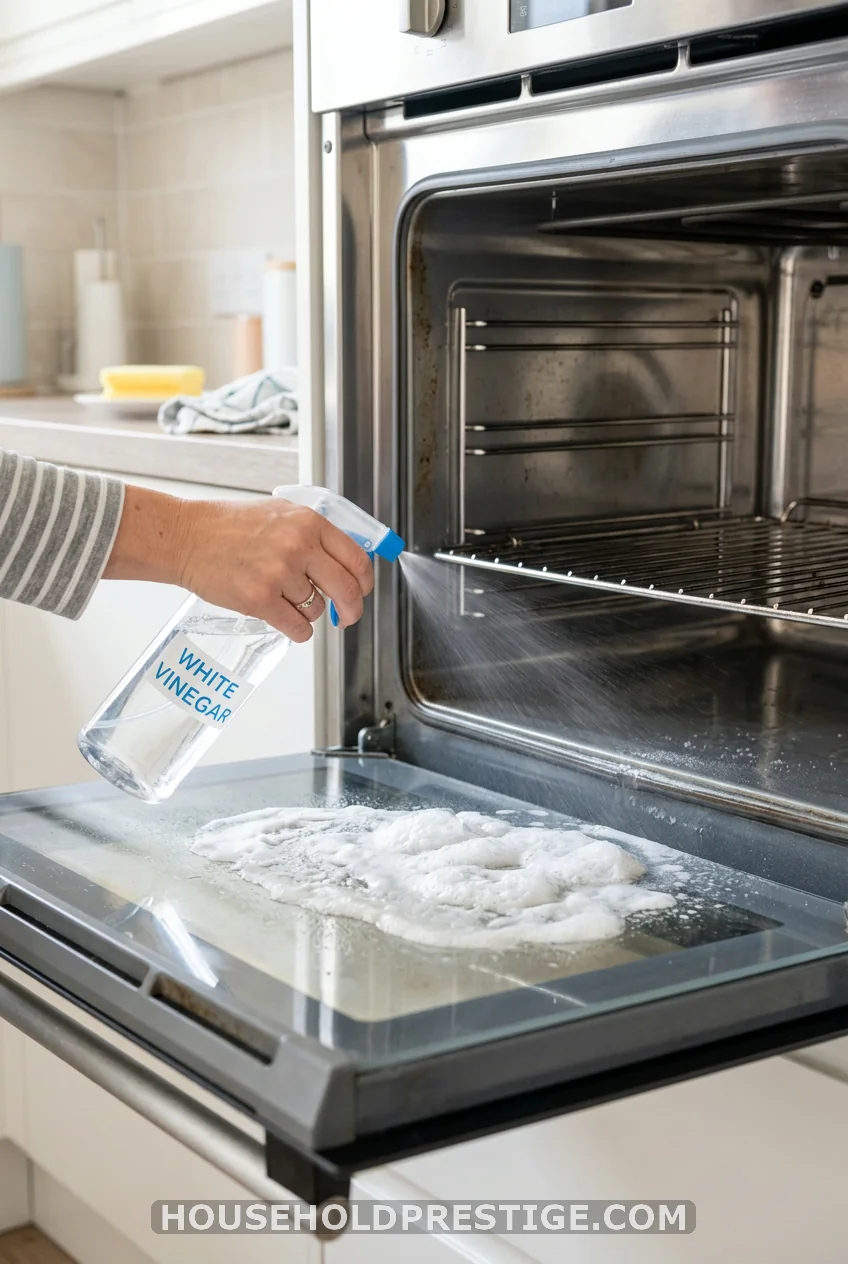
Fill your spray bottle with white vinegar and mist any spots where baking soda residue remains. It’ll fizz and foam on contact, that’s the vinegar neutralizing the leftover baking soda. Wipe it away with a clean, damp cloth once the fizzing settles.
Repeat this spray-and-wipe pass until the interior feels smooth under your hand instead of chalky.
Step 7: Dry, Reassemble, Rinse the Racks
Wipe the interior dry with a fresh towel. Pull the racks from their soak, scrub off any remaining softened grime with a non-scratch sponge, rinse, and dry them too. Slide everything back into place.
Run the oven empty at 350°F for about ten minutes before you cook anything in it. This burns off any lingering vinegar smell and confirms everything is bone dry before food goes back in.
Don’t Forget the Oven Door Glass
The glass panel on your oven door collects its own layer of grease and splatter, and it’s usually the first thing anyone notices when they open the kitchen. The same baking soda paste works here too, just apply it a little thinner since glass doesn’t need as much bulk as metal.
Spread a thin layer across the glass, let it sit for fifteen to twenty minutes, then wipe with a damp cloth. For stubborn baked-on spots, a damp dishwasher tablet (not a pod) works surprisingly well as a mild abrasive, just be sure to wear gloves since the tablet’s coating can irritate skin. Rinse the glass with a clean, water-only cloth afterward to remove any residue before it dries into streaks.
Common Mistakes That Undo a Deep Clean
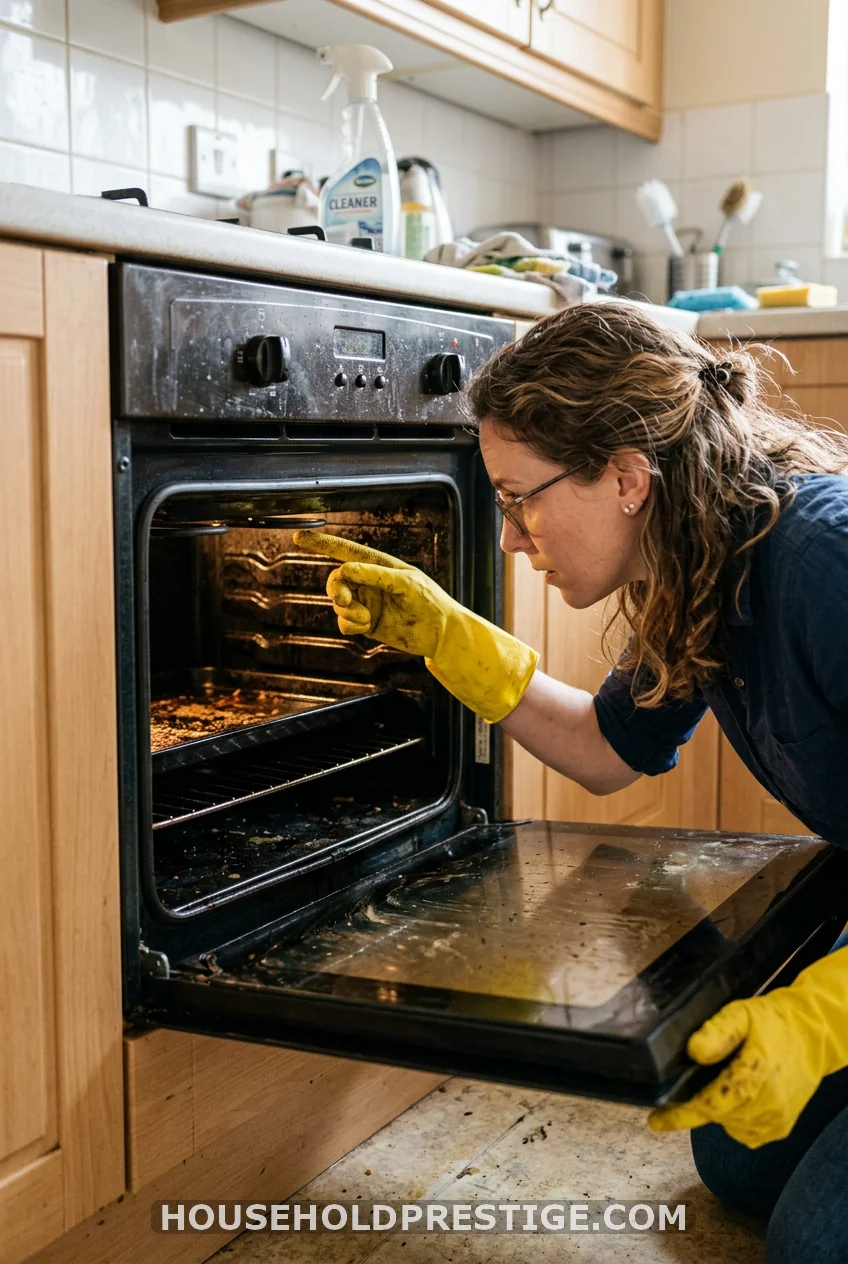
Skipping the overnight wait. Baking soda paste needs time, not effort. Wiping it off after twenty minutes barely touches surface dust. The magic happens in hours six through twelve.
Using a metal scraper. It feels satisfying to chip away at crusted grease with something sharp. It also scratches the enamel coating, and once that’s gone, grime sticks even faster next time. Stick with plastic or silicone.
Running a self-clean cycle on a heavily soiled oven. Self-cleaning functions heat to 800 to 900°F to incinerate residue. On a very dirty oven, that much fuel for the fire can trigger smoke, odor, or in rare cases, a small fire from grease flare-ups. Do a manual deep clean first, then reserve self-clean for light maintenance only.
Forgetting the door gasket and hinges. Grease loves to hide in the rubber seal around the door and in the little hinge gaps. A cotton swab dipped in vinegar gets into these spots that a cloth can’t reach.
Not protecting the heating element. Water and baking soda paste on an exposed electric coil isn’t just ineffective, it’s a genuine safety issue. Keep cleaning products away from any element that heats up.
How Often You Should Deep Clean Your Oven
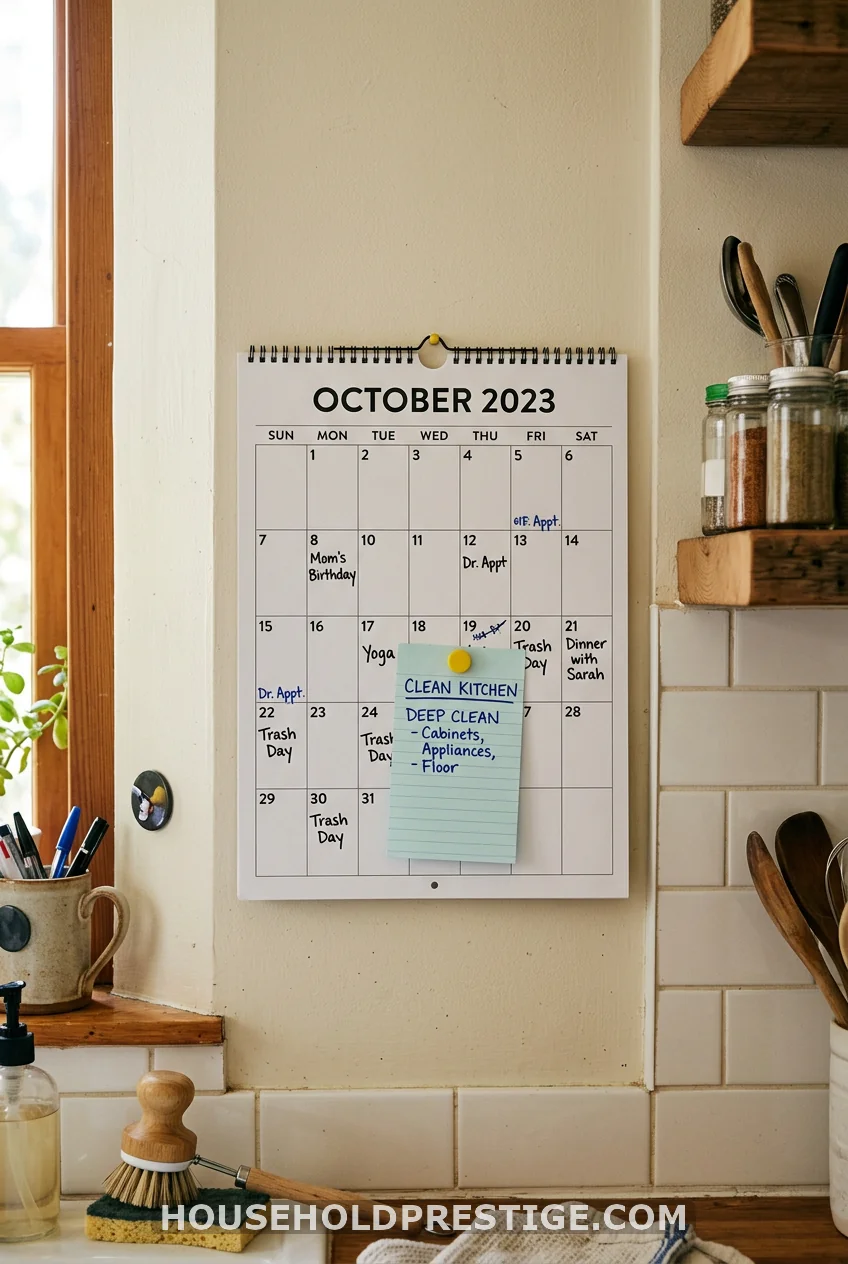
A true deep clean, the kind in this guide, only needs to happen every three to four months for an average home cook. If you bake often or your oven sees weekly roasts and bubbling casseroles, bump that up to monthly.
Between deep cleans, wipe up spills while the oven is still slightly warm (not hot). Grease and sugar wipe away in seconds when fresh. Left for a month, that same spill needs the full baking soda treatment. A quick habit now saves you a Saturday later.
Final Thoughts
A grimy oven isn’t a life sentence. It’s baking soda, vinegar, one overnight wait, and a bit of wiping the next morning. No fumes, no chemical burn on your hands, no hours hunched over with a scraper. Once you see how little effort the actual cleaning takes when you let the paste do the work, you’ll wonder why you put it off for so long.
Go start your paste tonight. Tomorrow’s oven will thank you.
FAQ
How long does it take to deep clean an oven?
Active work is under thirty minutes total, split between coating the interior and wiping it clean the next day. The paste itself needs to sit for at least twelve hours, so plan this as an overnight project rather than a same-day task.
Do I need to remove the oven racks to deep clean it?
Yes. Racks trap grease in ways the flat interior surfaces don’t, and cleaning them separately in soapy water gets far better results than trying to scrub them in place. It also gives you full access to the oven’s sides and back.
Can I deep clean a self-cleaning oven this way?
You can, and for heavily soiled ovens, it’s the safer route. Self-clean cycles run extremely hot and can produce smoke or odor on a very dirty oven. A baking soda deep clean first, followed by occasional self-clean cycles for maintenance, keeps both methods working well together.
What if the burnt smell doesn’t go away after cleaning?
Run the empty oven at 350°F for ten to fifteen minutes after cleaning. This bakes off any leftover vinegar or moisture. If odor persists, a bowl of water with lemon slices baked for thirty minutes will absorb lingering smells.
Is vinegar safe to use on all oven interiors?
Vinegar is safe on porcelain, enamel, and most stainless interiors. Avoid using it on natural stone components, like a stone baking surface, since the acidity can etch the surface over time.