

“You want to put what on a five-by-seven wall?”
That was my sister, standing in my half-bath with a coffee, staring at a sample of inky floral paper. I told her the truth. Small powder room wallpaper is the one place where going bold is the safe choice.
Below are 19 looks, from moody and dark to soft and coastal. Each one comes with a pattern-scale tip. After the list, you get the material spec that survives a windowless half-bath, plus roll math you can take to the store.
Before You Shop: Three Quick Checks
Measure the width of every wall, the ceiling height, and the door. Write them down. You will need them for the roll math later.
Count your outlets, switch plates and vents. Each one means a cut, and busy patterns hide cuts better than plain ones.
Note your sink type. A pedestal sink leaves lots of wall to paper and lots of curves to cut around. A vanity hides the lower wall.
Color and Mood Looks
A powder room has no shower, so steam stays low. That means you can pick a wall color for drama without worrying much about moisture. Start with the mood you want.
1. Moody Dark Florals for a Candlelit, Boutique-Hotel Effect
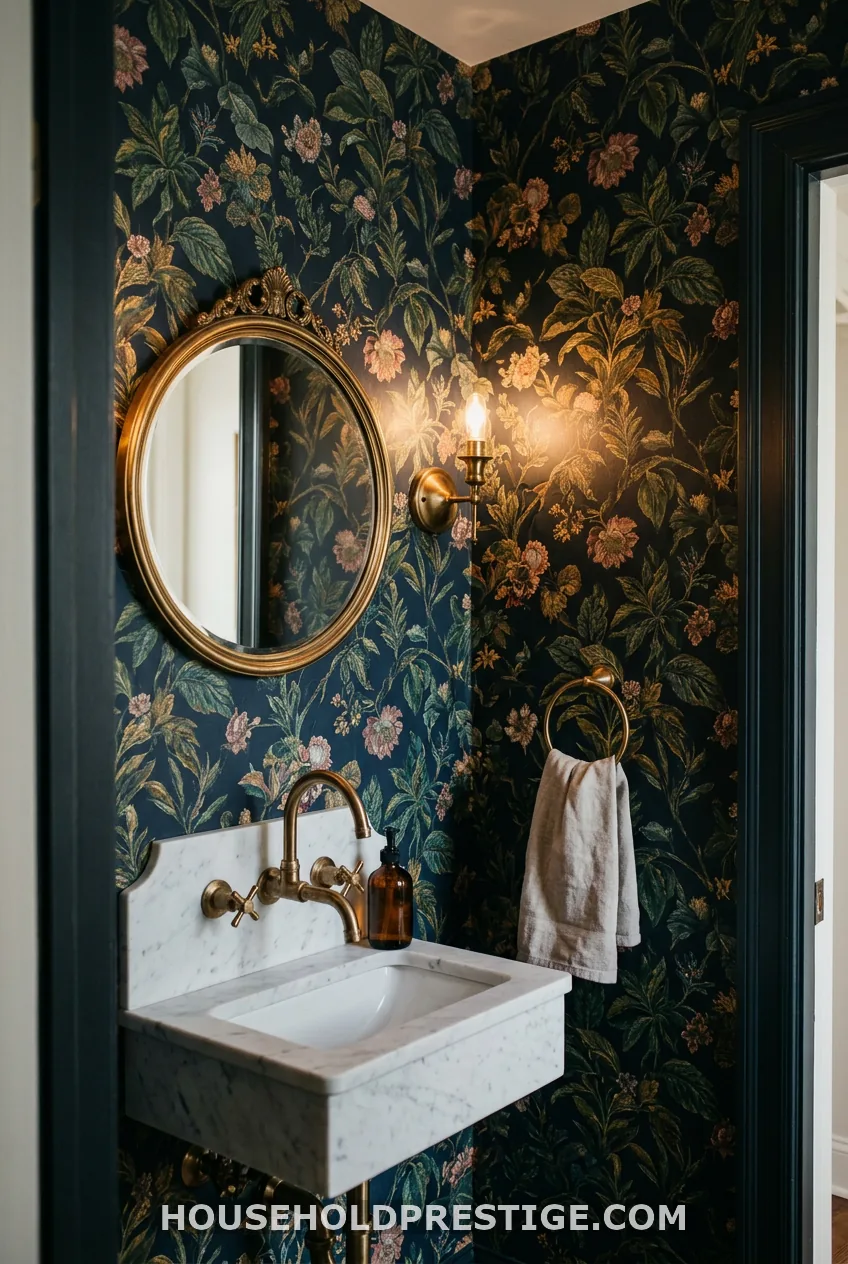
Ink, charcoal and midnight grounds with dense botanicals make walls fade back. The corners blur, and an awkward ceiling line disappears. The room feels like a jewel box instead of a closet.
Pair the paper with unlacquered brass and one round mirror. The mirror bounces light so the dark does not feel heavy. Use warm bulbs, around 2700K, so the blues stay rich instead of flat.
2. Oversized Botanicals That Make a Tiny Room Feel Bigger
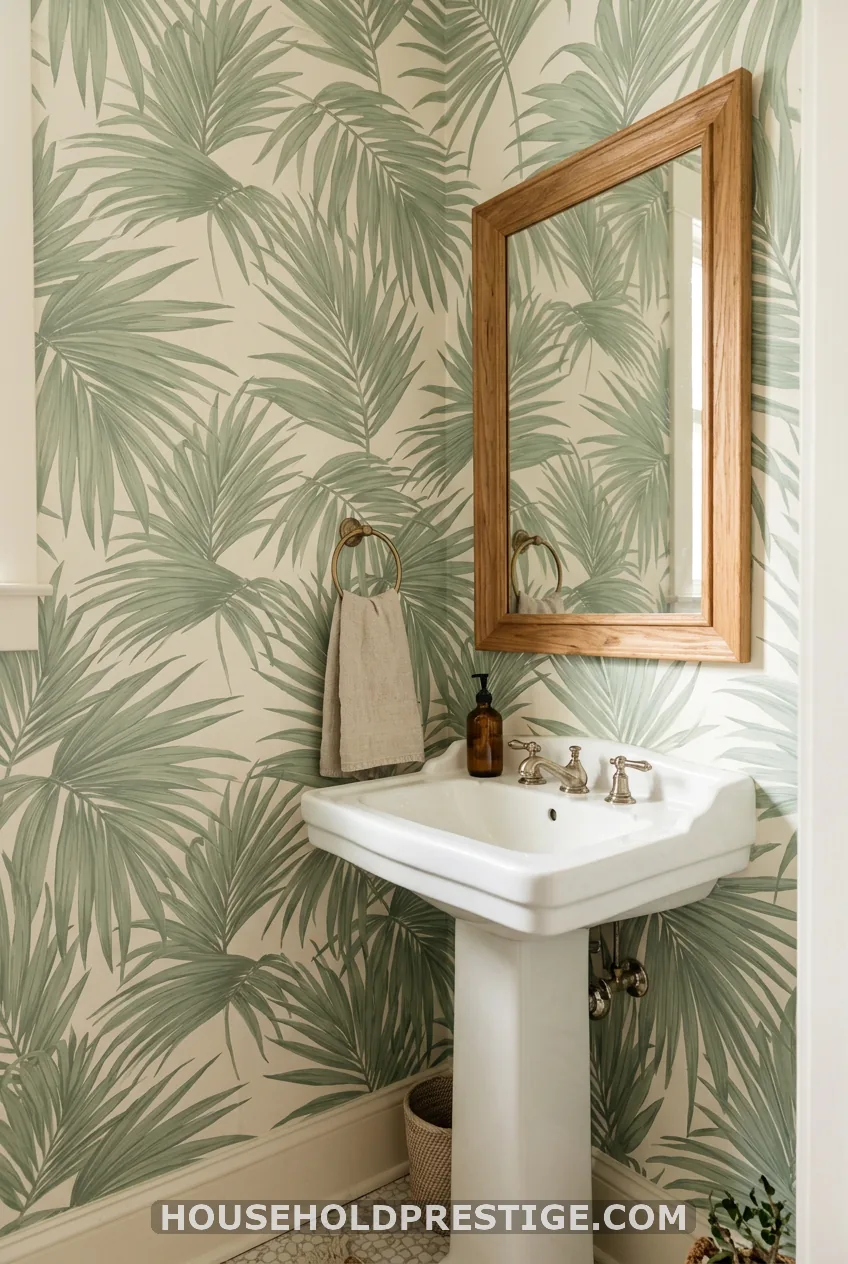
Here is the scale rule that surprises people. In a room under 25 square feet, go big. One large leaf has fewer repeats and fewer busy seams, so your eye reads fewer lines.
Dainty prints break into noise in a small room. Look for a repeat of 24 inches or more. Brands like Schumacher and Peter Dunham Textiles are known for large botanicals.
Expect awkward moments. A giant motif will land unevenly in corners and above the door casing. Order a sample length and plan where the biggest leaf falls before you cut.
3. Sage and Olive Green Wallpaper for a Soft, Grounded Look
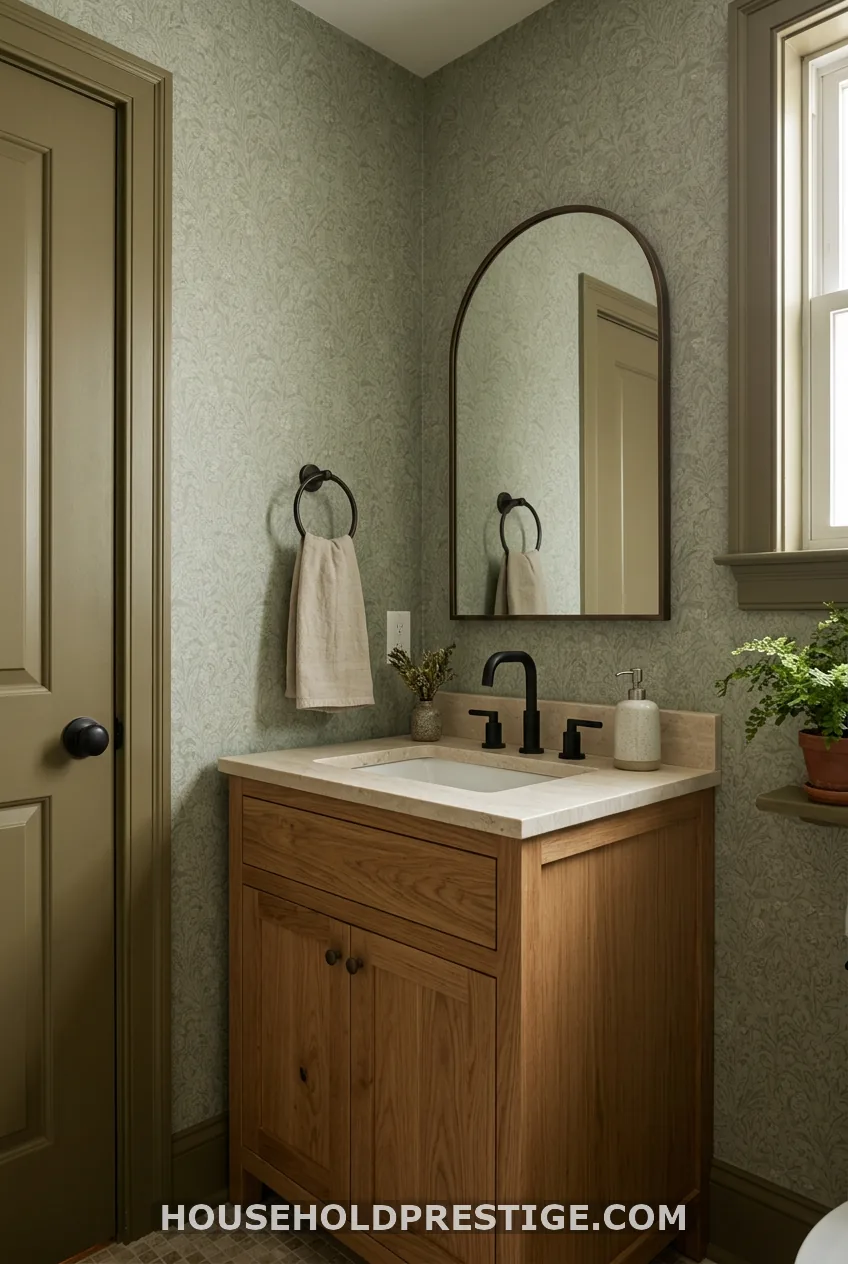
Green acts like a neutral. It flatters oak, black, brass and white vanities alike. Sage, moss and olive all work.
Skip default white trim. Paint the baseboard and door casing a shade pulled from the paper.
4. Modern Farmhouse Plaid, Ticking and Gingham
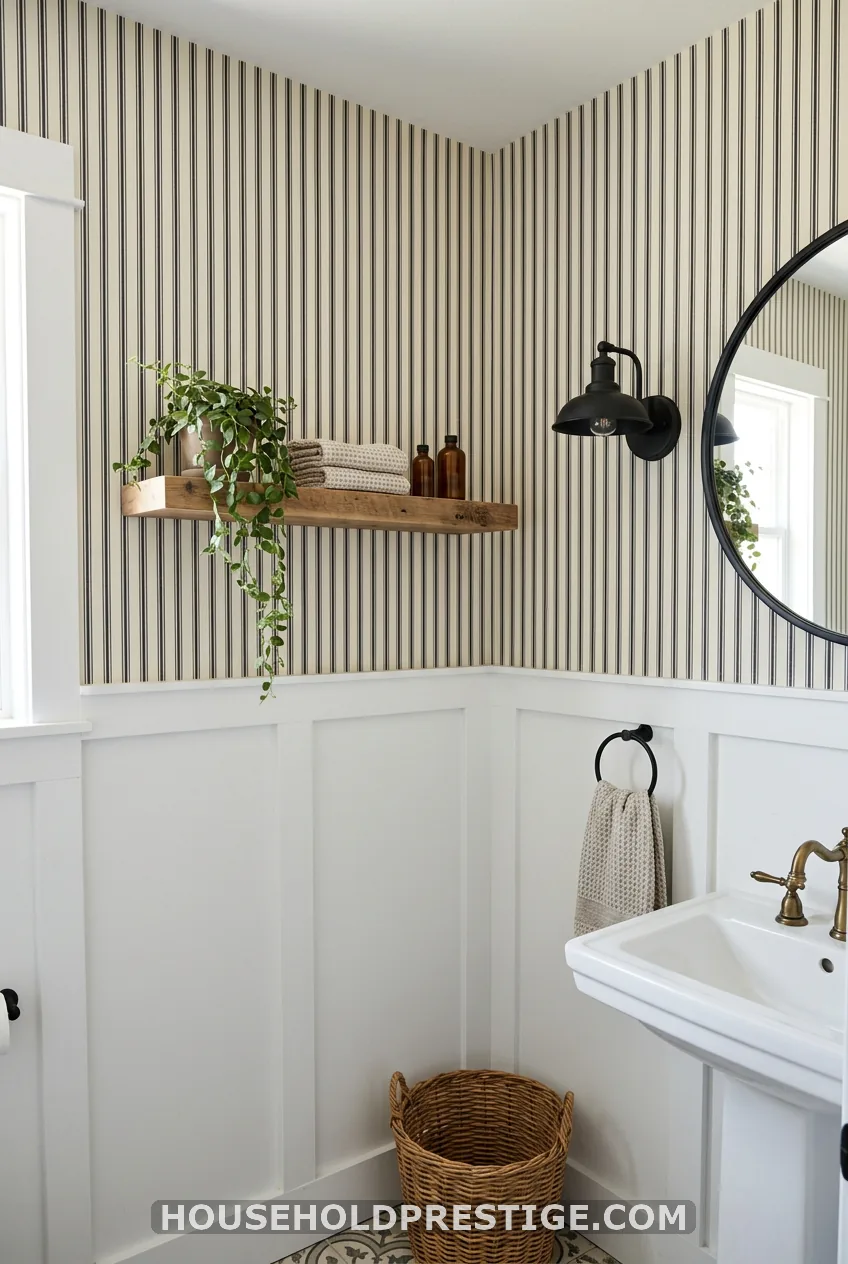
Small checks and ticking stripes read calm, not busy. They also feel familiar, which helps if you fear commitment.
The modern farmhouse formula is board-and-batten wainscoting up to about 36 to 42 inches, with paper above. Stop the paper at the top of the rail, not halfway up a wall. A fat, clear break looks planned.
For a full-wall version, run stripes vertically. They add height at no extra cost.
5. Coastal Blue Chinoiserie and Watercolor Washes
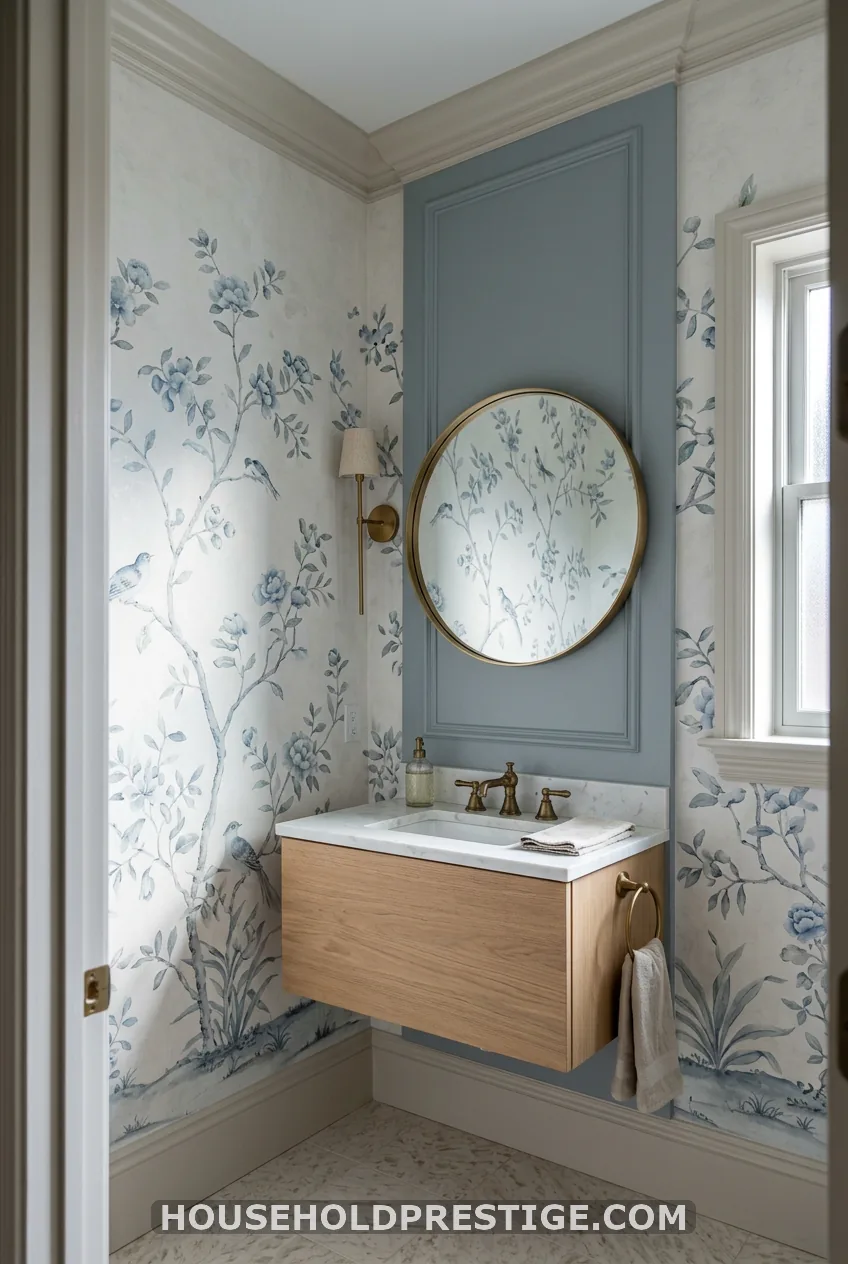
Misty blues, seafoam and painterly washes feel breezy. They also warm up a cool, north-facing room, because a blue ground reads gentler than gray paint.
Center a panel behind the vanity or mirror. Sandberg and Ferrick Mason both make soft blue options worth sampling.
Pattern and Print Looks
6. Bold Geometrics and Mid-Century Repeat Prints
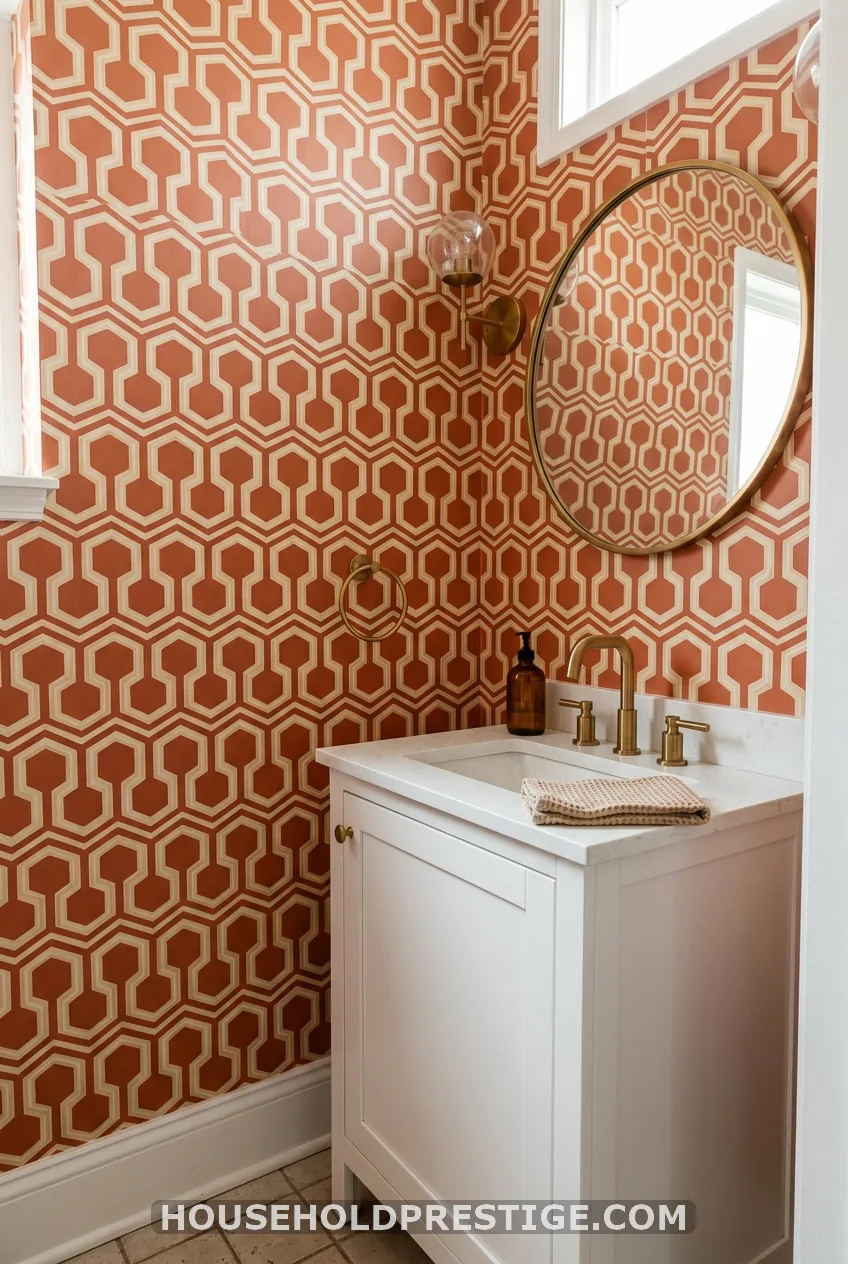
Here is my cautionary tale. I hung a diamond print in my first house and loved it for one afternoon. Then I saw the diamonds drift an inch off level across a corner. The walls were crooked, and straight lines told on them.
Hexagons, scallops, diamonds and ribbons all expose bad walls. Before you hang, check each corner with a level. Skim and sand any bulge you find.
Keep the rest of the room quiet. A plain vanity and a single mirror let the pattern be the hero.
7. Art Nouveau and Vintage Linework for Small Walls
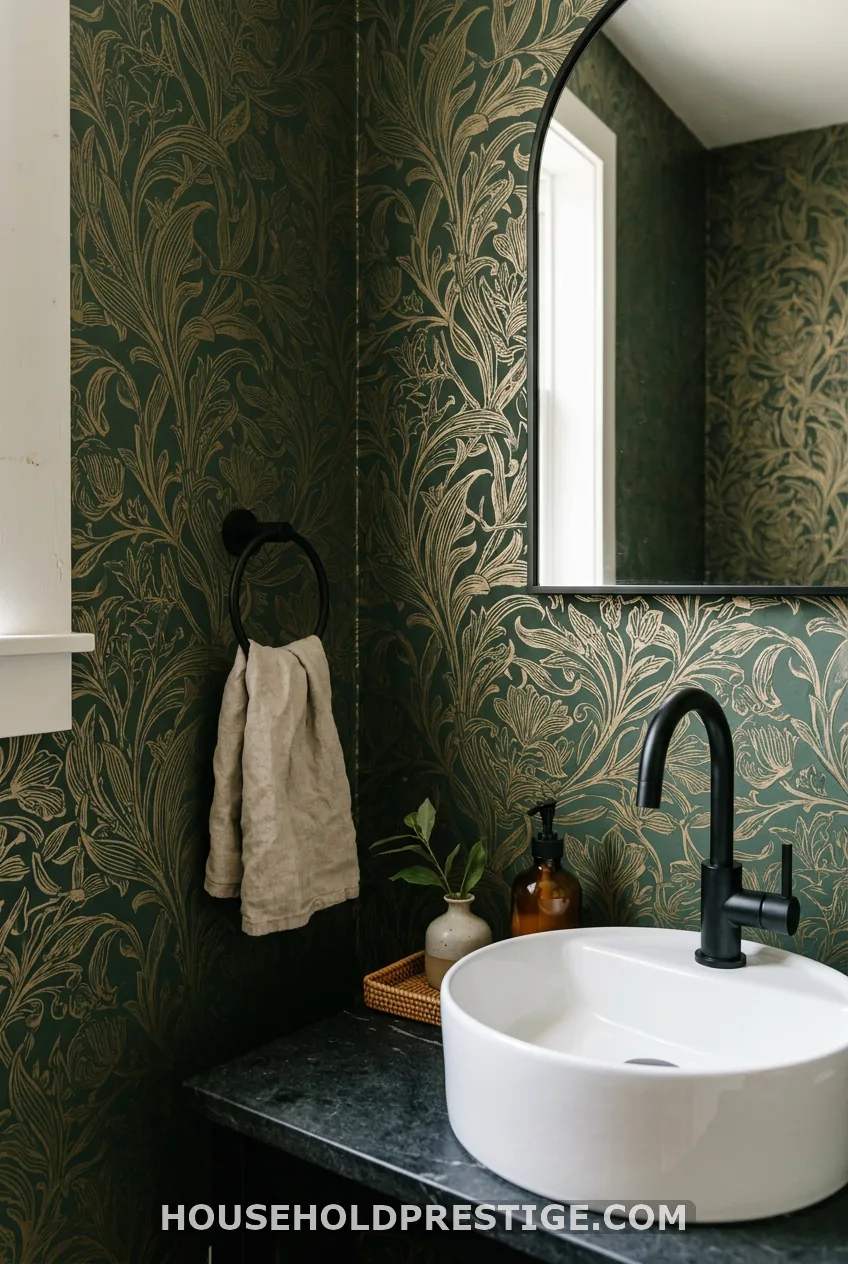
Whiplash curves and arched foliage use fine lines. Fine lines suit tiny rooms better than heavy damask, which can feel like a velvet curtain closing in.
Mix the vintage pattern with modern fixtures. A clean faucet and a plain mirror keep the room from looking like a time capsule. Spoonflower carries many linework prints you can order as a sample first.
8. Chinoiserie and Toile Panels for a Collected, Luxe Feel
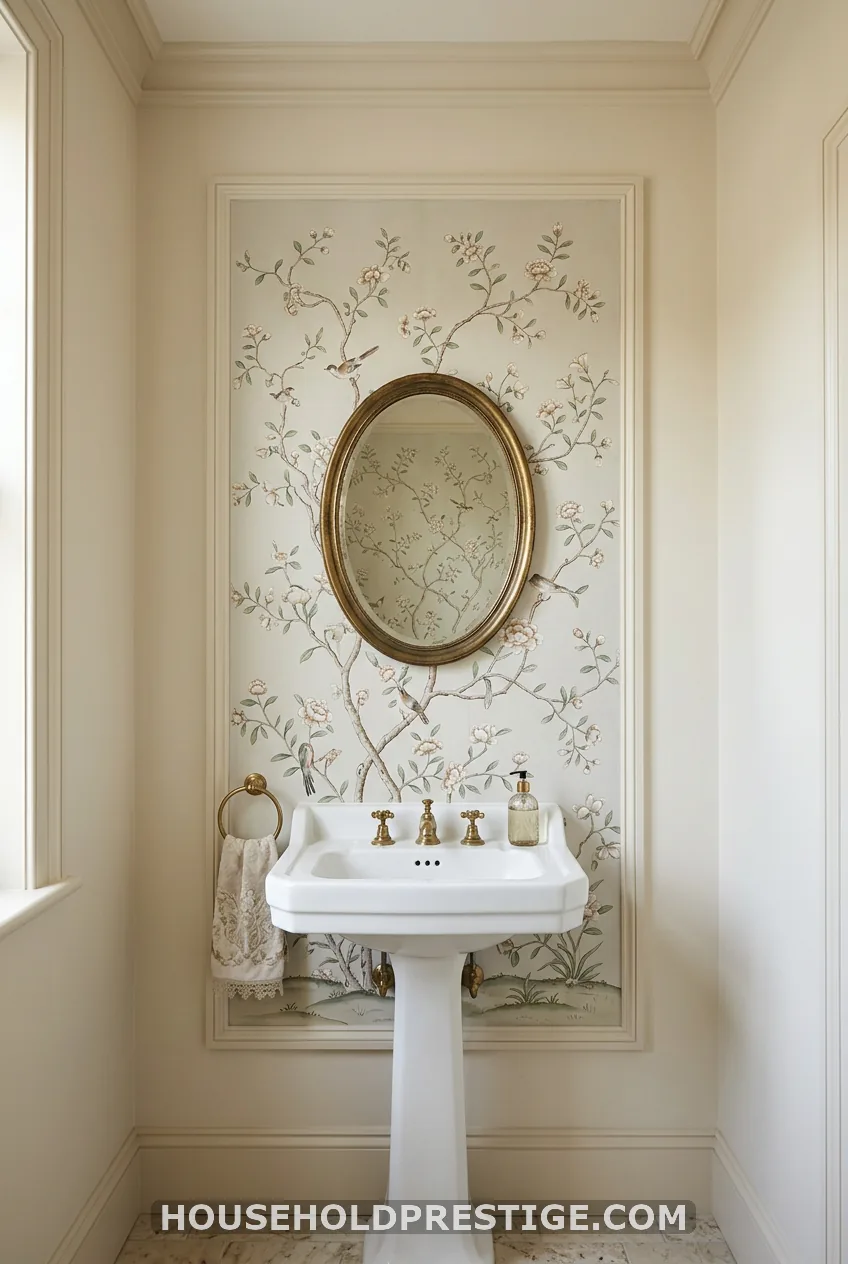
Panel papers are made for one wall or a niche. They do not repeat, so they look custom. Center one behind the vanity and you have a focal point.
Expect to pay more. Designer panels from makers like Cole & Son or de Gournay often run several hundred dollars. Spend here, because one wall is all you need.
9. Metallic, Pearlescent and Shimmer Finishes
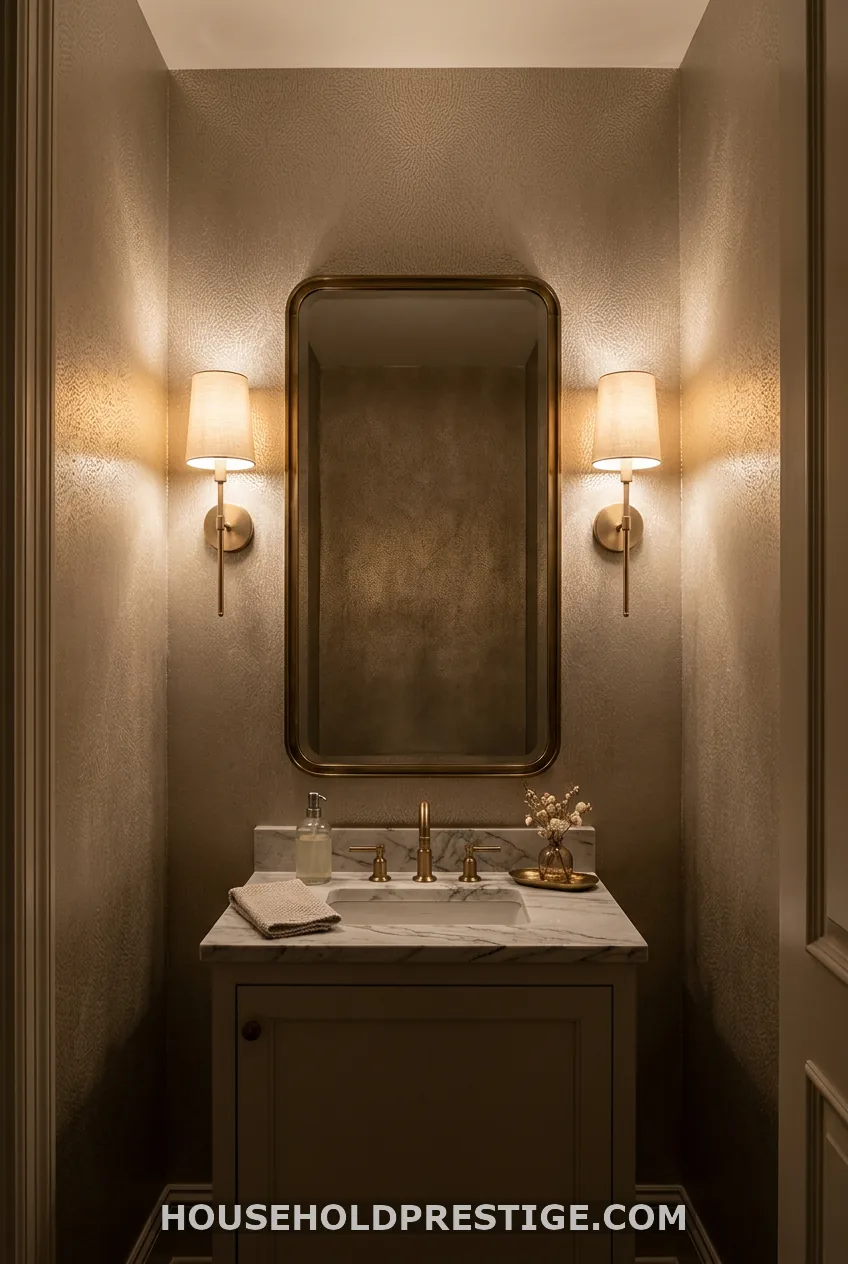
With no window, a metallic ground borrows light from your sconces. Gold and champagne shimmer love warm bulbs. Silver and pearl look cleaner under neutral white around 3000K.
Finish matters more than shine. A vinyl-coated metallic wipes clean. A raw foil can stain when someone drips soap on it.
10. Wallpaper the Ceiling: The Fifth-Wall Move
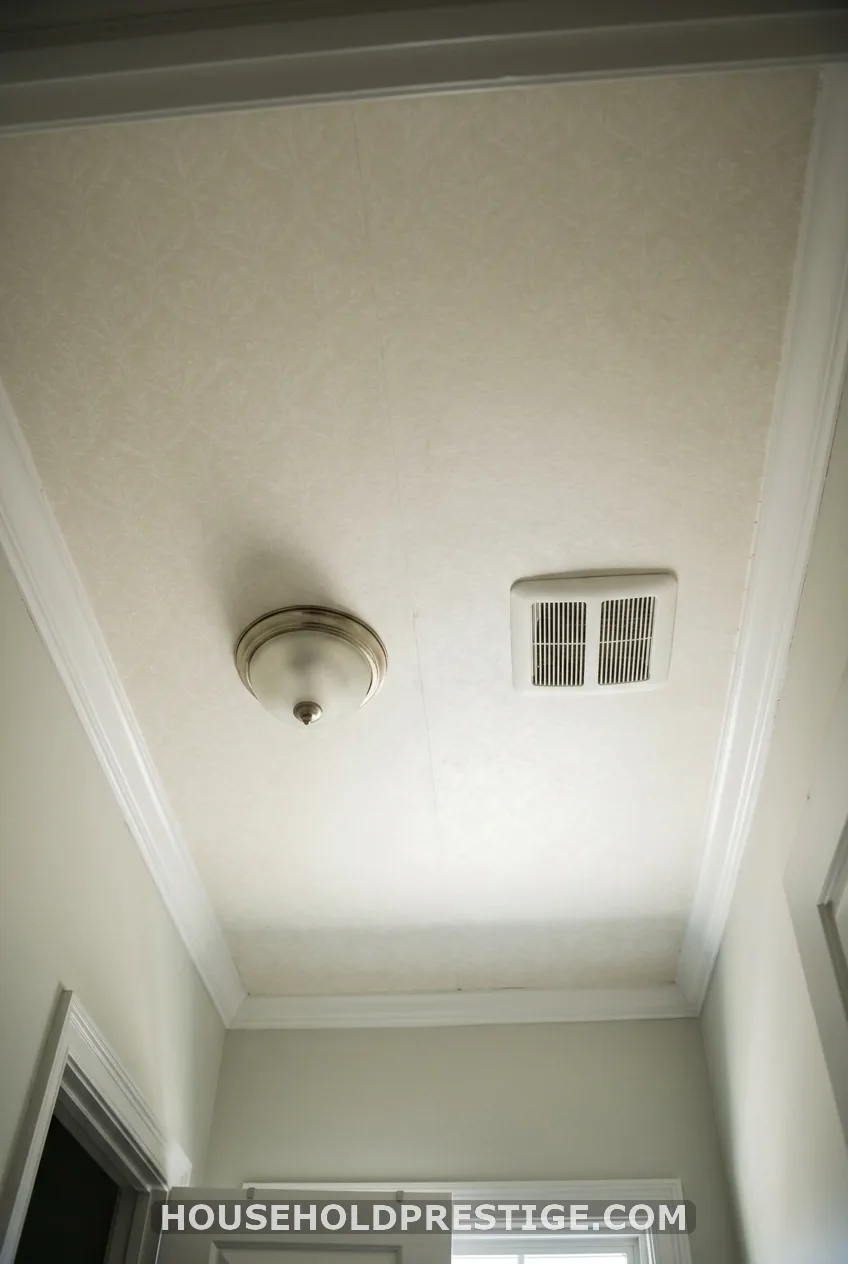
Paper overhead pulls the eye up, so a low room feels taller. Choose small repeats or tone-on-tone patterns. Giant motifs overhead get dizzy.
Trim carefully around the fan and the light. Turn the power off, take the covers down, and cut the paper in an X over each hole. Fold the flaps in and replace the covers.
11. Accent Wall Plus Board-and-Batten or Tile
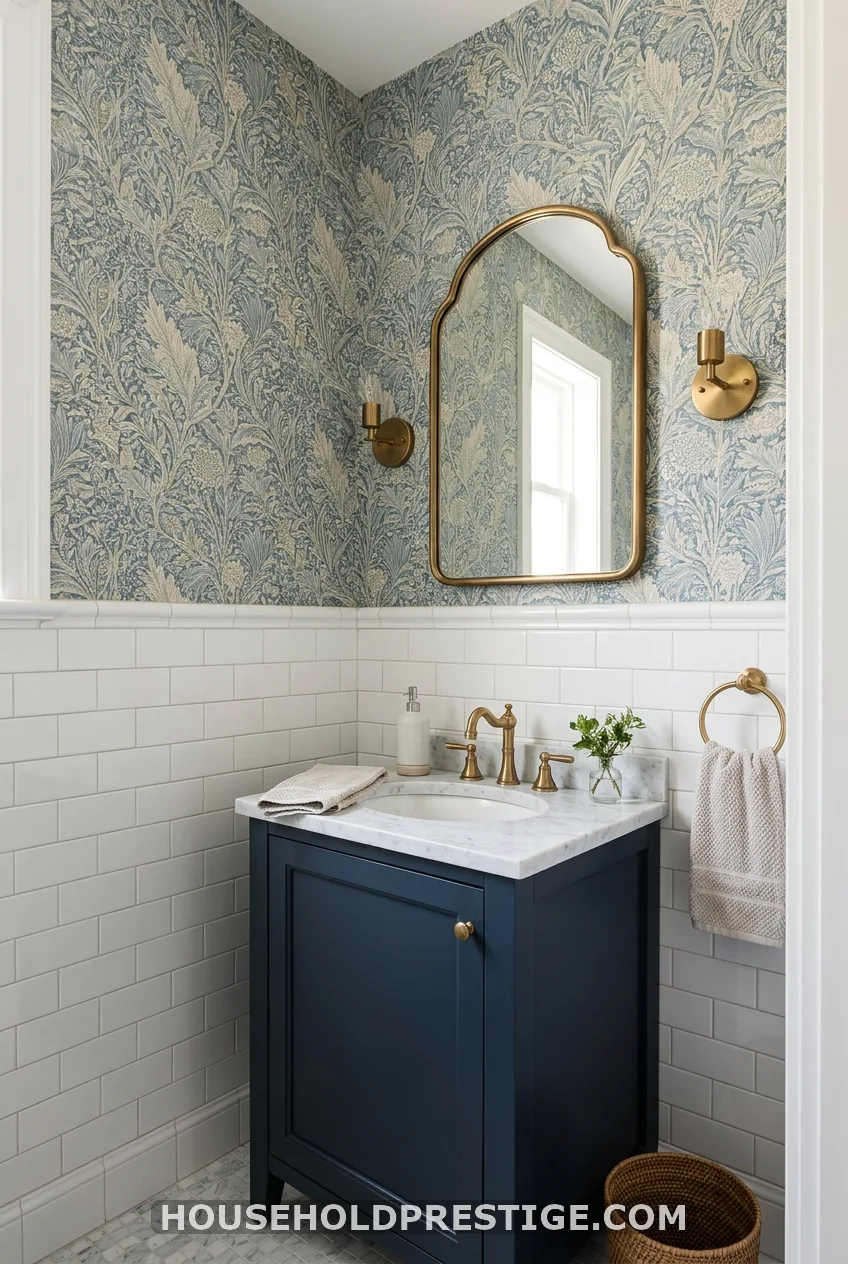
Papering just the wall behind the sink saves money and cuts the roll count. You can also paper above tile or wainscoting on all four walls.
Plan where the joint line lands. End the paper at a trim cap or a tile edge, never in the middle of a tile. Match the paper ground to your grout color for a calm edge.
12. Peel-and-Stick and Removable Wallpaper for Renters
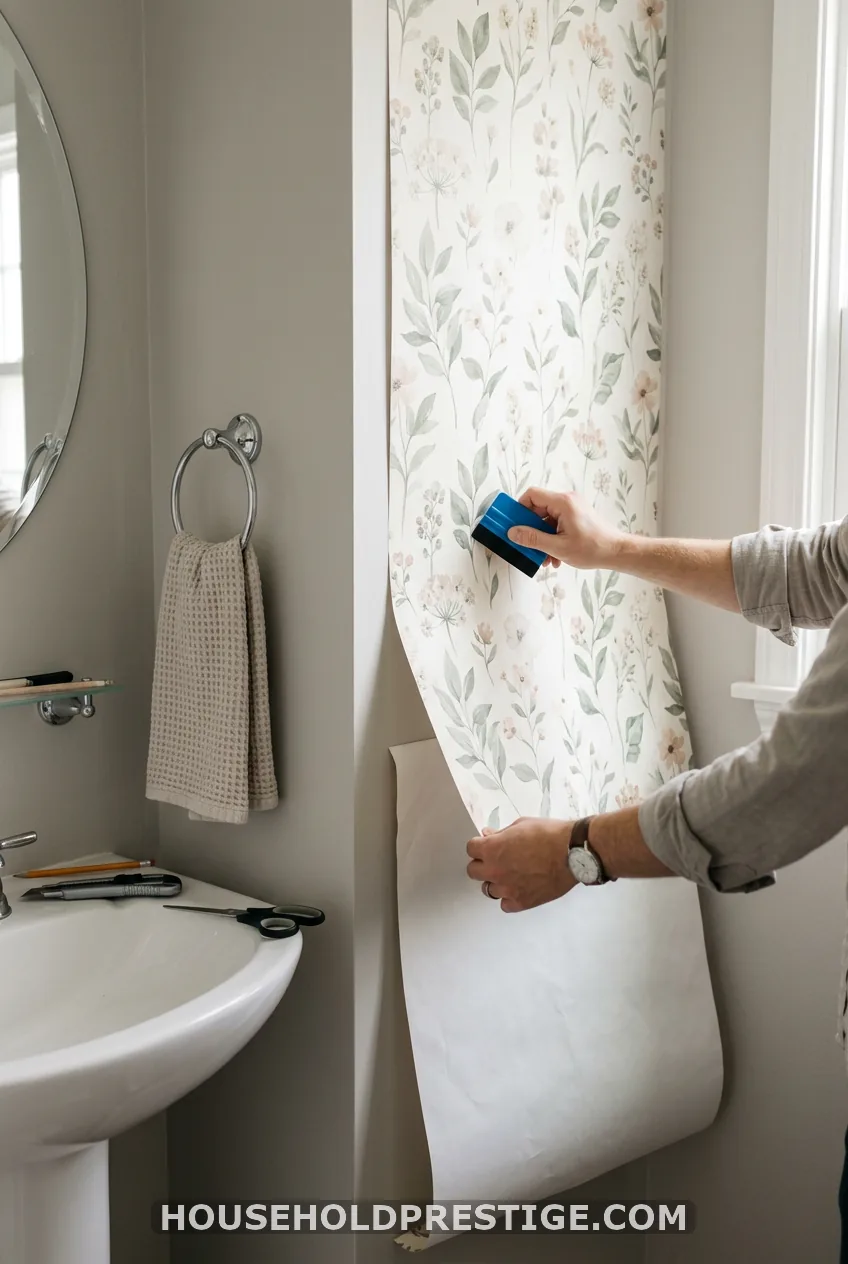
Tempaper, Chasing Paper and WallBlush all make peel-and-stick that comes off cleaner than paste paper. It still has limits. It grips smooth, fully cured paint well. It fails on rough plaster, textured walls and spots that get splashed.
Test a corner first:
- Wash the wall and let it dry fully.
- Stick a one-foot sample low in a corner, out of view.
- Wait 72 hours.
- Peel it slowly. If paint lifts, prime first or skip it.
Keep it away from standing water. This is not a shower product.
13. Grasscloth and Textured Weaves for a Spa-Like Half-Bath
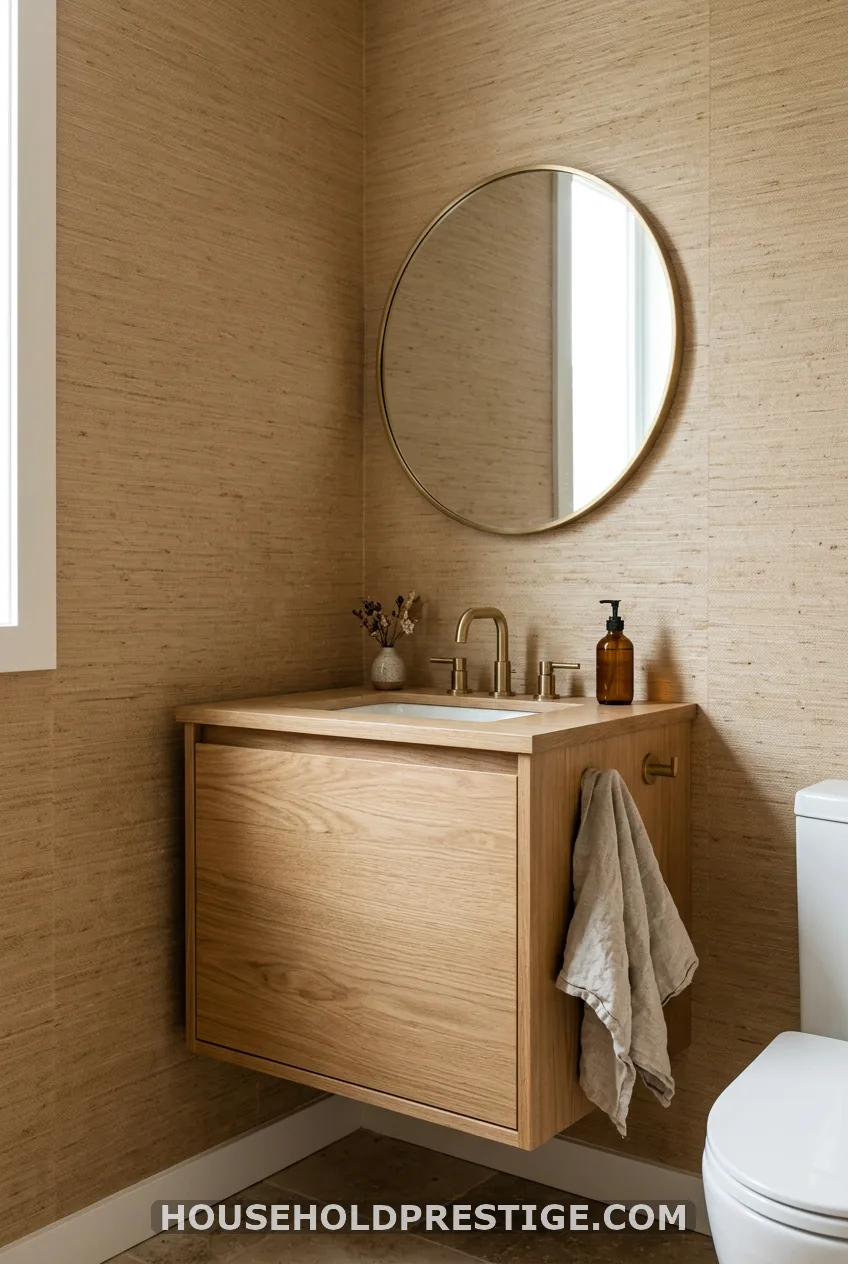
Natural weaves hide wall flaws better than flat paper. Seams show, though, and you cannot hide them. That is part of the look.
Plan your panel widths on purpose so seams fall evenly. Keep it out of the splash zone behind the faucet. Raw grasscloth stains from water drops, so a vinyl look-alike is safer by the sink.
14. Small-Scale Prints for Pattern Without the Overwhelm
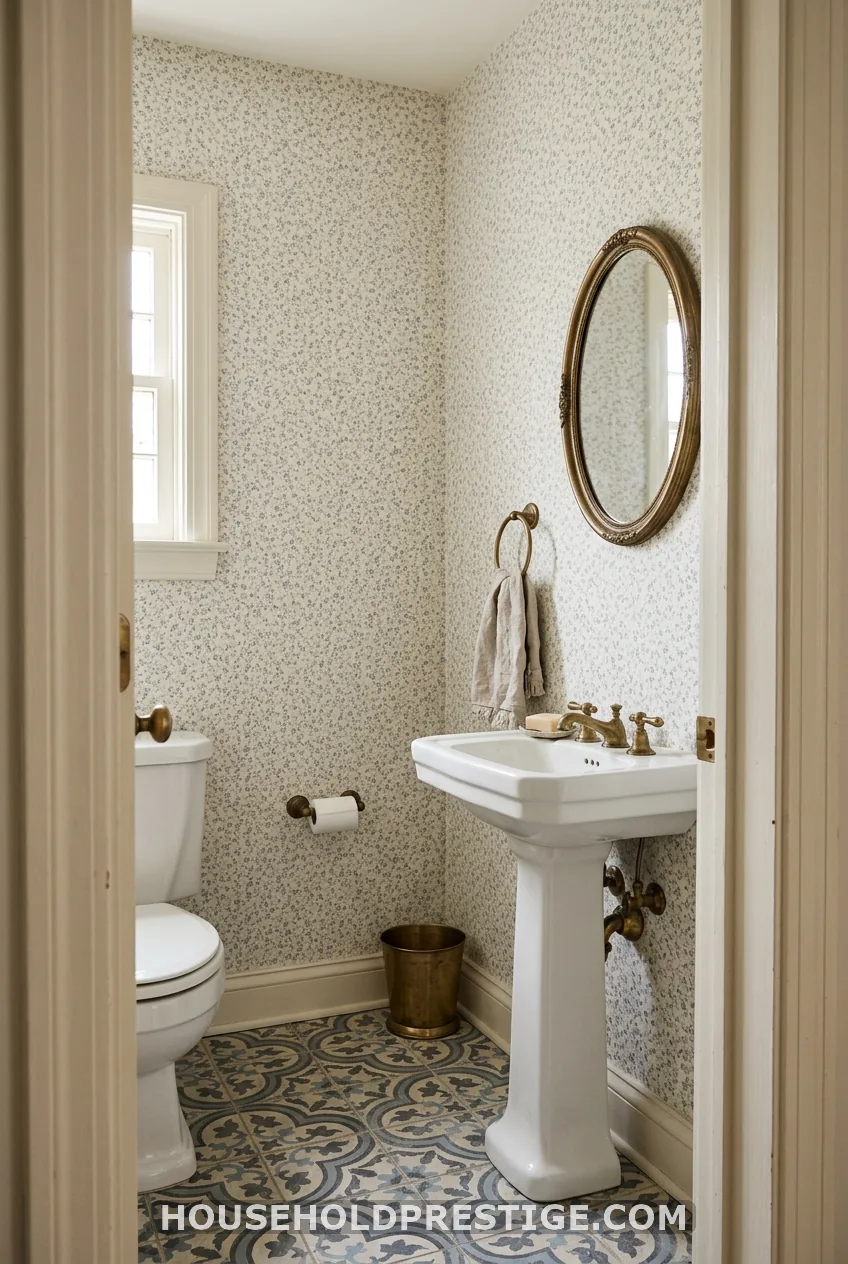
What most people think: small room, small print.
The reality: micro-prints can read as flat color from a few feet away. They work best as calm maximalism, paired with a busy floor like cement tile.
One catch. Tight patterns need tighter matching, so you buy more rolls. Add an extra roll to your count.
15. Black-and-White Wallpaper for Graphic Impact
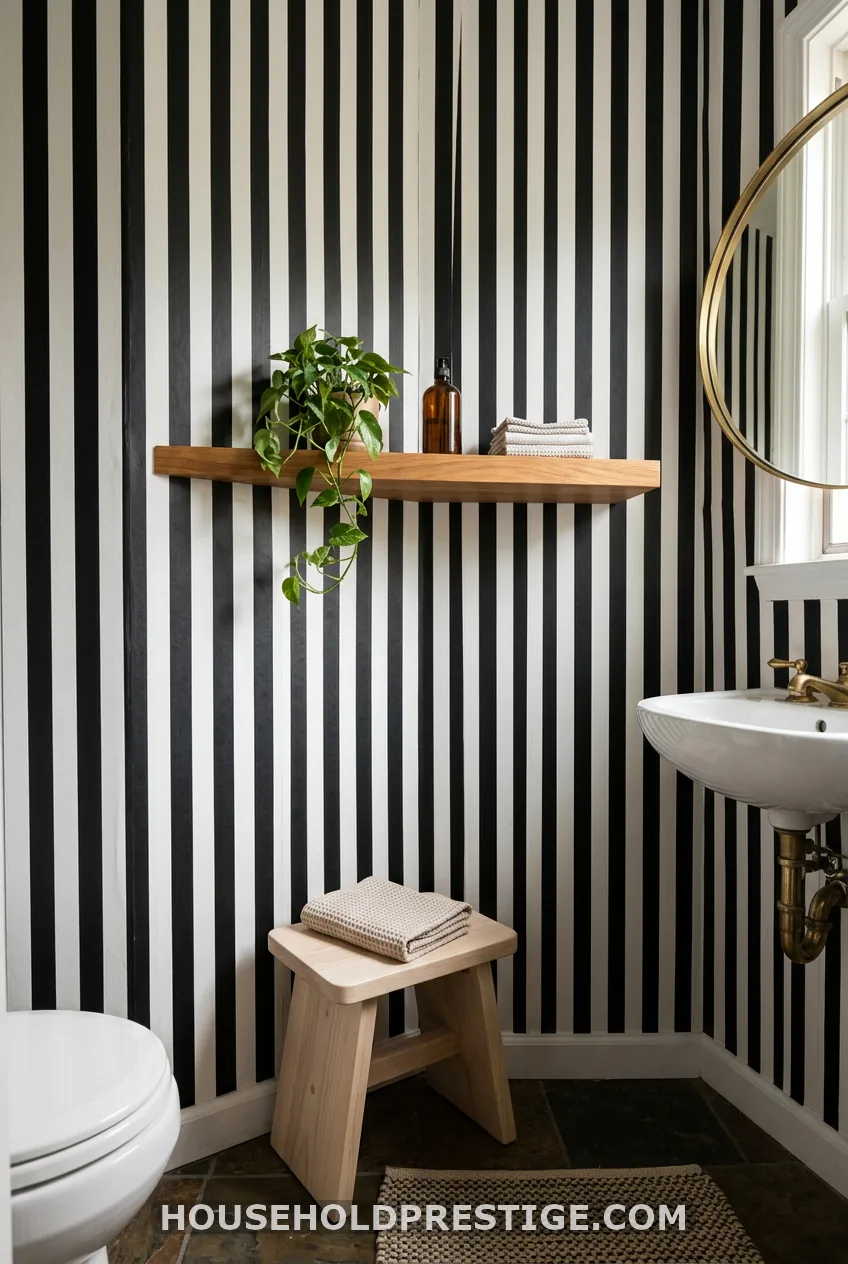
Stripes, spots and hand-drawn motifs hit hard. Vertical stripes are the cheapest way to add height. Warm up all that contrast with wood and a painted ceiling in soft blush or pale green.
16. Terracotta, Clay and Warm Neutral Wallpapers
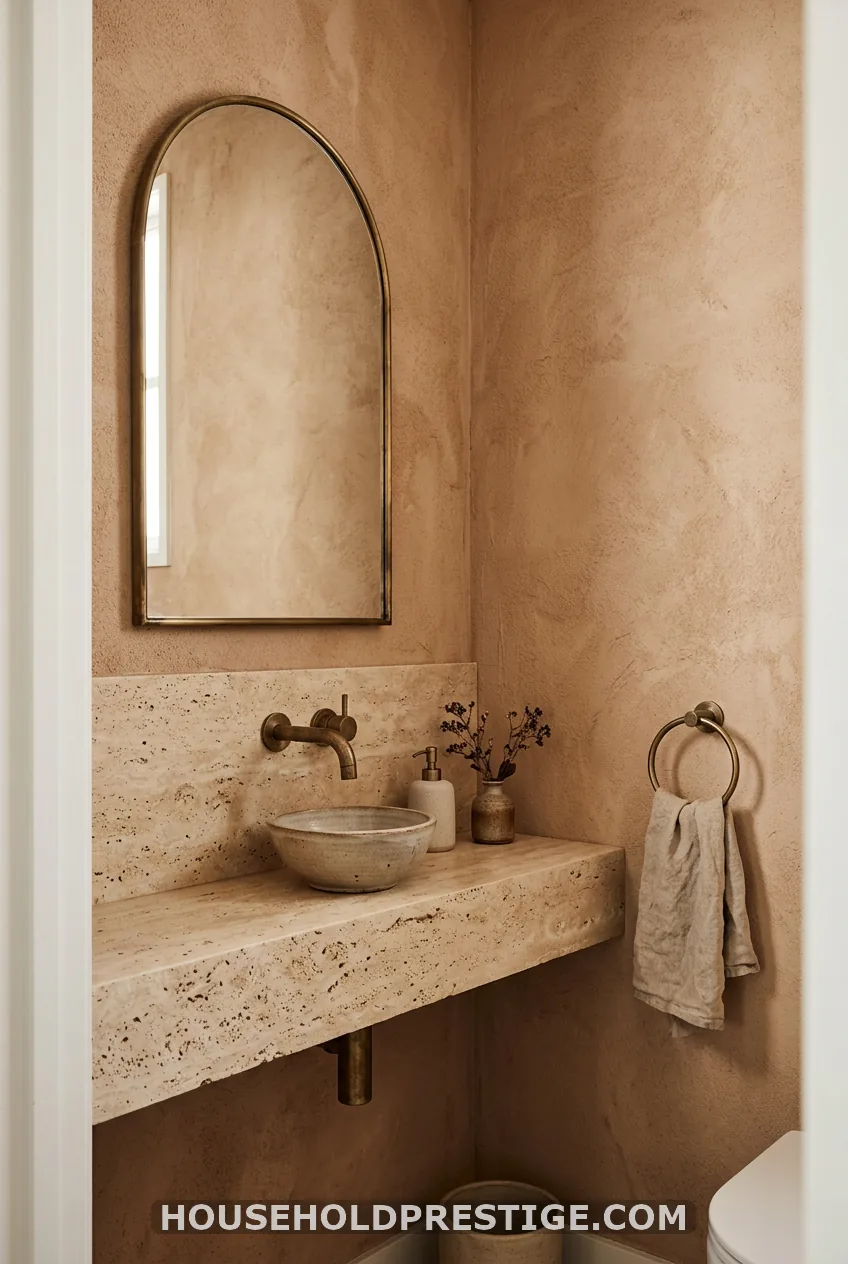
Sunbaked clay warms a dim, cool room fast. Pick a neutral with visible texture, not flat beige. Match the tone to unfinished brass and travertine.
17. Custom Murals and Non-Repeating Papers
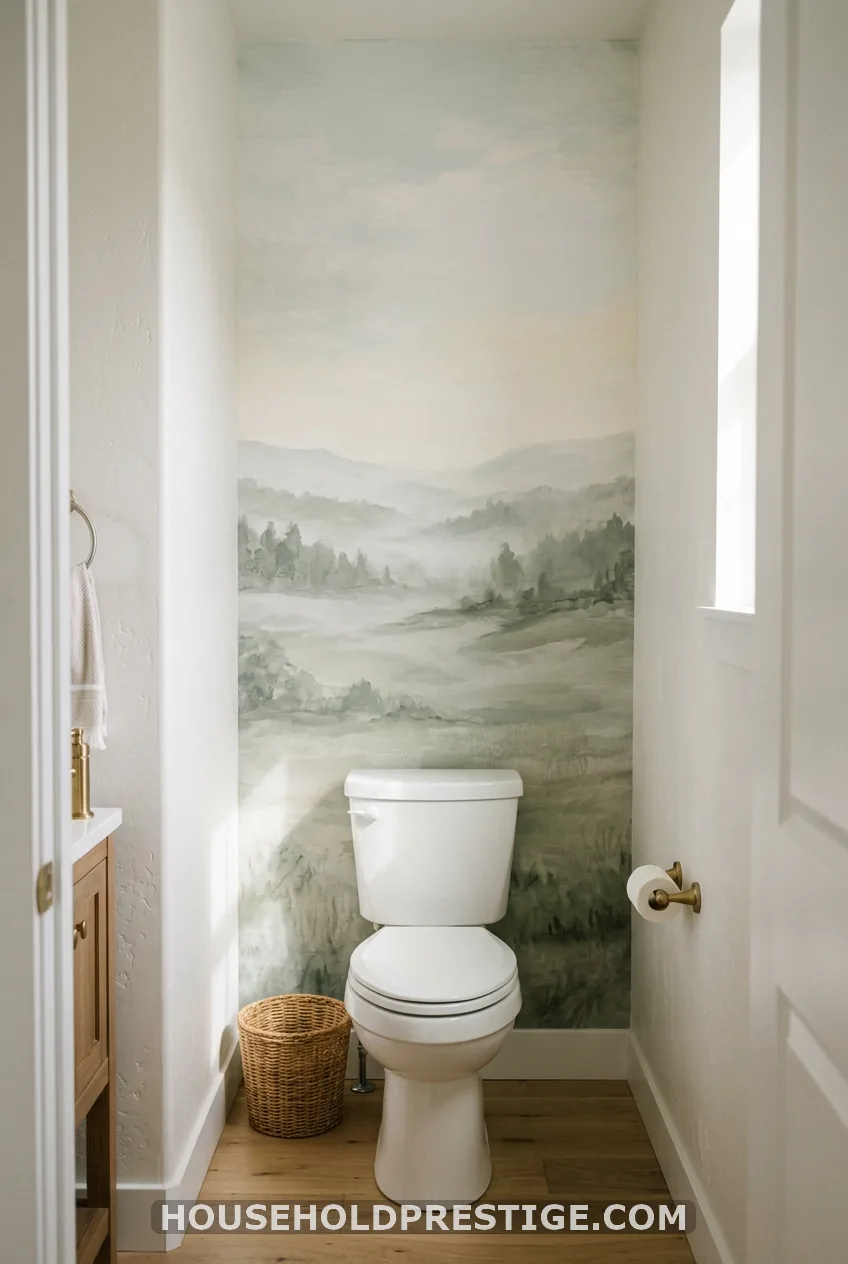
A mural is one big picture cut into panels, so there is no repeat to match. In an awkward room with a slanted wall or a jog, that is often the simpler path.
Measure the wall’s width and height to the quarter inch. Send the numbers to the maker. Custom sizing from shops like Spoonflower usually costs more per square foot than a standard roll, so measure twice.
18. Wallpaper Behind the Vanity Only (the Niche Move)
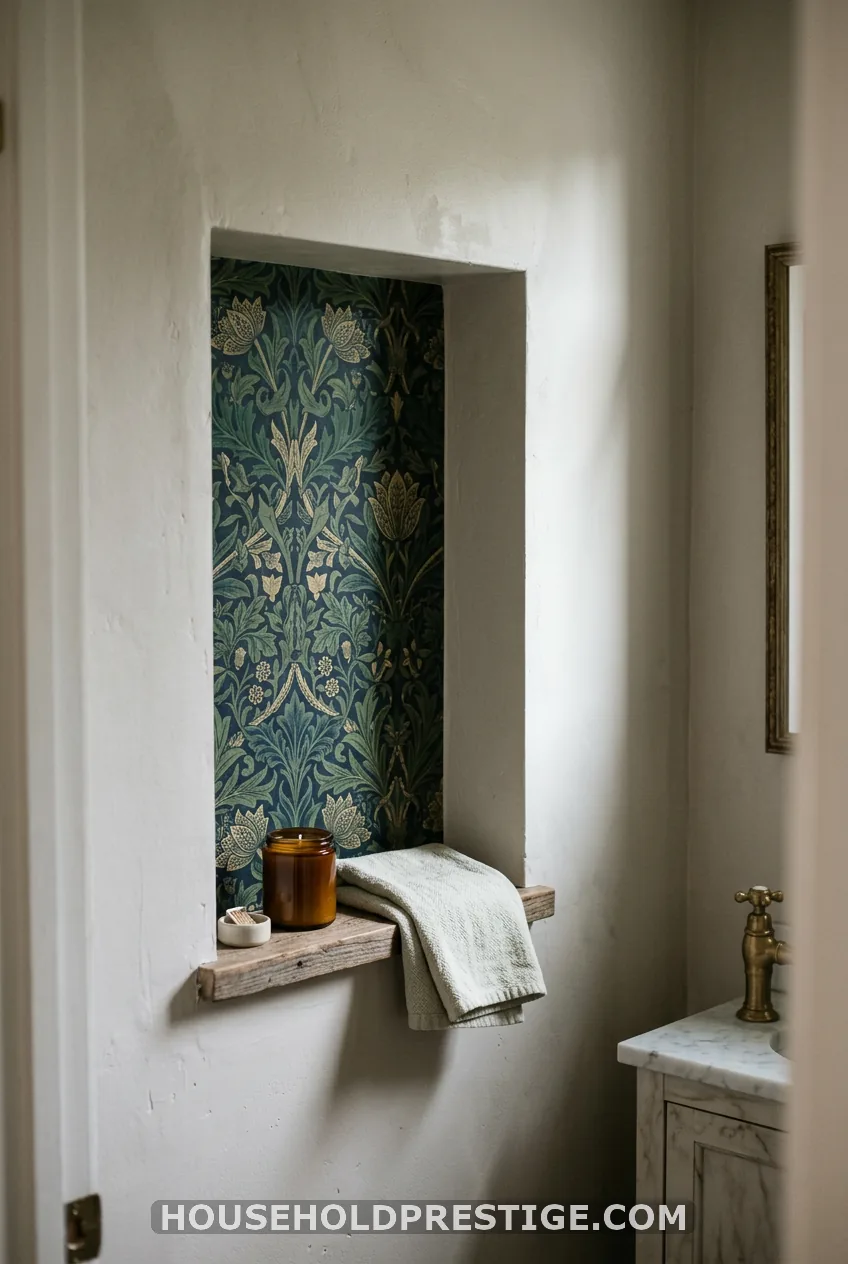
Paper only a niche or the sink alcove. One roll covers it, with leftover for drawer liners and shelf backs. It is the lowest-commitment idea here.
19. How to Pick the Right Pattern Scale for Your Room Size
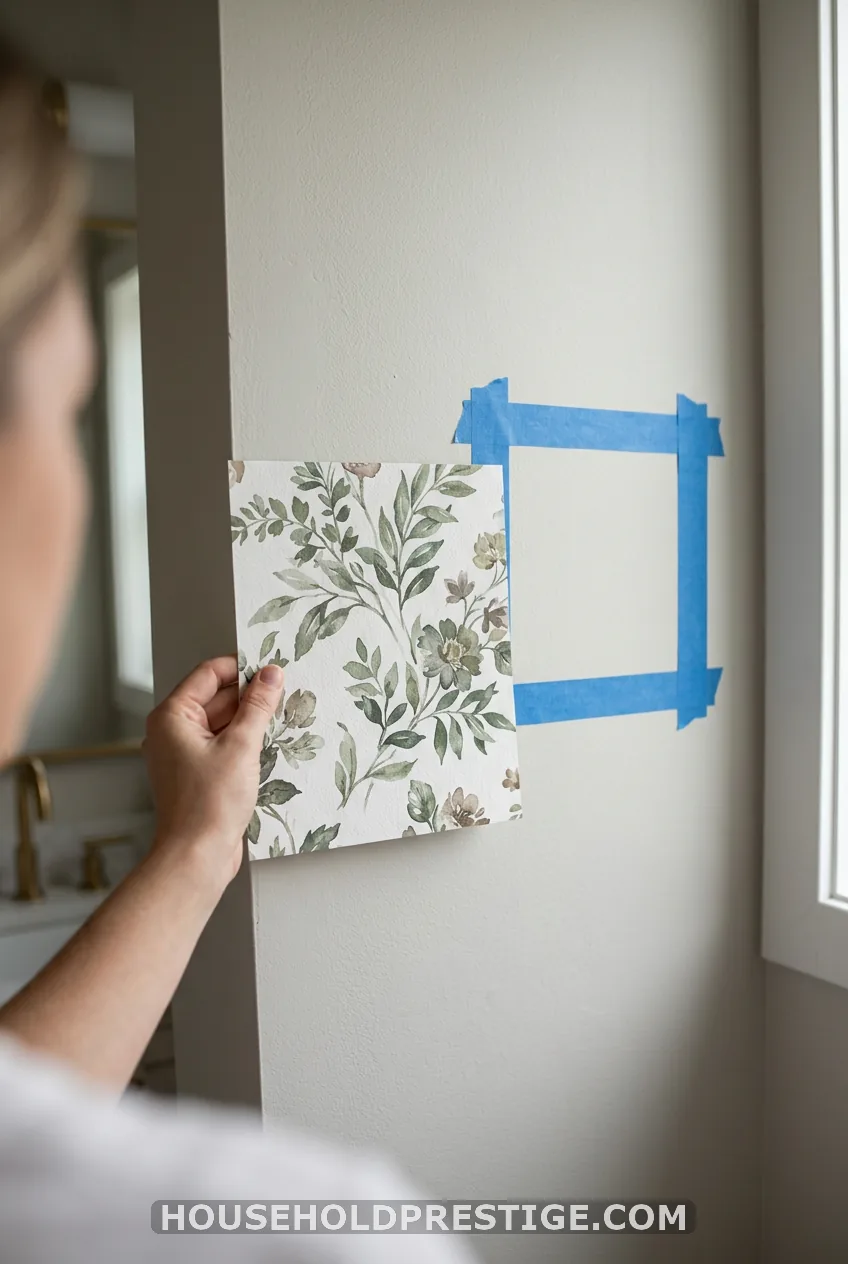
Use this rule: the repeat should be at least half the width of your widest wall, or bigger. In a 5×7 room, the longest wall is seven feet. A repeat of 42 inches or more reads confident. A 4-inch repeat reads busy up close.
Mock it up before you buy:
- Order a full-size sample, not a swatch.
- Tape it to the wall where it will hang.
- Look at it in the morning, at midday and at night with the light on.
- Stand in the doorway and at the toilet. Those are the two views people see.
The common mistake is judging a pattern in a store. Store light is bright and cold. Your powder room is dim and warm.
Walk away for a day. If you still like it, buy it.
The Material Spec That Survives a Half-Bath
Choose Type II commercial vinyl or coated non-woven. Both wipe clean and handle everyday humidity. Flat uncoated paper and raw grasscloth stain near the sink.
Splashes happen even without a shower. Keep paper at least a foot from the faucet, or seal the area with a wipe-clean finish. Toilet tanks also drip with condensation in summer.
Run the exhaust fan during and after use. Let new paper cure for 48 hours before steam. On an exterior wall, check for cold corners and mold before hanging. Prime with a mold-resistant primer such as Zinsser Shieldz or Roman PRO-543.
Roll Math for a 5×7 Powder Room
A 5×7 room has a 24-foot perimeter. With 8-foot ceilings, that is 192 square feet of wall. Subtract a 3×7 door (21 square feet) and you have about 171.
Here is the strip method, which is safer than area math. A standard roll is 20.5 inches wide, so 24 feet needs about 14 strips. Each strip is 8 feet plus 4 inches of trim, about 100 inches.
A double roll (27 feet long) gives three strips. So 14 strips need 5 double rolls.
Pattern repeat adds waste. Plan 15 to 25 percent more. That brings the total to 6 or 7 double rolls.
Buy one extra roll from the same dye lot for attic stock. A later reorder may not match.
Installation Basics
Wash the walls and fill holes. Sand, then apply sizing or primer so the paper grips and later peels off cleanly. In older homes with crooked plaster, skim any dips first.
Start the first seam in the least visible corner, usually behind the door. Mark a plumb line with a laser level. Use a smoothing tool, a seam roller and a fresh blade for each few cuts.
Around a pedestal sink or toilet flange, cut relief slits and trim slowly. Sharp blades beat speed.
Frequently Asked Questions
Can you wallpaper a powder room with no window?
Yes. A powder room has no shower or tub, so humidity is low. Run the exhaust fan, keep paper away from direct sink splash, and choose a wipe-clean vinyl or non-woven for extra insurance.
Is peel-and-stick okay in a small powder room?
Yes, for renters and quick updates. The wall must be smooth, clean and fully cured. It works well on the vanity wall, but keep it away from standing water.
Should I wallpaper all four walls?
Usually yes. The room is small enough that a bold print reads as intentional. To hedge, paper the vanity wall and the ceiling, or paper above wainscoting.
How many rolls for a 5×7 powder room?
Plan 4 to 5 double rolls with 8-foot ceilings, including repeat waste. Add one more for a large repeat or tight match.
Can you wallpaper over tile or old wallpaper?
Not reliably. Tile needs skim-coated, sealed grout first. Strip old wallpaper before hanging, since weak adhesive can pull the new paper off.
My Plan for Next Time
Next time, I would order a full-size sample first and tape it up for three days. Then I would measure, run the strip math, and add one spare roll.
After that, I would test peel-and-stick in a corner or prime for paste paper. That is the plan for your weekend too.