

Your dishwasher washes everything else in your kitchen. Nobody washes it.
That’s the irony sitting behind your cabinet door right now. You run it every night, trust it with your good glasses, and never once open the filter compartment to check what’s living down there. I didn’t either, until my glasses started coming out cloudy and I finally looked. Not pretty.
Here’s the good news. A proper deep clean dishwasher routine takes about 20 minutes, uses stuff already in your pantry, and fixes almost every complaint you have about your machine, from the musty smell to the film on your wine glasses to the mystery grit at the bottom of your mugs.
By the end of this guide, you’ll know exactly what to check, what to scrub, and what to run through the machine so your dishwasher goes back to actually cleaning dishes instead of just rinsing them.
What You’ll Need
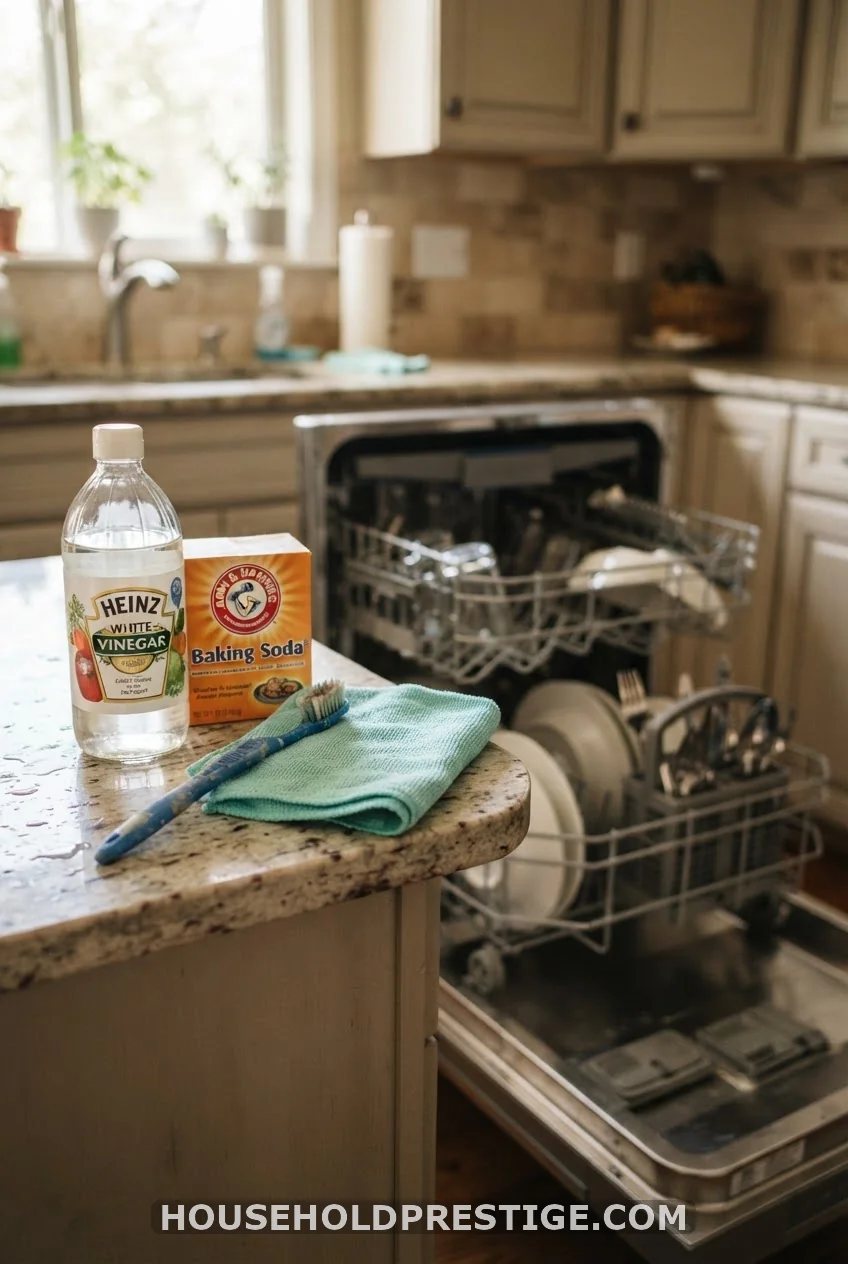
You don’t need a specialty cleaner for this, though I’ll mention a couple below for anyone who wants extra help with hard water buildup.
- White vinegar, 2 cups
- Baking soda, 1 cup (Arm & Hammer works fine, so does any store brand)
- An old toothbrush or a small scrub brush
- A microfiber cloth or a few paper towels
- Dish soap
- A dishwasher-safe bowl or measuring cup
- Optional: a dishwasher cleaner tablet like Affresh or Finish In-Wash, roughly seven to nine dollars for a three-pack, for machines with heavy mineral buildup from hard water
Total cost if you’re starting from zero: under five dollars, since vinegar and baking soda are the only true requirements.
Step 1: Empty the Racks and Check for Stray Debris
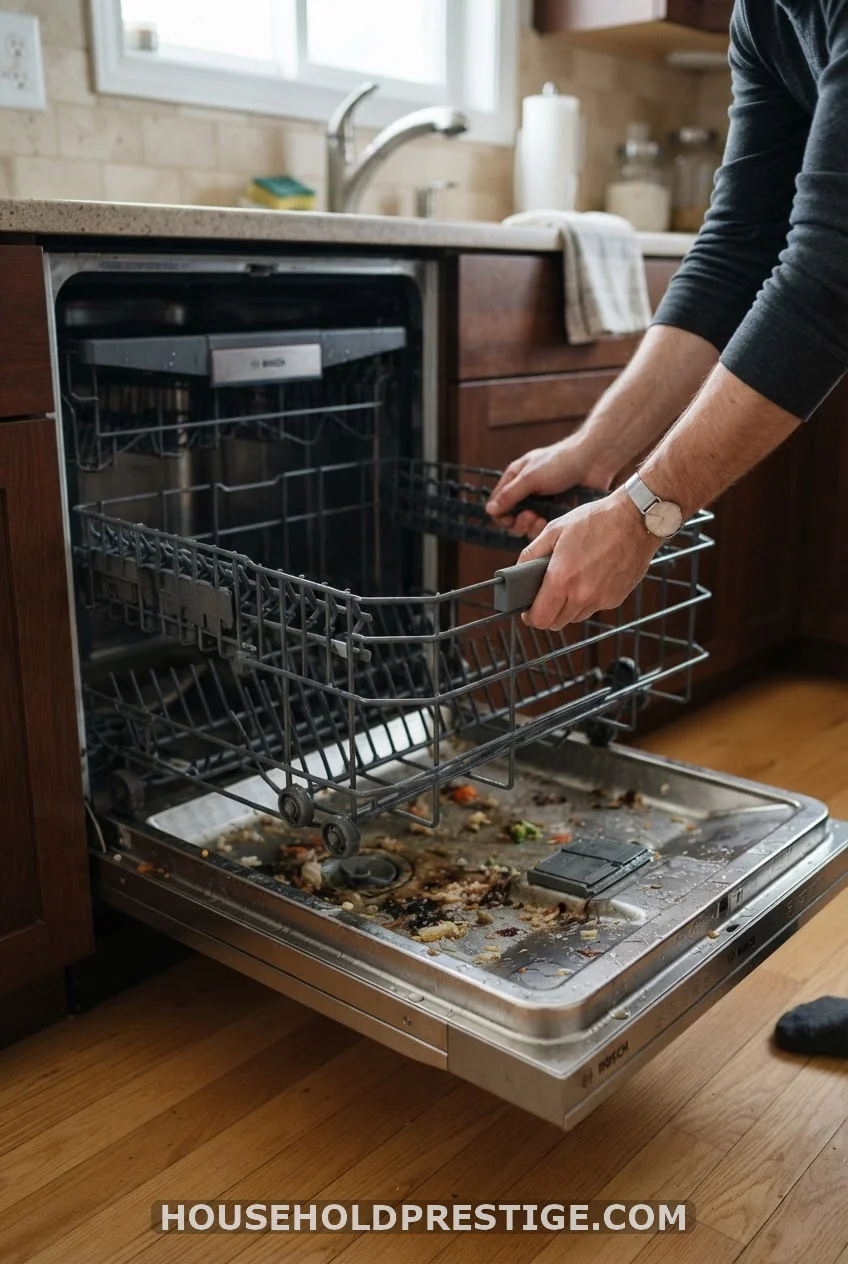
Pull both racks out. Set them in the sink for now. Look at the bottom of the tub with the racks gone. You’ll usually find a small graveyard down there: a popcorn kernel, a shard of glass, a bottle cap that fell through the rack months ago and got stuck near the drain.
Fish out anything solid by hand before you touch the filter. Sharp bits like glass or broken bones can nick the filter mesh, so grab a paper towel first rather than your bare fingers.
Step 2: Remove and Scrub the Filter
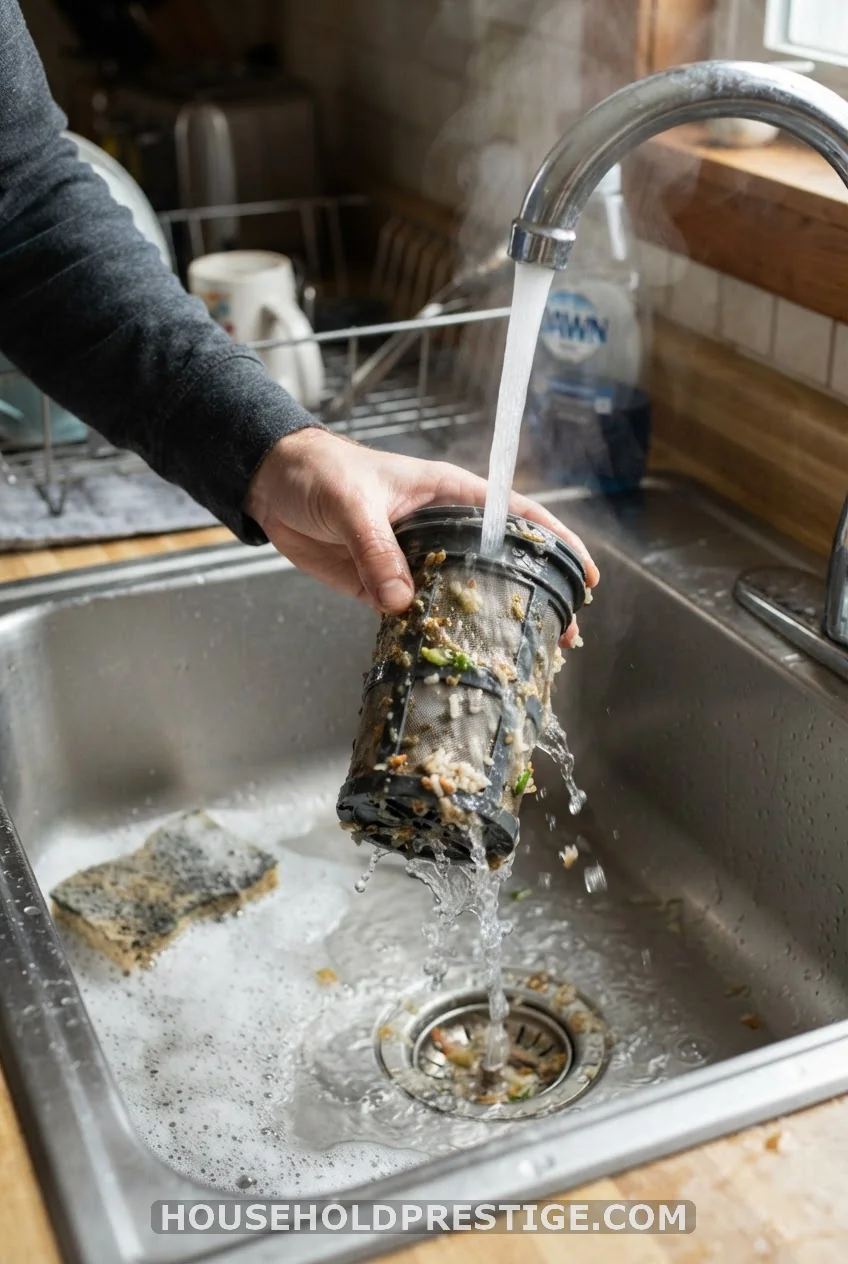
This is the step most people skip, and it’s the one that matters most. The filter traps everything your rinse cycle misses, and a clogged one is the single biggest reason dishes come out gritty or smell off.
Most dishwashers built in the last fifteen years have a removable filter at the bottom of the tub, usually a round piece that twists a quarter turn to release. Pull it out.
Pro tip: newer machines from brands like Maytag or Bosch sometimes ship with a self-cleaning filter that grinds food particles instead of trapping them. Check your owner’s manual before you go hunting for a part that isn’t removable on your model.
Once it’s out, rinse it under hot water, add a drop of dish soap, and work the mesh with an old toothbrush until the water runs clear. This takes about three minutes and it’s genuinely disgusting the first time you do it. Rinse thoroughly and set the filter aside to dry while you move to the next step.
Step 3: Clear the Spray Arms
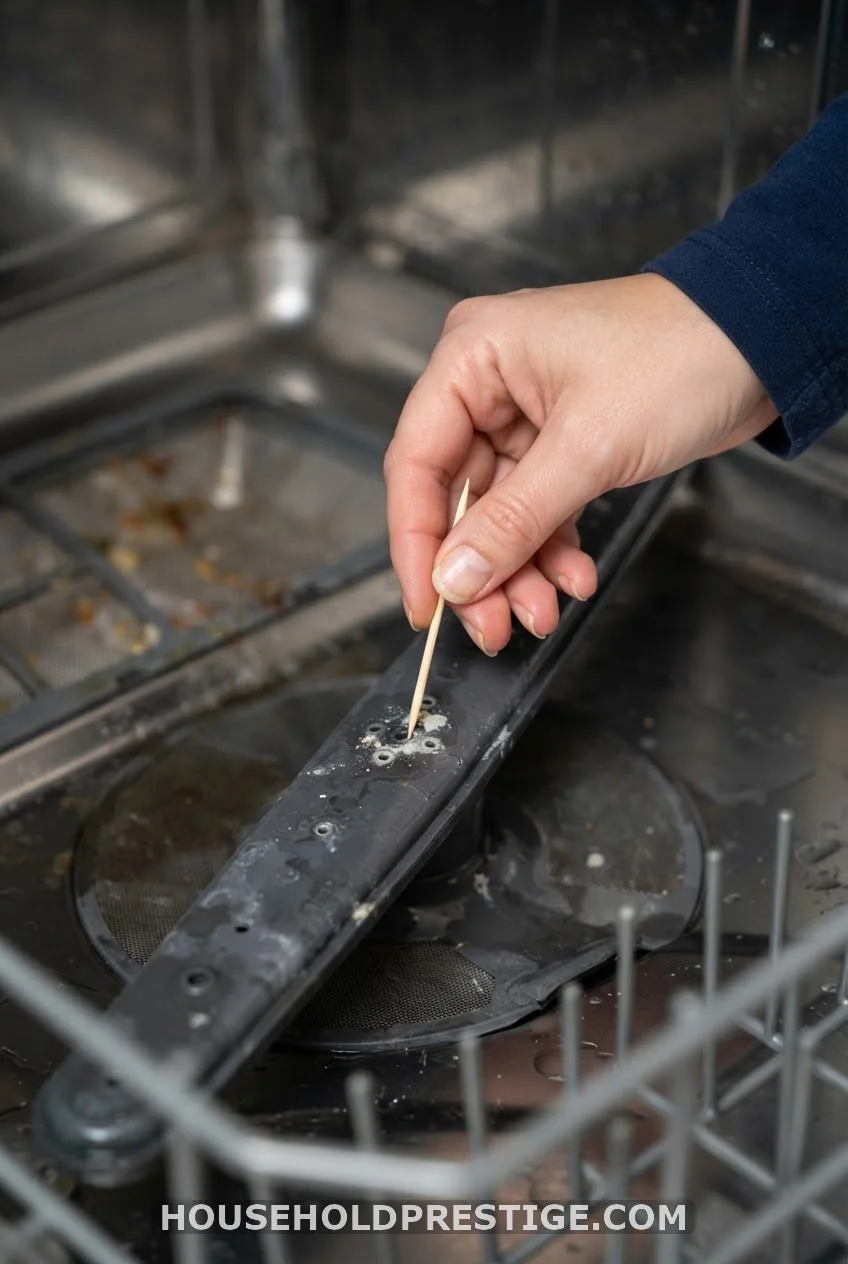
The spray arms are the two propeller-shaped bars, one near the bottom and sometimes one near the top, that shoot water at your dishes. Give each one a gentle tug. Most simply lift off.
Hold each arm up to the light and check the tiny holes along its length. Food residue and mineral deposits clog these constantly, which is exactly why some dishes get clean while others three inches away stay dirty.
Poke a toothpick through any blocked hole, then rinse the arm under the tap before snapping it back into place.
Step 4: Wipe Down the Door Seal
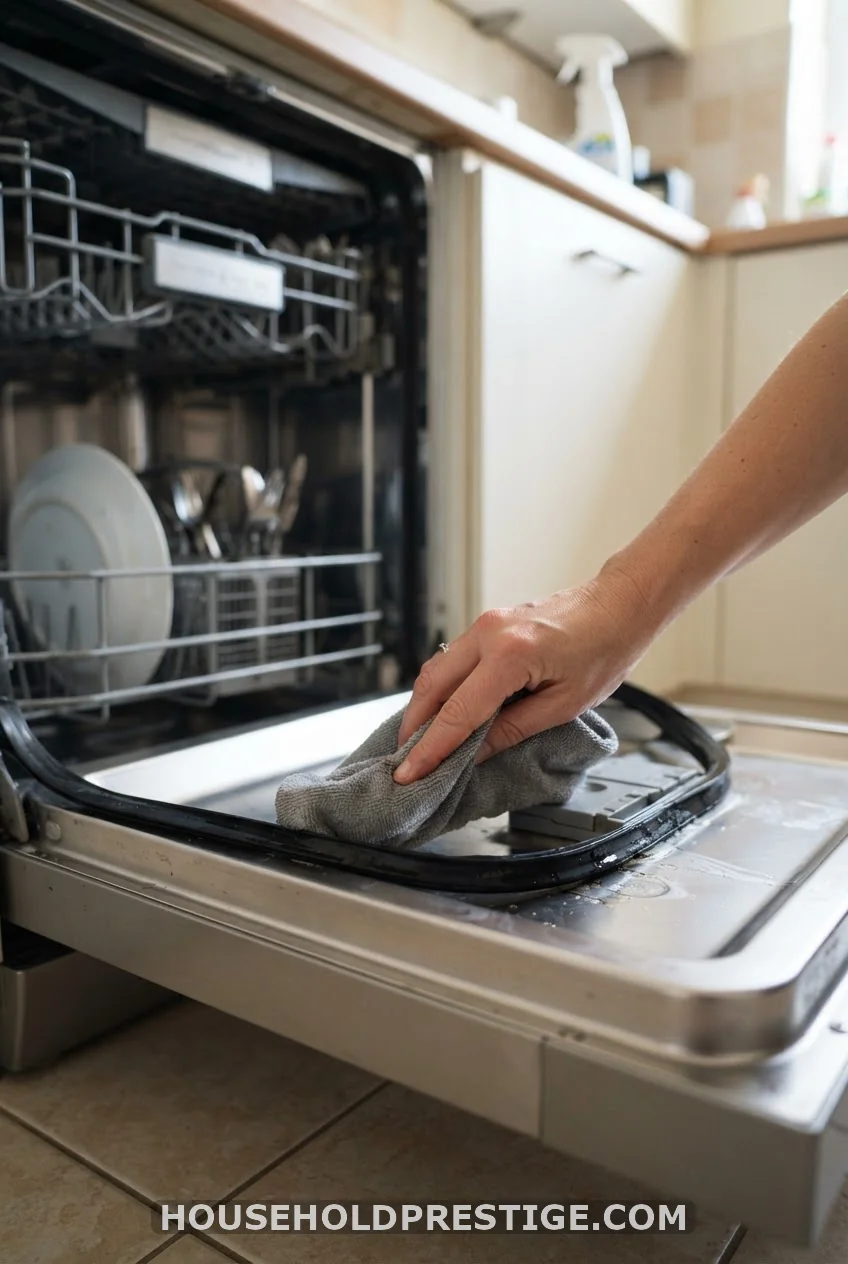
Run a finger along the rubber gasket that lines the door. If it feels slimy, that’s mold, and it thrives there because the seal stays damp and dark between cycles.
Dampen a cloth with warm water and a few drops of dish soap, then wipe the entire gasket, paying attention to the folds where grime hides. For stubborn spots, dip an old toothbrush in equal parts water and vinegar and scrub gently. Rinse the area with a clean, damp cloth afterward so no soap residue ends up on your next load of dishes.
Step 5: Run a Vinegar Cycle
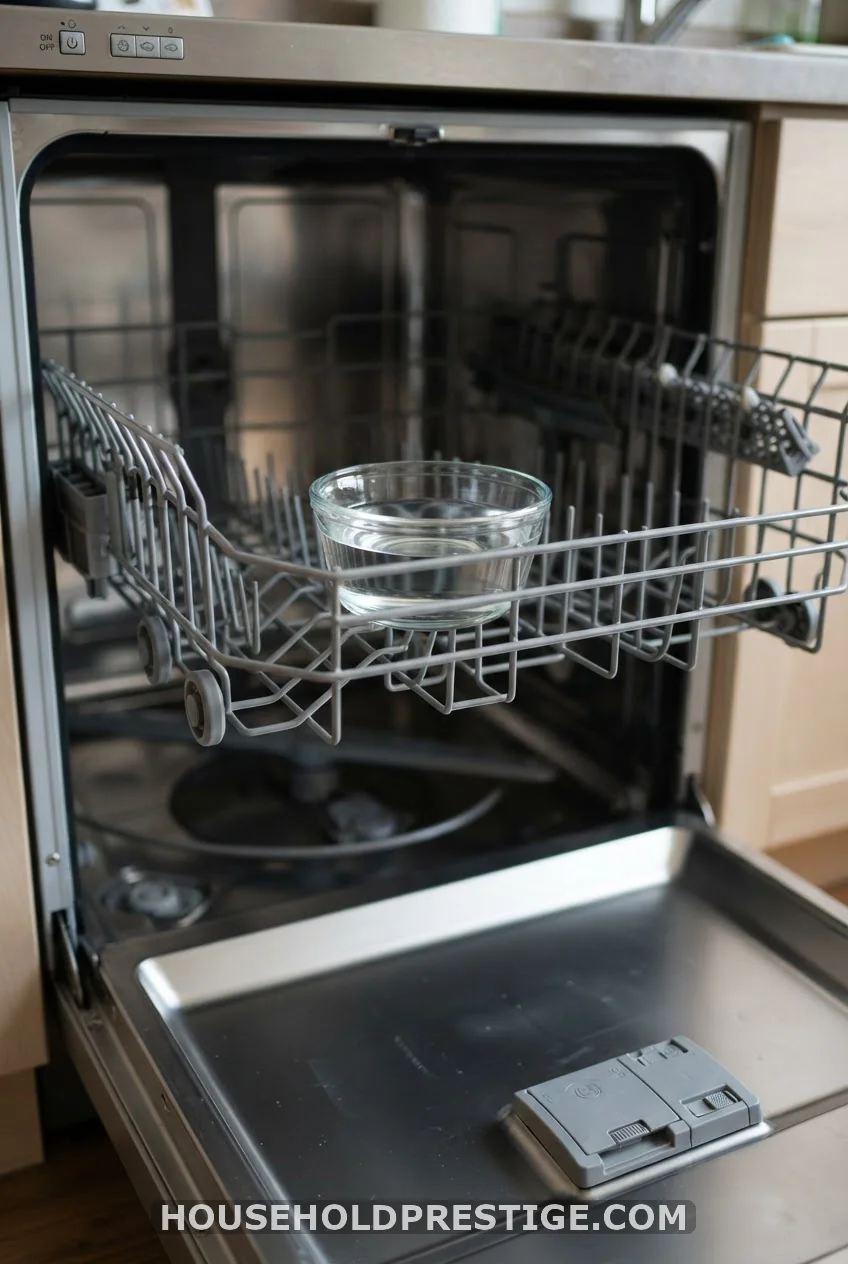
Put the filter back in, reload both racks, and make sure the dishwasher is completely empty of dishes. Fill a dishwasher-safe bowl with 2 cups of white vinegar and set it upright on the top rack.
Run a full hot-water cycle with no detergent and no drying cycle. The heat and acidity work together to dissolve grease, break down mineral scale from hard water, and lift the smell that’s been bothering you for months.
Cost reality: two cups of vinegar runs about thirty cents. There’s no cleaner cheaper than what’s already in your pantry.
If your water is especially hard, meaning you see white, chalky spots on glasses regularly, run this vinegar cycle every two weeks instead of monthly.
Step 6: Run a Baking Soda Cycle
Once the vinegar cycle finishes, sprinkle 1 cup of baking soda across the bottom of the empty tub. Skip the top rack this time. Run a short, hot cycle, again with no detergent.
The catch: never combine vinegar and baking soda in the same cycle. Mixed together they neutralize each other and foam up, which wastes both ingredients and does nothing for your dishwasher. Keep them in separate cycles, vinegar first, baking soda second.
The baking soda absorbs lingering odors and gives the interior a brighter, less dingy look, especially around the door edges and the bottom of the tub.
Step 7: Clean the Exterior
Your dishwasher only looks as clean as its front panel. For stainless steel, wipe with a microfiber cloth dampened in water and a drop of dish soap, moving with the grain of the steel to avoid streaking. For plastic or painted exteriors, a simple soapy sponge and a dry cloth afterward does the job.
Don’t forget the control panel and door handle, which pick up more fingerprints and grime than almost any other spot in the kitchen.
Troubleshooting: Dishes Still Coming Out Dirty
If you’ve done all six steps and your dishes still have film or grit, the problem usually isn’t the dishwasher itself. It’s one of these three things.
When it’s worth it: if your glasses have a permanent cloudy film that survives every vinegar cycle, that’s etching from hard water and heat, and it’s permanent damage to the glass, not something a cleaning routine will fix.
- Overloading. If plates and bowls touch each other, water can’t reach every surface. Leave a small gap between each item.
- Old detergent. Powder and gel detergents clump and lose effectiveness in humid cabinets. Switch to pods and store them somewhere dry.
- Hard water without a rinse aid. Add a rinse aid to the dispenser if you haven’t already; it prevents the mineral spotting that mimics “dirty” dishes.
How Often to Deep Clean Your Dishwasher
| Task | Frequency |
|---|---|
| Wipe door seal and check for debris | Weekly |
| Clean the filter | Every 2 weeks |
| Vinegar cycle | Monthly (every 2 weeks with hard water) |
| Baking soda cycle | Monthly |
| Full deep clean (all 7 steps) | Every 1 to 2 months |
A dishwasher that gets this treatment every month rarely needs the full seven-step routine, since the small habits, wiping the seal and checking the filter, catch most buildup before it becomes a project.
The Bottom Line
A clean dishwasher isn’t complicated. It’s a filter rinse, a spray arm check, a seal wipe, and two short cycles with ingredients you already own. Twenty minutes now saves you from cloudy glasses, musty smells, and dishes that come out of a “clean” cycle looking anything but.
Set a reminder on your phone for the first of the month. Future you, unloading a dishwasher full of actually spotless dishes, will thank you.
FAQ
How often should I deep clean my dishwasher?
Once a month covers most households. If you have hard water or run the machine daily, move to every two weeks.
Can I use bleach to clean my dishwasher?
Only if your interior is plastic. Bleach can damage stainless steel tubs and should never be mixed with vinegar, since the combination releases harmful fumes.
Why does my dishwasher smell even after I clean it?
Check the filter first. A clogged filter is the most common cause of lingering odor, even after a vinegar and baking soda cycle.
Is vinegar safe for all dishwasher models?
Yes, for occasional deep cleaning. Avoid using it as a daily rinse aid additive, since frequent exposure can wear down rubber seals and hoses over time.
Do dishwasher cleaning tablets work as well as vinegar and baking soda?
Tablets like Affresh target mineral buildup a bit more aggressively, which helps in hard water areas. For a standard monthly clean, vinegar and baking soda do the same job for a fraction of the cost.