

Open your hall closet right now. Go on, I’ll wait.
If what greeted you was an avalanche of mismatched hangers, a rogue umbrella, and at least one shoe with no partner, you’re not alone. The hall closet is the one space every visitor sees, and nobody plans for. It’s not a bedroom closet where only you deal with the chaos. It’s the first thing a guest hands their coat to, and the last thing you slam shut before company arrives.
Here’s what makes hall closet organization different from any other closet in your house: it has to do triple duty. Coats one season, linens the next, cleaning supplies year-round, and somehow still look presentable when someone rings the doorbell. That’s a lot to ask of one small space.
These 18 hall closet organization ideas cover the whole range, from thirty-second fixes to a full weekend shelving build, so you can pick what matches the mess you’re staring at.
1. Color-Code the Hanger System
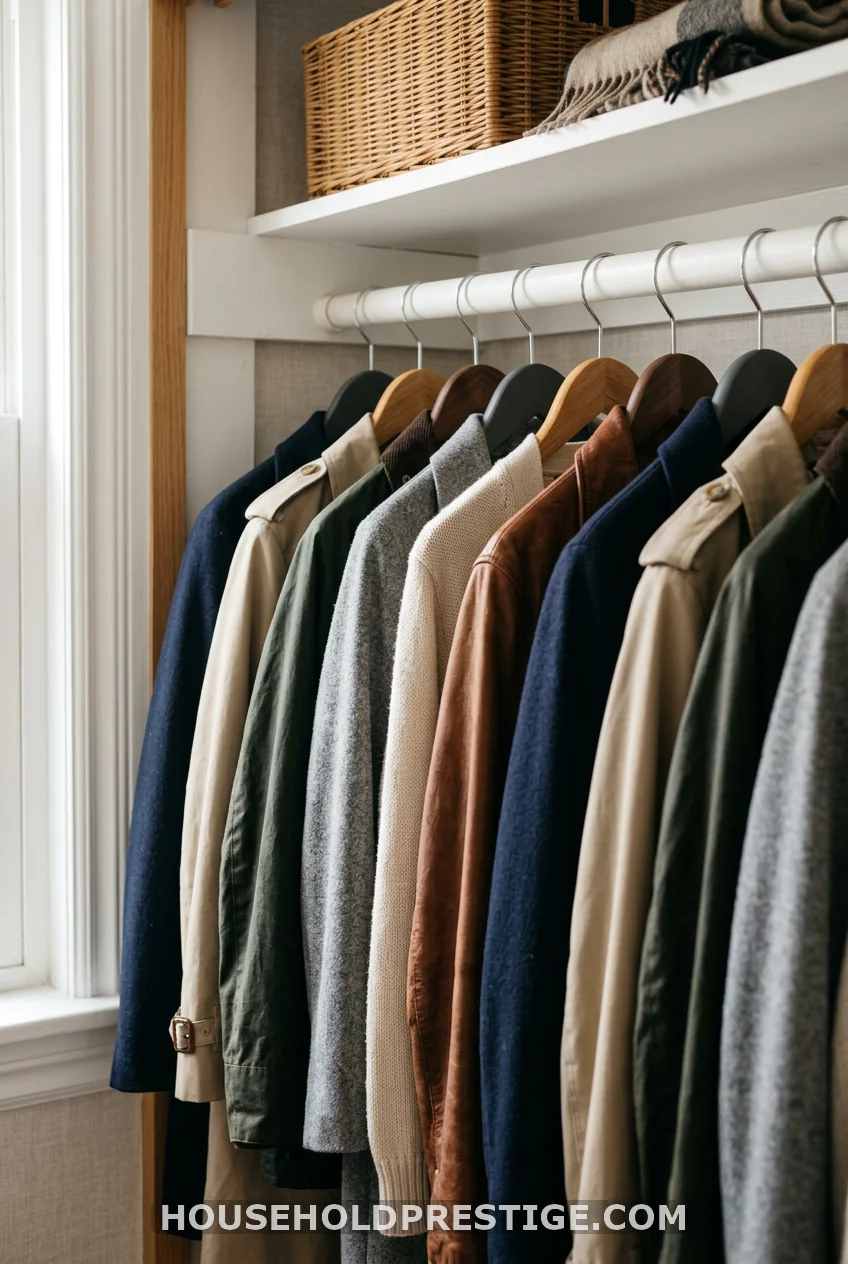
Give each family member a hanger color. Kids grab their own coats without asking. You spot an out-of-place jacket in half a second. A pack of 20 colored wood hangers runs about $15, and it’s the fastest fix on this list.
2. Zone the Closet by Person, Not by Item Type
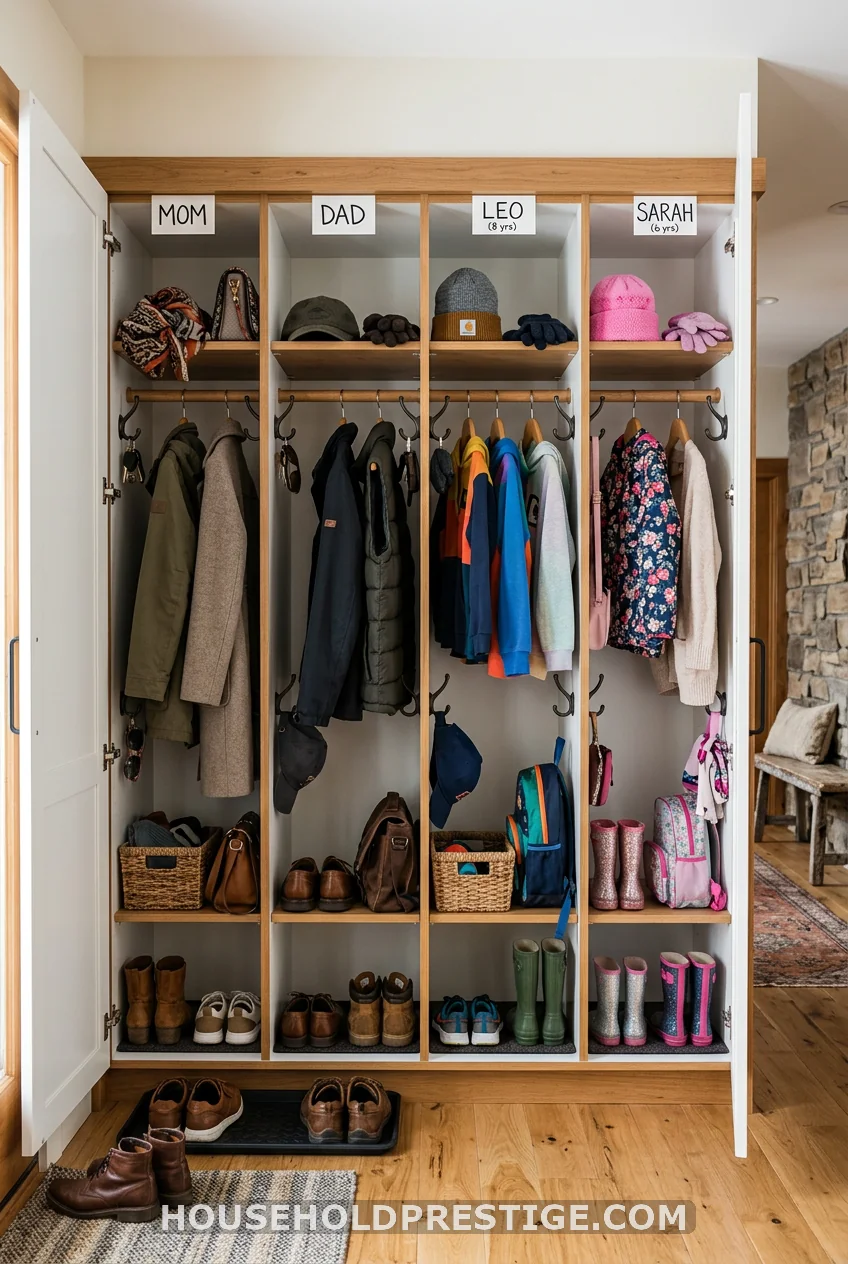
Most people organize by category: all coats together, all shoes together. Flip that. Give each person a vertical slice of the closet, top shelf to floor, with their coats, boots, and gear in that one column. Mornings get faster because nobody’s hunting across three shelves for one kid’s mittens. This works especially well in closets under four feet wide, where horizontal zoning just creates one long jumbled shelf.
3. Swap Wire Shelving for a Slide-Out Basket
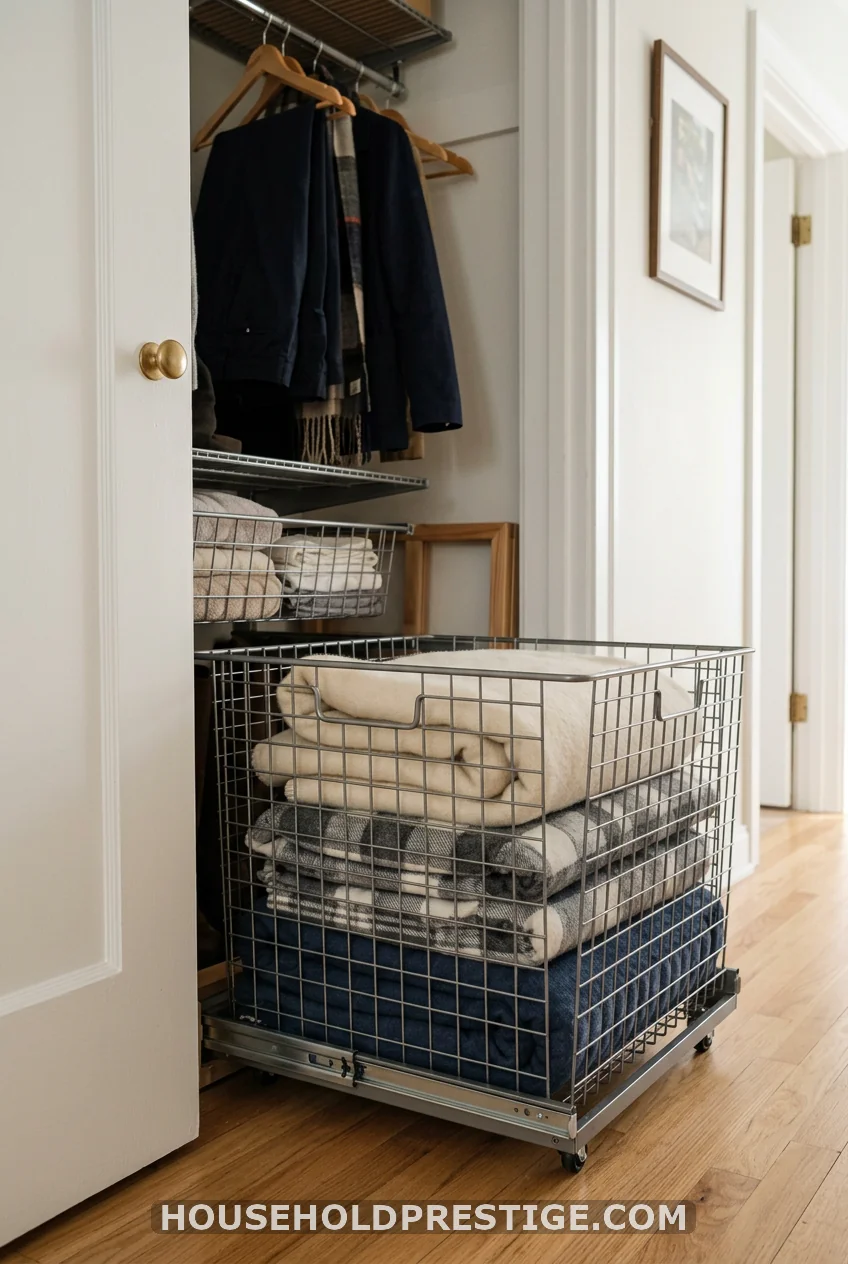
Wire shelves eat shoes and gloves whole. A slide-out wire basket ($20-30) sits at floor level and pulls forward, so nothing gets shoved to the back and forgotten until spring cleaning.
4. Build a DIY Zoned Shelving System With 1×12 Boards
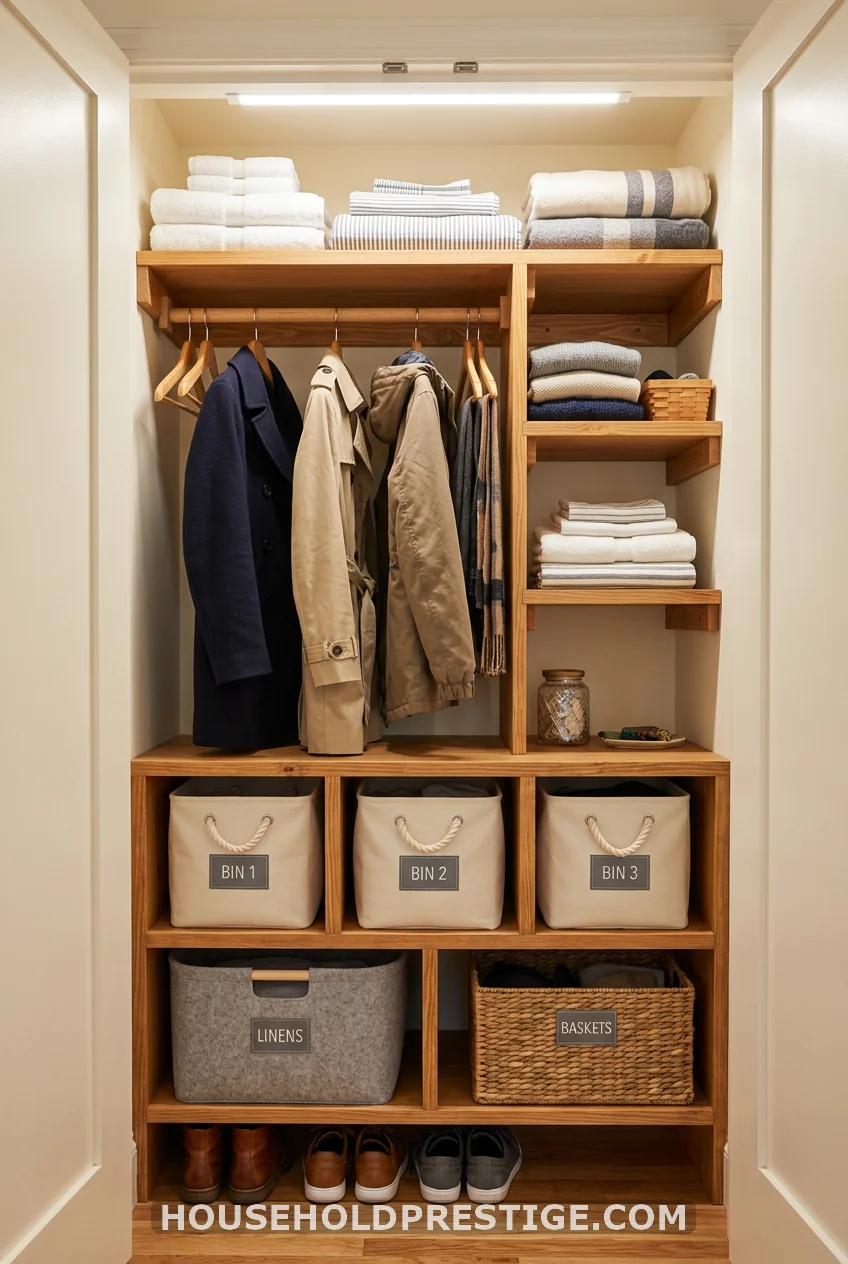
If your hall closet still has the builder-grade single rod and one wire shelf, this is the upgrade that changes everything. It costs a weekend and under $200, and it turns a closet that holds twelve coats badly into one that holds coats, linens, and cleaning supplies well.
Why It Works
A single rod-and-shelf setup wastes the bottom half of most hall closets entirely. Adding fixed shelves at calculated heights, instead of one shelf near the ceiling, lets you stack functional storage all the way to the floor. You’re not fighting the closet’s shape anymore. You’re using every cubic inch of it.
Dimensions
Standard hall closets run 24 to 36 inches deep and 4 to 6 feet wide. For a 5-foot-wide closet, plan on:
– One hanging section, 24-30 inches wide, rod height 66-70 inches for adult coats
– Three fixed shelves above the rod, spaced 12 inches apart, for linens and seasonal bins
– One open shelving column, 18-24 inches wide, floor to ceiling, for baskets
Step-by-Step
- Empty the closet completely and vacuum the floor and walls.
- Locate wall studs with a stud finder and mark them at shelf height.
- Cut 1×12 pine boards to your measured widths using a circular saw or have the hardware store cut them.
- Install an L-bracket or cleat system, screwed into studs, at each shelf height.
- Set the shelves onto the brackets and check level with a bubble level.
- Mount a closet rod bracket 66-70 inches from the floor for the hanging section.
- Sand any rough edges and add a coat of paint or shelf liner if you want a finished look.
- Load the closet back in, heaviest and least-used items on top.
Materials & Costs
| Item | Quantity | Cost |
|---|---|---|
| 1×12 pine boards (8 ft) | 4 | $60-80 |
| Shelf brackets or cleats | 8-10 | $30-40 |
| Closet rod + brackets | 1 set | $15-20 |
| Wood screws, wall anchors | 1 box | $10 |
| Paint or shelf liner (optional) | 1 can/roll | $20-30 |
Total: roughly $135-180 for a full weekend project.
Common Mistakes
Skipping the stud finder is the biggest one. Shelves anchored only into drywall will sag and eventually pull loose under the weight of folded linens. Spacing shelves too close together is the second mistake. Twelve inches is the minimum for stacked bins; anything tighter and you’ll be cramming instead of sliding items in and out.
Pro Tip
Paint the inside of the closet a light color before you install shelving. It’s ten times easier to paint an empty box than a shelf-filled one, and a lighter interior makes the whole space read as bigger and cleaner.
5. Use the Back of the Door for Almost Everything
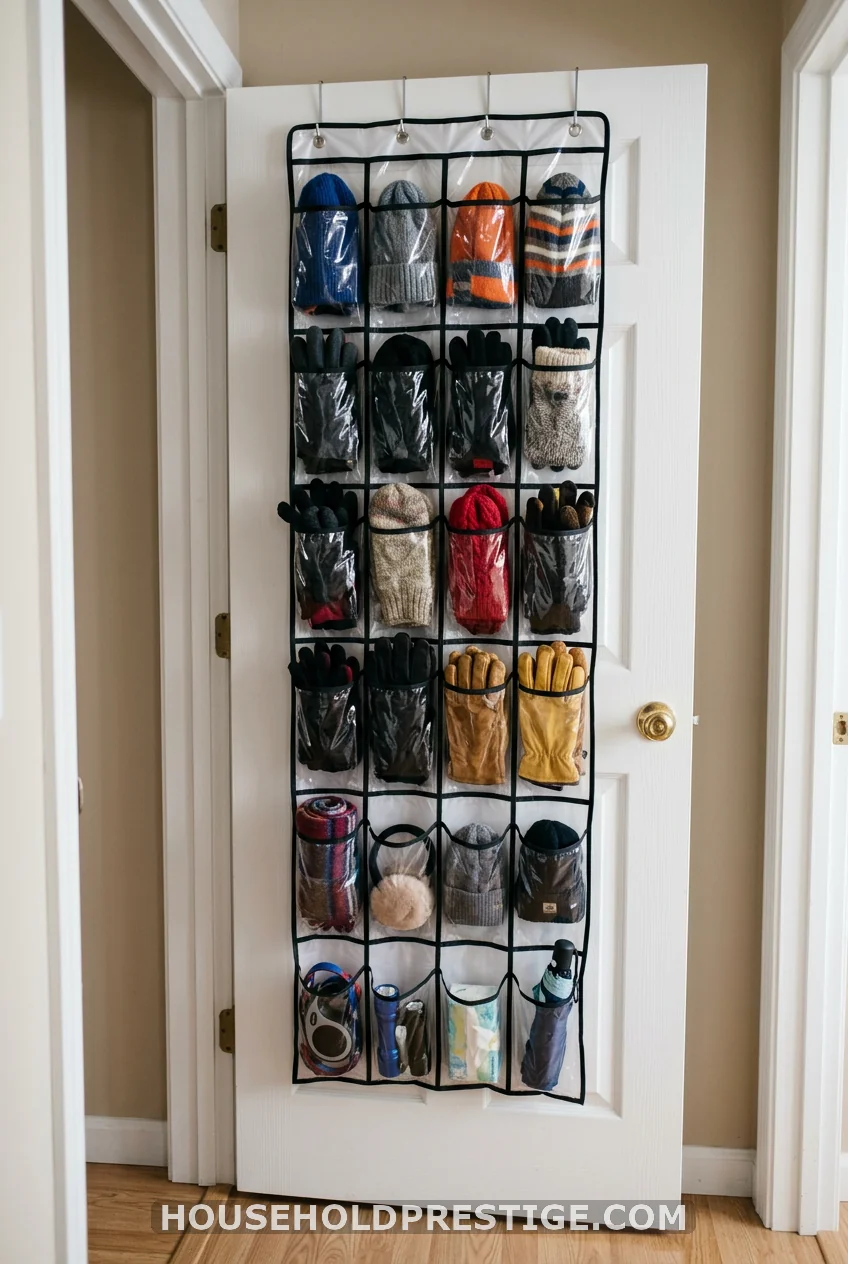
The back of your closet door is prime real estate that most people leave empty. An over-the-door organizer with clear pockets handles gloves, hats, dog leashes, or first-aid supplies. If your door swings wide enough, this alone can free up a whole shelf.
6. Add a Battery and Remote Drawer
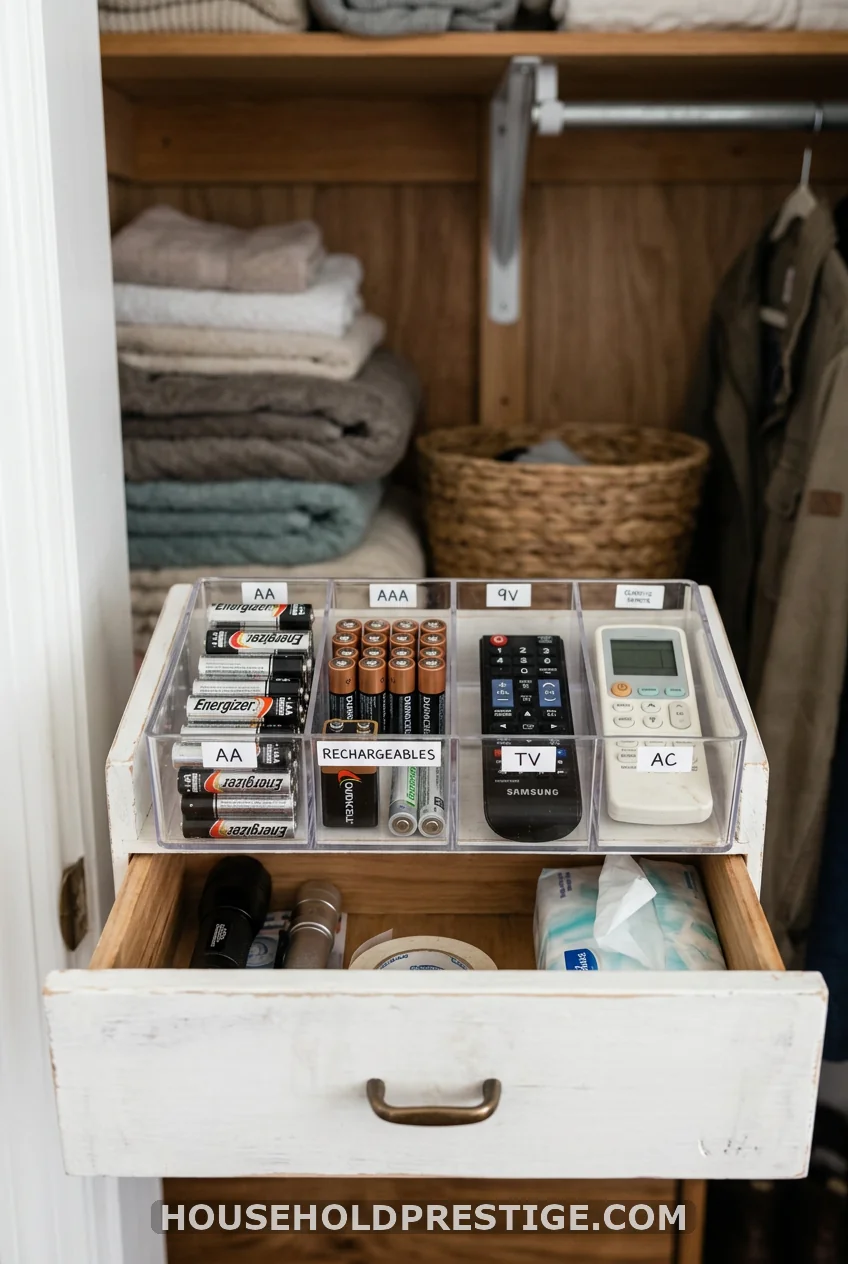
Every house has a junk drawer’s worth of loose batteries and remotes with no home. A single small drawer bin, labeled and tucked on a low shelf, keeps them from scattering across every surface in the house.
7. The Guest Coat Disaster (A Cautionary Tale)
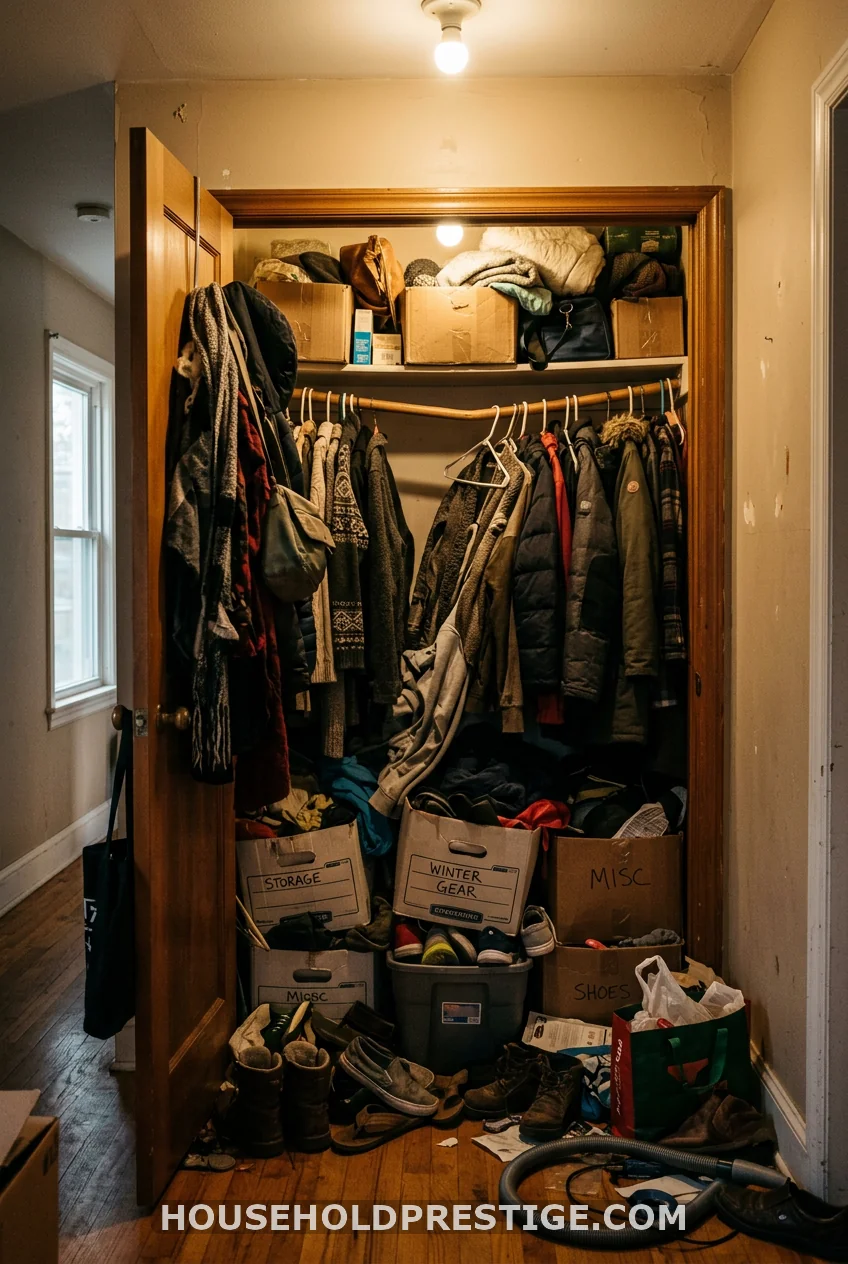
A friend of mine hosted Thanksgiving for fourteen people last year. She’d spent two days on the food and completely forgotten the coat closet, which had quietly become storage for holiday decorations, a broken vacuum, and roughly nine reusable grocery bags. When the first guests arrived, the rod gave out under the weight of everything crammed onto it, and four coats hit the floor along with a box of ornaments.
She spent the first twenty minutes of her own party on her knees, sorting decorations into a laundry basket while guests hovered awkwardly in the doorway. The fix wasn’t complicated. It was ten minutes of decluttering she kept putting off because the closet door closed fine, so the problem stayed invisible. The lesson: if your hall closet is the one guests use, do a five-minute check before anyone arrives. A closet that looks fine shut can still be one bump away from a scene.
8. Label Every Bin, Even the Ones You Think You’ll Remember
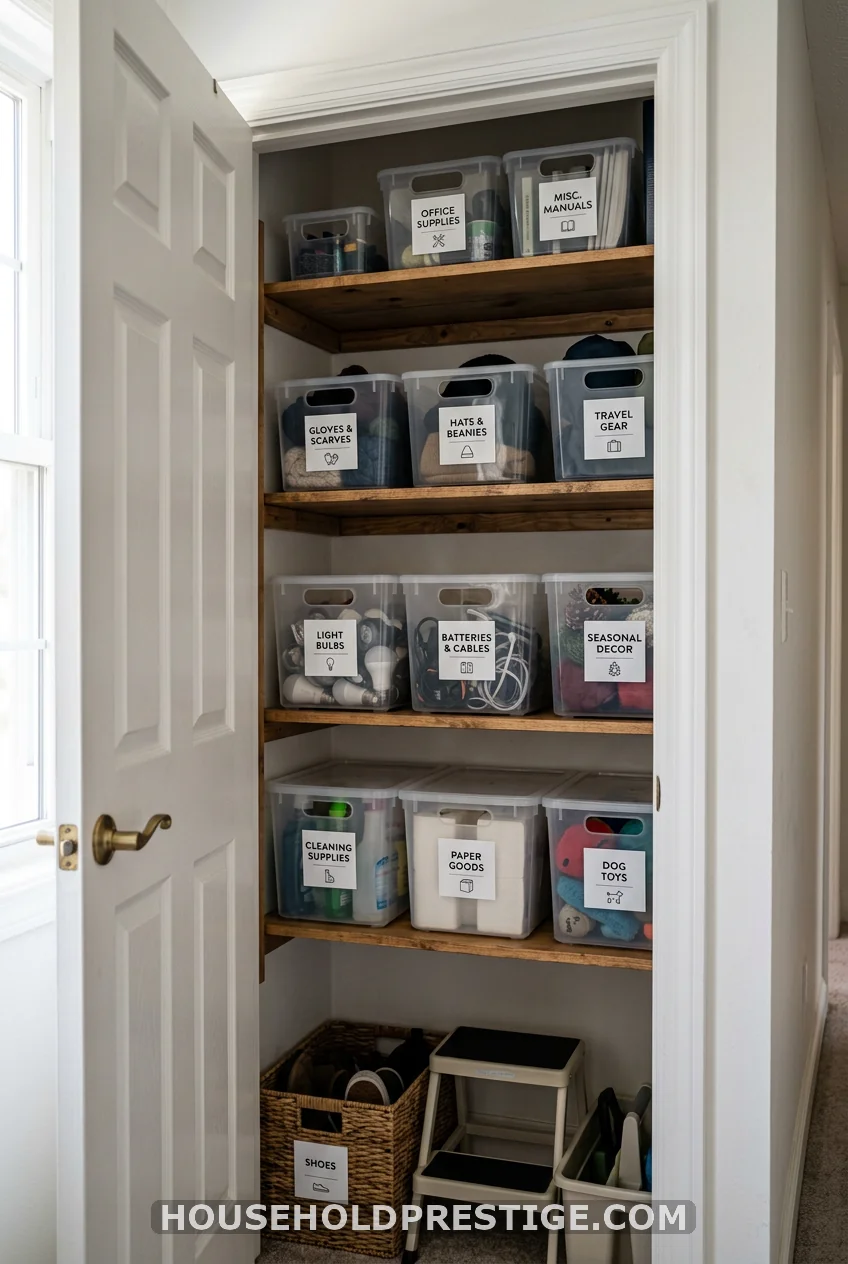
You will not remember what’s in the unlabeled bin six months from now. Neither will your spouse. A $10 label maker pays for itself the first time someone finds the sunscreen without opening four containers.
9. Store Wrapping Paper Vertically, Not Flat
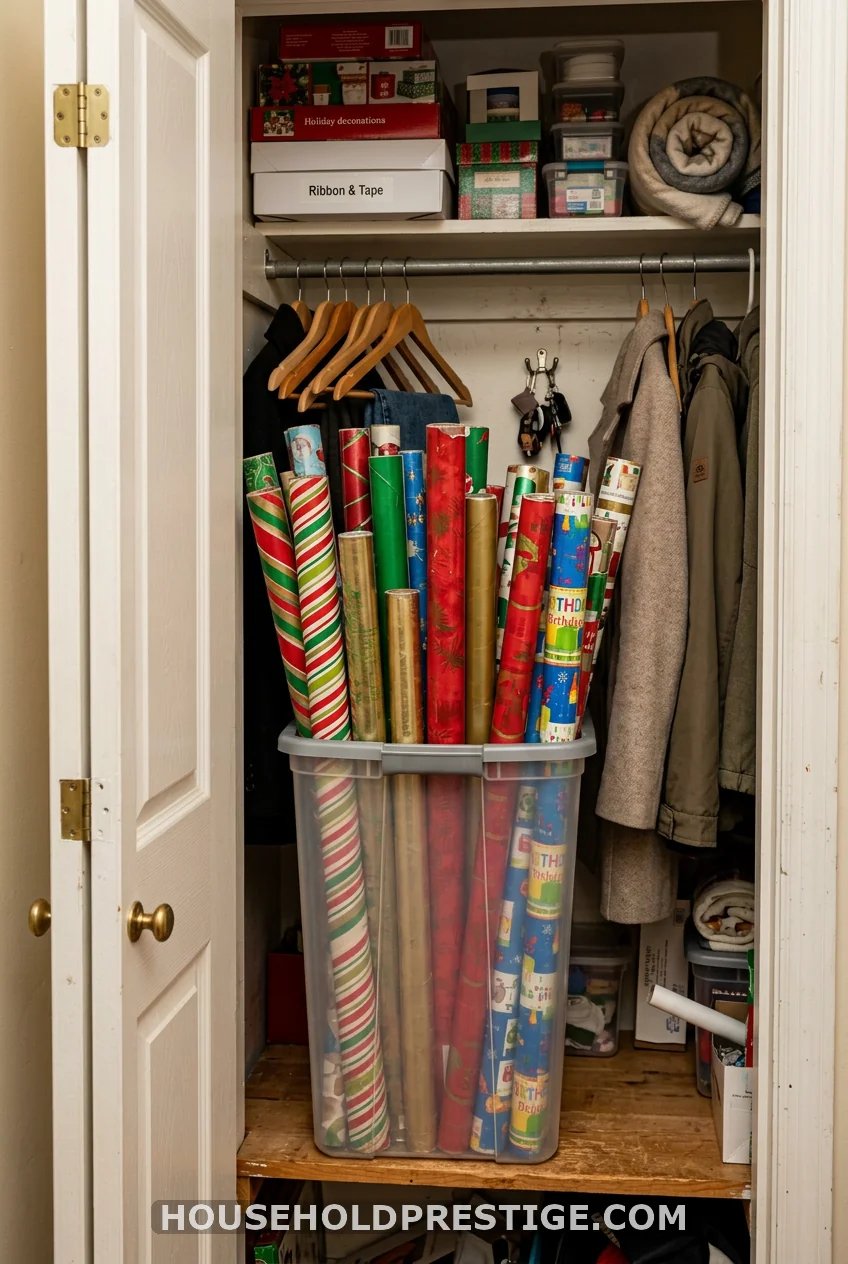
Flat-stacked wrapping paper always ends up crushed under something heavier. A tall narrow bin or even a cut-down cardboard box, stood upright in a corner, keeps rolls straight and easy to grab without unstacking half the closet.
10. Give Cleaning Supplies Their Own Shelf, Not a Floor Pile
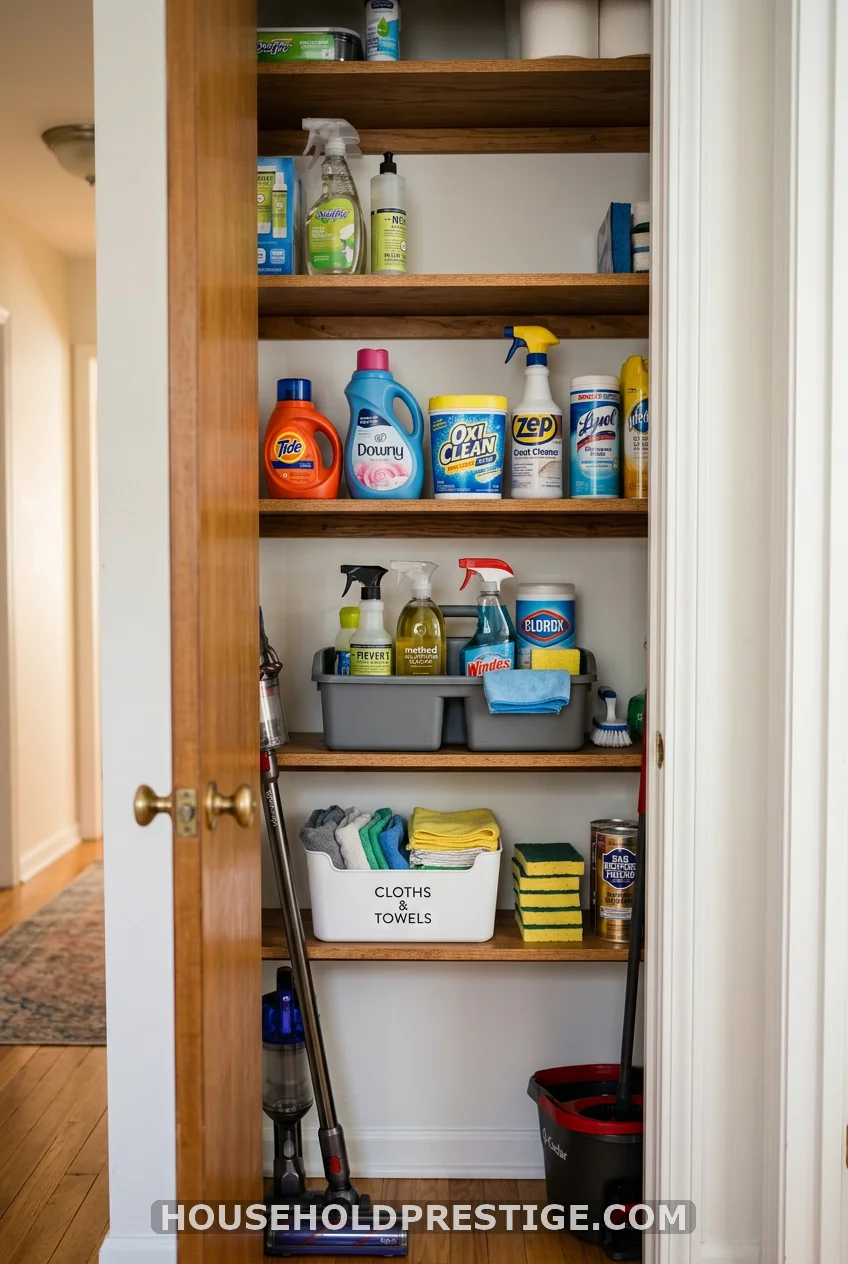
If your hall closet doubles as the cleaning supply closet, resist the urge to just set bottles on the floor. A single shelf at waist height, with a caddy for the items you grab most, keeps spray bottles from tipping and mixing with shoes below.
11. Hang a Second, Lower Rod for Kids
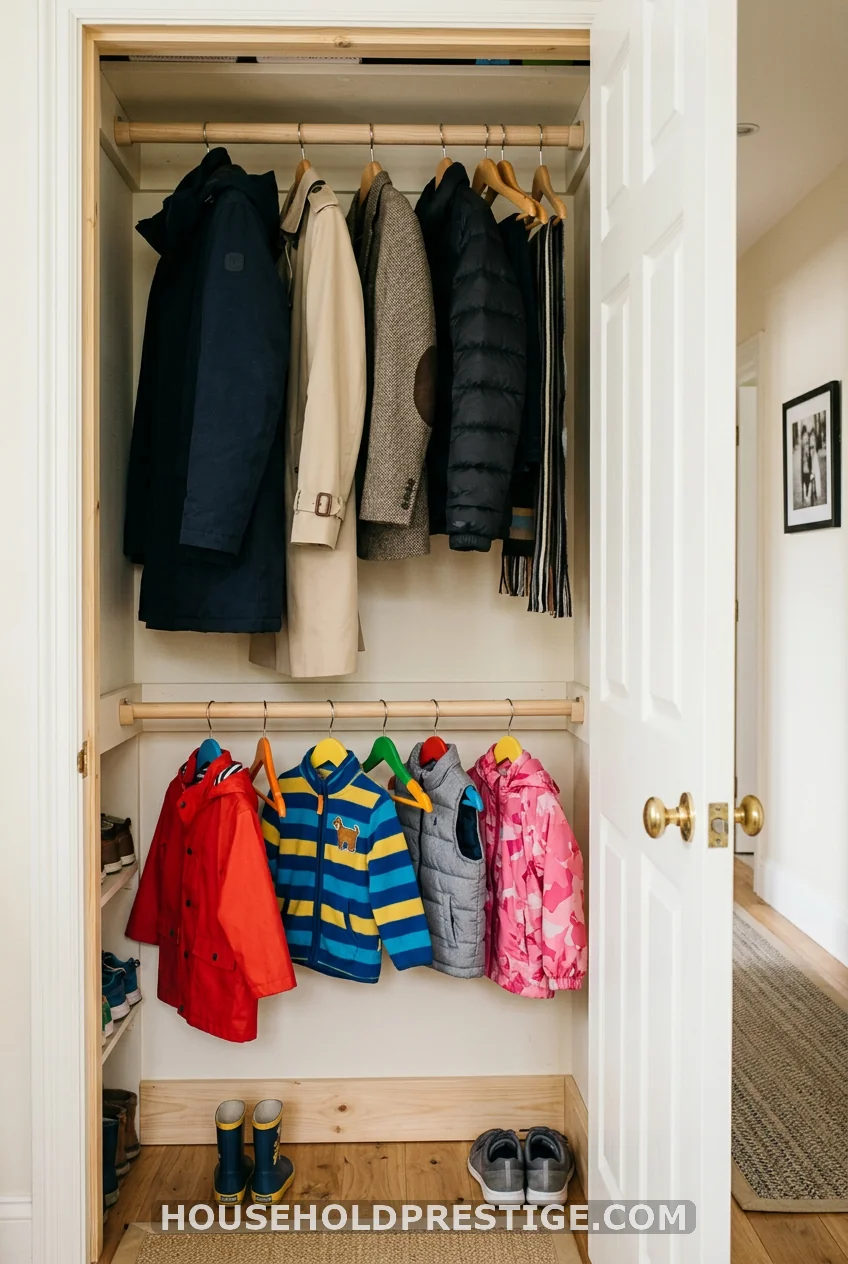
A second rod at 36-40 inches lets kids hang their own coats without help. It’s a $15 rod extension, and it ends the daily “hang up your jacket” negotiation.
12. Rotate Seasonal Items Twice a Year
Not every coat needs to live in the hall closet year-round. Move heavy winter coats to a bedroom closet or attic bin in spring, and swap in rain jackets and light layers. This alone can cut what’s crammed into the hall closet by a third.
13. Use Clear Bins for Anything You Search For Often
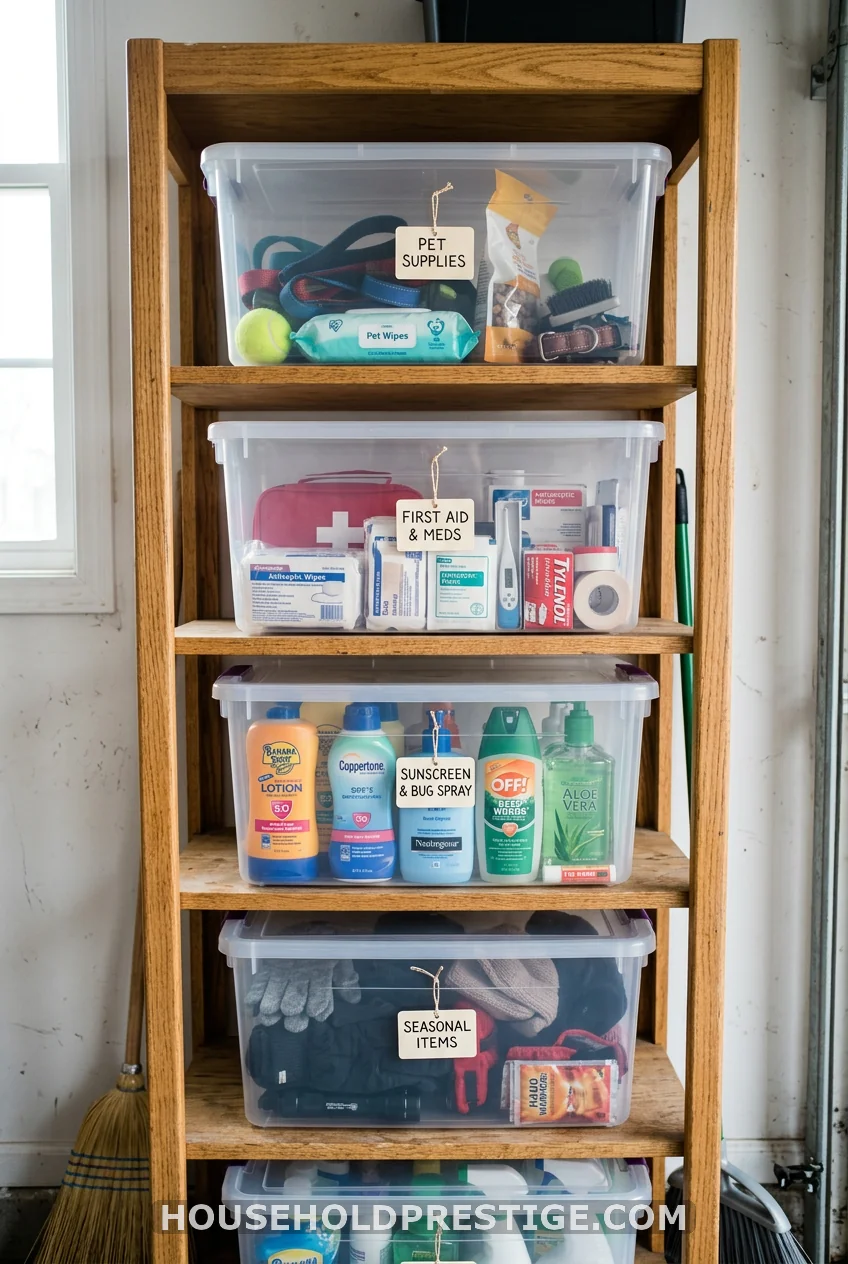
Opaque bins look tidier in photos, but clear bins save real time. Anything you dig for weekly, sunscreen, pet supplies, extra chargers, belongs in a clear bin where you can see the contents without opening it first.
14. Mount a Fold-Down Ironing Station
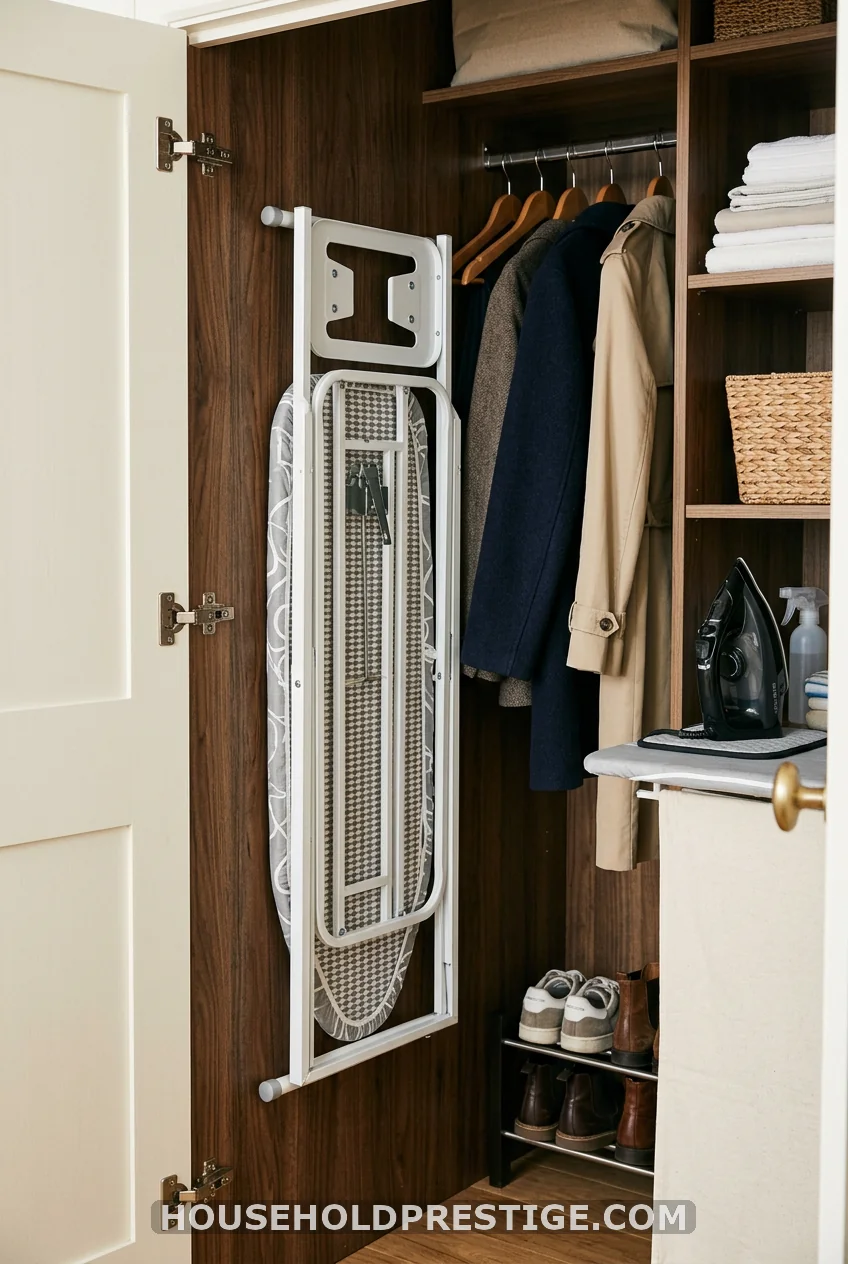
If you don’t have room for a laundry room ironing setup, a wall-mounted fold-down ironing board tucks against the closet wall and folds flat in seconds. Models run $60-100 and typically include a small hook for the iron itself, so it stops living on top of the dryer.
15. Keep a “Donate” Basket Inside the Closet
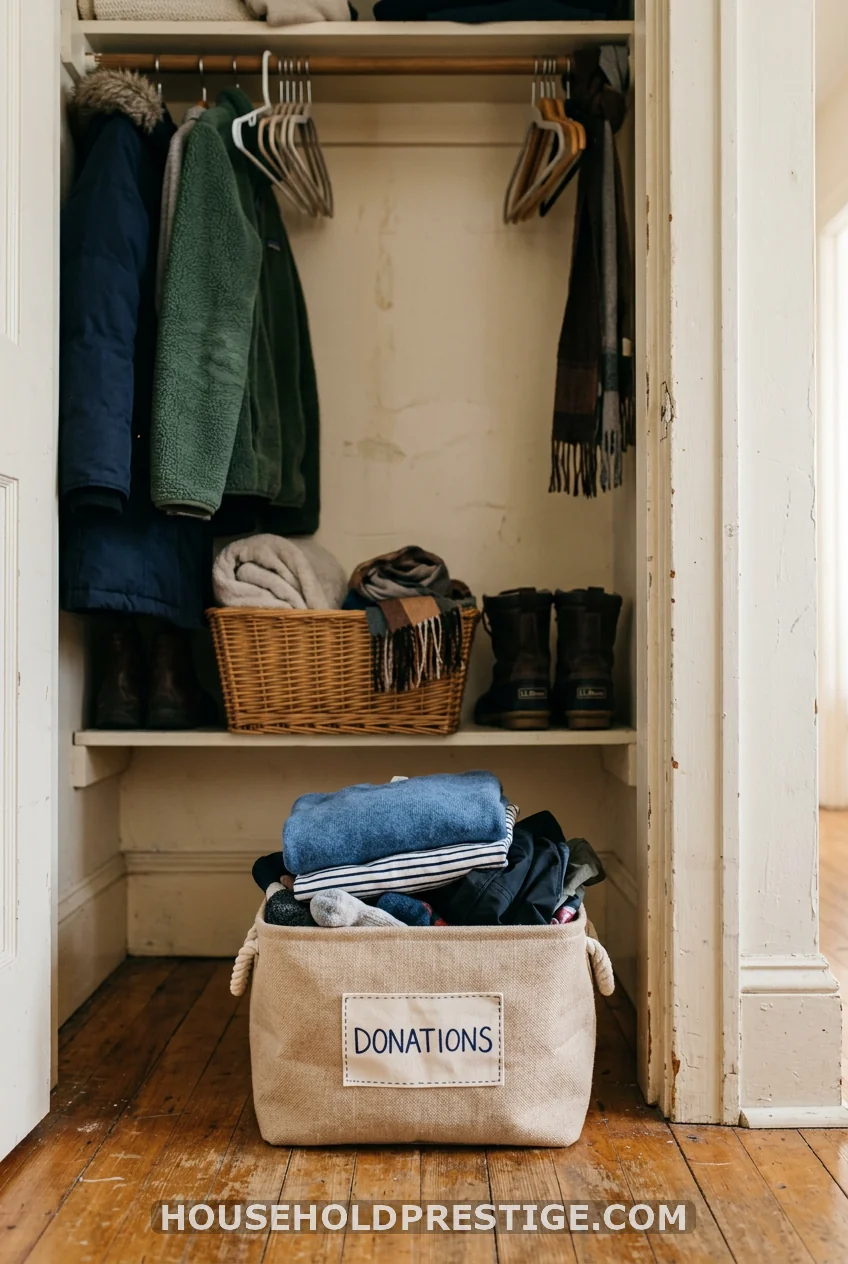
A standing donate basket means you toss the coat you no longer wear the moment you notice it, instead of shoving it back on the rod. Empty it every season.
16. Add Battery-Operated Puck Lights
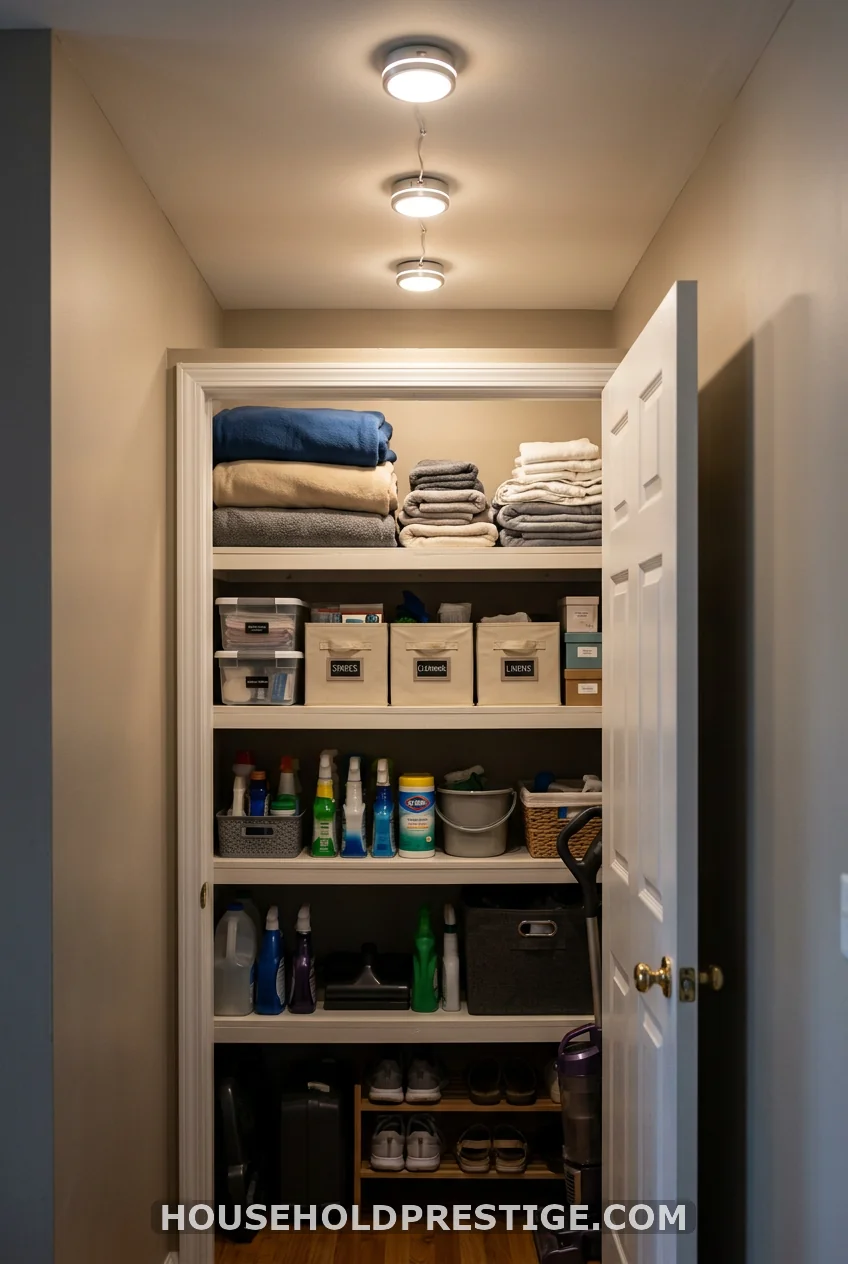
Most hall closets have zero built-in lighting, which means everything at the back becomes invisible past age forty. Stick-on puck lights ($15-25 for a three-pack) solve this in five minutes with no wiring involved.
17. Turn Unused Corners Into Vertical Shoe Storage
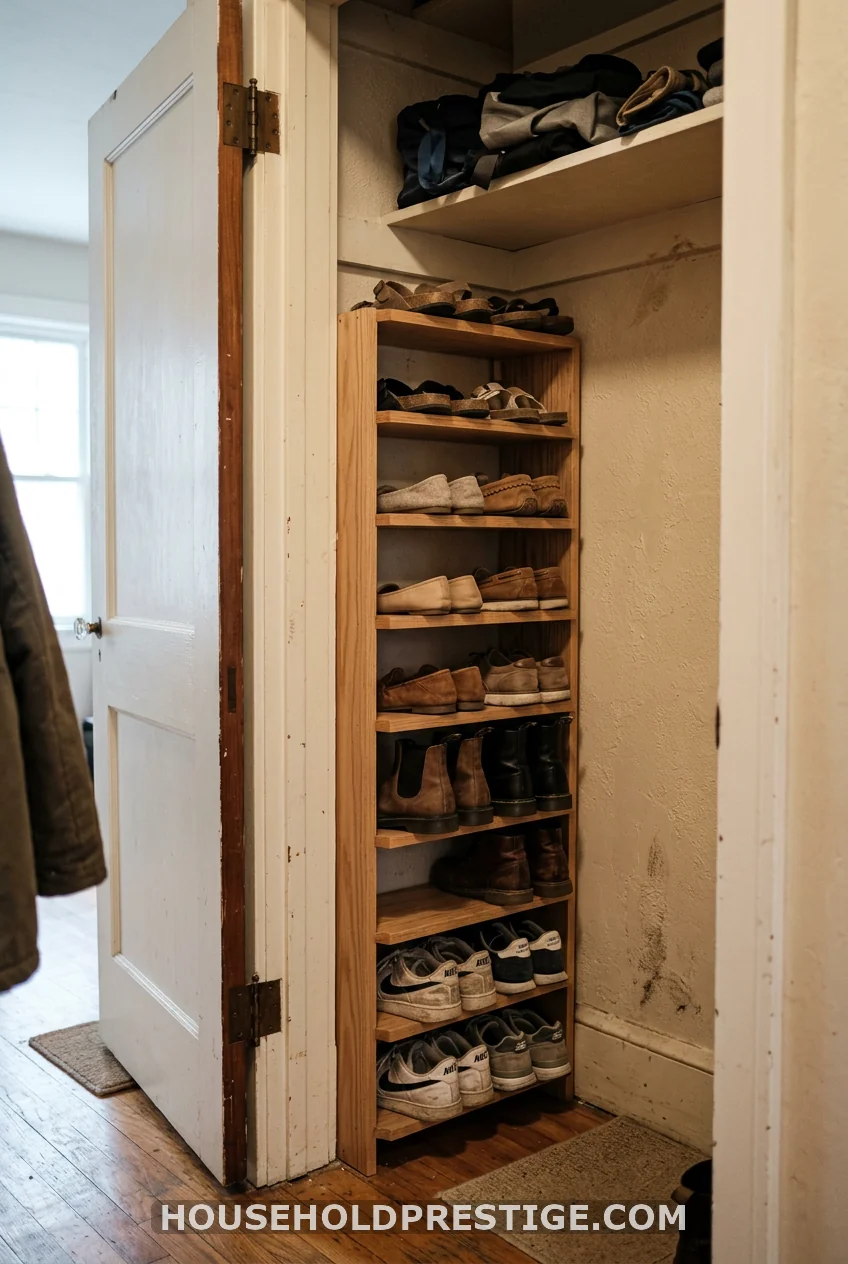
That dead triangle of space in the corner of an L-shaped closet is usually wasted. A narrow vertical shoe rack, sometimes just 6-8 inches wide, slides into corners a standard shoe shelf can’t reach.
18. The Five-Minute Reset Rule
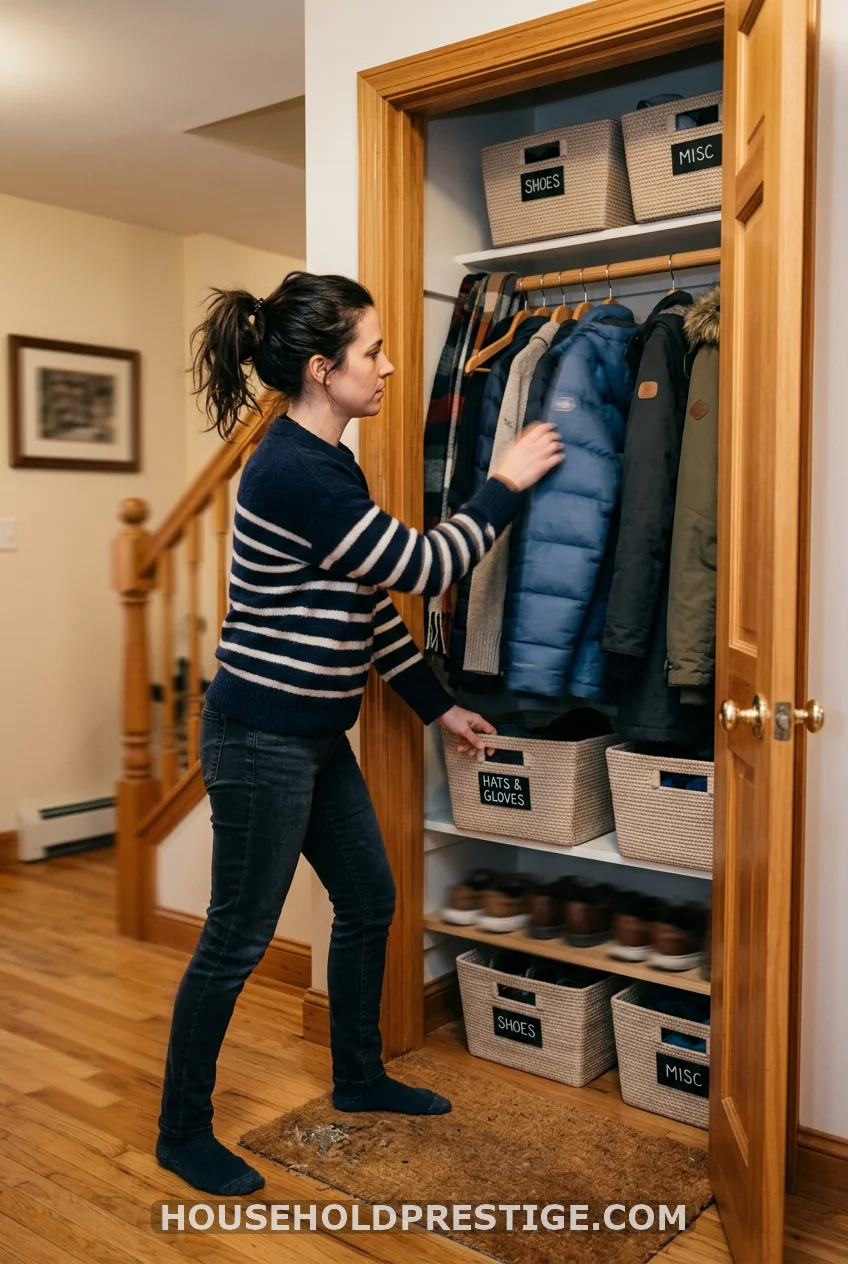
Once the closet is set up, the system only survives if you protect five minutes a week to reset it. Straighten hangers, toss stray shoes back where they belong, and check that nothing’s building up on the floor. It’s the maintenance step every organization list skips, and it’s the reason most closets stay organized for a month and then slide back into chaos.
Frequently Asked Questions
How do I organize a small hall closet with no extra space?
Start vertical instead of horizontal. Add a second rod, floor-to-ceiling corner shoe storage, and an over-the-door organizer before you consider buying any new furniture. Most small hall closets are under-using height, not lacking width.
What should not go in a hall closet?
Anything you use less than twice a year, like holiday decorations or camping gear, is better stored elsewhere. Keep the hall closet reserved for items your household reaches for weekly: coats, shoes, cleaning supplies, and everyday accessories.
How often should I clean out my hall closet?
Twice a year lines up naturally with seasonal coat swaps. Spring and fall resets keep the closet from slowly filling back up with things that don’t belong there.
Is a wire shelving system or wood shelving better for a hall closet?
Wire is cheaper and easier to install, but it lets small items slip through gaps and offers less weight capacity for bins. Wood shelving costs more and takes longer to install, but holds heavier loads and won’t dent boxes stacked on it.
Can I organize a hall closet without spending money?
Yes. Zoning by family member, rotating seasonal items, and setting up a donation basket cost nothing but time. Save the paid upgrades, like a shelving rebuild or puck lights, for items your family uses often enough to justify them.