

Open your washing machine right now. Go on, I’ll wait.
Smell that? That faint sour note hiding around the door seal or the detergent tray? That’s not your imagination, and it’s not your detergent’s fault either. Washing machine cleaning is one of those chores nobody puts on their to-do list, right up until a load of towels comes out smelling worse than when it went in.
Here’s the good news. You don’t need a special appliance or a call to the repair guy. You need vinegar, baking soda, and about an hour of mostly hands-off time. By the end of this, your machine will look and smell like the day it left the showroom.
What You Need to Clean Your Washing Machine
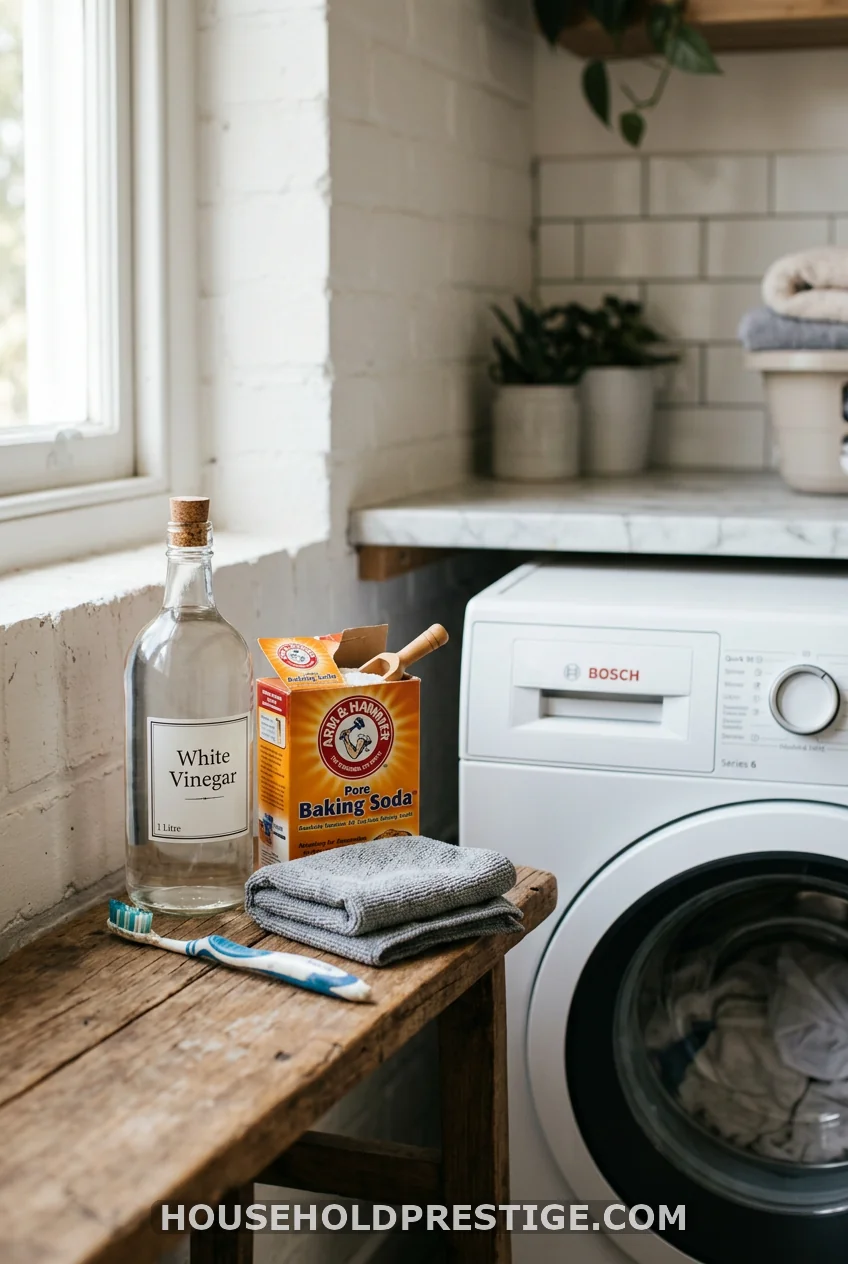
You probably already own everything on this list. That’s the whole point.
- White vinegar (you’ll want at least 2 cups)
- Baking soda (about 1 cup)
- A microfiber cloth or two
- An old toothbrush, retired from dental duty
- A small bowl
- Rubber gloves, if you’re using bleach as a backup
Bleach works too, and some manufacturers recommend it over vinegar for stubborn mold. Just never mix bleach and vinegar in the same step. That combination releases a gas you don’t want anywhere near your lungs. Pick one per cleaning cycle, not both.
One quick note before you start: top load and front load machines get dirty in different spots, so a few of the steps below branch off depending on which one is humming away in your laundry room. I’ll flag those as we go.
Step 1: Empty the Drum and Take Stock
Pull out any stray socks, then take thirty seconds to actually look inside. Check the drum, the rubber gasket if you have a front loader, and the detergent drawer. You’re looking for buildup, that grayish film that collects where water sits and doesn’t fully drain.
This is diagnostic, not decorative. The dirtier it looks now, the more satisfying the after photos will be later.
Step 2: Run a Hot Water Cycle with Vinegar
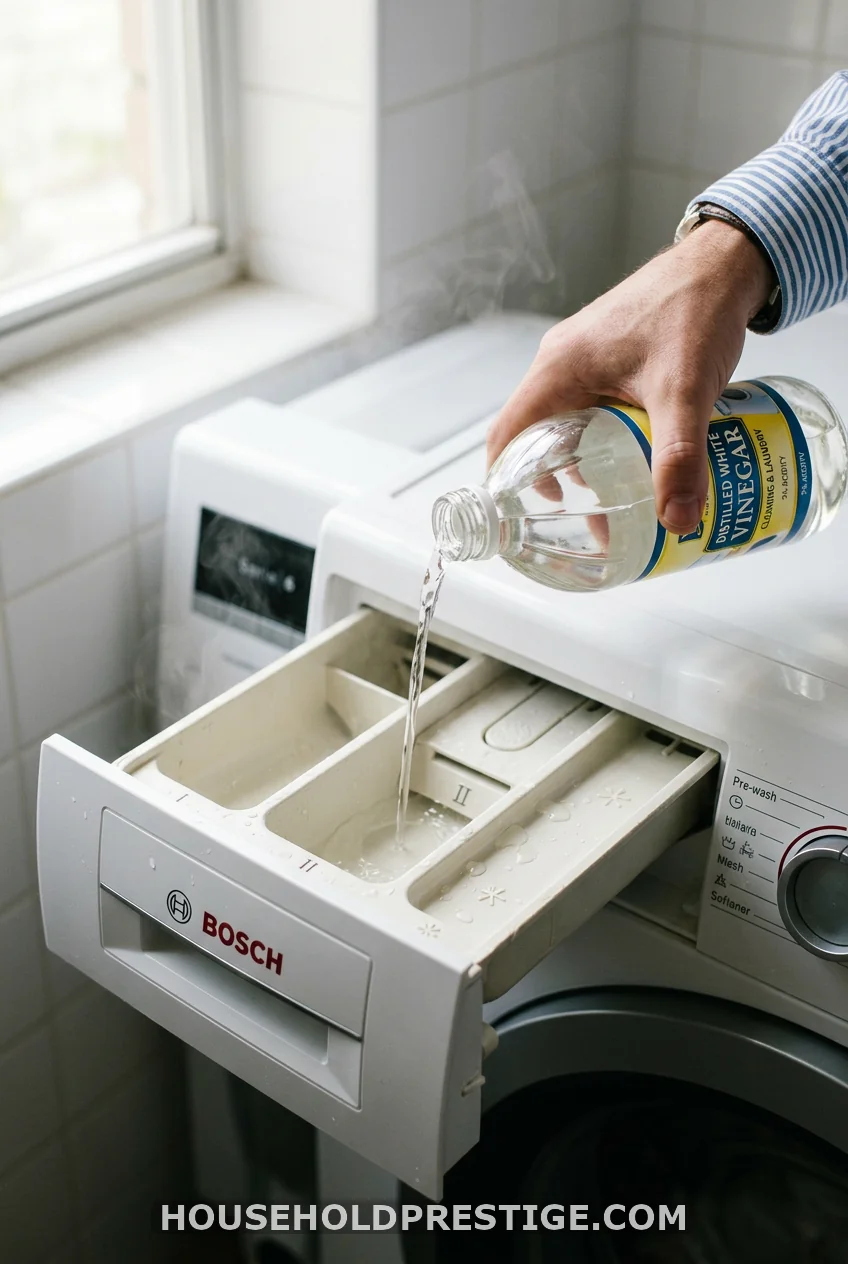
If your machine has a “clean cycle” or “tub clean” setting, select it now. No such setting? Choose the hottest water temperature and the largest load size instead. That combination does most of the heavy lifting.
Top load machines: Fill the drum about halfway with hot water, then add 2 cups of white vinegar directly into the tub. Let it fill the rest of the way, then pause the cycle.
Front load machines: Pour the vinegar straight into the detergent dispenser instead of the drum. Front loaders don’t fill the same way, so the dispenser is your delivery point.
Either way, that fizzy reaction you might see when vinegar meets old detergent residue is a good sign. It means the acid is breaking down mineral buildup that plain water never touches.
Step 3: Add Baking Soda and Let It Sit
Once the water’s in, sprinkle in about a cup of baking soda. On a top loader, add it directly to the drum along with the vinegar. On a front loader, put it in the drum itself since it’s already used the dispenser for vinegar.
Now here’s the part everyone skips because it feels like doing nothing: let the mixture sit for a full hour. Prop the lid or door open if your machine allows it. That soak time is what actually loosens the grime clinging to the drum walls, not the agitation.
If you have a newer top loader with a lid lock, you may not be able to reopen it mid-cycle to add the baking soda later. Add both the vinegar and baking soda together before you start the cycle instead, and let the fill and agitation do the mixing for you.
Step 4: Scrub the Spots the Cycle Can’t Reach
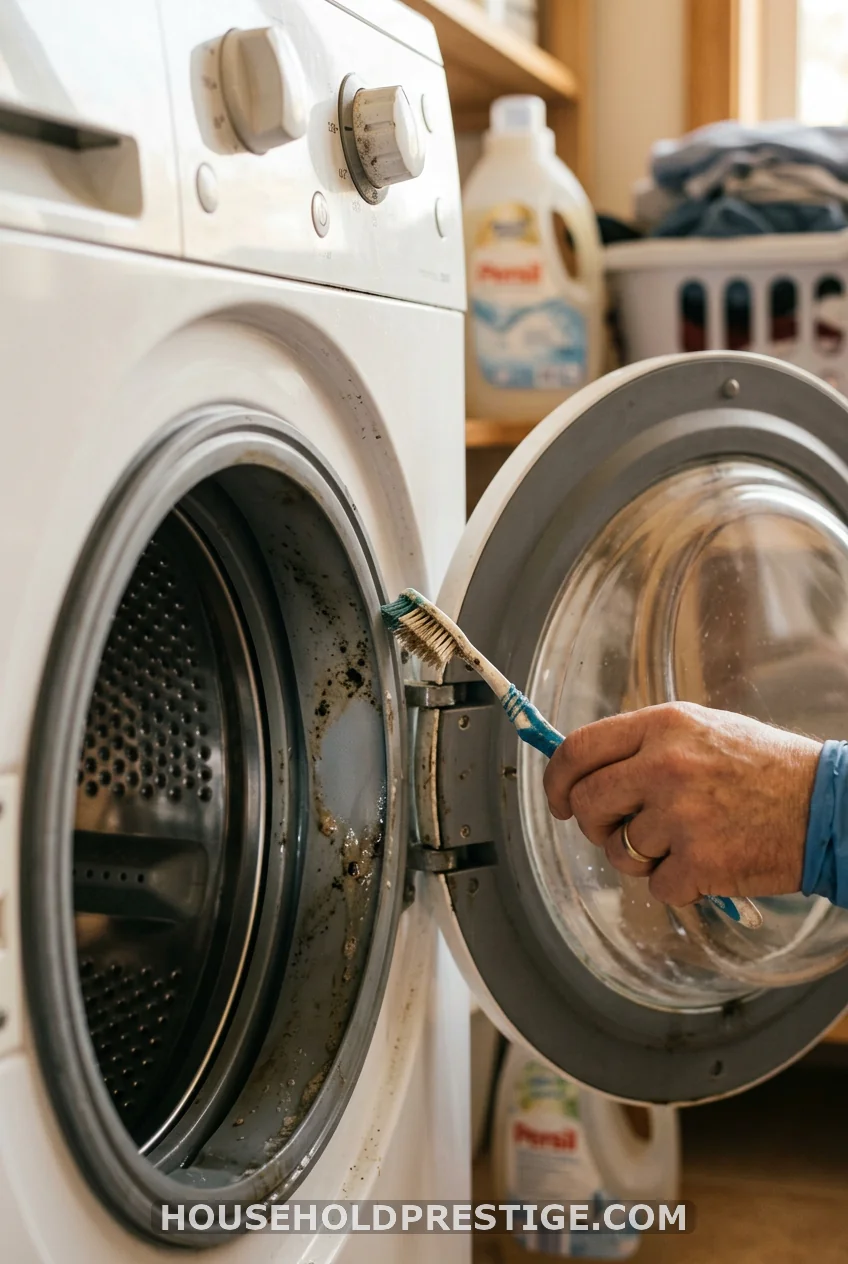
A wash cycle handles the inside of the drum just fine. It does nothing for the parts water doesn’t reach directly.
Dip your microfiber cloth in the vinegar water and go over the fabric softener cup, the bleach dispenser, and the rim around the drum opening. For a front loader, fold back the rubber gasket and check underneath it. This is where coins, hair, and lint collect, and it’s usually the source of that lingering odor everyone blames on “old washers.”
Use the toothbrush for anything the cloth won’t reach: dispenser corners, the ridges around the agitator on a top loader, or the seams of the gasket fold.
Step 5: Finish the Cycle and Rinse
Close everything up and let the wash cycle run to completion, rinse included. This flushes out the loosened residue along with the vinegar and baking soda, so nothing gets left behind to redeposit on your next load of laundry.
Once it’s done, take a look inside. That gray film from Step 1 should be gone, replaced by a drum that actually looks clean, not just recently used.
The Front Load Difference: Gasket, Filter, and That Locking Lid
Front loaders get a bad reputation for smell, and it’s not entirely fair. They just have two extra failure points top loaders skip.
The gasket. That rubber seal traps water against the door every single wash. Leaving the door open between loads solves most of the problem before it starts. If you already have mold stains after the vinegar treatment, soak a few cotton pads in bleach and tuck them into the folds of the gasket for two to three hours before rinsing clean.
The drain filter. Most front loaders hide a small access panel near the bottom front, usually behind a little door. Behind it sits a drain tube and a filter that catches lint, hair, and the occasional coin. Set a shallow bowl underneath, pull the cap, and let the standing water drain out before you open the filter itself. Skip this step for a year and you’ll understand exactly where that smell was coming from.
The lid lock issue. This trips up more people than anything else in this guide. Newer machines lock the door once a cycle starts, so you can’t pause and add ingredients partway through like older models allow. The fix is simple: load your baking soda and vinegar in before you press start, not after.
How Often You Should Clean Your Washing Machine
Once a month keeps most machines in good shape. Households with pets, kids in sports gear, or anyone who does laundry daily should bump that to every two to three weeks.
Between deep cleans, two small habits do most of the maintenance work for you:
- Leave the door or lid open after every load so the drum can actually dry.
- Wipe the gasket and detergent tray dry with a towel once the wash is done, rather than letting water sit.
Neither takes more than a minute, and together they’re the reason some washing machines never develop an odor problem in the first place.
Common Mistakes That Bring the Smell Back
Using too much detergent. More soap doesn’t mean cleaner clothes. Excess detergent doesn’t fully rinse away, and it builds up as residue that feeds mold. Stick to the amount your detergent’s cap actually recommends, which is almost always less than people pour.
Closing the door right after a wash. A warm, wet, sealed drum is close to ideal conditions for mildew. Give it air.
Skipping the drain filter on front loaders. It’s out of sight, so it’s easy to forget entirely. Put a reminder in your phone if you have to.
Mixing bleach and vinegar. Worth repeating: never combine them in the same cleaning session. Choose one.
Wrapping Up
A clean washing machine isn’t about having a spotless laundry room for guests who will never open the appliance anyway. It’s about clothes that actually come out smelling like nothing, which is exactly what clean laundry should smell like. Vinegar, baking soda, and an hour of patience get you there, and the habits you build afterward keep you from doing this whole process again next month.
Go give your machine the clean it’s been waiting for. Your next load of towels will thank you.
Frequently Asked Questions
Can I use bleach instead of vinegar to clean my washing machine?
Yes. Bleach works well against mold and mildew stains, especially on a front loader’s gasket. Use about a cup of bleach in place of vinegar, but never in the same cycle as vinegar or baking soda.
Why does my front load washing machine smell worse than my old top loader ever did?
The rubber door gasket traps moisture against the drum after every wash, which top loaders don’t have. Leaving the door open between loads is the single biggest fix for this.
How long should I let the vinegar and baking soda sit before running the cycle?
About an hour gives the mixture enough time to break down mineral deposits and detergent buildup. Less than thirty minutes and you’re mostly just rinsing, not actually cleaning.
Is it safe to clean a washing machine with a locking lid mid-cycle?
No, and you likely can’t anyway. Add your vinegar and baking soda before starting the cycle rather than trying to pause and reopen it partway through.
Will cleaning my washing machine actually make my clothes smell better?
Yes. Most lingering odors on “clean” laundry trace back to a dirty machine, not the detergent or the clothes themselves. A clean drum and gasket usually solve the problem within one or two loads.