

You’re standing in your backyard. It’s 95°F. The neighbor two doors down just finished a full-size inground pool — 40 feet of shimmering blue. And you’re looking at your 350 square feet of patchy grass thinking: not for me.
Wrong. Stop right there.
You don’t need a 40-foot pool. You need a plunge pool — and the right plunge pool ideas can make your compact backyard feel like a boutique hotel you never have to leave. We’re talking 8 to 20 feet long, purpose-built for soaking, cooling off, and honestly? Looking incredible on Pinterest.
This list covers 19 plunge pool ideas across every style and budget, from a $1,200 stock tank you can DIY this weekend to a $50,000 custom inground with a tanning ledge and smart controls. Real dimensions. Real brand names. Real prices. No vague inspiration without substance.
Let’s get into it.
1. The Stock Tank Pool (Yes, It Counts)
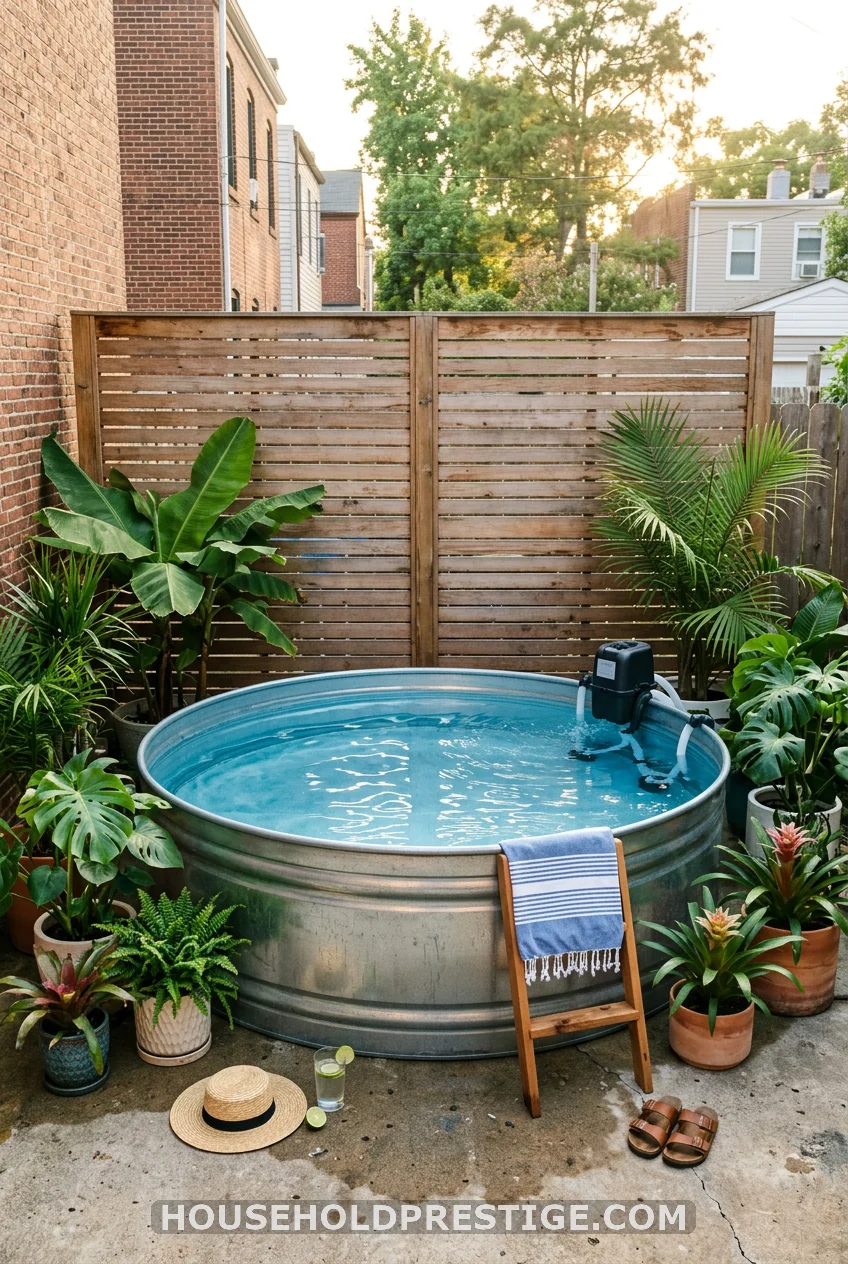
Buy a galvanized steel stock tank from Tractor Supply Company — the 8-foot round runs about $600–$800. Add a Intex or Hayward above-ground filter ($150–$250) and a 12V bilge pump for drainage. Total cost: under $1,200. You’ll fill it in an afternoon. It holds roughly 1,800 gallons, stays cool in summer, and wraps seamlessly into a deck or gravel patio setup. Zero permits required in most US counties.
2. The Spool: Where a Spa Meets a Pool
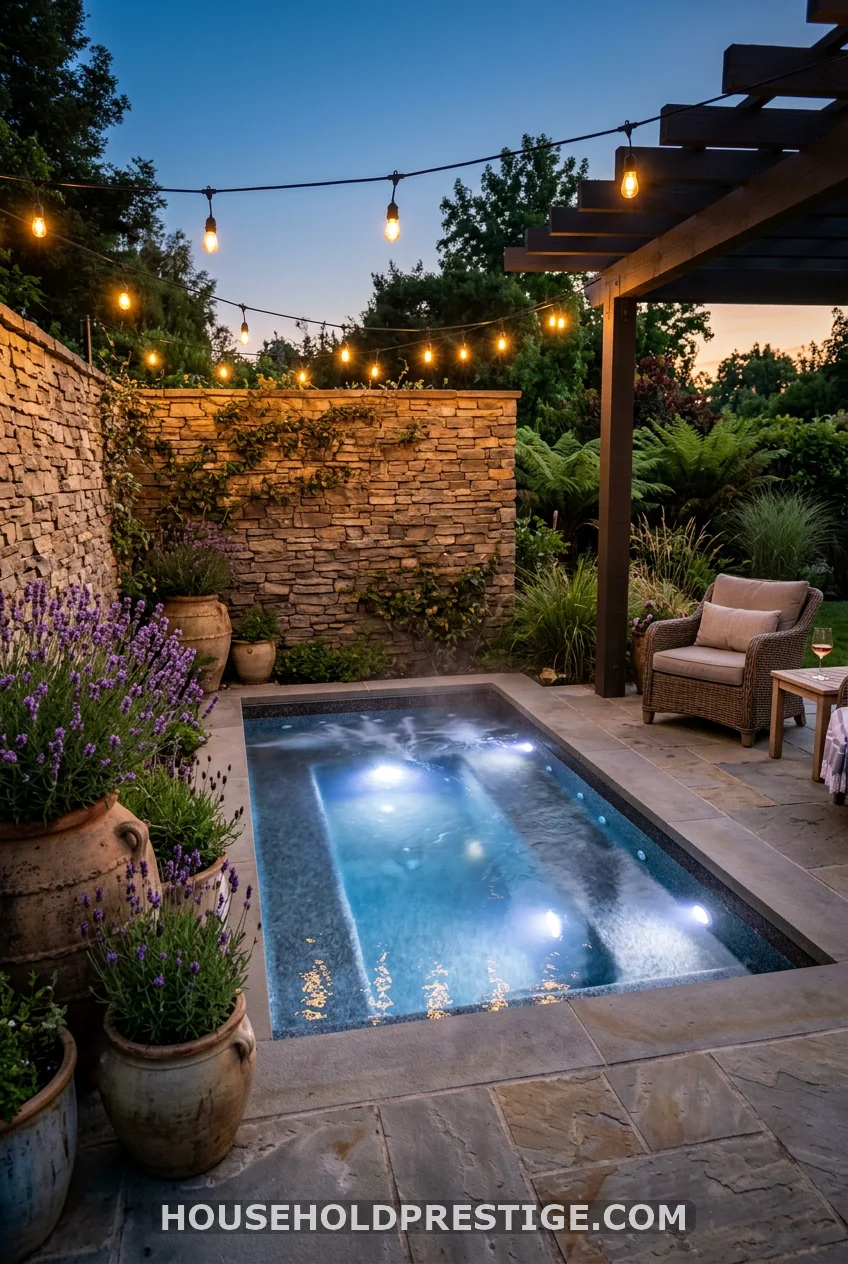
A spool is exactly what it sounds like. Part spa, part pool. Usually 8–12 feet long, 6–7 feet wide, and about 4.5 feet deep — compact enough for a 15×20-foot backyard, deep enough to actually submerge.
What makes it worth considering is the year-round functionality. A standard pool sits cold and useless from October to May in most climates. A spool with a heat pump runs anywhere from a refreshing 68°F in August to a fully heated 100°F in January. Same footprint. Double the use.
Budget reality: a pre-manufactured fiberglass spool from companies like Leisure Pools runs $18,000–$28,000 installed. Custom concrete spools climb to $40,000+. The fiberglass option is typically installed in 2–3 days versus 6–8 weeks for a poured concrete build. If you want a year-round feature that justifies the cost per use, the spool math works better than almost anything else on this list.
3. The Fiberglass Shell: Fastest Install, Lowest Maintenance
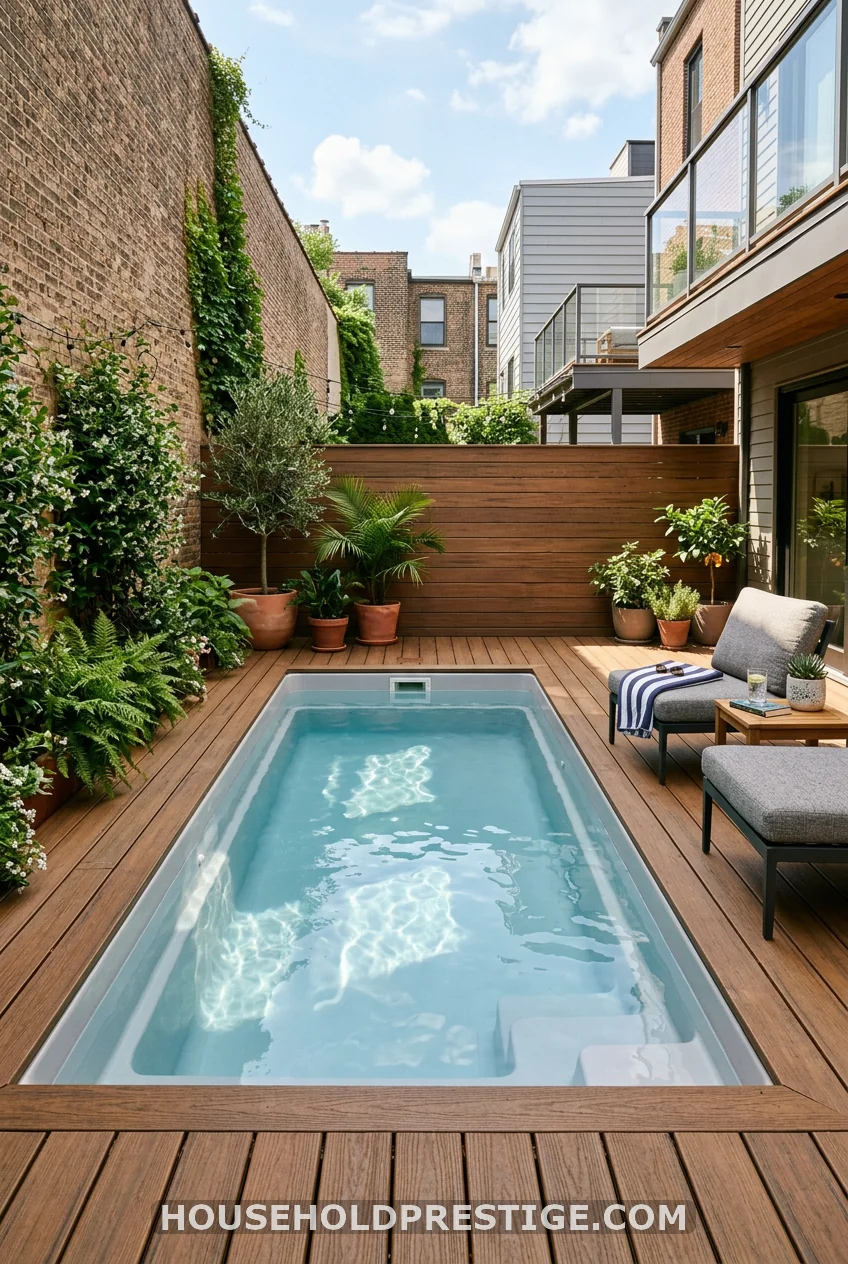
Concrete pools crack. Vinyl liners tear. Fiberglass does neither — and that single fact is why fiberglass dominates new plunge pool installs right now.
The shell arrives as a single pre-formed unit, gets craned or maneuvered into your excavated hole, plumbed in 48–72 hours, and filled the same week. Leisure Pools’ Fiji Plunge is one of the smallest on the market at 9’6″ long × 7′ wide. Their Palladium Plunge comes in 16-foot and 20-foot lengths for slightly larger lots. Both are available in six interior colors — the deep charcoal finishes photograph beautifully if you’re shooting for that high-contrast look.
Fiberglass wins on maintenance because its surface is non-porous. Algae can’t grip it the way it grips concrete. You’re looking at roughly 75% fewer chemical treatments than a plaster pool, and your pool service visits drop from weekly to bi-weekly. Over 10 years, that adds up to a meaningful cost difference.
Installation runs $22,000–$38,000 depending on your yard access, excavation difficulty, and local labor rates. Remote areas with limited crane access will push toward the top of that range.
4. The Precast Concrete Pool: Plug-In Luxury in Days
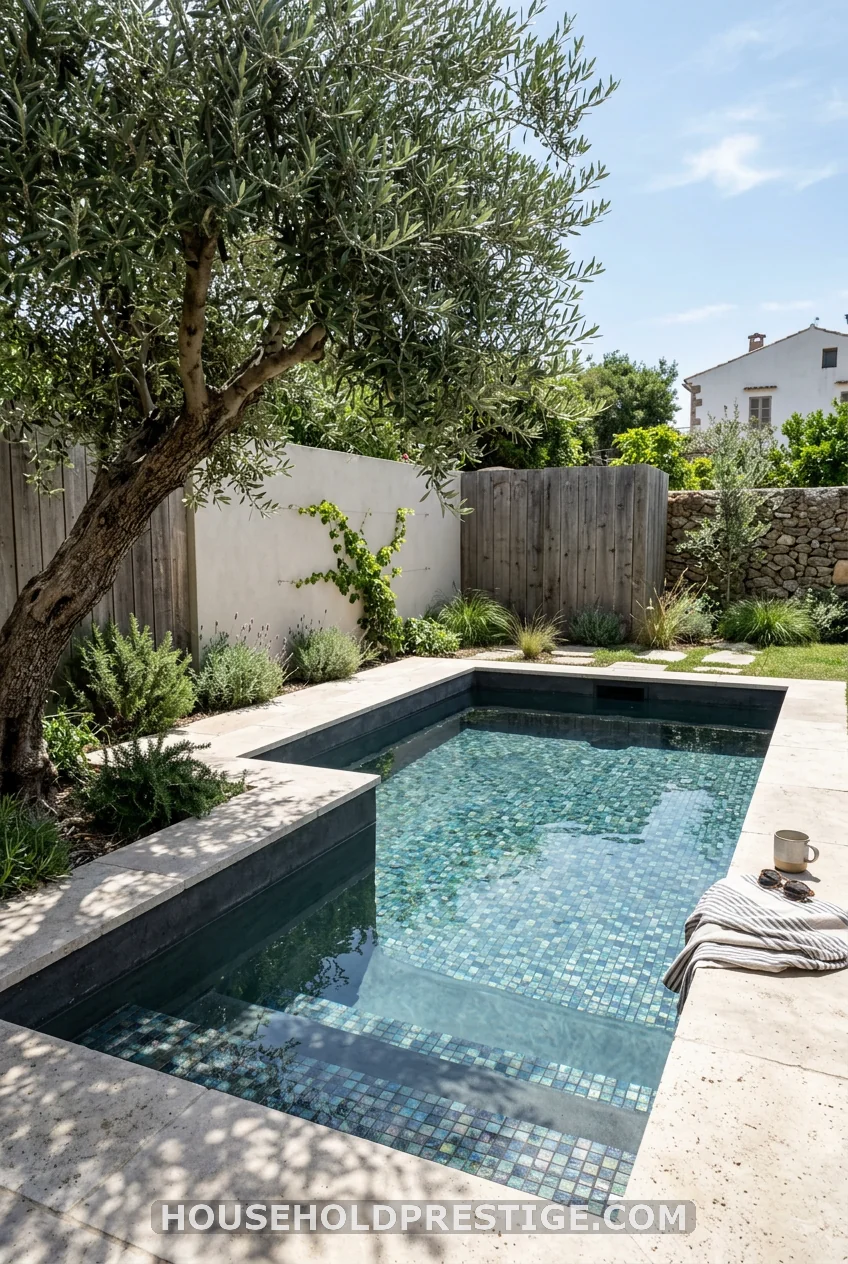
Soake Pools is the name that keeps coming up in designer backyards, and for good reason. They manufacture precast concrete plunge pools in a certified plant in New Hampshire, hand-tile the interiors, and ship them finished and ready to set in place. You can have water in your backyard within days of delivery — no long concrete cure times, no weeks of construction dust.
Soake Pools start at $24,500 and include a saltwater sanitation system and an LED color-changing pool light in the base price. The heater is separate — their heat pump option brings the pool up to hot tub temps (~100°F) for cooler months, which effectively doubles your usable season.
One practical note: precast concrete pools are heavy. The smallest Soake Pool weighs several tons when empty, so your installer needs to confirm the ground can handle it and that access exists for the delivery equipment. For most standard suburban backyards this is straightforward, but narrow side-gate access can be a complication worth solving before you order.
5. The Custom Inground Concrete Plunge Pool: The Full Deep Dive
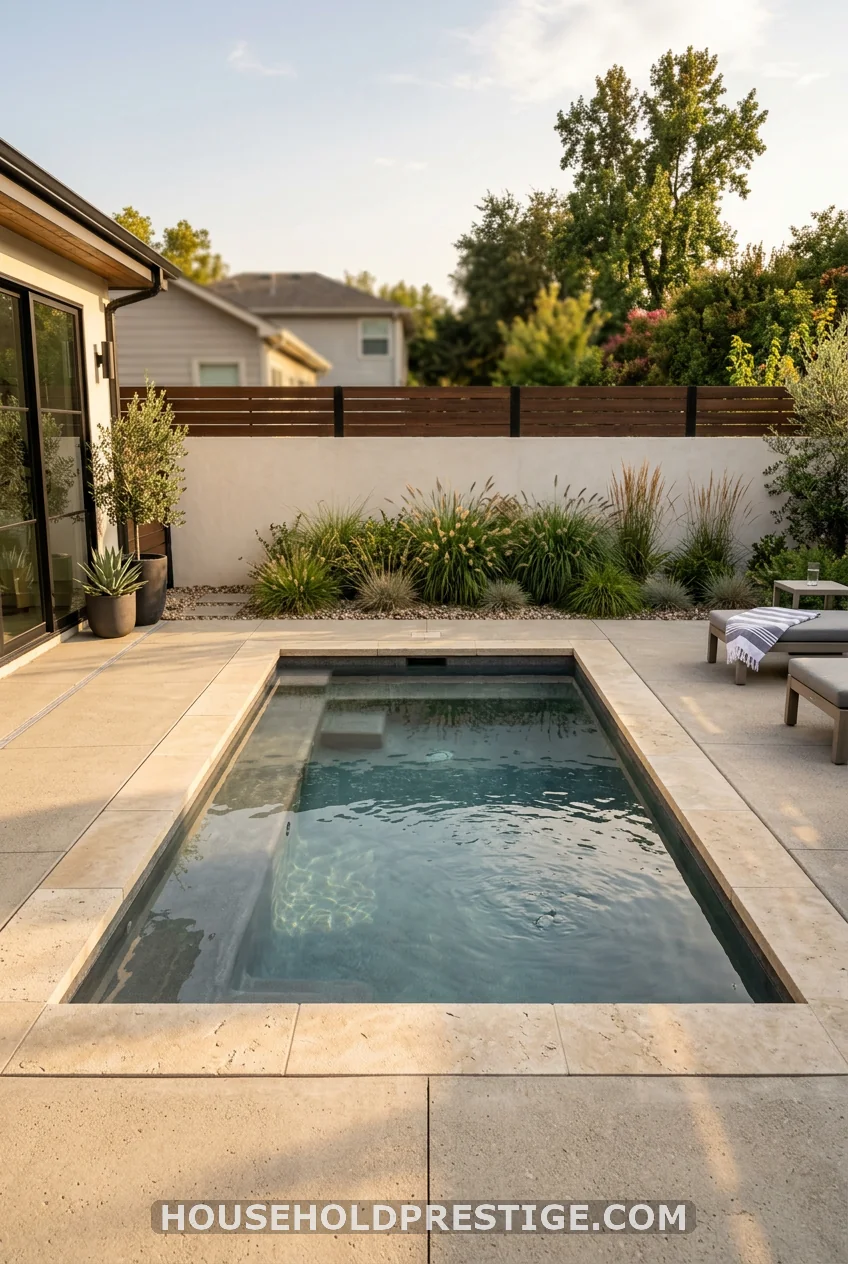
This is the version that shows up in every architecture magazine. A fully custom, poured-in-place concrete plunge pool, sized and shaped to your exact yard. It’s also the most expensive and time-consuming option — and still worth understanding in detail, because when it’s done well, nothing competes with it.
Why It Works
Concrete gives you complete design freedom. You can specify exact dimensions, bench heights, steps, underwater shelves, the slope of the floor, the finish of the walls. There’s no waiting for a pre-formed shell that almost fits. Every edge and curve is yours.
Standard Dimensions
A well-proportioned plunge pool is typically 12 feet long × 8 feet wide × 4.5–5.5 feet deep. That fills roughly 3,200 gallons — compared to 30,000+ gallons in a standard family pool. Your yard needs to accommodate the pool footprint plus a minimum 3-foot deck perimeter on at least two sides, plus 10 feet of setback from your house foundation (check your local code).
Step-by-Step Build Process
- Permit and design — Submit plans to your local building department. Residential pool permits typically cost $500–$1,500 depending on jurisdiction and take 2–6 weeks to approve.
- Excavation — A bobcat excavates your hole in 1–2 days. Budget for $800–$2,000 in excavation, plus $500–$1,500 to haul away the soil.
- Steel framework — Rebar cages are assembled and tied in place. This forms the skeleton of your shell.
- Shotcrete or Gunite application — Pressurized concrete is sprayed over the rebar. Two separate applications — shell and finish coat — require a cure time of 28 days minimum before water goes in.
- Plumbing and electrical rough-in — Skimmer, returns, lights, and equipment connections are set during and after the shell pour. This is also when your equipment pad is poured.
- Coping and decking — Natural stone coping typically runs $30–$60 per linear foot installed. Concrete deck: $10–$18 per square foot. Travertine or limestone: $25–$45 per square foot.
- Interior finish — Plaster (basic, $1.50/sf), pebble finish (Pebble Tec or Pebble Sheen, $4–$8/sf), or mosaic tile ($15–$40/sf). Tile is the most striking and the most expensive.
- Equipment installation — Variable-speed pump, filter, heater (optional), automation system, salt chlorine generator (optional).
- Final inspection and fill — Fill with water, balance chemistry, and schedule your final permit inspection.
Materials and Costs
| Item | Budget Option | Mid-Range | Premium |
|---|---|---|---|
| Excavation + soil removal | $1,200 | $1,800 | $2,500 |
| Shell (shotcrete/gunite) | $8,000 | $12,000 | $16,000 |
| Plumbing and electrical | $3,500 | $5,000 | $7,000 |
| Interior finish (plaster/tile) | $2,500 | $6,000 | $15,000 |
| Coping (per 40 LF) | $1,200 | $2,000 | $3,500 |
| Decking (200 sf) | $2,000 | $4,000 | $8,000 |
| Equipment (pump, filter, heater) | $3,000 | $5,500 | $9,000 |
| Permits and design | $1,500 | $2,500 | $4,000 |
| Total Estimate | $23,000 | $38,800 | $65,000 |
Pro Tip
Specify a variable-speed pump from day one. Single-speed pumps cost $400–$600 less upfront and will run you $600–$900 per year more in electricity. A Pentair IntelliFlo or Hayward TriStar VS costs $800–$1,200 but typically pays for itself in energy savings within 3–4 years.
Common Mistakes to Avoid
- Skipping the permit. Unpermitted pools are a liability nightmare at resale. Don’t do it.
- Under-sizing the equipment pad. Your pump, filter, and heater take up more space than you think. Plan for at least a 4×8-foot concrete pad.
- Choosing plaster on a tight budget. Plaster is the cheapest finish and the most maintenance-intensive. It stains, etches, and needs replastering every 7–10 years. Pebble finish costs more but lasts 15–20+ years.
- Ignoring drainage. Plan for a deck drain channel along at least one side of your pool. Without proper drainage, the surrounding deck stays wet and becomes slippery.
6. The Tanning Ledge Addition
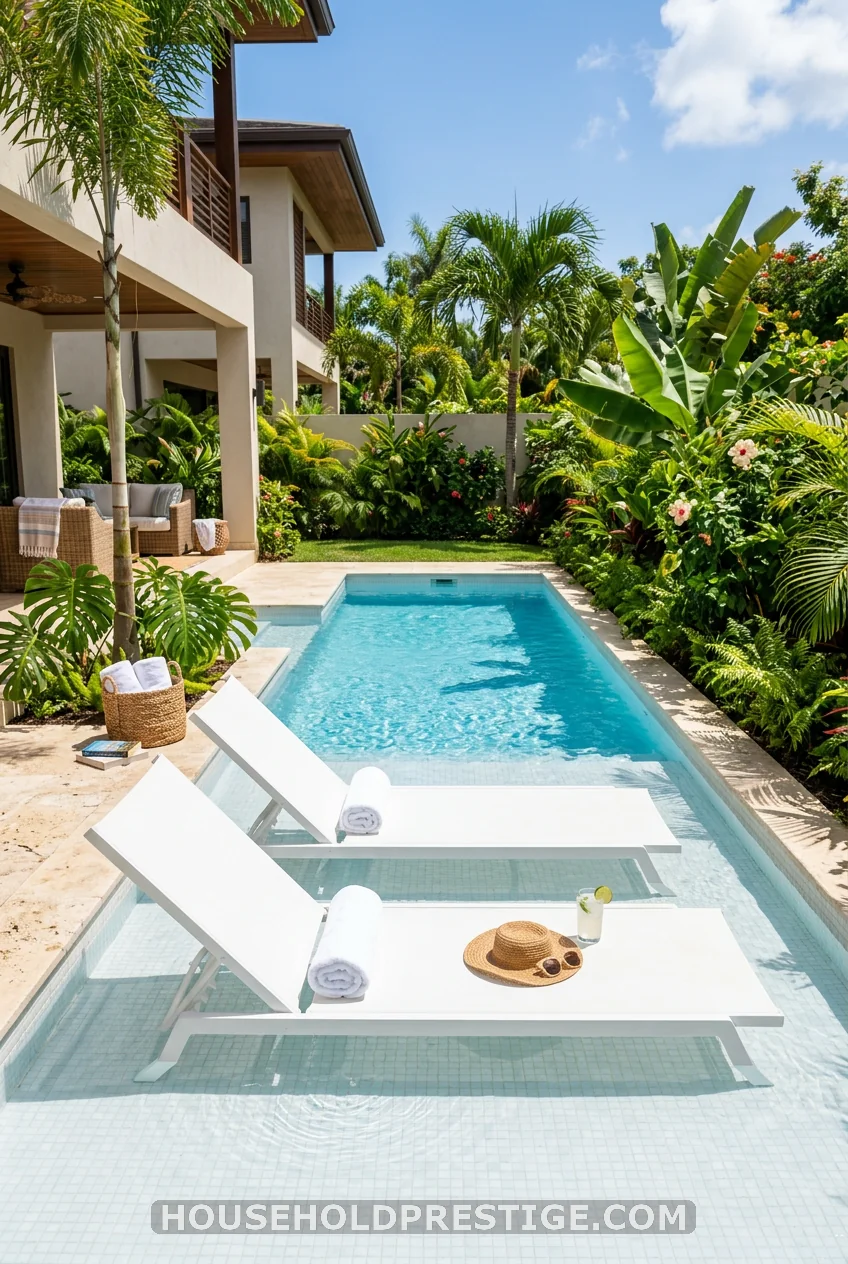
A tanning ledge is a shallow plateau — usually 8–12 inches deep — built into one end of your plunge pool. You set a lounge chair on it. Your legs go in the water. The rest of you bakes in the sun. It’s the closest thing to a resort vacation experience you can install in your backyard.
Most fiberglass plunge pool manufacturers include a tanning ledge option on their 16-foot and longer models. On a custom concrete pool, it adds approximately $1,500–$3,000 depending on size. If you’re going with Latham Pool’s fiberglass options, their Calypso line is available with an integrated ledge as a standard configuration.
Tanning ledge logistics worth knowing: the ledge works best facing south or southeast to maximize sun exposure through the morning and midday hours. An umbrella mount embedded in the ledge — typically a 2-inch steel sleeve set in the concrete — costs about $80 and saves you from buying a freestanding base that tips over the moment your kid bumps it.
7. Greenery-Framed Pool: The Low-Cost Privacy Upgrade
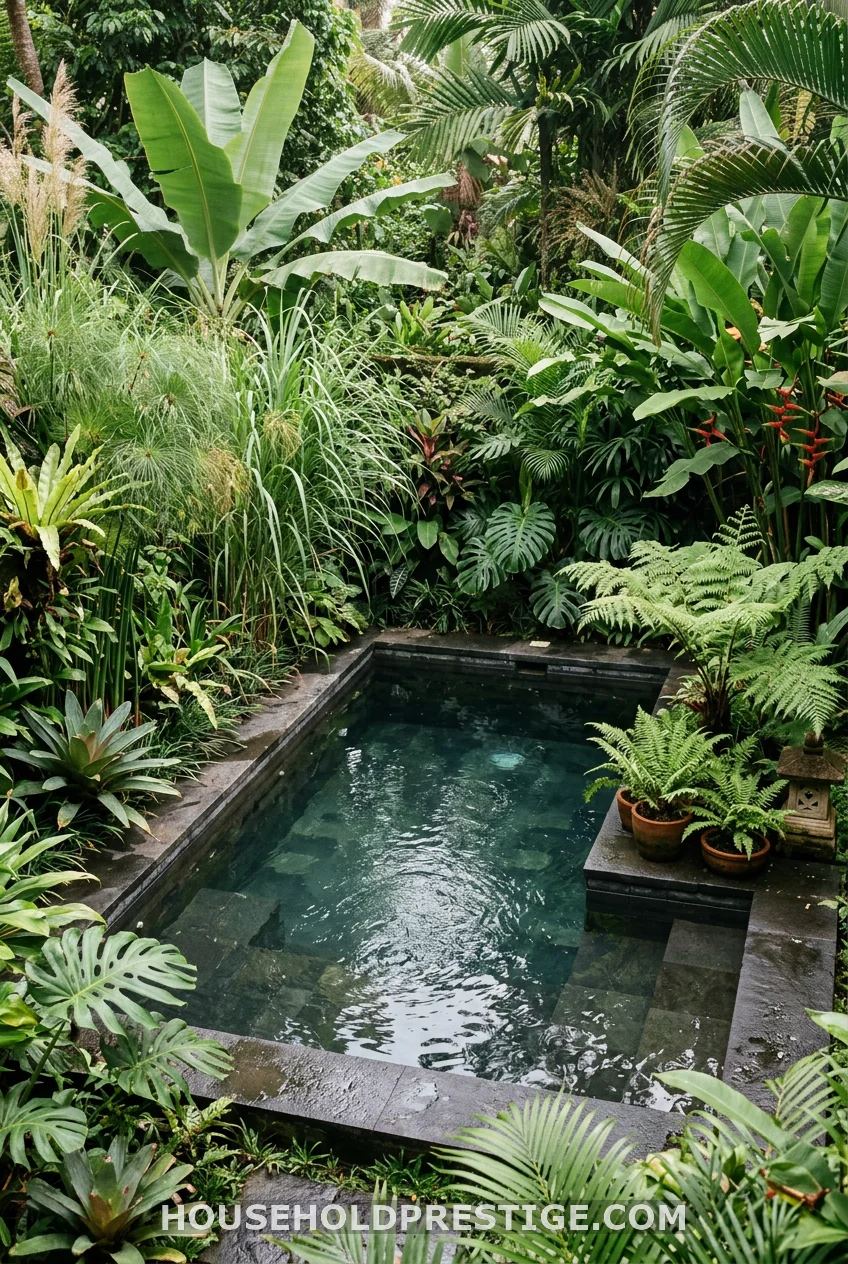
Plants cost less than fences and look better. Frame your plunge pool with three-gallon banana plants ($35–$50 each at most garden centers), clumping bamboo like Bambusa multiplex ($45–$80 per clump), and large ornamental grasses like Miscanthus or Pampas for height variation.
The practical payoff: a planted perimeter drops ambient temperature around the pool by several degrees on hot days, cuts wind that chills the water, and creates the kind of privacy that wood fencing approximates but never quite matches. Allow three growing seasons for a dense look, or start with mature specimens (5-gallon and above) to skip the wait.
8. The Black Tile Moody Pool
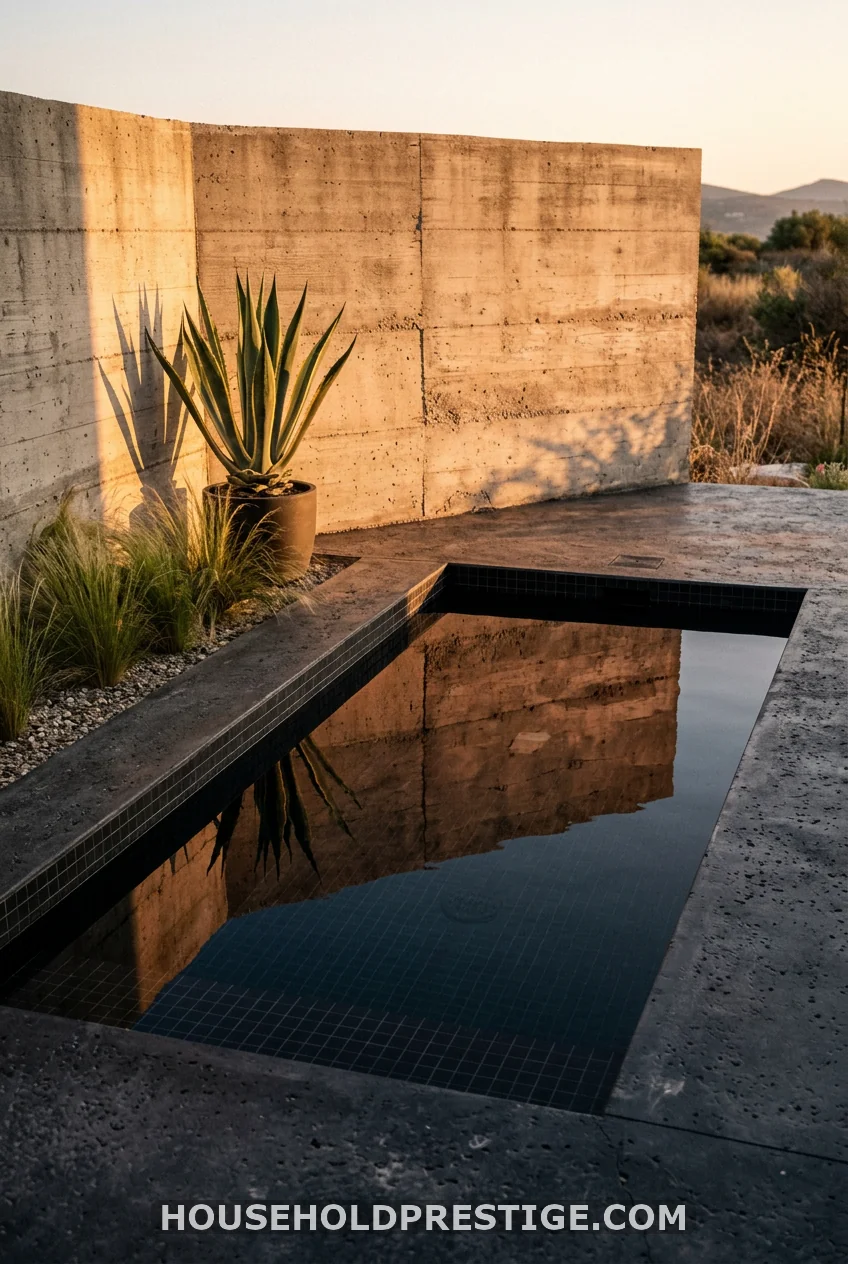
Black tile pools photograph at a completely different level. The water reads dark, almost reflective — like a natural spring rather than a suburban backyard pool. Installation-wise, there’s nothing more complicated here than any other tile finish. The tile itself — typically matte black glass mosaic — runs $18–$40 per square foot installed. A 10×8-foot pool interior at that size is roughly 280 square feet of surface area, so budget $5,000–$11,000 for the interior tile alone.
9. The Natural Stone Surround
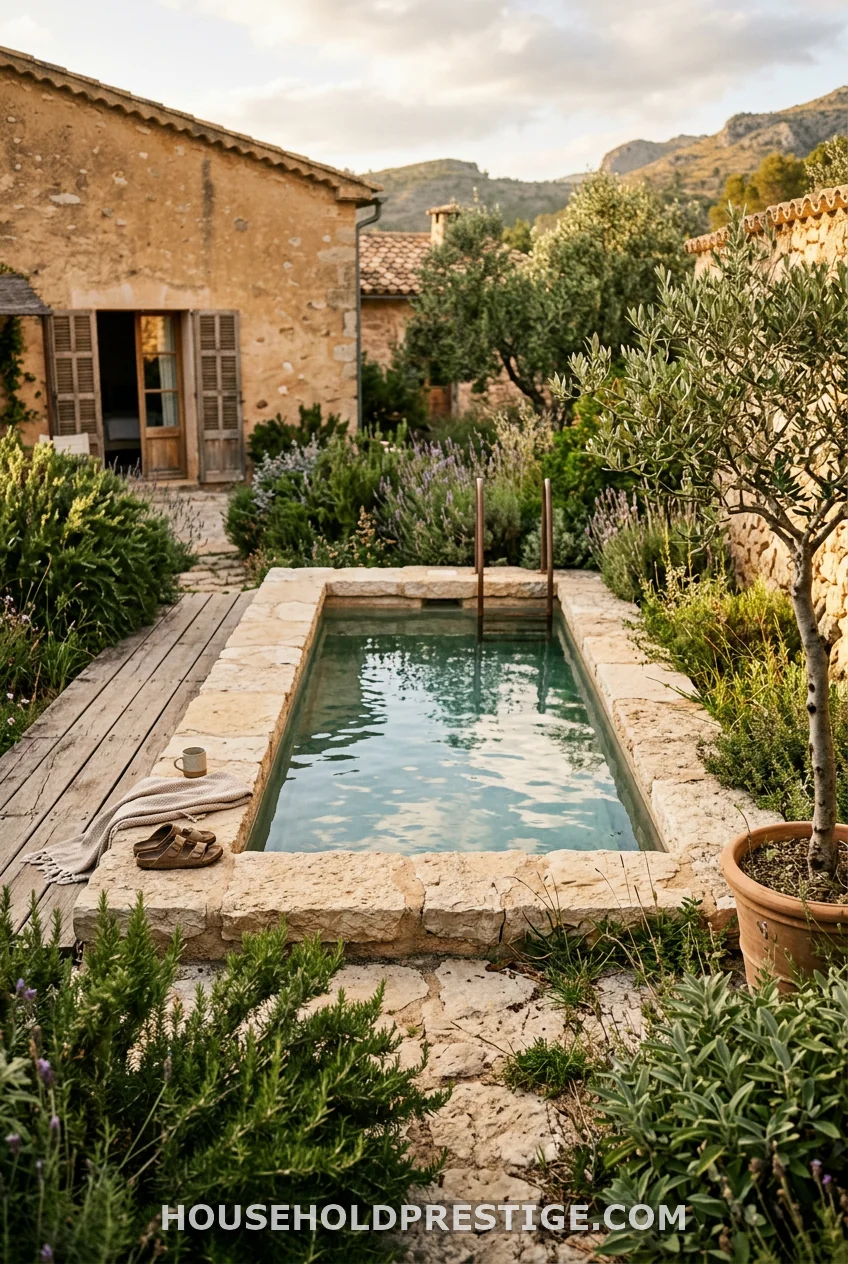
Limestone, travertine, and bluestone are the three natural stones most commonly used for pool coping and surrounding deck areas. Each performs differently.
Travertine is the most popular — it stays cool underfoot even in direct sun, doesn’t retain heat the way darker materials do, and costs $12–$25 per square foot installed. The downside: it’s porous and needs sealing every 2–3 years to prevent staining from pool chemistry and sunscreen.
Bluestone runs $20–$35 per square foot, has a naturally non-slip surface when wet, and holds up exceptionally well in freeze-thaw climates. It does get warm in direct summer sun.
Limestone (tumbled or honed) sits in the $15–$28 per square foot range and gives the softest, most resort-like aesthetic of the three. The rough-tumbled version handles grip and texture well.
For a plunge pool with a 3-foot perimeter deck on all four sides, you’re looking at roughly 120–150 square feet of coping and deck. Total stone material cost: $1,800–$5,000 plus installation labor.
10. The Cold Plunge Wellness Pool: Reality Check
What Most People Think
Cold plunge pools are Wim Hof content for people who wear linen year-round and say “nervous system regulation” in casual conversation. You need a specialty product, expensive equipment, and a very specific morning routine.
What’s Actually True
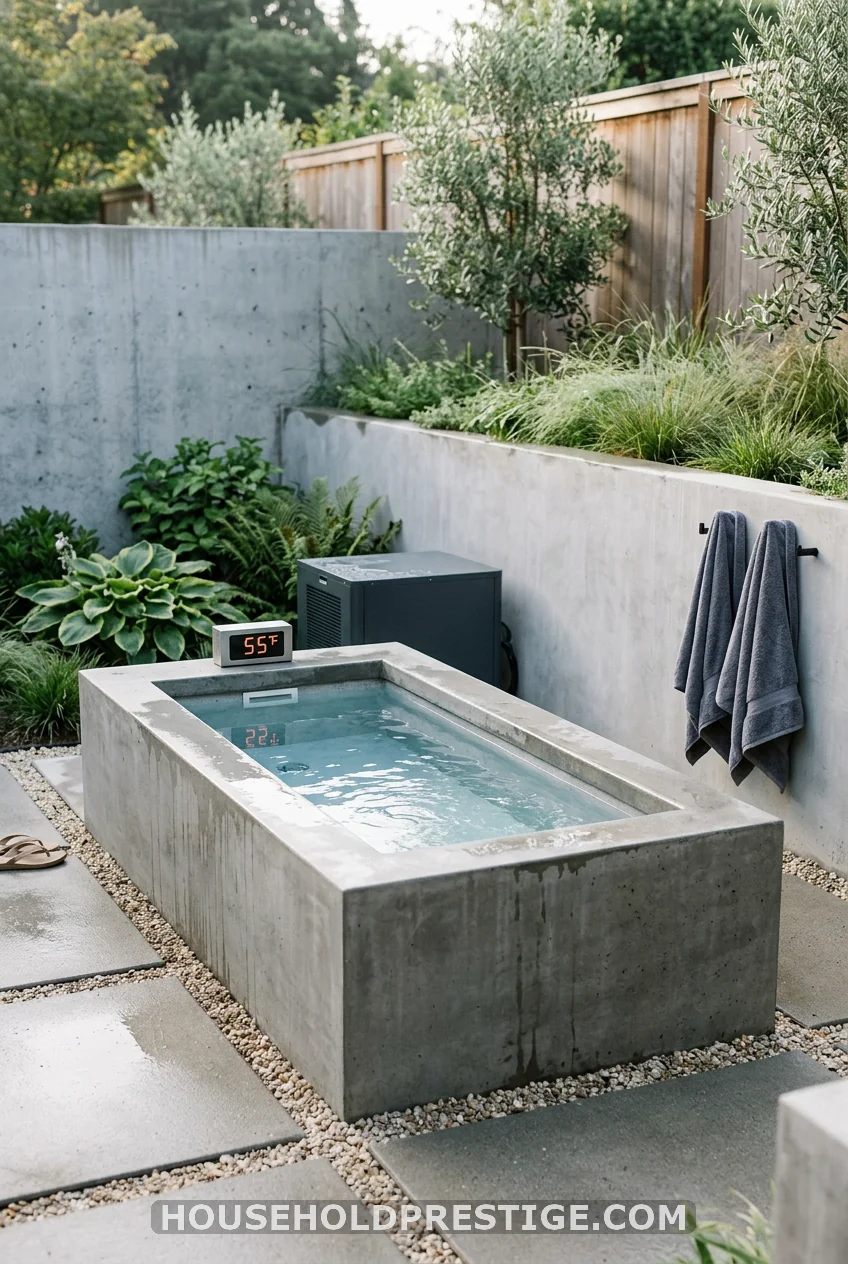
You can convert almost any small plunge pool into a cold plunge setup. The equipment you need is a water chiller — the Iceberg 1/2 HP Water Chiller (~$800) or the more robust Arctic Heat Pump AC10K (~$1,200) — plus an appropriately insulated cover. These units connect to your existing pool return line and can drop water temperature to 40–55°F, which is the effective range for cold water immersion benefits.
The research on cold water immersion is more mixed than Instagram suggests, but the confirmed benefits include: measurable reduction in delayed-onset muscle soreness (studies typically show 20–30% reduction), improved alertness and norepinephrine release following immersion, and better sleep quality when timed appropriately (morning or early afternoon, not within 4 hours of bedtime). The same research suggests that doing cold plunges immediately after strength training may blunt muscle protein synthesis — so if hypertrophy is your goal, separate your sessions by several hours.
For a dedicated cold plunge setup on a budget, some homeowners use a stock tank (see item 1) with an Iceberg chiller and an insulated cover. Total cost: around $2,000–$2,500. It won’t win design awards, but it works exactly as advertised.
11. The Geometric Pool with Built-In Bench Seating
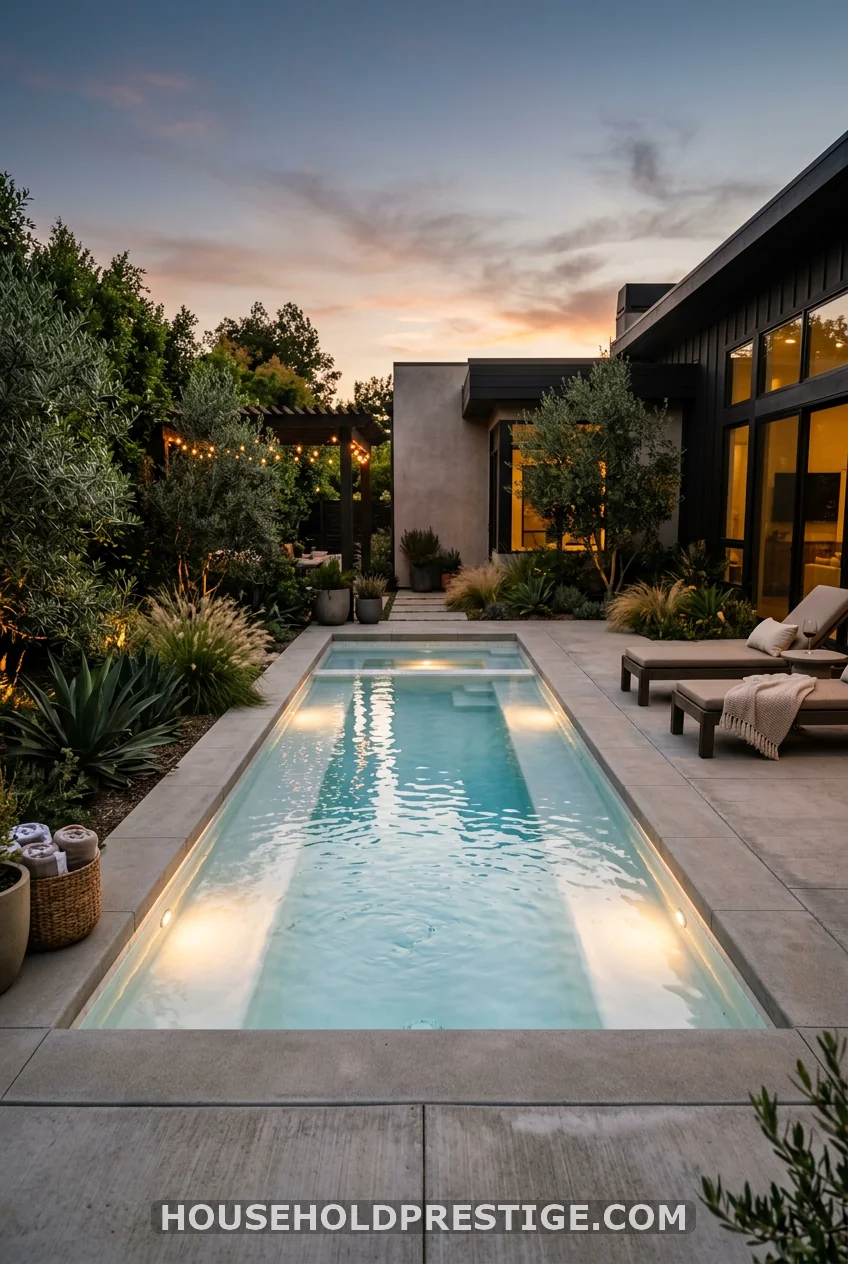
Built-in benches do two things simultaneously: they give you somewhere to sit at shoulder depth (which is genuinely pleasant and underrated), and they make the pool feel larger than it is by pulling the eye inward rather than out.
Standard bench height for a plunge pool is 18–20 inches from the pool floor, with the bench surface at approximately 7–8 inches wide — narrow enough to sit on comfortably but not take up half the pool. Most pool designers default to running the bench along the two long walls of a rectangular pool, leaving the ends open for a child to stand and float.
For a custom concrete pool, built-in benches add roughly $800–$2,000 to the build, depending on length and whether you’re adding bench jets (hydrotherapy jets aimed at the bench level, which are wonderful for back tension and add $400–$800 per jet pair). For a fiberglass pool, bench configurations come standard in most models — check whether your chosen shell includes them before assuming.
LED strip lighting along the base of the bench is the lighting choice that makes cold-weather evening soaks feel deliberately luxurious rather than accidentally gloomy. Pentair’s IntelliBrite 5G LED color-changing system costs about $600–$900 installed per light fixture and is controllable via app.
12. The Waterfall Feature: More Useful Than Decorative
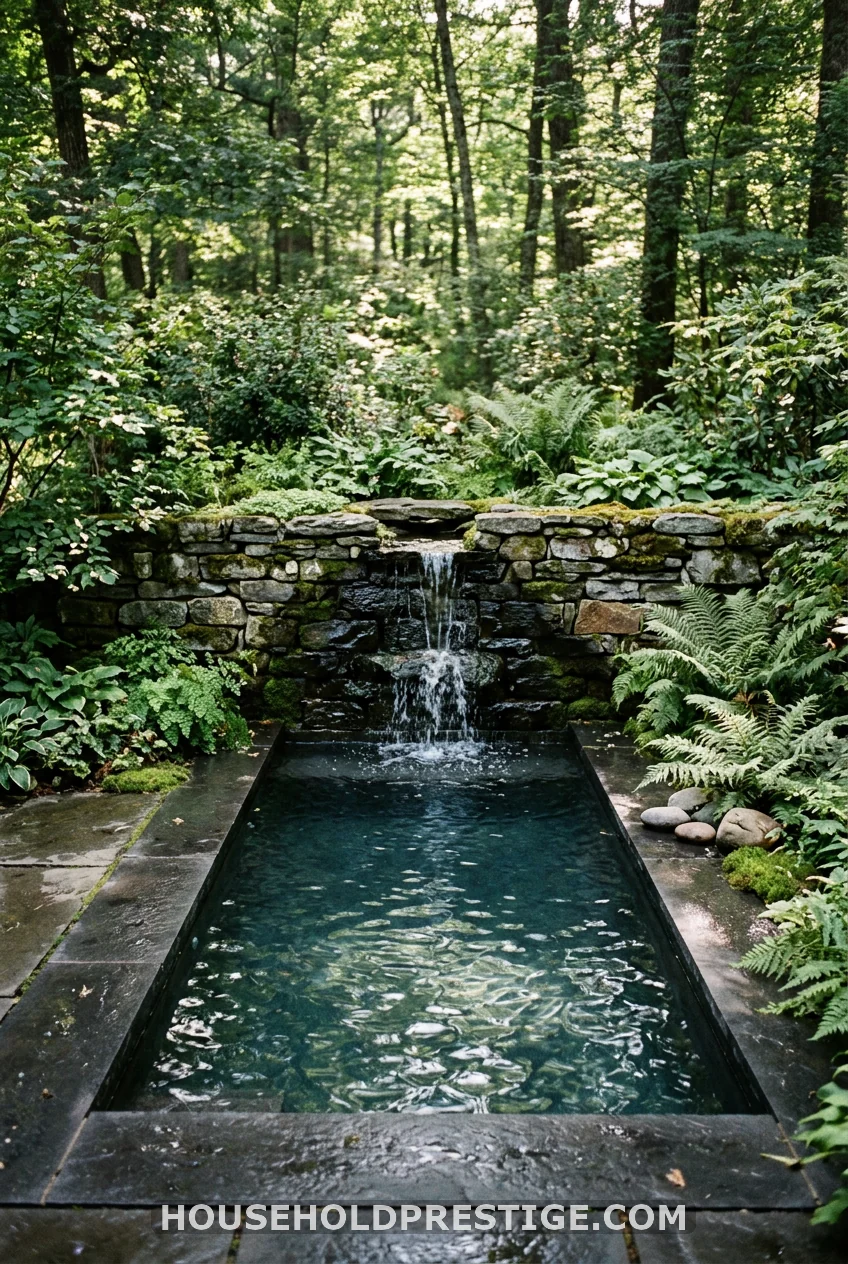
A waterfall isn’t just aesthetic. Moving water increases circulation in your pool, which means your filtration system moves water through the filter more efficiently, reduces chemical stratification, and lowers your algae risk. That’s measurable, not hypothetical.
A simple deck-mount water weir (a blade of water falling over a flat edge) starts around $800–$1,500 installed. A natural stone waterfall wall — like the stacked fieldstone style popular in landscape design right now — runs $3,000–$8,000 depending on height and complexity. If you’re working with a contractor, ask for the waterfall and the pool excavation to be bid together; the cost savings on labor coordination can be 15–20%.
13. The Round Concrete Pool with White Wood Deck
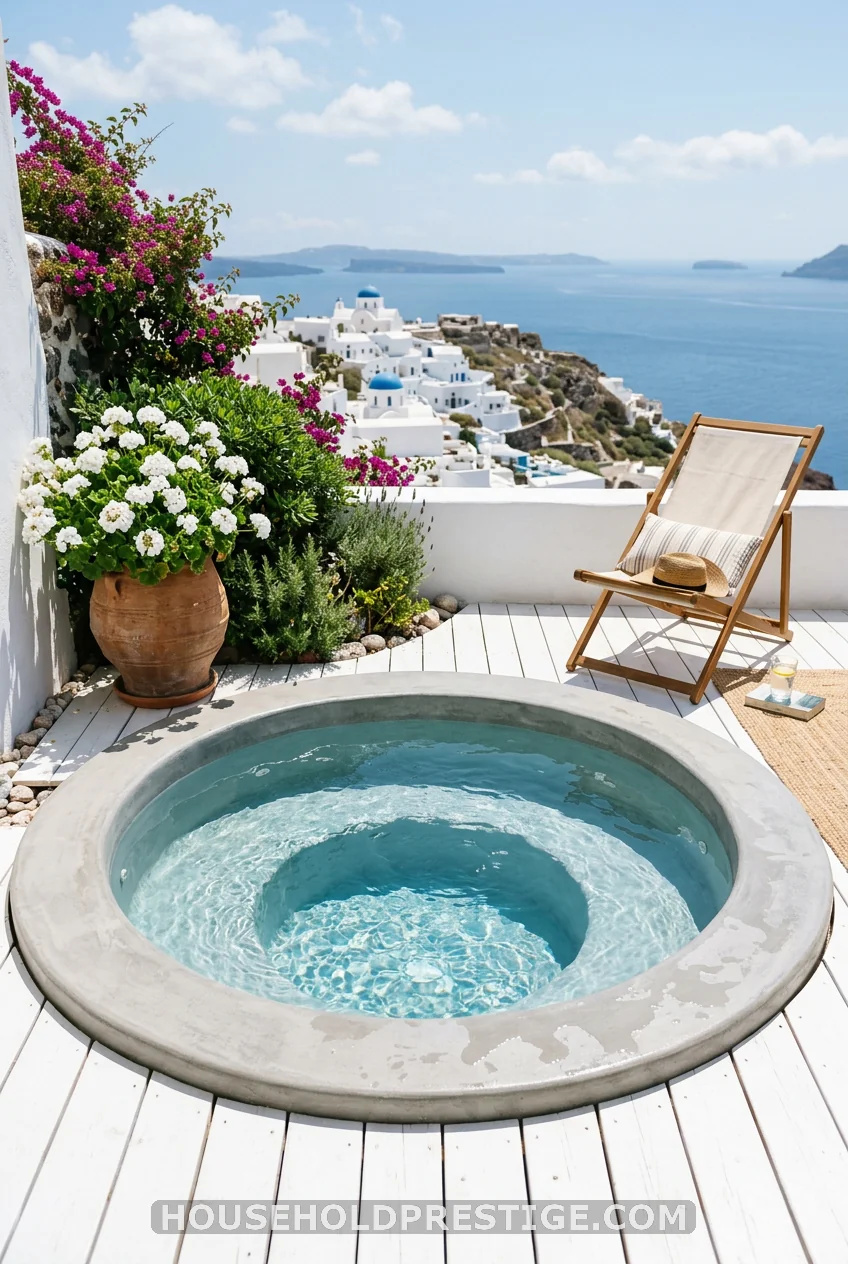
Round pools fit corners and odd-shaped yards that rectangles can’t. An 8-foot round plunge pool holds roughly 1,500 gallons and requires almost no dedicated deck space — just the pool footprint plus a 2-foot clearance perimeter. Same water. Same depth. Half the excavation area of a standard rectangular build. Ideal for yards where you’re working around a tree, an HVAC unit, or a corner that doesn’t line up with anything.
14. The Glass Panel Pool: Urban Chic for Tight Spaces
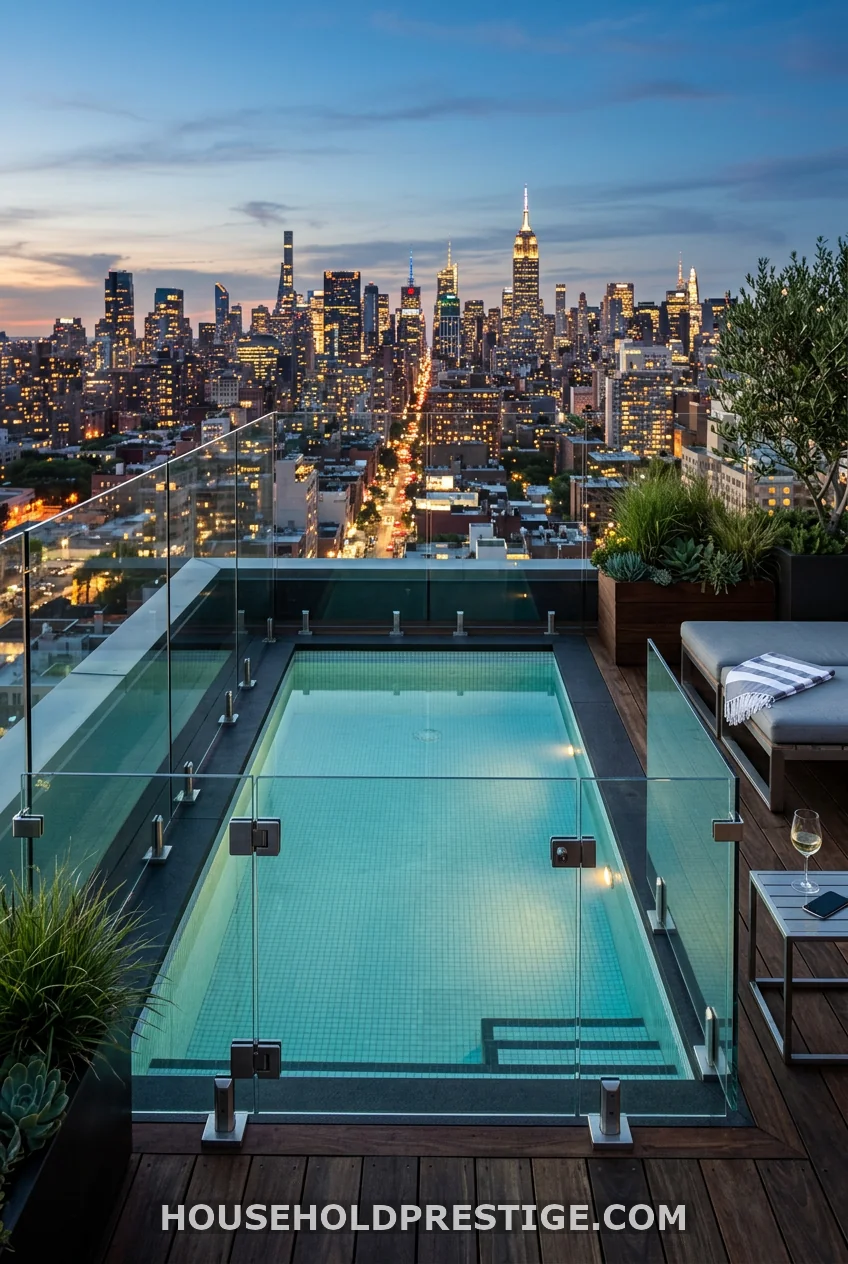
Glass panels around a plunge pool solve two problems in dense urban environments: safety code compliance and the feeling of openness. Most municipalities require barrier fencing of at least 48 inches around any residential pool — glass panels satisfy that requirement while keeping the sightlines completely unobstructed.
Tempered glass pool fencing costs $180–$350 per linear foot installed, depending on the hardware system (frameless costs more than semi-frameless). For a 12-foot pool requiring 40 linear feet of glass, that’s $7,200–$14,000 just for the fencing — a significant line item, but one that pays back in visual square footage. A yard enclosed in glass reads as larger than the same yard behind a wood privacy fence.
The maintenance catch: glass needs cleaning. Salt spray, sunscreen residue, and hard water leave film on glass that becomes visible within weeks in a pool environment. Budget a squeegee wipe-down every 1–2 weeks.
15. The Rooftop Plunge Pool
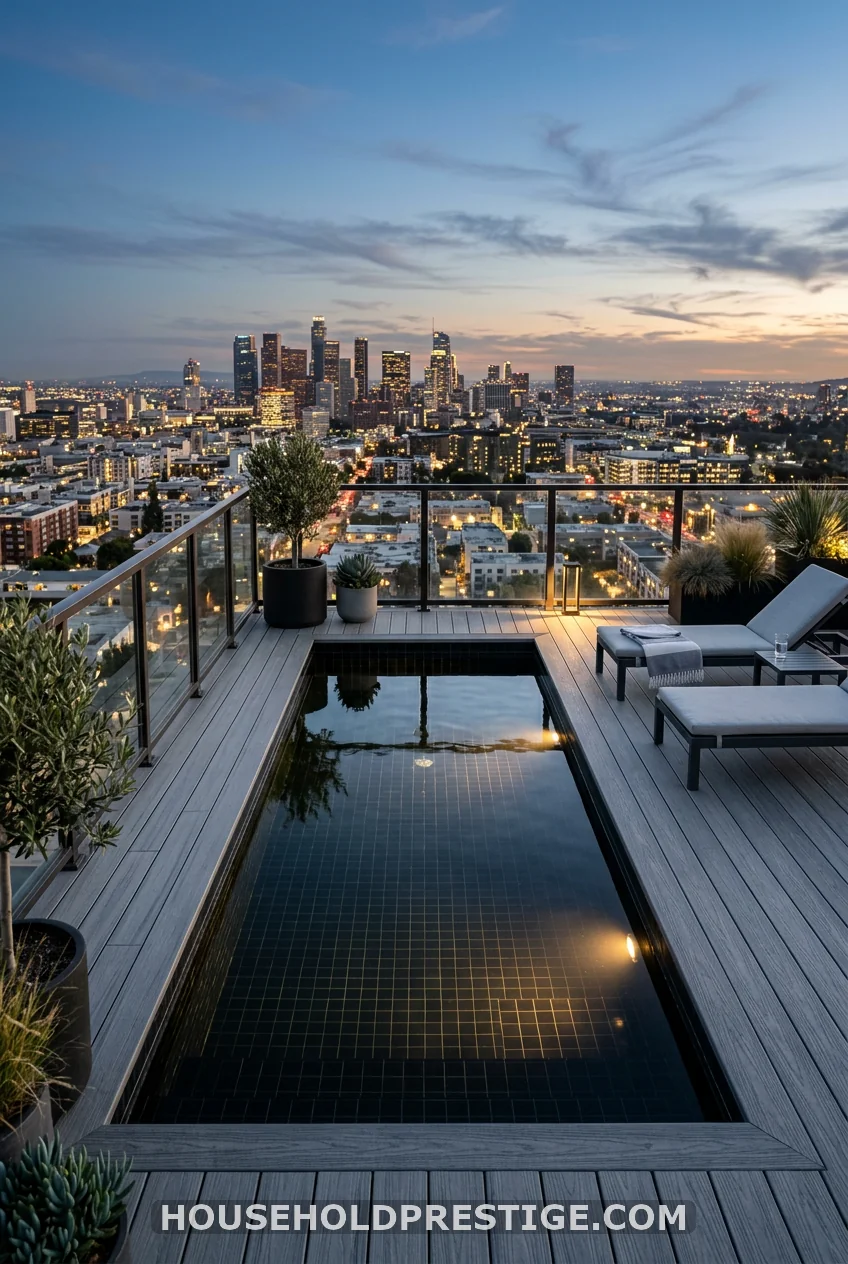
Rooftop plunge pools exist, they’re spectacular, and they come with a structural checklist that you cannot skip. Standard residential rooftop decks are designed for 40–60 pounds per square foot of live load. A filled plunge pool generates approximately 62 pounds per gallon — a 10×8×4.5-foot pool filled with water weighs roughly 100,000 pounds. You are not putting that on a roof without a structural engineer who has specifically approved the load.
If the structure works, rooftop pools typically use fiberglass shells (lighter and easier to lift than precast concrete) or modular stainless steel units. The project cost includes the pool itself ($22,000–$45,000), structural reinforcement ($15,000–$60,000 depending on existing conditions), crane costs for the shell lift ($2,000–$6,000), and custom decking. Total rooftop pool projects rarely come in under $60,000 and frequently exceed $100,000. Worth it for the right property. Don’t start this process without a structural engineer on your team first.
16. The Indoor Plunge Pool: A Cautionary Tale
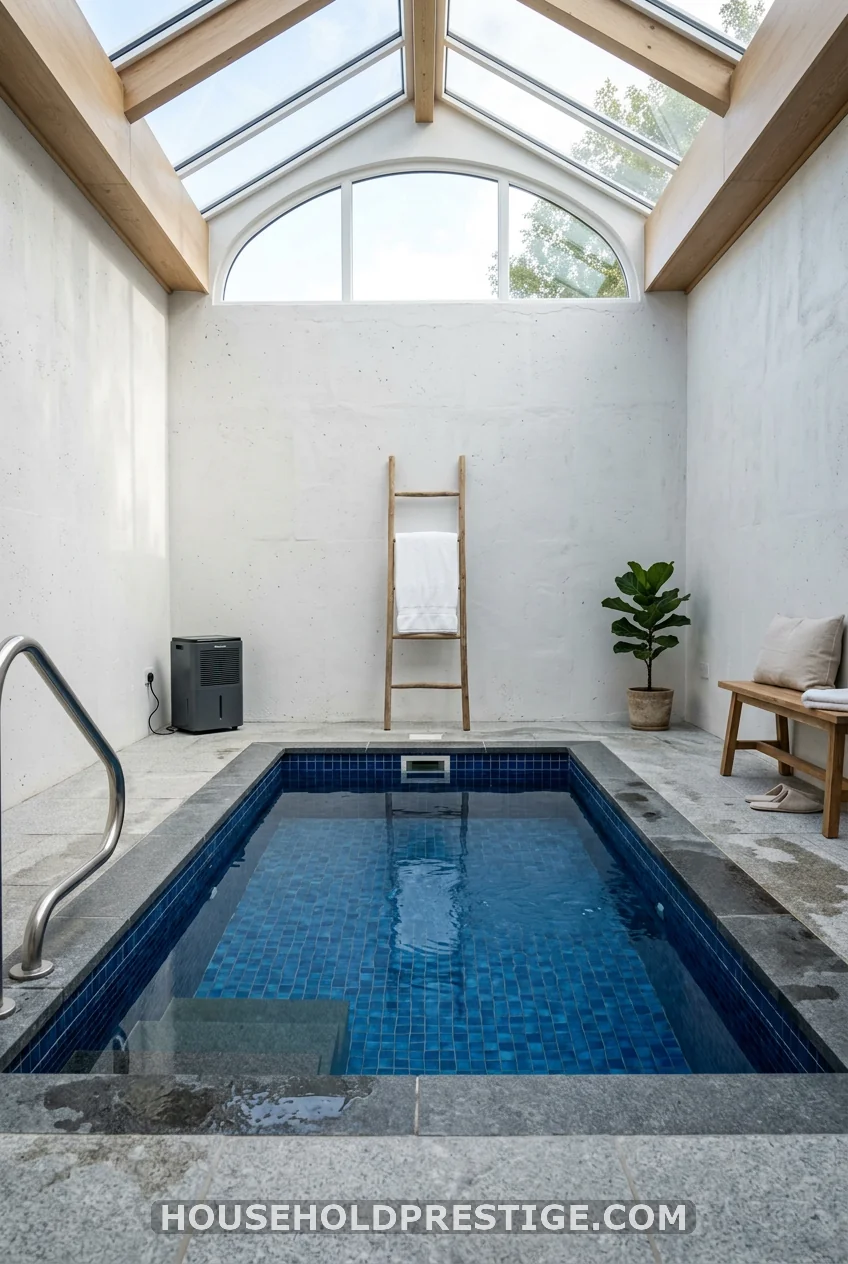
My neighbor’s indoor plunge pool story did not go the way she planned. She found a lovely corner in her converted garage — 12×14 feet of space, good ceiling height, tile floor already in place. She installed a beautiful 8×6-foot concrete plunge pool. It looked incredible for about four months.
Then the mold started.
Indoor pools generate constant humidity. Warm water evaporates into an enclosed space, that moisture hits cooler surfaces, and without an industrial dehumidifier running continuously, you get moisture damage on walls, ceilings, and framing within one to two years. She hadn’t budgeted for a commercial-grade dehumidifier (the PoolPak units designed for natatoriums start at $4,000–$8,000) or the exhaust ventilation system that should have been designed in from day one.
The right way to do an indoor plunge pool:
- Commission a mechanical engineer alongside your pool contractor, not instead of one
- Specify a room-size dedicated dehumidifier rated for pool environments (not a residential unit — they can’t keep up)
- Install exhaust-and-fresh-air mechanical ventilation with a heat recovery unit to control energy costs
- Use waterproof construction materials: cement board walls with waterproof membrane, not drywall
- Budget an additional $15,000–$25,000 for the HVAC work on top of the pool cost itself
Done right, an indoor plunge pool is genuinely extraordinary — a year-round swim, available at 11pm on a Tuesday in January with no weather barrier between you and the water. Done wrong, it’s a $40,000 mold remediation job.
17. Semi-Inground with Flagstone Pavers
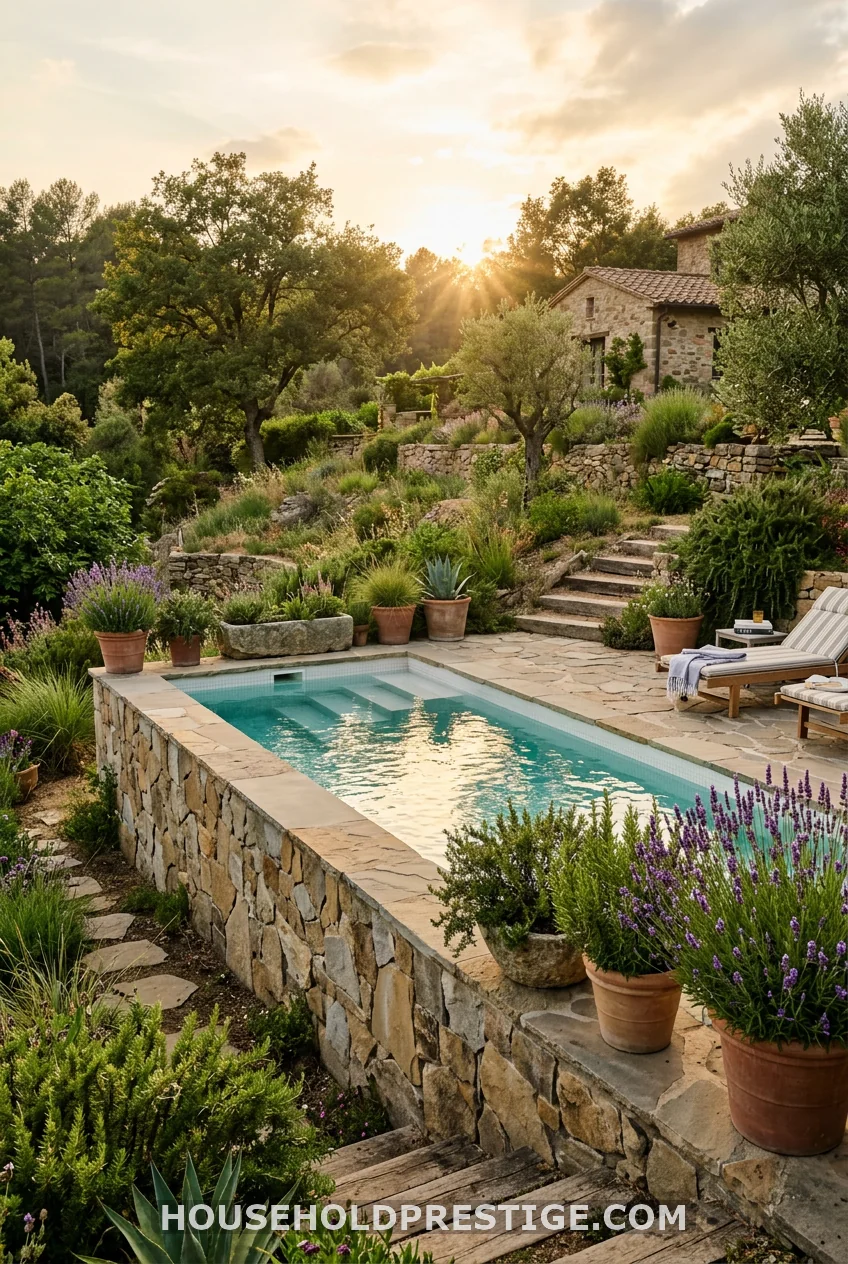
On a sloped lot, going fully inground on the downhill side means excavating deeply and pouring massive retaining walls. Going semi-inground — burying the pool 2–3 feet and building up 2–3 feet on the exposed side — cuts excavation cost by 30–40% and lets you use the exposed exterior wall as a design feature. Flagstone cladding on the exposed wall costs $15–$30 per square foot installed and blends the pool into the grade rather than fighting it.
18. LED + Fire Feature: Extending Your Season
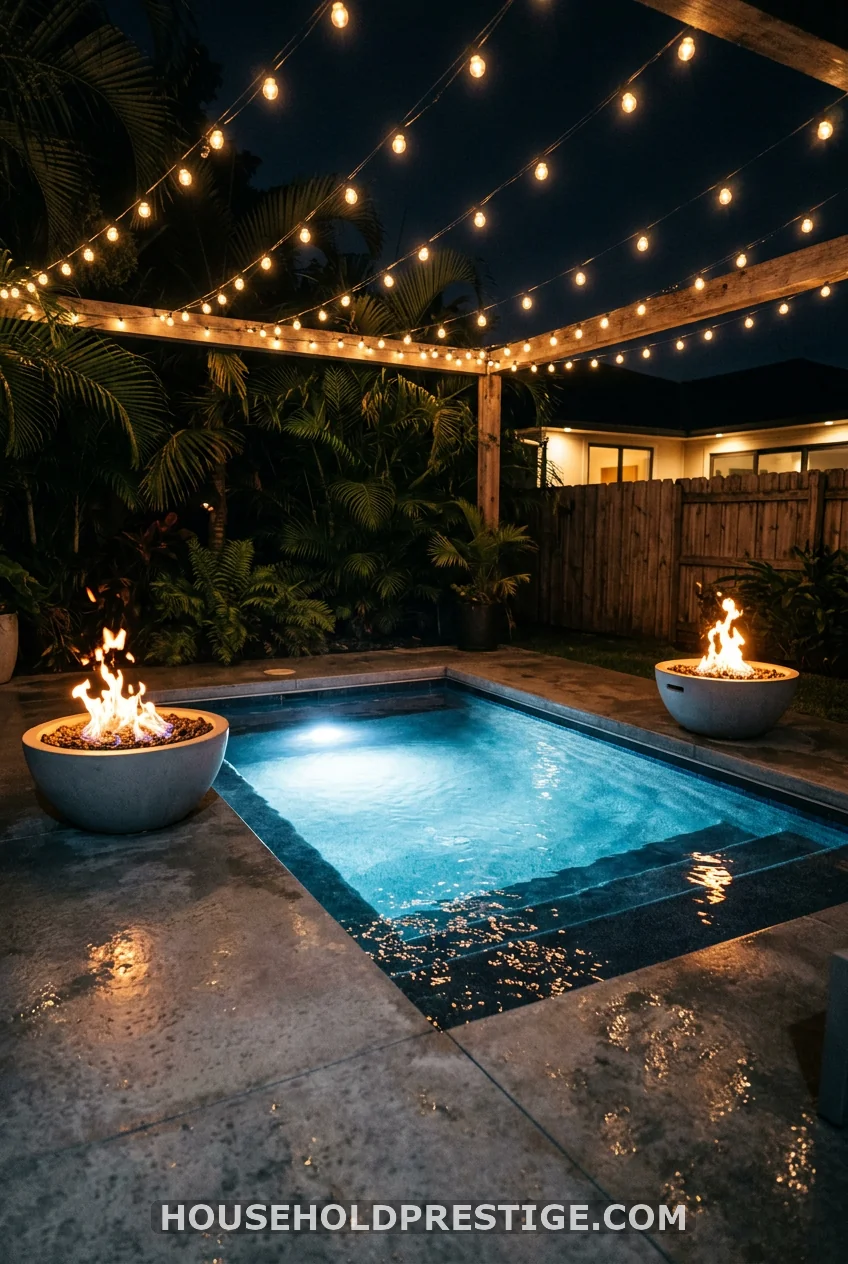
Underwater LED lighting and a fire feature are the two additions that most dramatically extend how often you actually use your plunge pool. Cold October night? If the pool is heated, the fire bowls are lit, and the LEDs are set to a warm amber, you’re not getting out of that water until midnight. That’s not a hypothetical — it’s what happens.
LED pool lights: the Pentair IntelliBrite 5G runs about $600–$900 per fixture installed and offers 7 colors plus color-cycling programs, app-controlled. Budget one fixture for a pool under 12 feet, two for anything longer.
Fire bowls: free-standing concrete fire bowls with gas hookup run $400–$1,200 per bowl. Permanently installed gas fire features set into deck or wall structures cost $2,000–$5,000. Both require a gas line — if you don’t already have one run to your backyard, factor in $800–$2,000 for the gas extension.
19. The Palm Springs Mosaic Style
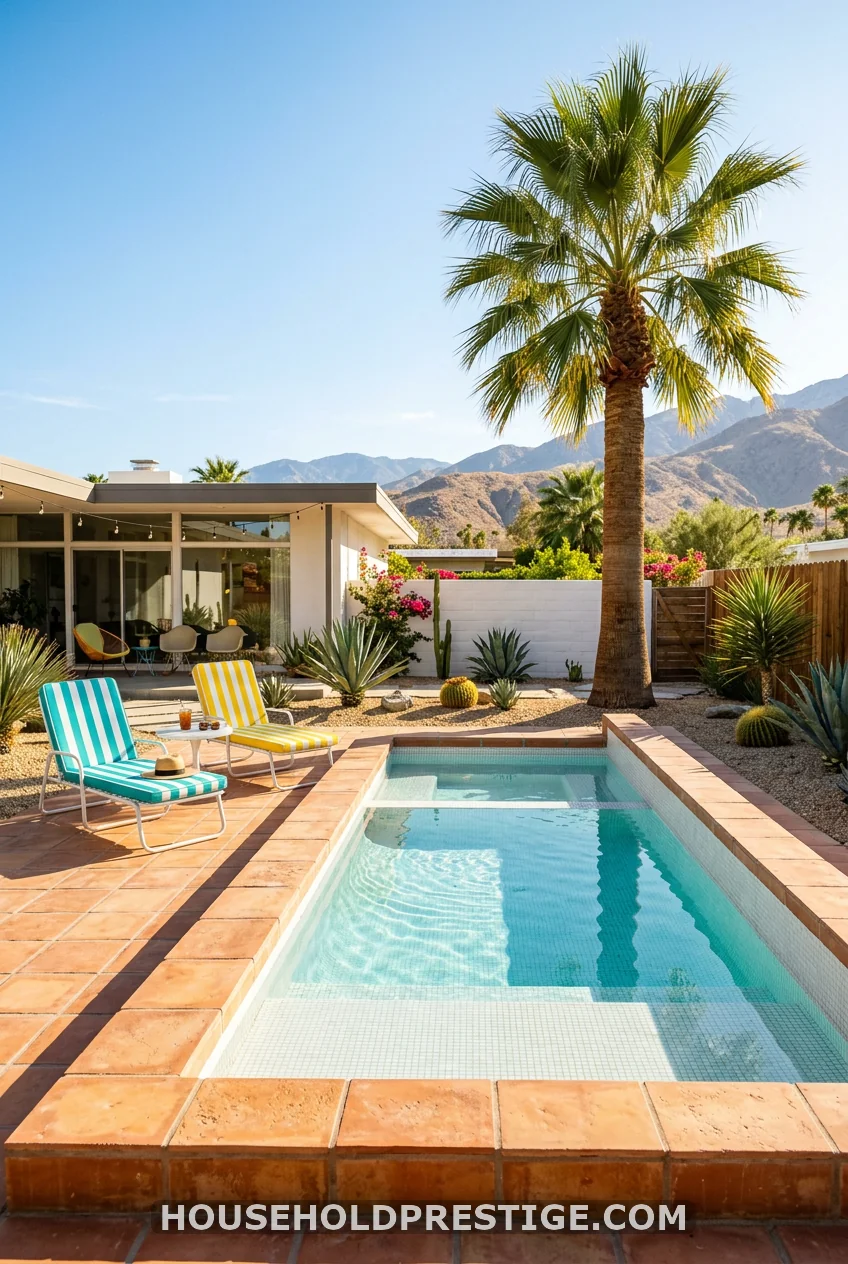
Midcentury Palm Springs aesthetics are having a serious revival on Pinterest, and a plunge pool is the centerpiece that makes the whole look work. The formula is simple: white or light aqua mosaic tile interior, terracotta or warm concrete deck, one or two statement loungers in a saturated color, and at least one palm or large agave.
For the tile specifically: white glass mosaic tiles in a 1×1 or 2×2 format cost $8–$15 per square foot at tile distributors like Dal-Tile or Cercan Tile. The aqua-to-white gradient look (deeper color at the bottom, lighter at the waterline) requires careful tile selection and a skilled installer who has done pool interiors before — standard tile installers don’t always have the technique for pool-grade waterproof grout application. Expect 2–3 weeks of additional lead time if you’re sourcing specialty mosaic.
A semi-inground installation here — burying 18–24 inches and building a short retaining wall on the exposed side — is the most cost-effective way to achieve the flush, built-in look without the full excavation cost. Semi-inground fiberglass plunge pools installed this way typically run $25,000–$38,000 all-in, including decking and basic landscaping.
The Bottom Line
Small backyards don’t produce small plunge pools. They produce focused ones. The version that fits your yard perfectly — whether that’s a $1,200 stock tank this weekend or a $45,000 custom concrete build next spring — will get used more than a sprawling pool you half-heartedly maintain in a yard too big to feel intimate.
Figure out your primary use case first. Cooling off in summer only? A fiberglass or precast option under $30,000 is your sweet spot. Year-round wellness and entertainment? Budget for a spool with a heat pump. Pure aesthetics and design value? Custom concrete with a tile interior is the version that doesn’t compromise.
Whatever you choose, the one mistake you can’t make is not building it at all because you assumed you didn’t have enough space. You almost certainly do.
Frequently Asked Questions
What is the minimum backyard size needed for a plunge pool?
Most plunge pools fit in yards as small as 400 square feet, provided local setback requirements are met. The smallest fiberglass options — like Leisure Pools’ Fiji Plunge at 9’6″ × 7′ — require roughly 150 square feet of pool footprint plus a minimum 3-foot clearance on each side. Always check your local zoning for required setbacks from property lines and your home’s foundation before purchasing.
How much does a plunge pool cost to maintain annually?
Annual maintenance for a plunge pool runs roughly $600–$1,500, depending on whether you DIY or hire a pool service. This includes chemicals ($200–$500/year), electricity for the pump ($200–$400/year, depending on your rate and pump efficiency), and one to two seasonal service visits ($150–$300 each). Fiberglass pools run toward the lower end of that range due to reduced chemical needs. Heated pools add $50–$150/month in heating costs during colder months.
Can a plunge pool be used year-round?
Yes, with a heat pump or heater. A heat pump (like the Raypak Crosswind 50i) can maintain water temperature in the 90–100°F range even when ambient temperatures drop to the low 50s°F. Insulated covers — either automatic retractable or manual foam covers — reduce heat loss significantly and cut heating costs by 50–70% when the pool isn’t in use.
Do I need a permit to install a plunge pool?
In most US states and counties, yes. Any in-ground or semi-inground pool requires a building permit and typically a fence/barrier permit as well. Above-ground pools under a certain capacity (usually 5,000 gallons) are sometimes exempt, which is one practical advantage of the stock tank approach. Always check with your local building department before starting excavation — unpermitted pools create title issues at resale and liability exposure in the event of an accident.
What’s the difference between a plunge pool and a cocktail pool?
The terms are often used interchangeably. A plunge pool is typically defined as a small, deep pool (5+ feet) designed for immersion and cooling rather than lap swimming, generally 8–12 feet wide and up to 20 feet long. A cocktail pool is the same concept with a social emphasis — it usually includes bench seating and is shallow enough that adults can stand. Both terms describe the same category of compact backyard pool, and most manufacturers use them interchangeably in their marketing.