

I was halfway through folding a fitted sheet on top of my dryer when the whole stack slid onto the floor. Again. That was the day I measured the gap between my machines and the wall and started hunting for laundry room countertop ideas that would actually fit.
Here are 19 of them, from cheap laminate to black quartz. Each one tells you the cost, the material and whether it works over a front-loader, a top-loader or a tight nook. Pick the look you love, then check that it fits your machines.
Wood and DIY Countertops
Wood is the warmest, cheapest way to get a real counter. It also takes the most care in a wet room.
1. Butcher Block Over the Washer and Dryer
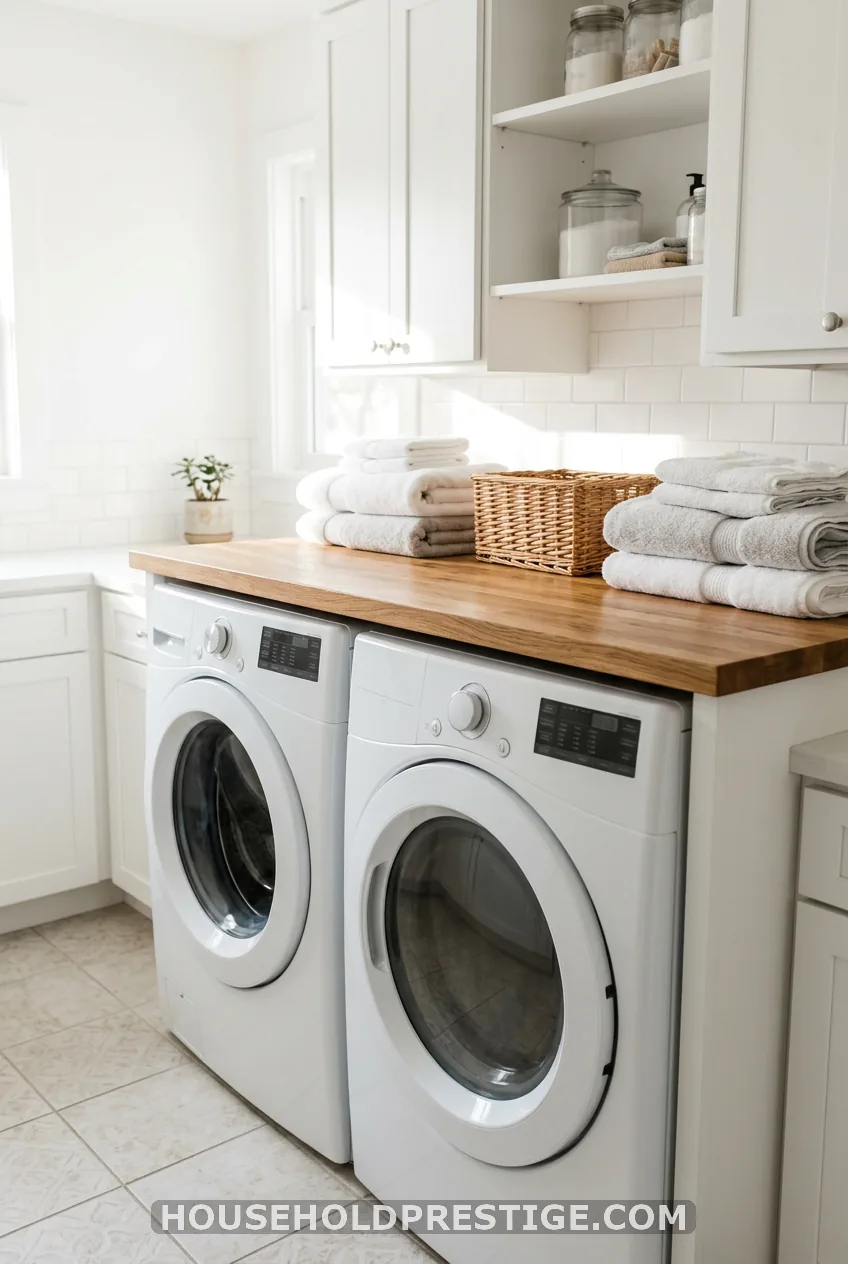
This is the classic. An IKEA HAMMARP-style top or a big-box butcher block slab runs about 25 inches deep and handles most front-load pairs. Expect roughly $30-$60 per linear foot.
Seal every face, including the underside and cut edges. Water-based polyurethane gives a hard, wipeable shell. Butcher block oil looks softer but needs a fresh coat every few months in a damp room.
2. The DIY Plywood-and-Cleat Counter
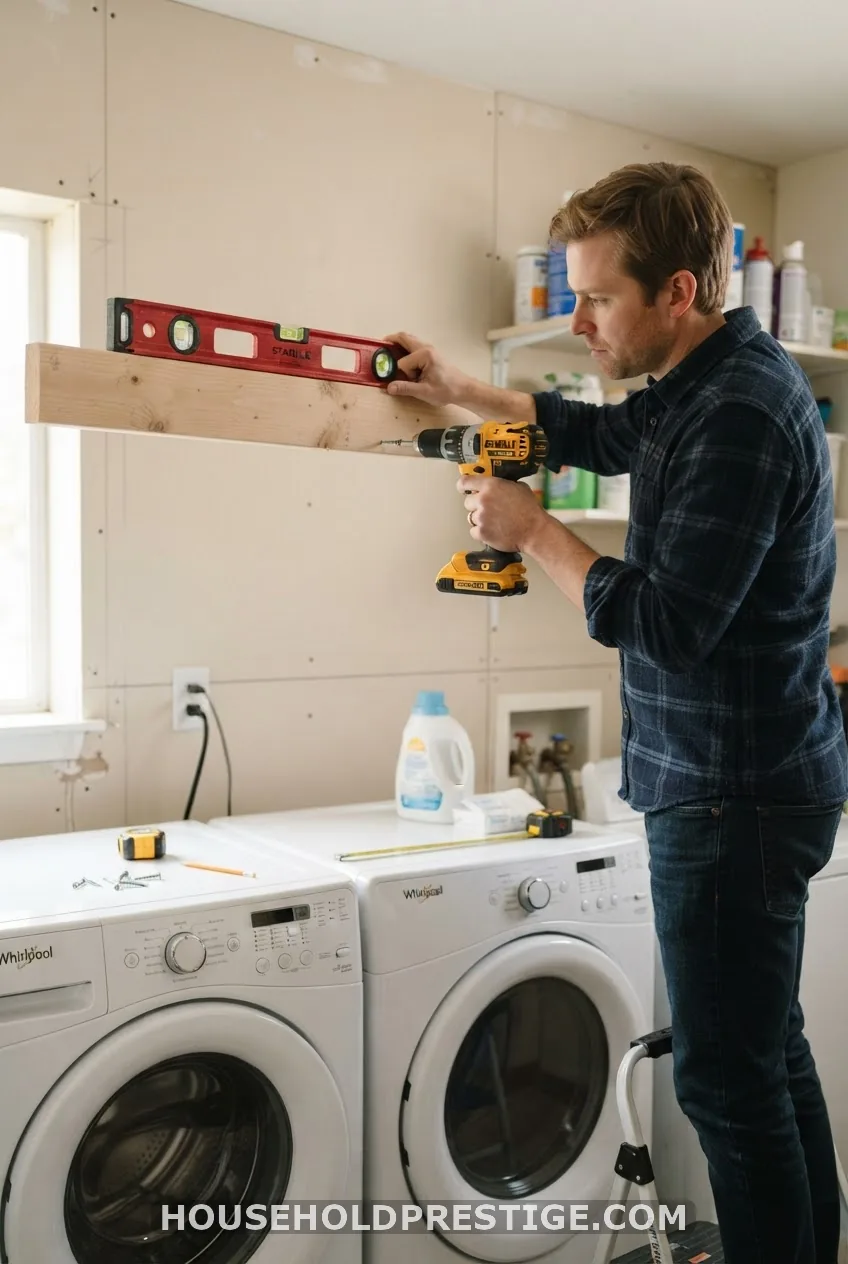
This is the build behind most wood counters. The top must never rest on the machines. They vibrate, and they have to slide out for repairs.
Materials
- One 3/4 in. plywood sheet, cut to your width by 24-25 in. deep
- Three 2×2 cleats, or 1×2 boards for light loads
- 2 1/2 in. wood screws
- Wood finish of your choice and clear silicone caulk
- Jigsaw, drill, stud finder and level
Total cost runs about $60-$110.
Steps
- Measure your machines with the door or lid closed. Add 1-2 in. of clearance above the tallest one.
- Mark the stud lines. Screw a back cleat and two side cleats at that height, level all the way.
- Cut notches for outlets, water valves and the dryer vent. Cut them larger than you think you need.
- Finish the top, let it cure fully, then set it on the cleats and screw it down.
- Run a silicone line at the wall, and leave a gap at the back for hoses.
The mistake to avoid
Don’t let the plywood sit tight against the machines. A 1 in. gap stops rattling and saves your finish. Plan on a weekend, not an afternoon.
3. Rustic and Reclaimed Wood
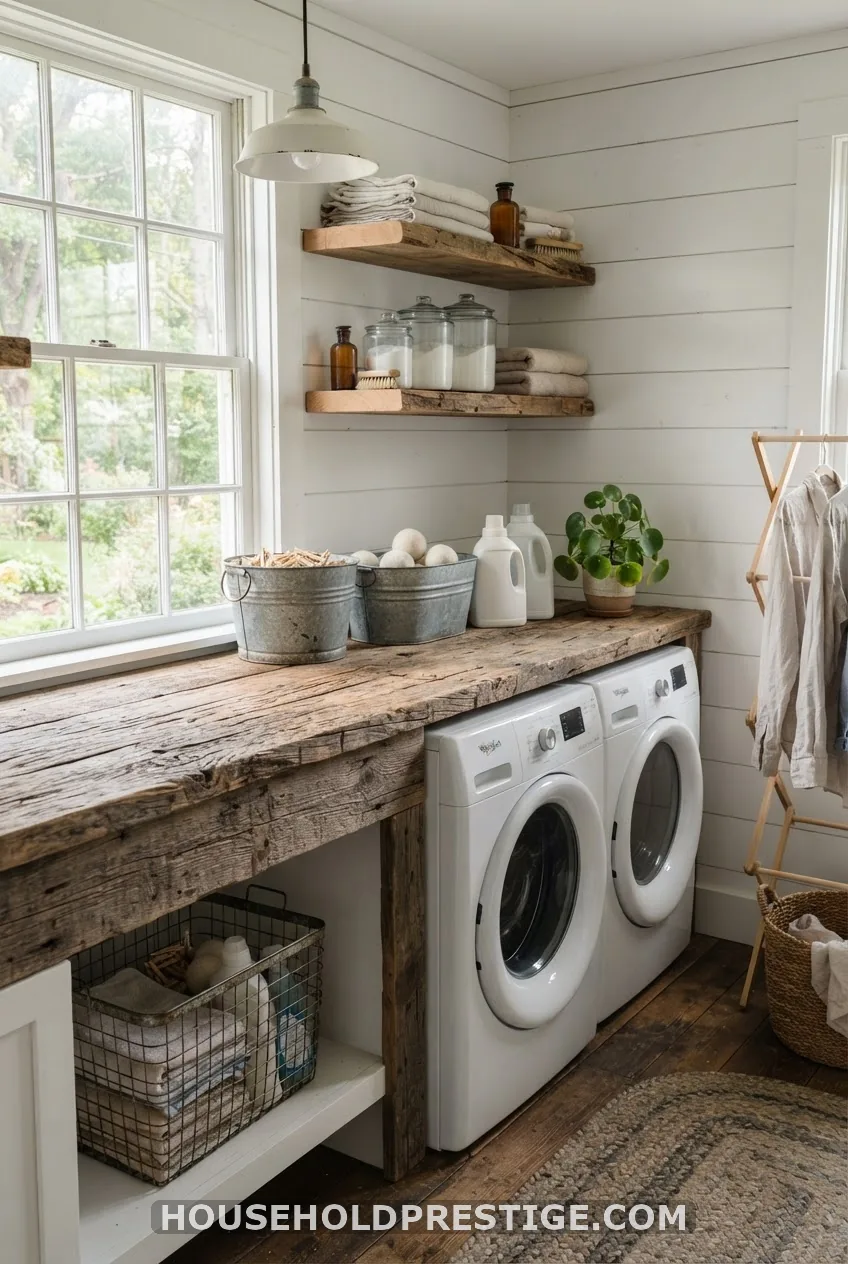
Barnwood brings knots, cracks and character. It also brings gaps where water can hide.
Fill the gaps and seal the top with a marine-grade finish or a pour of clear epoxy. Pair it with galvanized buckets and open shelves for a rustic look. Skip bleach on it.
4. Cheap Laminate Under $150
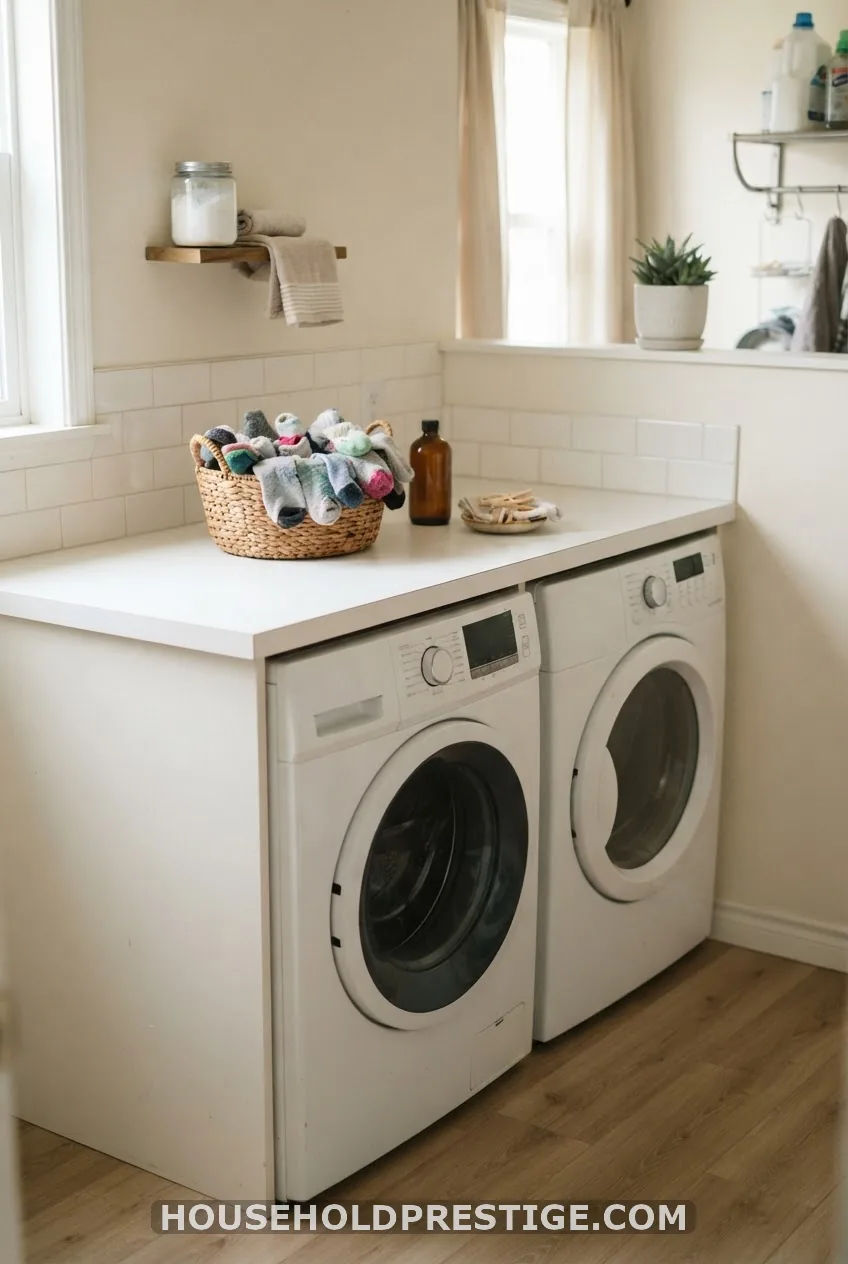
Laminate is the budget king at roughly $10-$25 per linear foot. Buy a premade top or a sheet to glue over plywood. A 6 ft. run often lands under $150 total.
It shrugs off detergent drips. It hates abrasive pads and standing water at the seams, so caulk every seam.
5. Painted and Sealed MDF or Melamine
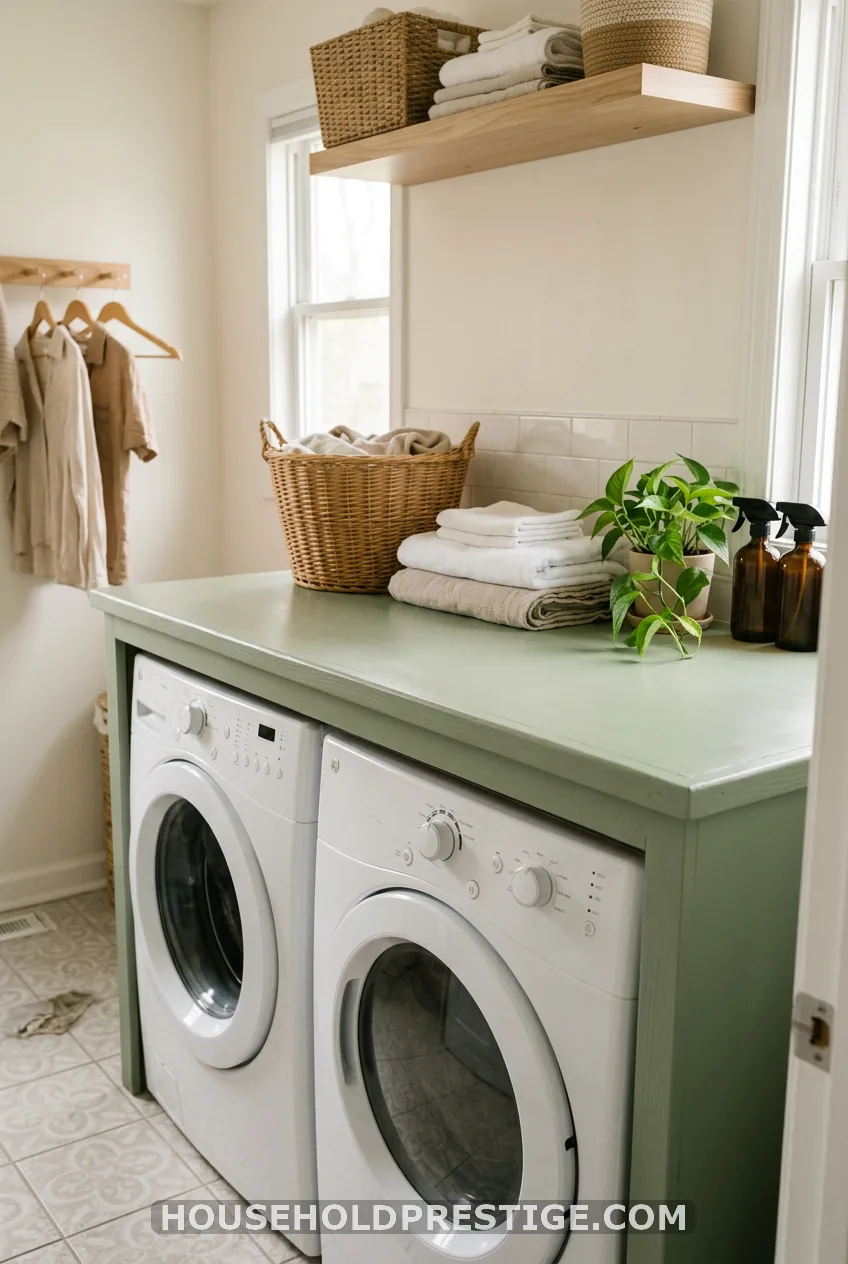
Cut a sheet of MDF or melamine from a big-box store. Many stores sell offcuts for less. Melamine already has a wipeable face, so just edge-band it.
Raw MDF drinks water. Prime all sides, paint, then add two coats of water-based polyurethane. Budget about $40-$80.
6. Peel-and-Stick Tops for Renters
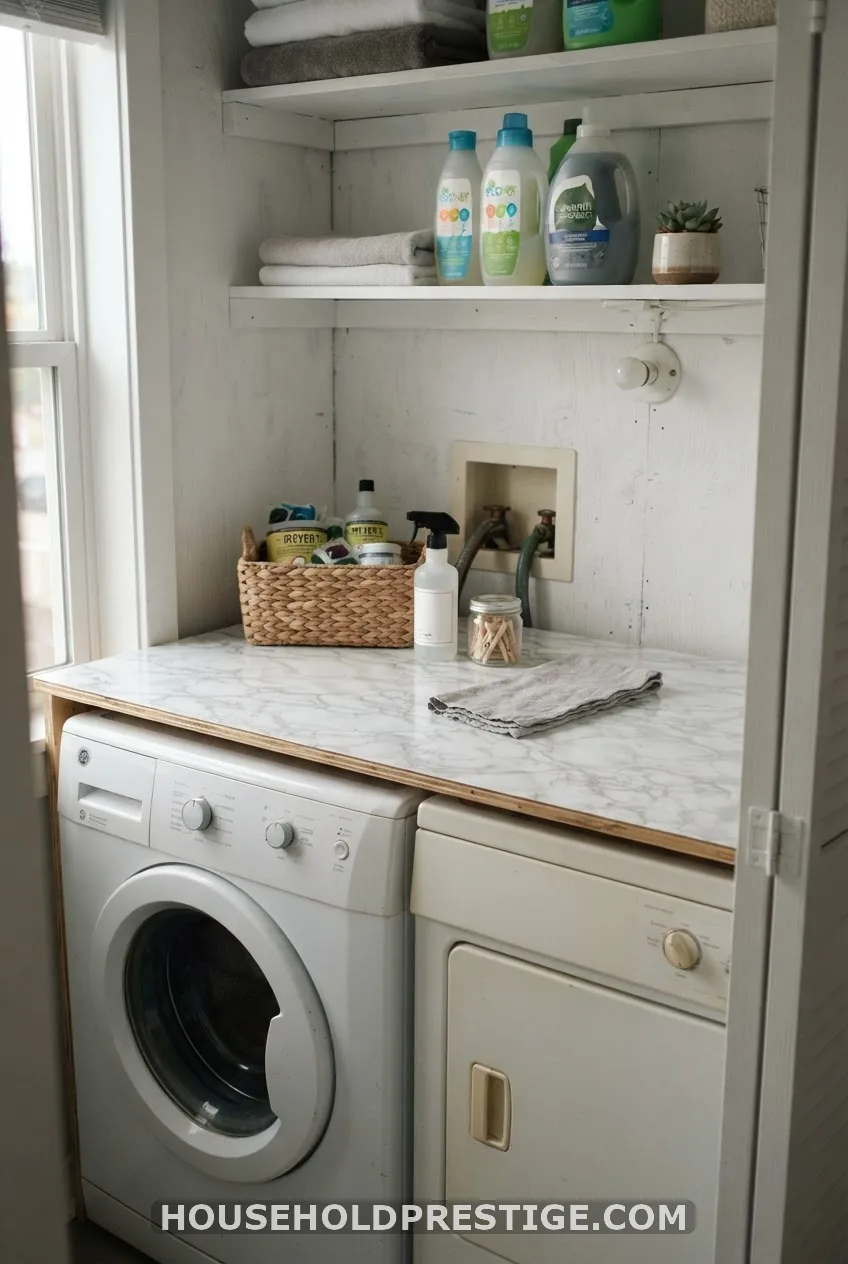
Renters, this one is yours. Rest a plywood top on freestanding wall brackets or a pair of slim side cabinets, then cover it with marble-look peel-and-stick vinyl.
Nothing is glued to the walls. You can lift it out and take it with you. Roughly $50-$90 total.
Stone, Solid Surface and Concrete
These cost more up front. They also shrug off detergent, bleach and time.
7. Quartz and Engineered Stone
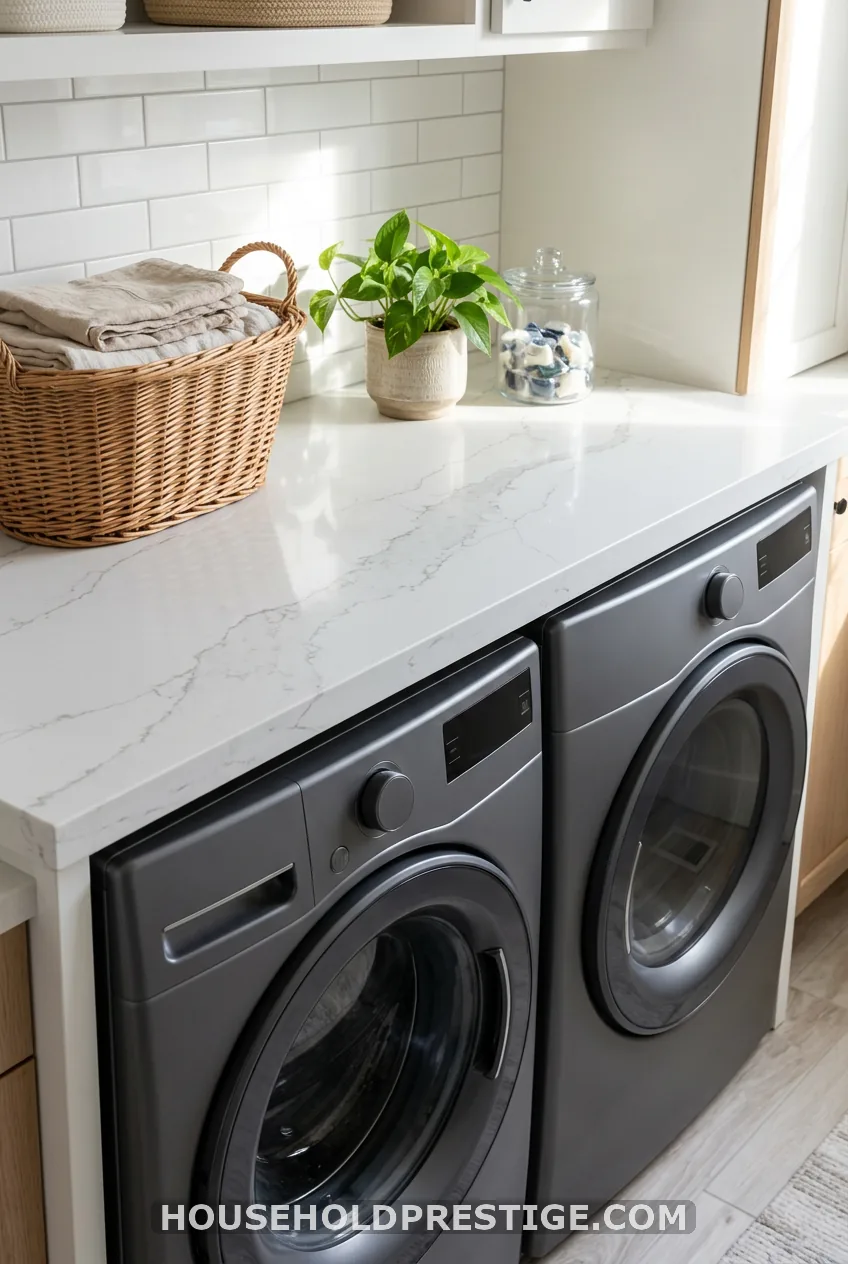
Quartz is non-porous. No sealing, no stains from fabric softener, no worry over bleach drips. Cambria, MSI Q, Silestone and Caesarstone all make laundry-friendly colors.
Expect around $60-$120 per linear foot installed, depending on your area. Avoid pouring very hot pans or irons straight onto it.
8. Quartz From a Remnant Slab
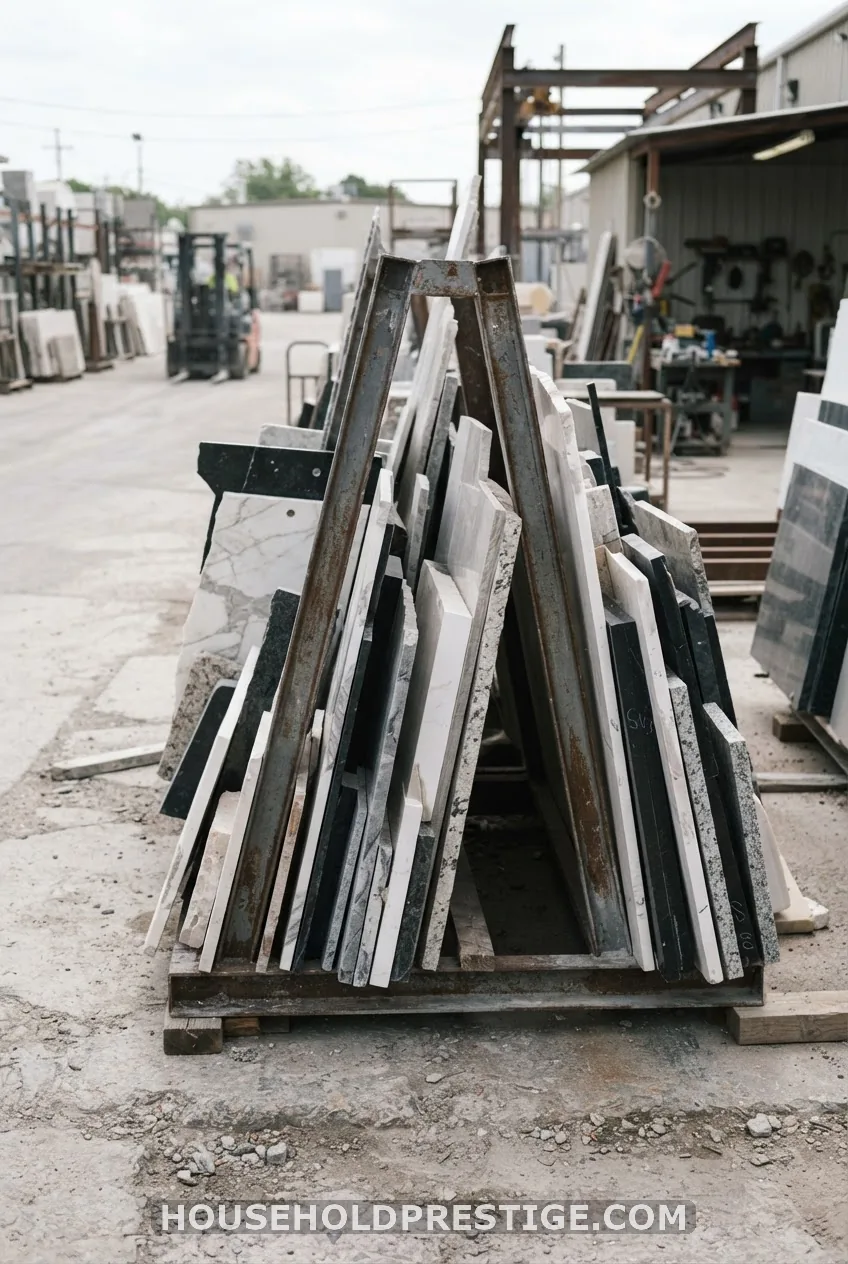
A 6 ft. laundry run needs a small piece of stone. Ask local fabricators about remnants and overstock slabs. You pay for the offcut and the cutting, not a whole slab.
9. Solid Surface With an Integral Sink
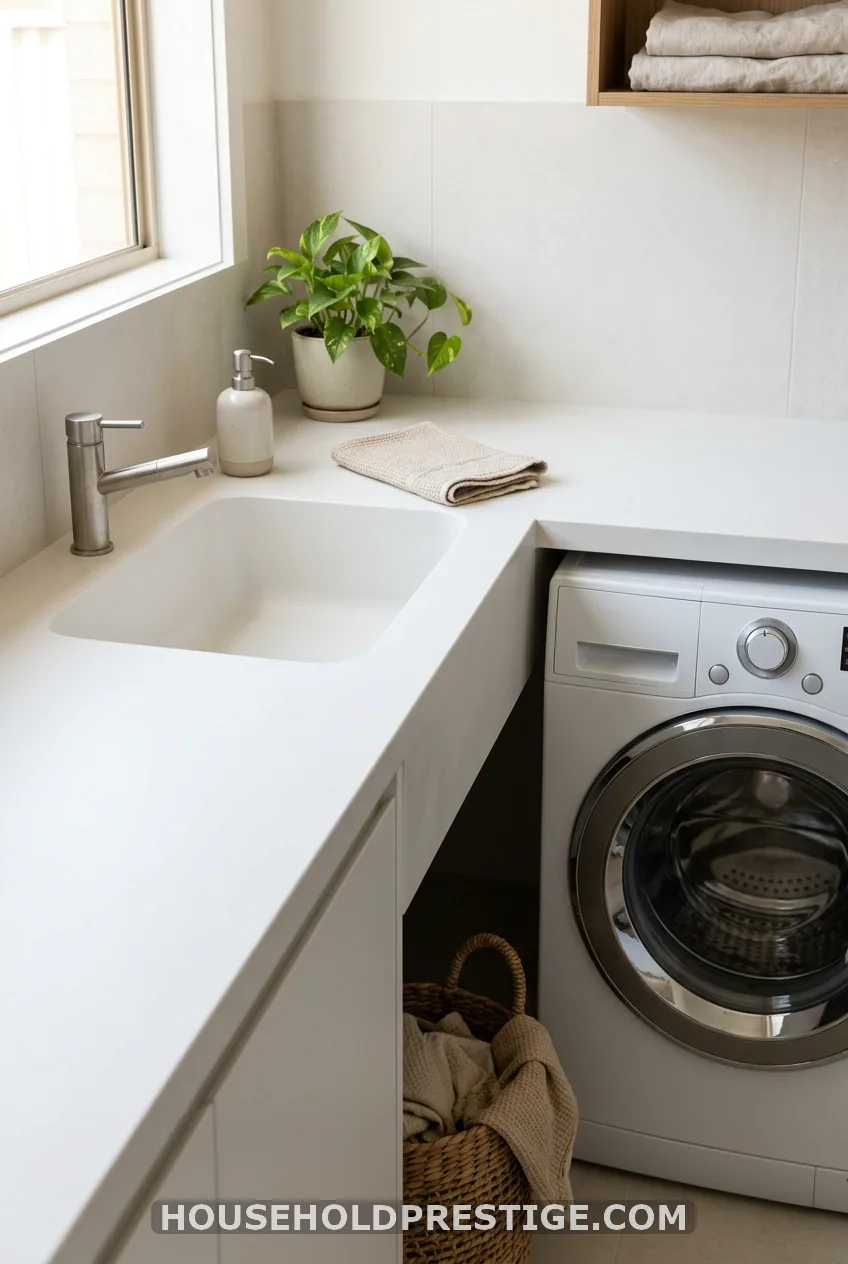
Corian-style solid surface has no visible seams, even where the sink meets the top. Scratches or scorch marks sand out with a fine pad.
It suits front-load pairs best, where the top stays clear and free of lid swings.
10. Concrete and Concrete Overlay
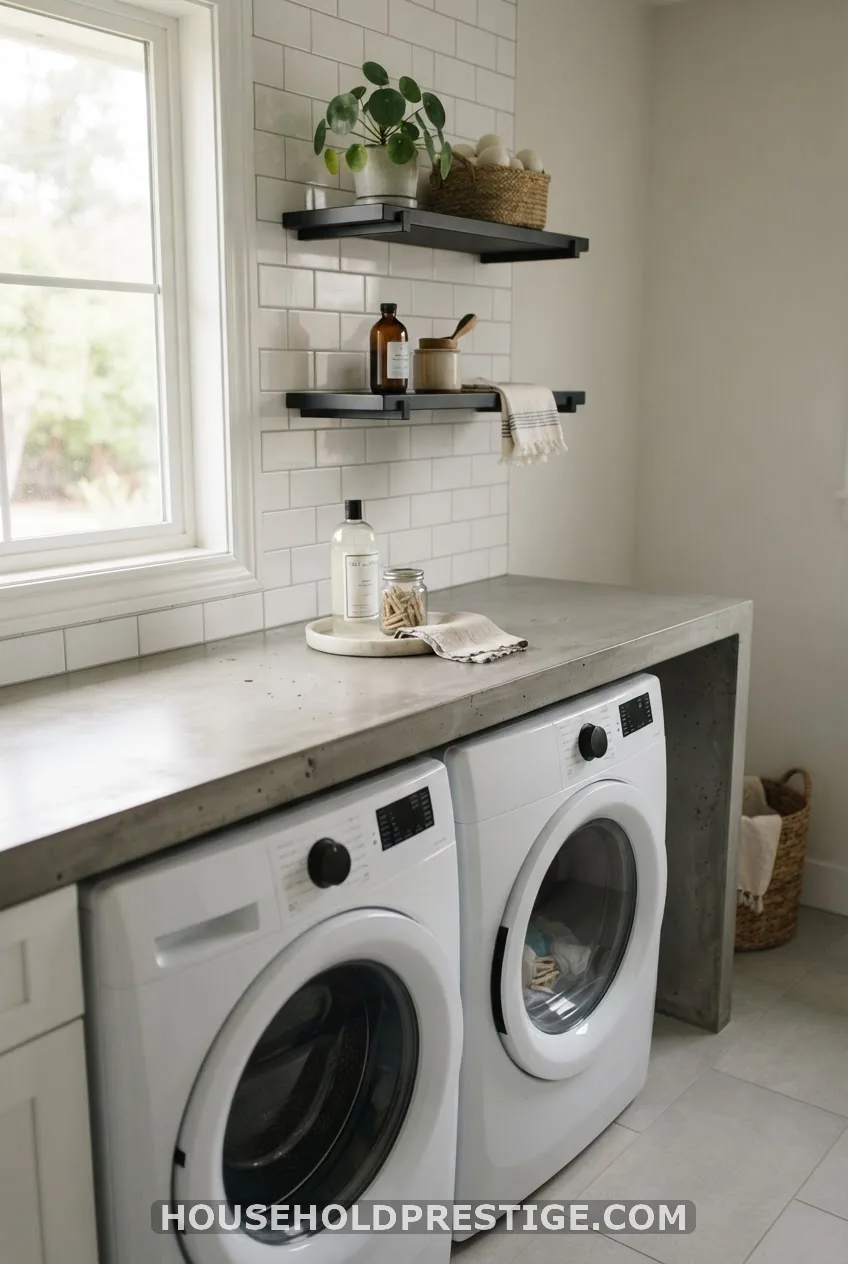
You can buy precast slabs or pour an Ardex-style overlay over a plywood base. Both look modern and calm.
Concrete is heavy. Use cleats plus side supports, and never rest the slab on your machines. Seal it well, because detergent stains raw concrete fast. Re-seal once a year.
11. Honed Granite
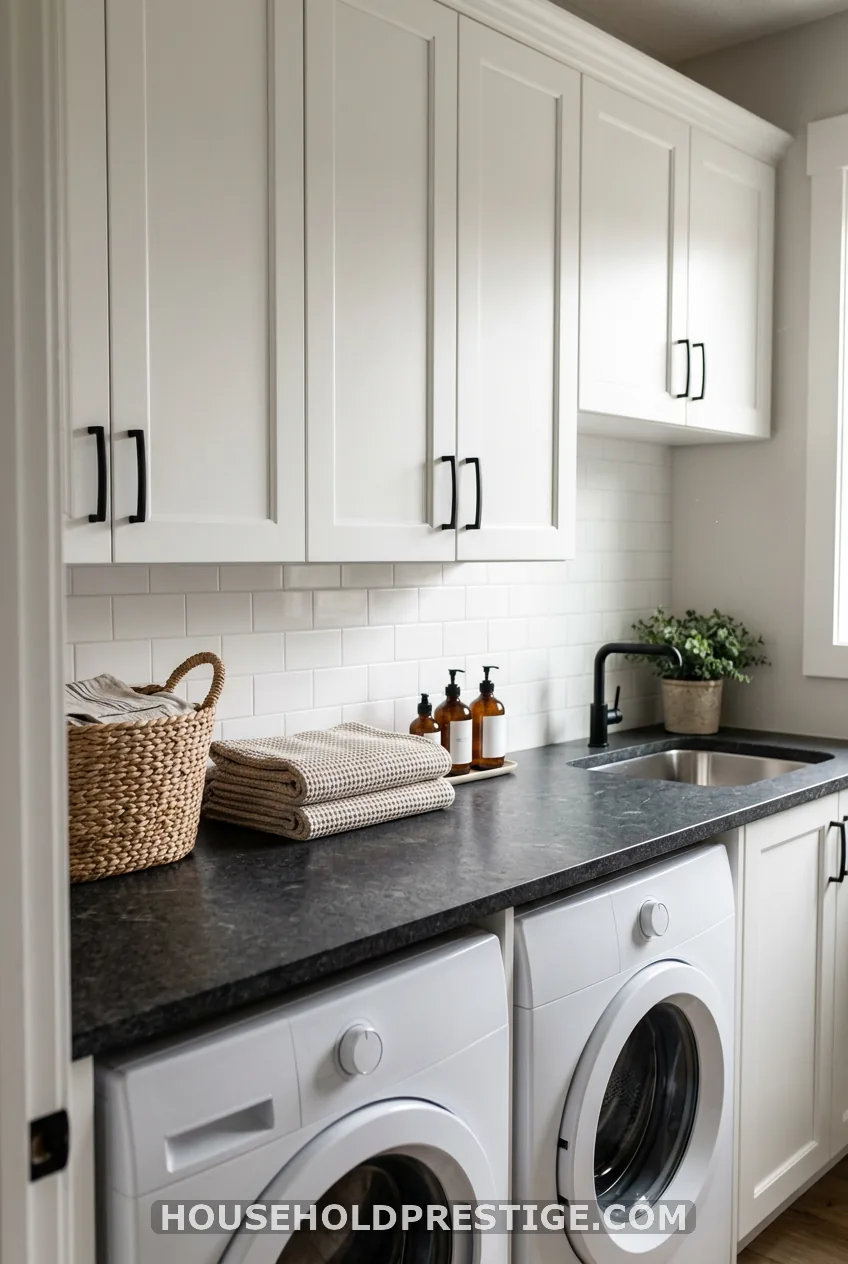
Honed granite hides fingerprints and lint better than polished stone. It needs sealing about once a year. Skip acidic cleaners like vinegar on it.
Layout-Driven Countertop Ideas
Here the machine decides the plan. Measure before you fall for a photo.
12. The Folding Station With a Drying Rack
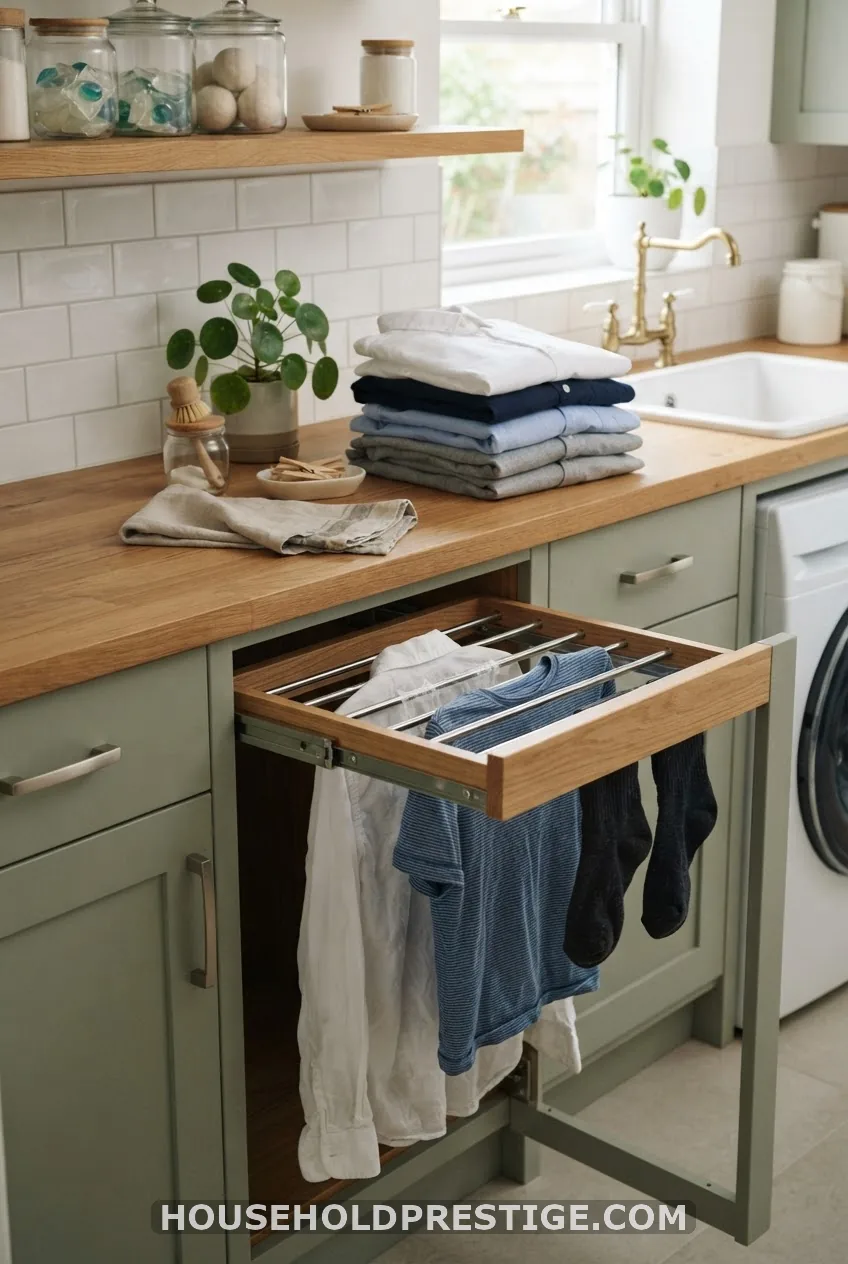
Keep 12-18 in. of counter clear for stacking baskets. Hang a pull-out drying rack or a drop-down folding table under a shelf or cabinet.
Mount an overhead shelf about 18 in. above the counter. That’s tall enough for detergent bottles.
13. Countertop With a Sink
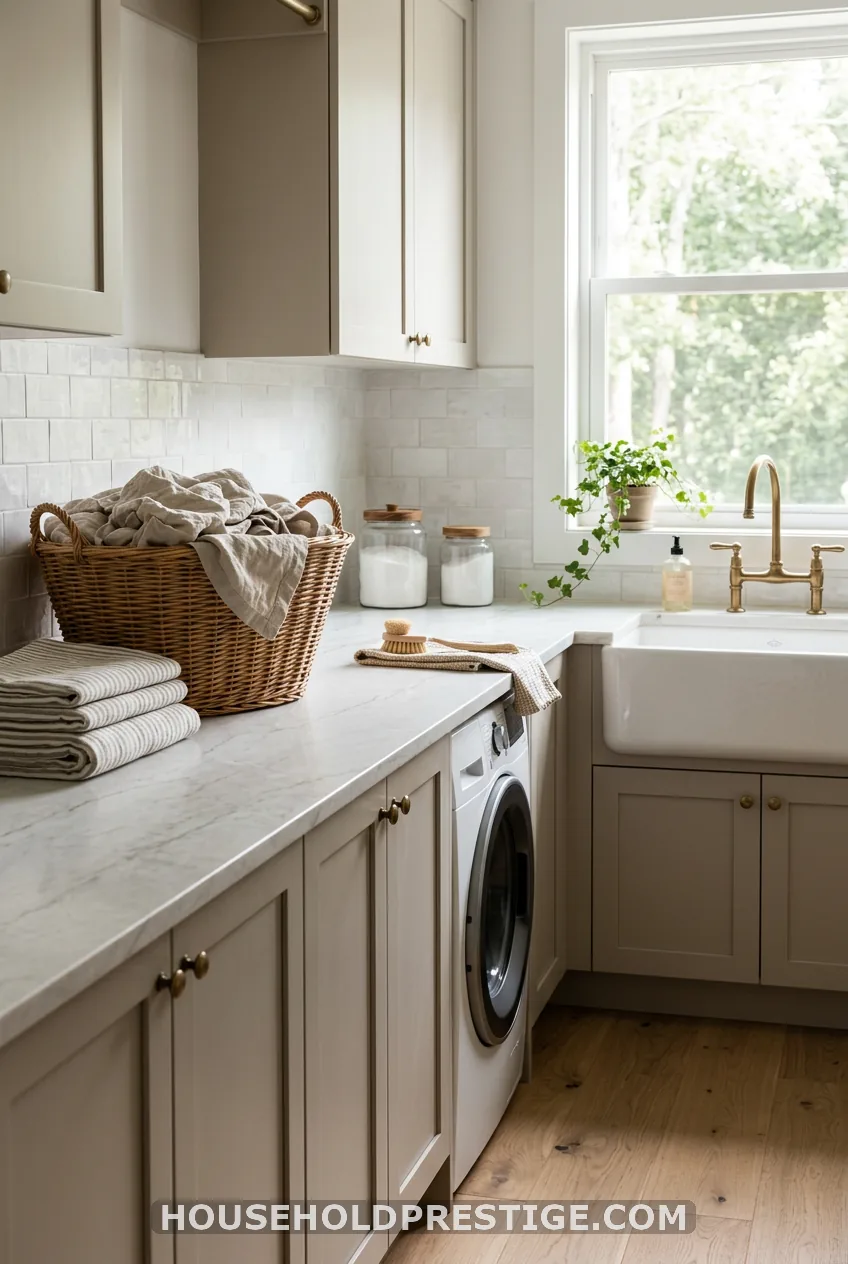
Go for a basin at least 10 in. deep. A shallow bar sink won’t soak a muddy jersey. An undermount utility sink looks tidy. A farmhouse apron sink looks cozy.
Put it at the end of the run so it doesn’t eat your folding space. Plumbing adds cost, often $300 or more if you hire a plumber.
14. Small and Narrow Laundry Rooms
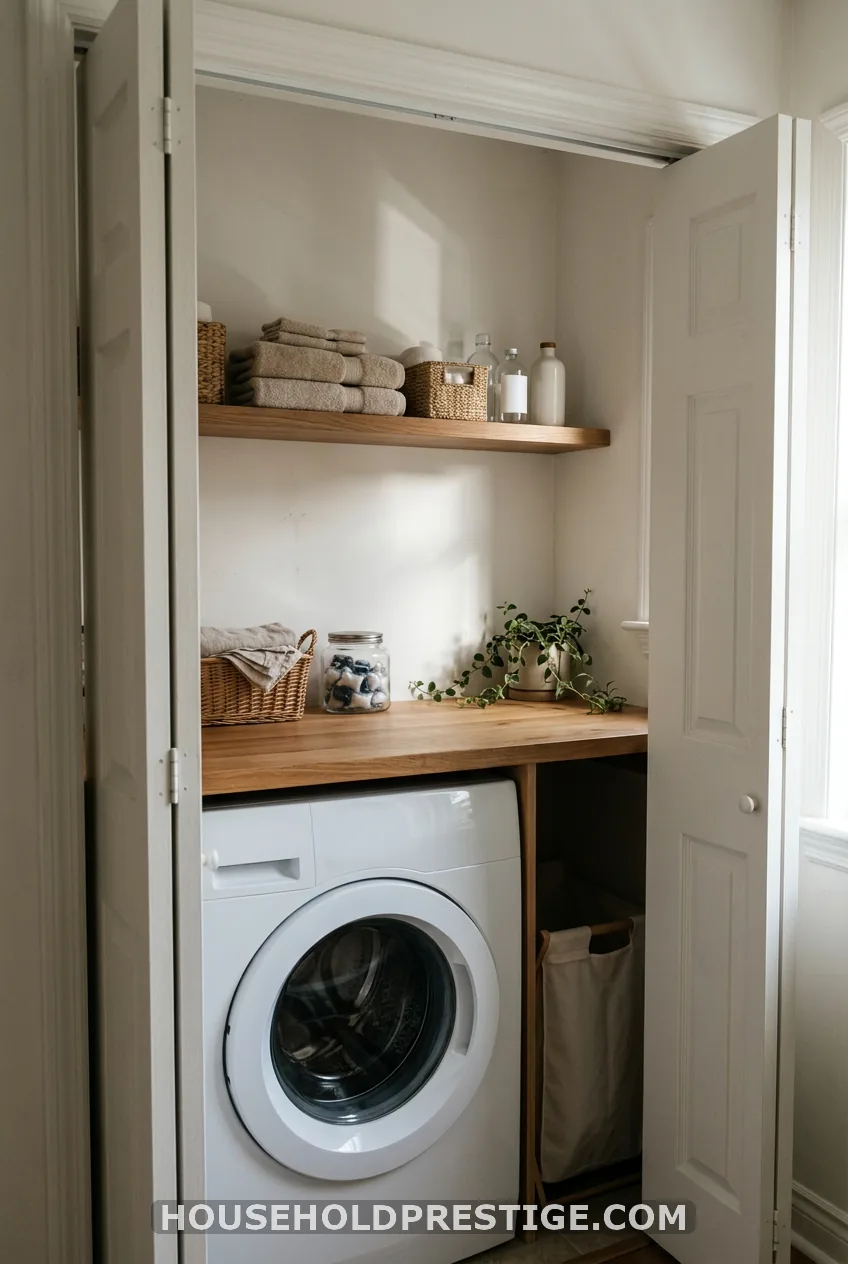
Run the counter wall to wall over a single machine. Or use a 12 in. floating shelf-counter hybrid where depth is tight.
When there is no depth at all, hang shelves over the machines instead.
15. Over a Top-Loader: Myth vs. Reality
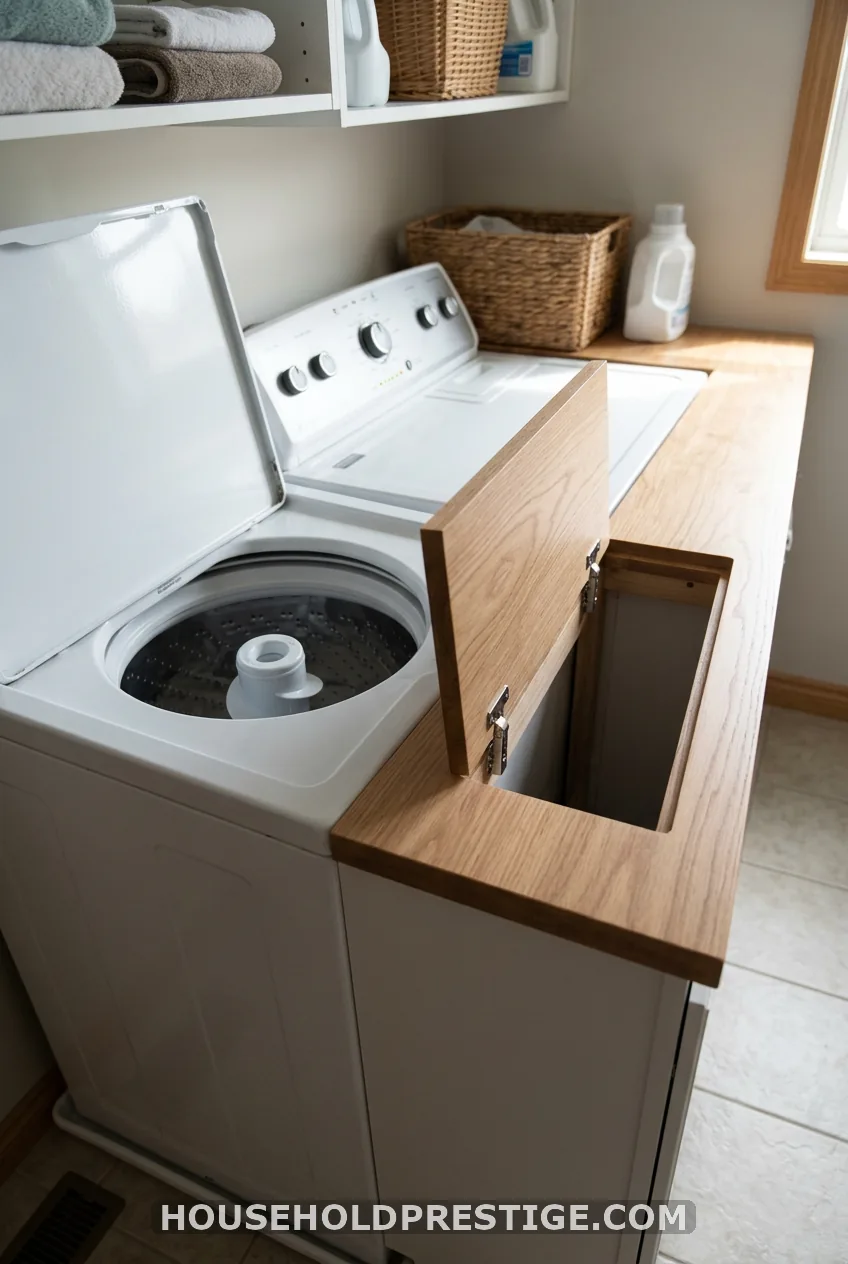
What most people think: A counter fits right over any washer.
Reality: A top-loader’s lid swings up high. Measure the full open-lid height, then add a gap on the hinge side. A fixed counter just above the lid usually fails.
Three fixes work. Use a lift-off or hinged section. Build the counter beside the washer. Or set a fixed shelf above the open-lid height.
16. Stacked Washer-Dryer With a Counter Beside It
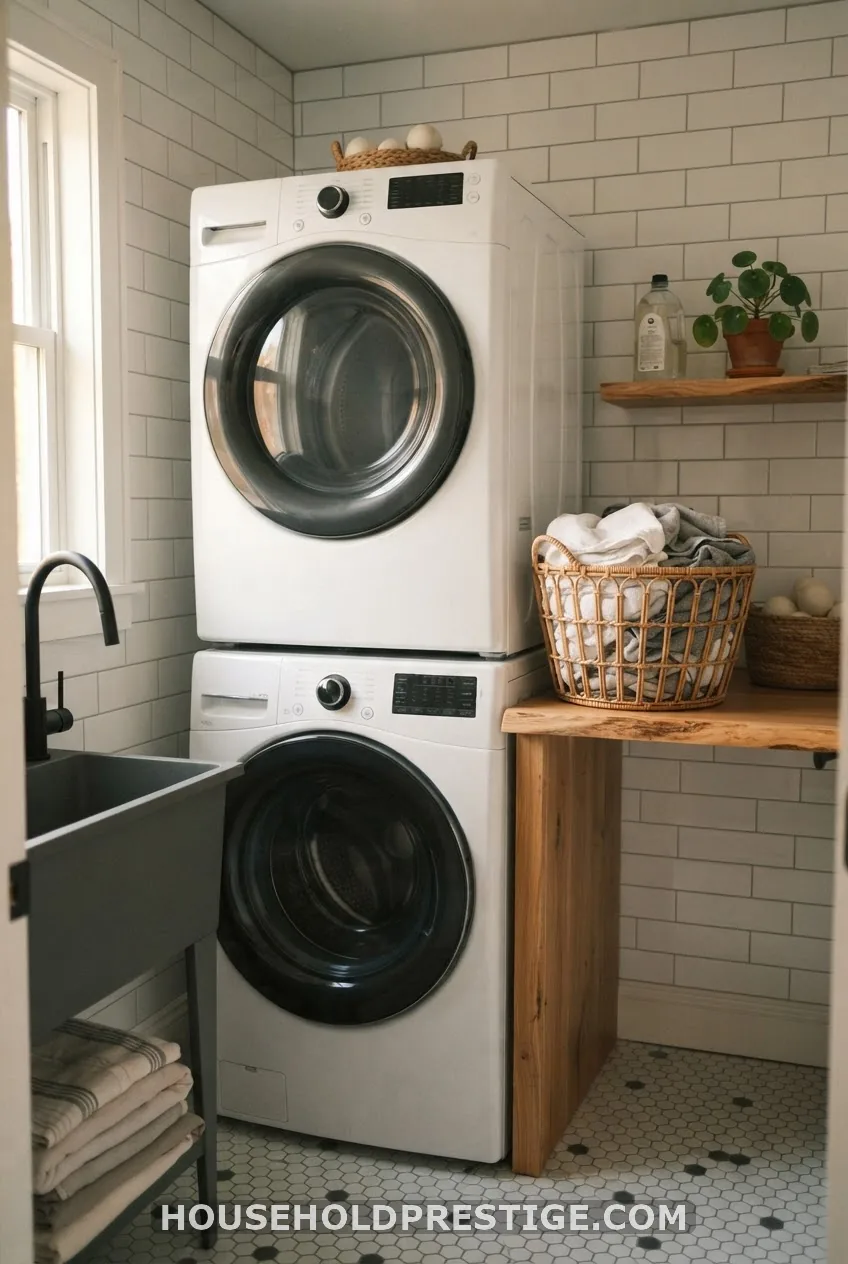
A stack frees floor space but leaves no top surface. Build a counter beside it at 36 in. high. Fill the wall above with shelves.
Style-First Countertop Looks
Once the fit works, pick the mood.
17. Farmhouse Style
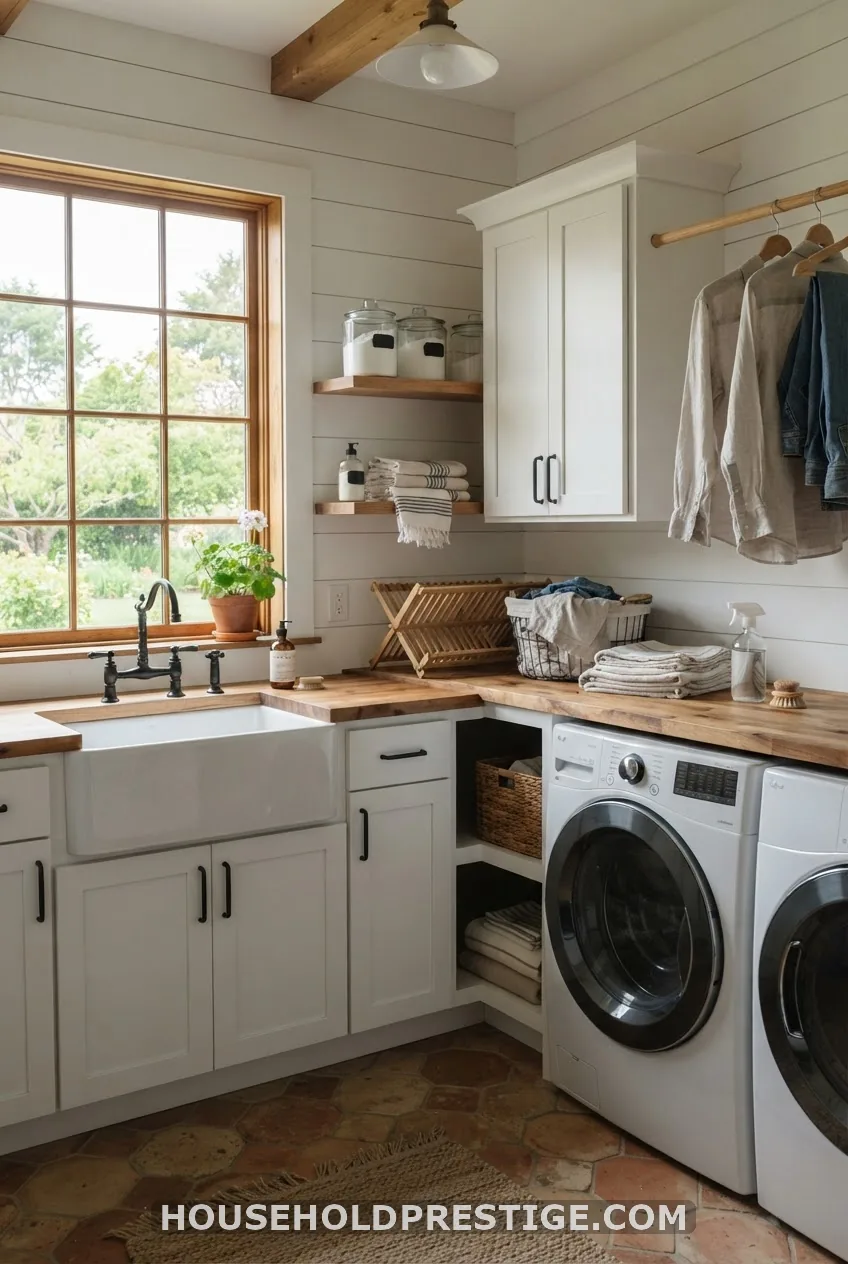
White cabinets, black pulls and a butcher block or quartz top set the base. Add shiplap or beadboard behind the machines. A matte black faucet over an apron sink finishes it.
Paint the walls a soft gray like Benjamin Moore Revere Pewter.
18. Black and Moody
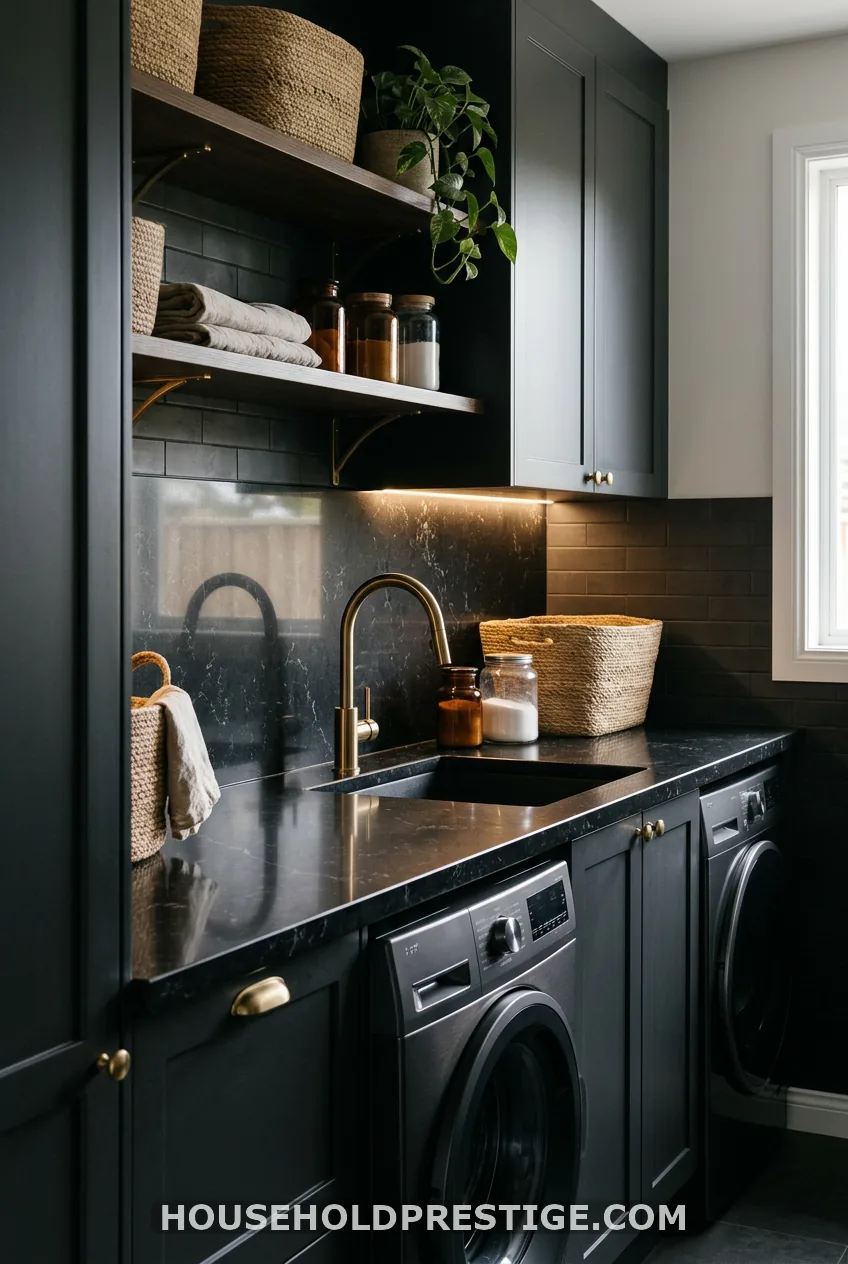
Black or charcoal quartz, soapstone-look quartz or honed granite looks rich against dark cabinets. Busy detergent labels vanish on it. That’s the upside.
The downside is a cave. Add under-cabinet task lighting, plus warm wood or brass touches.
19. Decor and Organization on Top
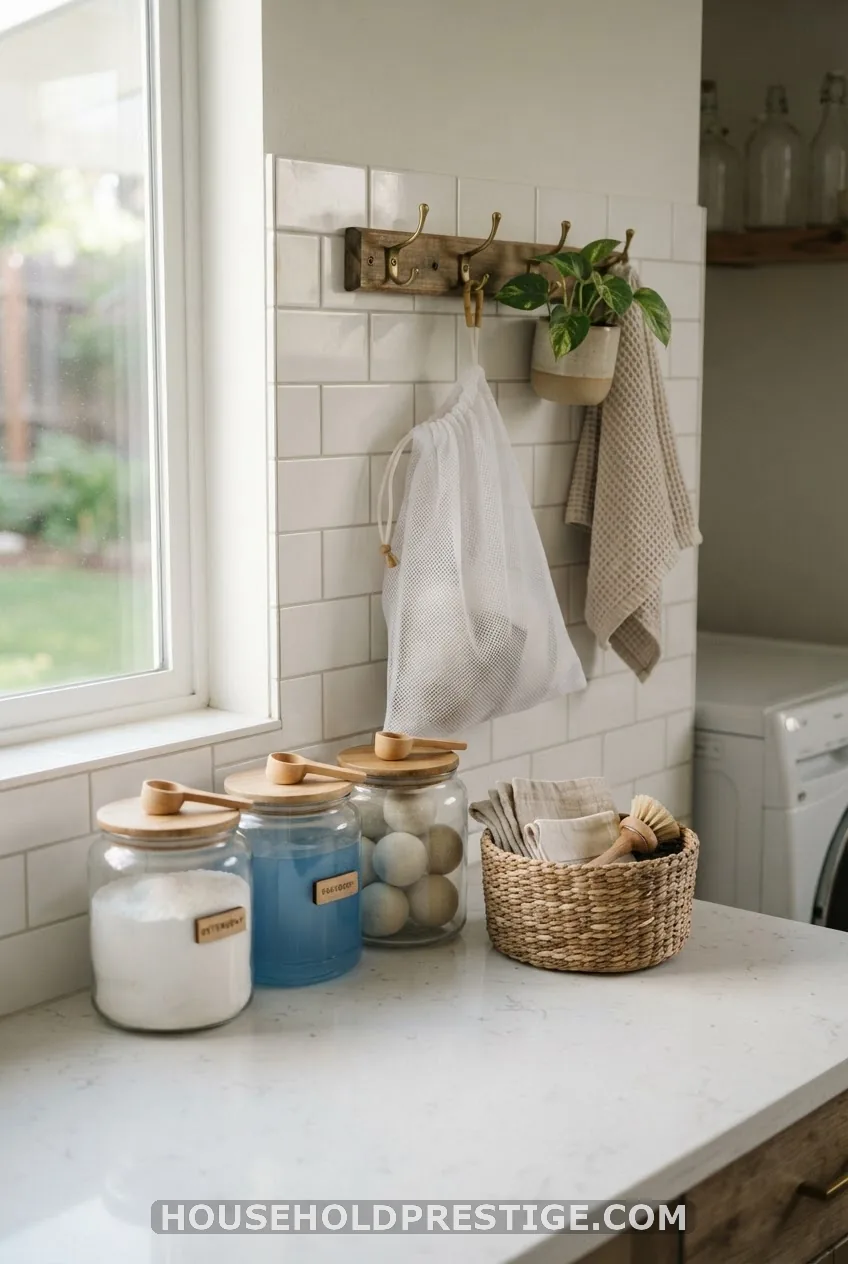
Keep the surface 80 percent clear. That’s the rule. Use glass jars for pods, a labeled basket for lost socks, and wall hooks for delicates bags and lint rollers.
Here is my cautionary tale. I once built a pretty counter and left no access gap. When a hose leaked, I had to unscrew the whole top.
Leave the water shutoff valves and dryer vent reachable. Never block a dryer vent.
How to Pick Your Material
Use these rough ranges as a guide, and check local prices.
- Rentals: Peel-and-stick over a freestanding plywood top.
- First DIY: Butcher block or laminate over plywood.
- Forever home: Quartz or solid surface.
- Wet-room worry: Quartz wins on stains. Wood needs the most upkeep.
Standard counter height is about 36 in. The better rule is machine height plus 1-2 in. Check depth too, since some washers run deeper than 25 in.
Wrap-Up
Which of these 19 laundry room countertop ideas will you try first: the weekend wood build or the black quartz splurge?
FAQ
How high should a laundry room countertop be?
Most sit near 36 inches. The real rule is your tallest machine height plus a 1-2 inch gap. Measure with the door or lid closed.
Can you put a countertop over a top-load washer?
Only if the lid can open fully. Use a lift-off or hinged section, or build the counter beside the washer.
What is the cheapest countertop for a laundry room?
Laminate is the cheapest at roughly $10-$25 per linear foot. Painted and sealed MDF and butcher block remnants come next.
Do laundry room countertops need special support?
Yes. Screw cleats or ledger boards into the wall studs and add side panels. Never rest the weight on the appliances, so the machines can still pull out.