

You closed the pool in October. You opened it in May. And what greeted you was a swamp.
I’ve been there. The wrong pool cover is worse than no plan at all, because it lulls you into thinking the job is done while leaves rot and water turns the color of a science experiment. Most of these pool cover ideas get pitched to you as one-size-fits-all, and that’s the trap. A cover that’s right for a screened lanai in Florida is the wrong call for a yard buried under three feet of Minnesota snow.
So I sorted them. By budget. By pool type. By how much you hate maintenance. By the end of this, you’ll know exactly which cover belongs on your water, and which ones to skip before you waste a dime.
The Short List: Pool Cover Ideas Worth Your Money
Here’s the menu. Some of these are five-minute jobs. One of them costs as much as a small car. I’ll tell you which is which.
1. The Solar Cover (Your Cheapest Win)
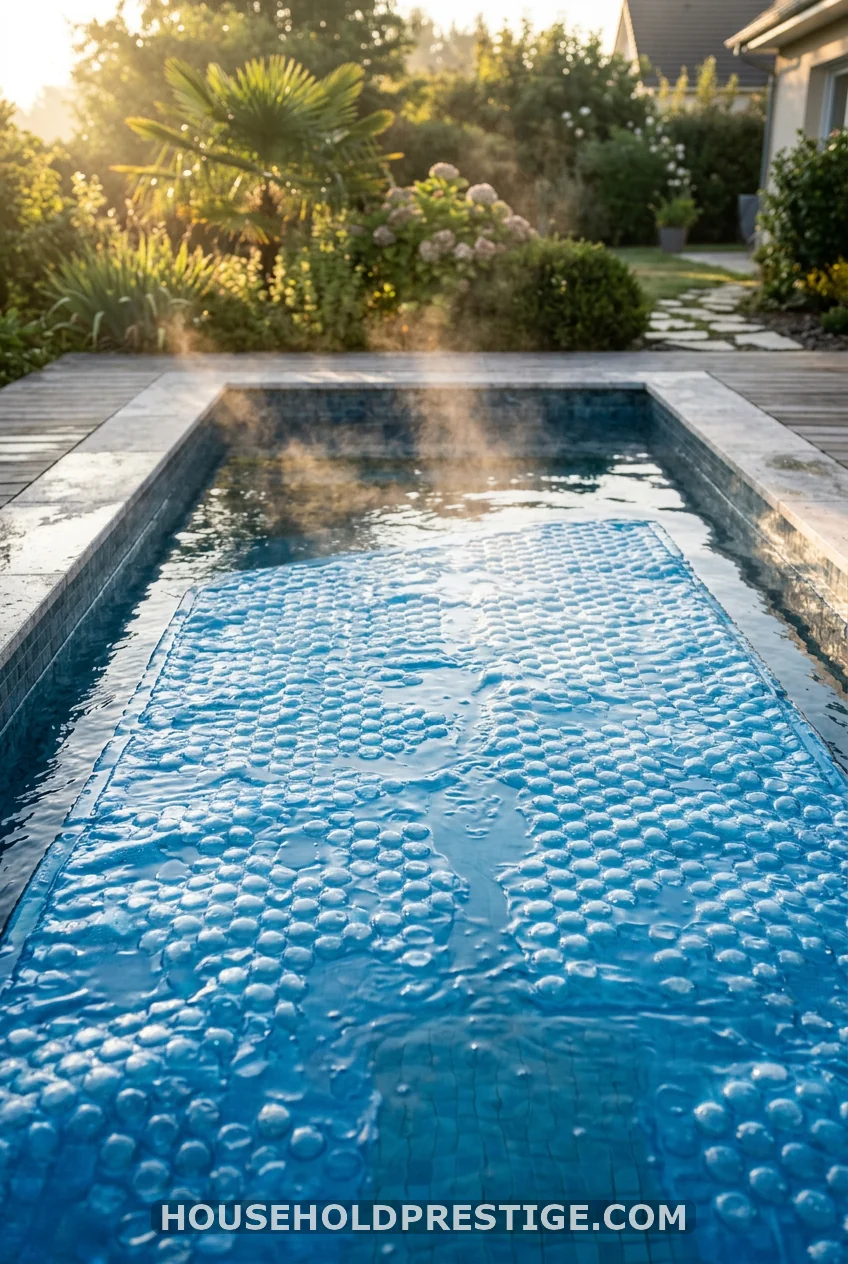
Think bubble wrap, but built for your pool. The bubbles trap sunlight and feed the heat straight into the water. Mine adds about 10 to 15 degrees over a sunny week, which stretches my swim season by a solid month on each end.
It runs $35 to $400, depending on thickness and size. It also cuts evaporation hard, so you refill less. The catch? It does nothing for safety and tears within a few seasons. Treat it as a heater, not a guard.
2. The Mesh Safety Cover
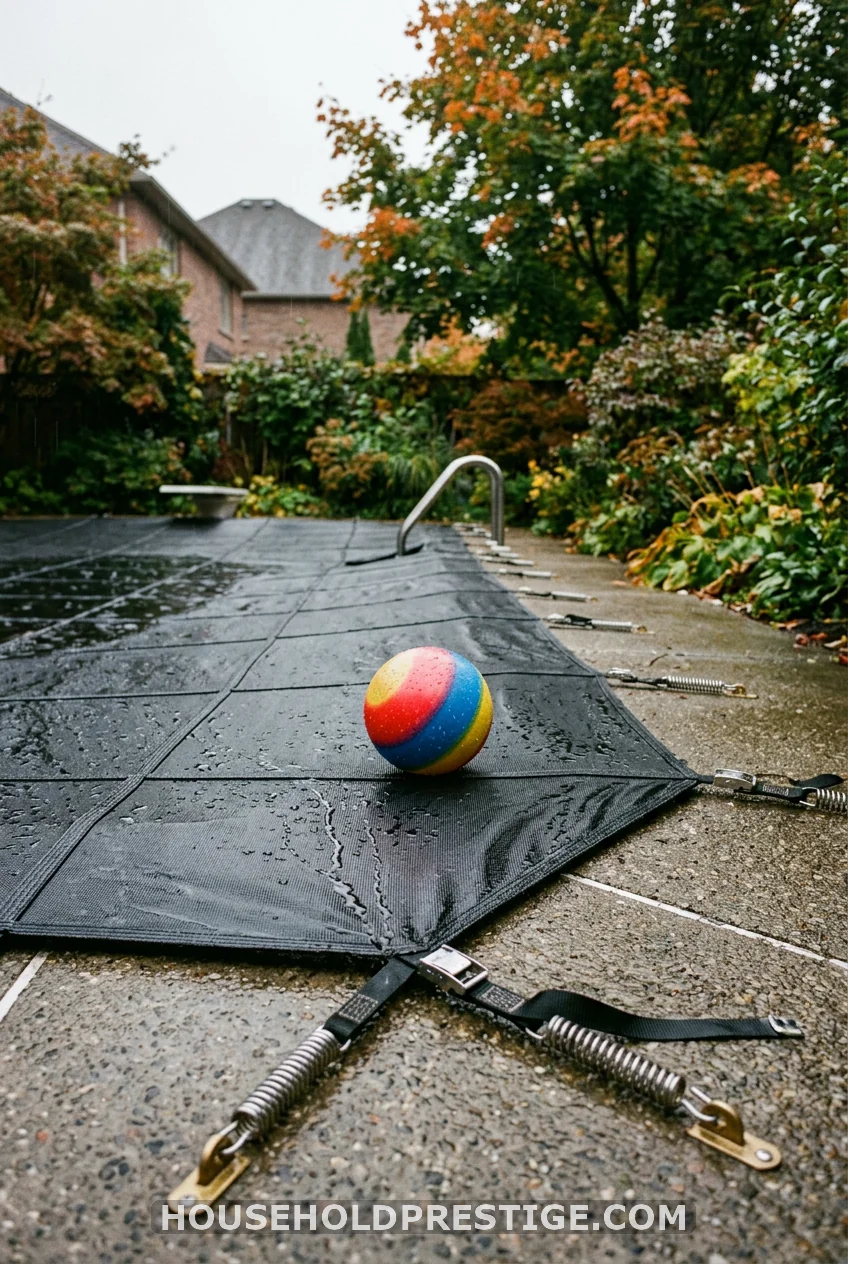
This is the one that holds weight. Densely woven threads let rain and snow drain straight through, so you skip the pump-the-puddle chore that haunts solid covers. Some hold up to 4,000 pounds, enough that a pet (or a clumsy adult) won’t break through.
Budget $300 to $1,400, plus a one-time anchor install. The trade-off: mesh lets UV light pass, so a little algae can still bloom underneath. Worth it for the peace of mind.
3. The Automatic Cover (The Push-Button Splurge)
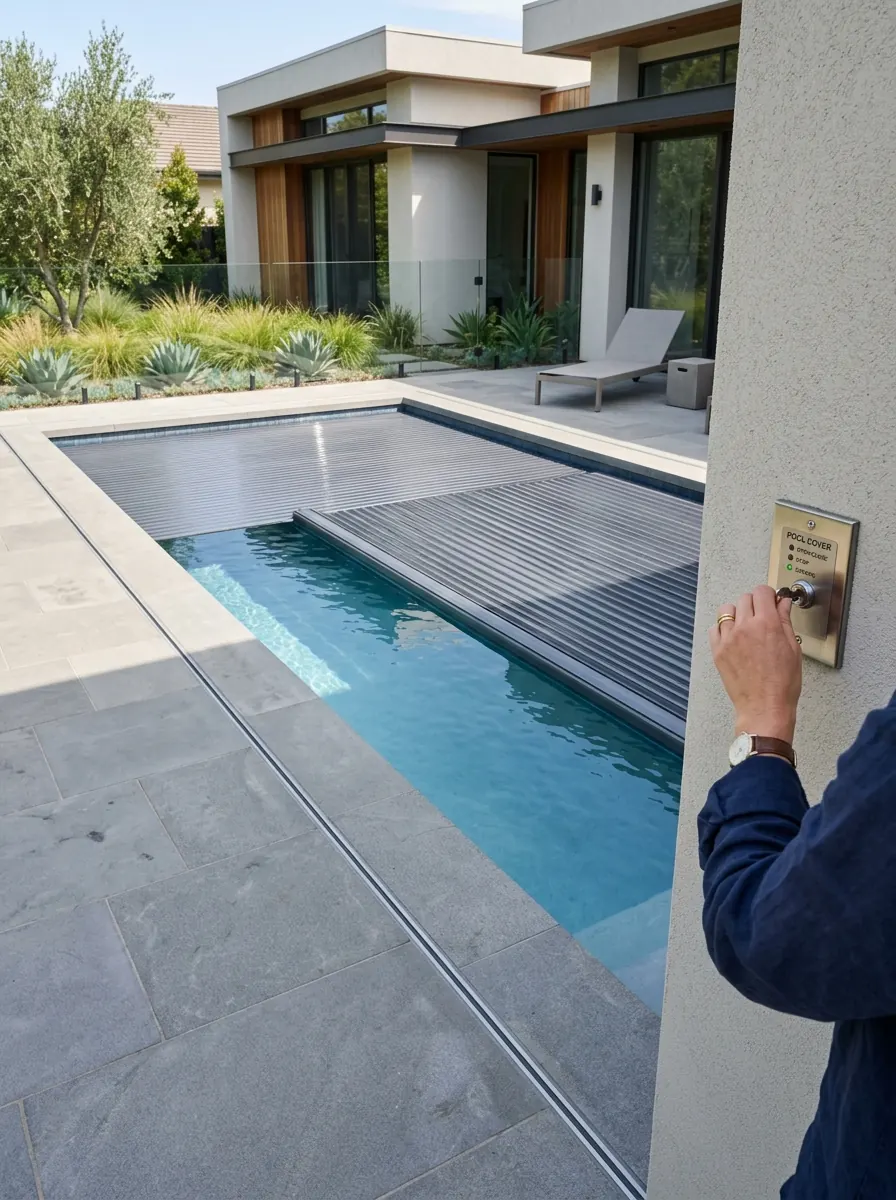
This is the deep dive, because it’s the one people get most wrong. An automatic cover rolls across your pool on a track at the press of a button. No wrestling, no anchors, no friend on the other end. It’s the most convenient cover made, and the most expensive.
Why It Works
Convenience drives use. A cover you have to drag off by hand gets left on, and a pool you never uncover is a pool you never swim in. The automatic version flips that. Closing the pool becomes a two-second habit, like locking a door. That habit is also a safety layer, because a closed pool is a barrier between curious toddlers and deep water.
The Real Cost
Expect $8,000 to $20,000 installed for most residential pools. Yes, that’s the price of a used car. The motor, the tracks, the custom-fit fabric, and the pro install all stack up. Cheaper “automatic” kits exist, but the bargain ones jam, and a jammed cover is a dead cover.
Step-by-Step: How an Install Really Goes
- A tech measures your pool to the inch, including any odd curves or steps.
- Tracks get mounted along the long sides of the pool, either on top of the deck or recessed under it for a cleaner look.
- A housing box for the rolled-up cover goes at one end, often hidden under a bench or a flush deck lid.
- The fabric and motor get fitted and tensioned.
- The tech runs a dozen open-close cycles to check for drag and alignment.
The whole job takes one to three days, depending on your deck.
Materials and Brands
Look at vinyl-laminate fabrics rated for your climate. Reputable systems use a sealed motor and a manual override crank for power outages. Ask specifically whether the housing is recessed or surface-mounted; recessed costs more but looks far better and protects the rolled fabric.
Common Mistakes to Avoid
- Skipping the override crank. When the power dies mid-storm, you’ll want it.
- Installing near a diving board, slide, or rock waterfall. Anything close to the water’s edge blocks the cover’s path.
- Choosing the cheapest fabric. It fades and cracks, and a replacement sheet alone runs four figures.
- Forgetting the drain pump. Rain pools on top, and standing water sags the fabric over time.
Pro Move
Spec the cover before you pour the deck, not after. Recessing the tracks and housing during construction costs a fraction of retrofitting them into finished concrete.
4. The Sliding Deck Cover (The Showpiece)
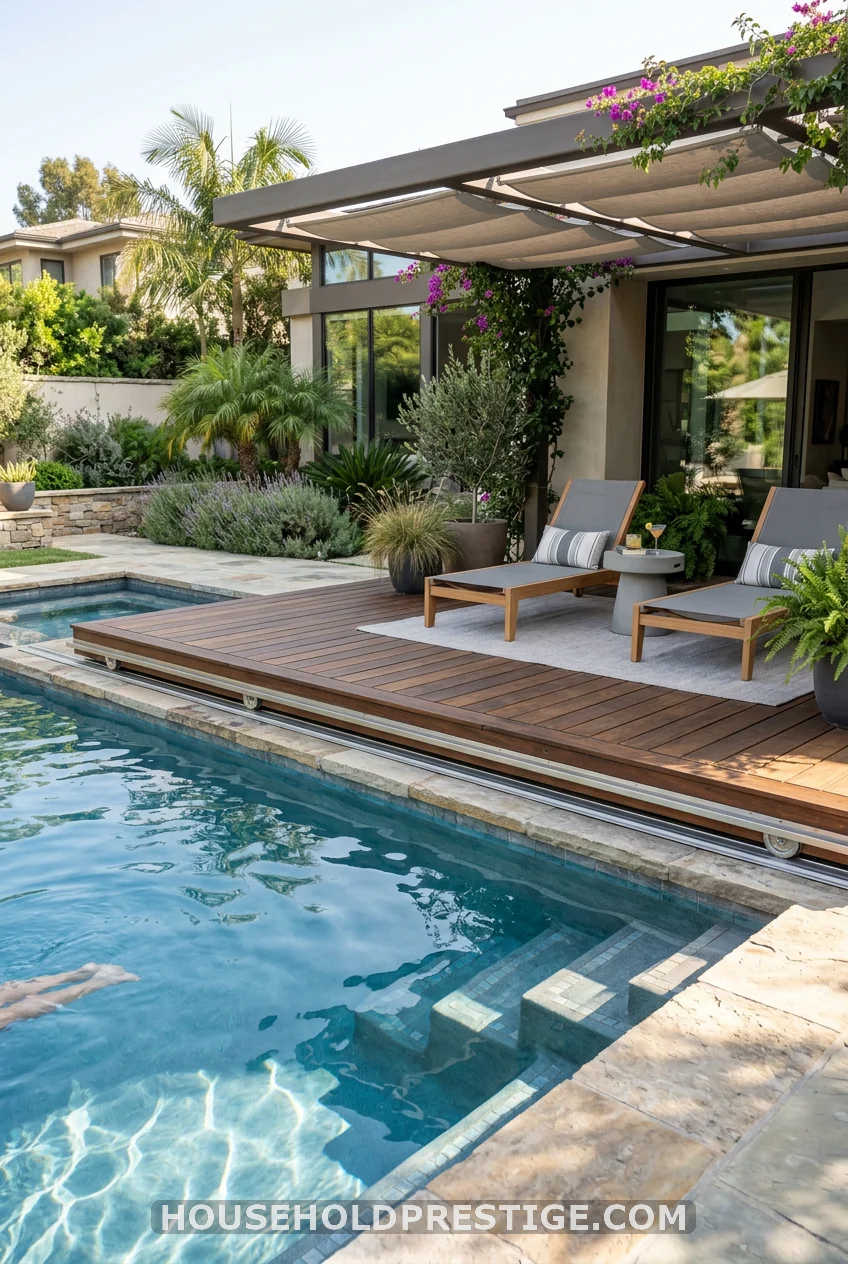
This one is theatrical. A solid deck rolls on tracks to expose the pool, then rolls back to give you a full patio. Furniture sits right on it. Guests have no idea there’s water underneath.
It’s also the cover that “can cost as much as the swimming pool itself,” in the words of one builder who installs them. Real numbers run $25,000 to $75,000. It works best on narrow, small-to-medium pools, and you need roughly double your pool’s footprint to park the deck when it’s open. Gorgeous, safe, and not for the faint of wallet.
5. The Solid Winter Cover
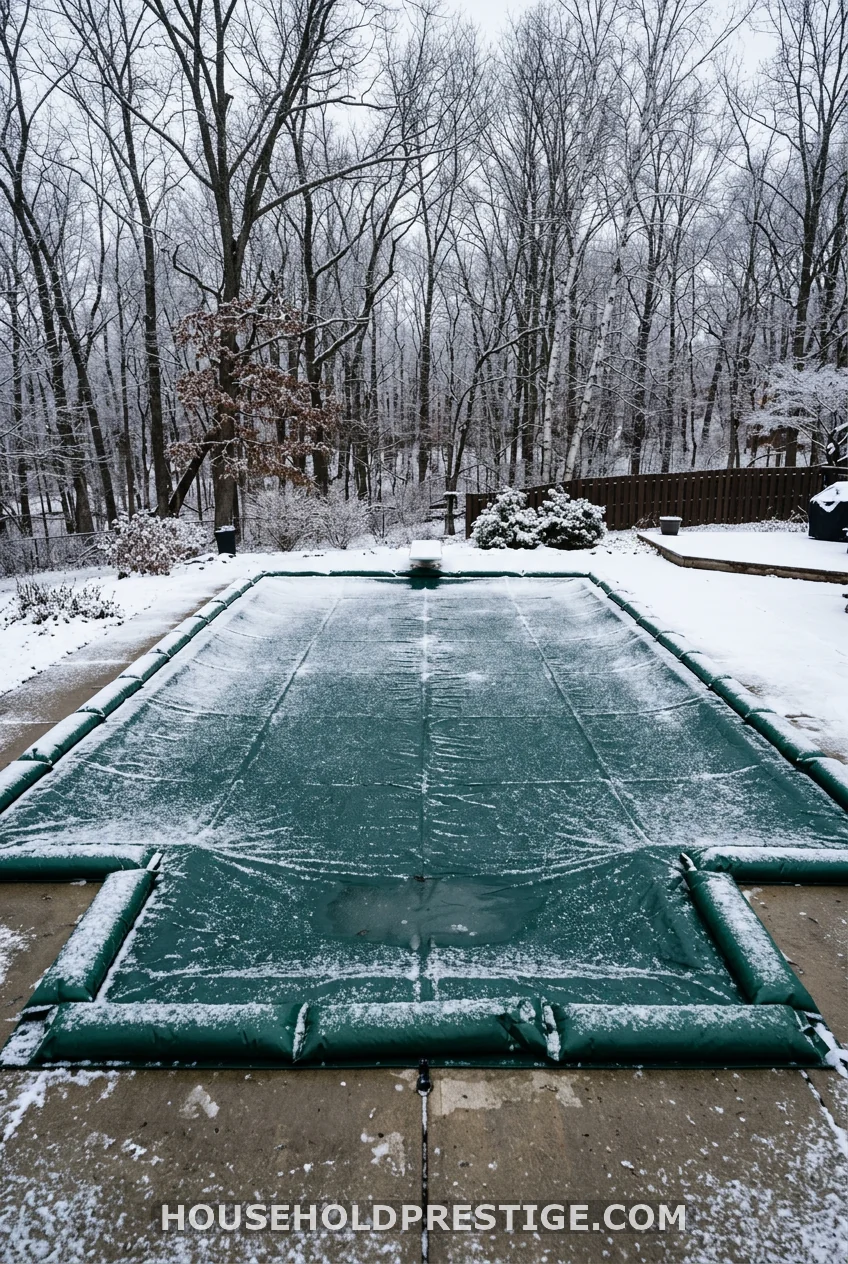
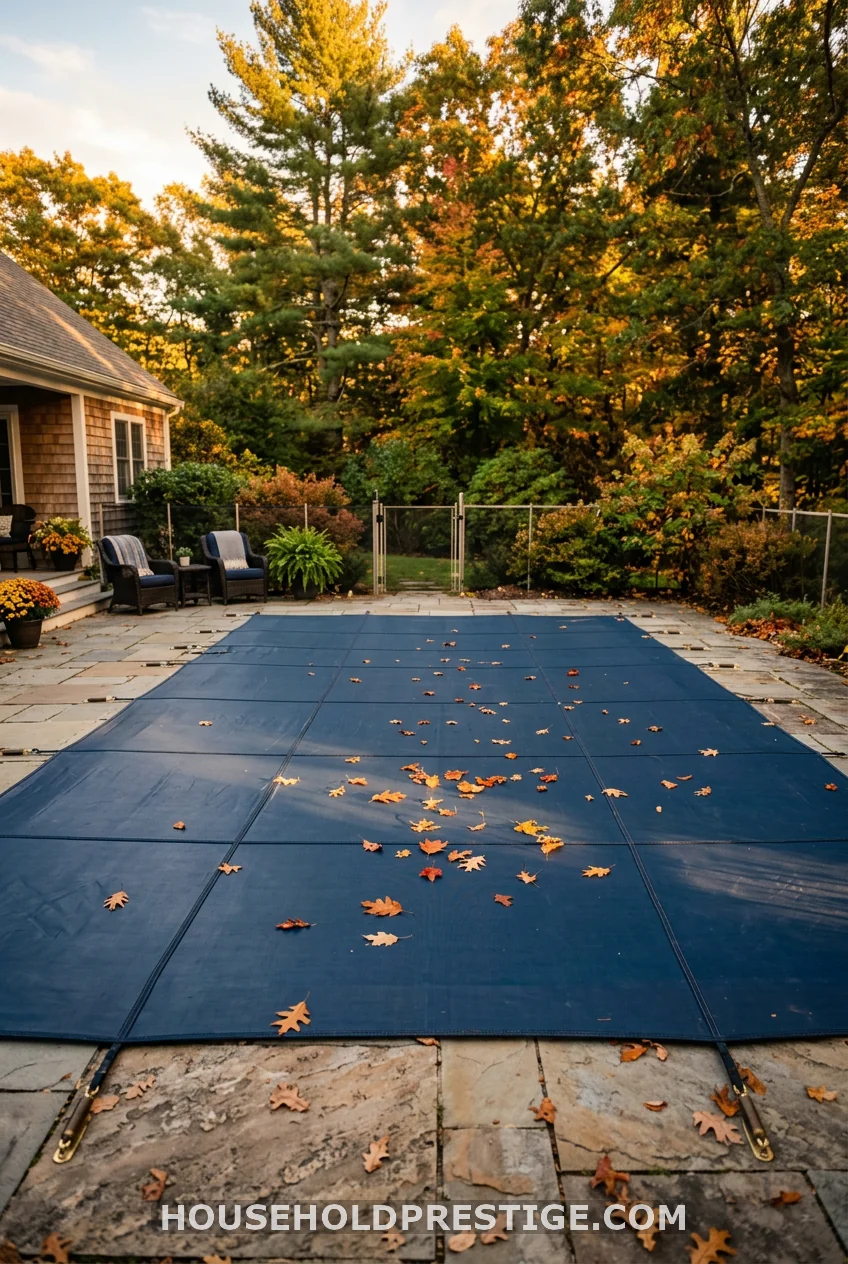
A heavy tarp held down by water-filled tubes around the rim. It blocks all light, which starves algae, and it’s the cheapest barrier you can buy at $70 to $250. Water pools on top, so keep a pump handy. It supports almost no weight, which brings me to a warning further down this list.
6. The Hybrid Safety Cover
A patchwork of solid vinyl with a mesh drain strip. It blocks UV like a solid cover and drains like a mesh one. Best of both, priciest of the safety bunch at $600 to $2,500.
7. The DIY PVC and Bubble-Wrap Cover
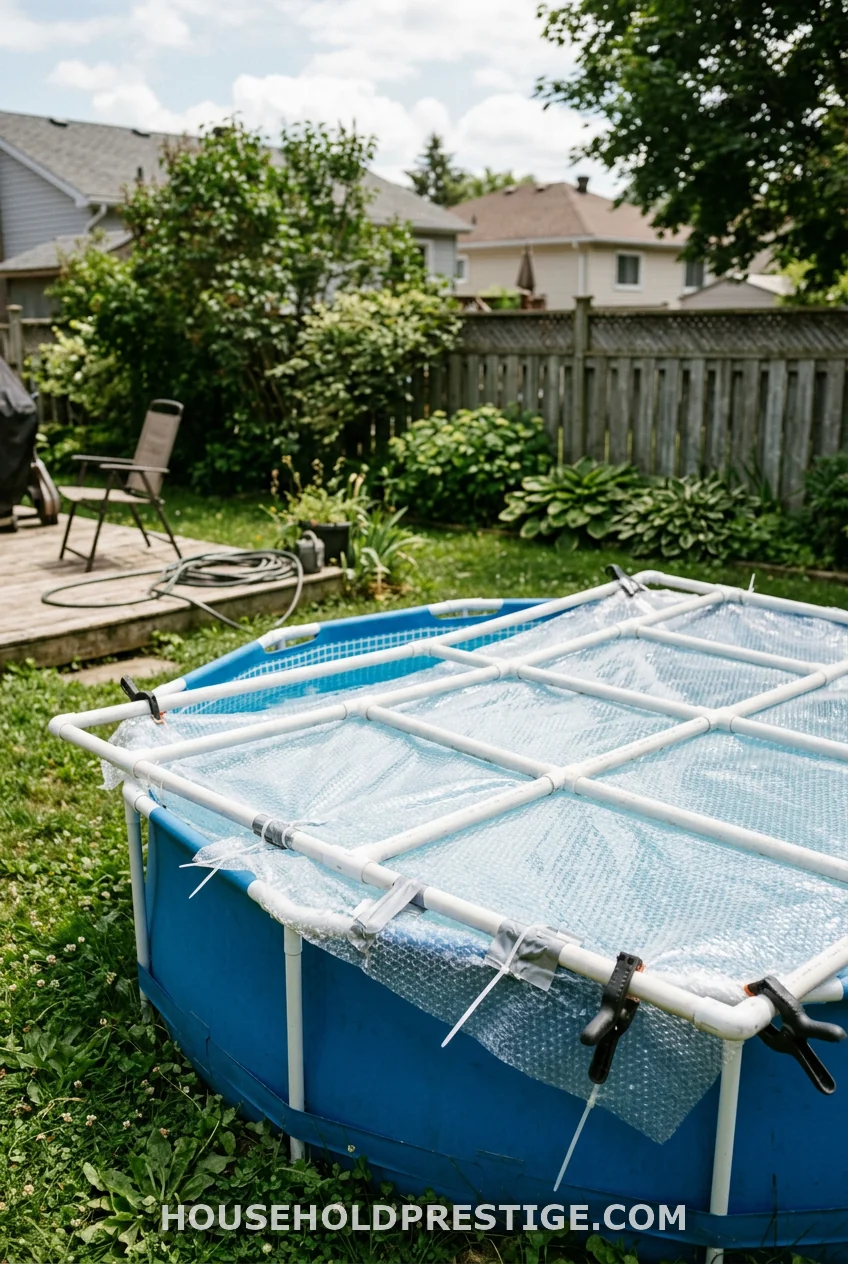
For small or above-ground pools, you can build your own. Cut PVC pipe to your pool’s width, join the corners, then roll bubble plastic across the frame and seal it. It floats, retains heat, and keeps leaves out for a fraction of a store-bought solar cover. Plan a weekend and maybe $50 in parts.
8. The Tarp-and-Bungee Quick Fix
Stretch a tarp over the pool. Bungee the corners to a nearby fence or to stakes driven into the ground. It’s ugly and temporary, but for a renter or a tight month, it keeps the leaves out. Nobody’s giving you a design award; you’re buying time.
9. The Hidden Under-Deck Roller Box
If you love the auto-cover convenience but hate the look of a roller sitting poolside, hide it. A recessed box under a flush deck lid or a bench seat tucks the whole mechanism out of sight. Lift the lid, push the button, close the lid. Clean lines, zero visible hardware.
10. The Telescopic Enclosure
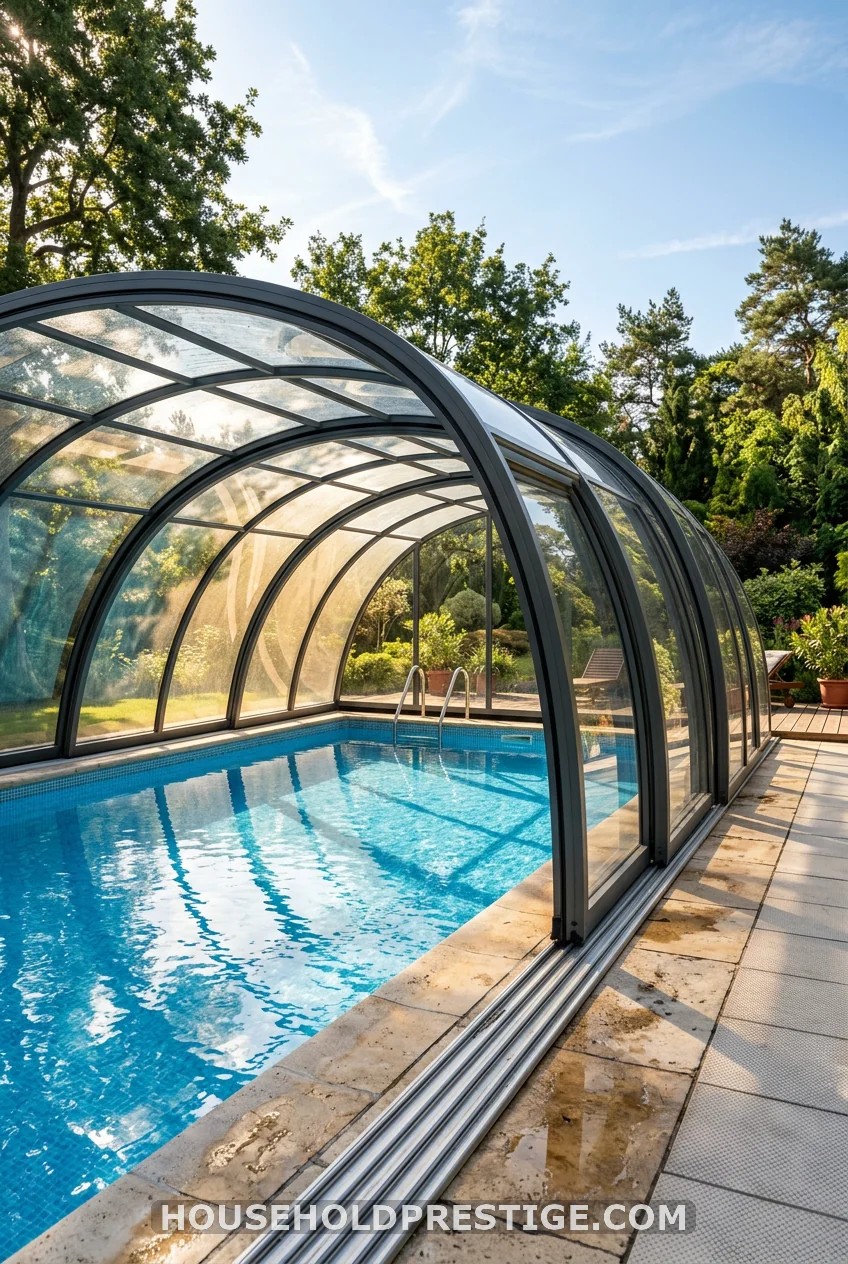
This isn’t a cover so much as a clear, sliding greenhouse for your pool. Curved glass or polycarbonate panels stack and slide so you can open the pool on warm days and seal it on cold ones. It cuts heating bills, blocks debris, and stretches your season for months. It’s a serious investment, but in a cold climate, it can pay for itself in heat savings and swim days.
11. The Leaf Net Topper
Got a solid cover and a maple tree dropping a blizzard of leaves? Throw a lightweight leaf net over the top. When the leaves pile up, you drag the net off, and the mess goes with it. Your real cover stays clean underneath.
12. Camouflage the Pump and Filter
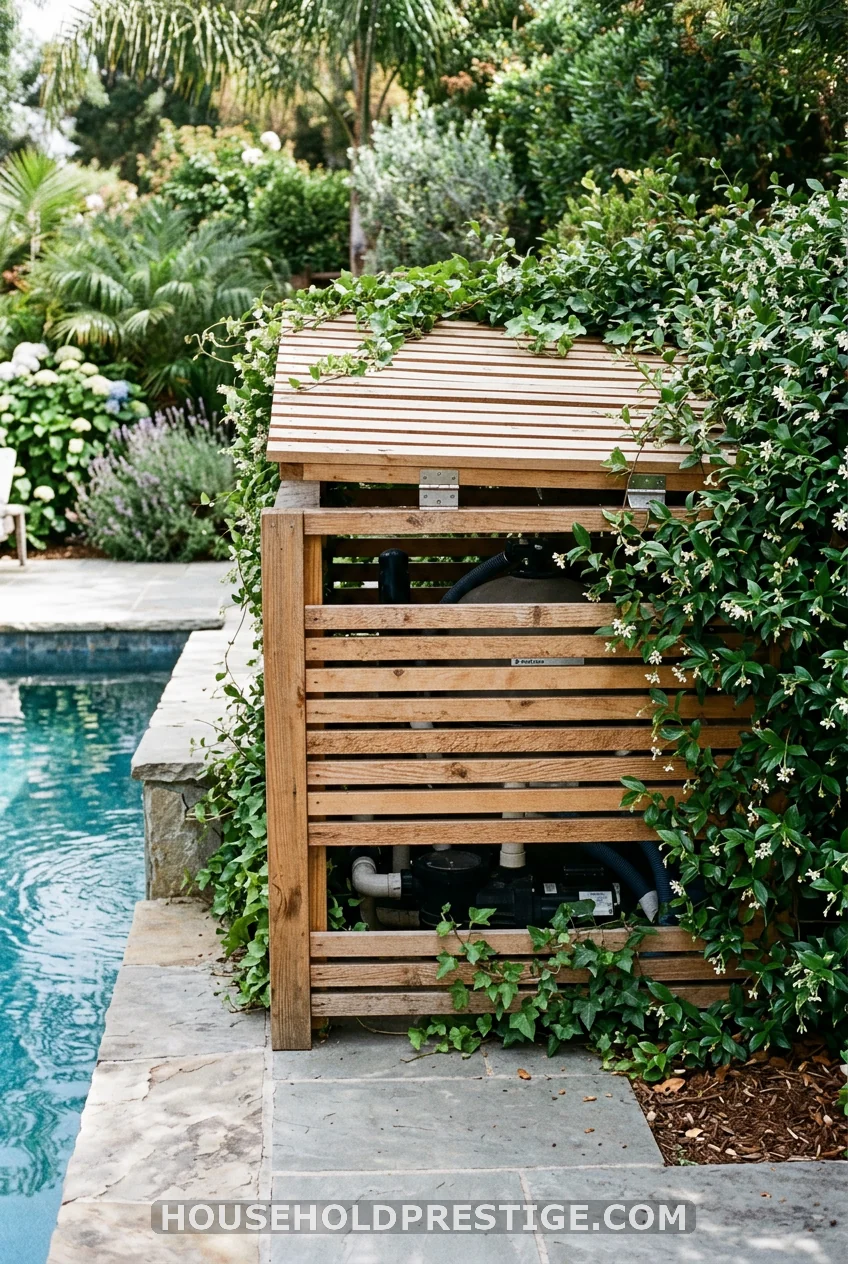
Your cover hides the water, but the pump and filter still sit there looking industrial. A slatted wood screen fixes it. Build a three-sided cedar box with a hinged or liftable lid for access, and suddenly your eyesore reads as a tidy garden feature. A simple version costs under $40 in lumber. Leave airflow gaps; a sealed box overheats the motor.
13. Plant a Living Screen
Skip the lumber and let nature do it. A row of tall potted grasses or a narrow planter of arborvitae screens the equipment while softening the whole poolside. It’s the prettiest cover-up on this list, and it grows more lush every season.
14. The Cinch-Top Above-Ground Cover
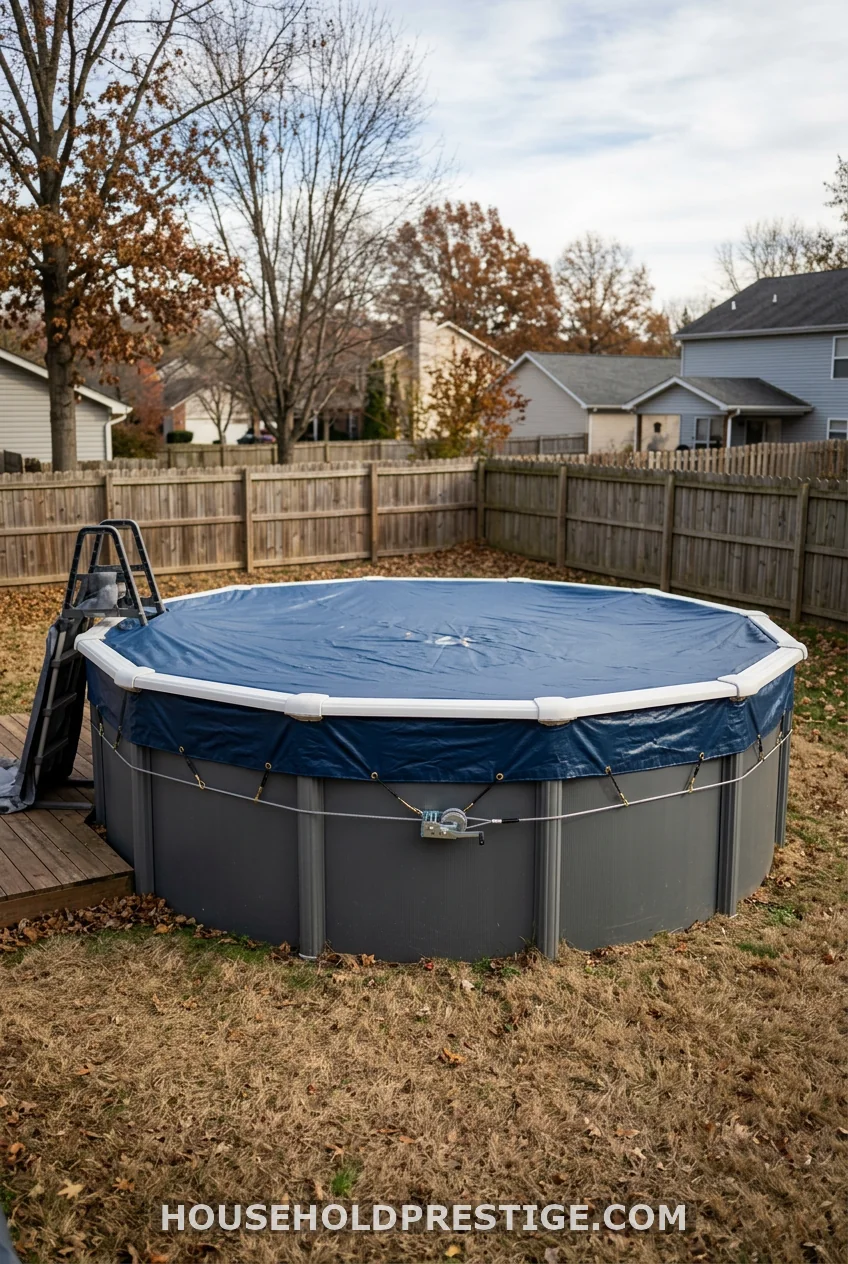
Above-ground pools get their own style. A fitted cover drapes over the top rail and cinches tight with a cable-and-winch loop around the perimeter. It’s quick, cheap, and keeps the winter gunk out. Add a few cover clips so the wind doesn’t peel it back.
15. A Cautionary Tale: The Cover That Became a Trap
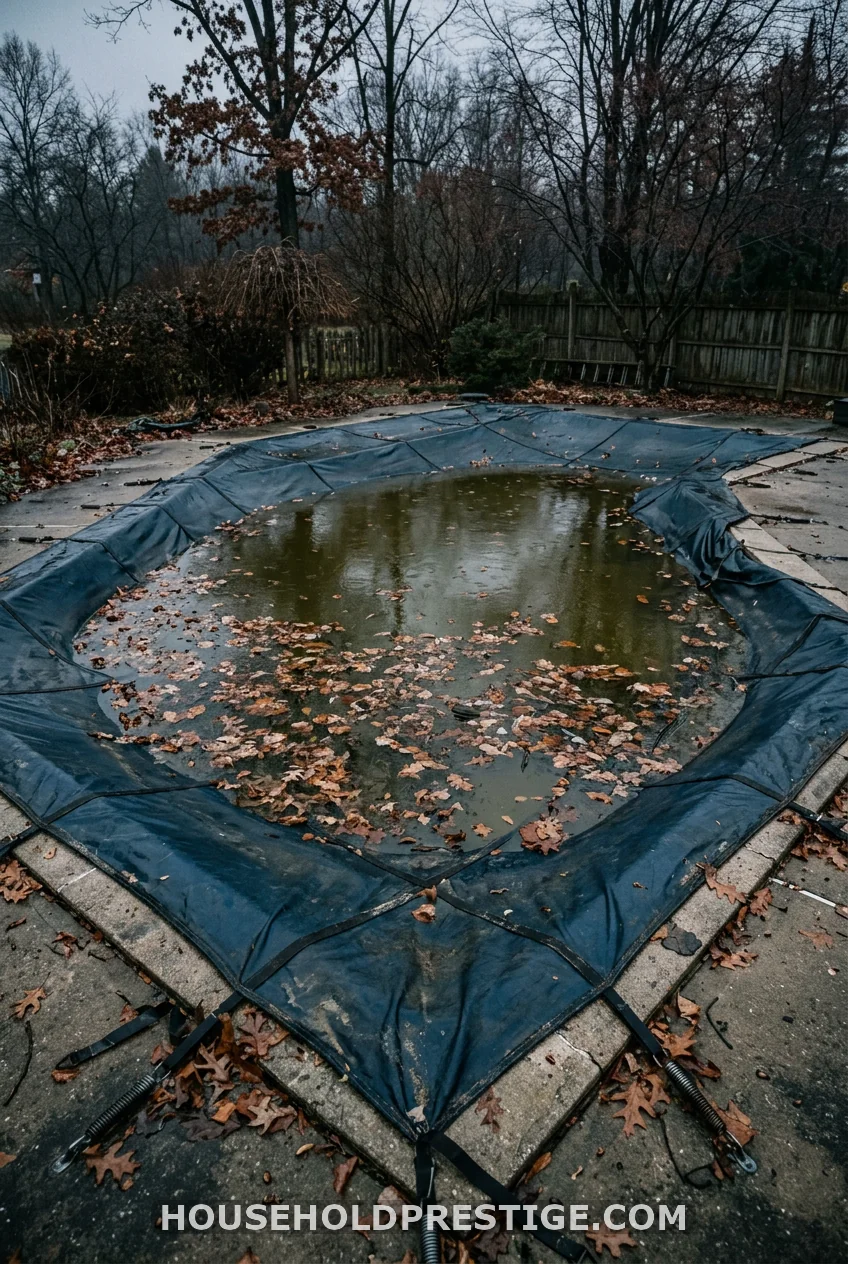
Let me tell you about my neighbor’s first winter. He bought the cheapest solid winter cover he could find and called it done. No fence. No leaf net. No pump.
Rain came. The cover sagged into a shallow basin and held a foot of black water in the middle. Then his dog wandered out, stepped onto what looked like solid ground, and went straight through. The dog was fine. Barely.
A floppy winter cover is not a safety cover. It cannot hold weight, and the water that pools on top is its own drowning hazard for a small child or pet. If safety is the goal, you need a mesh or solid safety cover with anchors, full stop. The $200 you saved is not worth the risk you took.
16. Myth-Bust: “A Cover Means I Can Skip the Fence”
Here’s a belief that gets people in trouble.
What most people think: A safety cover is locked down, so the fence is optional.
The reality: Covers and fences solve different problems. A fence stops a child from reaching the pool area at all. A cover is the second line if the fence fails. Many areas legally require both for inground pools, and insurers often do too. Layer your protection. Don’t trade one safeguard for the other.
17. The Stock Tank and Plunge Pool Cover
Tiny pool, tiny problem, tiny solution. For a stock tank or a small plunge pool, a round fitted spa-style cover (the kind built for hot tubs) snaps right on. It holds heat, blocks leaves, and you can lift it one-handed.
18. Add an Automatic Cover Reel
Hate folding a wet solar cover by yourself? A manual or motorized reel mounts at one end of the pool and rolls the cover up like a window shade. One person, thirty seconds, no kneeling on hot concrete wrestling soggy plastic.
19. Match the Cover to Your Deck
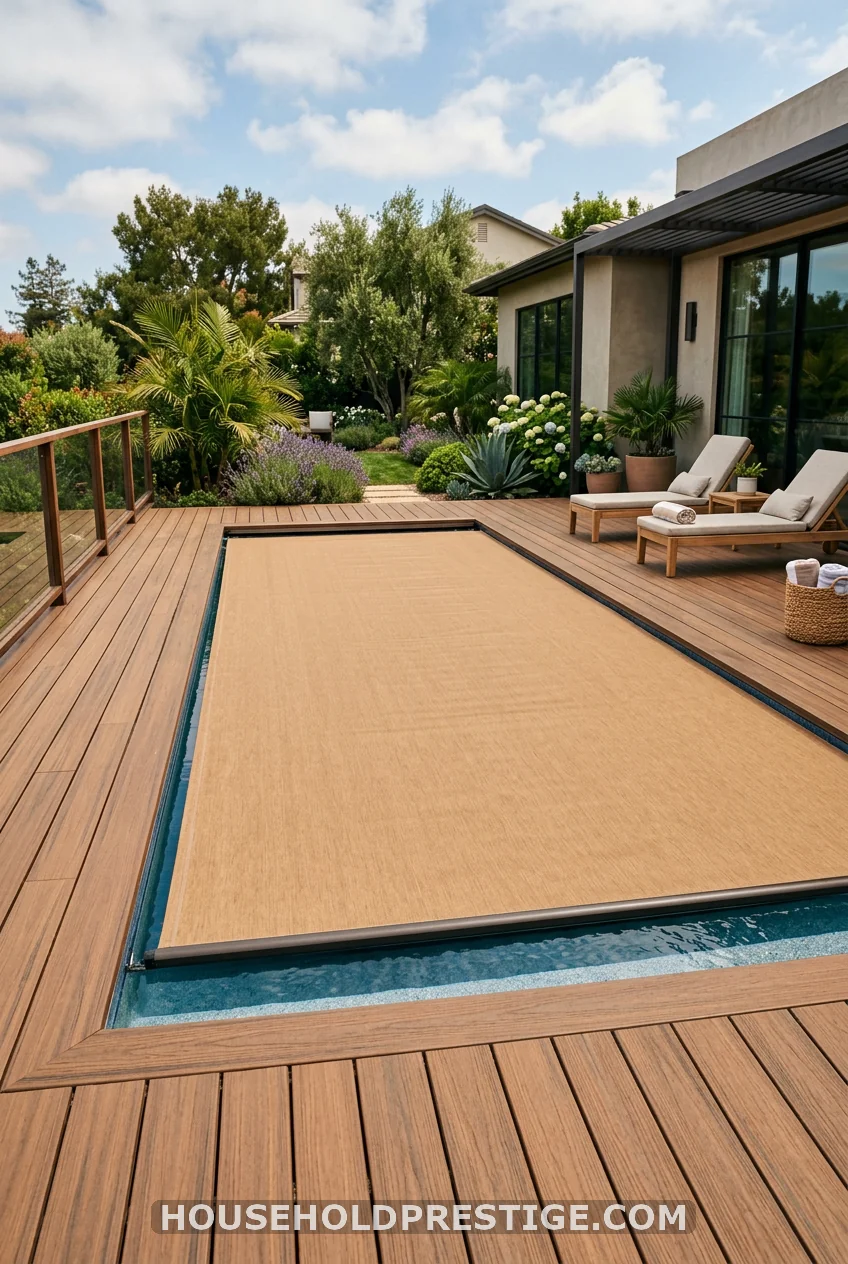
A cover doesn’t have to scream “cover.” Many auto-cover fabrics come in tans, grays, and greens. Pick a shade that echoes your decking or your home’s trim, and the closed pool reads as a deliberate design choice instead of a blue plastic afterthought.
20. Set Up an Auto-Drain Pump
The number-one killer of solid covers is standing water. A small submersible cover pump with a float switch turns itself on when water collects and shuts off when it’s clear. Set it and forget it. Your cover lasts years longer because it never sags under a load it wasn’t built for.
21. Build Your Decision Framework

Still stuck? Run it through three questions.
First, what’s the job? Heat retention points you to solar. Safety points you to mesh or solid safety covers. Pure convenience points to automatic.
Second, what’s your climate? Heavy snow loves a solid safety cover or a telescopic enclosure. Mild winters can lean on mesh.
Third, what’s your honest budget? Under $300 buys a winter or solar cover. A few thousand buys real safety. Five figures buys push-button luxury or a sliding deck.
Answer those three, and the right cover picks itself.
The Takeaway
A pool cover is the difference between opening to clear blue water in spring and opening to a swamp. The cheapest cover isn’t the smartest one, and the priciest isn’t always necessary. Match the cover to your real pool, your real weather, and your real budget, and you’ll spend less time skimming and more time swimming.
You’ve got this. Pick the one that fits your yard, and enjoy the water you worked for.
Frequently Asked Questions
What is the cheapest pool cover idea that still works?
A solar bubble cover ($35 to $400) or a basic solid winter cover ($70 to $250) are the cheapest options. Solar keeps heat in; winter covers block debris. Neither offers real safety, so pair them with a fence if children or pets are around.
Do pool covers really keep the water warm?
Yes. Solar covers can add 10 to 15 degrees over a sunny week and sharply cut evaporation. Any cover that floats on the surface also slows nighttime heat loss, which trims your heating bill and extends your swim season.
Which pool cover is safest for kids and pets?
A mesh or solid safety cover anchored to the deck is the safe choice, since some hold thousands of pounds. A floppy winter cover is not a safety cover and can be a hazard. Automatic and sliding deck covers add convenience on top of that protection.
How long does a pool cover last?
It depends on the type. Winter lasts a few seasons. Mesh and solid safety covers can run 8 to 15 years with care. Automatic covers last around 5 to 7 years per fabric before replacement. Keeping water drained off the surface adds years to any of them.
Can I make a DIY pool cover for an above-ground pool?
Yes. A PVC frame with bubble plastic, or a cinch-top fitted cover for round above-ground pools, both work well and cost little. For a quick fix, a tarp bungeed to a fence keeps leaves out, though it won’t hold weight or provide safety.