

My neighbor spent $85,000 digging an inground pool into her flat suburban backyard. My other neighbor dropped $1,200 on an above-ground oval that sat under a tarp by September. I went a completely different direction with semi inground pool ideas — and honestly, three summers in, I’m the one the block is jealous of.
Semi inground pools are the option nobody explains properly. They’re not a compromise. They’re a decision. You choose how much of the pool sits below grade, which means you can work with a sloped yard instead of fighting it, stay under $30,000 for the full project, and still end up with something that looks deliberate and designed. Whether your yard is awkward, your budget is real, or you just don’t want to commit to the excavation nightmare of a full inground, these 15 semi inground pool ideas cover the full range — from quick wins to full weekend-project deep dives.
1. The Wood-Deck Wrapped Pool
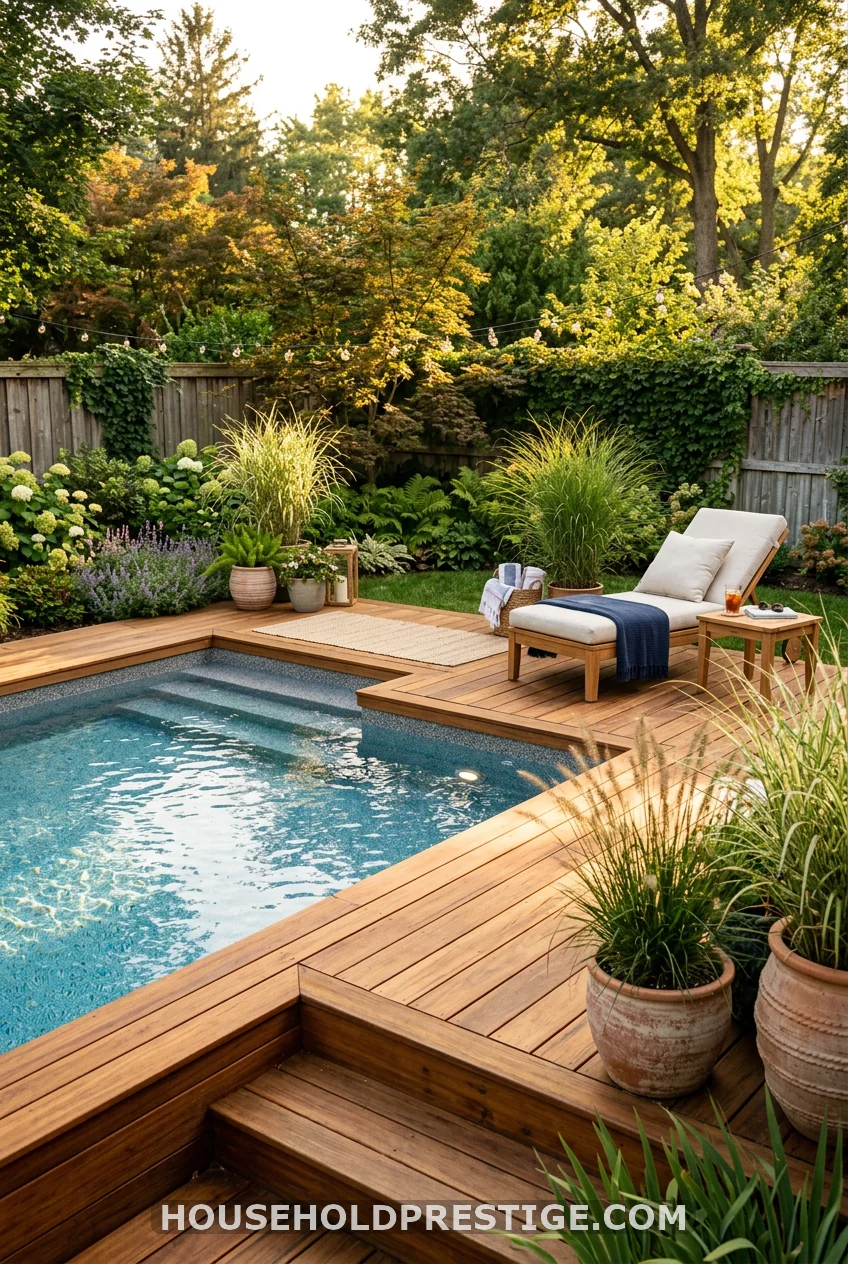
This is the look that sells semi-inground pools. A rectangular pool, half buried, with horizontal wood decking wrapping flush to the coping — it creates that seamless “resort in the backyard” effect without the inground price tag.
The wood of choice matters more than most people realize. Pressure-treated pine is the budget route (around $2–$4 per linear foot), but it can warp and splinter within a few seasons near water. Composite decking like Trex Transcend or TimberTech Pro costs $4–$9 per square foot installed, but looks better at year five than it did at year one. Ipe and cedar are beautiful mid-range options — seal them annually, and they’ll last decades.
For a standard 12×24 pool with a 3-foot deck surround on three sides, budget $4,000–$8,500 for composite decking materials and labor. If you’re handy with a circular saw and a drill, the material-only cost drops to $1,800–$3,500.
Pro tip: Build your deck at pool edge height, not 6 inches above it. That flush transition is what makes it look in-ground.
2. The Sloped Yard Terraced Design
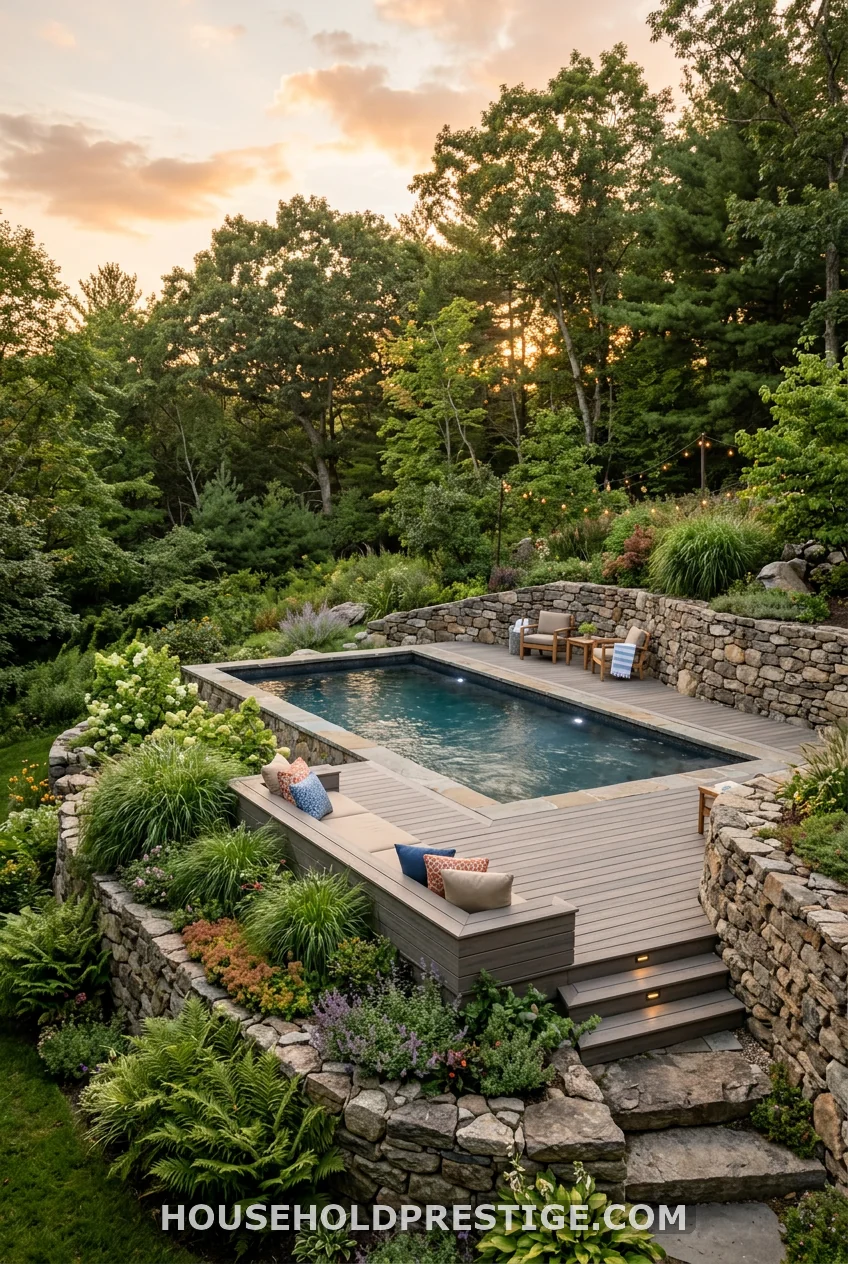
If your yard drops more than 18 inches across the pool footprint, a full inground pool becomes an excavation project with serious structural engineering costs — often $15,000–$25,000 just for the grading before the pool goes in. A semi-inground pool flips that math.
Why Sloped Yards Are Actually the Best Semi-Inground Candidate
Slope means you’re already partway to “inground” on the uphill side. You set the pool lower into the hill, then finish the downhill side with exposed walls. The result is a pool that reads as fully inground from one angle and has a beautiful exposed wall — perfect for stone cladding, built-in seating, or water features — from another.
How Much to Bury It
The standard starting point: bury the pool at least halfway into the hillside on the uphill side, leaving up to 36 inches of pool wall exposed on the downhill face. This height differential is exactly what makes terracing work. With a 48-inch-deep pool (standard for most semi inground kits), you’re typically looking at 12–18 inches exposed on the uphill side and 30–36 inches exposed downhill.
Materials for the Retaining Walls
Your exposed pool walls need to handle lateral soil pressure plus the weight of the water inside — roughly 8.3 pounds per gallon, so 14,000–18,000 gallons for a 12×24 pool means upward of 120,000 pounds of water pressure. This is not a DIY concrete block situation.
Options ranked by cost and durability:
– Poured concrete with stone veneer: Most durable, best look. $6,000–$14,000 for a standard 12×24 installation
– Stacked natural stone: Beautiful and structural if done by a professional mason. $4,500–$10,000
– Segmental retaining wall blocks (Allan Block, Versa-Lok): Budget-friendly and DIY-possible for walls under 4 feet tall. $1,500–$4,000 in materials
Step-by-Step: Planning a Sloped Yard Semi-Inground Pool
- Get a site survey first. A professional survey runs $300–$600 and tells you your exact grade change. Don’t skip this. Eyeballing the slope gets pools built crooked.
- Determine your burial depth. Your pool supplier needs this number — it affects wall panel selection. Most aluminum and steel semi inground pool kits are rated for 0–36 inches of burial.
- Order the pool before breaking ground. Lead times on semi inground pool kits (Optimum, Radiant, Wilbar) run 4–10 weeks. Start the order before you start digging.
- Excavate the uphill pocket. You’re digging out a shelf, not a full hole. For a 12×24 pool buried 24 inches on the uphill side, you’re removing roughly 18–22 cubic yards of soil. Rent a mini-excavator ($350–$500/day) or hire a landscaper ($800–$1,500 for a typical suburban slope).
- Install drainage first. A French drain along the uphill side of the pool is not optional. Without it, water pressure from saturated soil will stress your pool walls and liner. Add a perforated 4-inch drain pipe in gravel-filled trench: materials around $200–$400.
- Set the pool. Most aluminum semi inground kits arrive flat-packed and go up in a weekend with two people. Follow the manufacturer’s sequence — bottom rail, wall panels, top rail — before backfilling.
- Build your retaining structure. If your exposed wall exceeds 36 inches, bring in a licensed contractor. Walls this tall require engineered footings.
- Terrace your decking. Build two deck levels: upper deck at pool coping height for lounging, lower level 2–3 steps down for furniture and entertaining. This tiered setup is the visual payoff that makes a sloped yard pool look like $120,000 on a $35,000 budget.
Materials + Cost Snapshot
| Item | Budget Range |
|---|---|
| Semi inground pool kit (Optimum 12×24) | $3,500–$7,000 |
| Excavation | $800–$2,500 |
| Retaining wall | $2,500–$8,000 |
| French drain | $200–$500 |
| Two-level composite deck | $5,000–$10,000 |
| Liner | $600–$1,400 |
| Filter/pump system | $700–$1,500 |
| Electrical/bonding | $800–$1,800 |
| Total Installed | $14,000–$32,700 |
Common Mistakes to Avoid
- Skipping the drainage. Non-negotiable. Saturated soil pushes. Pool walls fail.
- Building the deck level with the hill, not the pool. Your deck should follow the pool coping, not the grade. Amateur builds have steps mid-deck that look like an afterthought.
- Underestimating permit requirements. Most jurisdictions treat semi-inground pools the same as inground pools for fencing codes. You’ll need a 48-inch barrier with self-latching gates. Budget $800–$2,500 for code-compliant fencing.
- Buying the cheapest liner. On a sloped installation with partial wall exposure, temperature swings stress the liner more. Spend the extra $150–$200 for a 30-mil liner over a 20-mil one.
3. The Shipping Container Conversion
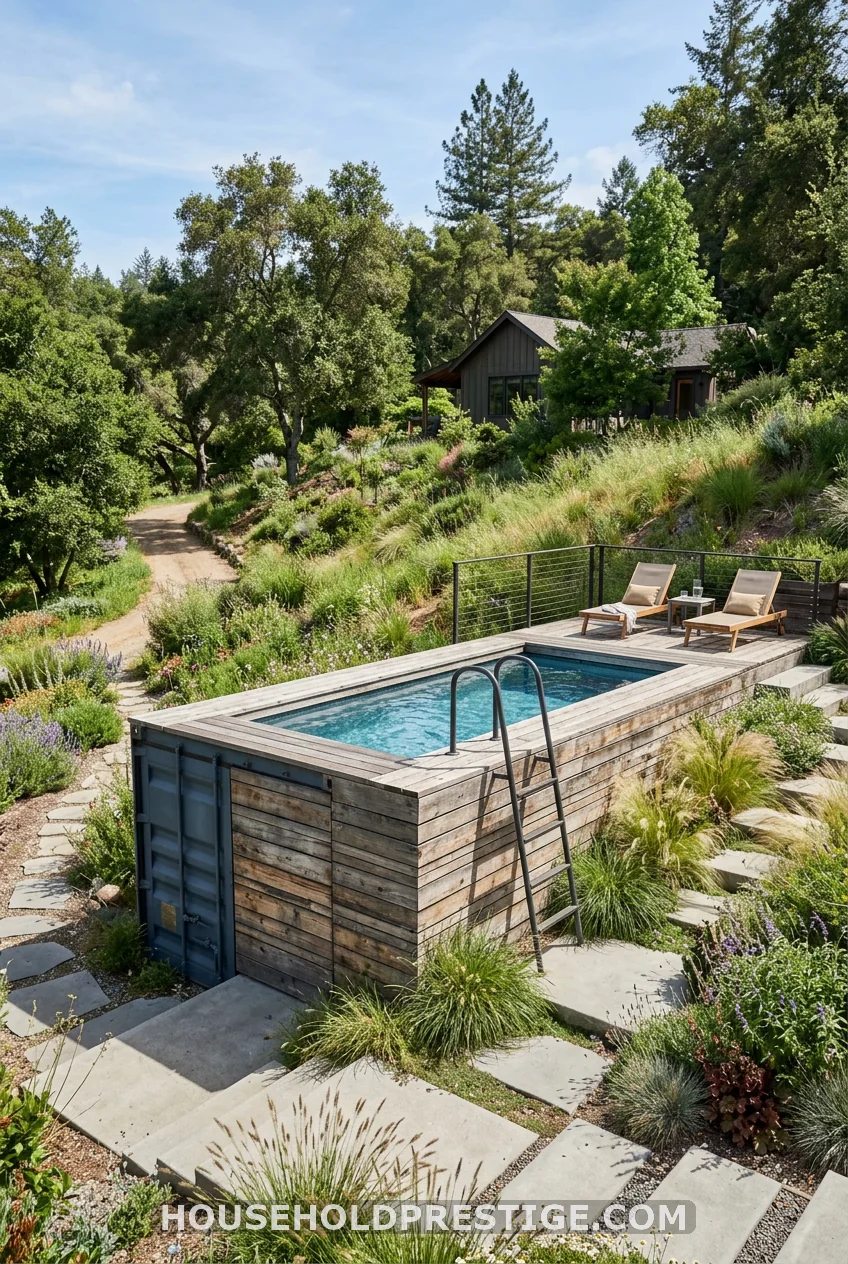
Bury a reinforced 20-foot shipping container halfway into the ground, waterproof the interior, add an inlet/outlet, and you have a 20-foot lap pool for $6,000–$15,000 all in. Yes, it’s real. The corrugated steel handles soil pressure well, the dimensions are ideal for lap swimming, and the exposed half gives you endless cladding options — cedar siding, stucco, tile, or just leave it painted. It’s not subtle. It’s also not boring.
4. Fiberglass Shell With Composite Decking
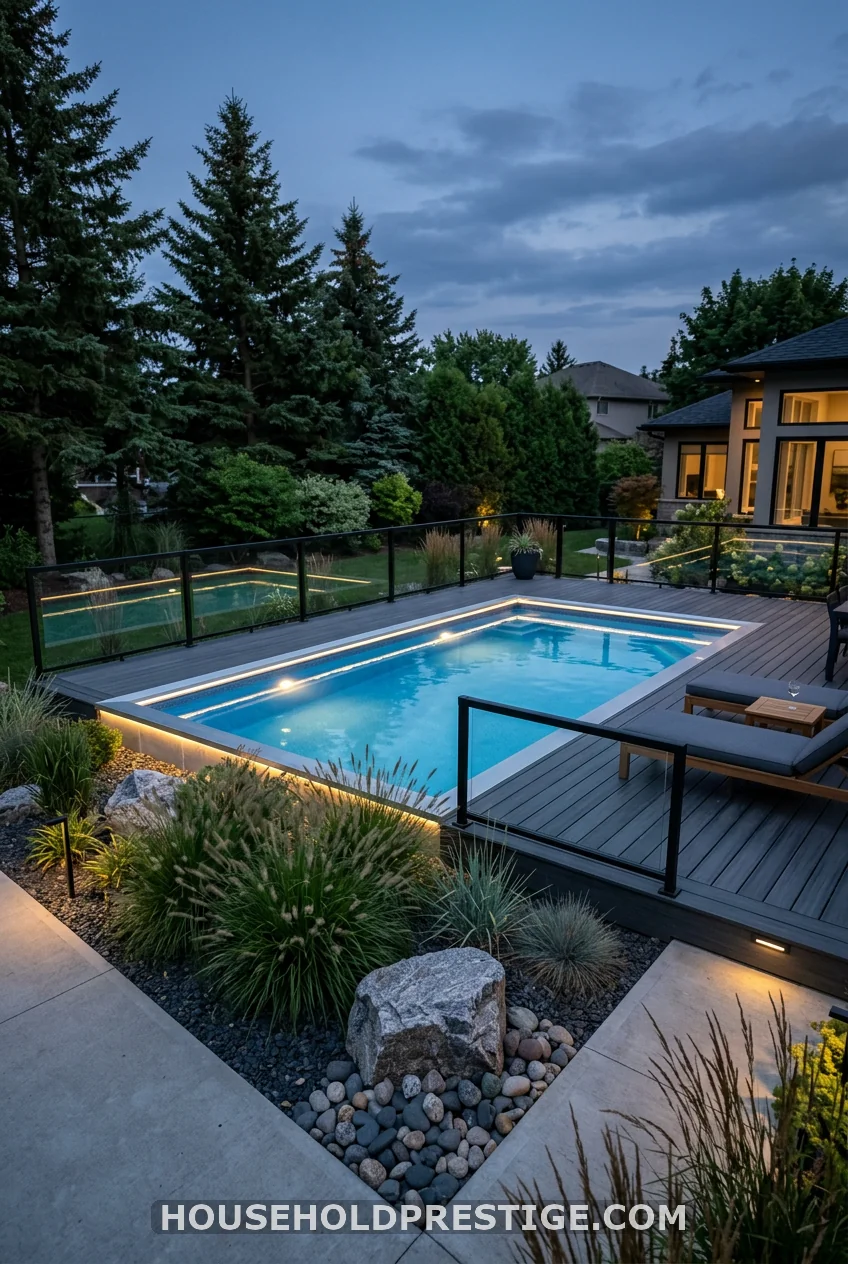
Fiberglass is the lowest-maintenance semi inground option out there. The smooth, non-porous surface resists algae, which means less chemical spend and less scrubbing. Most fiberglass semi inground shells come with built-in benches and a tanning ledge already molded in.
The tradeoff is size. Fiberglass pools are built from molds, so they cap out around 16 feet wide and 40 feet long. If you need bigger, vinyl liner is your path. For most backyards — especially ones under 1/4 acre — 12×24 or 14×28 fiberglass is plenty.
Popular semi inground-rated fiberglass brands: Latham Pool Products, San Juan Pools, Leisure Pools. Entry-level models in the 12×24 range run $8,000–$14,000 for the shell alone. Add $3,000–$6,000 for installation labor, $800–$1,200 for a pump/filter system, and $4,000–$8,500 for composite decking, and your total lands at $16,000–$30,000 installed.
The catch: fiberglass pools require the excavation to be done precisely. Low spots in the base cause cracking. Pay the $200–$400 to have the sand base graded by someone who has done it before.
5. Vinyl Liner With Stone Coping
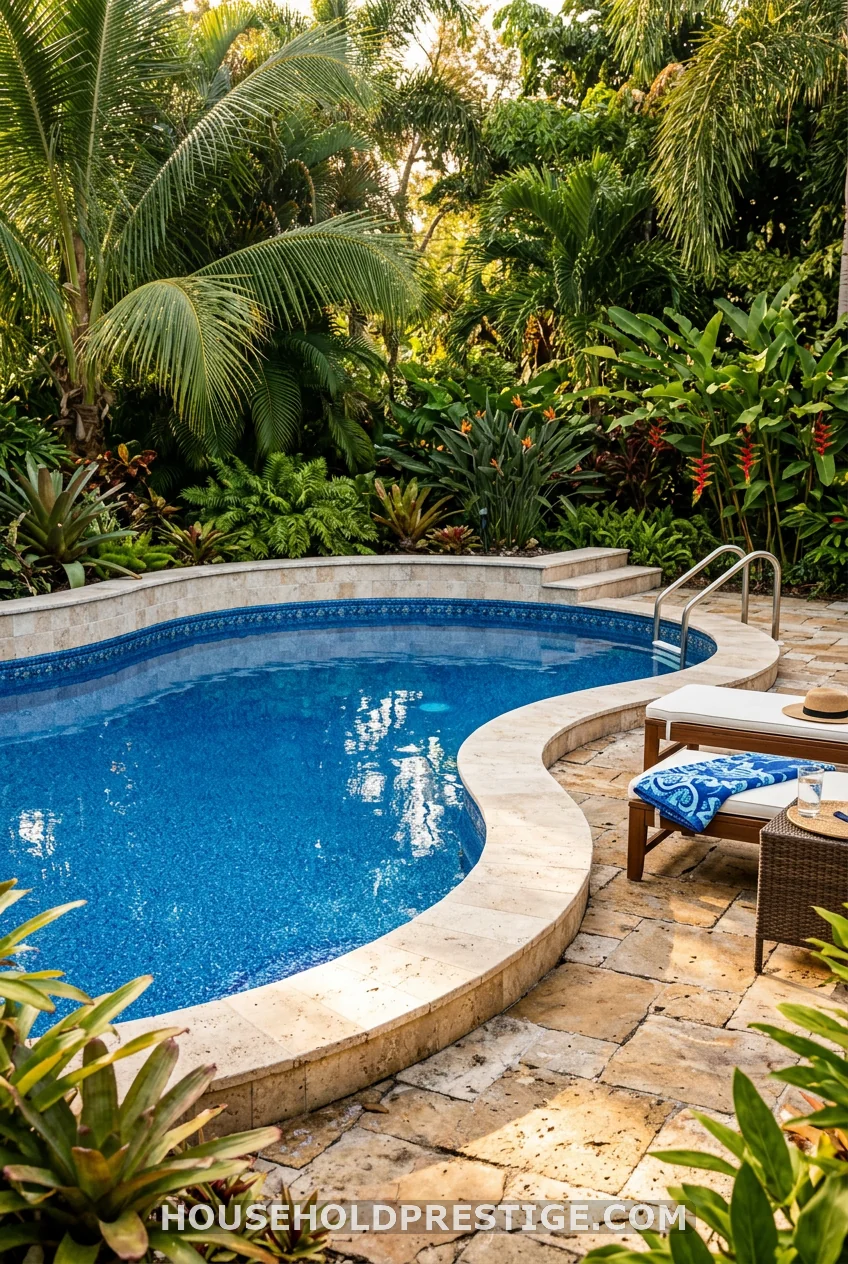
Choose a bold liner pattern — cobalt blue, ocean blue, charcoal geometric — and pair it with tumbled travertine or limestone coping. The stone keeps the look elevated; the liner keeps the cost realistic ($600–$1,400 for a standard 12×24 liner depending on thickness). Liners need replacement every 10–15 years. Everything else on the pool stays intact.
6. The Natural Lagoon Shape
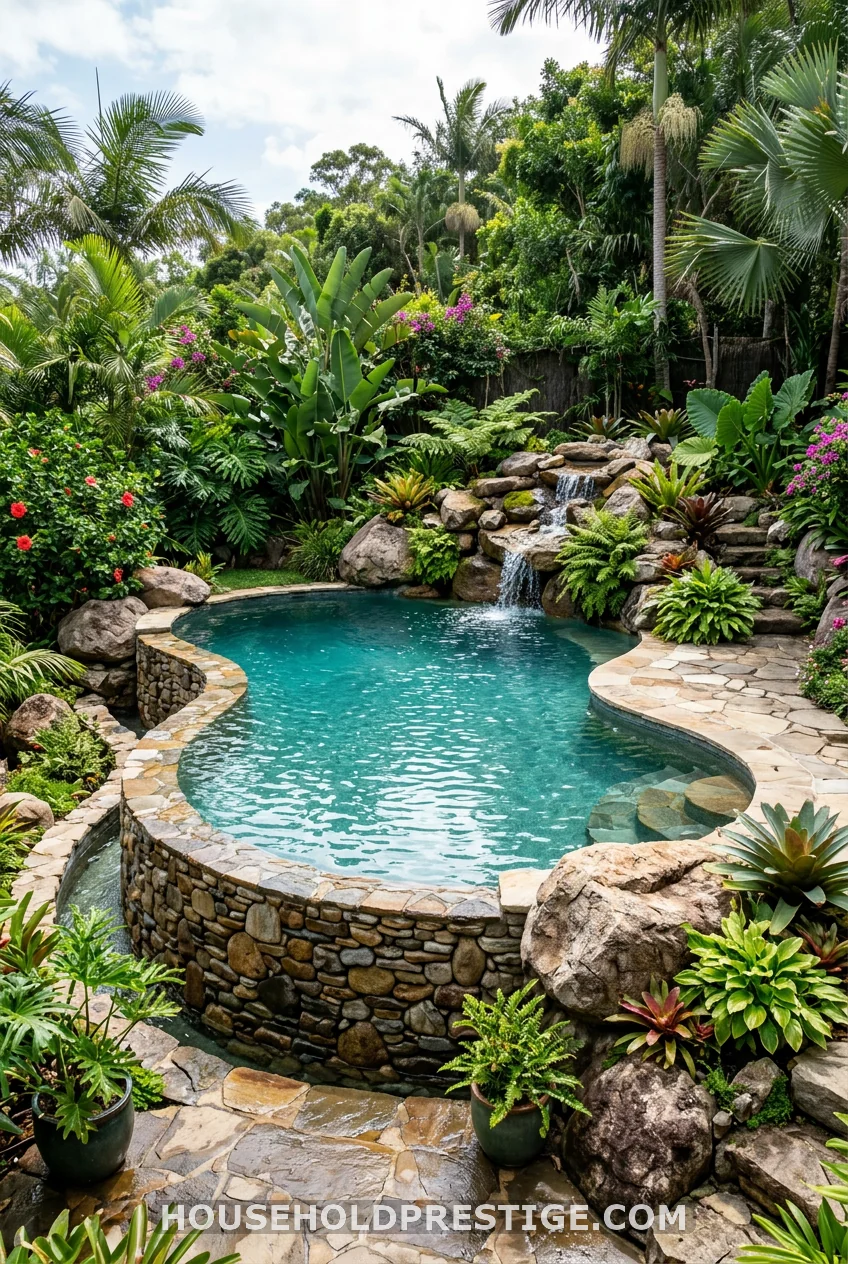
Most semi inground pool kits are rectangular or oval because that’s what fits into standard molds and wall panels. But if you’re going custom concrete or hiring a gunite contractor, the “semi inground” simply means the finished grade sits partway up the pool shell — the shape itself is yours.
Kidney, freeform, and lagoon shapes work especially well when you’re landscaping a pool to look like a natural feature. Use boulders of varying sizes (not all the same height), plant ornamental grasses and native shrubs at different distances from the water’s edge, and keep one section of the pool wall exposed and clad in river rock or fieldstone. The result reads as natural, not constructed.
Budget note: custom concrete semi inground pools start around $30,000 and climb fast. This look is achievable closer to $20,000 if you use a Radiant or Wilbar oval kit with custom stone landscaping around the exposed portion.
7. The Half-Deck, Half-Open Design
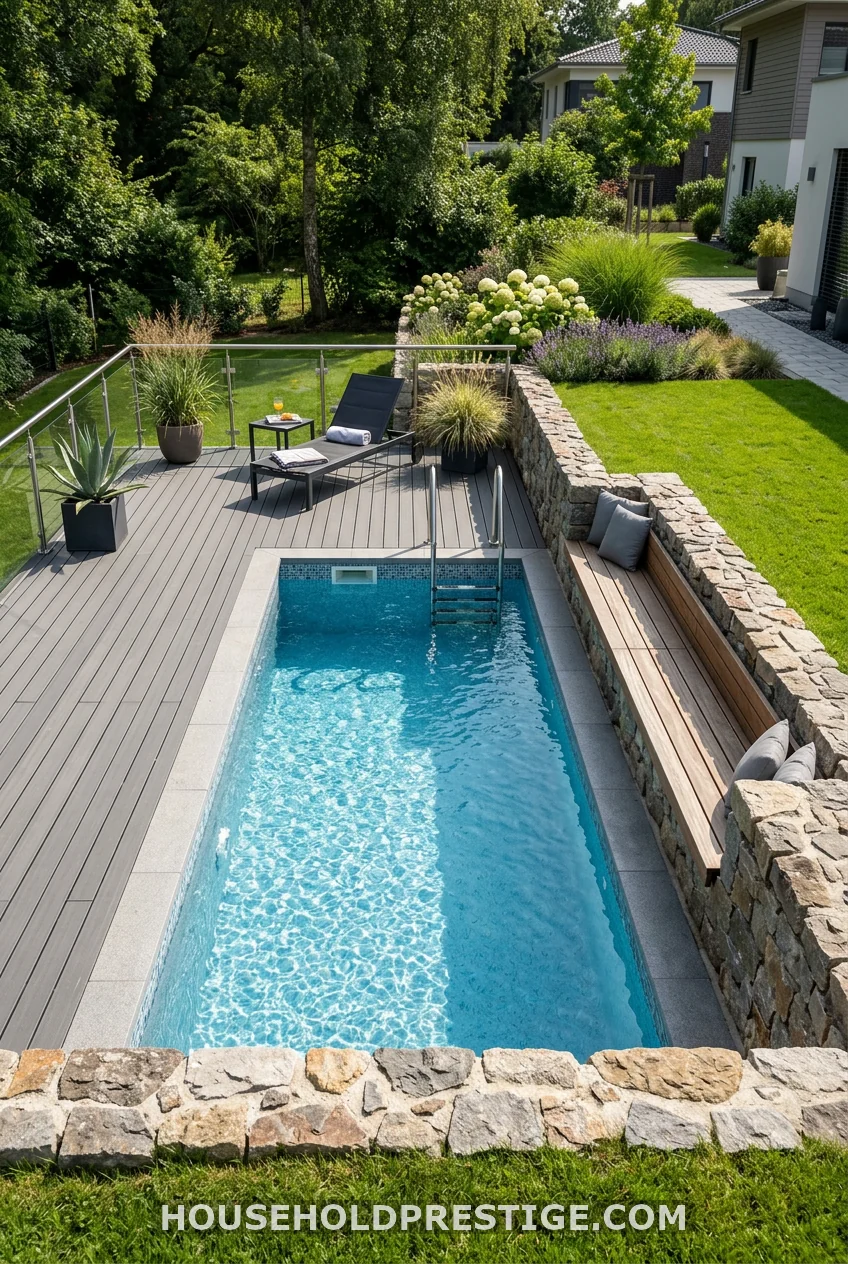
Deck one side of the pool. Leave the other exposed and build a stone or concrete bench wall into it. You cut your decking costs roughly in half — from $6,000–$9,000 to $3,000–$5,000 — and you actually gain a better seating option. A bench wall at pool coping height means people sitting there have their feet dangling into the water. That’s worth more than another 10 square feet of decking.
8. Retaining Wall as Built-In Bench
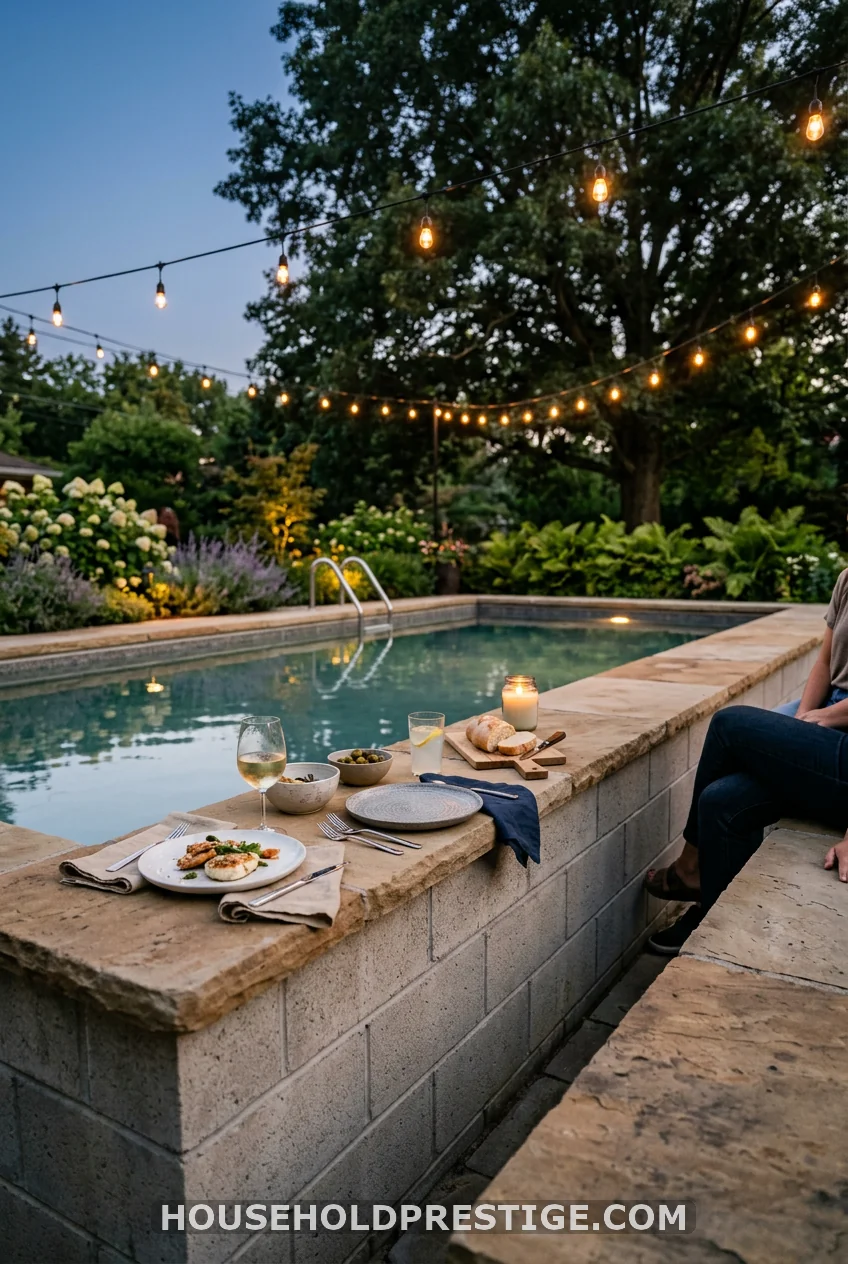
The exposed walls of a semi-inground pool are not a limitation. They’re a canvas. Cap them in 4–6 inch bullnose flagstone that overhangs the water by 1–2 inches, and your pool wall becomes permanent seating that also hides the pool structure completely.
This trick works especially well on the side that faces your entertaining area. Guests can sit with their legs in the water without needing a ladder or steps. The stone cap needs to be mortared onto a solid wall — either poured concrete or concrete block, not loose stone. Flagstone cap runs $8–$18 per square foot installed, depending on the stone type.
The added bonus: a continuous stone cap around the pool perimeter resolves the question of coping. Most semi-inground pool kits include basic aluminum coping that looks fine, but not special. Stone coping is special.
9. What I Wish Someone Had Told Me Before Installation
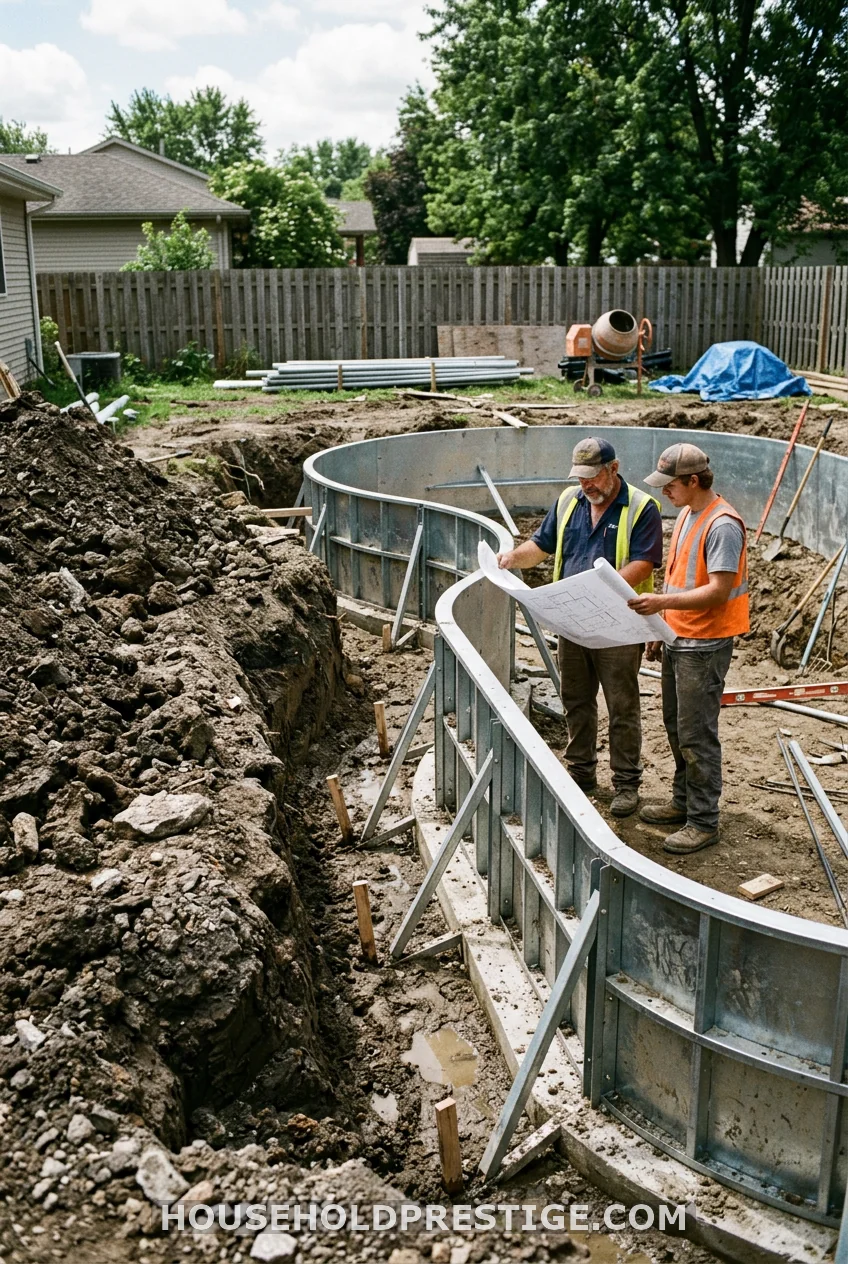
Here’s the story I hear most from people in pool Facebook groups, and the one I almost became.
She found a gorgeous semi inground pool idea on Pinterest — wood decking all around, string lights, the whole look — for what the caption said was “around $12,000.” She got one contractor quote. She liked him. He seemed honest. She said yes.
Eight weeks later, the pool was done. It looked exactly like the picture. The problem? The pool sat 2 feet lower than her side yard drainage path. The first significant rain sent 6 inches of runoff directly under the liner. The pool floor buckled. The liner tore. Re-installation cost $4,800. The French drain that should have been there from day one cost another $900.
The myth: Semi inground pools are simpler than inground pools, so you can cut corners on site prep.
The reality: The “semi” part — meaning the exposed wall above grade — actually adds complexity to drainage and structural requirements, not subtracts it. Any contractor who quotes a semi inground pool without discussing drainage, soil type, and frost depth (if you’re in a freeze-thaw climate) is skipping steps.
Three things to verify before signing any contract:
1. Does the quote include a French drain or perimeter drainage plan?
2. Is the base material specified (compacted gravel, sand, or concrete collar)?
3. In climates that freeze: is the burial depth set below the local frost line to prevent liner shifting?
Getting these answers upfront adds maybe $1,500–$3,000 to your project. Skipping them can cost $5,000–$12,000 to fix after the fact.
10. The Infinity Edge Effect Without the Infinity Price Tag
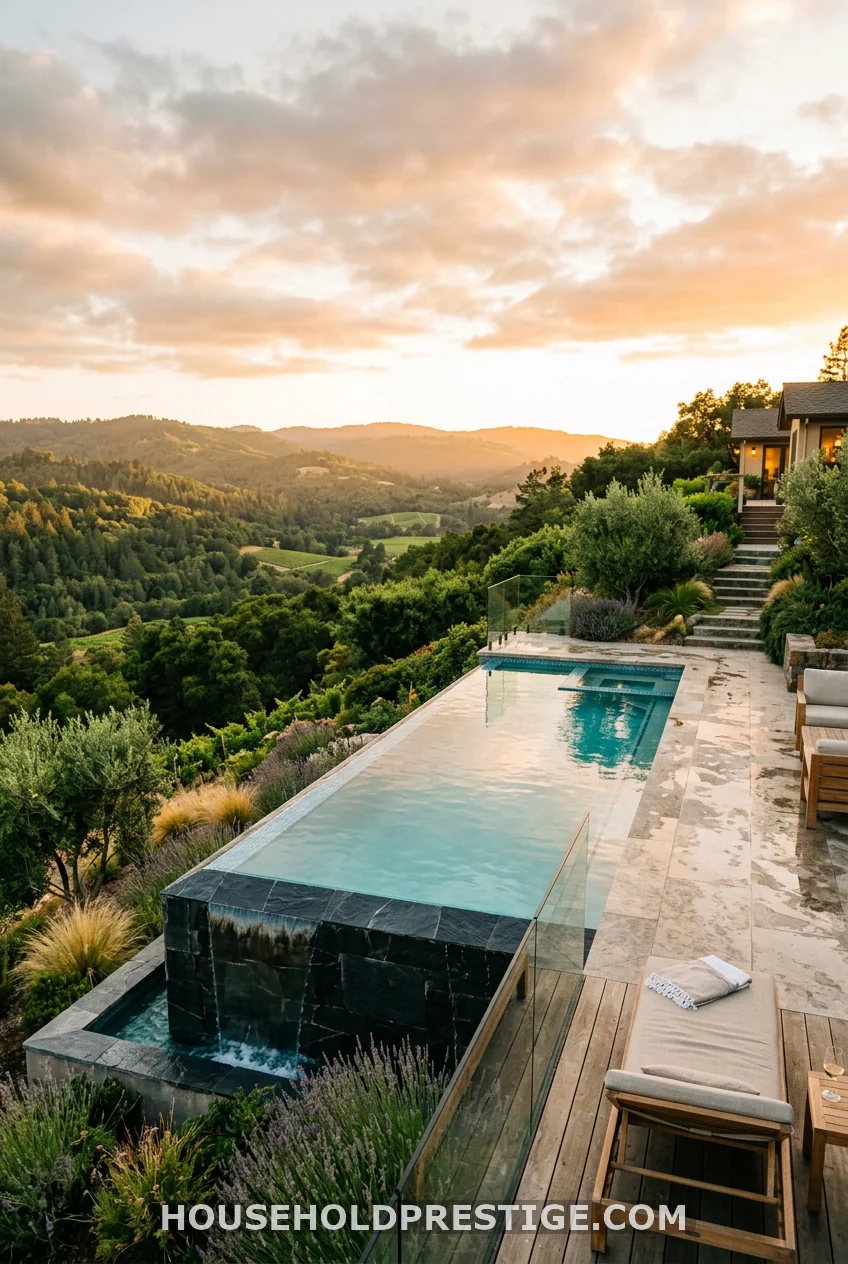
A true infinity pool requires a catch basin, a dedicated pump, and precise elevation engineering. It’s a $15,000–$30,000 add-on when built into an inground pool from scratch. As a semi-inground feature on a sloped yard, you can get 90% of the visual effect for significantly less.
The approach: on the downhill side of your pool, finish the wall as a weir edge — a flat-topped wall where water flows continuously over into a shallow trough, then returns via pump to the pool. You still need a small catch basin (typically 6–8 feet long, 18 inches deep, poured concrete) and a dedicated return pump, but the integration is far simpler when the pool already has an exposed downhill wall to work with.
Budget for this add-on: $3,500–$8,000 on top of your base pool installation.
11. LED Lighting That Changes the Space After Dark
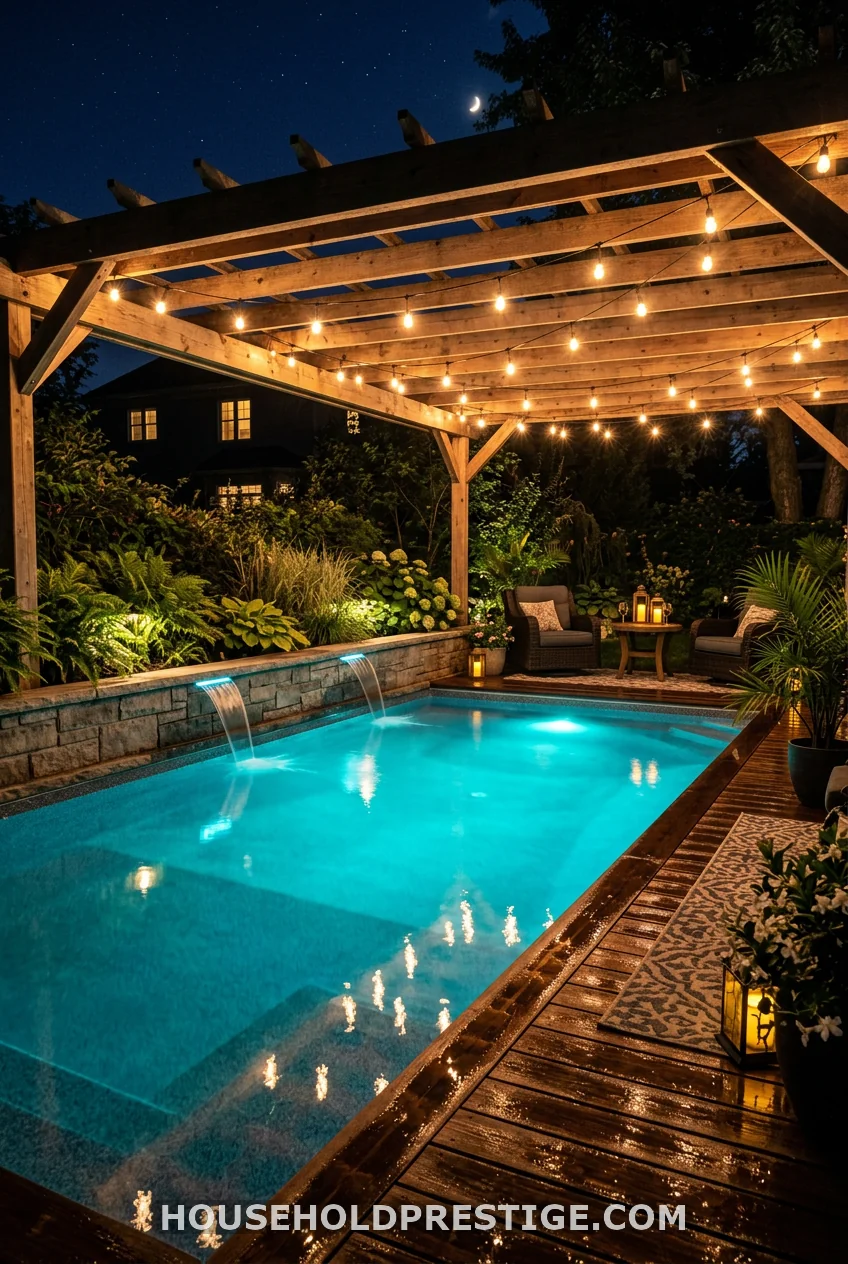
Color-changing LED pool lights (Hayward ColorLogic or Pentair IntelliBrite) run $200–$450 per fixture plus $150–$250 for installation. One light handles pools up to 16 feet. Two lights for anything larger. You control color and program sequences from your phone. The visual return on this $400–$900 investment makes the pool look custom-designed. No other single upgrade does more for less.
12. The Pool + Spa Combo
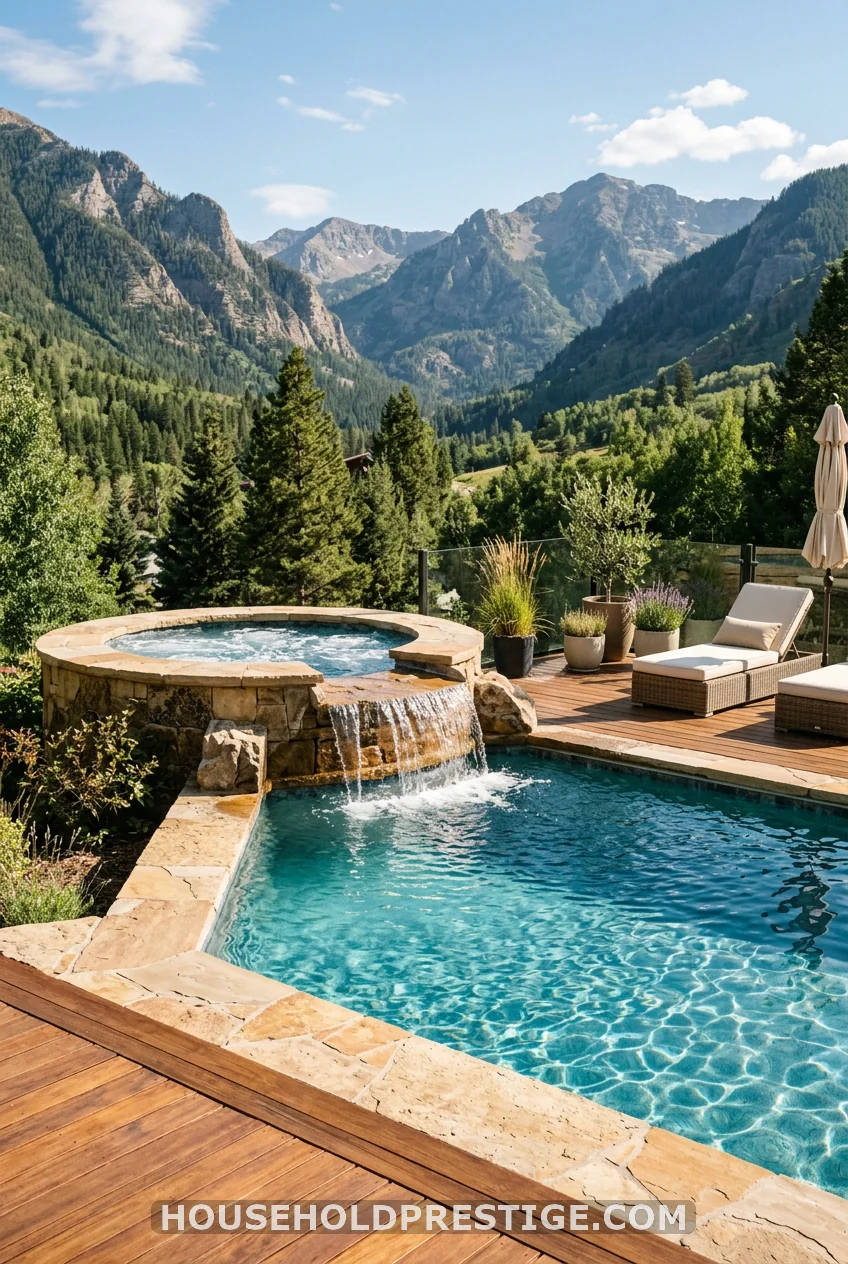
Adding a semi inground spa alongside your pool works because the elevated walls of the semi inground installation give the spa somewhere natural to sit — raised above the pool deck level, with a spillway dropping into the pool below. It looks completely integrated and not like an afterthought.
The spa shell itself costs $3,000–$7,000 for a prefab fiberglass or acrylic unit. The plumbing and electrical integration with your existing pool equipment adds $2,500–$5,000. You’ll need a separate heater or a two-speed heater that can run both pool and spa independently.
One decision to make early: do you want the spa on the same circulation system as the pool, or a separate system? Combined systems save on equipment cost ($800–$1,500 less) but limit your ability to heat the spa without heating the pool. For year-round spa use, a dedicated heater is worth the extra cost.
The full spa add-on budget: $7,000–$15,000, depending on spa size and equipment.
13. The Privacy Pergola Surround
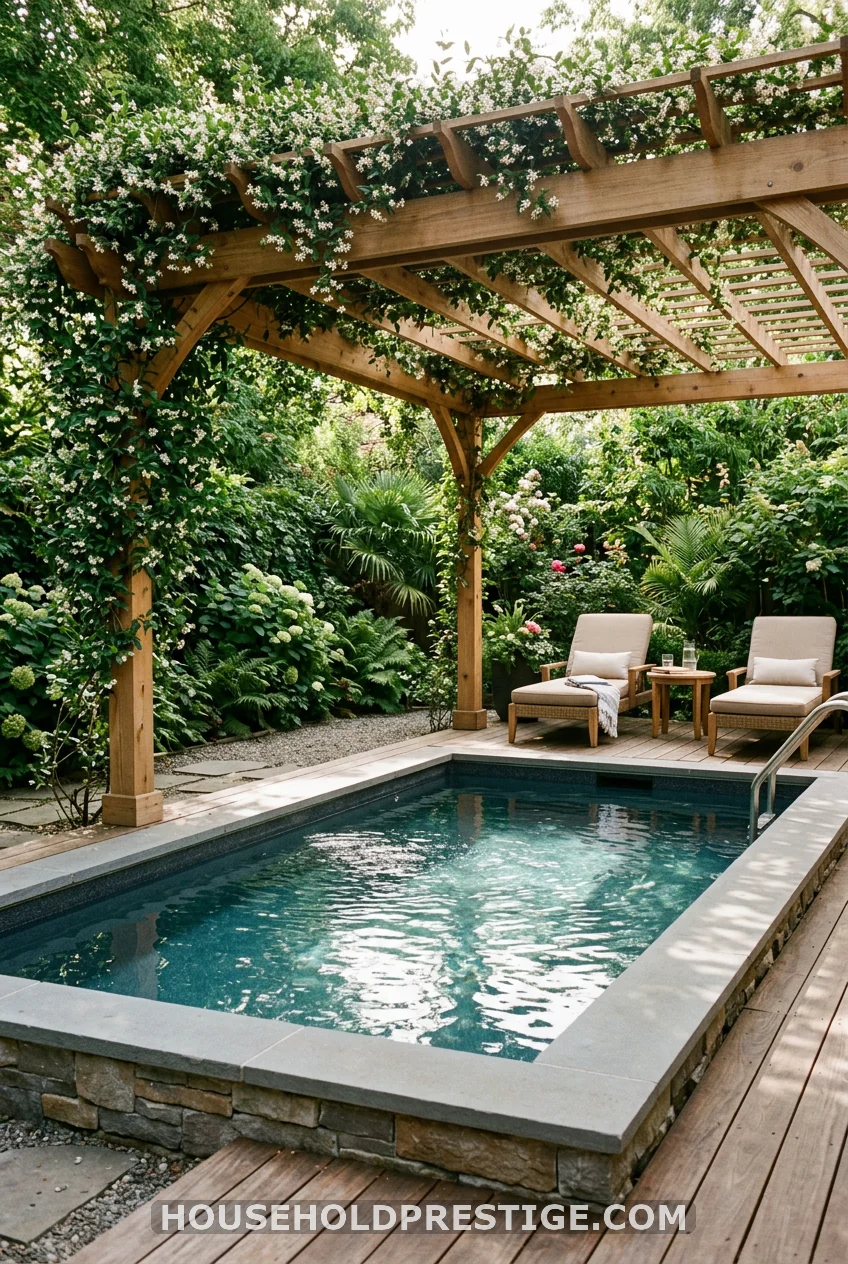
A pergola does something simple but significant: it defines the pool area as a room. Not just a pool in a yard. An outdoor room with a pool in it. The psychological difference is real, and it makes smaller backyards feel designed rather than cramped.
For a pool pergola, use pressure-treated pine (budget) or cedar (better weathering). A 12×16-foot pergola runs $1,800–$3,500 in materials and a weekend of labor if you’re comfortable with post-hole digging. Hire out the post setting and beam work for $1,000–$2,000. Train jasmine, wisteria, or climbing hydrangea over the structure — within two seasons, you’ll have a dappled canopy.
Position the pergola on the side of the pool that faces your neighbor or the afternoon sun, whichever gives you more privacy or shade value.
14. The Beach Entry for Families
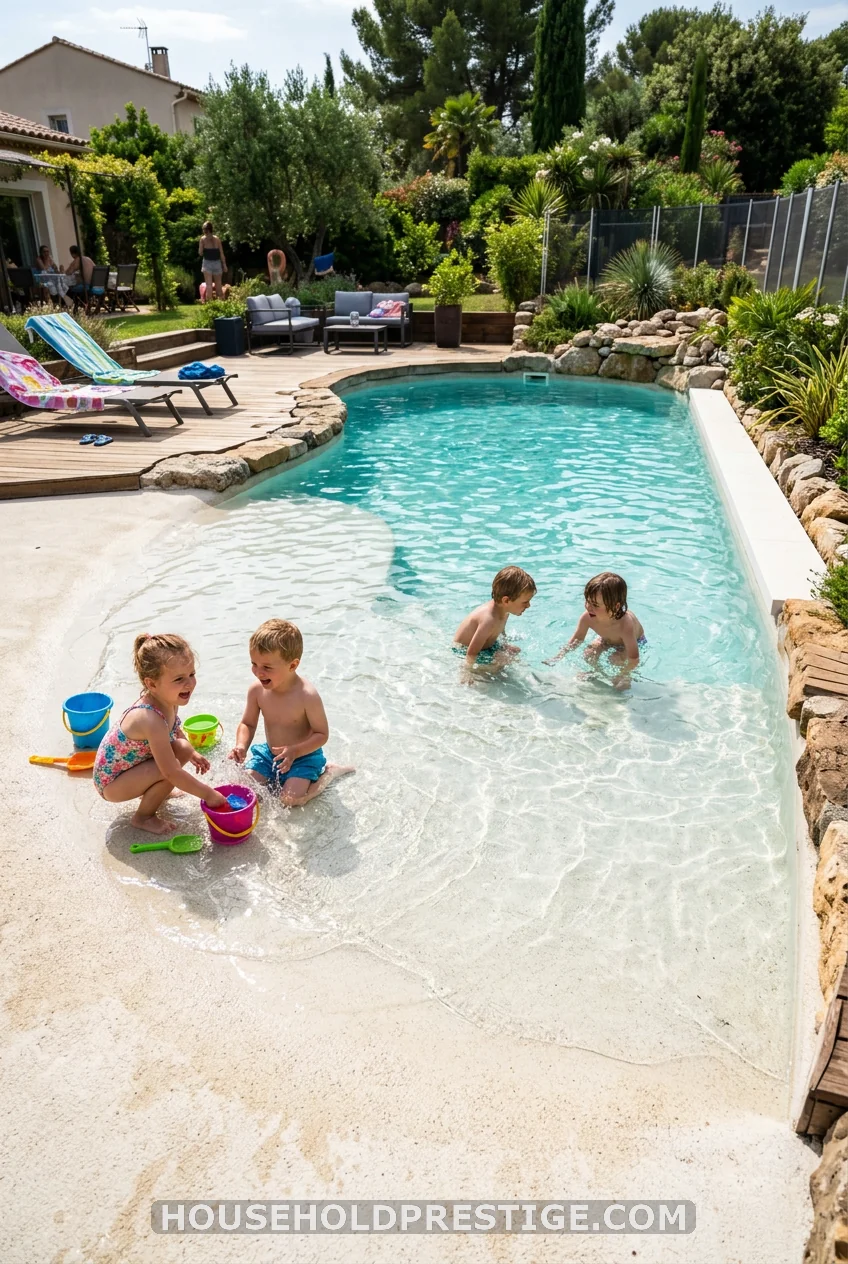
A beach entry — also called a zero-entry — is a gradually sloping shallow section that leads into deeper water without a step or ladder. For a semi inground pool, this works beautifully on the shallow end where the pool transitions from above-ground to at-grade on a level yard.
The entry zone is typically 4–8 feet of horizontal distance to get from 0 depth to 18 inches. It’s poured as part of the pool’s concrete base or added via a custom vinyl liner with a built-in slope. The cost over a standard flat-floor pool: $800–$2,500, depending on the size of the entry zone.
Young kids love it. Dogs love it. Older swimmers who find ladders awkward love it. If you have any of those three, build it in from the start — retrofitting costs three times as much.
15. The Year-Round Pool: Heating and Winterizing It Right
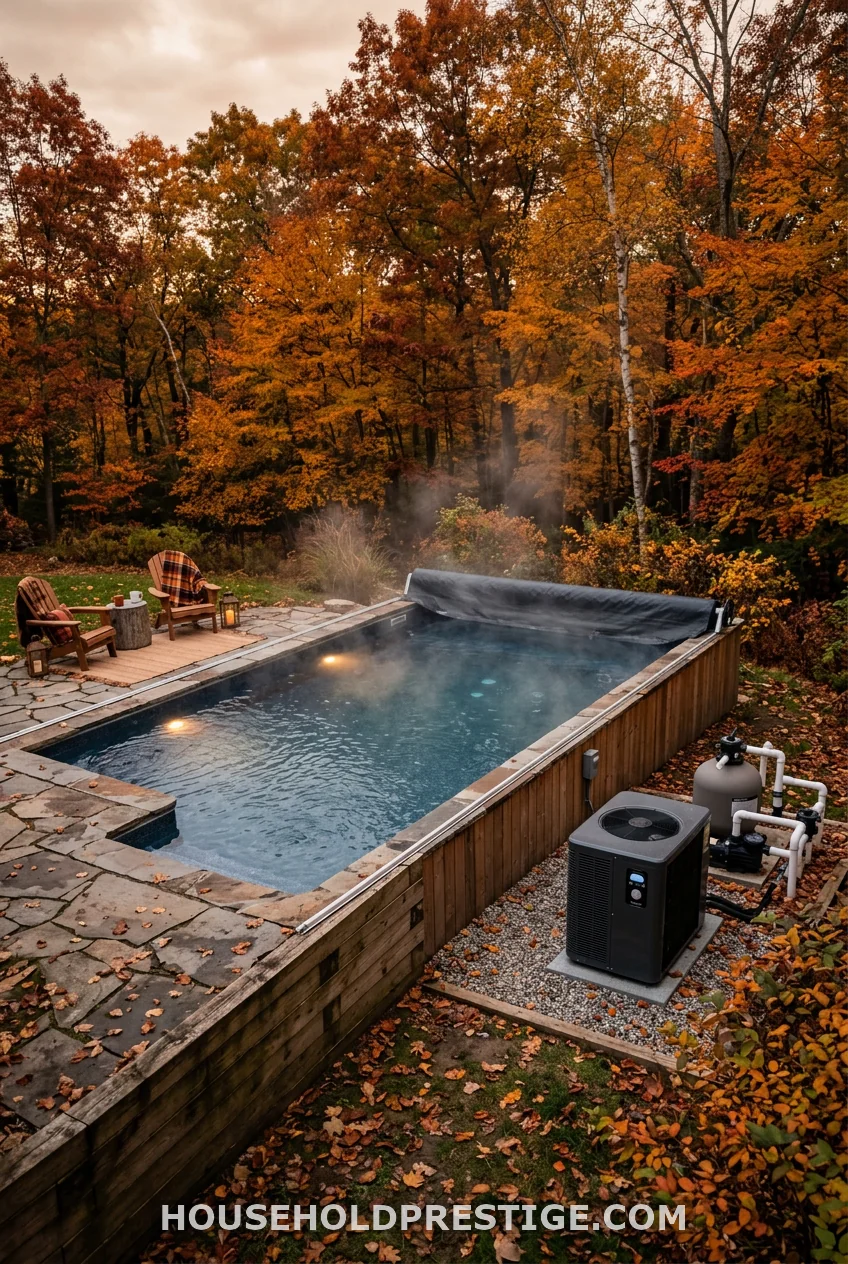
Most people shut their semi inground pool down in September. If you’re willing to spend $1,500–$4,500 on a heat pump and $500–$900 on a proper safety cover, you’re swimming in May and October.
Heating options by cost:
– Gas heater (Hayward H150FDP): Fastest to heat, $1,200–$2,500 installed. High operating cost ($200–$400/month in gas for daily use)
– Heat pump (Hayward HeatPro, Pentair UltraTemp): Slower to heat, $2,500–$4,500 installed. Low operating cost ($30–$80/month). Works above 50°F air temp
– Solar heating: Lowest cost to operate, $1,500–$3,500 installed. Works only in direct sun and doesn’t heat well below 65°F ambient
For extended-season swimming (May–October), a heat pump is the clear answer on cost efficiency. For year-round or quick weekend heating, gas wins on speed.
Winterizing a semi inground pool in freeze-thaw climates:
1. Balance water chemistry (chlorine 1–3ppm, pH 7.4–7.6, alkalinity 80–120ppm)
2. Lower water level 4–6 inches below the skimmer
3. Blow out all plumbing lines with a shop vac or air compressor
4. Add pool antifreeze to returns and skimmer line (propylene glycol, not automotive antifreeze)
5. Install an ASTM F1346-compliant safety cover (fits around $400–$900 for a 12×24)
6. Store pump, filter cartridge, and any removable fixtures indoors
The semi inground design actually winterizes better than a full inground in some cases — the exposed walls allow you to access the plumbing fittings without digging, and the pool’s partial height above grade makes cover installation significantly easier.
The Bottom Line
A semi inground pool is not what you settle for when you can’t afford inground. It’s what you choose when you want a pool that works with your yard’s actual conditions — a slope, a budget, a timeline, or all three. The 15 ideas above cover the full range from a shipping container conversion to a dual-level terraced entertainment pool. The common thread is this: the more specific you are about your yard’s constraints upfront, the better your design outcome.
Pick the idea that solves your actual problem first. The aesthetics will follow.
Frequently Asked Questions
How much does a semi-inground pool cost to install?
A basic semi-inground pool with a simple deck surround typically runs $12,000–$28,000 installed. The biggest cost variables are wall type (vinyl liner vs. fiberglass vs. concrete), the extent of decking, and site prep required. On sloped yards, add $2,500–$8,000 for retaining walls. Pools with custom features like spas, water features, or infinity edges range from $20,000–$45,000+.
Can you install a semi-inground pool on a slope?
Yes — sloped yards are actually one of the best candidates for a semi inground pool. You bury the uphill side deeper and use the natural grade difference to create an exposed wall on the downhill side. Proper drainage planning (French drain on the uphill side) and a retaining wall rated for soil pressure are the critical steps that separate a successful slope installation from a costly problem.
What is the difference between a semi-inground pool and an above-ground pool?
Both sit partly above grade, but the comparison ends there. Semi inground pools are designed and rated to be partially buried — their wall panels, coping, and liner systems are engineered for soil pressure and partial burial. Standard above-ground pool kits are not rated for burial and will fail under soil pressure. Semi inground pools also have significantly longer lifespans (15–25 years with maintenance) and a more permanent, finished appearance.
Do semi-inground pools add value to your home?
They add perceived value and lifestyle appeal, but generally less resale value than a full inground pool. Real estate agents in warm climates report semi-inground pools as a neutral-to-positive feature; in cold climates, it’s more neutral. The ROI is better thought of as personal enjoyment value — you’re buying summers, not resale premiums.
What permits do you need for a semi-inground pool?
Most jurisdictions require a building permit for any pool over 24 inches in depth, which covers nearly all semi-inground installations. You’ll also need to comply with local fencing ordinances — typically a 48-inch barrier with self-latching gates. Check with your local building department before ordering your pool kit. Permit costs range from $150–$800 depending on your municipality.