

I once hung a bold floral wallpaper in my powder room at 11 p.m. with no plan. By midnight the pattern drifted a full inch off by the toilet, and a giant peony stared at me from behind the tank. I peeled it off, cried a little, and started over the next morning with a level and a sketch.
That ruined night taught me what a small powder room makeover really needs: a plan, in the right order. Below are 13 ideas, from paint to lighting to the dreaded “almost no counter” problem. They come with real costs, real measurements, and options for renters.
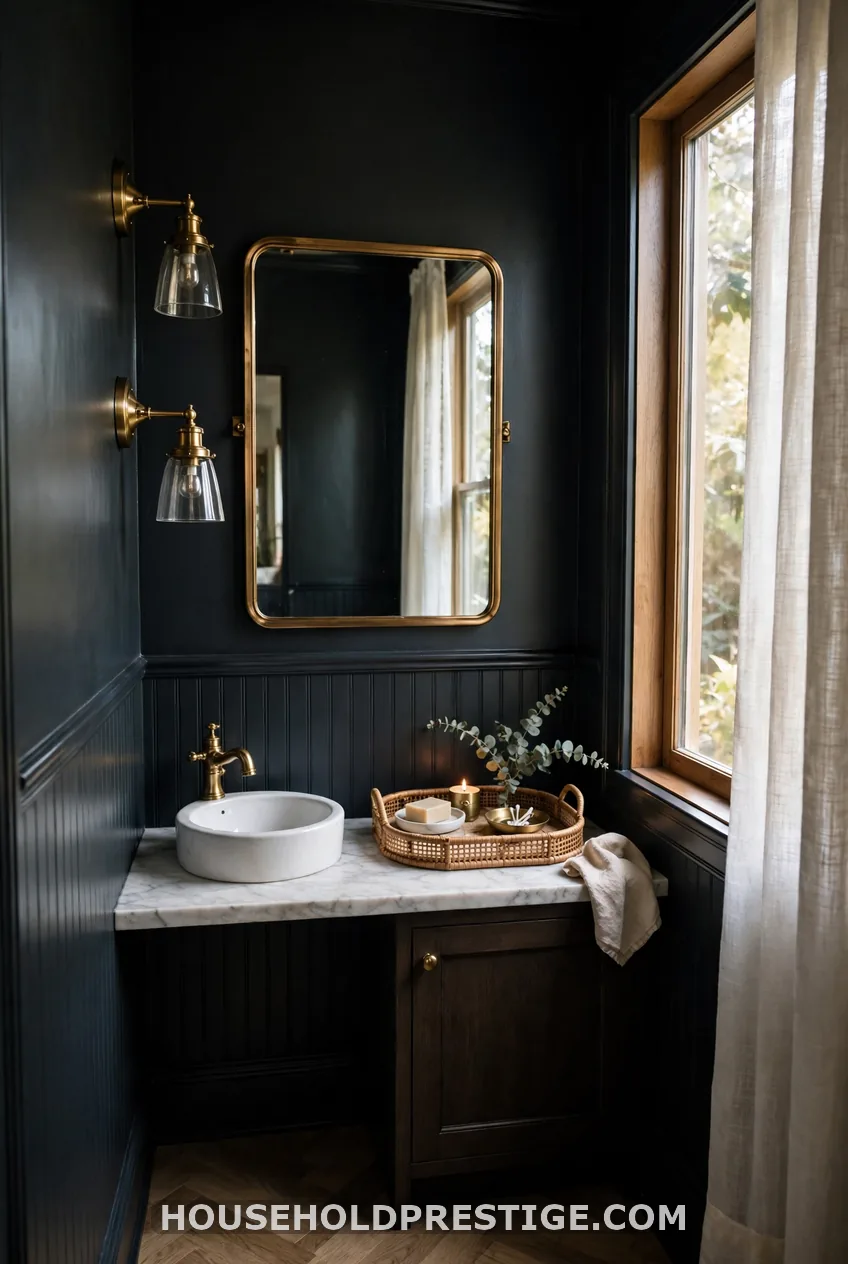
1. Pick a Jewel-Box Color Story
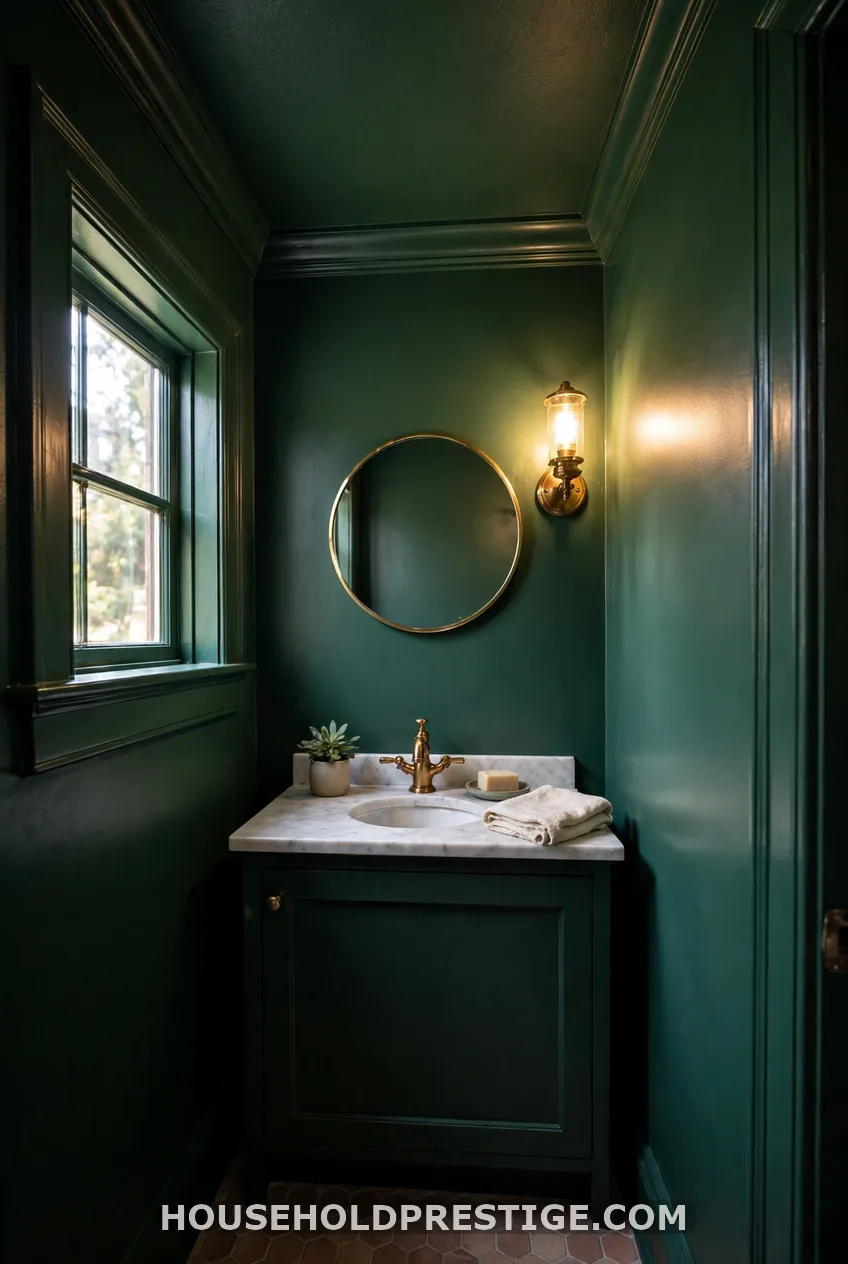
A powder room is the one room where you can go bold. People spend two minutes in there, so a dark color feels dramatic instead of heavy.
Try color-drenching. Paint the walls, trim, door and ceiling the same shade in one finish. The corners blur and the room reads as a cozy jewel box.
Deep greens, inky navies and warm charcoal all work. Benjamin Moore and Sherwin-Williams both sell sample pots for about $5 to $10, so test a patch first.
Prefer light? Choose a soft white with a warm undertone. Cool whites turn gray in a windowless room.
The catch:
Dark paint shows every dent and badly taped edge. Fill holes and sand before you open the can.
2. Fake Square Footage with Wallpaper
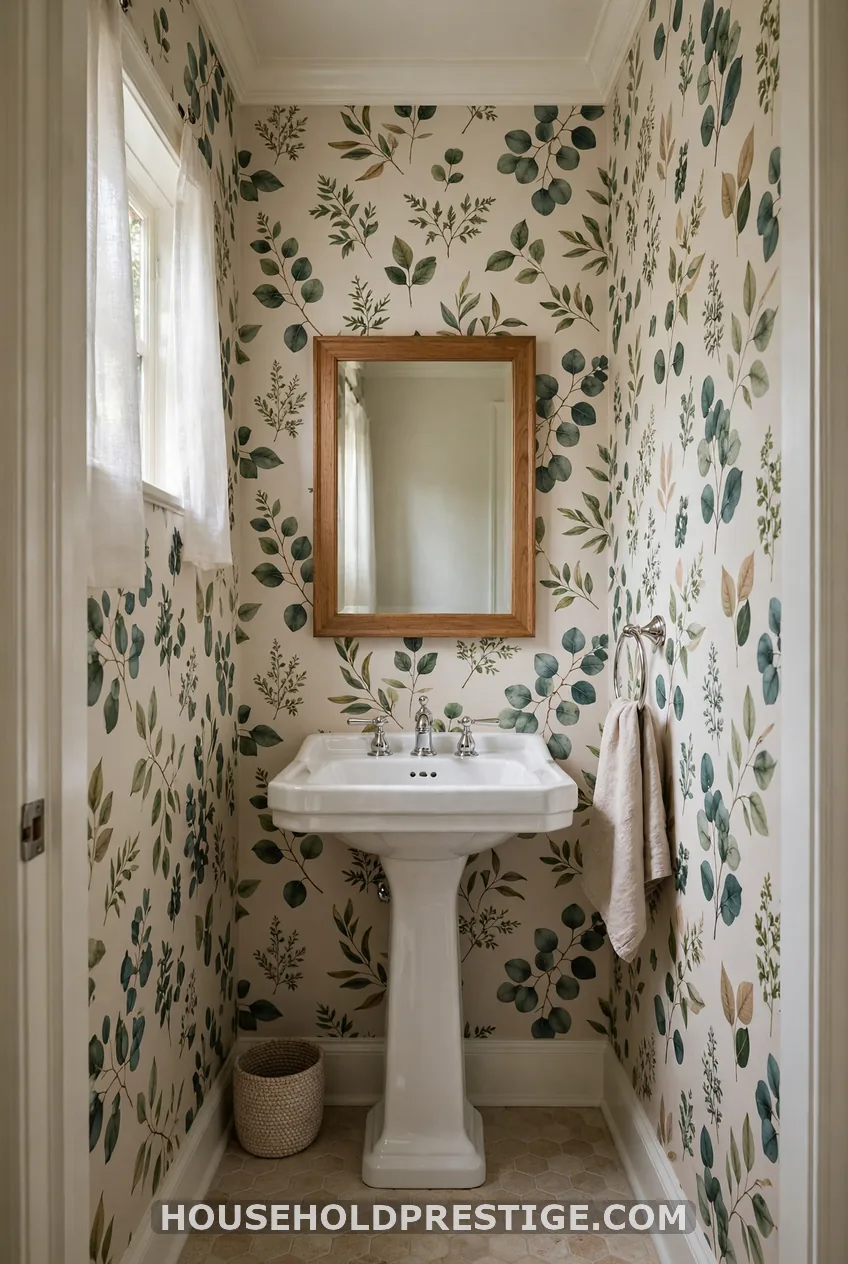
Wrapping all four walls hides the corners, and a tiny room feels larger when the eye has no hard edges to measure. Skip the nervous accent wall. Commit to the whole room.
Pick a medium-scale pattern. Tiny prints can look busy, and giant ones get chopped up by the toilet and sink. Peel-and-stick paper runs about $30 to $60 per roll and works for renters. A powder room usually needs two to four rolls.
Start in the least visible corner. Hang the first strip with a level, not by trusting the ceiling line.
One caveat:
Peel-and-stick sticks poorly to textured walls and fresh paint under 30 days old. Smooth the wall first.
3. Add Beadboard or Board-and-Batten
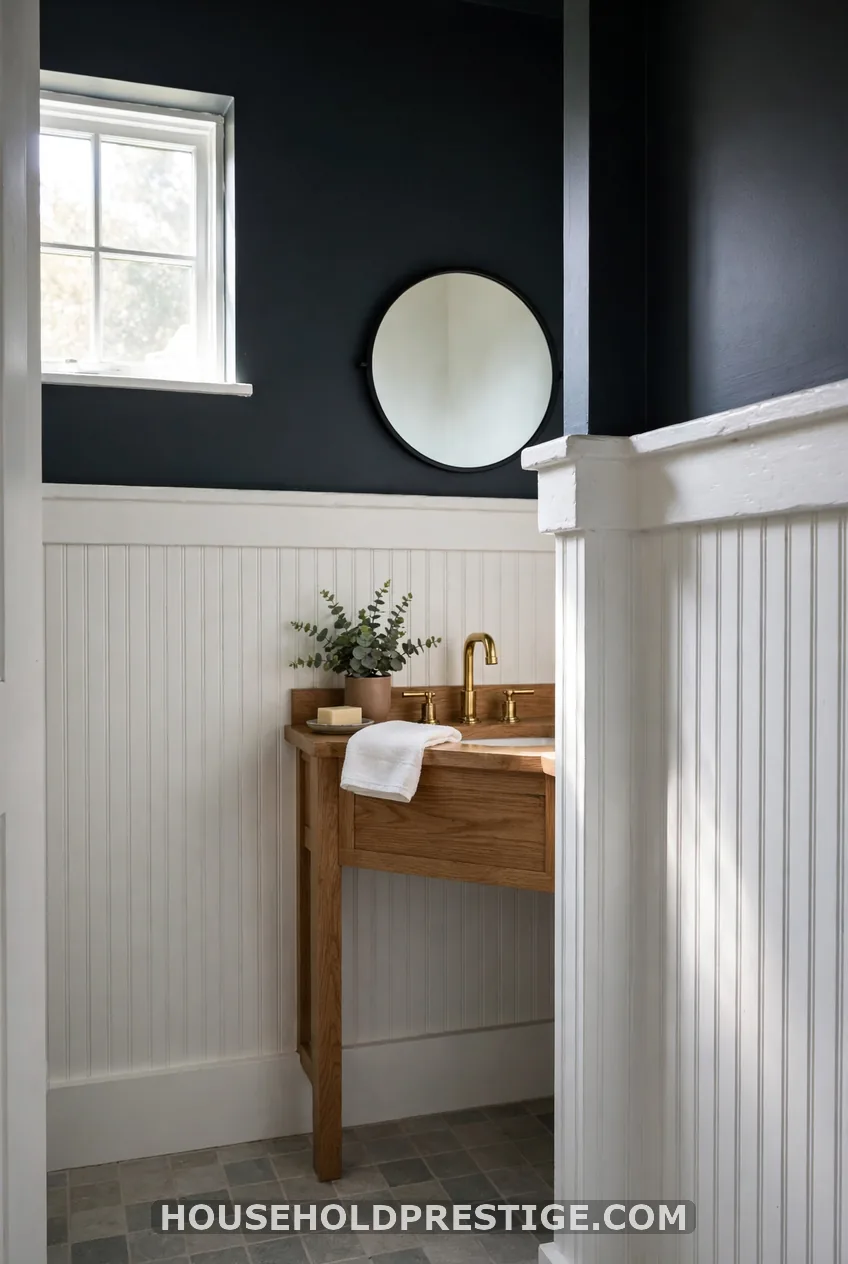
This is the project I’d pick if you can only do one weekend job. Beadboard gives a flat wall real depth. It also hides dings from wheeled bags and knees.
Materials and cost (about $150 to $250 for a 5×4.5-foot room):
- 4×8 beadboard sheets, about $30 to $40 each, cut to height at the store
- Construction adhesive and a 18-gauge brad nailer (or a hammer and finish nails)
- Top rail trim, about 6 to 8 linear feet per wall
- Paintable caulk and semi-gloss paint
Steps:
- Mark a line at 36 to 42 inches, or two-thirds of the wall height. Level it all the way around.
- Cut panels to height. Before you cut near an outlet, turn off that circuit at the breaker and test the outlet to confirm it is dead. Then notch the panel around the outlet with a jigsaw.
- Run adhesive in an S-pattern on the back and press the panel to the wall.
- Nail into studs, then add the top rail along your line.
- Caulk every seam, fill nail holes, and paint both panels and rail the same color.
Skip a chunky baseboard if your door swing is tight. Four inches of trim is plenty.
The catch:
Wall panels add about half an inch of thickness. Check that your toilet supply line and sink still clear.
4. Upgrade the Vanity Without a Full Reno
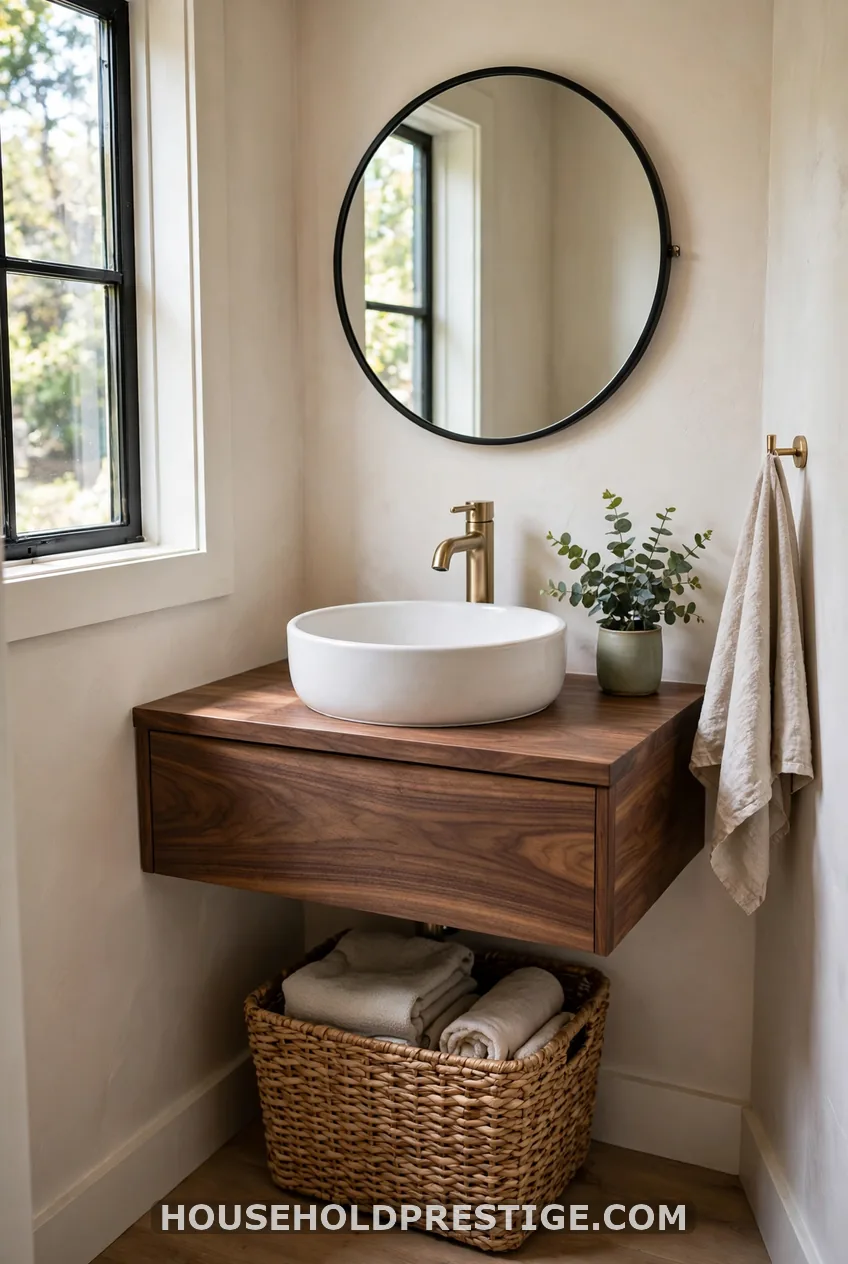
In a bath around 5×4.5 feet, a 24-inch vanity is the sweet spot. A floating model shows more floor, which makes the room look bigger.
A pedestal sink frees the most visual room but gives you no storage. A floating vanity gives you a drawer. Or convert a thrift-store dresser: cut the top for a drop-in sink, seal the wood with three coats of water-based polyurethane, and ask a plumber to hook up the drain.
No budget for a new unit? Remove the doors and put a basket underneath. It looks styled and holds spare rolls.
5. Solve the “Almost No Counter” Problem
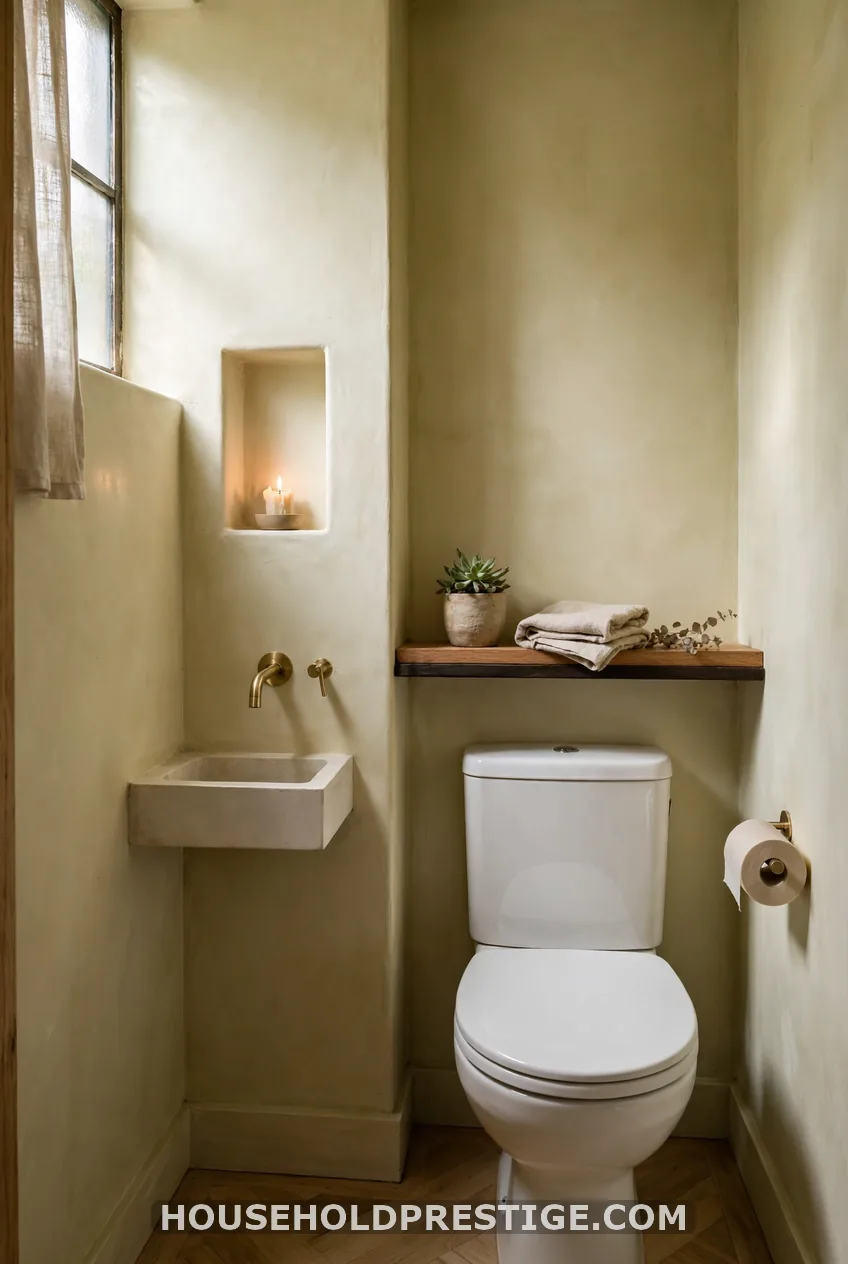
When the sink eats the whole counter, move the stuff up and into the wall.
- Wall-mounted faucet: it clears the sink deck, but the plumbing must move into the wall. Hire a plumber.
- Corner sink: it tucks into dead space and leaves floor room.
- Ledge shelf: a 4-inch-deep picture ledge above the toilet holds a candle and a small plant.
- Recessed niche: if the wall cavity between studs is clear of pipes, cut a 14.5-inch-wide niche for soap and a tray.
- Round tray: a 6-inch marble tray corrals a soap pump and a hand cream.
Check for wires and pipes before you cut any wall.
6. Layer Lighting for a Luxe Glow
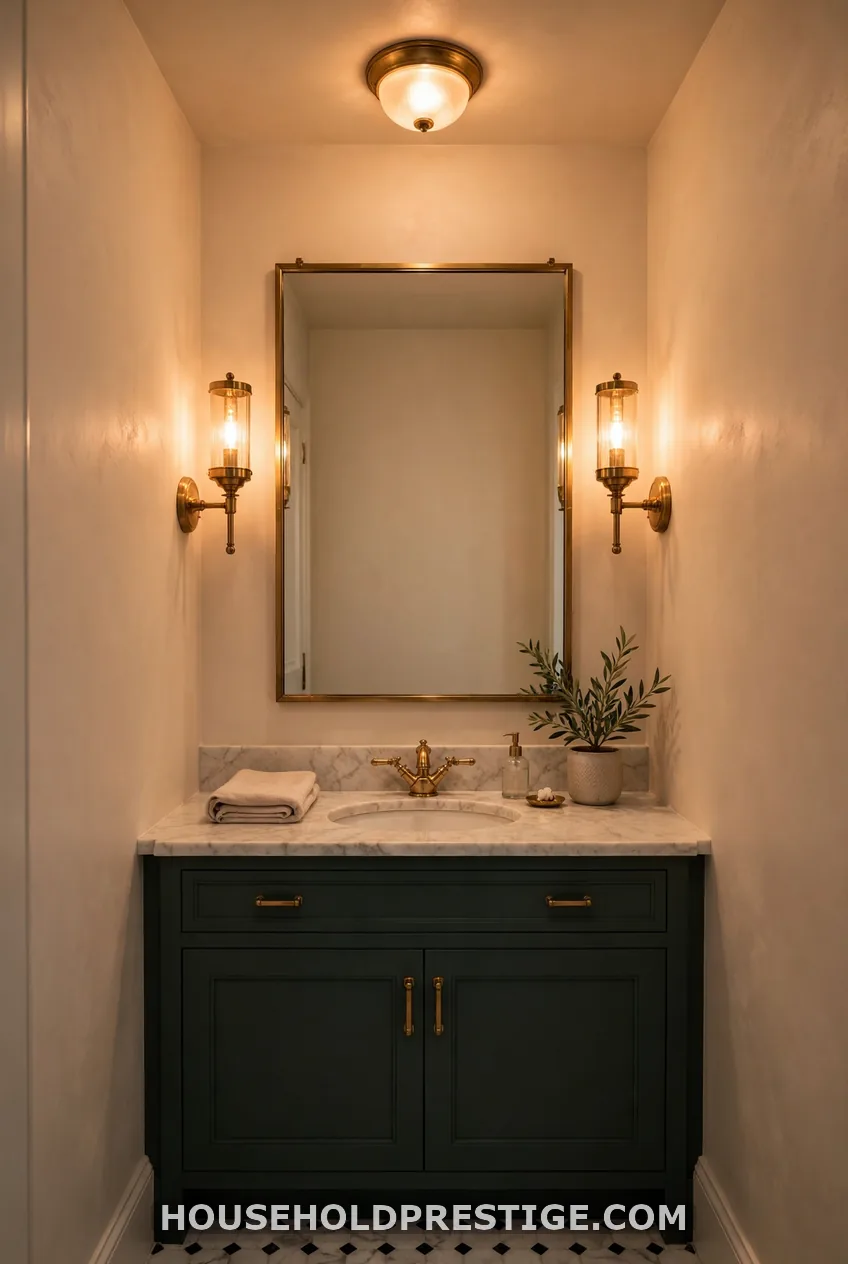
A single bright ceiling light makes everyone look tired. Layer two sources instead.
Hang sconces on both sides of the mirror, about 36 to 40 inches apart, with the center around 60 to 66 inches off the floor. Add a small flush mount or mini pendant overhead. Use 2700K bulbs, which glow warm, and a dimmer switch. A basic dimmer costs about $15 to $30.
For a windowless room, aim for light from the sides and above. That fills in shadows on faces and bounces off a pale ceiling.
One caveat:
Check the dimmer matches your bulb type. LED bulbs need an LED-rated dimmer or they flicker.
7. Choose a Mirror That Feels Bigger
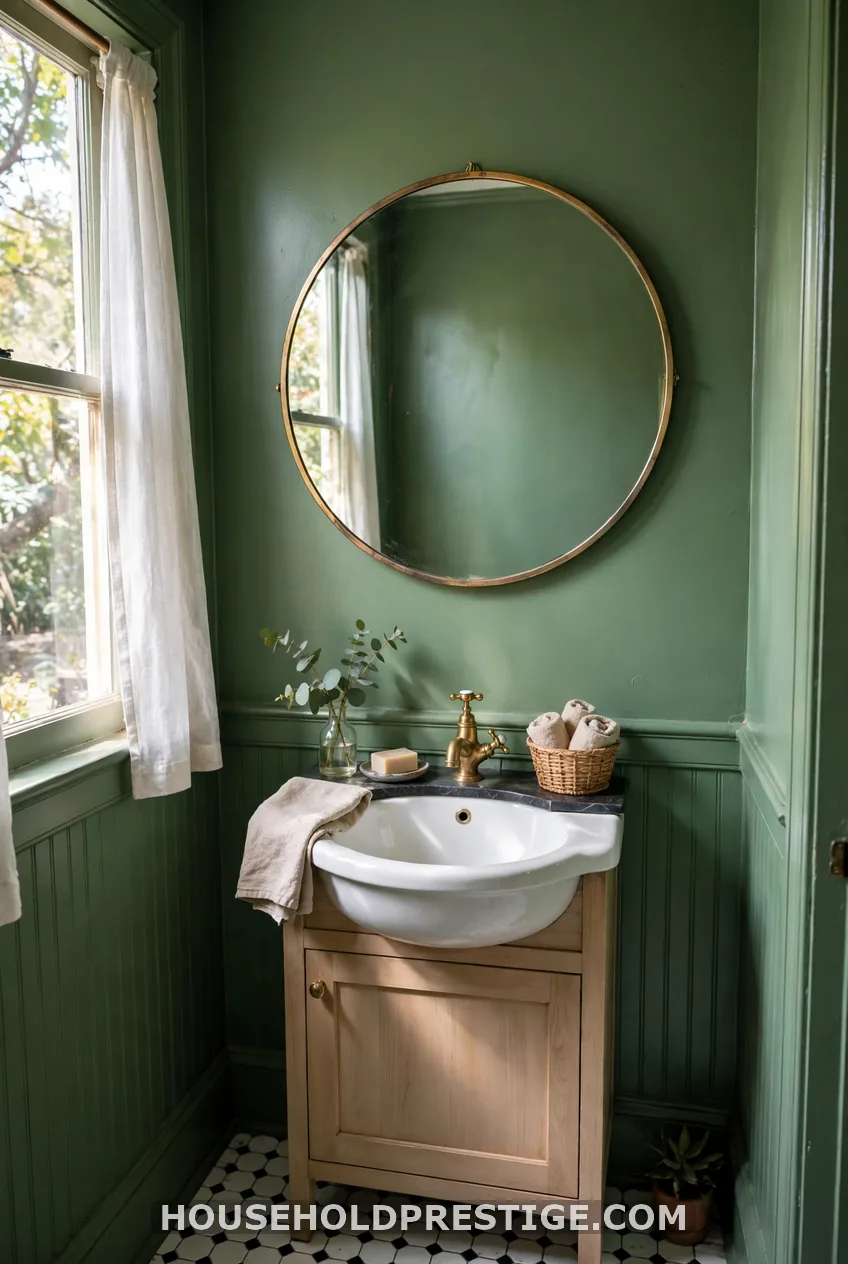
Go bigger than you think. A mirror about as wide as the vanity, or a few inches narrower, doubles the light and the sense of depth. Round shapes soften a boxy room. Hang it so the center sits at eye level, around 57 to 60 inches.
8. Swap Hardware and Fixtures
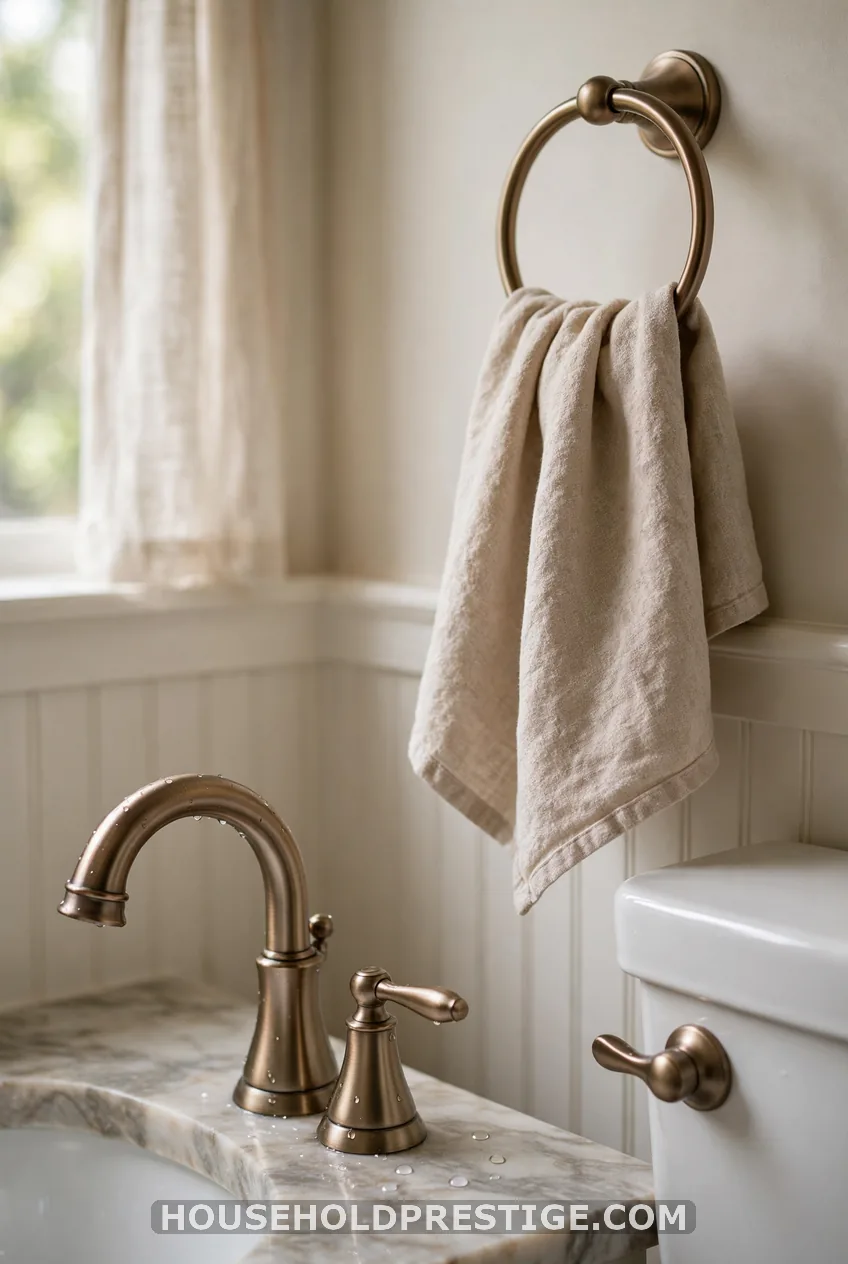
A new faucet, towel ring and flush lever cost about $100 to $150 total. Match them in one finish, like champagne bronze or matte black. Mixing metals works if you repeat each one at least twice. All of it needs only a screwdriver and a wrench, so renters can save the old parts and swap them back.
9. Use Vertical Space
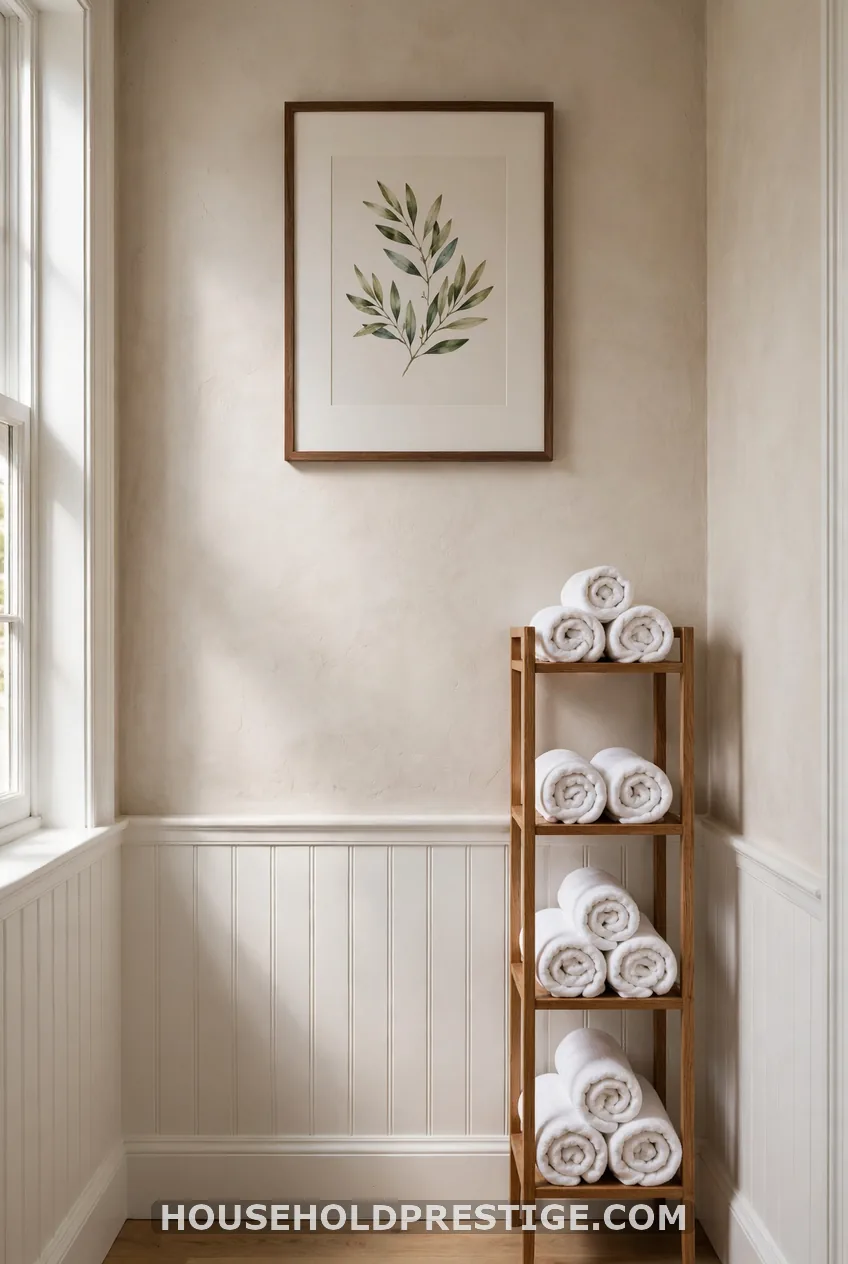
Draw the eye up. Hang art 8 to 12 inches above the toilet tank, or higher. A slim étagère or wall shelf holds towels without taking floor room. Add a towel bar with hooks and it becomes decor, not clutter.
10. Style the Toilet Zone
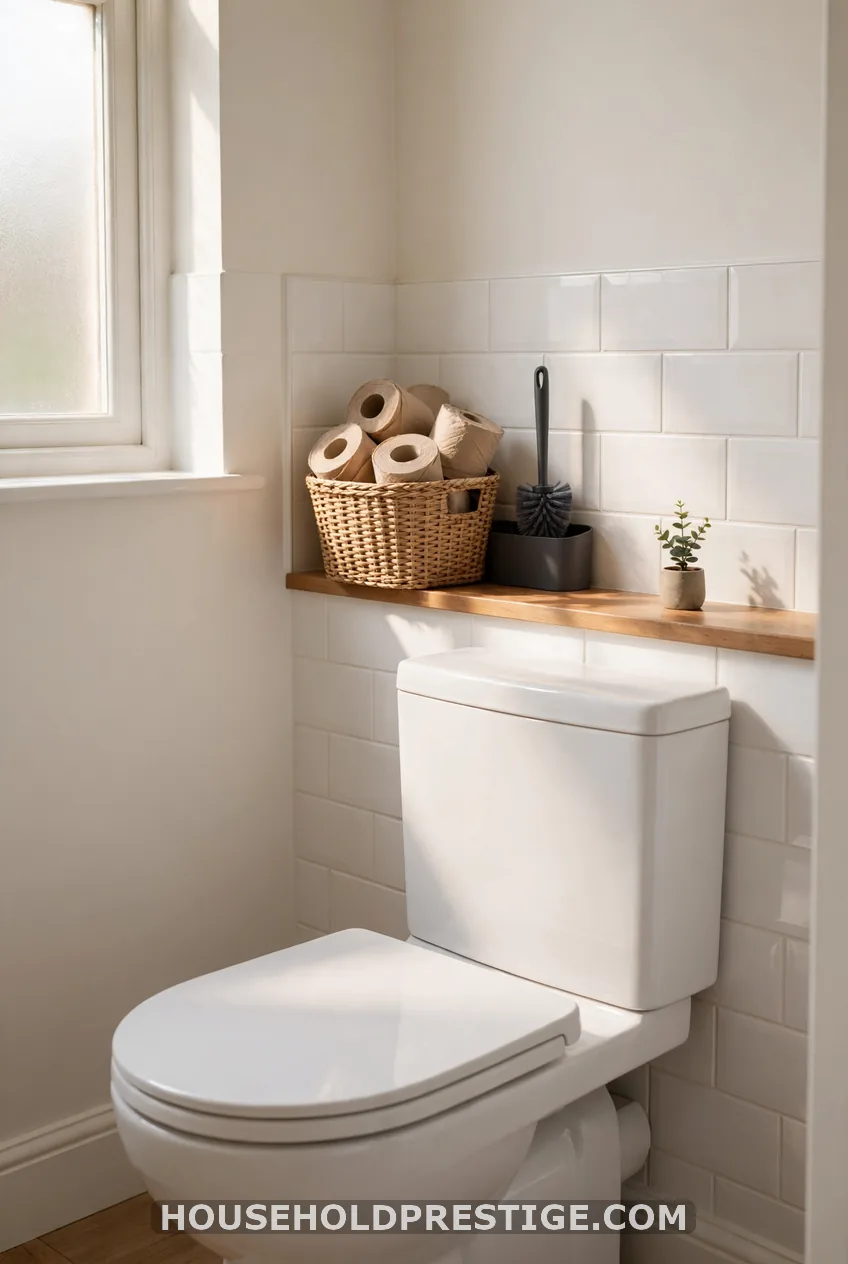
What most people think: the toilet is the ugly part, so hide the whole room’s style around it.
Reality: the toilet is the focal point, so style it. Guests look right at it.
Store the brush in a lidded ceramic caddy tucked behind the base. Put three spare rolls in a basket on a stool. On the tank, set one small item, like a candle or a bud vase.
That’s it. A tank covered in six objects looks like a yard sale.
Mind clearances. Most US codes want about 21 inches of open space in front of the toilet and 15 inches from its center to a side wall. Check your local rules before you place anything.
11. Handle the Floor and Threshold
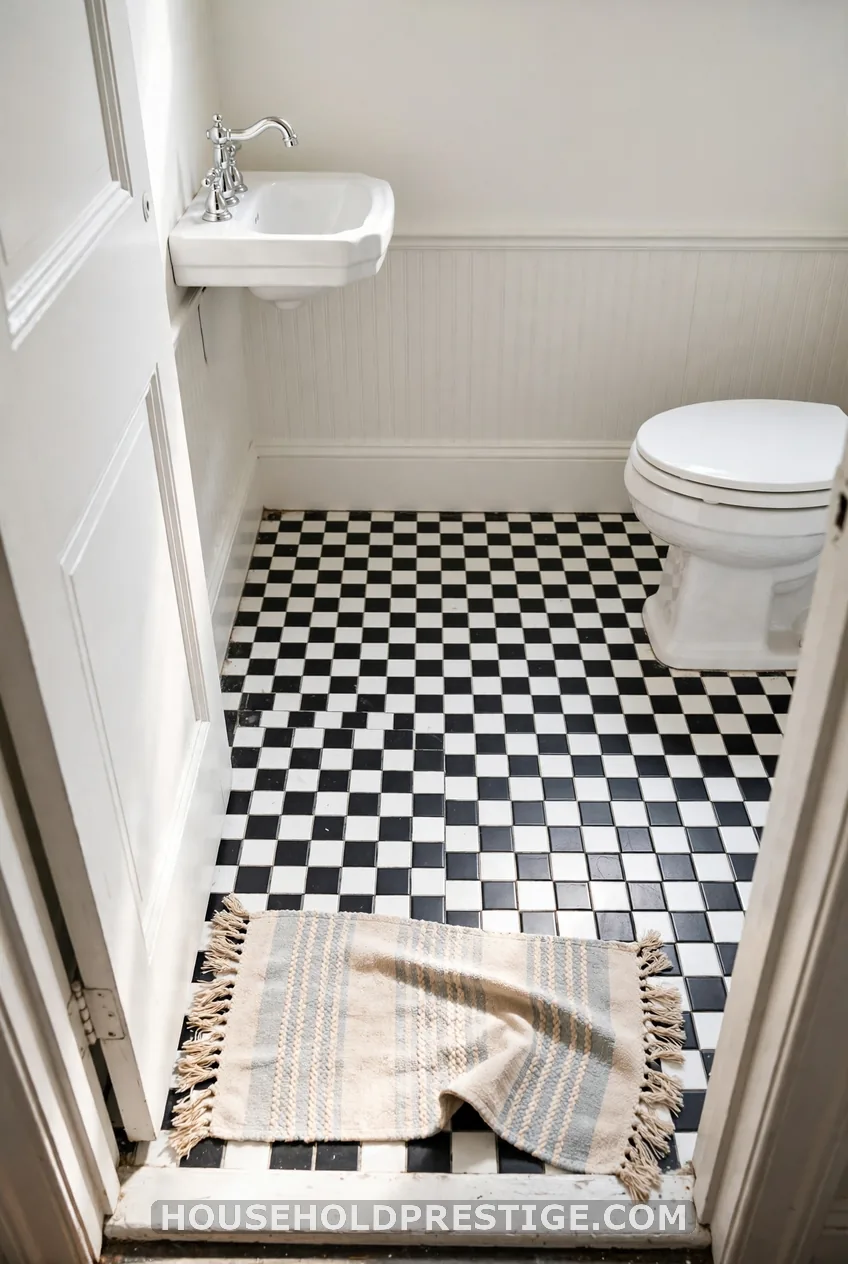
I once laid peel-and-stick tile over a floor I had only wiped, not scrubbed. Within a month, the edges near the toilet curled up. I had to pull every tile and start over.
Clean the floor with degreaser. Let it dry fully. Start at the center, not the wall, so the cuts at the edges look even. A powder room needs about 20 to 25 square feet of tile, which costs around $40 to $100.
Cheaper still: refresh the grout with a grout pen for about $8. Add a washable runner over the top.
12. Do a No-Paint, Renter-Friendly Makeover
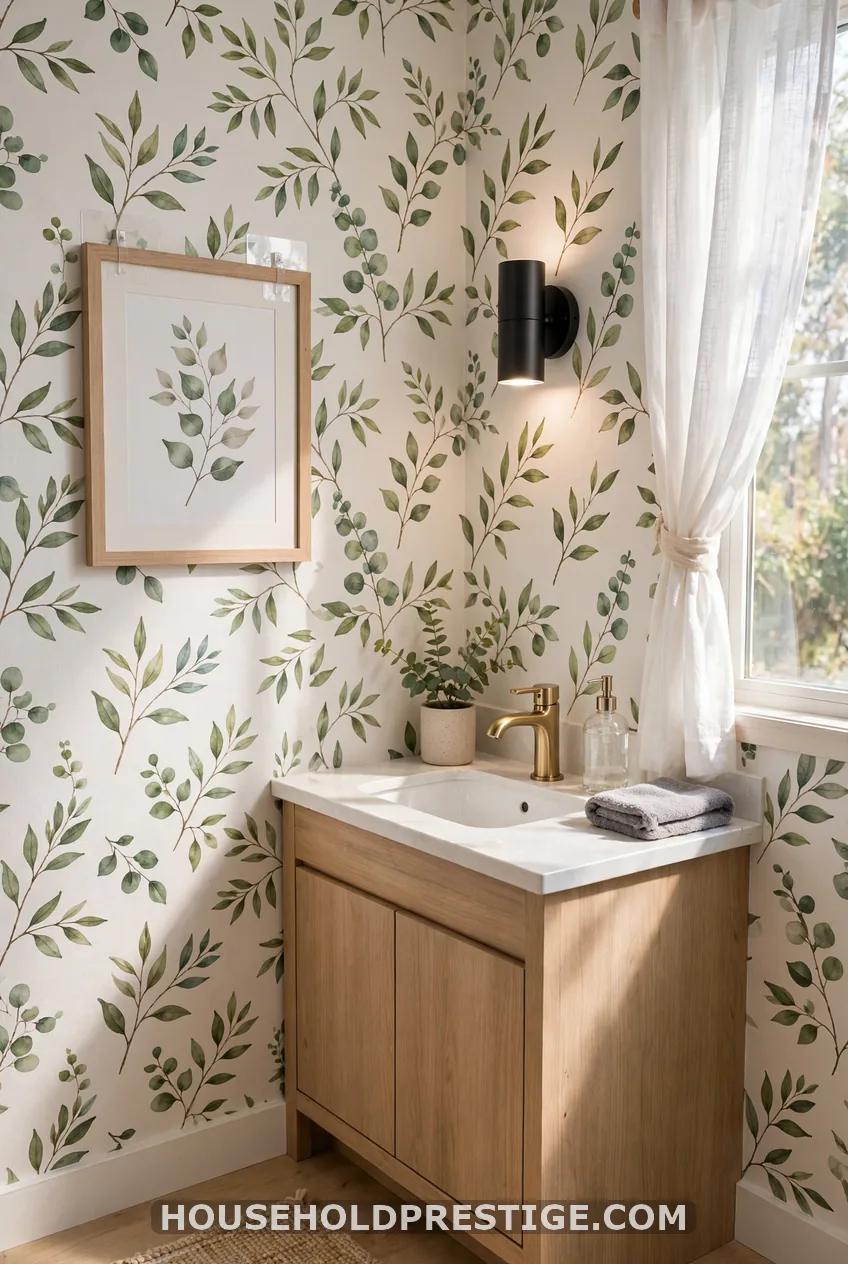
You can still get a custom look without a deposit fight.
- Hang removable wallpaper on a clean, smooth wall.
- Use Command strips for art and light shelves. Check the weight rating on the package, and stay well under it.
- Swap in plug-in sconces or battery lights.
- Swap the faucet, towel ring and flush lever. Keep the originals in a labeled bag.
- Add a hanging plant and a styled tray.
The catch:
Wallpaper can pull old paint off. Test a small hidden patch for a week before you commit.
13. Build a Budget Blueprint
Know what to splurge on and what to save. Spend on lighting and the mirror. Save on towels, trays and art.
- $200 (one day): gallon of paint $60, hardware $50, mirror or light $60, styling $30.
- $500 (one weekend): paint, peel-and-stick wallpaper $120, a plug-in sconce pair, and new hardware.
- $2,000 (several days): new 24-inch vanity, beadboard, wall sconces, plumber and an electrician for fixtures.
Work in order: paint or wallpaper first, then trim, then lighting, then hardware, then styling. Styling comes last so nothing gets splattered.
The Contrarian Take
A powder room doesn’t need to be a showpiece, and you don’t need to do all 13 of these. One bold choice done well beats six timid ones. Pick the dark paint or the wallpaper, not both. Skip the trend you only like on a screen.
Add a decent light and a big mirror, and call it done. Guests won’t count your finishes. They’ll remember how the room felt.
FAQ
How much does a small powder room makeover cost?
A paint, hardware and styling refresh runs $200 to $500. A weekend with wallpaper and a new vanity usually lands between $500 and $2,000. Moving plumbing or changing the layout costs more.
Can I make over a powder room without painting?
Yes. Use removable wallpaper, swap the faucet and towel hardware, add plug-in sconces, and lay peel-and-stick tile. Command-strip art finishes the look with no permanent damage.
Is dark paint a good idea in a small powder room?
Yes. The room is small and visited briefly, so bold color feels intentional. Pair it with warm 2700K lighting and a large mirror so it glows, not looms.
How do I add storage to a tiny powder room with no counter?
Use a 4-inch ledge shelf over the toilet, a recessed niche, a towel bar with hooks, and a basket under a floating vanity. A narrow étagère also works.
Do I need a permit for a powder room makeover?
Cosmetic changes like paint, wallpaper and fixture swaps usually don’t. Moving plumbing, adding circuits or changing the layout often does. Check with your local building office first.