

Your favorite chunky knit lands on a hanger every October, and by December, it hangs two inches longer than it should. The shoulders sag. The sleeves droop. That’s not the sweater’s fault. That’s the closet’s fault.
Sweater storage in a closet only works when the method matches the fabric, not the other way around. A wire hanger stretches wool the same way a bad night’s sleep stretches your patience. Fold the wrong sweater, and it wrinkles down the middle for a week. Stack too many in one bin and the bottom layer comes out flat as a pancake.
Here’s a system that fixes all three problems, whether your closet is a walk-in or barely wider than a door.
Know Your Sweater Before You Store It

Not every sweater behaves the same way in storage. Wool and cashmere stretch under their own weight, so they never go on a hanger for long-term storage. Cotton and acrylic hold their shape better and can hang for months without damage. Chunky cable knits need more room per fold than a thin merino layer.
Sort your sweaters into three piles before you touch a single storage bin: hang-safe (cotton, acrylic, thin merino), fold-only (wool, cashmere, anything heavier than 300 grams), and questionable (anything you’re not sure about, which almost always means fold it).
This sorting step takes ten minutes and saves you from re-organizing everything in November when half your closet looks lopsided.
Measure Your Closet Before You Buy Anything
Skip this step, and you’ll buy bins that don’t fit, shelves that wobble, and dividers that leave two inches of dead space on either side. Grab a tape measure first.
Standard closet shelves run 12 to 16 inches deep. A folded bulky sweater needs about 14 inches of depth to lie flat without buckling. If your shelf comes in under 12 inches, stop planning for flat stacks and switch to vertical, file-style folding instead. Sweaters stand up like folders in a filing cabinet, using height instead of depth.
Measure the vertical clearance between shelves too. Most closets give you 10 to 12 inches between shelf levels. That’s room for a stack of four to six folded sweaters, depending on thickness. Try to stack more than that, and the bottom sweater takes the weight of everything above it for months.
Cost Reality: What This Costs by Budget
A full sweater storage overhaul doesn’t require a shopping spree. Here’s what three budget tiers look like:
- Under $25: Repurposed shoeboxes, a $6 pack of shelf dividers, cedar blocks from a dollar store (roughly $4 for six).
- $25 to $75: Stackable canvas bins ($12 to $18 each), acrylic shelf dividers ($15 to $20 a set), a cedar-lined storage bag ($20).
- $75 and up: A closet system with built-in cubbies, vacuum-seal bags for off-season pieces ($15 to $25 for a set of four), and a dedicated sweater shelf insert ($35 to $50).
You don’t need the top tier to get this right. The dollar-store version, done correctly, protects sweaters just as well as the expensive one. What matters is the folding method and the airflow, not the price tag on the bin.
The Fold-and-Stack Method (Step by Step)
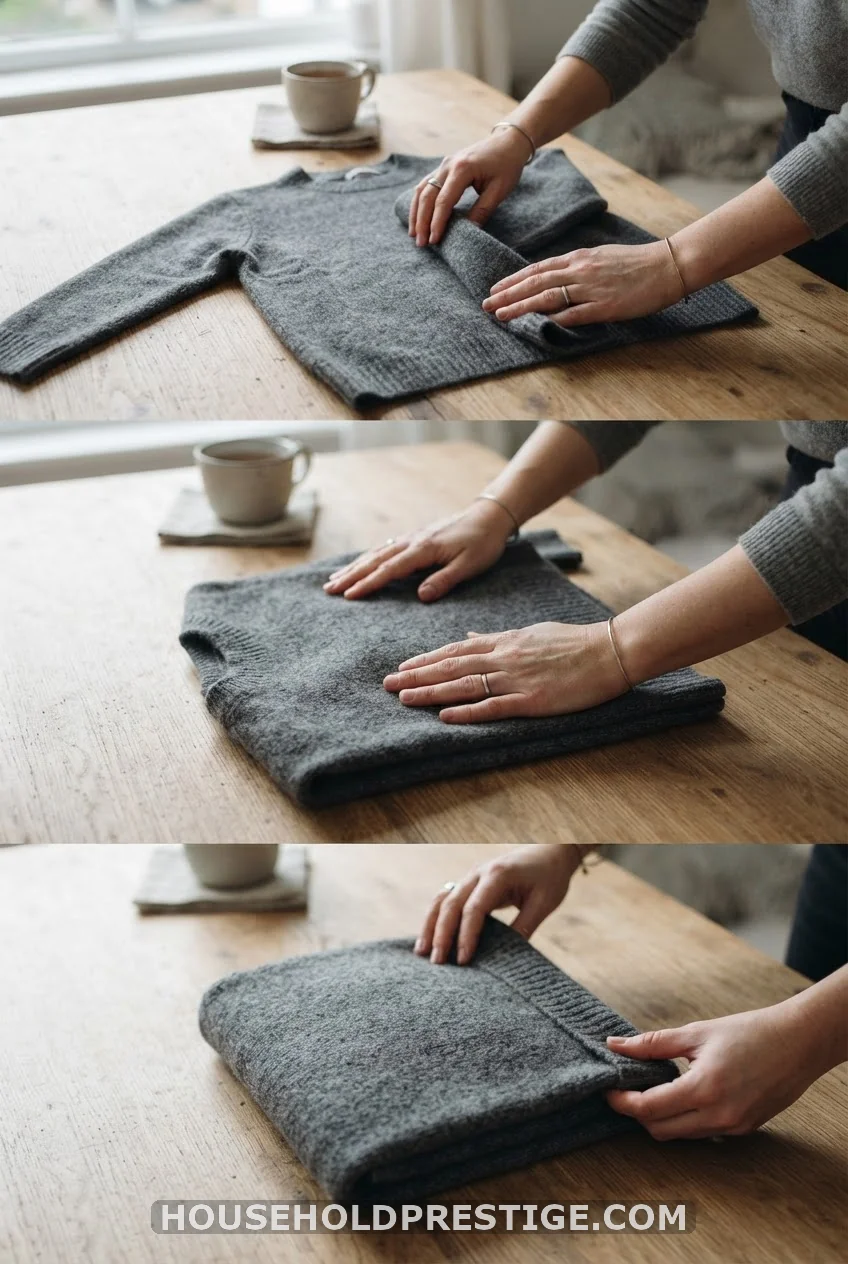
This is the method that keeps shape intact for months, not weeks.
- Lay the sweater face-down on a flat surface.
- Fold one sleeve across the back diagonally, so it forms a straight line down the spine of the sweater rather than a bulky lump.
- Repeat with the other sleeve, overlapping slightly at the center.
- Fold the bottom third up toward the collar.
- Fold the top third down over that, so you end up with a compact rectangle, not a square.
- Stack heaviest sweaters on the bottom of each pile, lightest on top.
- Cap every stack at five sweaters. Beyond that, the bottom one takes the weight of everything above it for months.
Why This Works
Folding in thirds, instead of in half, distributes weight along the length of the sweater rather than concentrating it at one crease. That single change is the difference between a sweater that snaps back into shape when you shake it out and one that carries a visible fold line into spring.
Common Mistakes to Avoid
- Folding sleeves straight down instead of diagonally. This creates a bulky front lump that throws off every sweater stacked on top.
- Stacking by color instead of by weight. It looks tidy for about a week, then the heavy sweater in the middle of a light stack crushes everything below it.
- Skipping the shake-out. Give each sweater a light shake before folding. It resets the fibers and prevents the fold from setting into a permanent crease.
- Using the same bin for every season. A bin that holds July’s linen sweaters shouldn’t also hold January’s wool ones. Rotate the bin, not just the contents.
Installation Note: Setting Up Shelf Dividers
If your closet shelf is open (no dividers), stacks lean and slide within weeks. Acrylic dividers clip onto most wire or wood shelves without tools. Space them 8 to 10 inches apart for folded sweaters, tighter at 6 inches for thinner cotton knits. This alone keeps five separate stacks from becoming one leaning tower.
For Renters: Zero-Damage Solutions
No drilling. No damage deposit at risk. Command strip hooks (rated for up to 5 pounds each) hold a hanging shelf organizer with zero wall damage, and most closet rods already support a second, lower rod using a tension-based hanging organizer that clips over the existing bar. A six-shelf hanging canvas organizer runs about $15 to $20 and turns unused hanging space into six sweater cubbies without touching the walls.
Bins vs. Baskets vs. Vacuum Bags
Bins hold their shape and stack cleanly, but they seal in humidity if the closet runs damp. Open baskets breathe better, but dust settles on anything left uncovered for more than a season. Vacuum-seal bags compress bulky sweaters to a third of their size, which helps in a tight closet, but compression that lasts more than four to six months can flatten wool fibers permanently. Save vacuum bags for short-term, off-season storage only, never for a sweater you plan to keep compressed all year.
Fighting Moths Without the Smell
Cedar blocks and lavender sachets repel moths without the chemical smell of mothballs. Replace cedar blocks every three to four months. Once the scent fades, so does the effect. Check stored sweaters every six to eight weeks for small holes near the collar or underarms, the two spots moths target first. Catching an infestation early means losing one sweater instead of the whole bin.
The Rotation Calendar
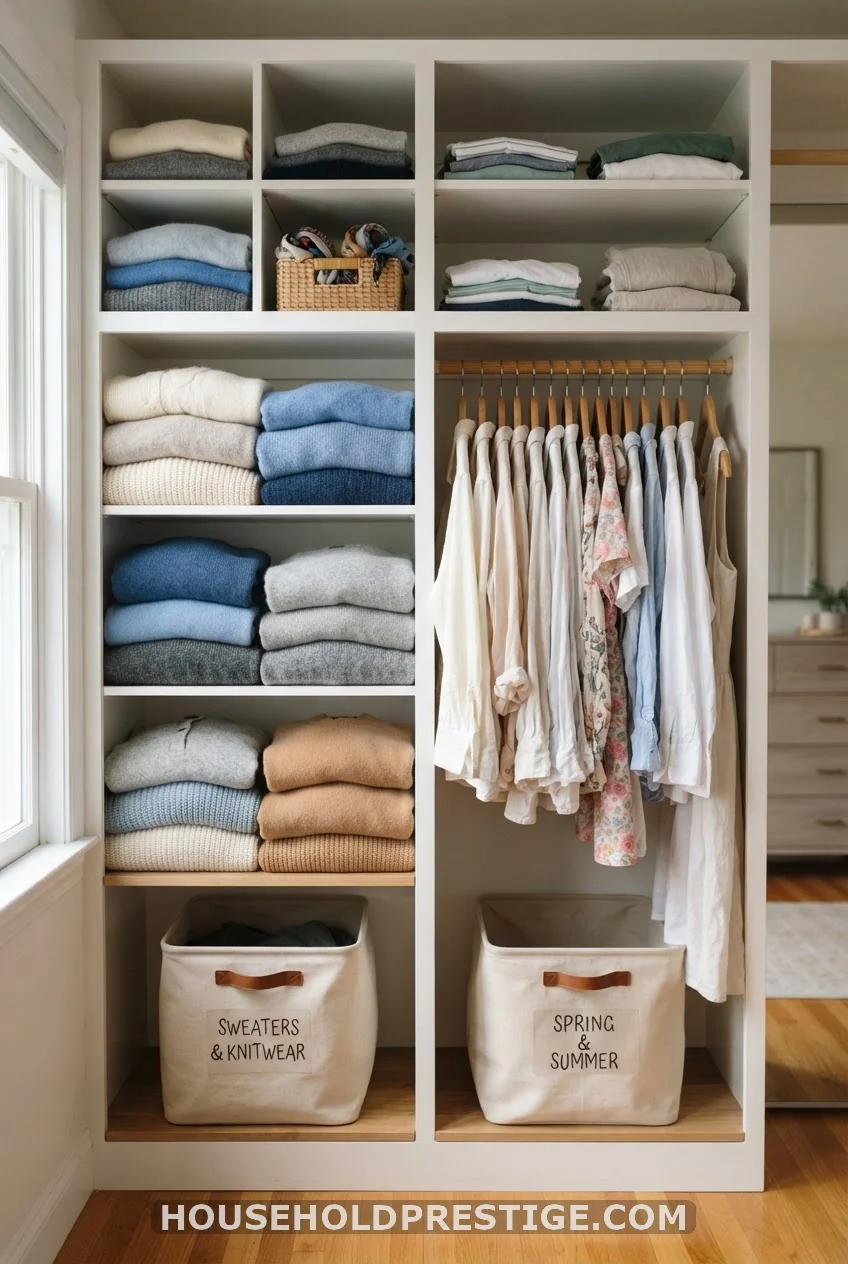
Swap sweaters into prime closet real estate around the first cool week of fall, typically when overnight temperatures drop below 60°F. Move them back out once daytime highs consistently clear 70°F in spring. Keep the off-season bin somewhere with stable temperature and low humidity. A hall closet works; a garage or damp basement doesn’t. Humidity swings invite moths and mildew more than the fabric sitting still does.
Conclusion
Sweater storage in a closet comes down to three decisions: fold instead of hang for anything wool or cashmere, cap your stacks at five, and give the whole system airflow instead of a sealed box. Get those three right and your favorite knit comes out in October looking exactly like it did the March before. No stretched shoulders, no crease lines, no scrambling for a fix on the first cold morning.
FAQ
Should sweaters be folded or hung in a closet?
Fold wool, cashmere, and anything heavier than a light cotton knit. Hanging stretches the shoulders over time under the fabric’s own weight. Thin cotton or acrylic sweaters can hang short-term without much risk.
How do you store sweaters in a small closet?
Switch from flat stacking to vertical, file-style folding when shelf depth runs under 12 inches. Sweaters stand upright like folders, which uses height instead of depth and lets you see every sweater at a glance.
What is the best way to keep sweaters from getting moth holes?
Wash or air out sweaters before storing them, since moths target body oils and food residue, not clean wool. Add cedar blocks or lavender sachets, and check stored sweaters every six to eight weeks for early holes near the collar and underarms.
Can you use vacuum-seal bags for sweater storage?
Yes, for short-term or off-season storage only. Compression beyond four to six months can flatten wool fibers permanently, so vacuum bags work best for a seasonal swap, not year-round storage.
How many sweaters should go in one stack?
Cap folded stacks at five. Beyond that, the sweater on the bottom carries the weight of everything above it and develops a permanent crease within a season.